Search models, users, collections, and posts

Print Profile(1)
0.2mm layer, 2 walls, 15% infill
Designer
30.7 h
3 plates
Open in Bambu Studio
Boost
53
174
8
5
97
13
Released
Description
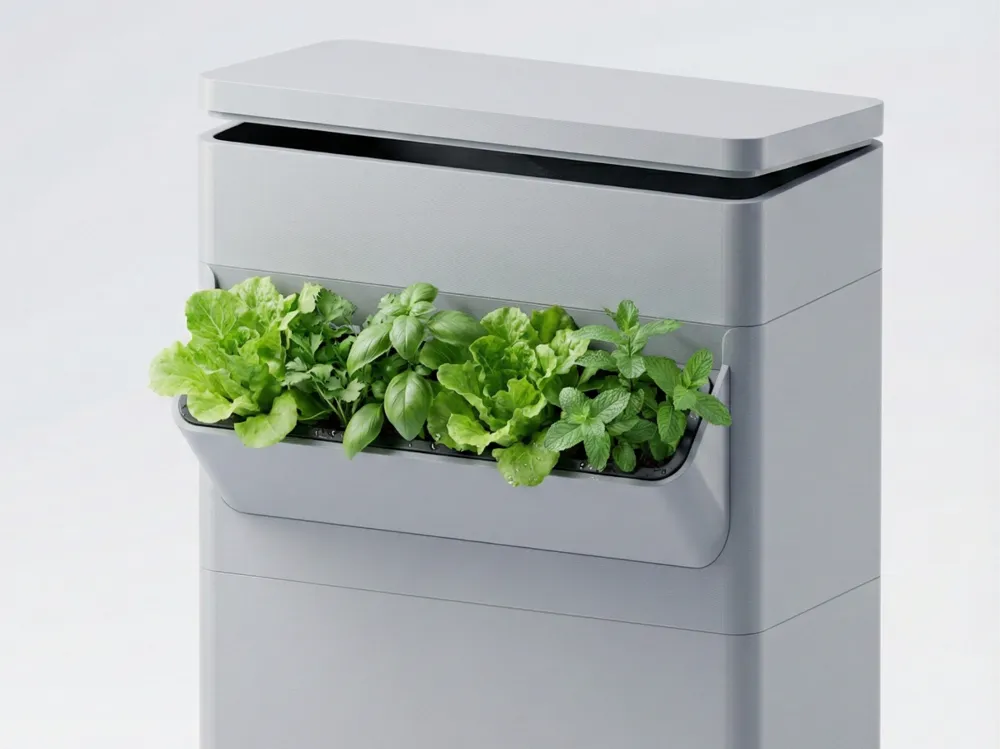
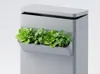
This hydroponic tower is designed for practical indoor growing. Unlike traditional 360-degree towers that require central lighting and open floor space, this system is directional. It features a flat back, making it ideal for placing against a wall, kitchen backsplash, or windowsill to optimise for available space and light.
Design & Features
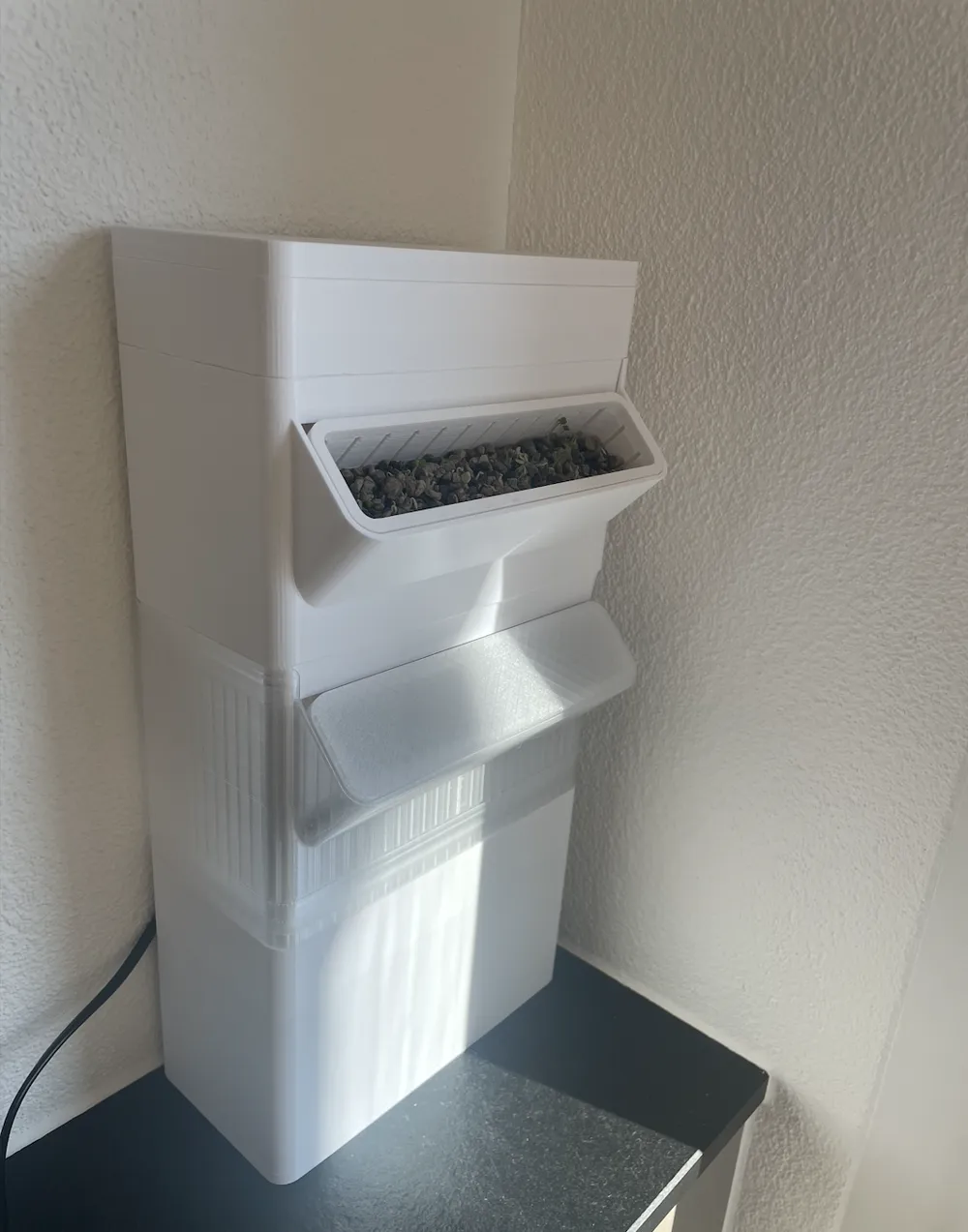
- Directional Growth System: The front planting tray is angled at 45 degrees. This provides optimal light exposure for the plants while keeping the unit's footprint minimal.
- Stackable Architecture: The main sections are modular. You can print and stack multiple grow modules vertically to scale the system to your desired height.
- Integrated Nursery Lid: The lid for the planting basket doubles as a nursery cover if printed with translucent filament. This allows you to germinate seeds directly within the basket, bypassing the need for a separate seed-starting station.
- Shower Screen Water Distribution: Water is distributed via a custom shower screen. You only need to install one at the very top of the tower, though the design allows you to stack additional screens between grow modules if you want to customize the water flow. The screen pools water and overflows precisely through a front slit, creating an even cascade over the roots.
- Watertight Slicer Configuration: Achieving a watertight print can be tricky, so the default print profile has the bottom reservoir pre-configured. The wall loops, solid layers, and extrusion settings are already optimized to prevent leaks straight off the build plate.
Hardware & Assembly The water loop is straightforward to assemble and hides entirely within the printed geometry:
- Place a standard mini water pump in the bottom reservoir.
- Route a 1cm silicone tube from the pump up through the concealed routing hole in the back of the modules.
- Connect the tube to the top shower screen module.
- Gravity feeds the water through the system and back into the base.
Print Recommendations
- Material: PETG is highly recommended due to its layer adhesion, water resistance, and UV stability. Standard PLA will work but may warp or degrade over time with constant water exposure.
- Settings: If you are not using the provided print profile, ensure the bottom base is printed with at least 4-5 perimeters and a high infill density to ensure water-tightness. The rest of the modules can be printed with standard settings (2-3 walls, 15% infill).
License

This user content is licensed under a
Creative Commons Attribution-Noncommercial


Comment & Rating (8)