
Teardrop hole tests
Print Profile(1)

Description
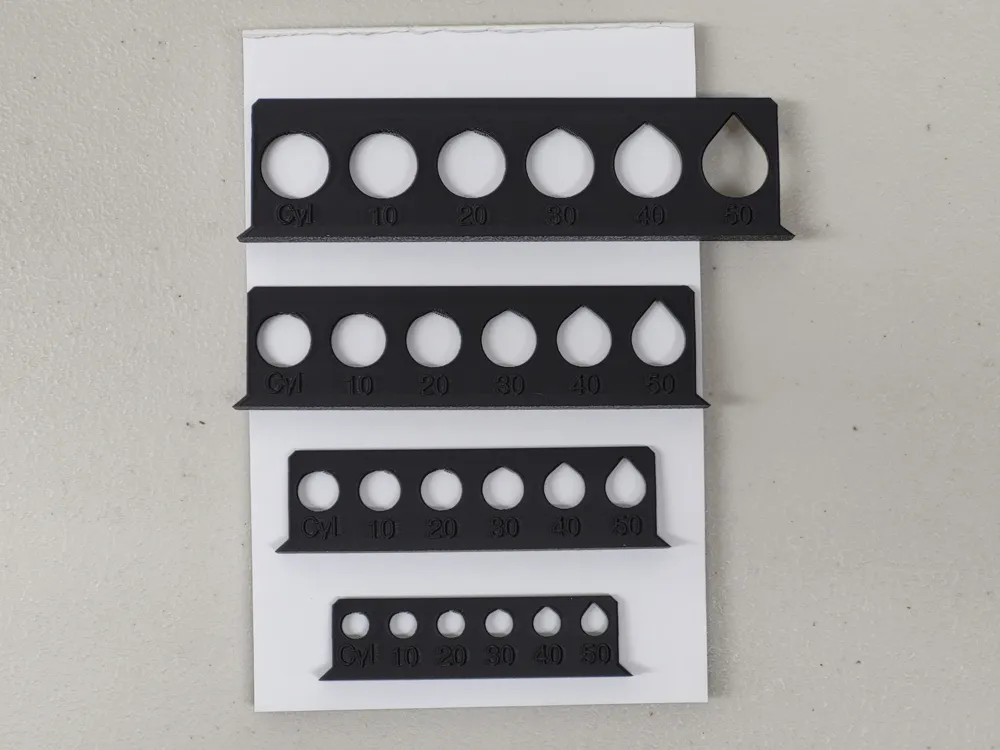
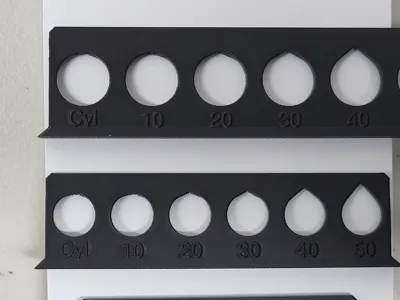
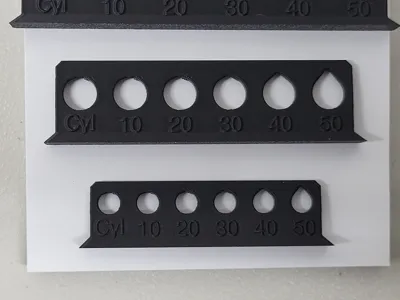
There's a common problem with printing circular holes in vertical walls. The top of the hole has very steep overhangs and it will sag if printed without supports. A recommended solution to this problem is to use a teardrop shaped hole instead of a circle. That way you can control how steep the overhang will get to allow the printer to print without supports and without allowing the sagging to deform the hole too much.
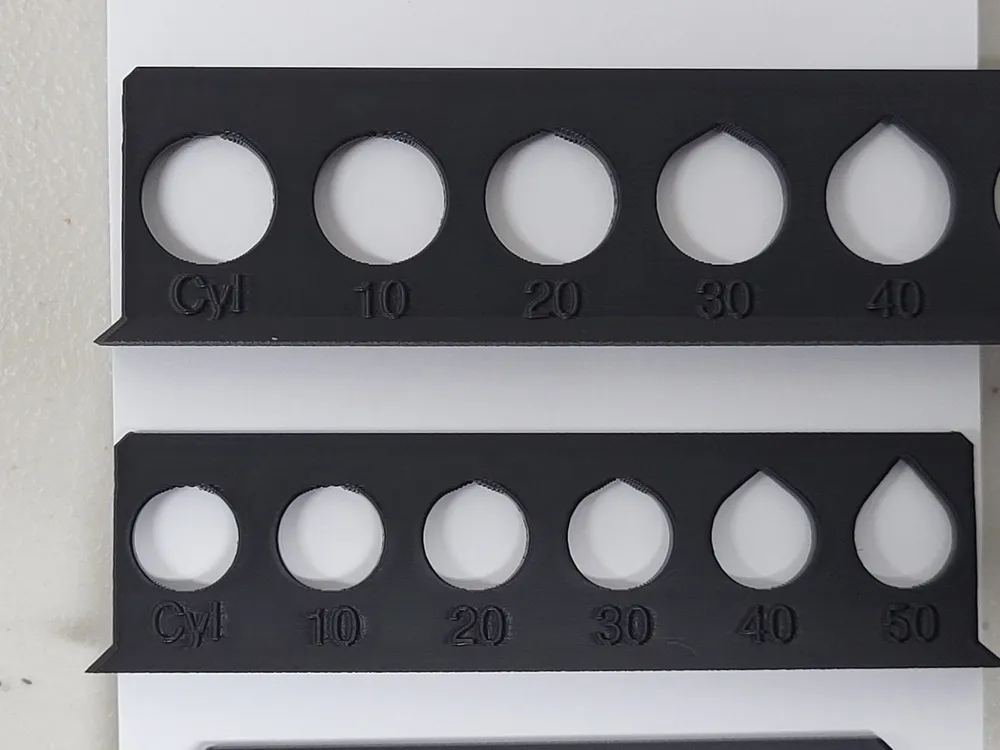
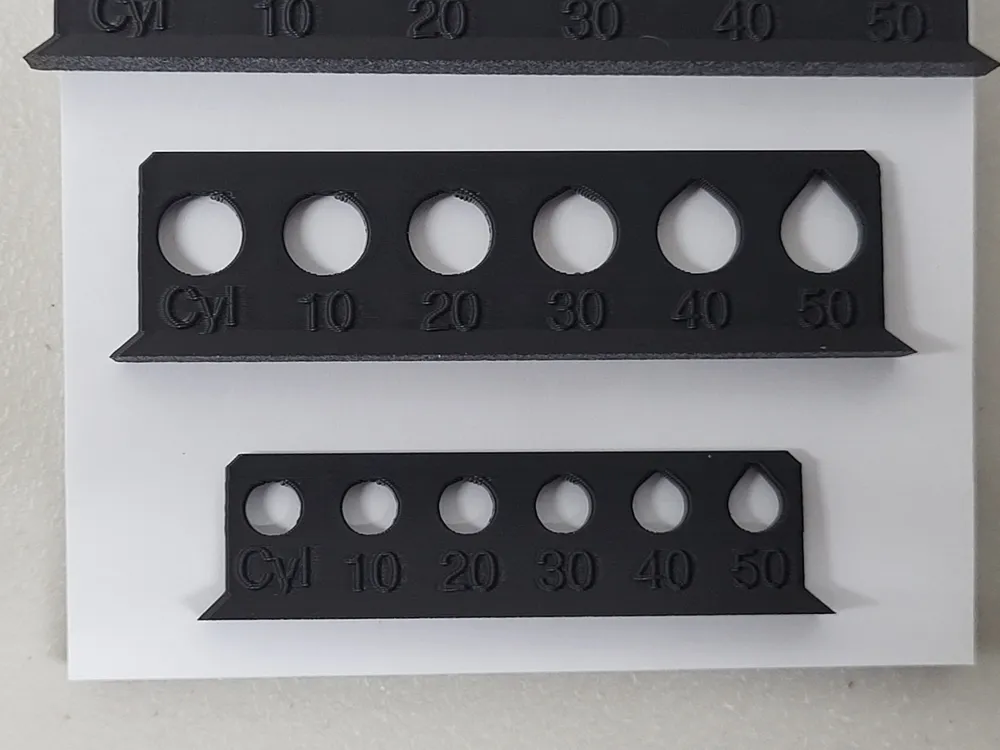
This model provides samples with holes of different diameters: 6mm, 9mm, 12mm, and 15mm. They also have different shaped teardrop openings ranging from 0 degree-overhangs (a normal circle) to 50-degree overhangs (a pronounced teardrop shape). If you print one of these with your own filament, you can judge for yourself how much overhang to allow to get a hole that prints without support and within the tolerance that you need for your model.
The first 4 plates also include test pins that you can use to judge the roundness of the printed holes. One pin has zero clearance: the pin diameter is the same as the hole diameter. The second pin has 0.2mm clearance: the pin diameter is 0.2mm smaller than the hole.
When I print the 9mm set with basic black PLA, I find that the full sized pin only starts to fit in the holes with 30 degree or higher overhangs. The 20, 10, and Cyl(0) sizes have sagged to much for the pin to work. Thus, I'll be using 30 degree teardrops in my models using this filament. Pretty much any printer/filament should work for the 50 degree teardrop, but as you can see it prints a noticeably altered hole.
License



Comment & Rating (2)