
Folding Mini Quadpod


Print Profile(1)

Bill of Materials


Description
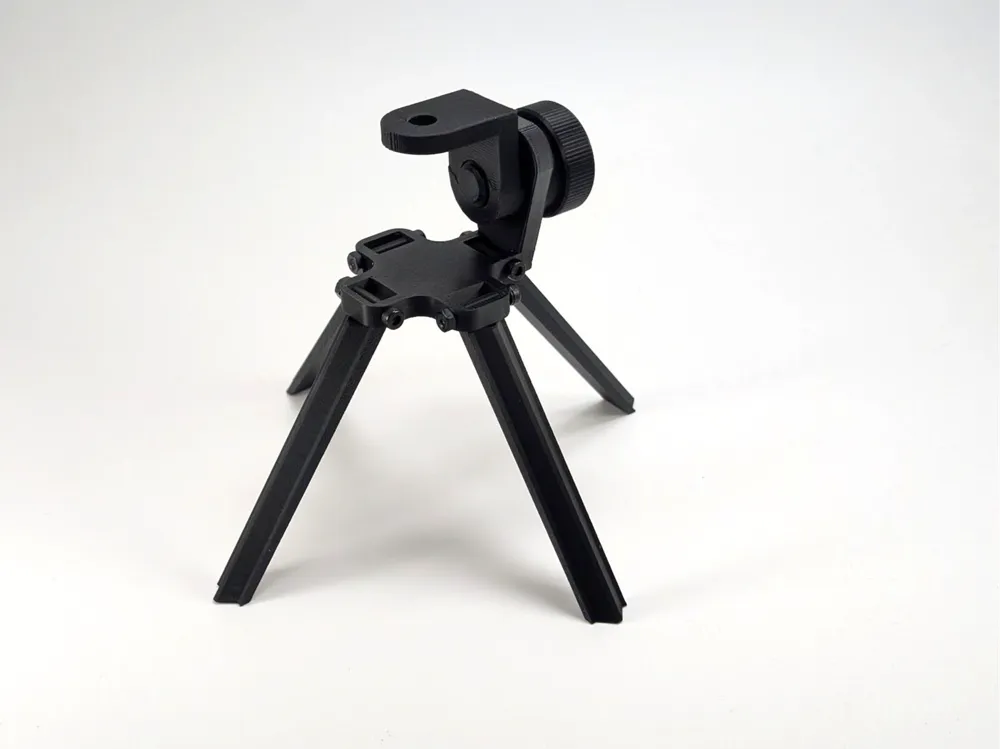
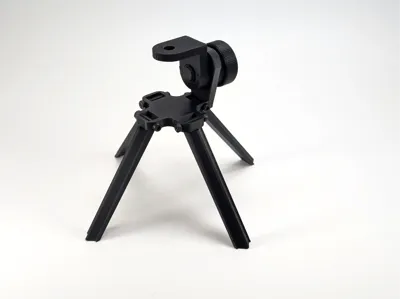
I personally think mini-tripods are evil. They have a way to tip over and the ones shipped with USB projectors or LED lights are usually unable to hold a fixed head angle. Quadpod comes to the rescue!
*** NEW VERSION UPDATED TO BE ABLE TO SUPPORT MUCH MORE WEIGHT **
You can use it to support cameras, lights, webcams or projectors that use a standard camera screw attachment.
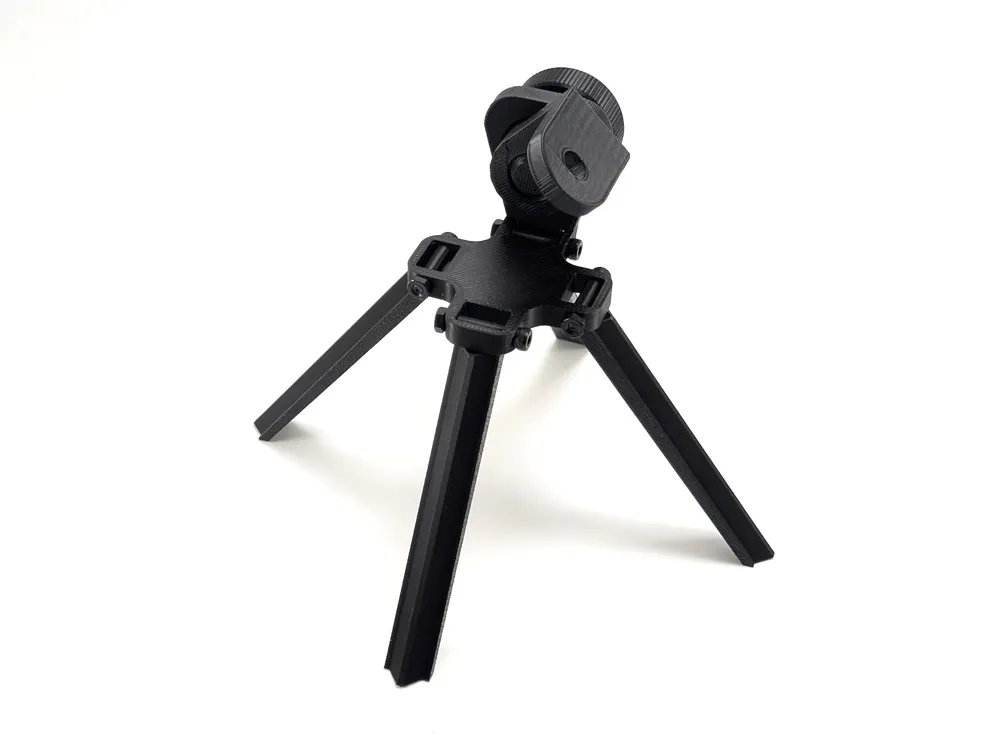
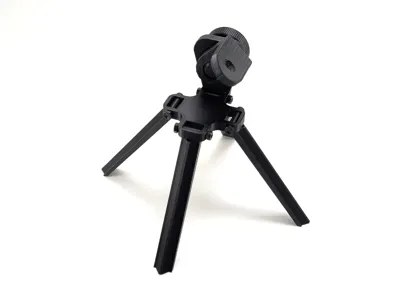
Four folding legs prevent it from tipping.
The head supports full 180 degrees angles and has a subtle click every 20 degrees.
After you tighten the thumb screw, it will stay put and not slide or drift.
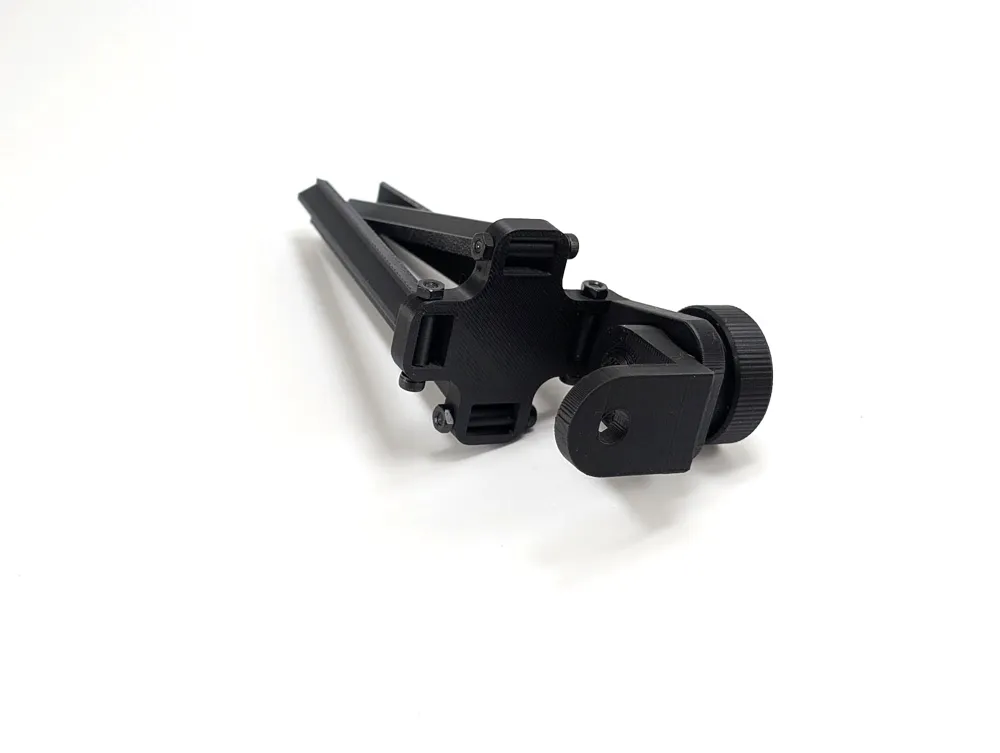
Easy print with only a few parts that fits on the A1 mini's plate. Only the angled mount prints with minimal supports around its base.
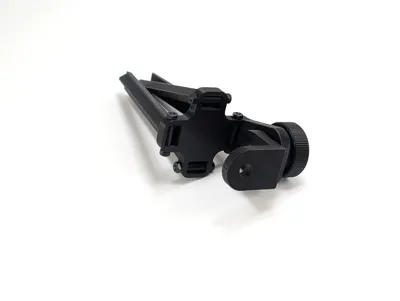
For convenience in light-duty uses, the profile includes a ¼"-20tpi screw to use in the mount. I use this screw to mount LED light panels. For heavier applications I recommend using a metal screw like the one listed in the hardware parts. The mounting plate is 5mm thick.
When unfolded, the top of the mount will be 11cm from the ground.
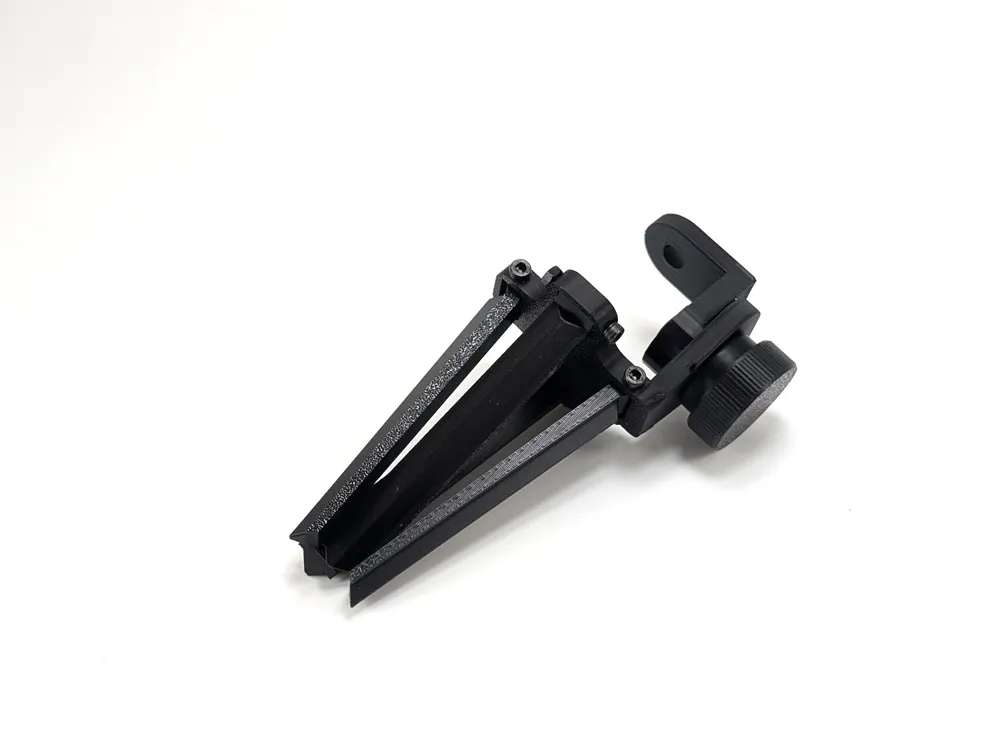
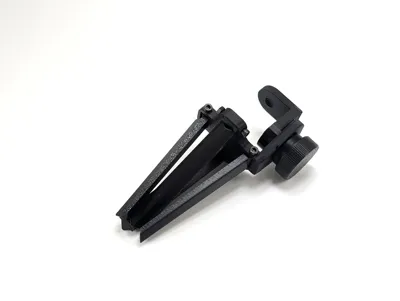
With legs folded, it is 14cm long and approximately 4cm diameter at the legs.
Required Hardware
1 - ¼"-20 camera mount screw
4 - m3x20mm bolts
4 - m3 nuts
Assembly Instructions
Use one of the m3x20mm bolts and one of the m3 nuts to attach one of the legs to the base.
Repeat the step for each of the legs.

Use the large thumbscrew to attach the camera mount to the quadpod's head.
Please remember to rate your prints!
Profile ratings are not only important for other users but also serve as valuable feedback for designers!
Click here to see my other models
Boost Me (for free)
If you like this model, please boost! It's free to you, but it's a meaningful way to support me and my designs.
General 3d Printing Tips
- Make sure your printing plate is clean! Oils from your skin can cause adhesion issues for your prints. Regularly wash your print plate with a detergent like Dawn, and avoid touching the surface when removing prints from the bed.
- If it's an option on your printer, always level the bed before each print. If you have to perform this manually, do so after every few prints. It takes a bit of time and patience, but it's a fair trade for reliable results.
- Ensure bed and nozzle temperatures are within the expected range for the material you're printing. Temperatures that are too high or too low can negatively affect the print, causing warping, malformed layers, or adhesion issues.
- Reduce your printing speed. Slower speeds are especially important for overhangs, as they give the material more time to cool as it's deposited.
Membership
Click here to obtain a commercial license to sell physical prints of my 3D models.
License

You shall not share, sub-license, sell, rent, host, transfer, or distribute in any way the digital or 3D printed versions of this object, nor any other derivative work of this object in its digital or physical format (including - but not limited to - remixes of this object, and hosting on other digital platforms). The objects may not be used without permission in any way whatsoever in which you charge money, or collect fees.


Comment & Rating (11)