
Modular Mechanical Binary Counter System





Print Profile(3)


Bill of Materials
- Super Lube (or other thin oil) x 1: Needed if using printed bearings
Description
Boost Me (for free)
Boost mode: engaged I appreciate the⚡spark⚡- the ⚙️gears⚙️ are ready!
Modular Mechanical Binary Counter System

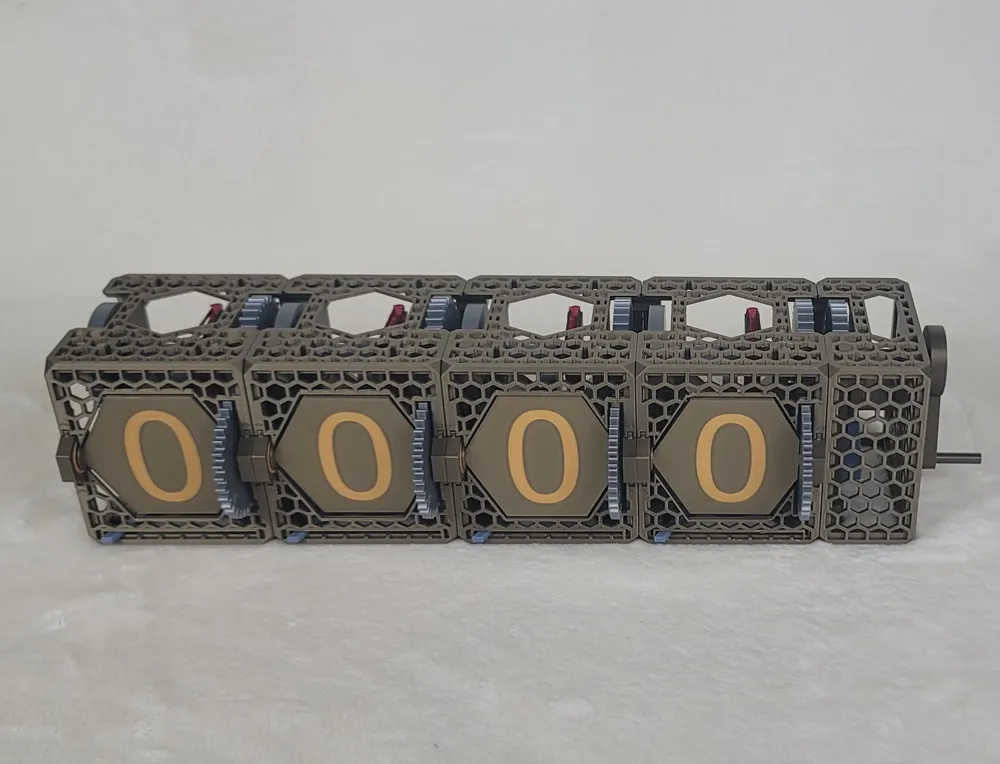
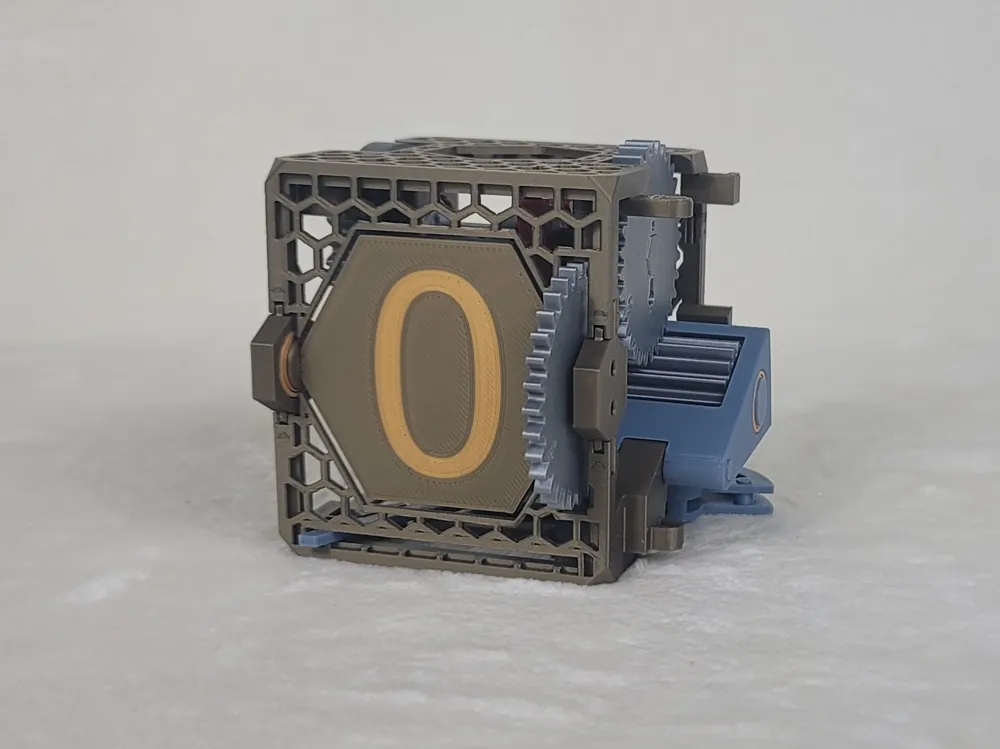
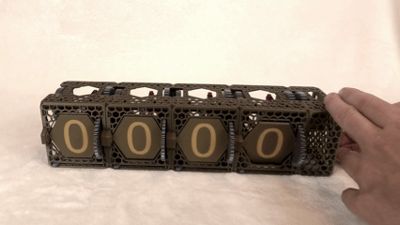
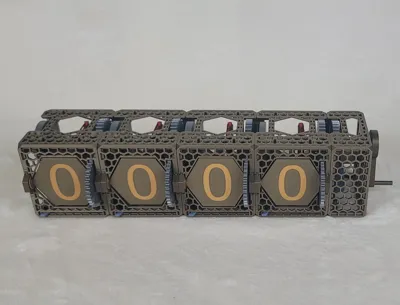
A gear-driven, expandable binary display designed for tactile operation with a steam punk feel.
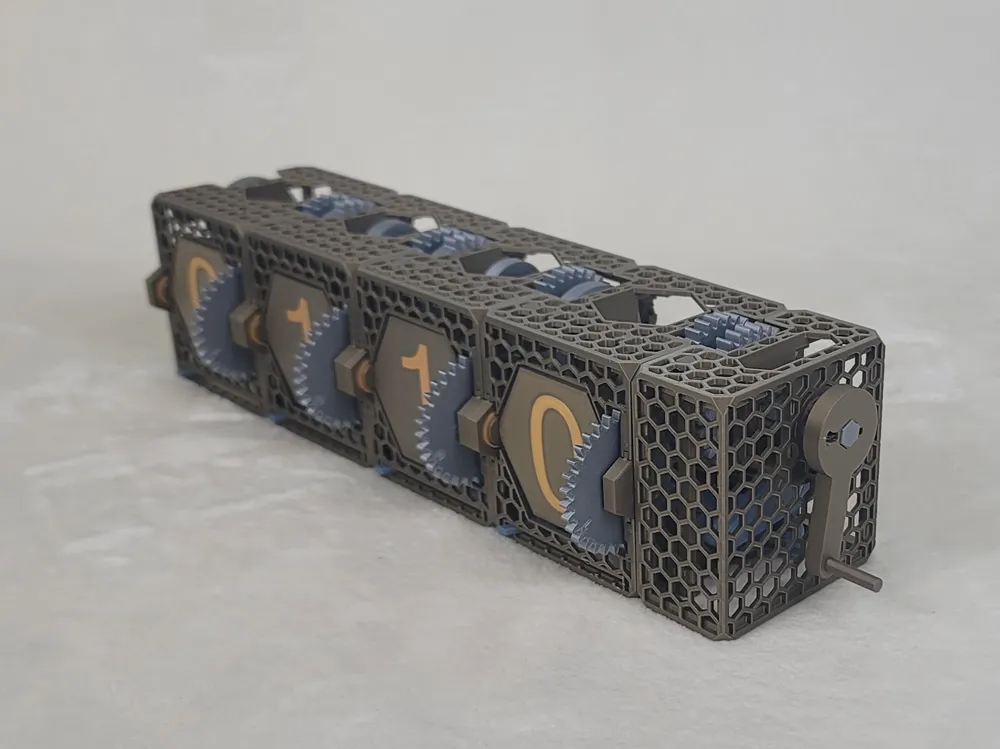
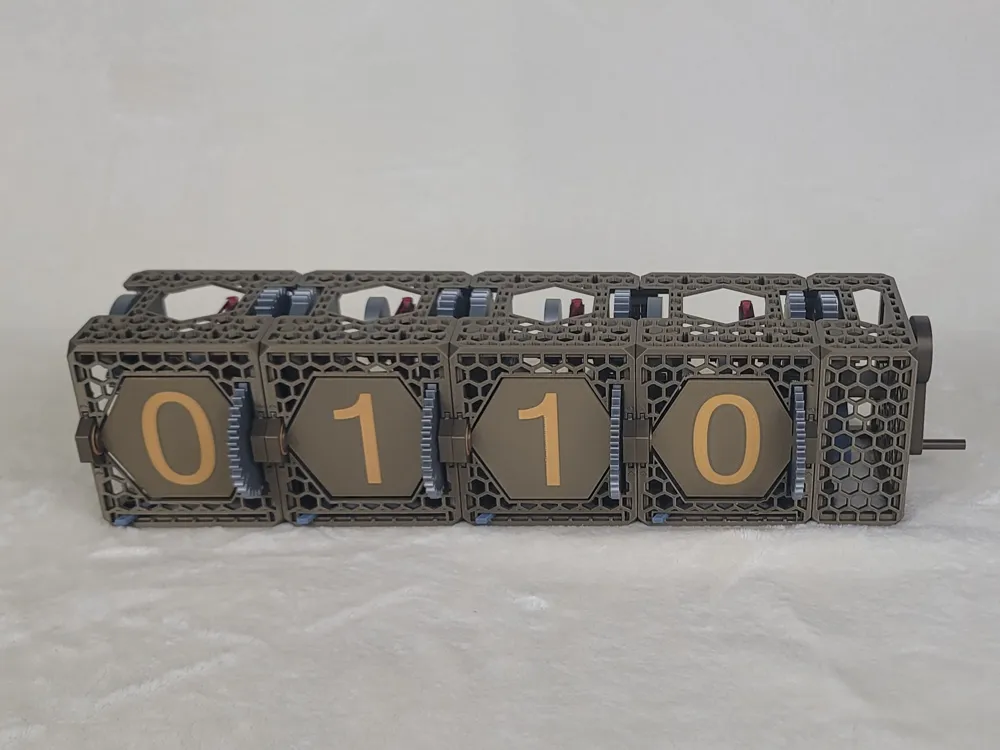
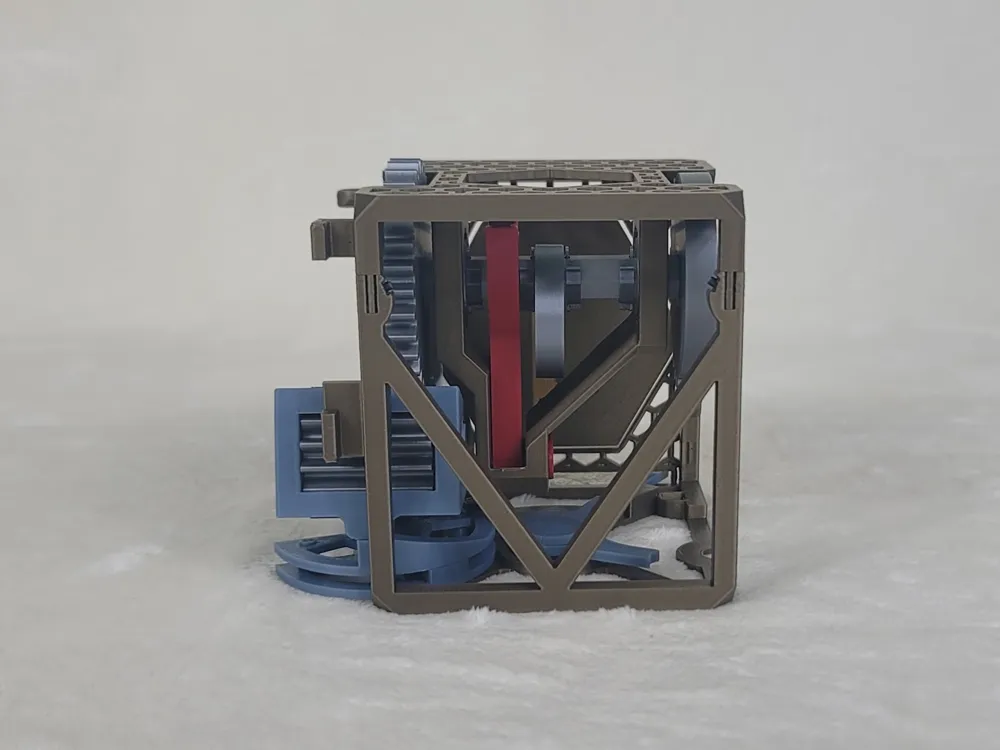
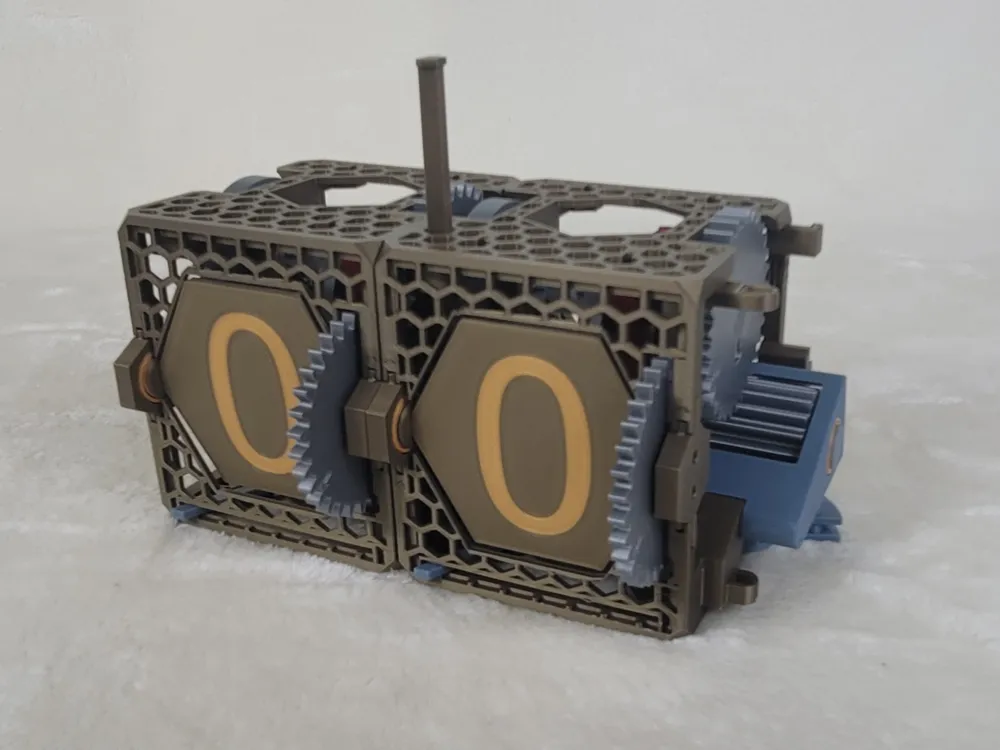
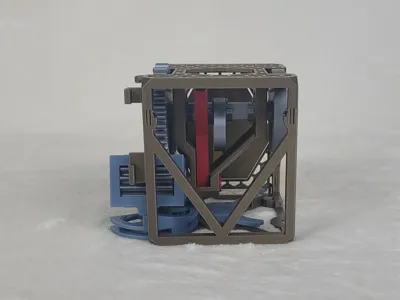
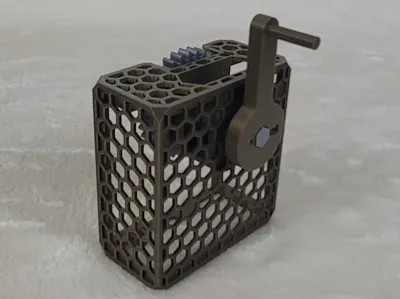

This project features a fully mechanical counter system built from modular Bit Modules and driven by a Manual Crank Module. Each Bit Module represents one binary digit (0 or 1). Carry-over is handled entirely through physical gear interactions. There is a clutch mechanism that aids in connecting the units together and allows you to flip any bit in the system independent of turning the crank.
Designed for both learning and fun, this system showcases binary counting through visible movement and satisfying mechanical actions.
What's new?
V1.1
- Steampunk gears added to the main BitModule profile
- Added removal relief slot to BitModuleConnectionPin
- Made BiStablePin .25mm longer
- Changed Frame Lock mechanism to a snap-on clip
- No change to overall dimensions or fit: v1.1 BitModules will connect with v1.0 BitModules
Note: There are two versions of assembly instructions. v1.0 is for the original model that uses a small piece of filament to lock the frames together. v1.1 is the new style that uses clips to lock the frames together.
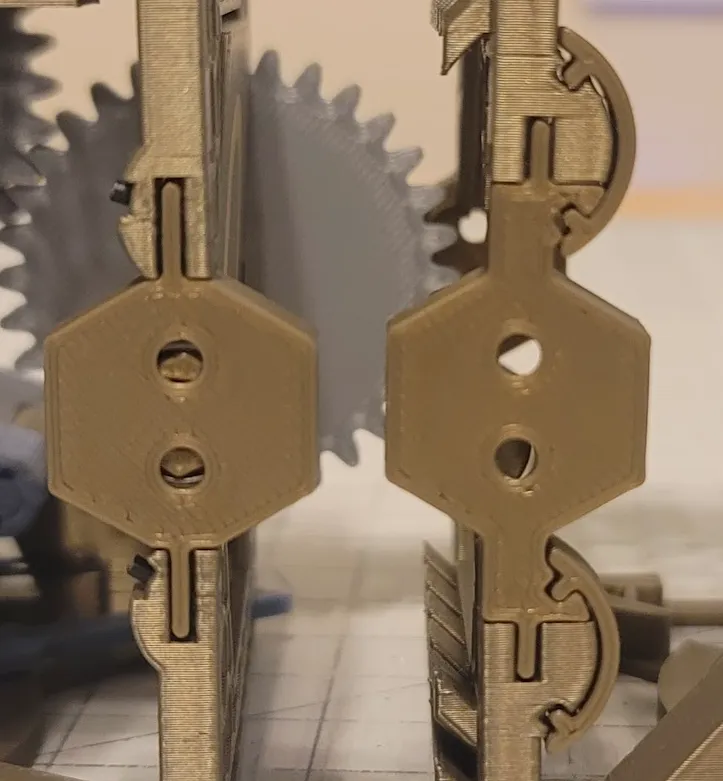
What you will need
The only required, non-printed parts are rubber bands and, for best performance, metal bearings. I have had great success with printed bearings for 4-bit setup. But to get 8-bits spinning, you will need to purchase actual steel bearings.
If you want to use printed bearings, I used this excellent profile by @jerryie:
https://makerworld.com/en/models/687254-print-in-place-bearings-v2#profileId-615941
You will want to try to get the sizes as close to the actual bearing specs as possible. For my P1S, I had the most success setting the X-Y hole and contour compensation values to 0.05 for these bearings. You can check the fit of the printed bearings by printing the Test Jig in the project. 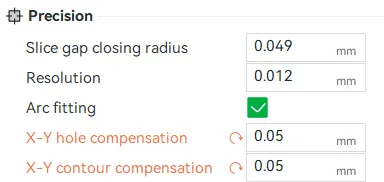
(Note, these settings are for the bearings only. For the actual project model files, these should be left at 0.)
For a 4-bit (nibble) build with 1:1 manual crank (printed bearings are ok):
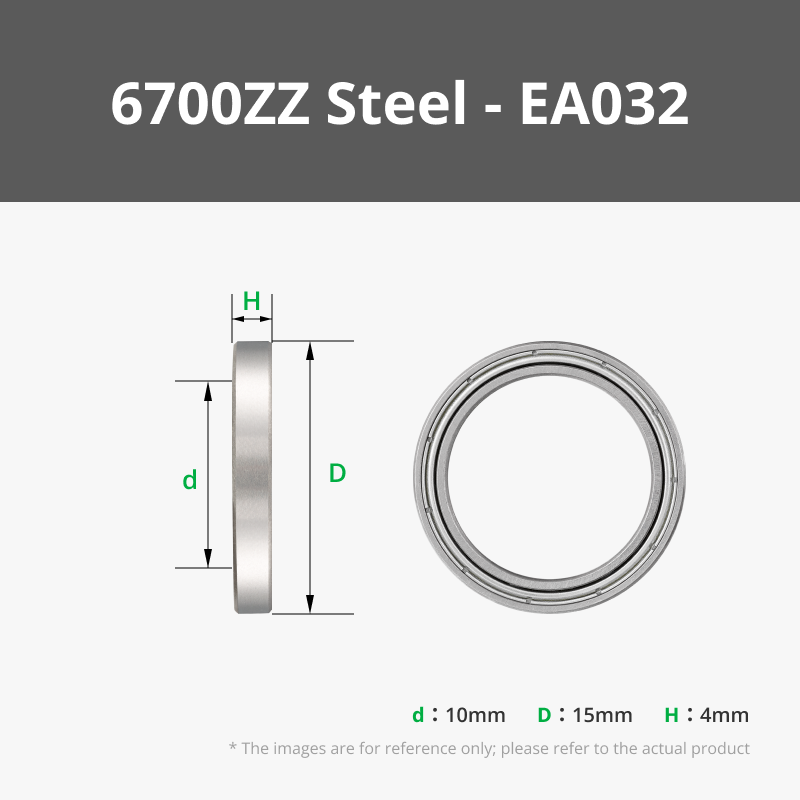
- Qty 16: 6700ZZ (ID: 10 mm / OD: 15 mm) (Bambu sells them in a 2 pack - so Qty 8)
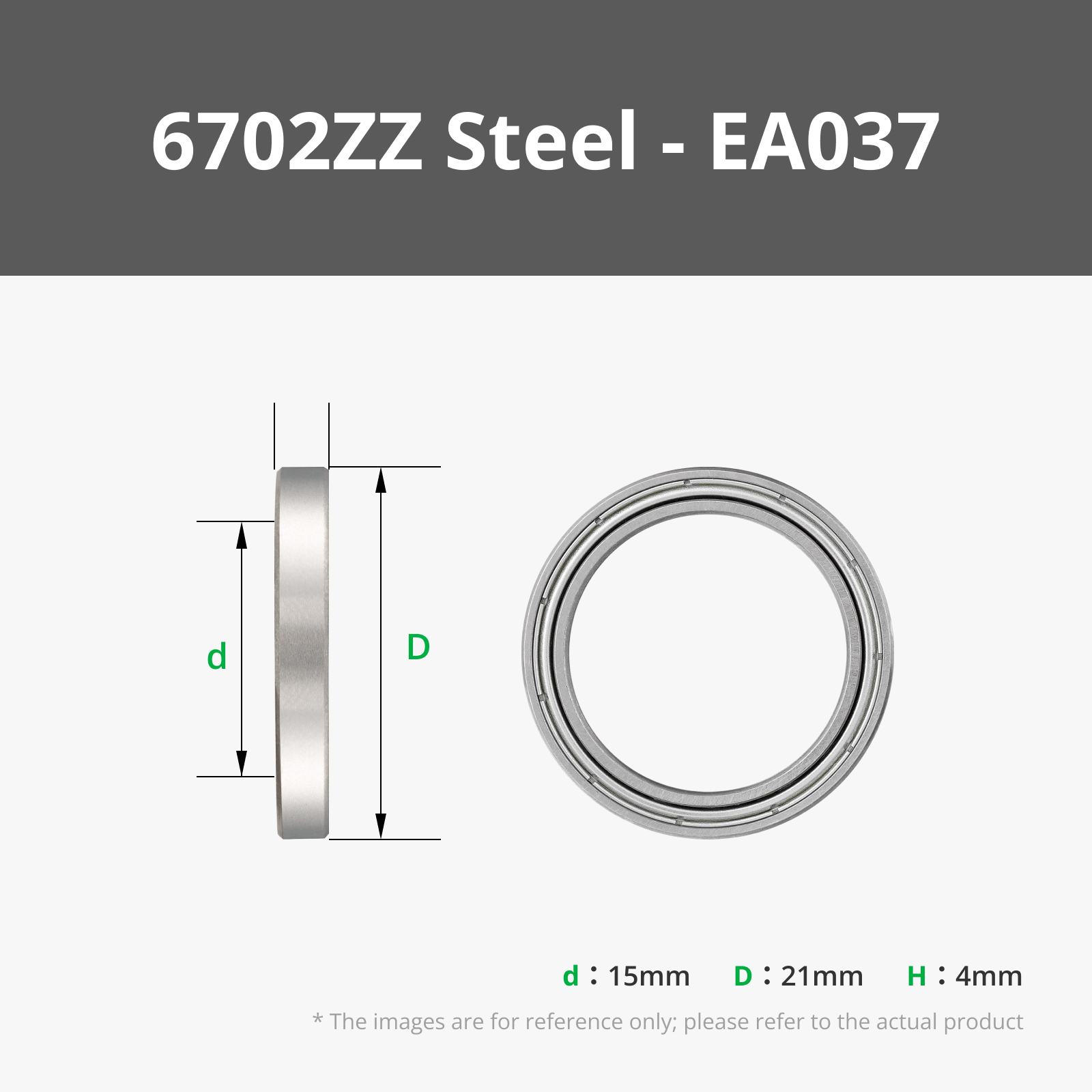
- Qty 10: 6702ZZ (ID: 15 mm / OD: 21 mm) (Bambu sells them in a 2 pack - so Qty 5)
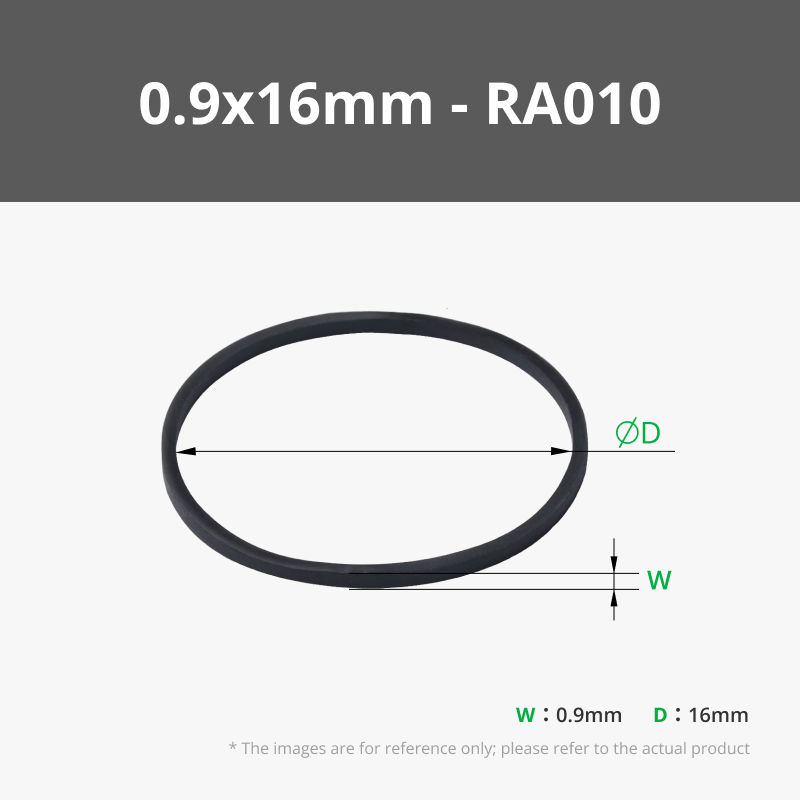
- Qty 8 - 12: 16mm rubber bands (Bambu sells them in a 100 pack - so Qty 1)
- ~ 626g of filament
- ~ 32 printing hours
- ~ 1 assembly hour
For a 8-bit (byte) build with 1:1 manual crank (you need steel bearings):
- Qty 32: 6700ZZ (ID: 10 mm / OD: 15 mm) (Bambu sells them in a 2 pack - so Qty 16)
- Qty 18: 6702ZZ (ID: 15 mm / OD: 21 mm) (Bambu sells them in a 2 pack - so Qty 9)
- Qty 16 - 24: 16mm rubber bands (Bambu sells them in a 100 pack - so Qty 1)
- ~ 1170g of filament
- ~ 59 printing hours
- ~ 2 assembly hours
Included Profiles
- Bit Module v1.1: the core unit of the binary counter
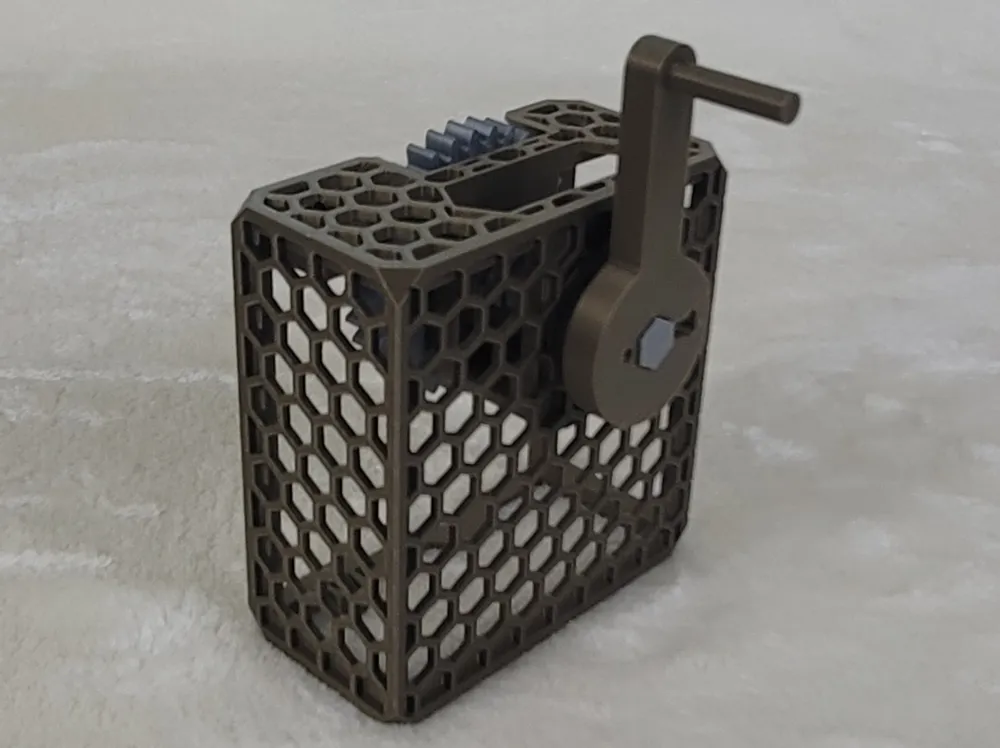
- 1:1 Manual Crank Module v1: a hand-operated input module that drives the system
- Bit Module v1.1 - A1 Mini: no changes to the models, just placed differently to better fit the smaller plate
Accessories: Hexadecimal Decoder Module
The Hexadecimal Decoder Module accessory is ready!

It mounts to the top of the counter and translates 4-bit binary states into a 13-dot-style hexadecimal display.

Here it is with 8 bits (a full byte) spinning.
On the roadmap
I plan to develop a motor driven module, perhaps with variable speed or pushbutton modes, depending on demand.
Why?
Honestly… I’m not sure. I was looking for a project complex enough to really stretch my design skills. I could have picked dozens of more useful and probably more popular projects. But somehow this is the one that stuck in my head, demanding to be let out.
I don't know why even thought about, or settled on, a modular binary counter. But I did a search and could only find the traditional, gravity based tab-carry mechanism models. I couldn't find anything that was gear driven, so at least I knew it would be a new concept.
Then, somehow, I thought it would be cool if I could decode the nibble (4 bits) into a it's hexadecimal representation. So I ended up developing both projects in tandem.
I had hoped that I could stack 8 together for a full byte display, but I doubted it would work. I figured the friction and additive forces would be too much. But it turns out, 8 will work as long as you use real (steel) bearings and not printed ones. Plus, adding the hex decoder probably actually helps a little bit because the most force in the binary counter is when a card is flipping from 1 to 0, and carrying the next card (or several cards) with it. But the hex decoder bit input for that module is releasing its stored energy back into the system when card is flipping from 1 to 0.
Documentation (2)
License

You shall not share, sub-license, sell, rent, host, transfer, or distribute in any way the digital or 3D printed versions of this object, nor any other derivative work of this object in its digital or physical format (including - but not limited to - remixes of this object, and hosting on other digital platforms). The objects may not be used without permission in any way whatsoever in which you charge money, or collect fees.


Comment & Rating (31)