
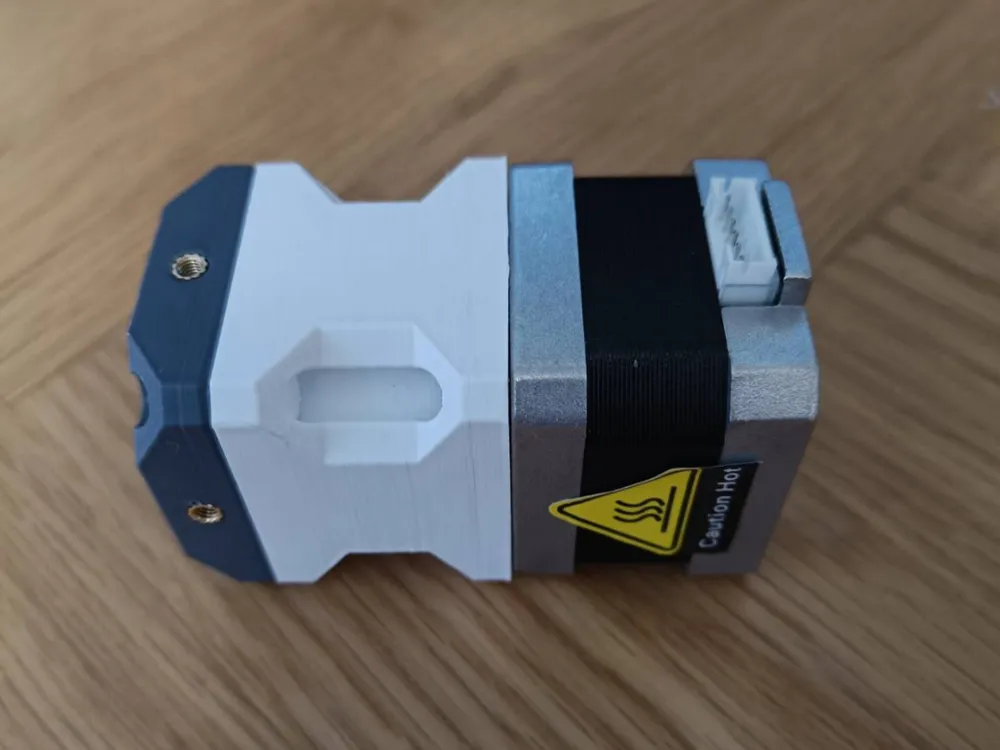
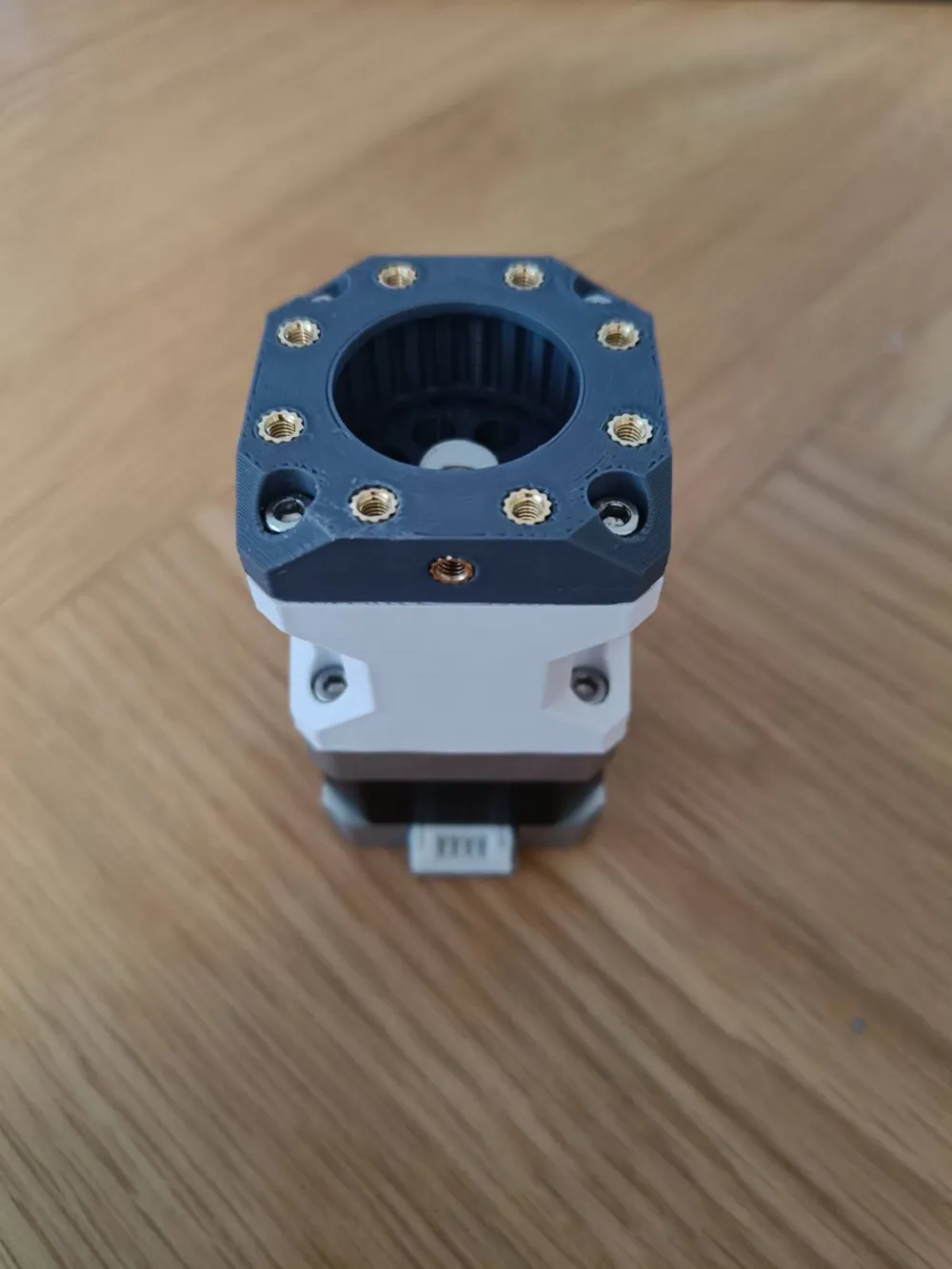
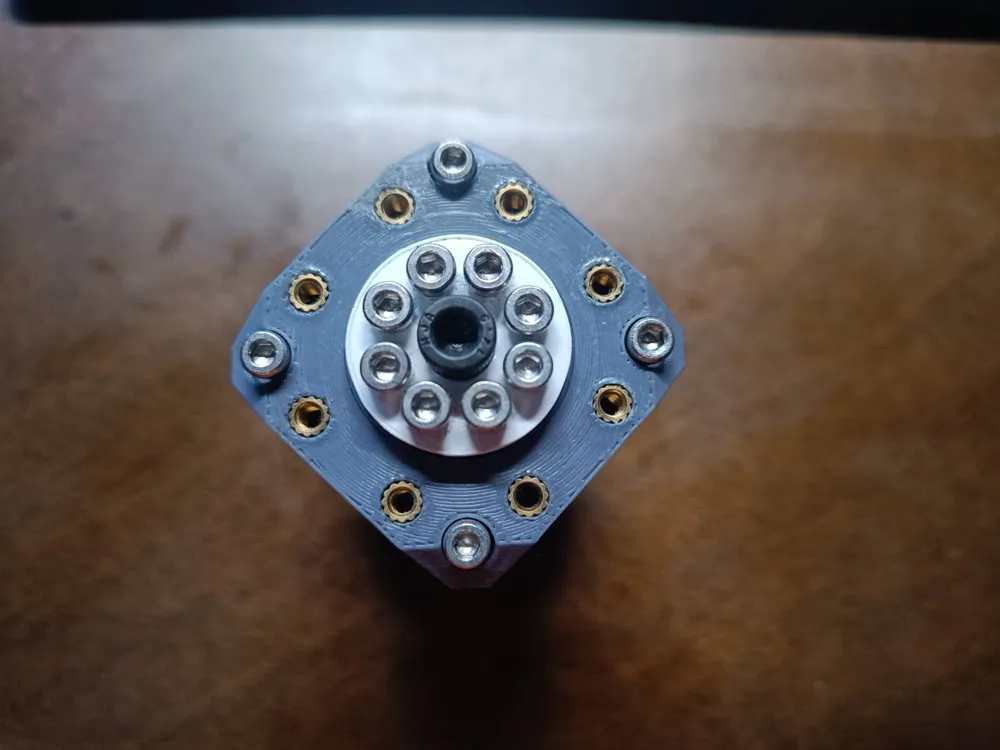
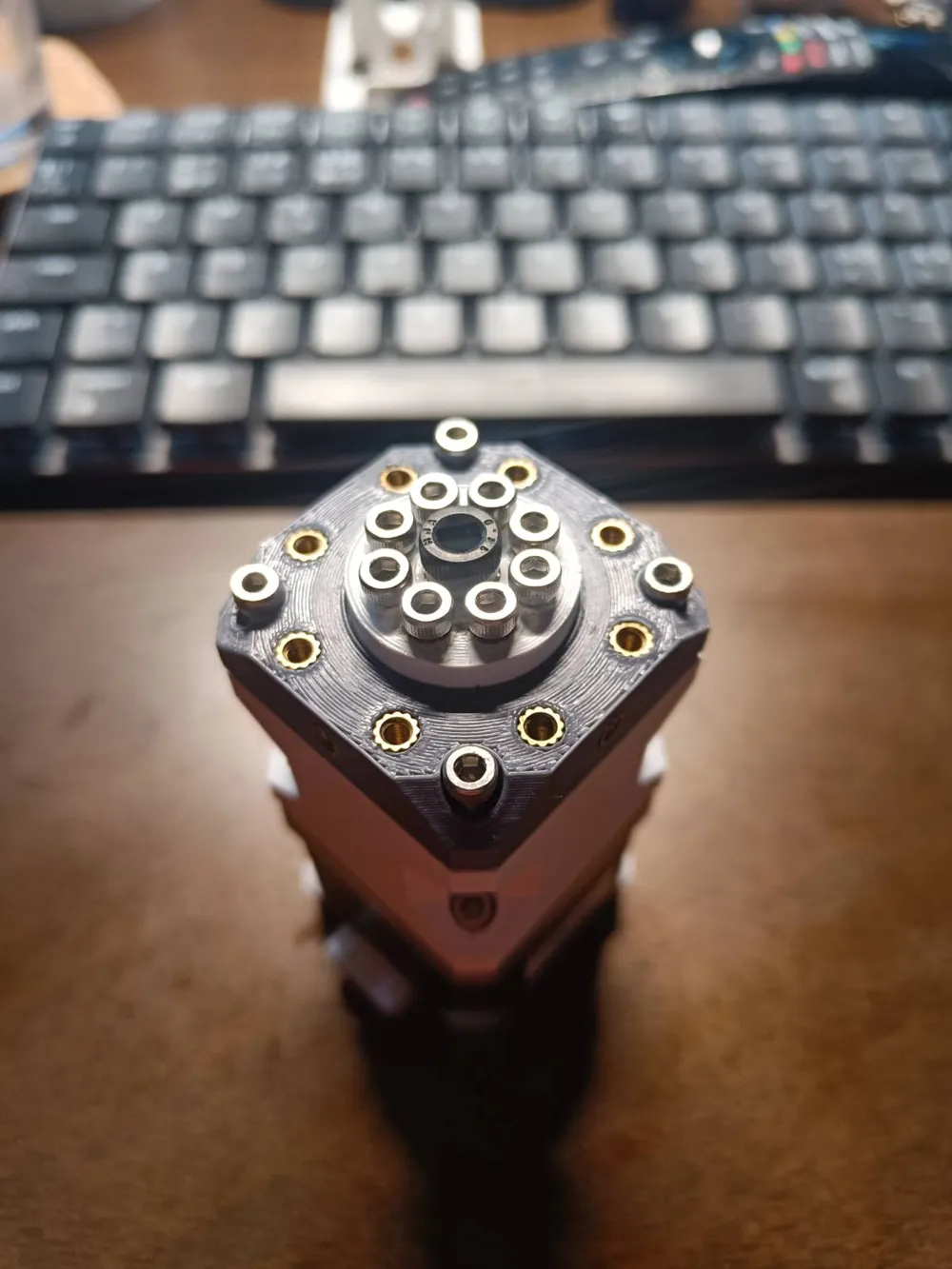
Cycloidal drive with Herringbone gear for NEMA 17

Print Profile(6)


Bill of Materials

Description
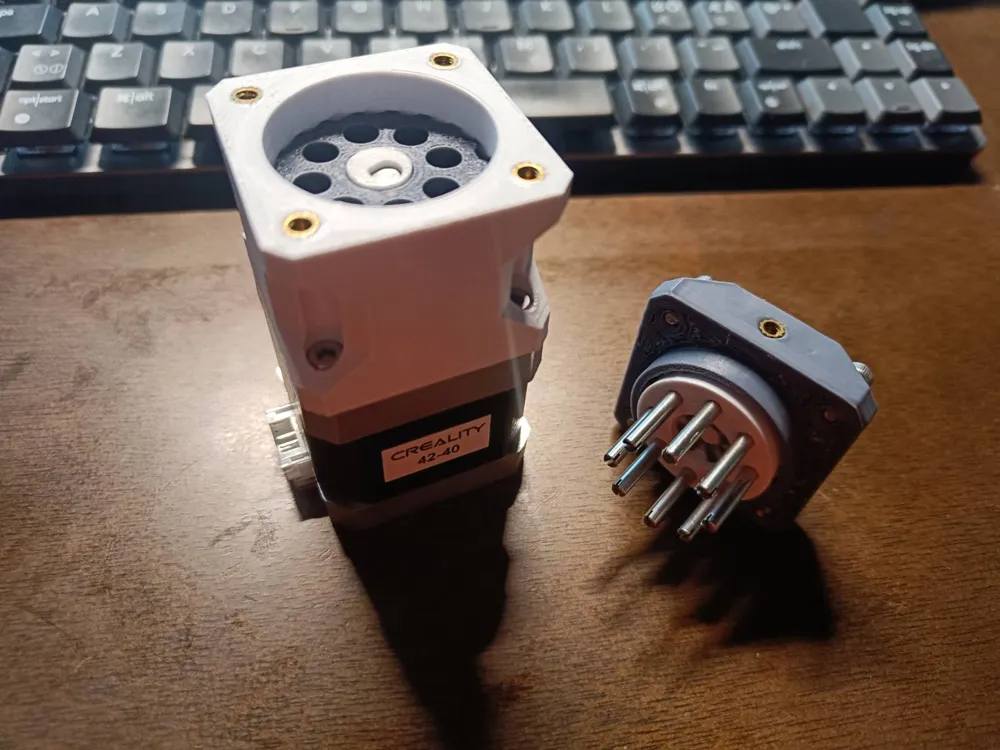
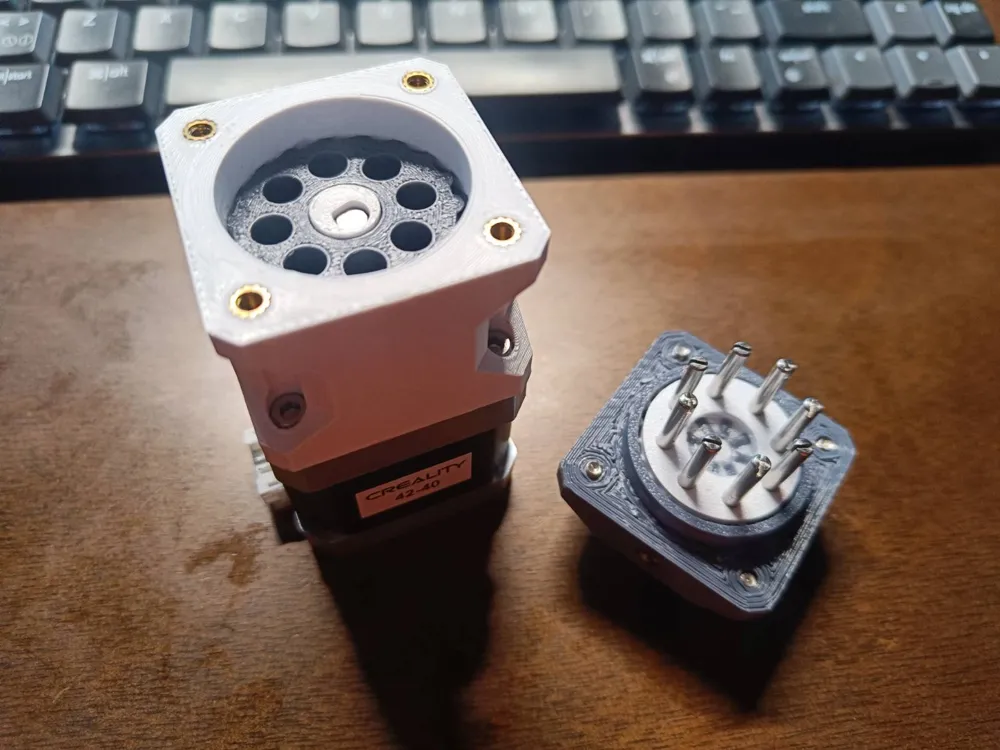
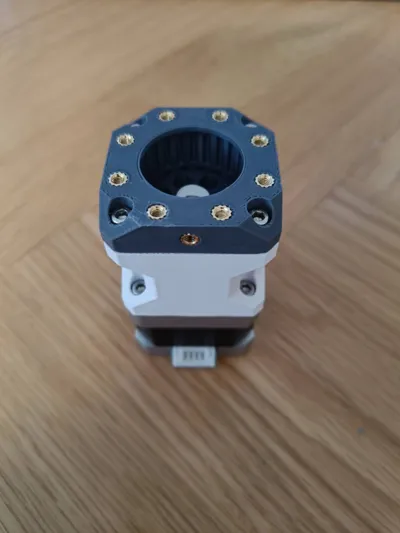
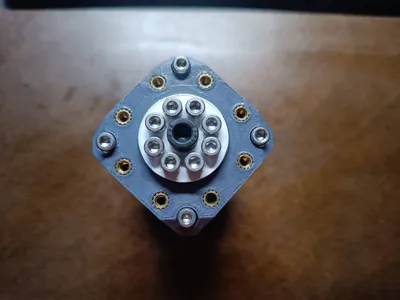
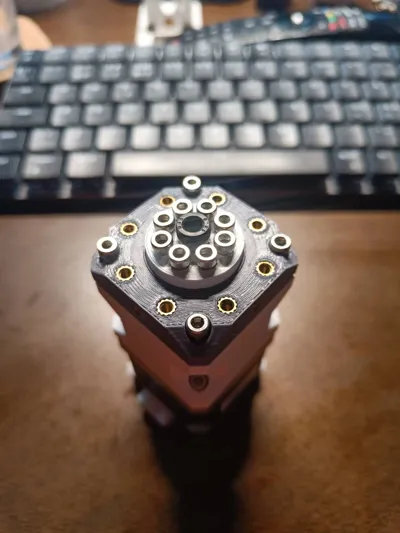
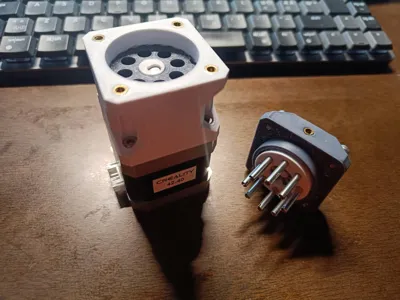
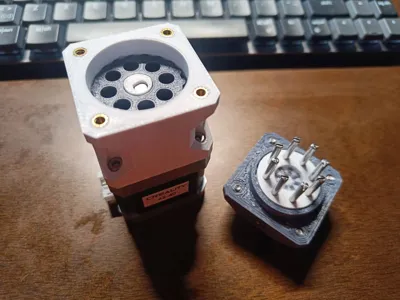
Cycloidal drive with Herringbone gear (derived from Helical gear).
This is under development and there will probably be improvements, but we have to start somewhere.
I have used PLA+ from eSUN. PETG/ABS offers more durability and can affect tolerances.
You are free to modify and develop.
If you use a traditional NEMA 17 standard size stepper where one step is 1.8°, then 360° is 200 steps.
With this gearbox, one step is 0.1°, so 360° is 3600 steps because of the 18:1 gear ratio (1.8° / 18 = 0.1°).
So this is 18 times slower and offers 18 times more torque compared to direct drive.
Of course, this is also affected by acceleration and the durability of the materials.
You are free to test the limits with different accelerations and materials used.
I will update the print profiles of the different parts when completed.
- 18:1 gear ratio (18 times slower and 18 times more torque).
- Input shaft is a press fit style tight fit, but you should be able to press it into place.
- Needle roller bearings on the input and output shafts use 1.75mm raw filament pieces. Length 10mm.
- Herringbone gear is a tight fit and can twist against the housing when you install it.
It will wear a little more at first, but will loosen up over time and start to run more smoothly.
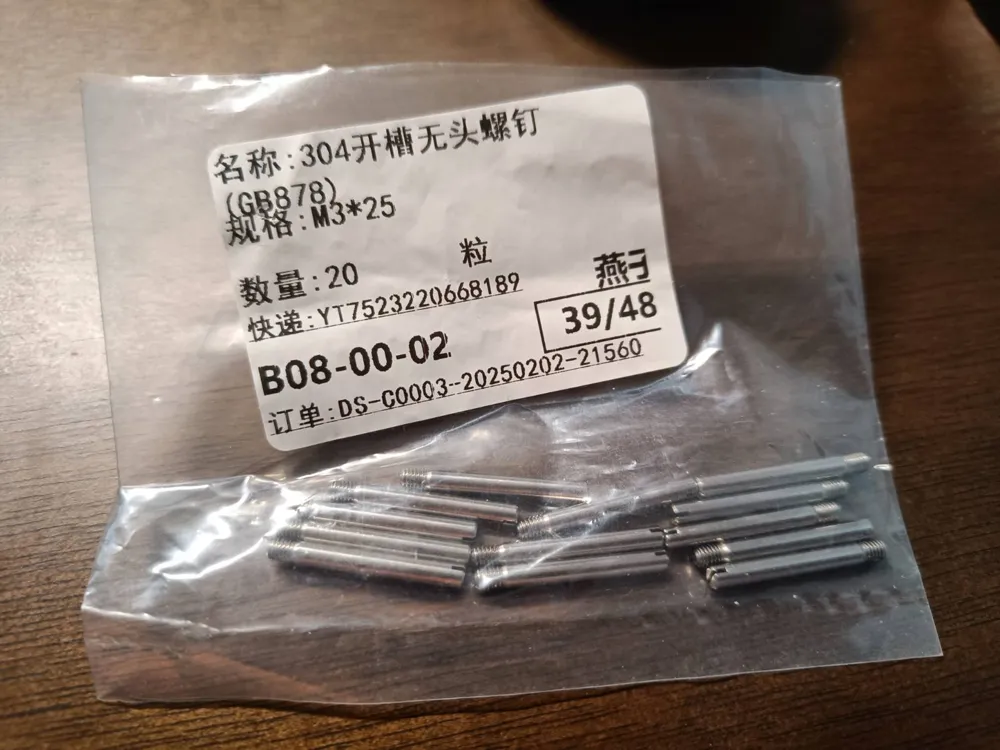
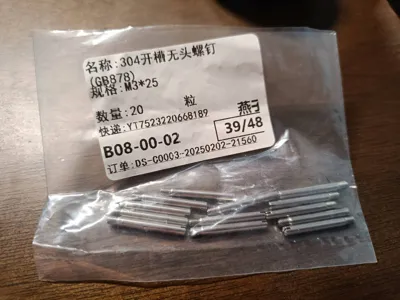
M3 Rods:
304 Stainless Steel Round Standoff Male To Female Standoff Spacer Screw Bolt M2 M2.5 M3 M4 M5 M6+4/6/8mm - AliExpress 13
License



Comment & Rating (19)