
The Ethanol Dog

Print Profile(1)

Description
The Ethanol Dog Model: A Tail-Wagging Approach to Molecular Education
Ethanol (C₂H₅OH) is a versatile organic compound central to many biological processes and human applications. This simple alcohol consists of an ethyl group (C₂H₅) bonded to a hydroxyl group (OH). Its molecular structure plays a crucial role in its properties and interactions, from its use in biofuels to its effects on biological systems. Ethanol is particularly significant in biological contexts due to its role as a metabolic product of fermentation, a process used by various microorganisms to generate energy under anaerobic conditions.
Additionally, ethanol serves as a key solvent in the laboratory for the extraction and purification of biological molecules, owing to its ability to dissolve a wide range of substances. Its impact on the central nervous system also underscores its importance in both medical and social contexts, where it acts as a psychoactive drug influencing neurotransmitter systems. Understanding ethanol's diverse roles enhances our comprehension of its multifaceted influence on life and technology.
Unleashing Creativity in Chemical Structures
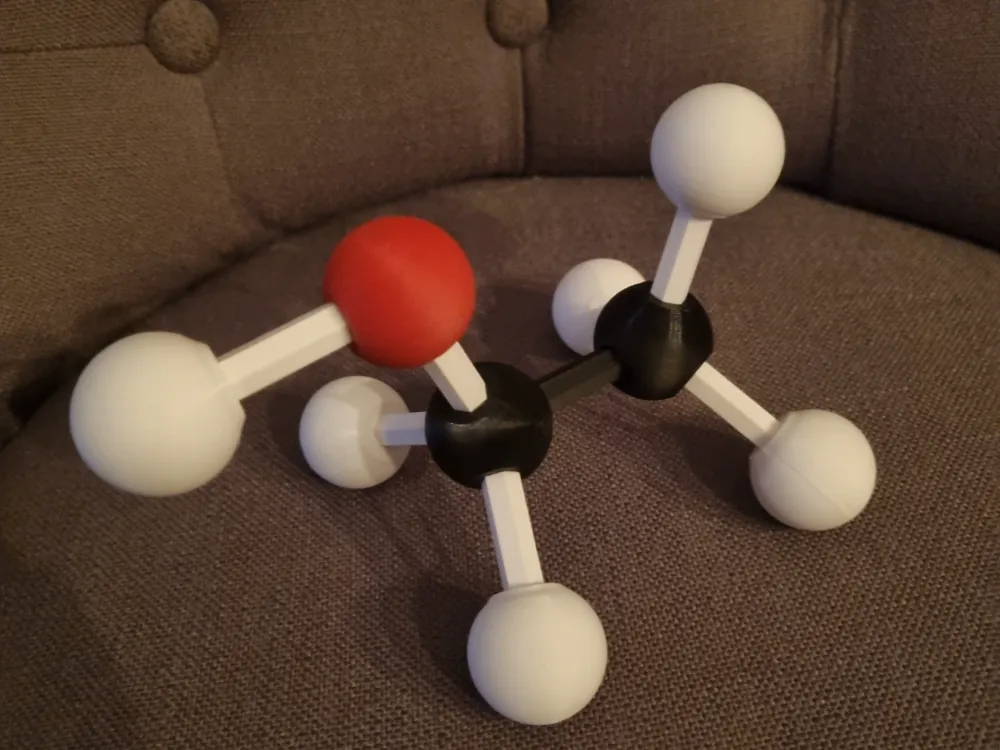
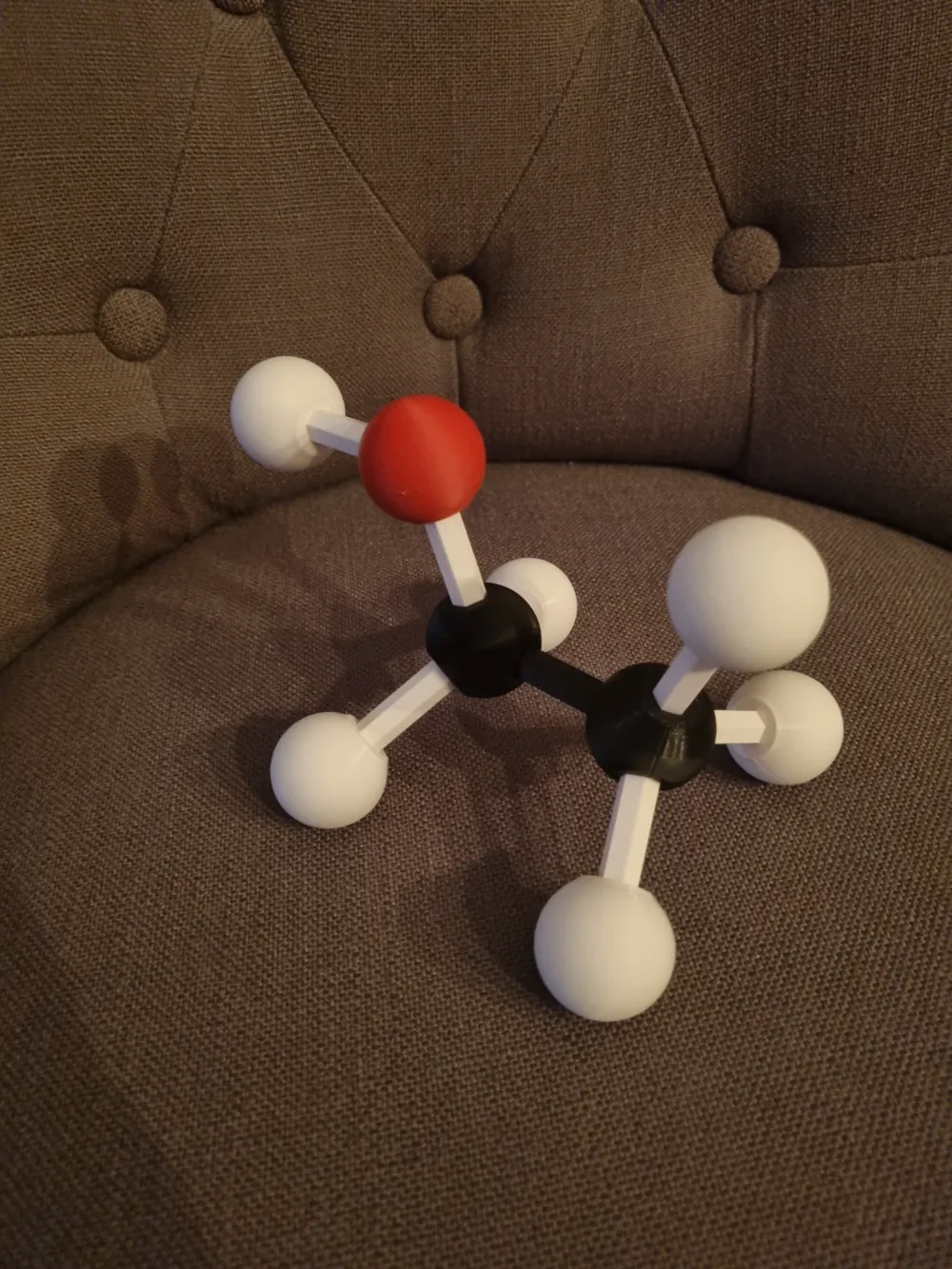
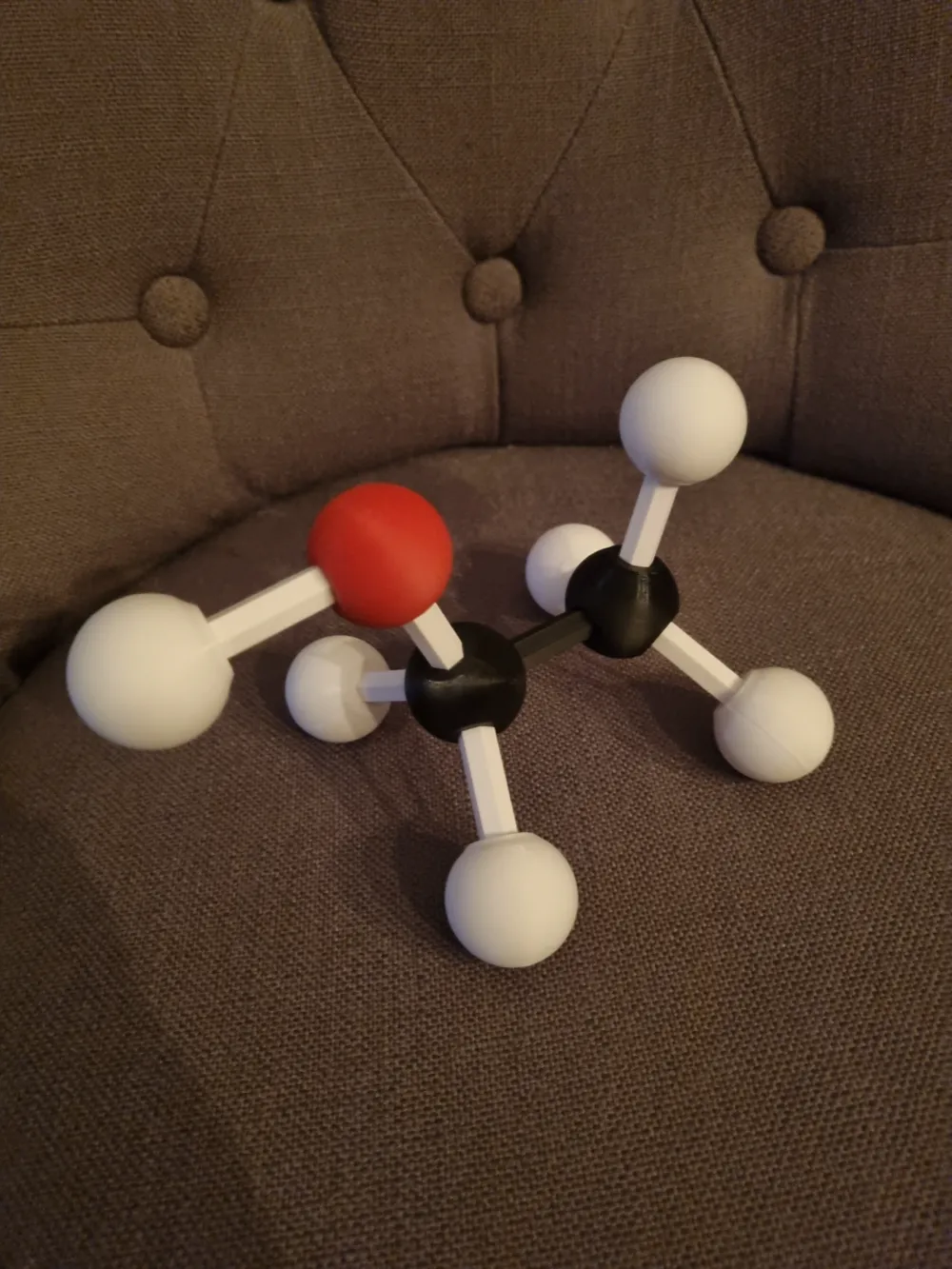
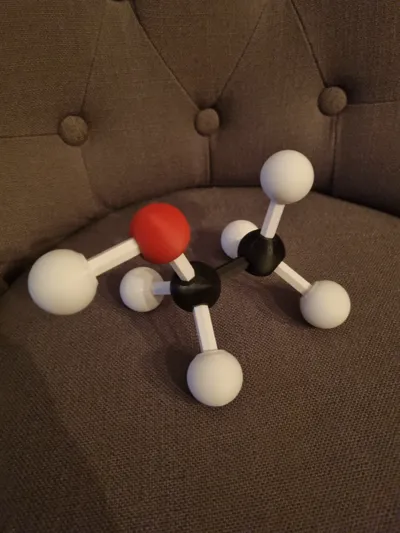
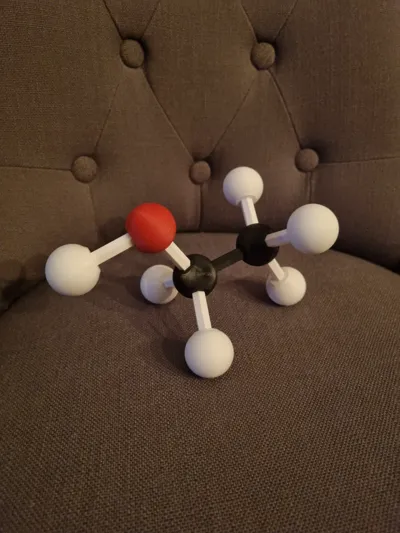
My ethanol model takes a playful leap into the world of molecular representation by transforming the C₂H₅OH molecule into an adorable, modular dog figurine. This approach combines scientific concepts with artistic flair, creating an unforgettable learning experience.
Model Description: A Molecular Mutt
I've brought ethanol's atomic components to life as a charming canine companion:
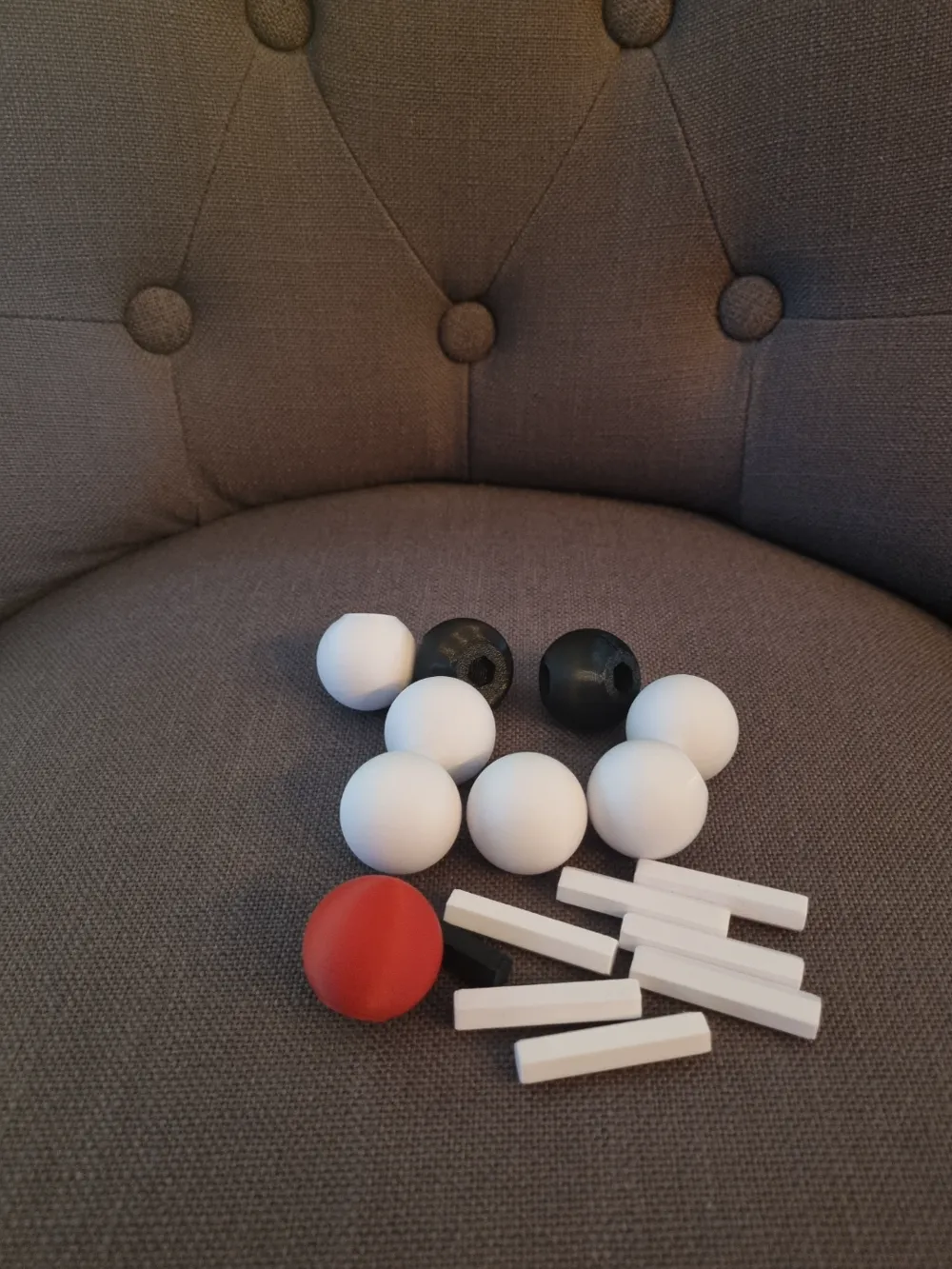
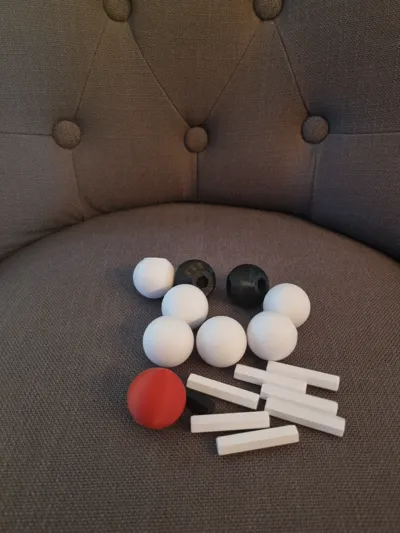
- Carbon atoms (C): Two black spheres form the dog's body and head, representing ethanol's carbon backbone.
- Hydrogen atoms (H): Five white spheres create the legs and wagging tail, symbolizing hydrogen's crucial role.
- Oxygen atom (O): A distinctive red sphere serves as the dog's nose, highlighting the hydroxyl group that defines alcohols.
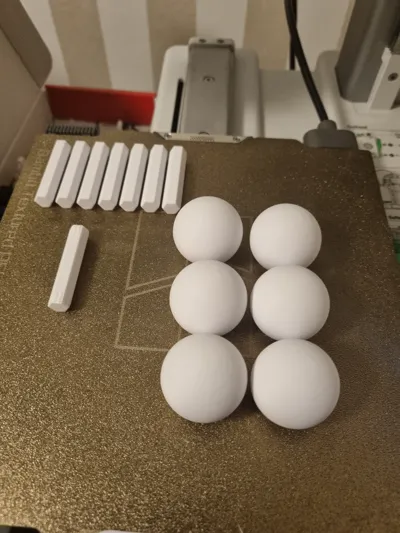
My modular design allows for easy assembly and disassembly, mirroring the dynamic nature of molecular bonds while maintaining its playful dog shape.
Bridging Art and Science
While my model takes artistic liberty with ethanol's structure, it serves as a powerful educational tool:
- Color Coding: Adheres to common molecular modeling conventions (black for carbon, red for oxygen, white for hydrogen), reinforcing standard chemical representations.
- Atomic Ratio: Accurately represents ethanol's molecular formula (C₂H₅OH), ensuring scientific validity despite its unconventional form.
- Modular Learning: Encourages hands-on exploration of molecular composition through assembly and disassembly.
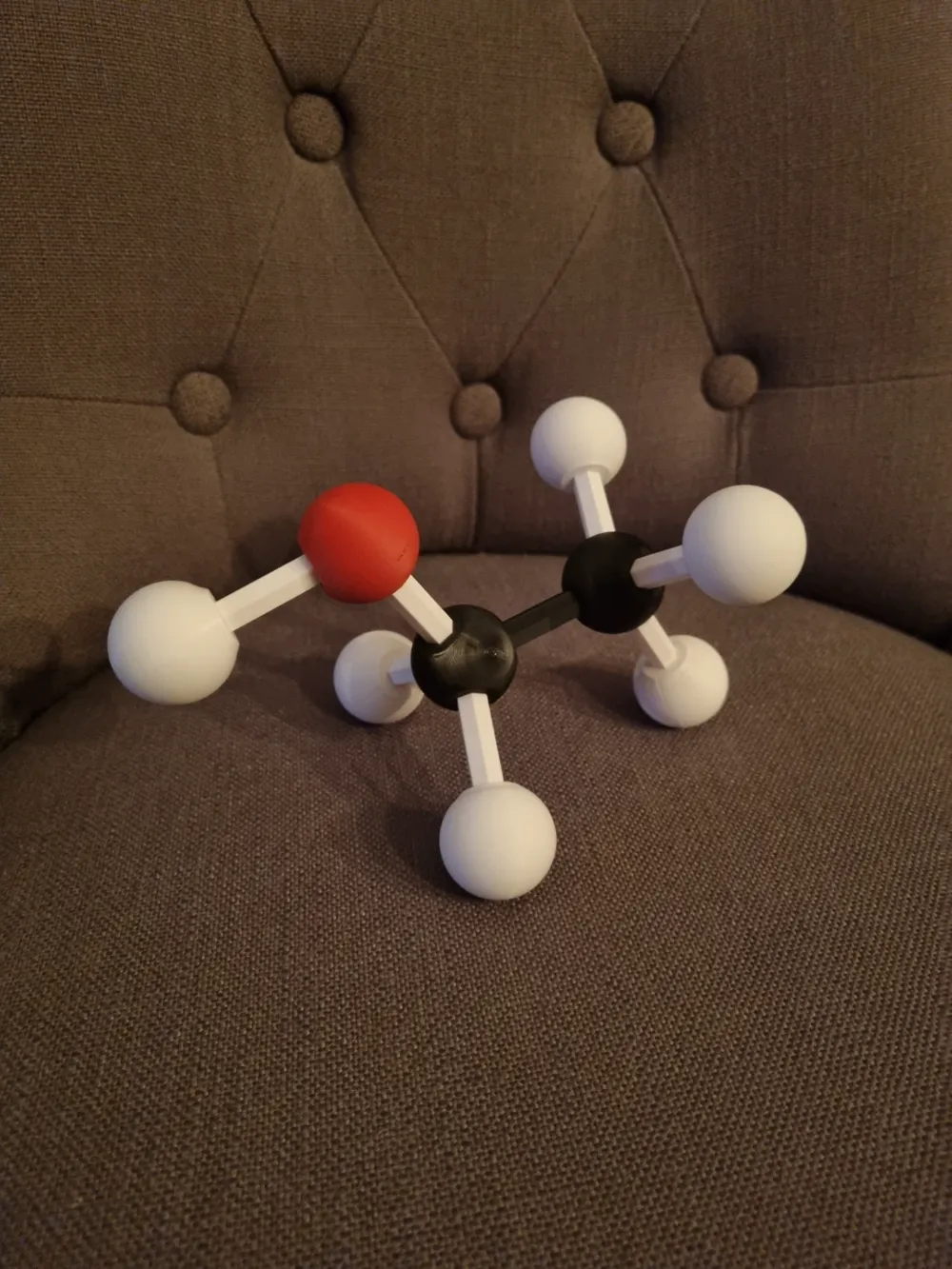
- Angle Accuracy: Although arranged in a dog shape, the model can be used to discuss the correct molecular angles of ethanol:
- Tetrahedral geometry around carbon atoms: approximately 109.5°
- C-C-O bond angle: about 109.5°, reflecting sp³ hybridization
- C-O-H bond angle in the hydroxyl group: approximately 104.5°
- C-H bond angles: 109.5°, consistent with tetrahedral arrangement
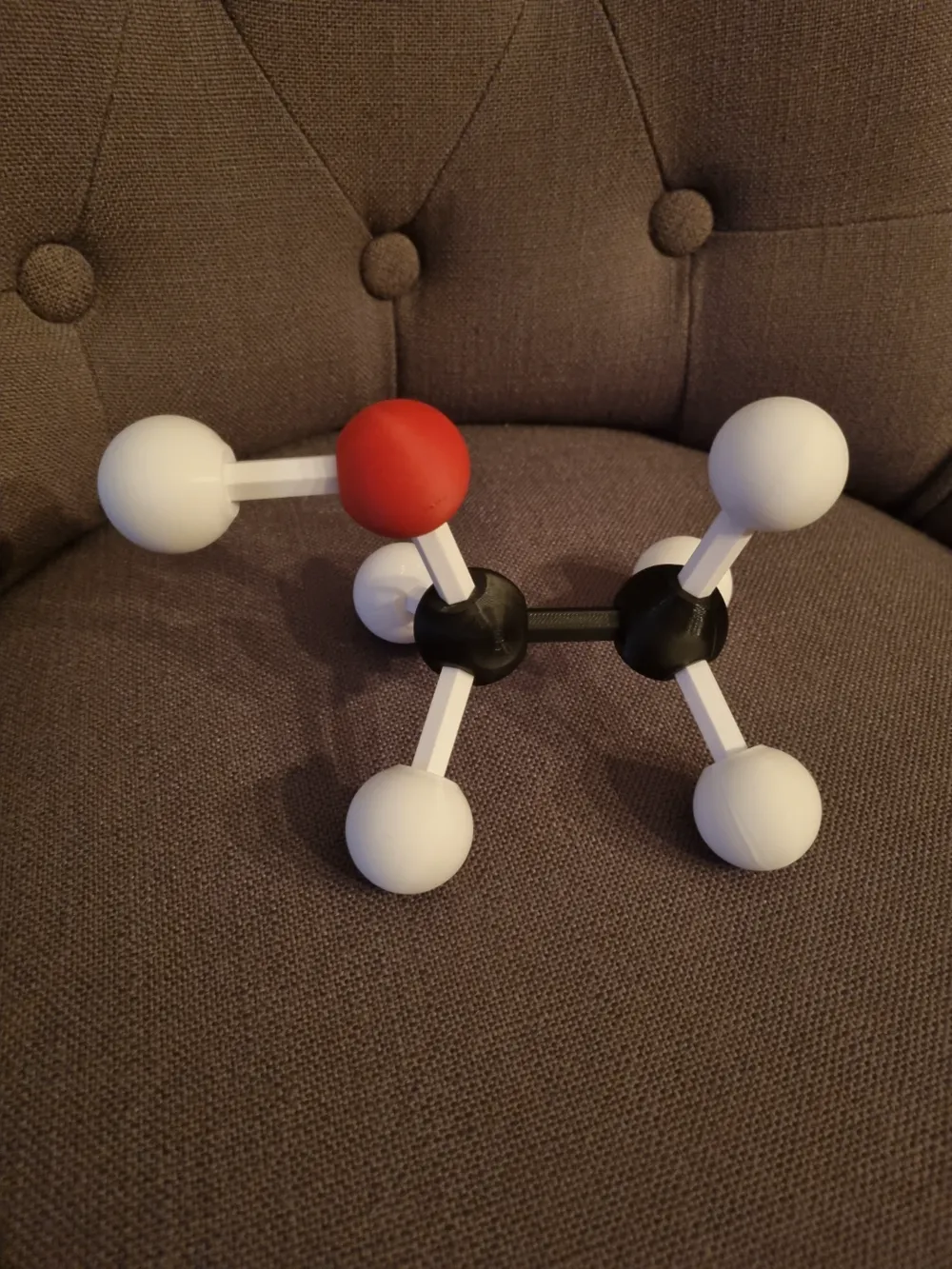
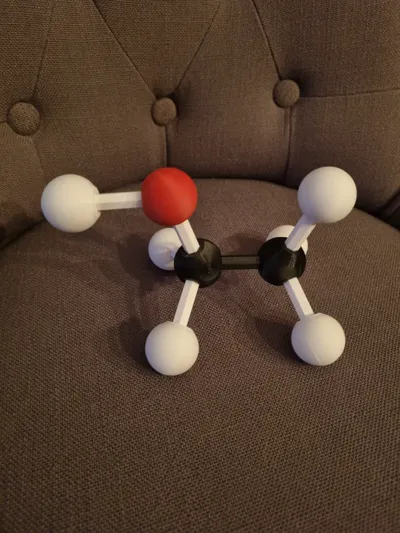
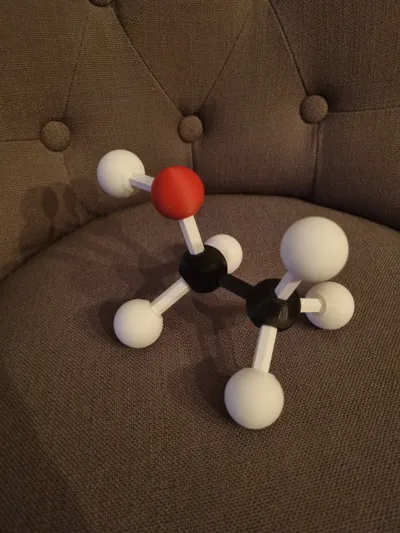
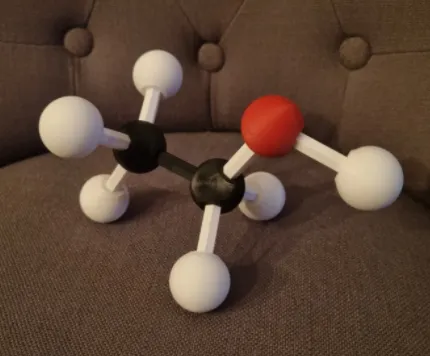
The correct orientation is more like this (a dog taking a pee?):
Educational Opportunities
My Ethanol Dog Model opens up a variety of engaging teaching moments:
- Molecular Mnemonics: The dog shape serves as a memorable visual cue for ethanol's composition.
- Structural Discussions: Comparing the dog model to accurate ball-and-stick representations prompts conversations about molecular geometry, bond angles, and artistic interpretation in science.
- Angle Exploration: Use the modular nature of the model to demonstrate correct bond angles, then reassemble into the dog shape, discussing the balance between artistic representation and scientific accuracy.
- Chemical Storytelling: Use the dog theme to create narratives about ethanol's roles in biology and industry. (e.g., "Why might this ethanol dog be sniffing around a brewery or fuel station?")
- Creative Chemistry: Inspire students to design their own animal-themed models for other molecules, promoting engagement with chemical structures while considering actual molecular geometries.
Beyond the Molecule: Fostering Scientific Creativity
This model exemplifies how scientific concepts can be communicated through unexpected and engaging visual metaphors. It challenges students to:
- Think critically about the balance between scientific accuracy and creative representation.
- Explore the role of art and design in STEM education.
- Develop memorable associations to enhance learning and recall of chemical structures.
- Understand that even creative models can be used to discuss accurate scientific principles.
My Ethanol Dog Model represents a fresh, tail-wagging approach to molecular education. By combining scientific principles with playful design, I've created a unique tool that makes learning about chemical structures an engaging and memorable experience. This model doesn't just teach ethanol's composition—it unleashes curiosity and creativity in the world of molecular science, while still providing a platform to discuss accurate molecular geometry.
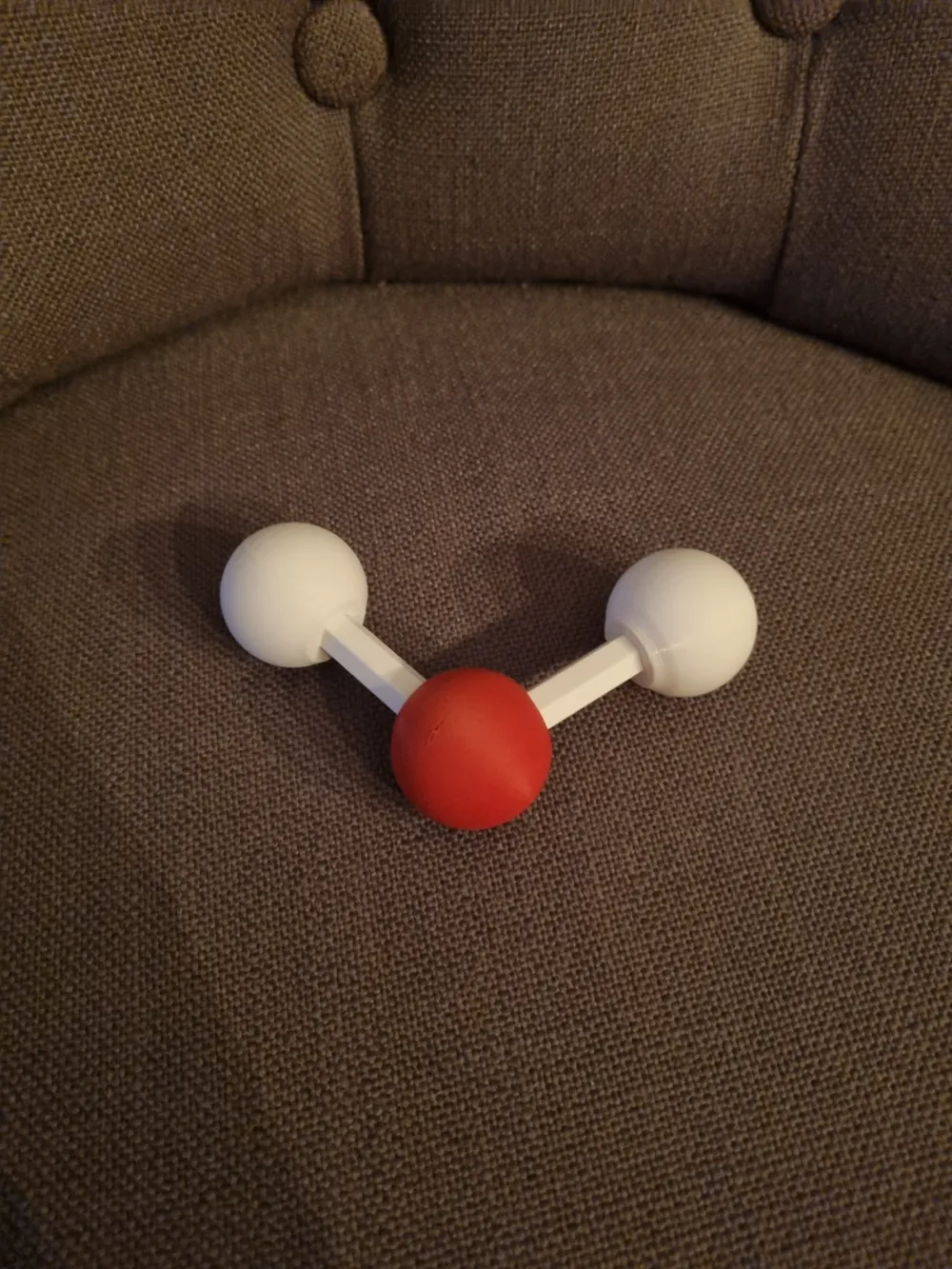
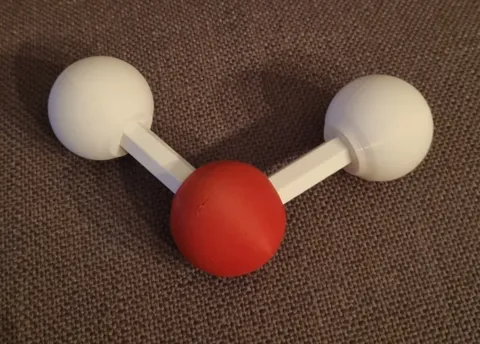
Other models that can be created?
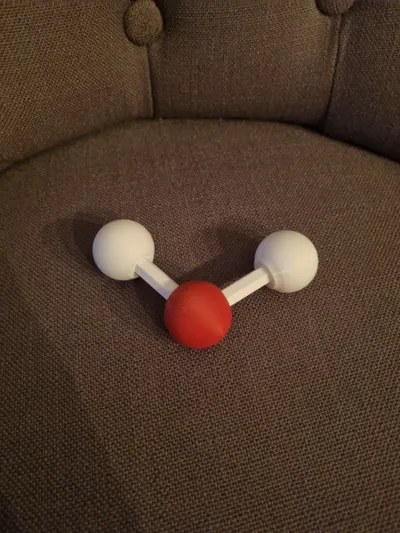
How about a molecule called H2O…
Motivation
This project reflects my belief that science education can be both informative and creatively inspiring.
By transforming a simple alcohol molecule into a lovable canine figure, I aim to demonstrate that even the most fundamental scientific concepts can be approached with innovation and artistic flair.
License



Comment & Rating (3)