
Hoberman Sphere (Partly Print-in-Place)


Print Profile(3)


Description
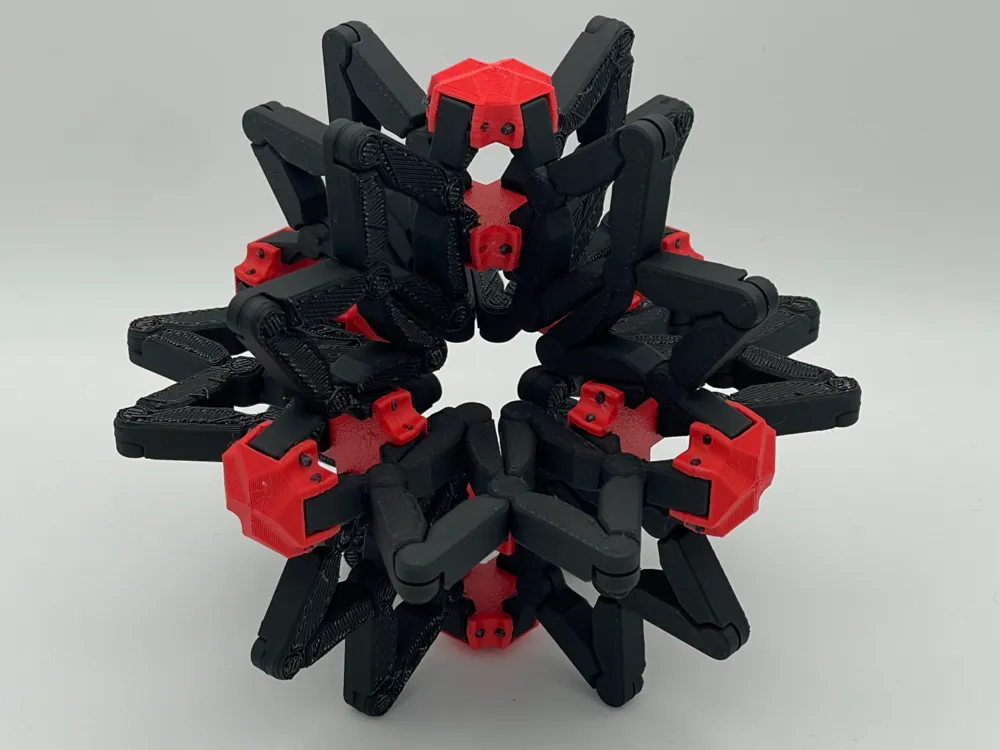
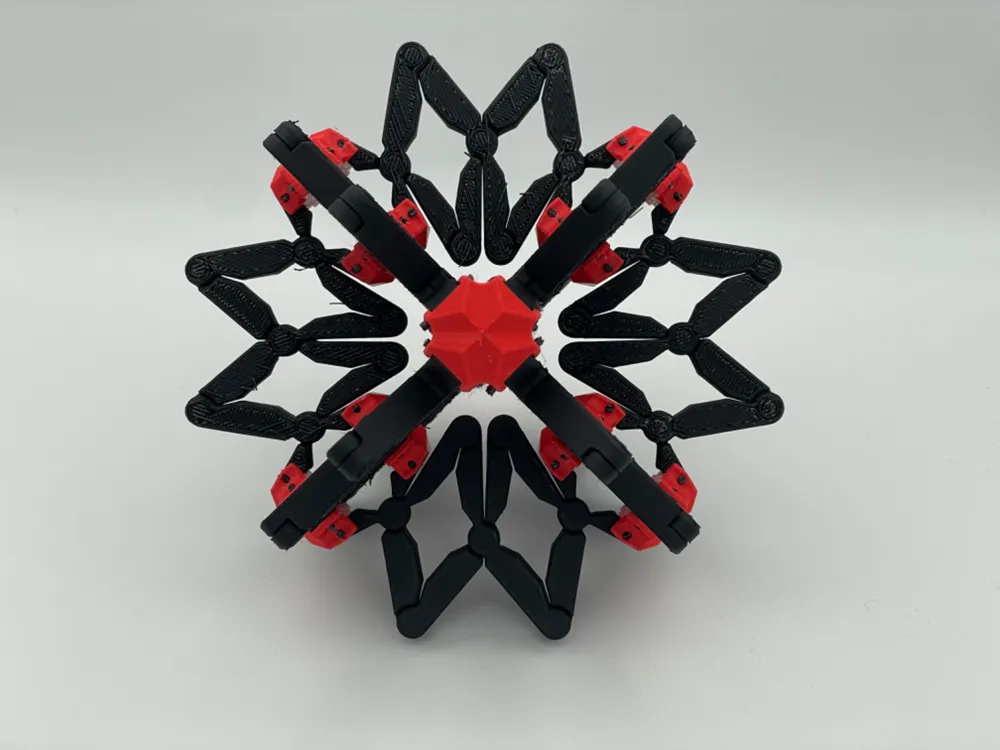
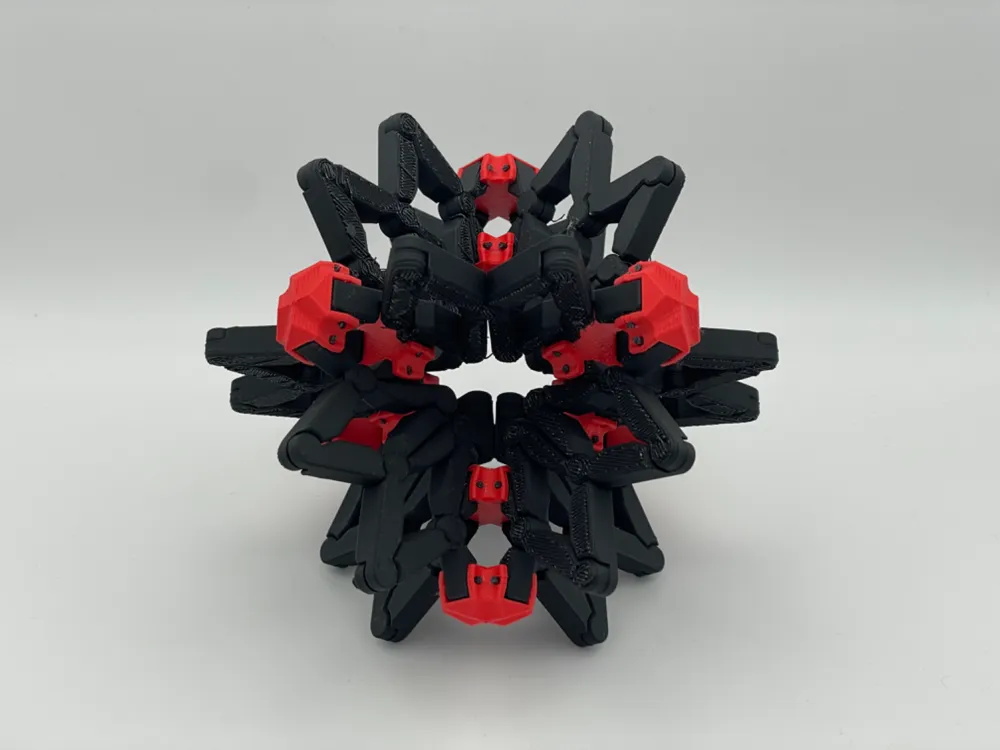
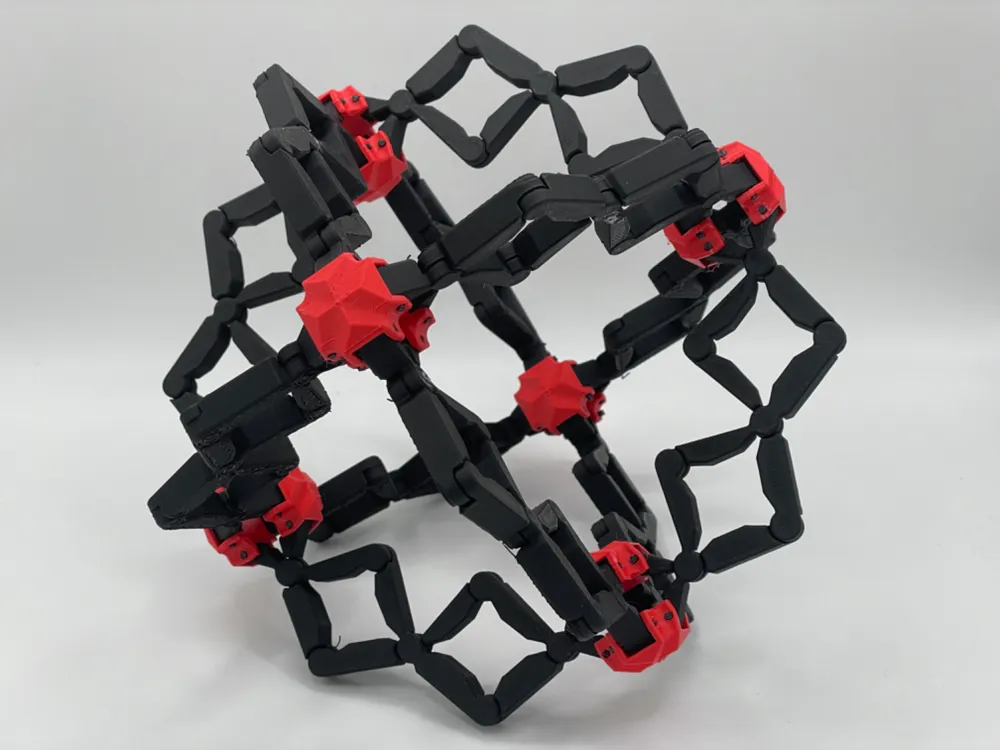
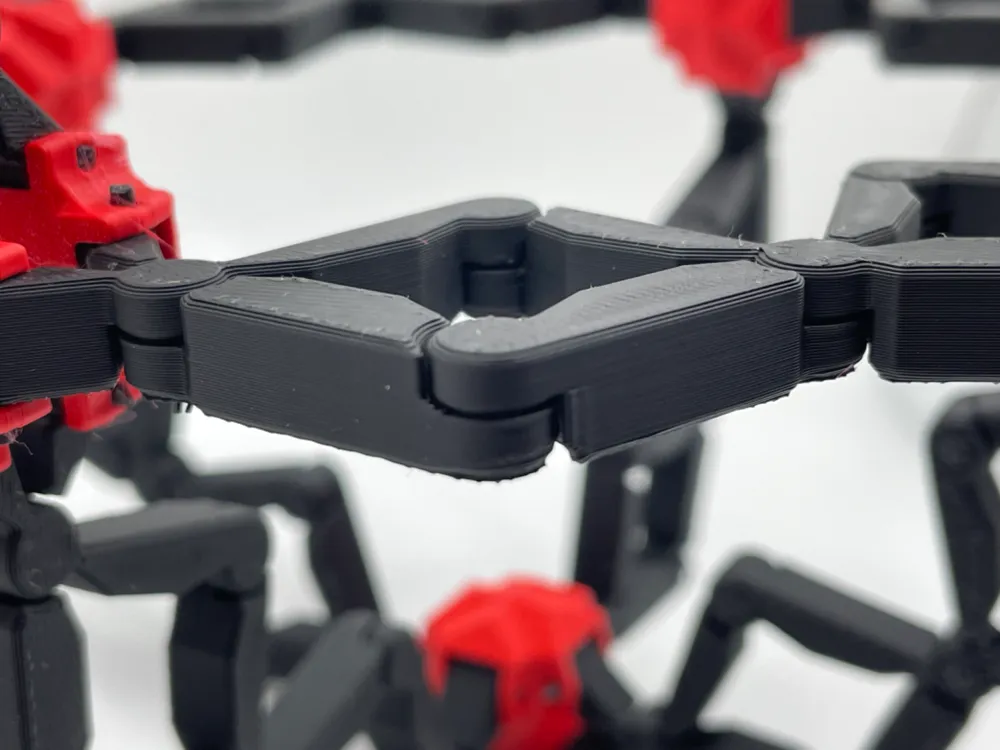
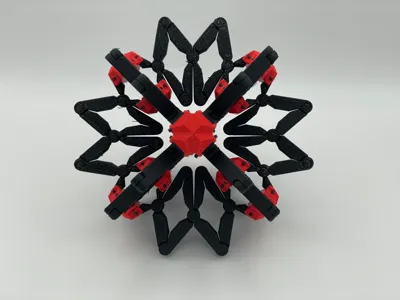
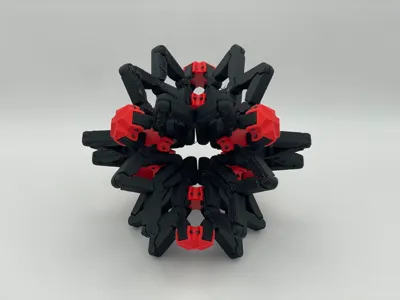
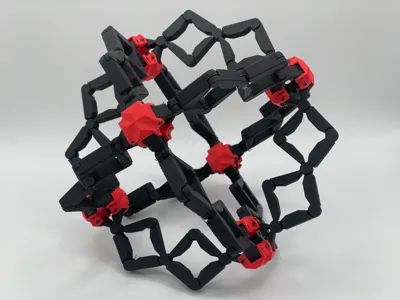
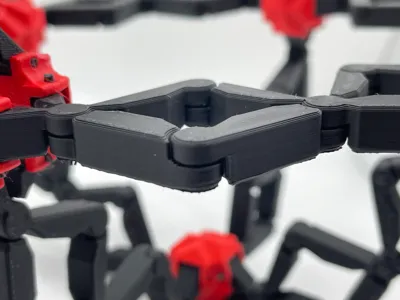
This is a partly print-in-place version of a Hoberman Sphere. It consists of 12 articulated link mechanisms (black) and 12 connectors (red) that are held together with pieces of filament.
Update
The links are now stronger and have looser tolerances.
Printing
The mechanical links need good bed adhesion in order to work properly. I’d recommend printing all the files in the orientation they are uploaded.
Assembly
You need to print both links and connectors twelve times each. Carefully break free the linking mechanisms if necessary.
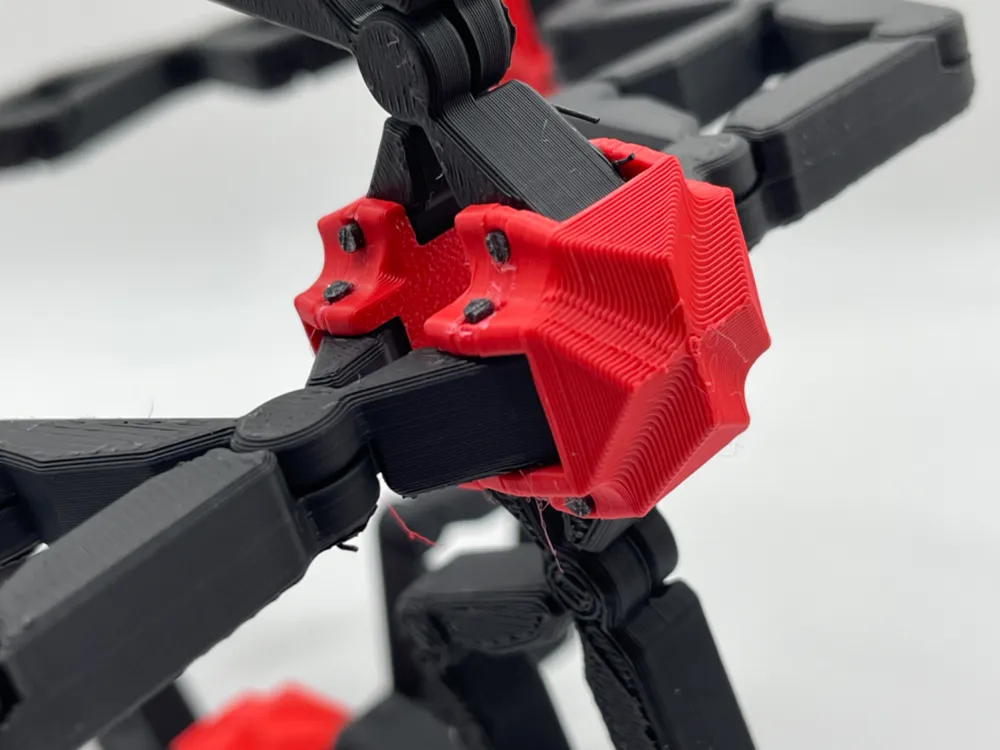
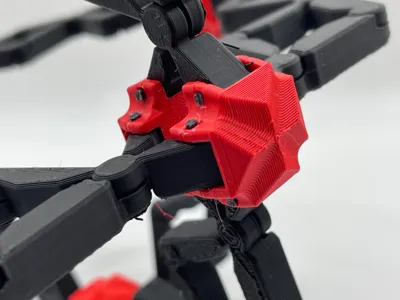
Then put connectors onto all four loose ends of one linking mechanism as shown in the picture.
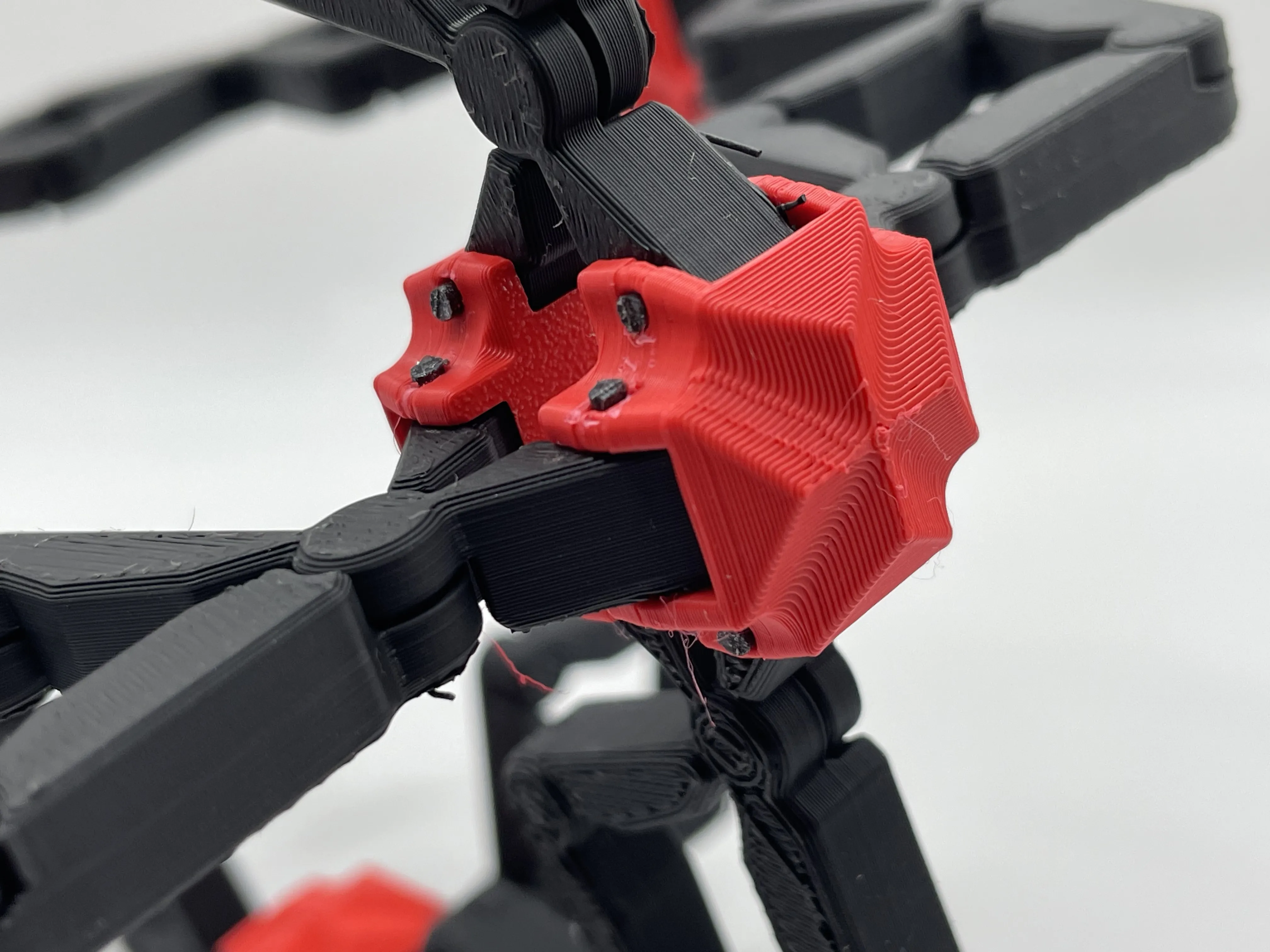
Next, get some filament and stick it into the hole in the connector. You’ll need to apply some force but, it should go all the way trough. If everything moves freely and the filament doesn’t fall out, the can trim off the filament at the ends [1].
Repeat that process until all the pieces are built in.
Mathematical Background
The Hoberman Sphere can act as graphic example for various mathematical concepts.
Geometric transformation can be visualized by expanding and contracting. The sphere exhibits rotational and reflective symmetry, which can be explored as it changes size.
The pattern of the Hoberman sphere’s expansion can also resemble fractal-like structures, demonstrating the concept of self-similarity where the structure at various scales is similar to the whole.
The basic shape of this “sphere” is the regular octahedron, a platonic solid composed of eight equilateral triangles.
Inspiration
I recently made a Print in Place Expanding Ring Mechanism. One comment over on Thingiverse suggested I could make a similar mechanism just as a sphere instead of a ring.
[1] If your filament keeps falling out or you just want more security. Carefully use some glue or a soldering iron.
License



Comment & Rating (85)