
Olive Tree V1 - Aureline Havran Collection

Print Profile(1)
Description
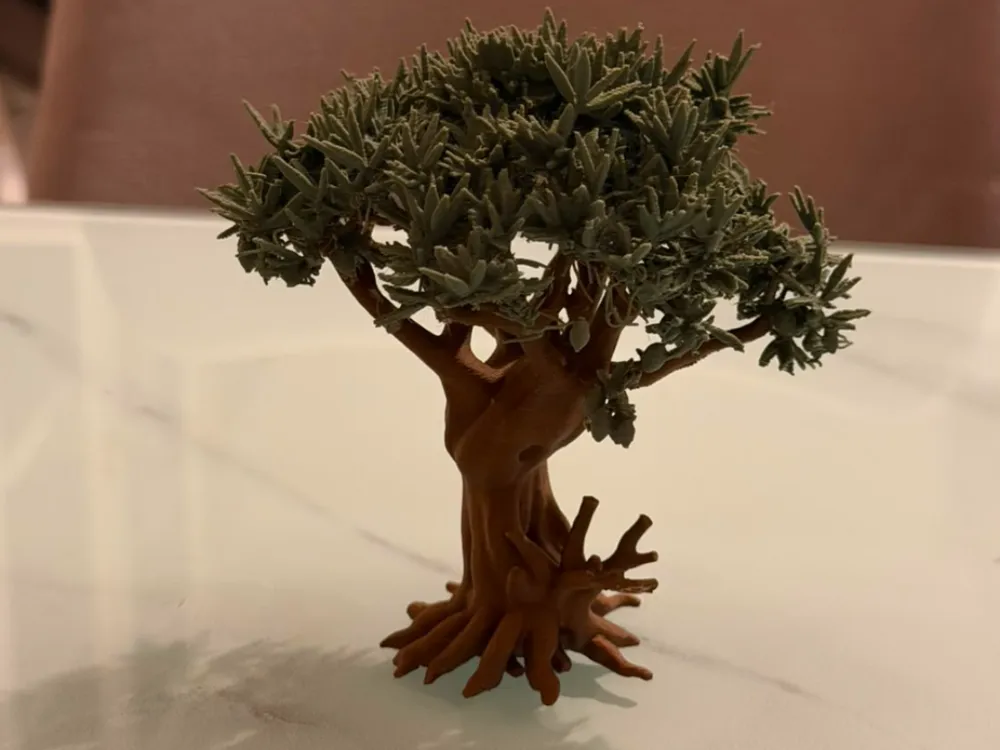
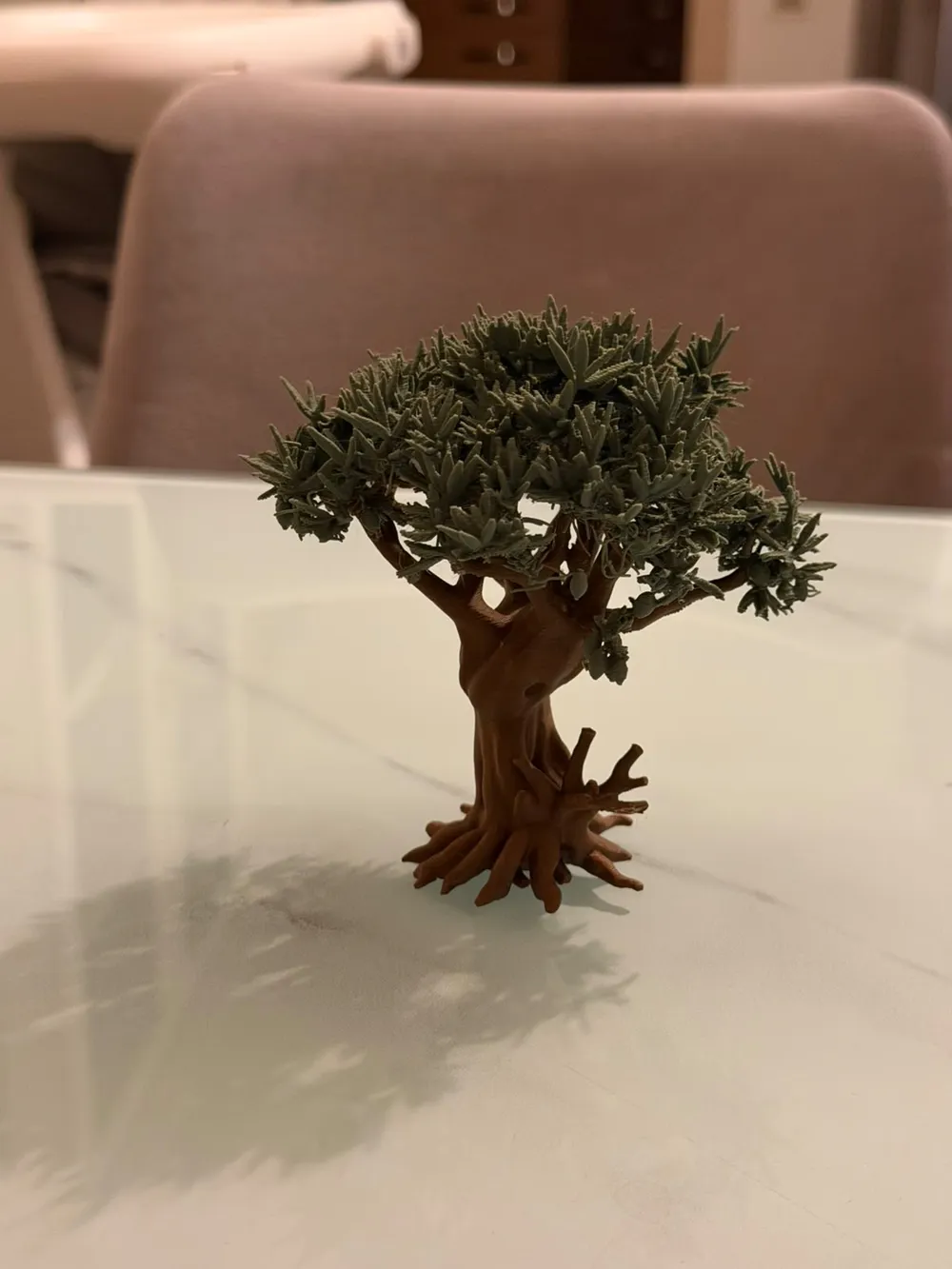
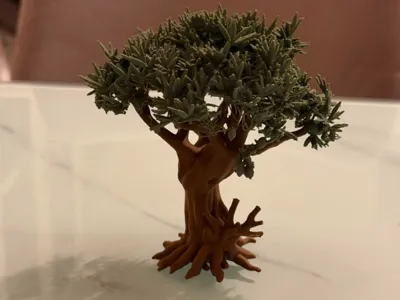
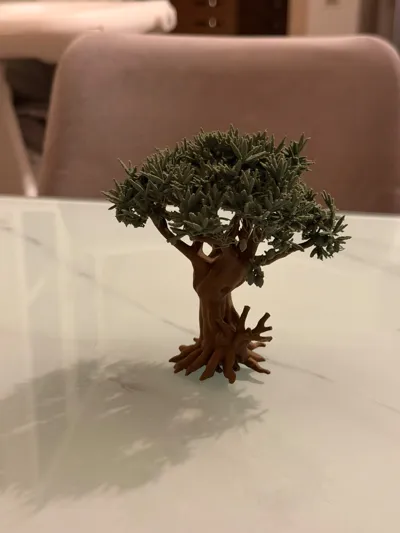
Aureline – Havran Olive Tree v1
This is the first public prototype of the Aureline Collection, a future series of jewelry display models inspired by Havran, the Aegean region, and the olive-growing culture of Western Anatolia.
The goal of this project is not only to create decorative models, but also to develop unique display pieces for jewelry stores inspired by regional architecture, nature, and local identity.
This model represents an ancient olive tree and serves as the starting point of that journey.
Specifications
- Height: 110 mm
- Print Time: 12h 47m
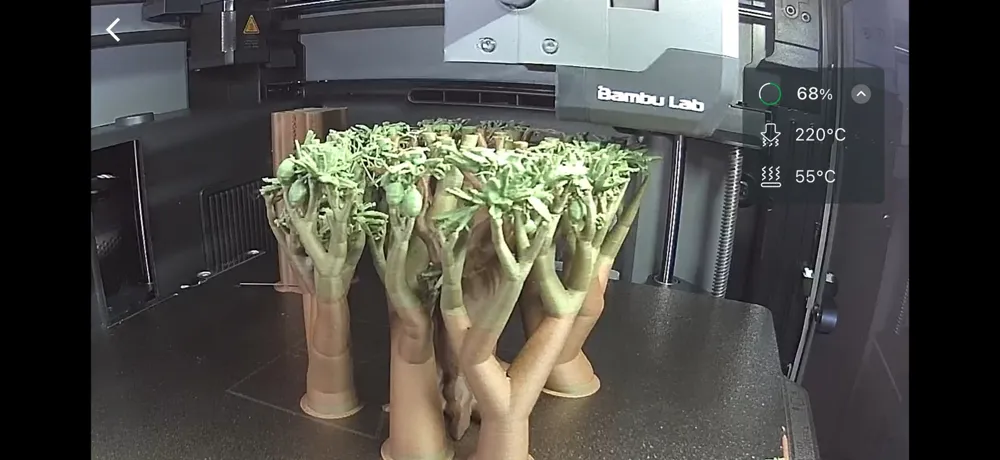
- Printer: Bambu Lab P2S
- Foliage Filament: SUNLU PLA+ 2.0 Olive Green
- Trunk Filament: SUNLU Wood Walnut
- AMS Multicolor Printing Enabled
Print Settings Used
- Layer Height: 0.20 mm
- Infill: 10% Gyroid
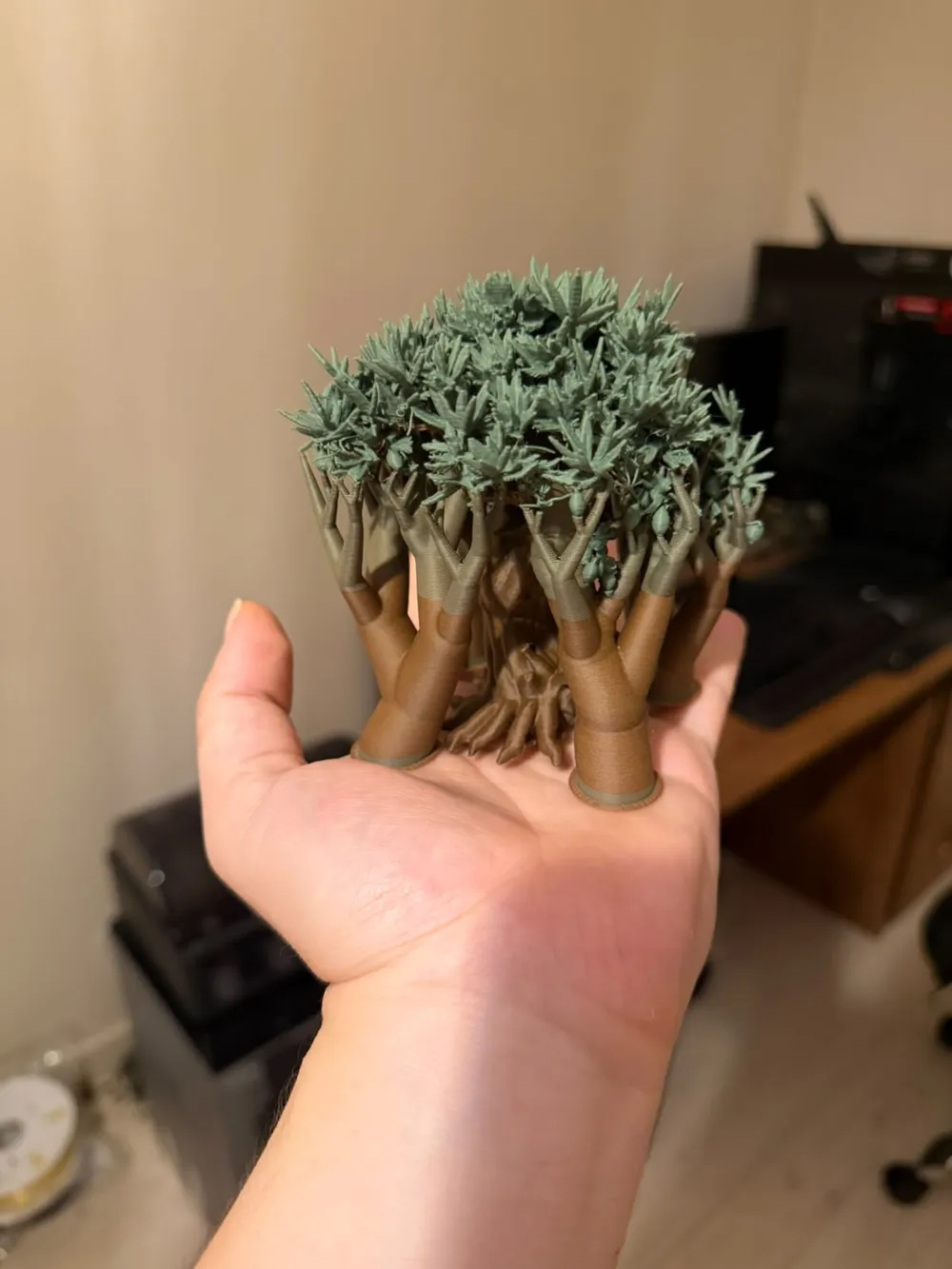
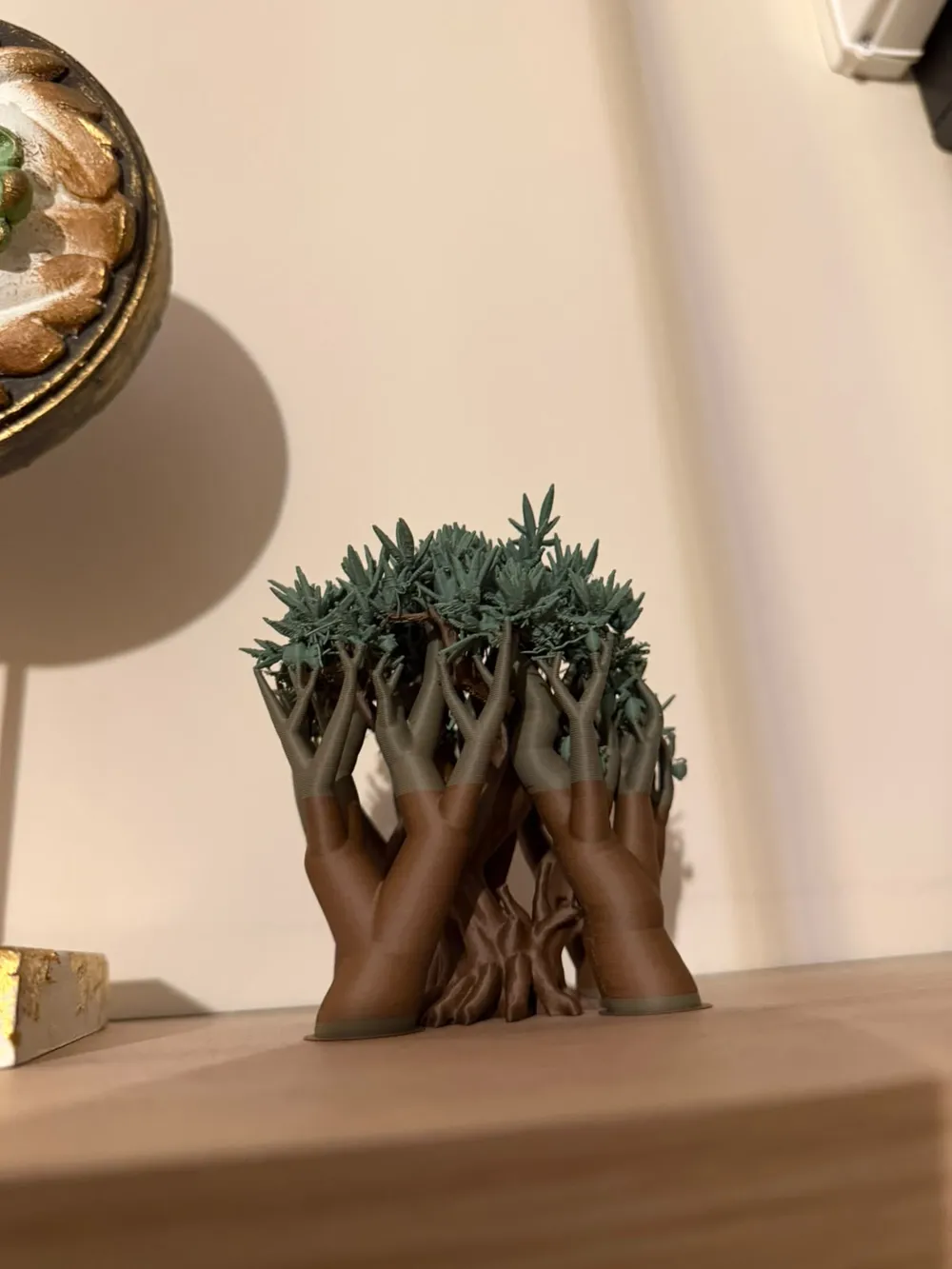
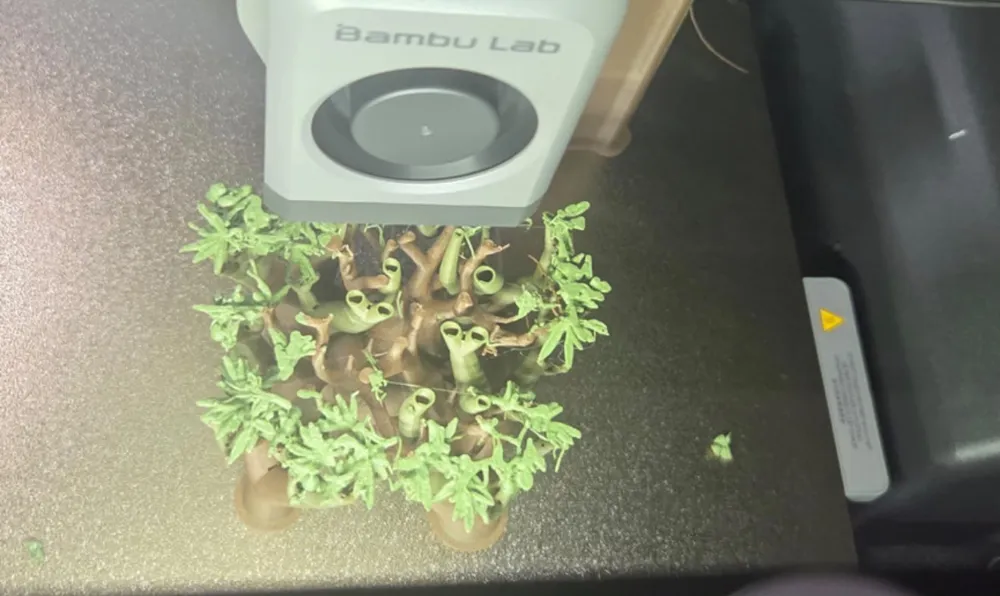
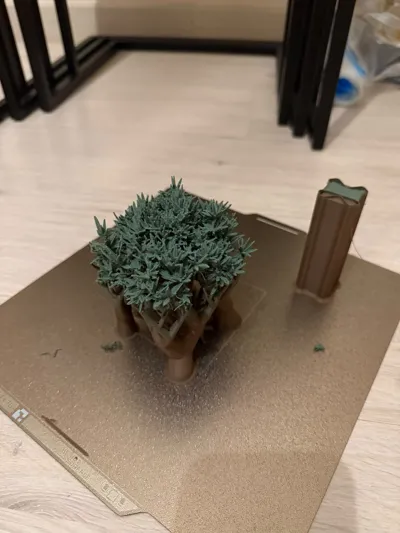
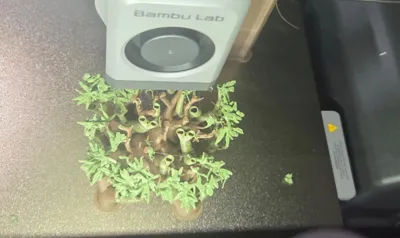
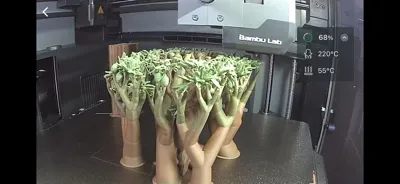
- Tree Supports Enabled
- Support Angle: 40°
- Critical Regions Only Support Mode
- Top Z Distance: 0.25 mm
- Bottom Z Distance: 0.20 mm
- Support XY Distance: 0.40 mm
- Tree Branch Diameter: 1.5 mm
- Tree Branch Distance: 6 mm
- Outer Wall Speed: 220 mm/s
- Infill Speed: 300 mm/s
- Travel Speed: 600 mm/s
- Prime Tower Enabled
Print Optimization
This model was not optimized solely for maximum visual quality.
One of the primary goals during development was reducing print time while preserving the overall appearance and structural integrity of the model.
Several settings were adjusted and tested to achieve a practical balance between:
- Print duration
- Support usage
- Foliage preservation
- Structural stability
- Visual quality
The final profile significantly reduced print time compared to earlier versions while still producing a successful result.
Print Notes
- Tree supports are required.
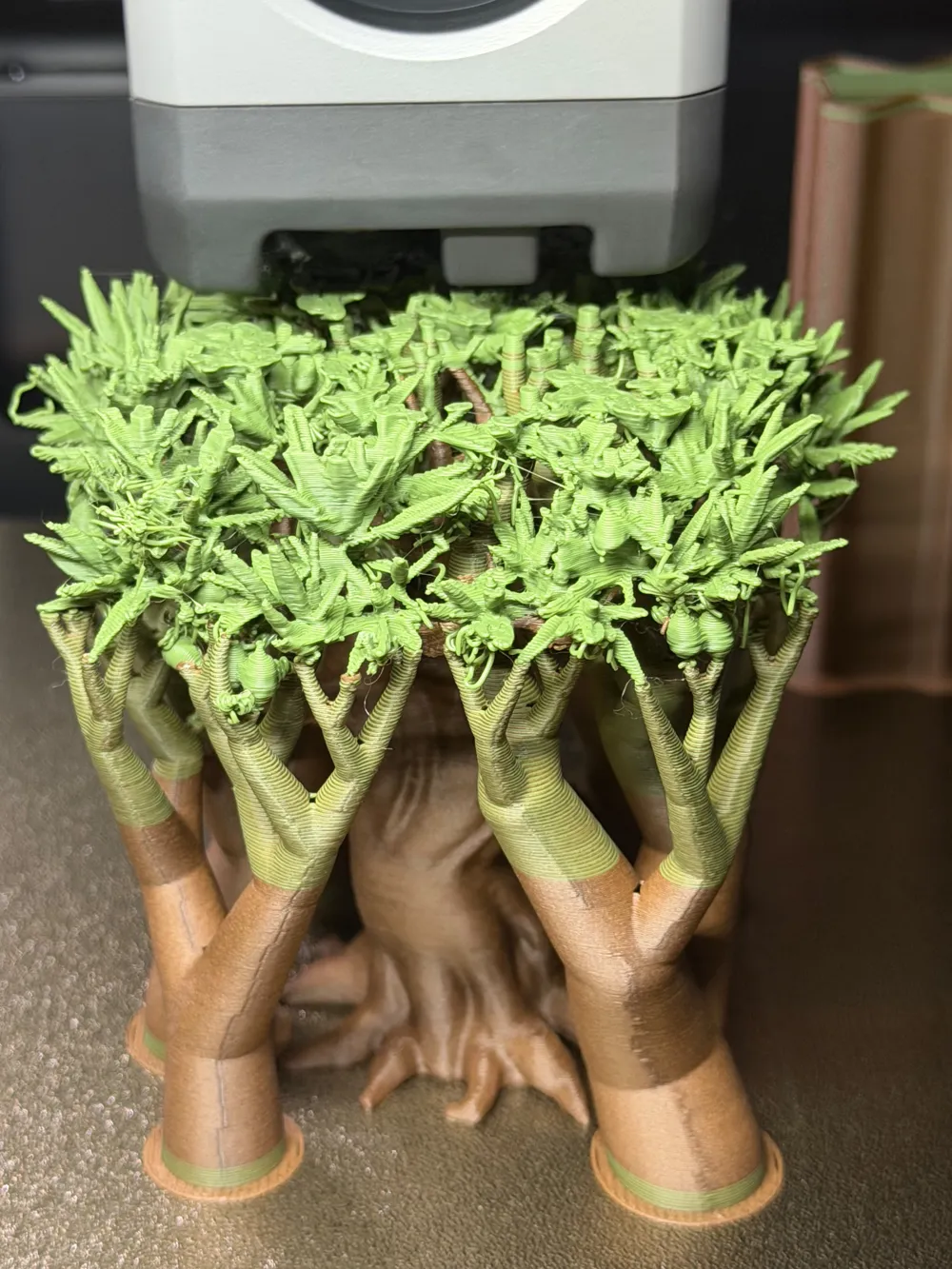
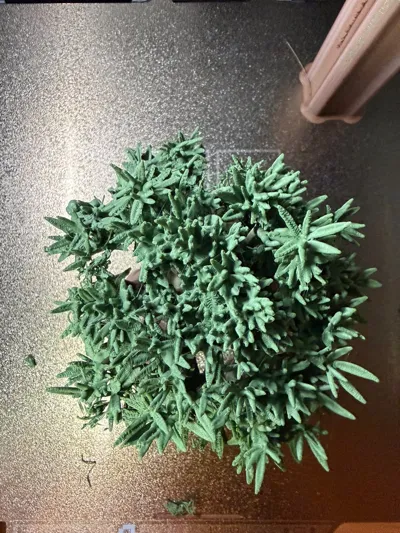
- The model contains dense foliage and many fine details.
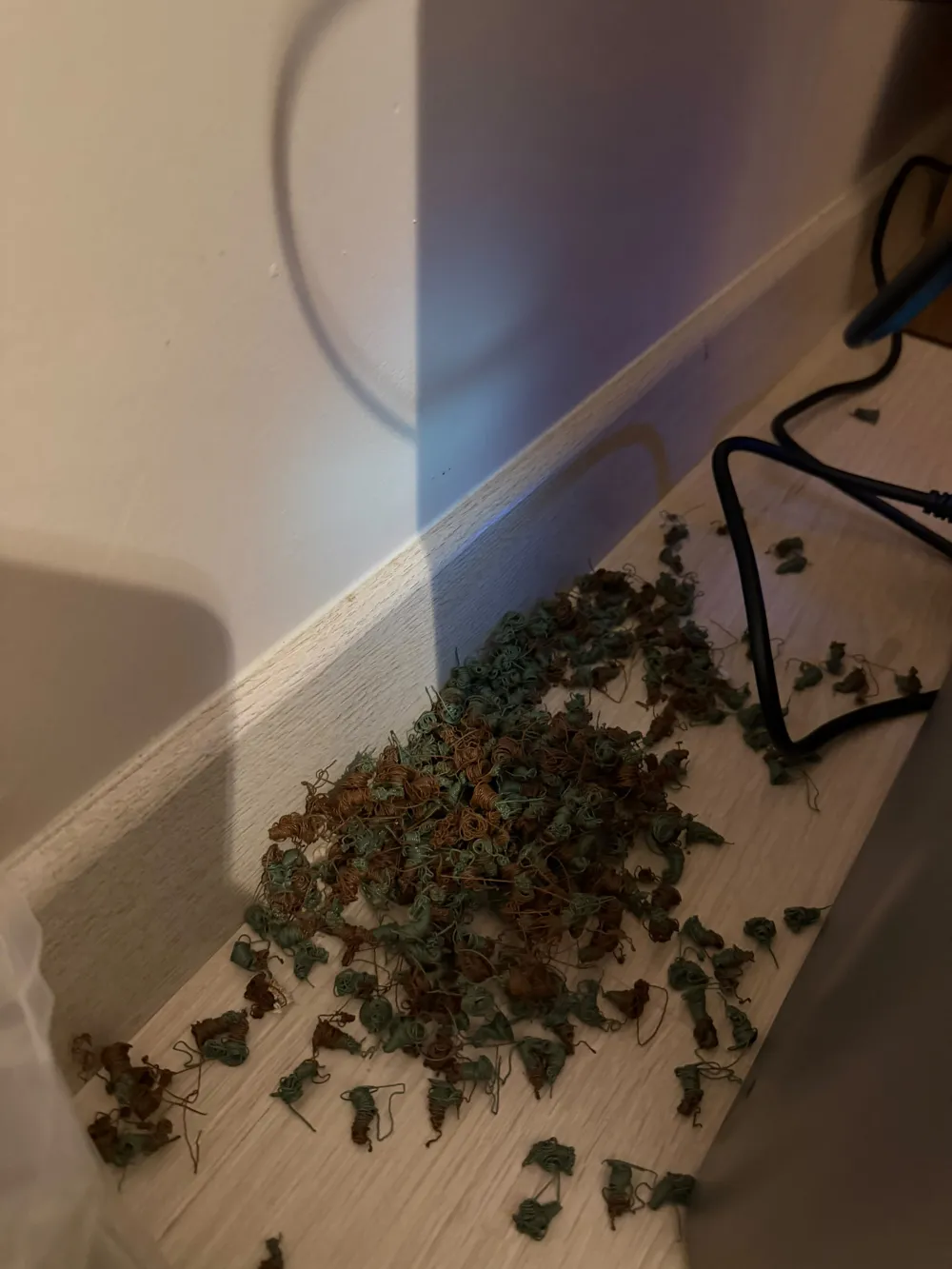
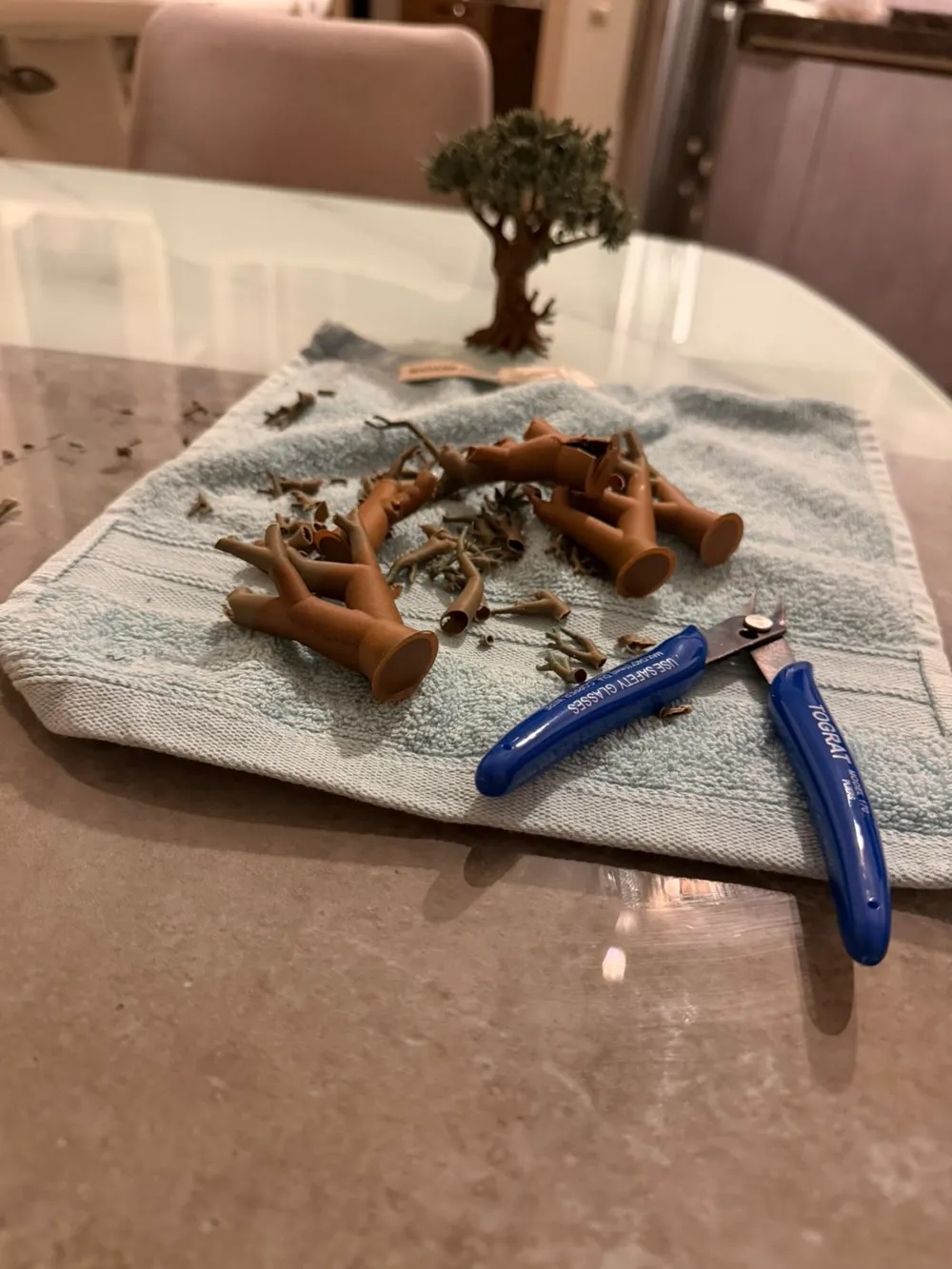
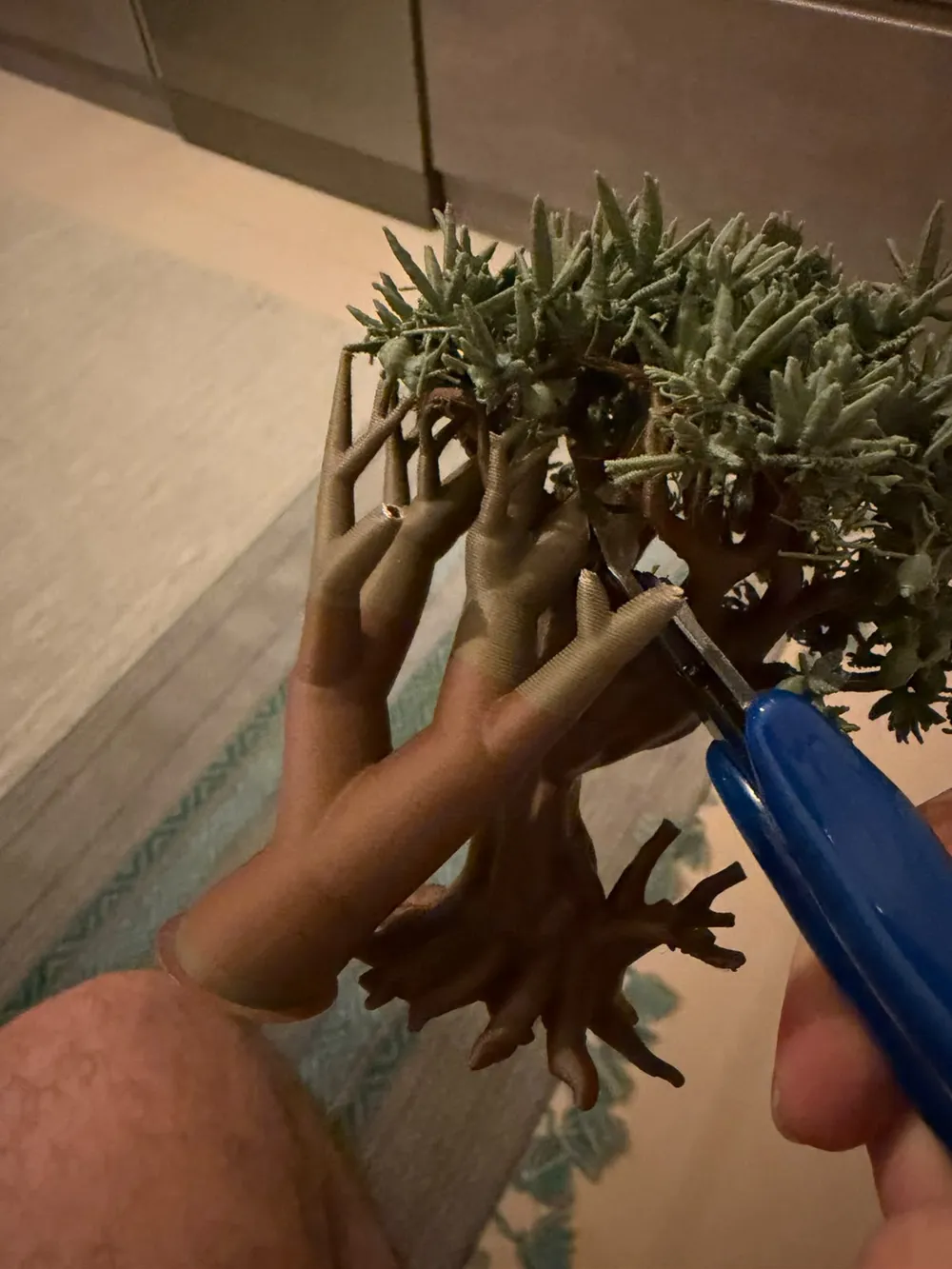
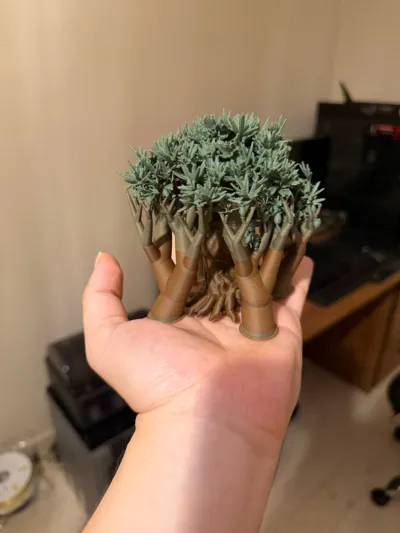
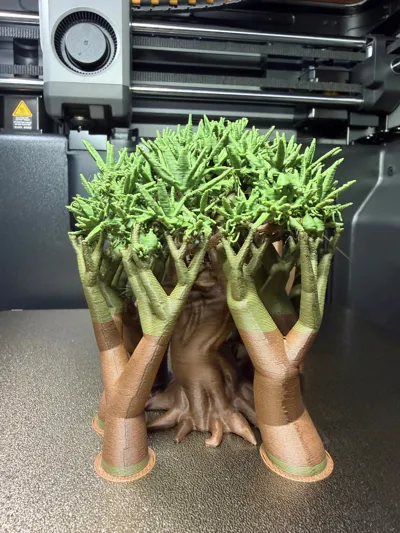
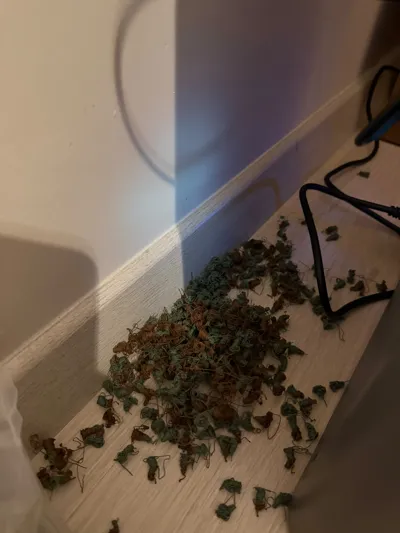
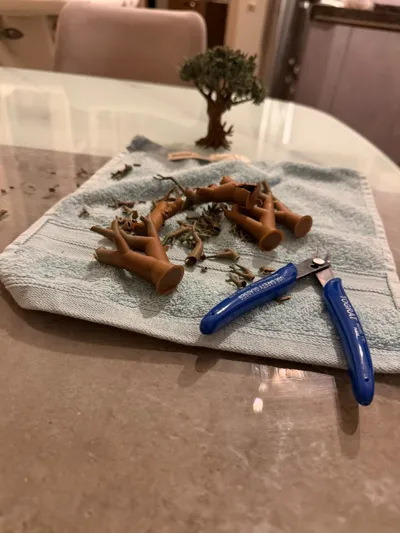
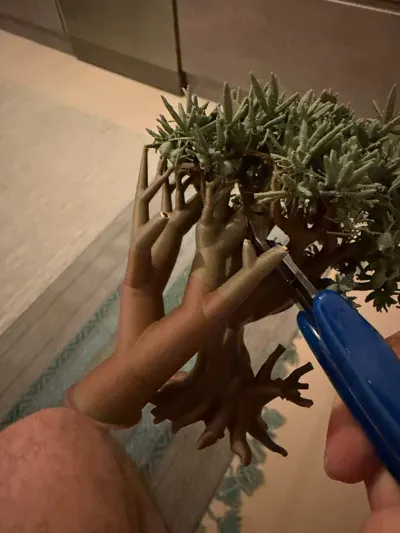
- Support removal requires patience and careful cleanup.
- Some leaf tips may need minor post-processing after support removal.
- Due to the complex foliage structure, small imperfections may still occur.
- This is Version 1 and not a finished commercial display model.
- During support removal, 2–3 olives were lost in action. Fortunately, the tree survived and continues to stand proudly. :)
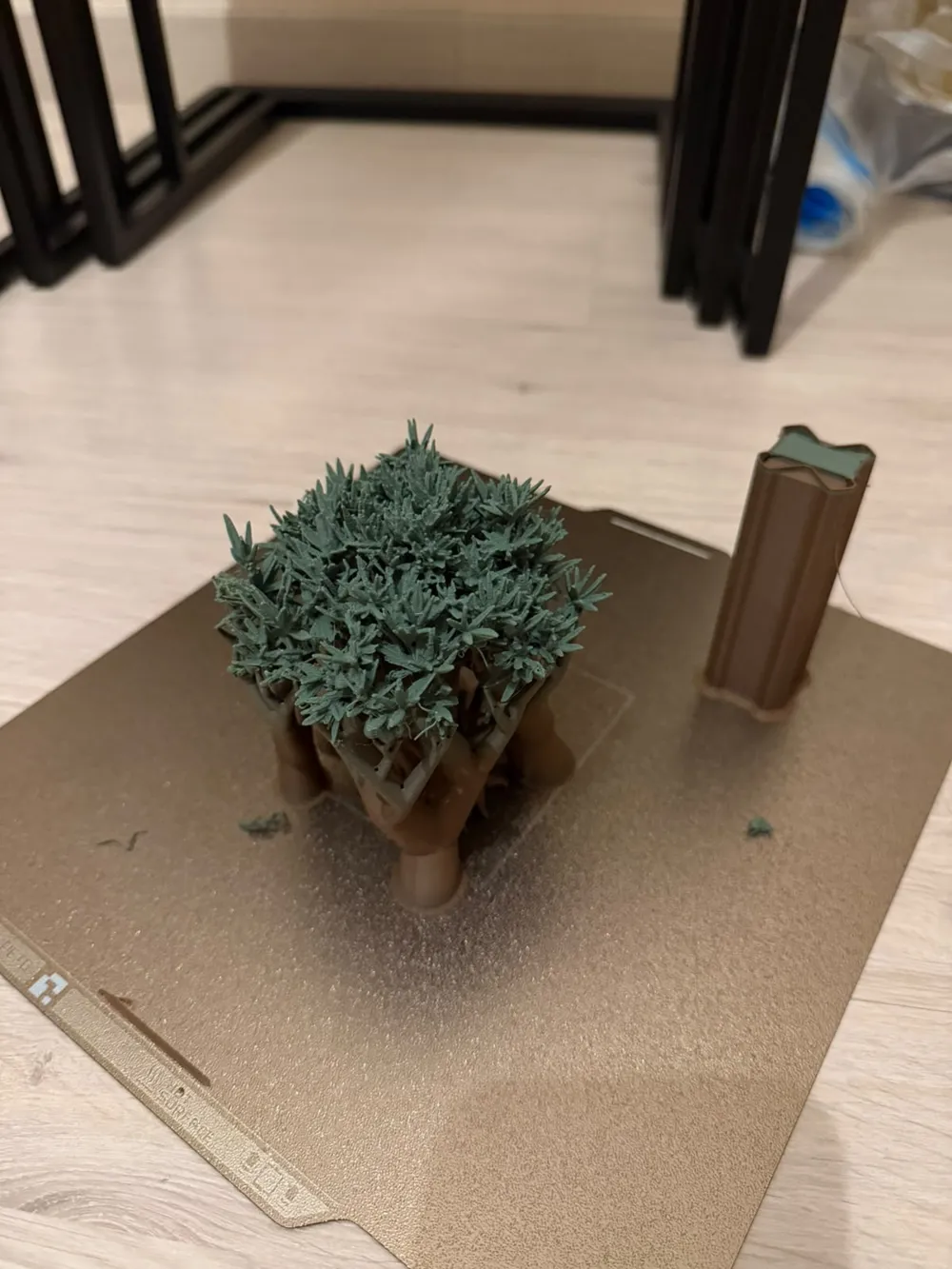
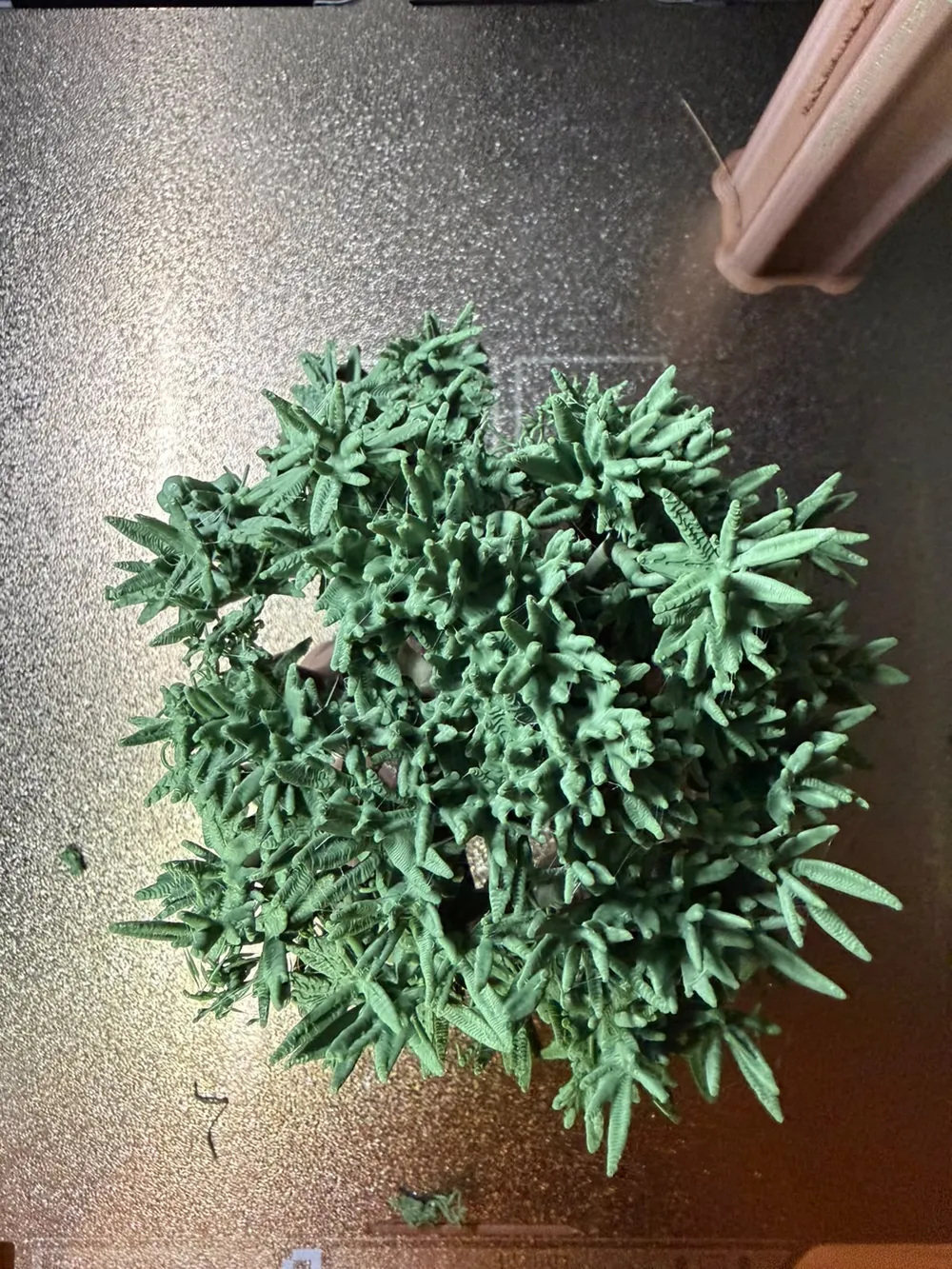
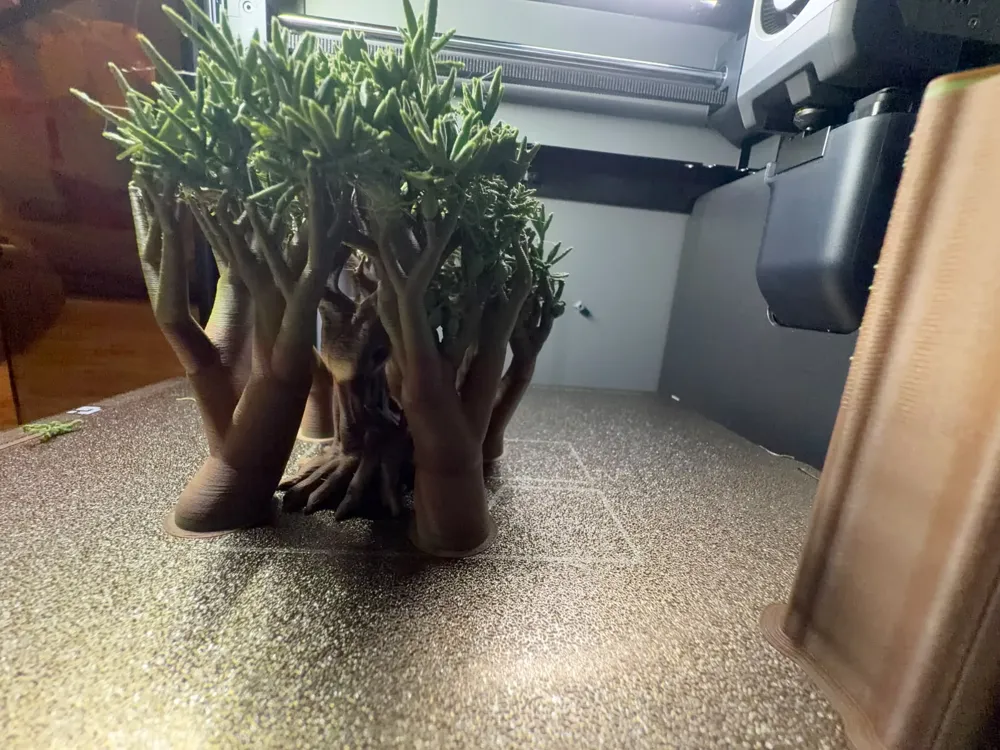
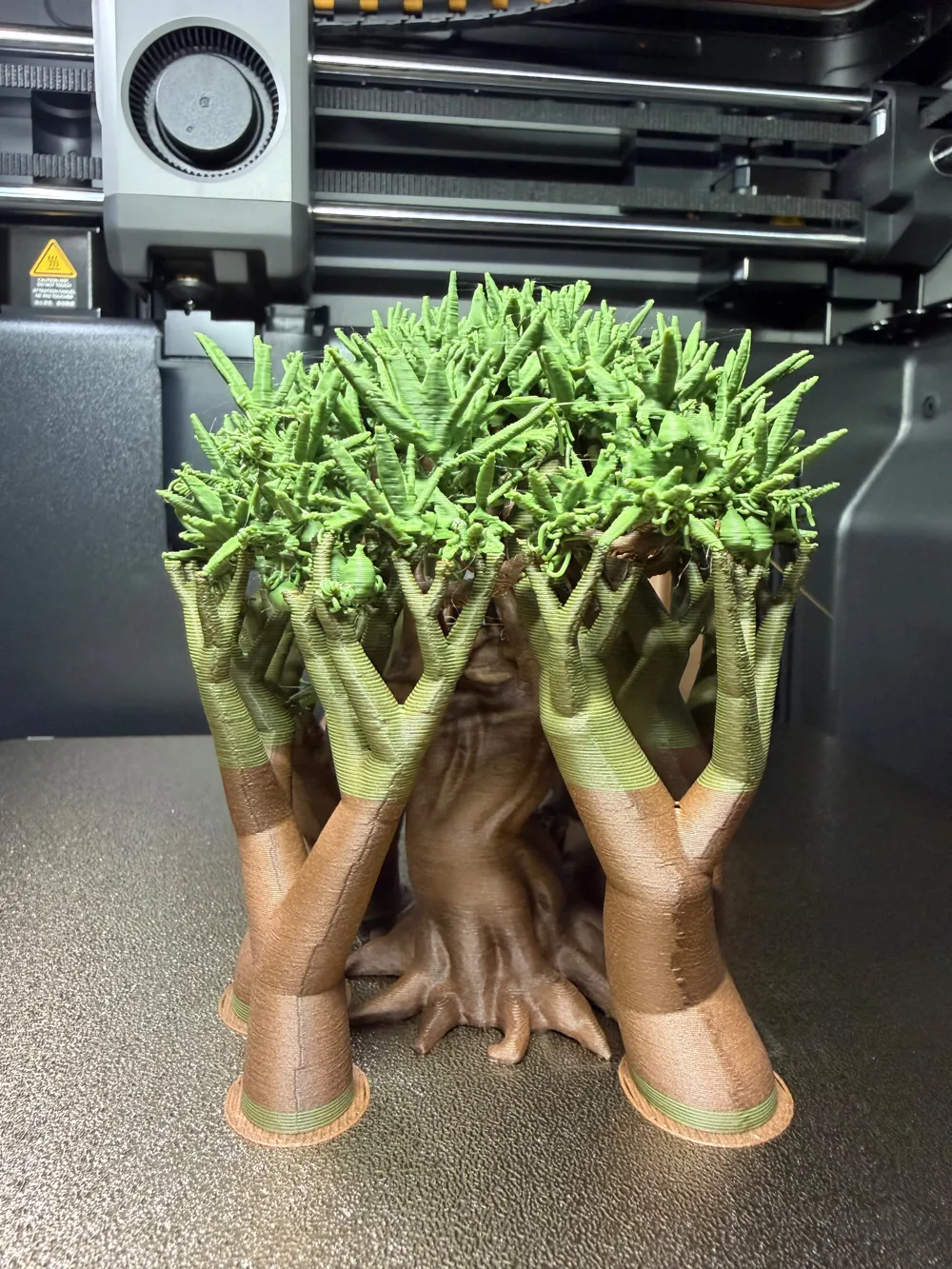
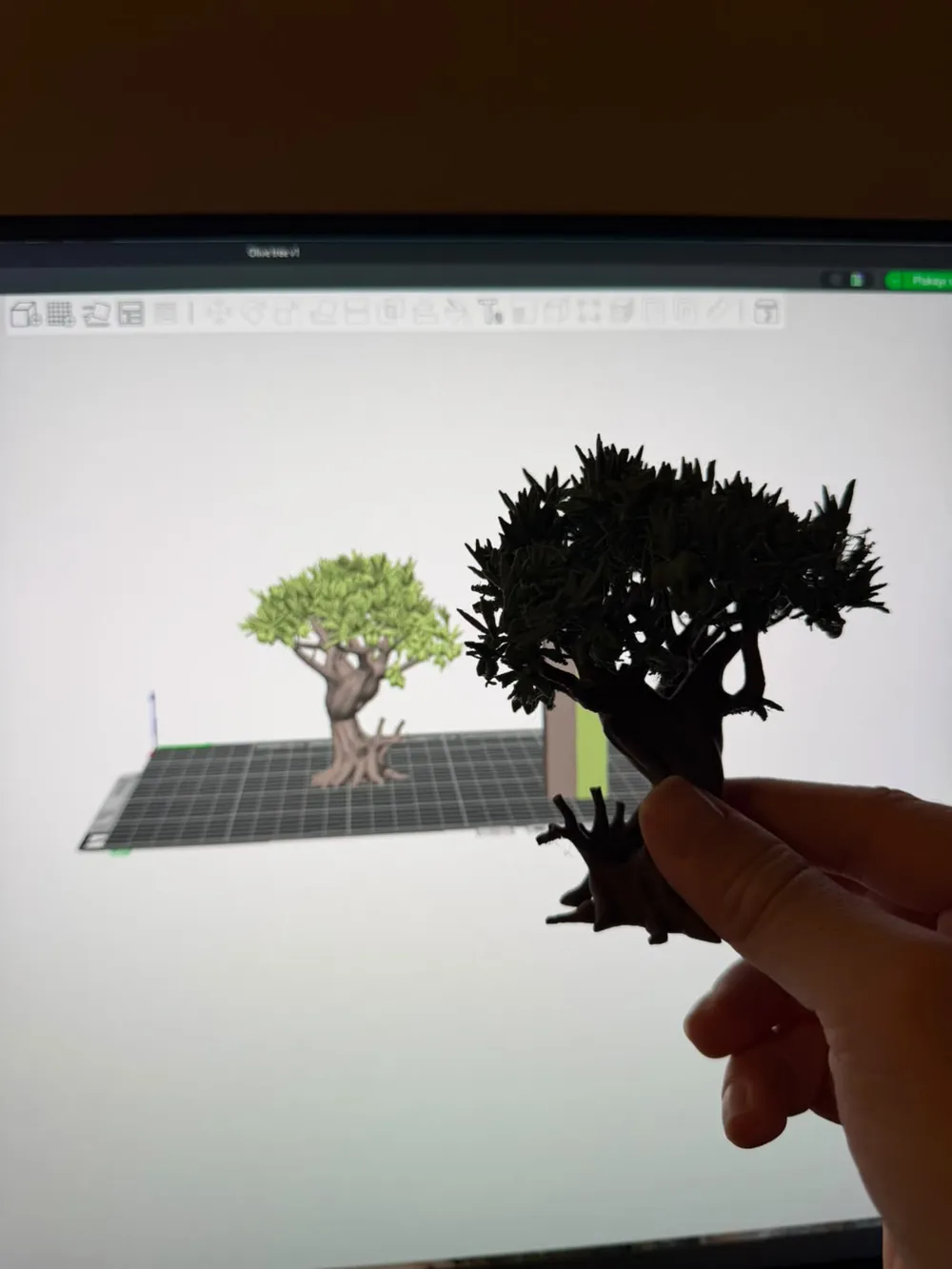
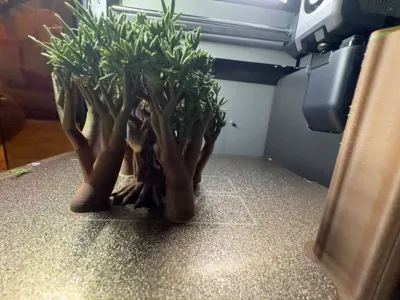
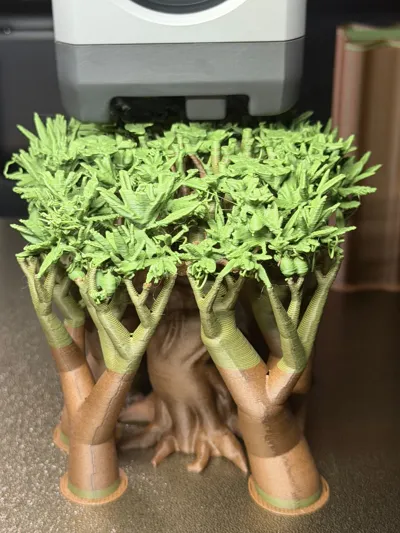
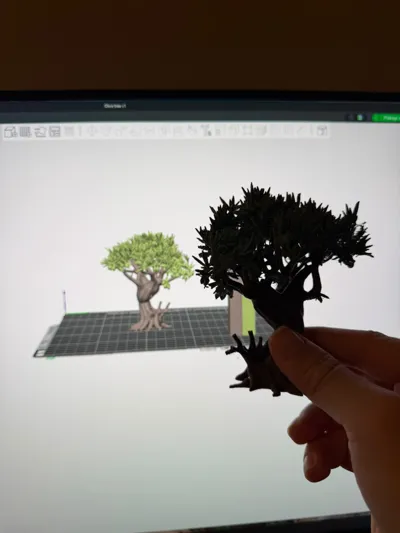
The uploaded photos intentionally include the entire development process, including slicing previews, support structures, support removal, cleanup work, test stages, and final results.
I chose to show both successful and imperfect stages so makers can clearly understand the challenges involved with printing dense foliage models and know exactly what to expect before starting a print.
The purpose of this upload is to document the real development process rather than present only perfect showcase images.
Support Removal Tips
For best results, start removing supports from the outermost and easiest-to-reach areas first.
Avoid pulling supports from deep inside the canopy at the beginning. Instead, gradually work your way inward while approaching the structure from underneath the tree whenever possible.
Supports located in hard-to-reach areas should be left until the end. Removing the surrounding supports first will provide better access and reduce the risk of damaging branches, leaves, or olives.
A small pair of side cutters is highly recommended. Cut the supports from the most accessible points first and work progressively toward the center.
Rather than pulling supports forcefully, gently wiggle them up and down while applying light pressure until they release naturally.
Patience is key. Taking your time during support removal will greatly reduce the chance of damaging the fine details of the model.
This method worked best during testing and helped preserve most of the foliage structure.
Remember: the goal is to remove the supports, not harvest the olive tree. :)
Lessons Learned
This prototype was created as a learning and testing stage for future jewelry display designs.
During development, multiple settings were adjusted and several test versions were evaluated to improve:
- Support removal
- Foliage preservation
- Print reliability
- Overall visual appearance
- Print efficiency
Future versions will focus on cleaner foliage details, easier support removal, reduced support usage, and additional jewelry-display-oriented features.
Future Collection
Planned future pieces include architecture, landscapes, olive groves, and cultural elements inspired by Havran, the Aegean region, and Anatolian heritage.
This is not a finished commercial display model. It is the first public prototype of the Aureline Collection and a learning step toward future jewelry display designs inspired by Havran and the Aegean region.
Thank you for checking out my first release.
License



Comment & Rating (1)