
Ford GT40 MKI – 1969 – Daytona 24 Hours – 1:32
Print Profile(4)
Description
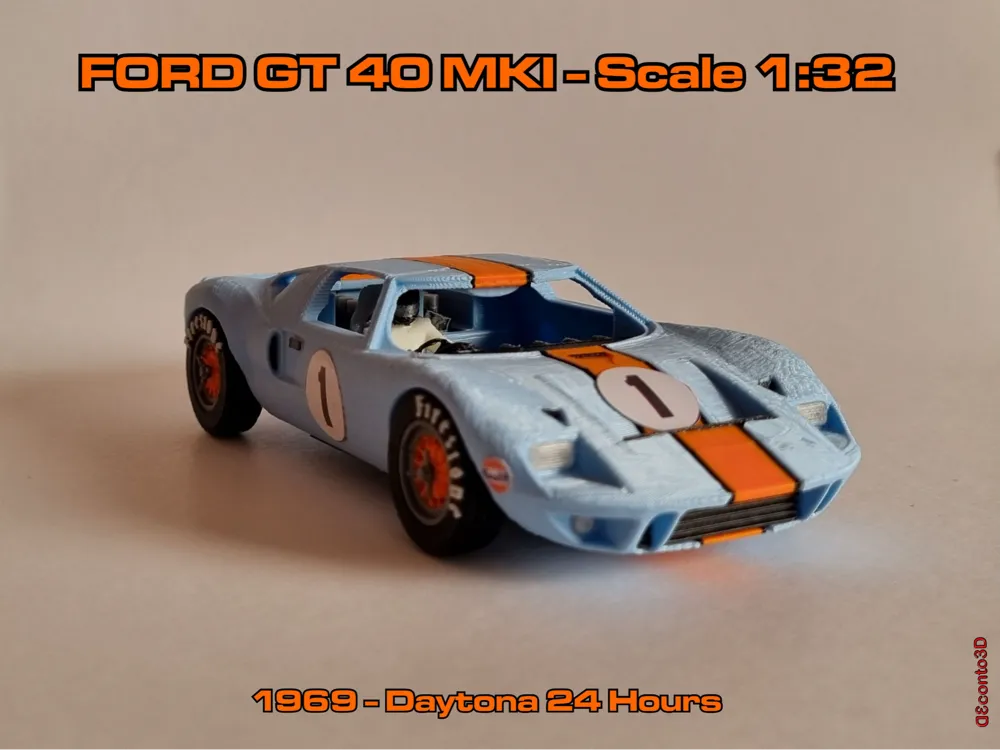
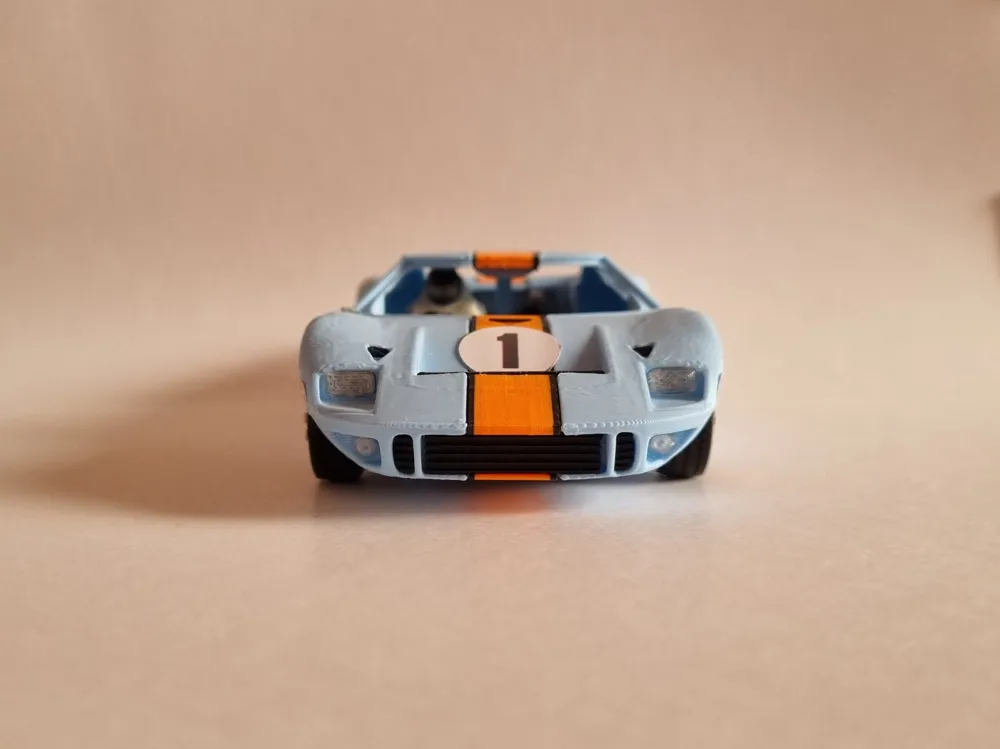
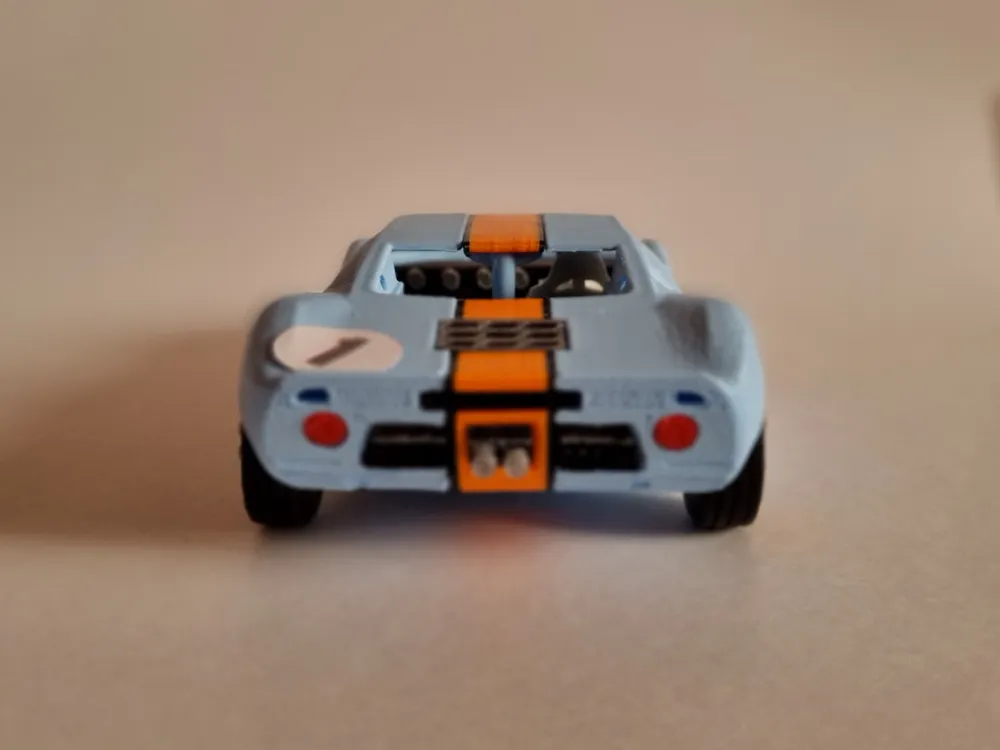
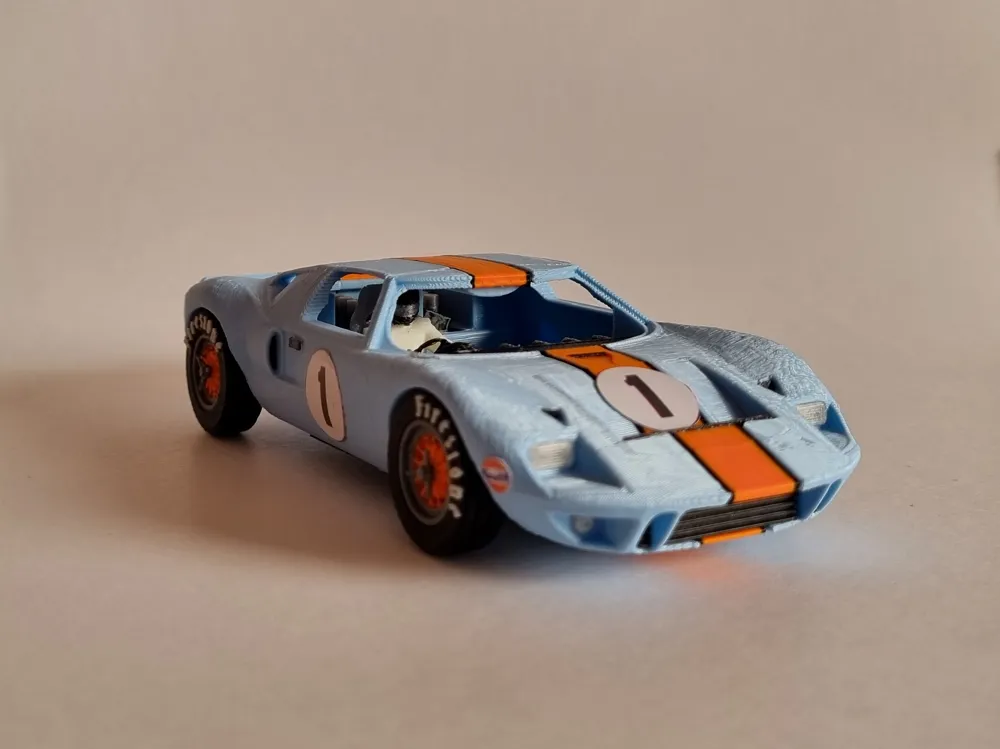
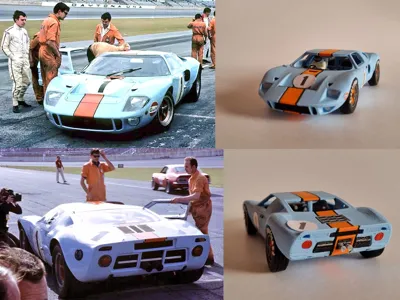
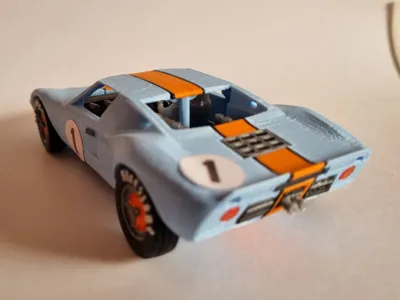
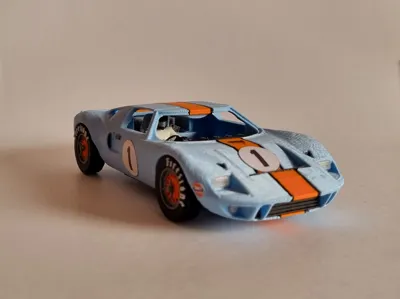
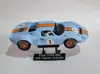
Ford GT40 MKI – 1969 – Daytona 24 hours – Jacky Ickx – 1:32 scale
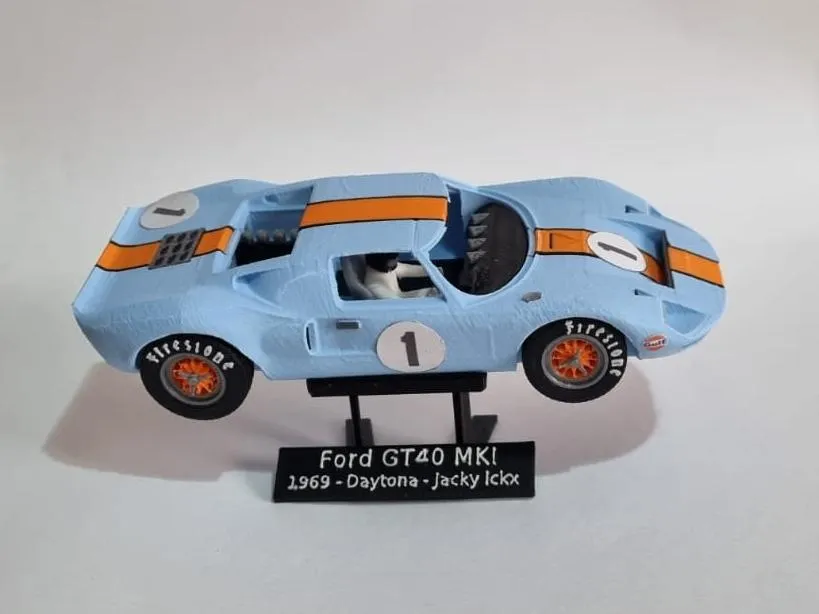
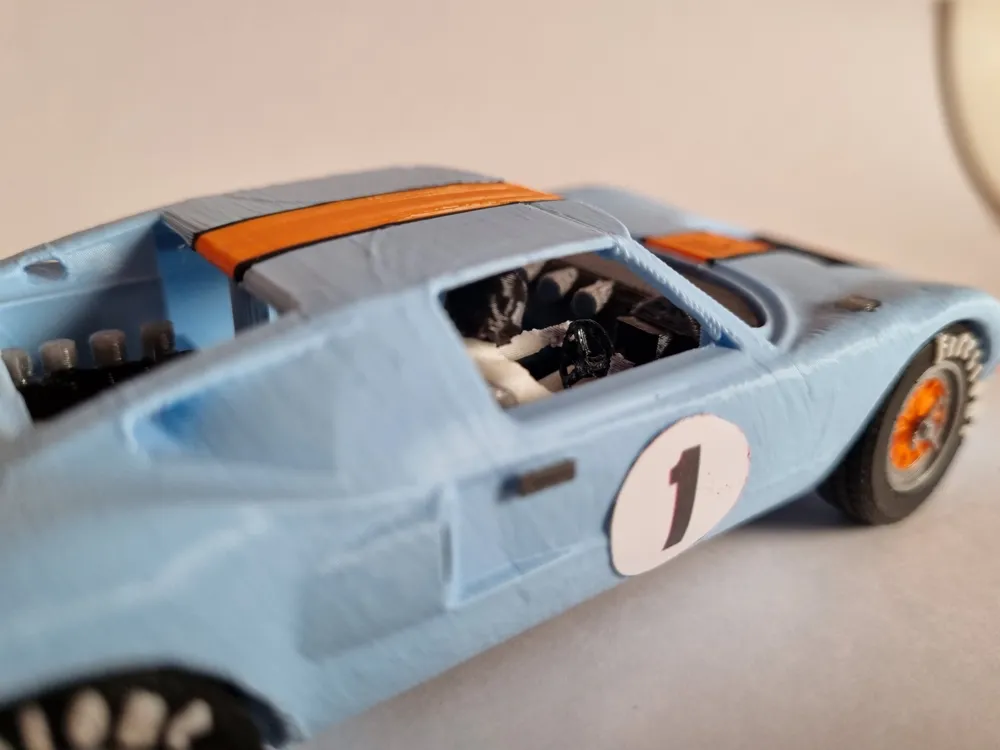
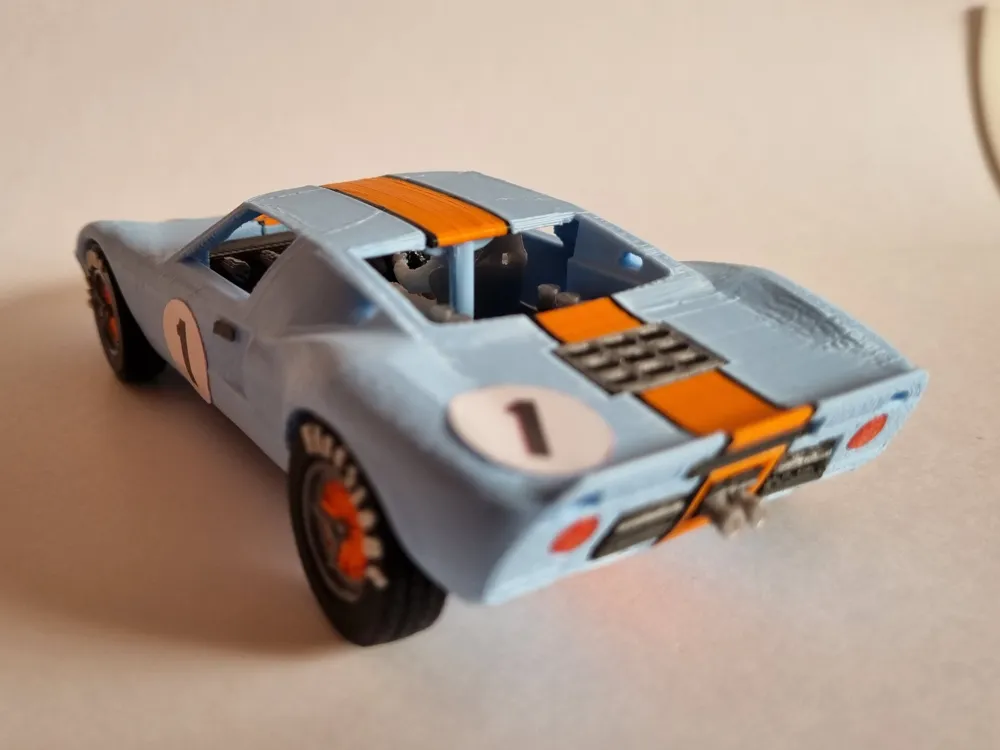
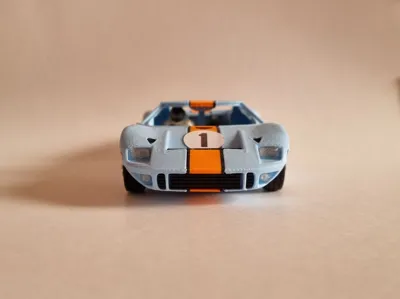
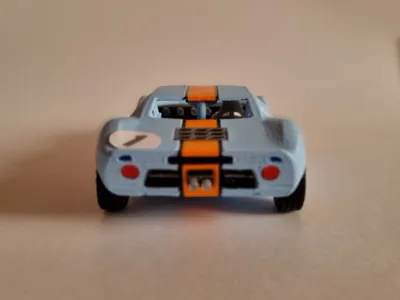
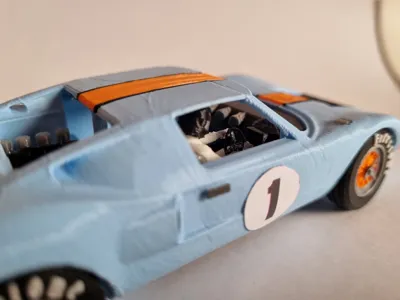
After seeing several monoblock car models, which I honestly find uninspired, I decided to make an “open” model myself. This way, you can see the driver, the seat, the steering wheel, the dashboard, and the engine. Of course, the windows are missing, as these should be made of acrylic, but I believe that even without them, the car looks beautiful. It's an amateur project, and I apologize for several imperfections in the model, but it's what I can do at this stage of my learning.
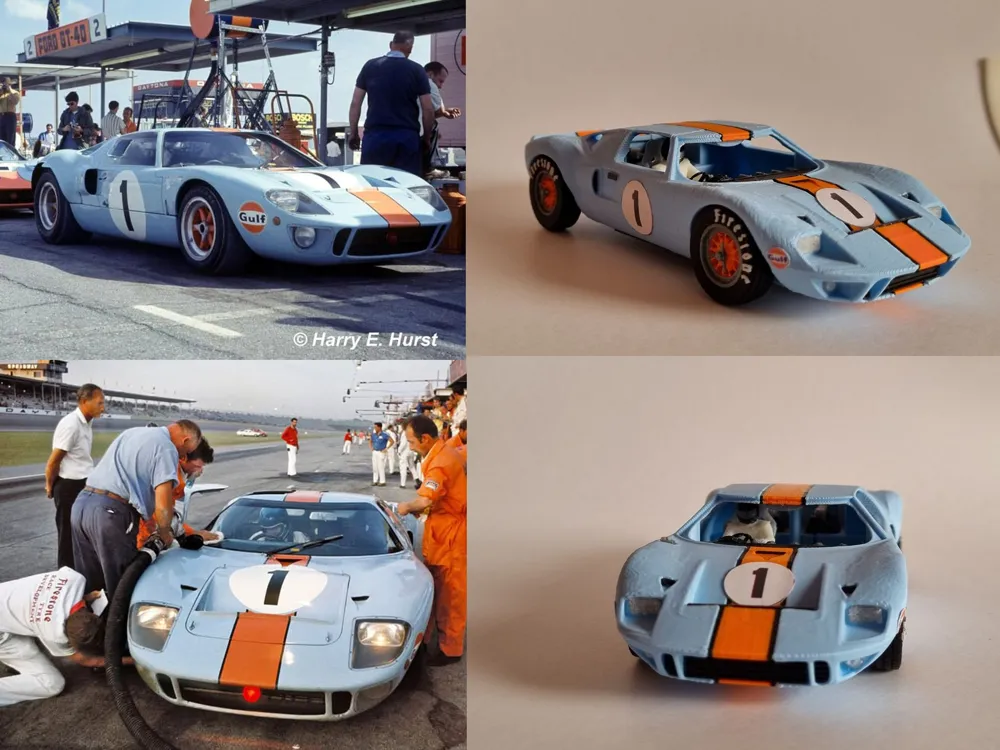
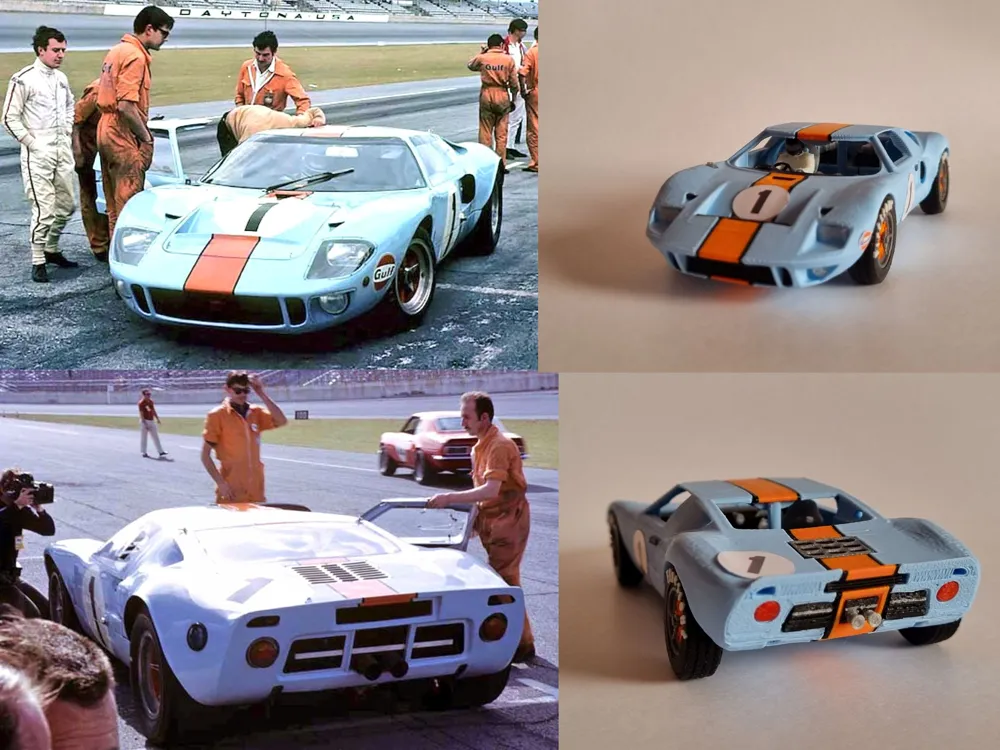
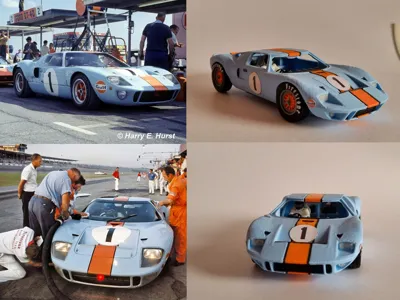
This car attempts to reproduce the 1969 Ford GT40 MKI that raced in Daytona, driven by Jacky Ickx and Jackie Oliver, and was designed for a 1:32 scale, which I believe is a good size for vehicle collectors.
Printing – Printing has a medium difficulty and should occur without problems if you follow my parameters, paying attention, if you change anything, to hole or contour compensation. As the scale is small, some parts are tiny and may require some work. If you have a 0.2mm nozzle, I have provided 2 files for it, one for the micro parts and another for the tires (greatly improves the Firestone lettering). The total printing time is approximately 12 hours, and the total filament quantity is 130 grams.
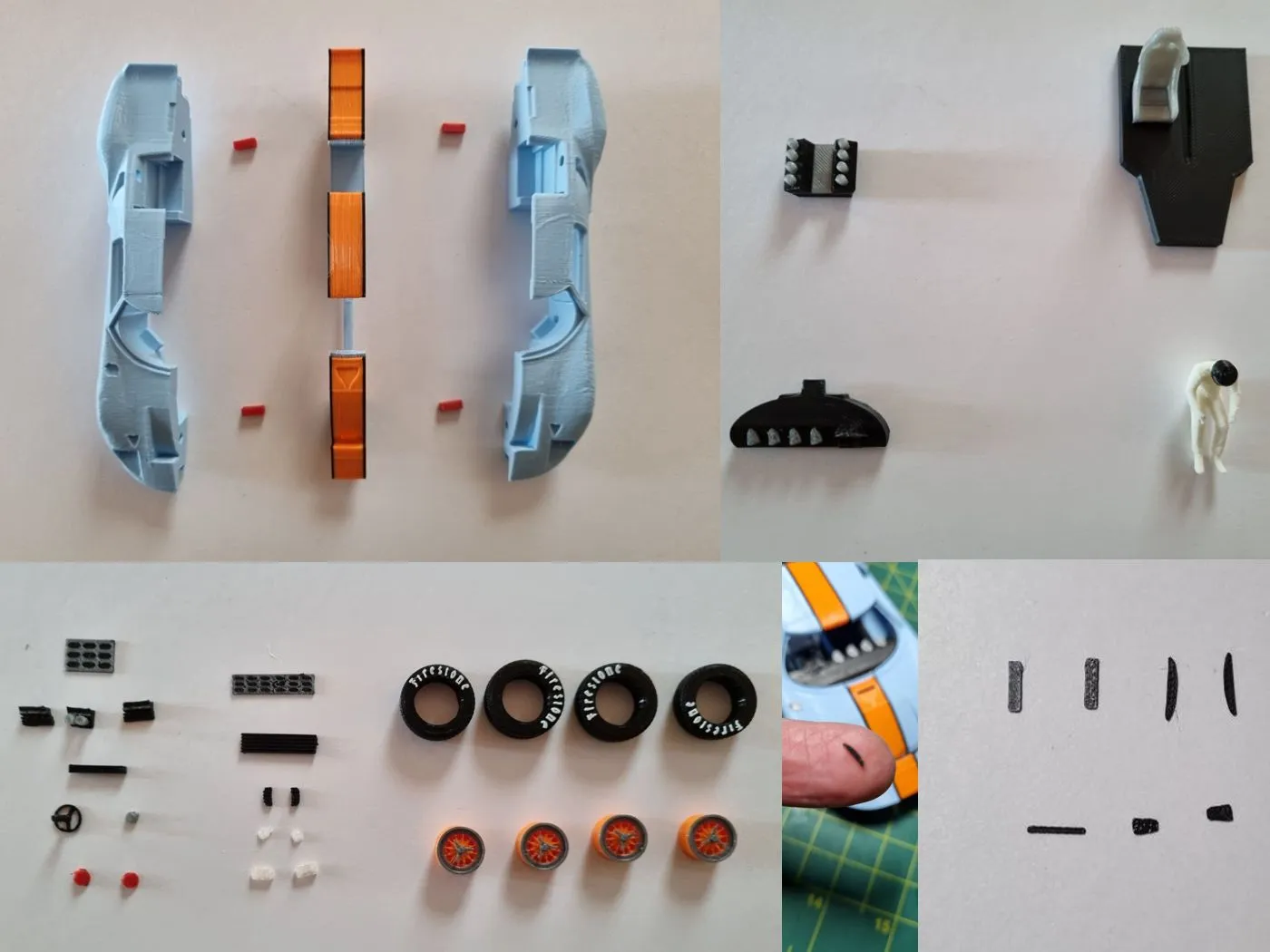
Assembly – Glue is required, and for small parts, I recommend using a pin or toothpick to apply the glue.
Attention: the rear tires are 1mm larger.
First, assemble the model without glue to check if the fittings are correct.
Follow this order for assembly and gluing:
- join one side of the body with the middle, inserting the connecting pins;
- place the dashboard and the engine;
- join the other side of the body, using the pins;
- place the steering wheel in the dashboard hole (without glue);
- put the driver in the seat and raise the base, making sure the steering wheel is between the driver's hands;
- finally, the other parts do not have a specific order;
- see the photos to check where the micro-parts (door handles and air intake bases) fit.
Decals – I have prepared a PDF file with the car's numbering and the Gulf logo. I used adhesive photo paper with an inkjet printer. I tried to cut them with a utility knife but couldn't, so I used scissors, and it didn't turn out very well, but it's reasonable.
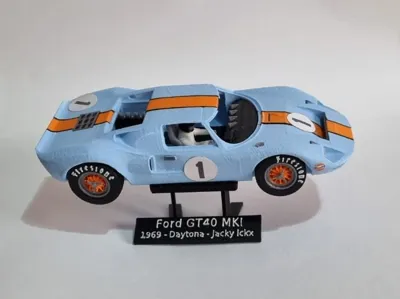
Display – I have also provided a file with the vehicle stand and identification plate if you wish to use it.
History
The 1969 24 Hours of Daytona were negatively marked for the Ford GT40. In 1969, after regulation changes limiting engines to 5 liters, the private John Wyer Automotive team raced with the GT40 MKI, which suffered from a lack of reliability and transmission failures, resulting in a general team withdrawal.
- Regulations: The organization imposed a 5-liter displacement limit. This banned the powerful 7-liter engines (Mk II and Mk IV), leading MotorTrend to highlight the change of pace.
- The Team: Development was under the tutelage of John Wyer, using the smaller 4.7L/4.9L blocks (different from the golden era of Carroll Shelby and the gigantic cars in Top Gear).
- Technical Problems: The transmission and input shafts could not withstand the wear of the banked circuit.
- Retirement: Practically all entered Ford GT40s broke down and retired from the race.
- The Winner: That year's overall victory at Daytona went to the rival Revs Institute.
Despite the setback in Florida, the GT40 MKI turned things around months later, achieving a historic victory at the 24 Hours of Le Mans in the same year with Jacky Ickx and Jackie Oliver.
Jacky Ickx, a Belgian driver nicknamed “Monsieur Le Mans”, won two World Endurance Championships (1982 and 1983) with Porsche, six victories at the 24 Hours of Le Mans, the Dakar Rally title in 1983, was a two-time Formula 1 runner-up in 1969 and 1970, in addition to other titles.
The 24 Hours of Le Mans
A famous episode involving Jacky Ickx and the Ford GT40 MKI occurred at the 1969 24 Hours of Le Mans. In protest against the dangerous "Le Mans-style start" (where drivers ran to their cars, started the engine, and drove off without a seatbelt), Ickx calmly walked to his car, buckled his seatbelts, started last, and won the race in an epic fashion.
- The Safety Protest: Old traditions required drivers to run across the track at the start. Concerned about previous fatal accidents, Ickx refused to run, walked to his Ford GT40 MKI, calmly fastened his six-point seatbelt, and set off last.
- The Ironic Tragedy: Tragically, on the first lap of that very race, driver John Woolfe suffered a fatal accident in his Porsche 917 precisely because he had not had time to fasten his seatbelt correctly. That was the last time the traditional start was permitted in the history of the event.
- The Historic Race: Driving the GT40 (chassis 1075) with Jackie Oliver, Ickx staged a spectacular comeback race. By Sunday morning, they were already leading and engaged in an intense battle against the Porsche 908.
- Dramatic Finish: Victory was decided on the final lap, with the GT40 overcoming Hans Herrmann and Gérard Larrousse's Porsche by a margin of a few seconds, securing the legendary Ford model's consecration.
Documentation (1)
License



Comment & Rating (7)