
Print Profile(3)
Description
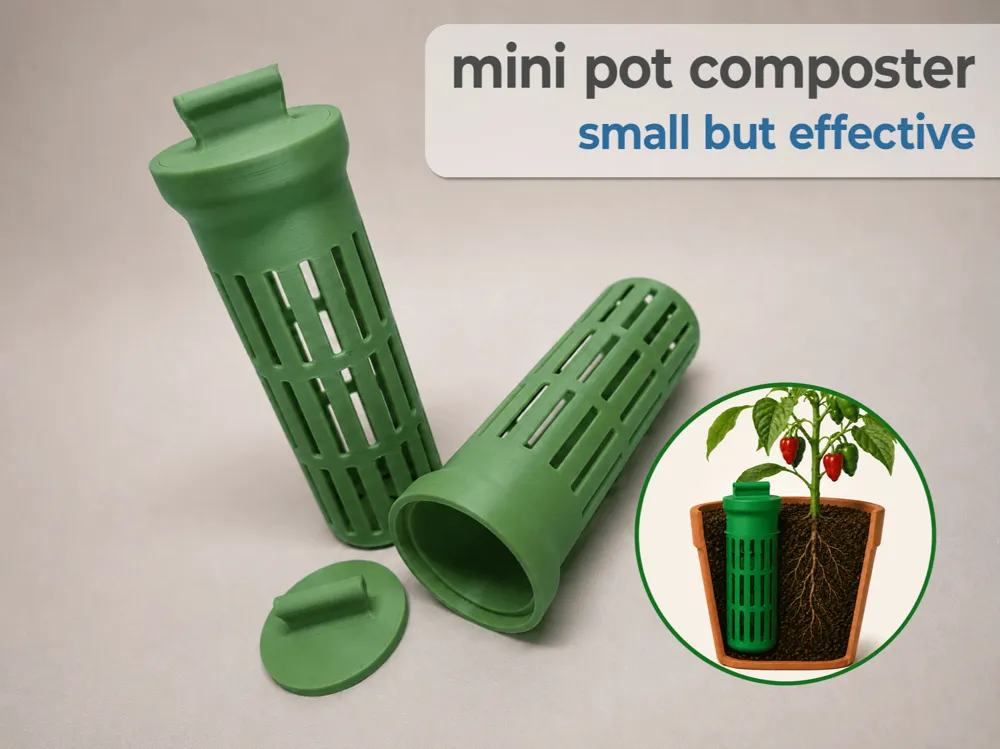
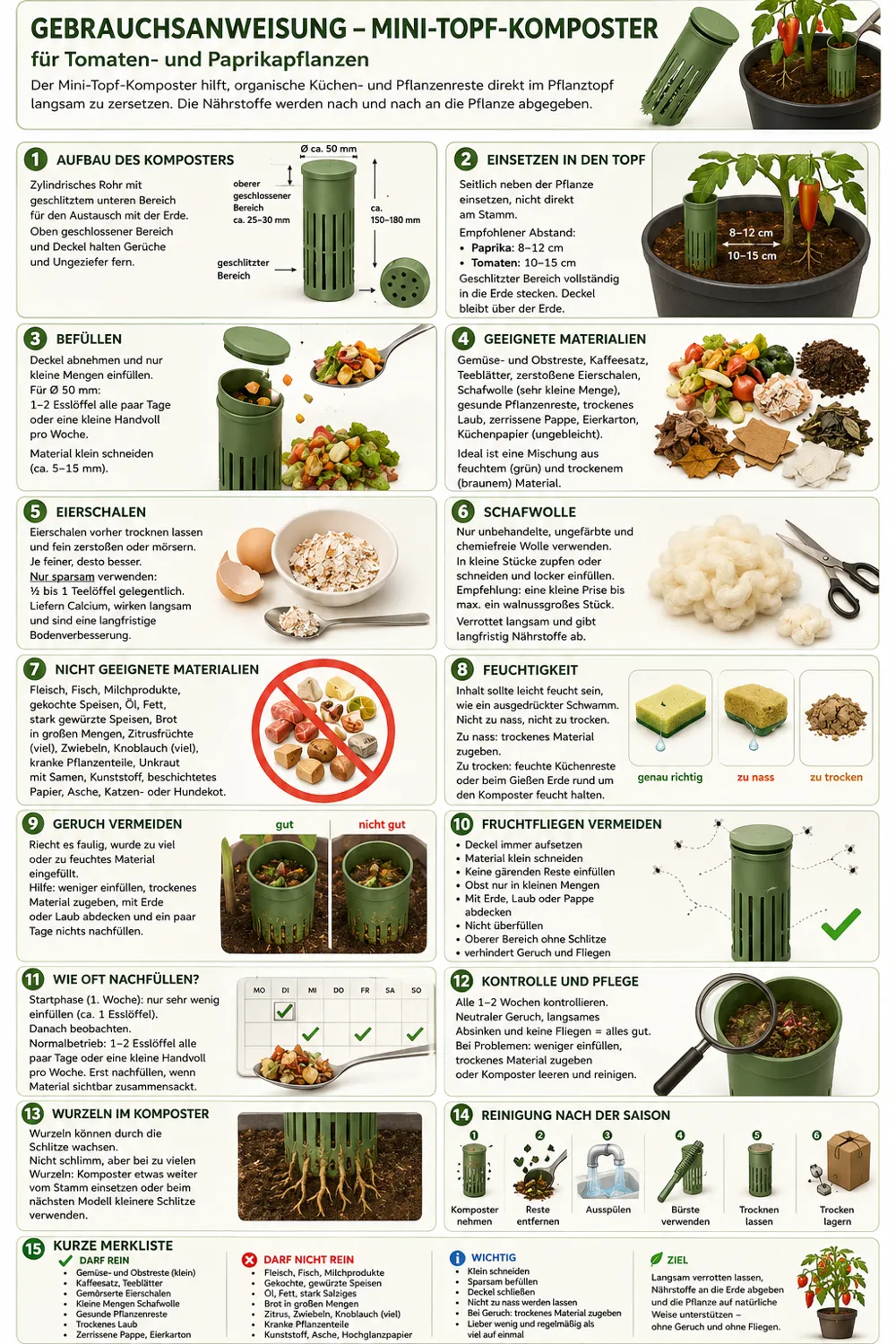
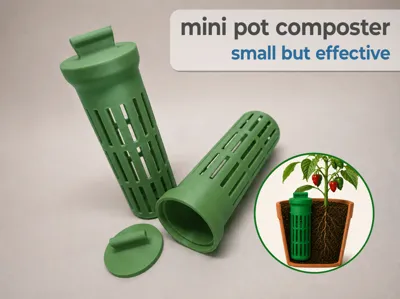
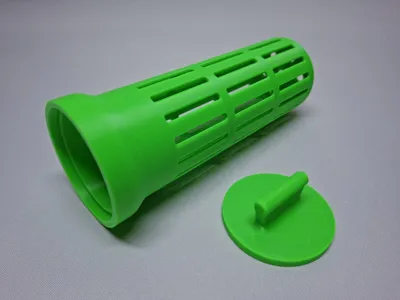
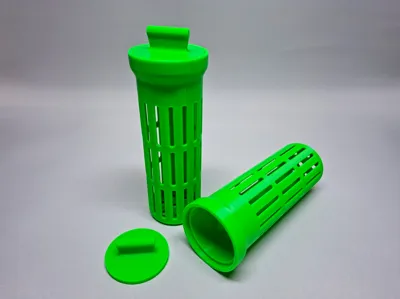
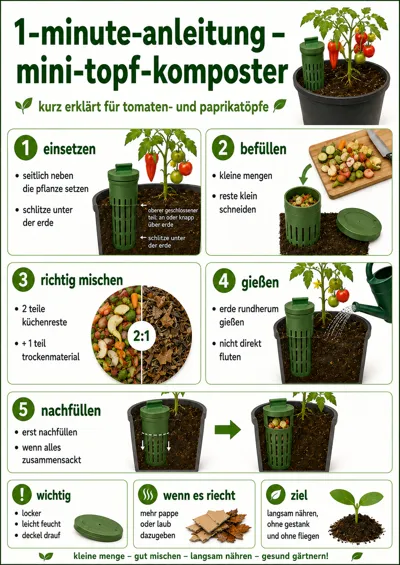
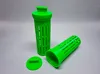
This mini-pot composter is designed for planters and larger flower pots. It is inserted directly into the soil next to the plant and serves to slowly decompose small amounts of organic kitchen and plant waste in the pot.
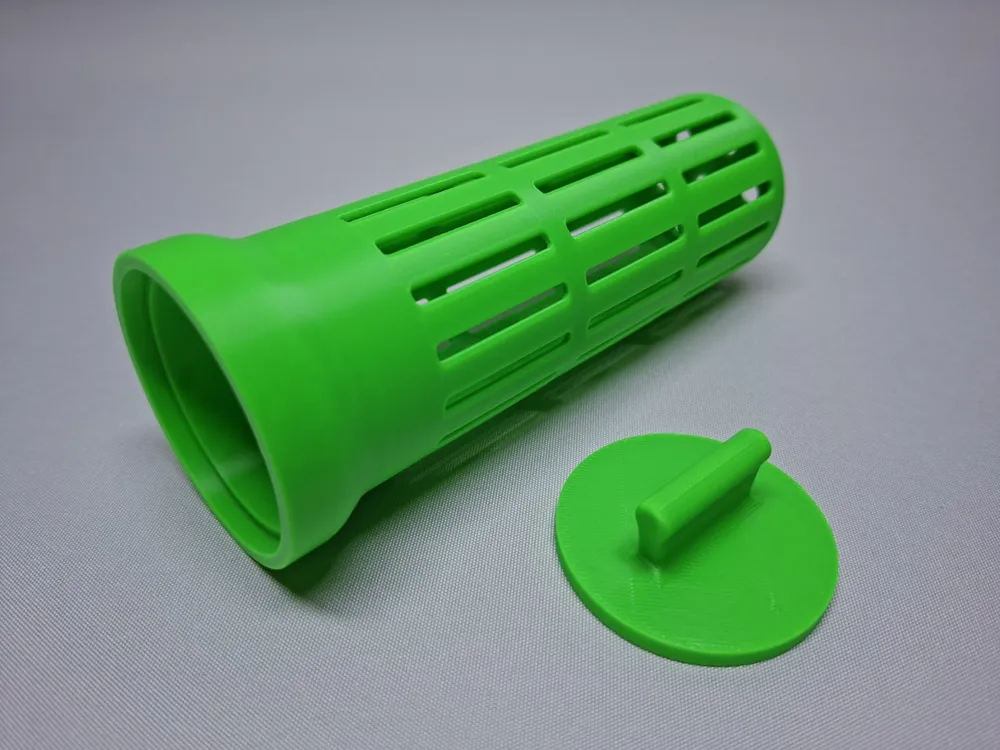
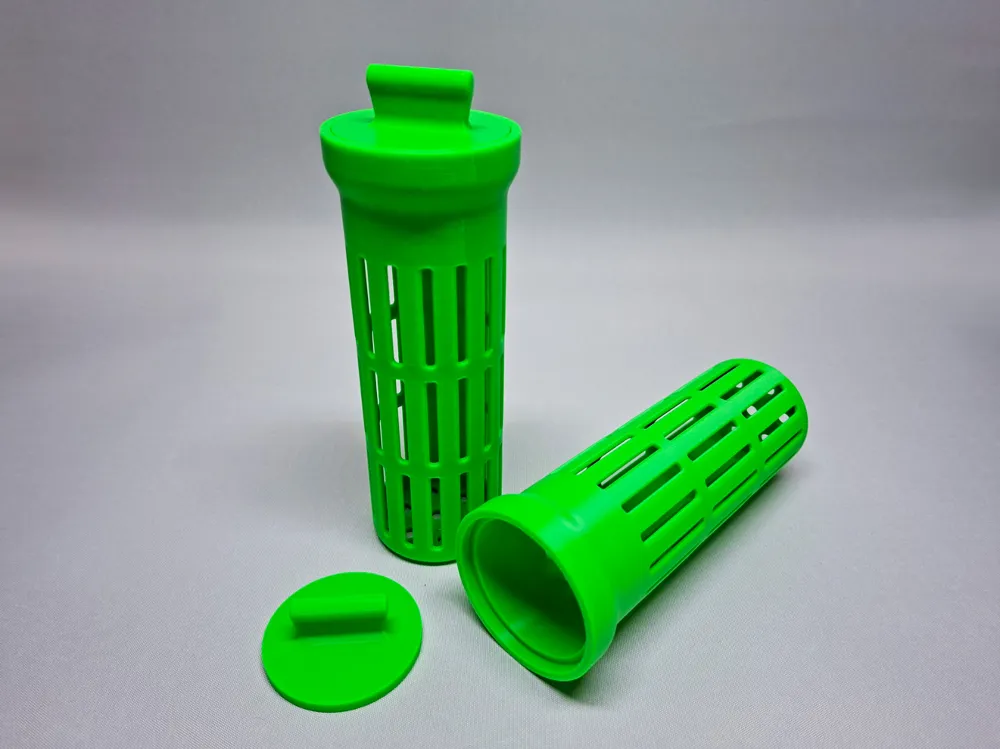
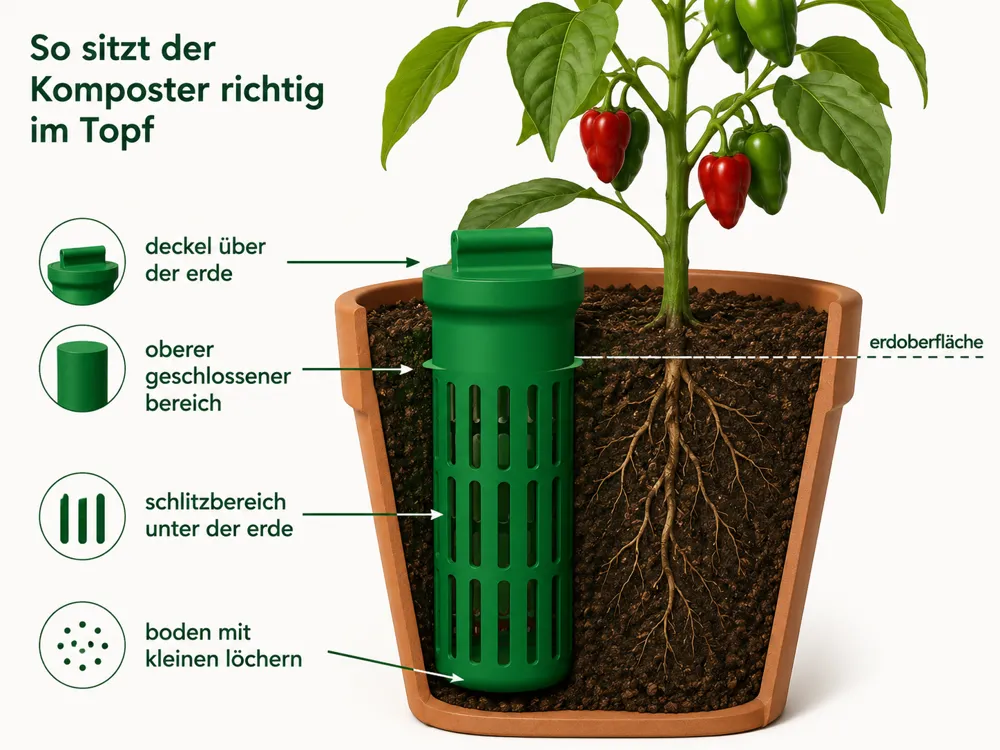
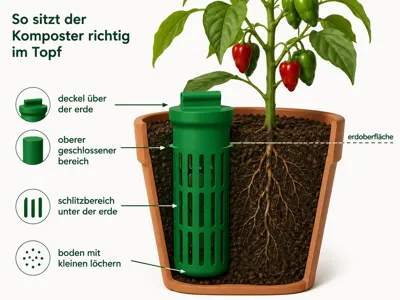
The lower section has slots to allow moisture, microorganisms, and nutrients to come into contact with the soil. This slotted area should be completely below ground. The upper, closed section remains above ground and helps keep fruit flies and other pests away.
The composter is particularly suitable for tomatoes, peppers, chili, and other potted plants. It does not replace a large compost heap but is a practical way to utilize small amounts of organic material directly in the pot.
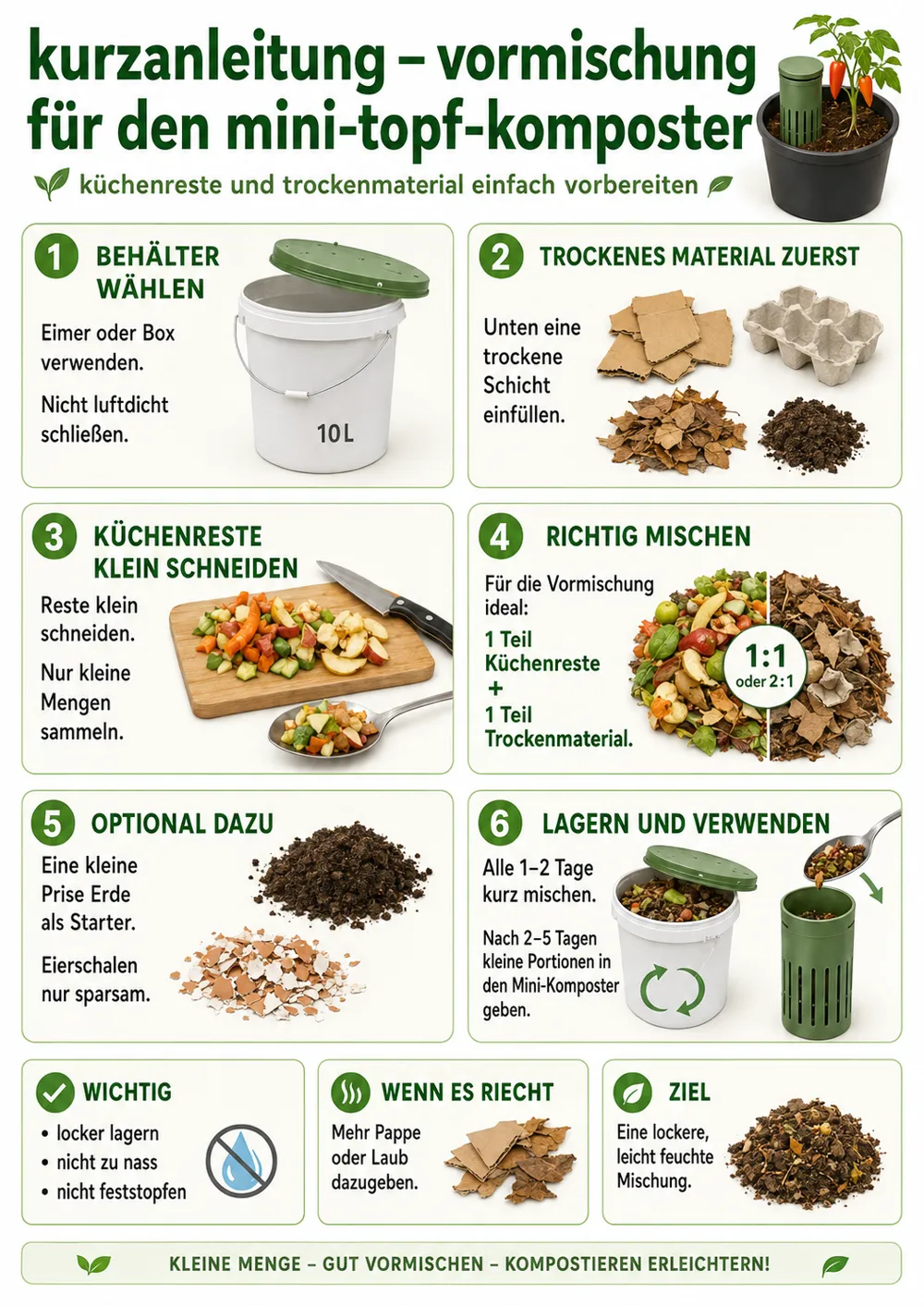
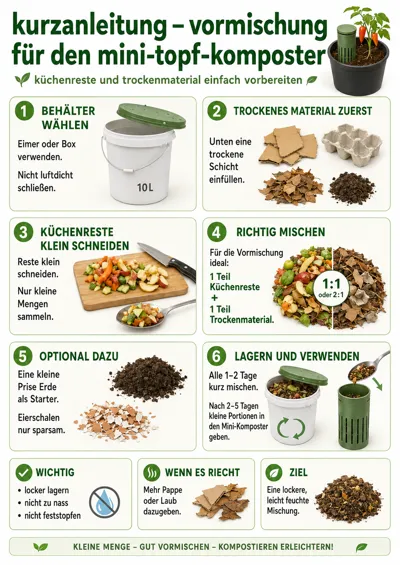
The material should be chopped as small as possible and mixed with dry material before filling. Suitable examples include vegetable scraps, small amounts of fruit peels, coffee grounds, tea leaves, shredded egg cartons, cardboard, dry leaves, a little soil, crushed eggshells, or very small amounts of untreated sheep wool.
Not suitable are meat, fish, dairy products, fat, oil, heavily spiced foods, cooked leftovers, diseased plant parts, plastic, or coated paper.
Recommended Printing Material:
PETG is well suited for this purpose as it is more moisture-resistant and temperature-stable than PLA. The composter is permanently in moist soil and can be exposed to higher temperatures in summer.
Also possible:
ASA
Very well suited for outdoor use, but more challenging to print.
Only partially recommended:
PLA
PLA can work, but it is less durable with constant moisture, sun, and heat. For a test print, PLA is fine, but for actual outdoor use, I would prefer PETG.
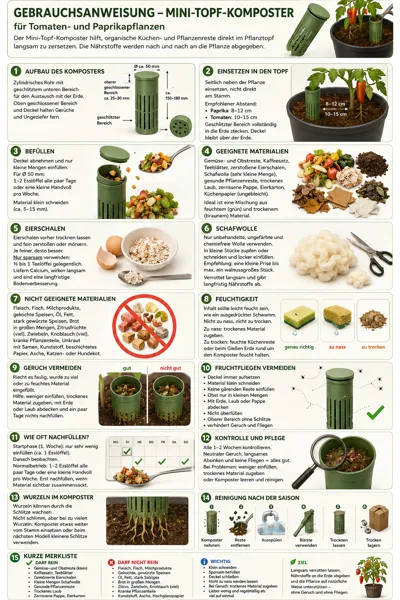
Usage Instructions (see also pictures)
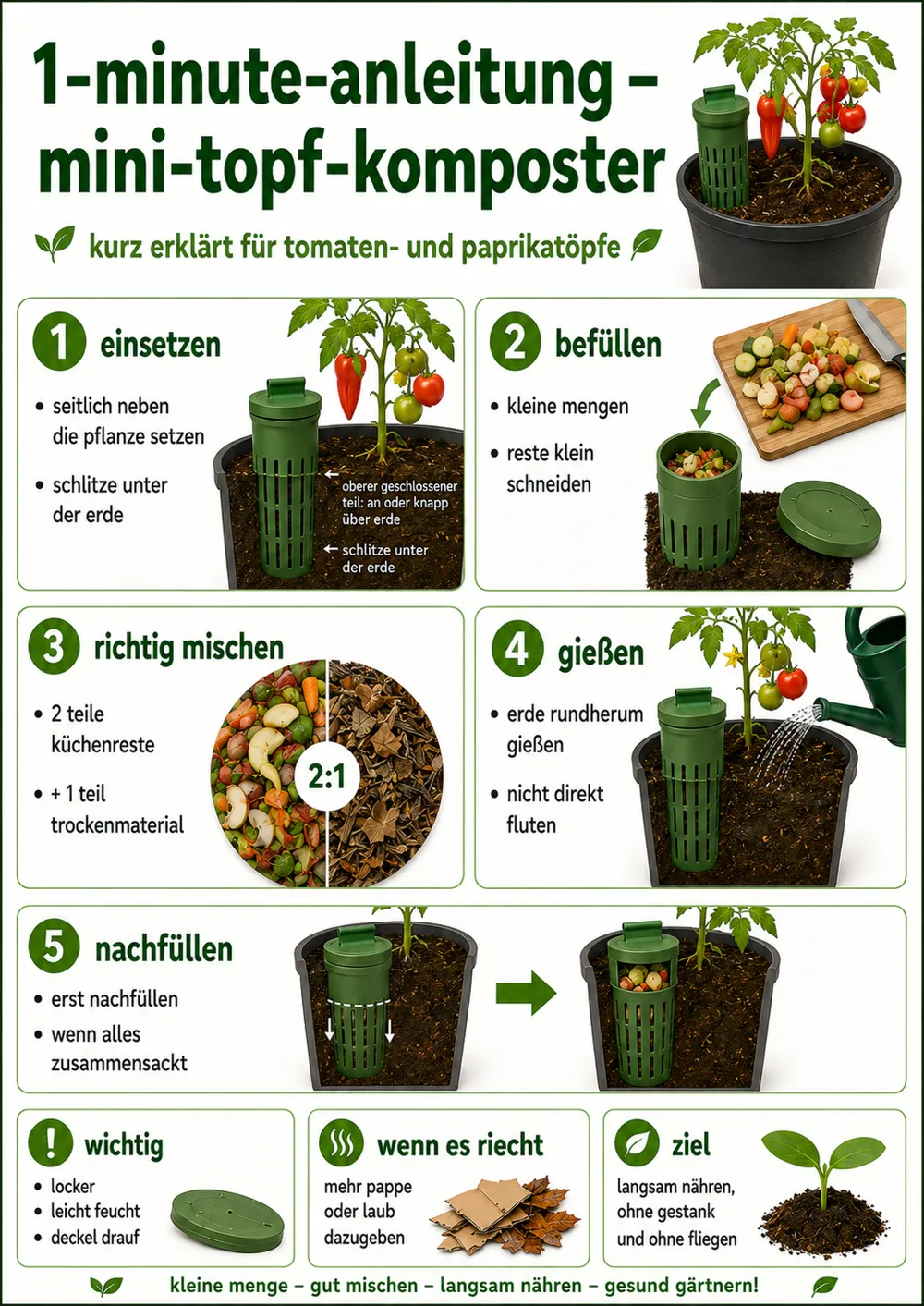
Insert the mini-composter to the side of the plant, not directly at the stem. The slotted area should be completely below ground. The upper closed area and the lid remain visible above ground.
When filling, use only small quantities. Chop kitchen scraps finely beforehand and ideally pre-mix them with dry material.
Rule of thumb:
1 part kitchen scraps + 1 part dry material
or with good ongoing use:
2 parts kitchen scraps + 1 part dry material
Suitable dry material includes shredded egg cartons, unprinted cardboard, dry leaves, coco coir, or some old soil.
Do not water directly into the composter. Usually, it is sufficient to water the plant and the soil around the composter. The content should only be slightly moist, not wet. If the composter smells foul, usually too much or too wet material has been filled in. Then add dry material and do not refill anything new for a few days.
The composter does not need to be completely emptied regularly. The material settles over time and slowly decomposes. Simply refill small amounts when space becomes available again. After the season, the composter can be removed, rinsed, and stored dry.
License

You shall not share, sub-license, sell, rent, host, transfer, or distribute in any way the digital or 3D printed versions of this object, nor any other derivative work of this object in its digital or physical format (including - but not limited to - remixes of this object, and hosting on other digital platforms). The objects may not be used without permission in any way whatsoever in which you charge money, or collect fees.


Comment & Rating (4)