
WALLY — Modular Wall Organizer





Print Profile(42)




Bill of Materials

Description
WALLY — Modular Wall Organizer
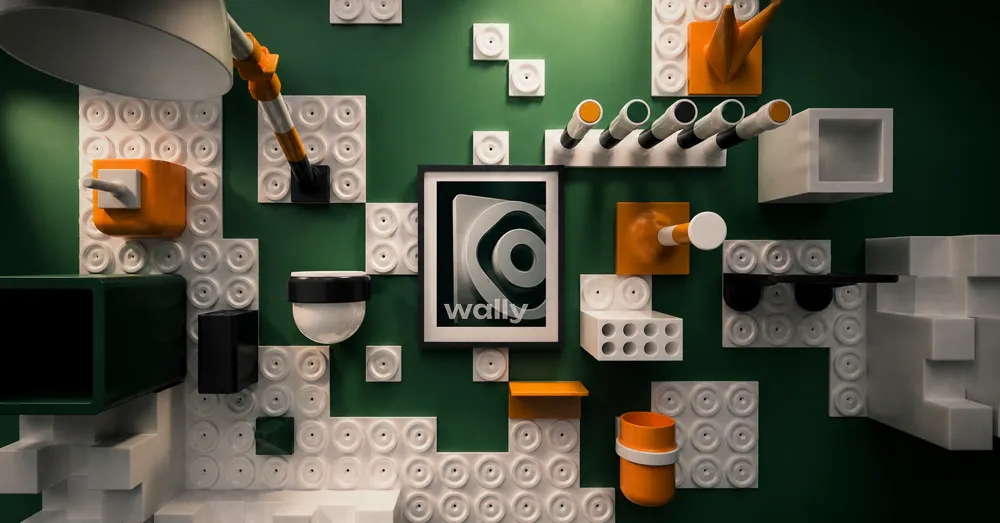
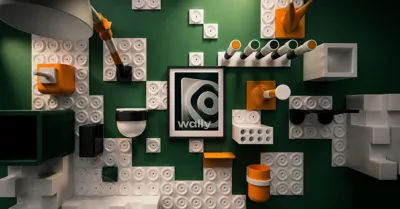
Wally is a modular wall organization system built around a single mounting module. The concept is straightforward: one or more bases are fixed to the wall, and functional modules are attached to them — without tools, in any combination.
The system works in two modes. In solo mode, a single mount is installed for one specific module — minimal footprint, maximum precision. In panel mode, mounts are arranged in a grid, creating a field for freely composing and rearranging modules as needed.
Wally is an open system that will continue to grow with new modules. Some modules were developed independently and later integrated into the system — they may also be published as standalone models in the future.
This model is part of my UnboringHousehold collection — everyday objects designed with a little more intention. Feel free to explore the rest of the collection here: NotJustHousehold
How It Works
At the core of the system is a 5×5 cm mounting module. It is fixed to the wall with a single screw and serves as the attachment point for any functional module. Mounting modules can be combined into panels of any size, forming a grid with a 5 cm step.
Attaching functional modules requires no tools: the module slides onto the mount and locks in place through the geometry of the connection. Removal is a single motion.
The mounting module is available in several configurations: as a standalone unit for single-module placement, and as multi-cell monolithic panels — for cases where a larger module is needed or the layout is predetermined.
Note. When choosing a mounting method, consider the wall material and the intended load. A screw in drywall without a wall anchor will hold significantly less than one in concrete or brick. For heavier modules — loaded shelves, plant pots — use appropriate hardware and distribute the load across multiple mounting points rather than a single screw. Avoid overloading a module held by a single screw. The mounting module can also be fixed with strong adhesive, which opens up additional surfaces: tiles, glass, furniture.
Available Modules
Base
- Mounting module — standalone and as monolithic panels
Storage & Organization
- Minimalist shelf
- Tray shelf
- Box shelf
- Pocket shelf
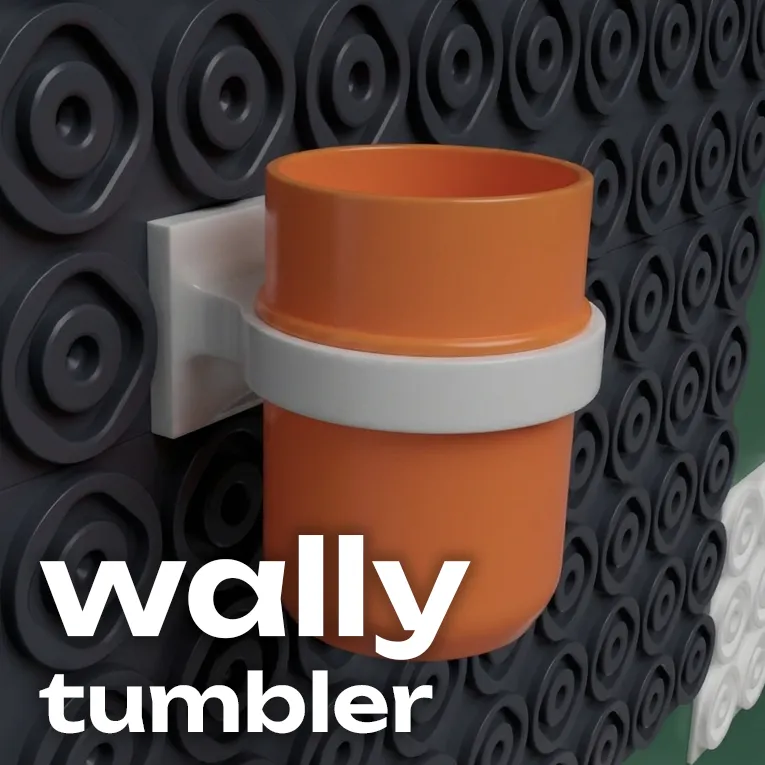
- Tumbler with holder
- Pen and pencil holder
- Marker holder
- Test tube holder
- Filament spool holder
Hooks & Hangers
- Hook hanger (theHook)
- Minimalist hanger (Hooky)
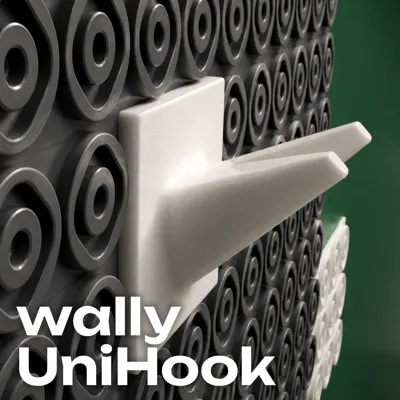
- Universal hanger (UniHook)
- Multi-purpose rods
Plants
- Plant pots with holders (4 sizes)
- Drainage pot (thePot)
Décor & Interior
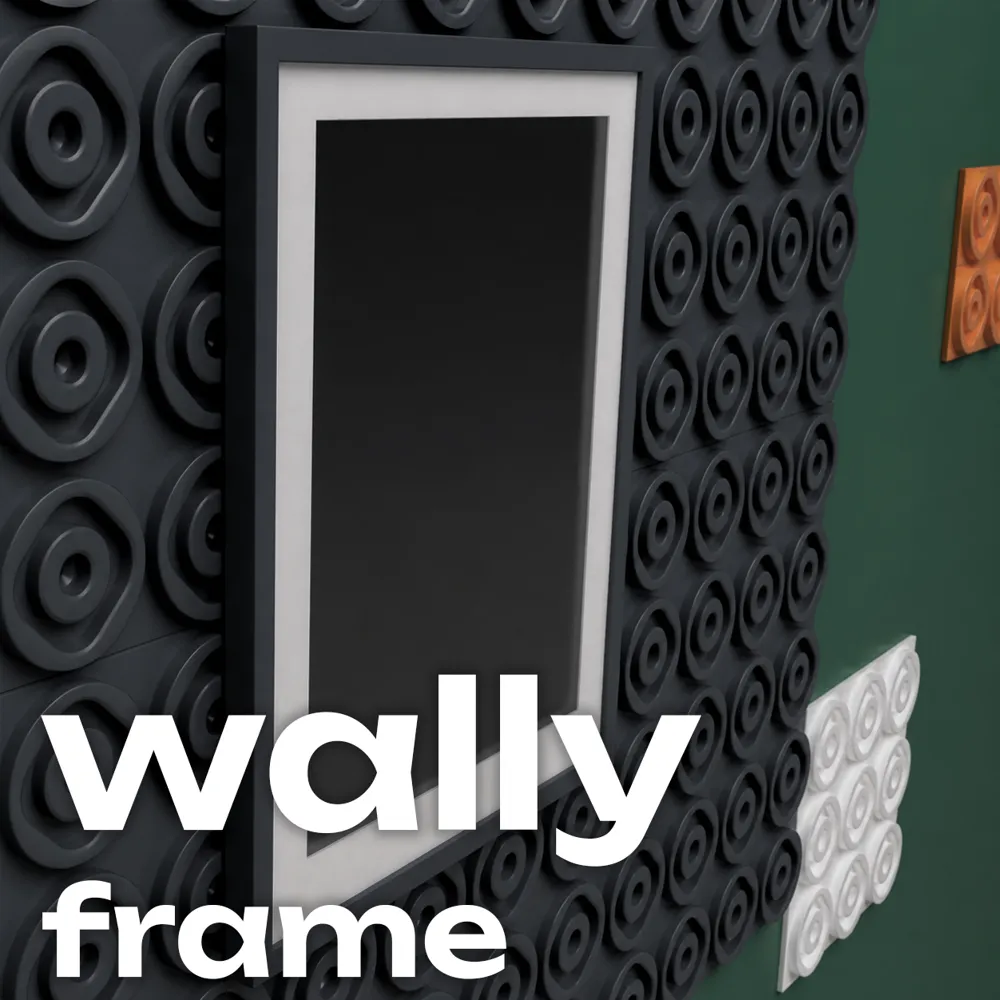
- Photo and illustration frames
- Decorative panels / boards
- Acoustic diffuser
Lighting
- Wall pocket sconce
- Articulating rod lamp
Module Descriptions
Mounting Module
The foundation of the Wally system. A 5×5 cm square plate with a central mounting element to which all functional modules attach. Fixed to the surface with a single screw.
Available in several configurations: a standalone unit for targeted placement of a single module; monolithic multi-cell panels for building a grid for multiple modules or one large module. Panels are available with print profiles for both the Bambu A1 mini and full-size printers.
Multi-purpose Rods
A versatile building element of the Wally system — a cylindrical rod projecting from the wall either perpendicularly or at a 30° angle. Rods are used both standalone and as part of other modules. Available in multiple lengths, extendable via additional sections.
Use cases:
- single rod — hanger for clothes, a bag, or a towel
- row of rods — improvised shelf for light items
- angled row of rods — dish drying rack in the style of lab dryers
- base for lamp and filament spool modules
Thinner-diameter rods with matching caps are also available specifically for dish drying. Each rod comes with a rod cap that prevents contents from sliding off. Three cap variants are available, one of which is customizable: it consists of a base and a removable platform that can be printed in a different color or personalized with a custom image or text directly in the slicer. (see customization guide)
The rod set allows you to independently build various structures beyond the provided modules. Examples: paper towel roll holder, towel rail, curtain rod for small curtains.
Rod reinforcement (rod core). Some rod-based modules include optional square-section inserts — rod core. These increase rod strength through a layer orientation perpendicular to that of the outer rod part. Rod core use is optional but recommended for longer rods and heavier expected loads — plastic tends to creep under sustained stress.
Shelves
Available in several styles, differing in form and purpose.
Minimalist shelf — a clean form based on simple geometric lines. Available in multiple sizes, from small — suitable for souvenirs, figurines, and collectibles — to full-size for everyday storage.
Tray shelf — a rectangular shelf with slightly raised edges to prevent items from sliding off. Available in three sizes.
Box shelf — a shelf in a cubic or near-cubic form. Suitable for display as well as utilitarian storage.
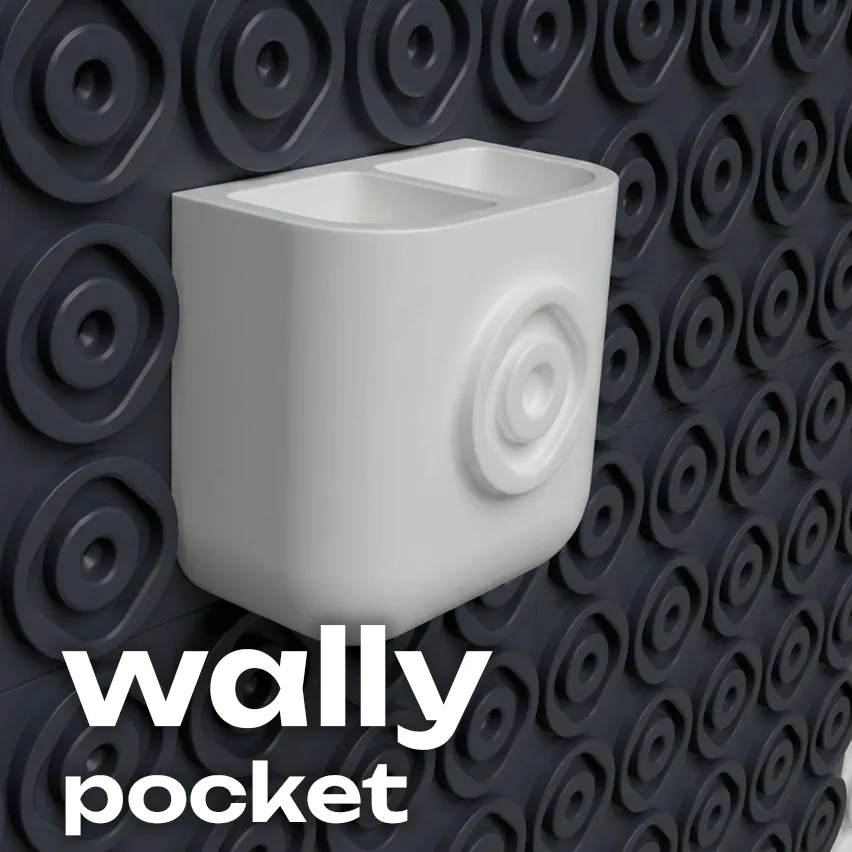
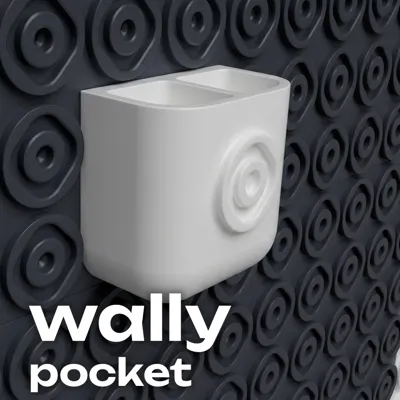
Pocket shelf — a set of pocket-shaped shelves in various heights, widths, and depths. Some variants feature an additional mounting element on the outer surface for attaching a small secondary module.
Hooks & Hangers
Hook hanger (theHook) — a classic hook. Available as a single unit or as a row of hooks on a shared base.
Minimalist hanger (Hooky) — a short peg perpendicular to the wall. Available as a single unit or in a row. The wall joint comes in two styles: angular and rounded. The peg can optionally be fitted with one of three cap variants: cylindrical, flared stopper, or spherical.
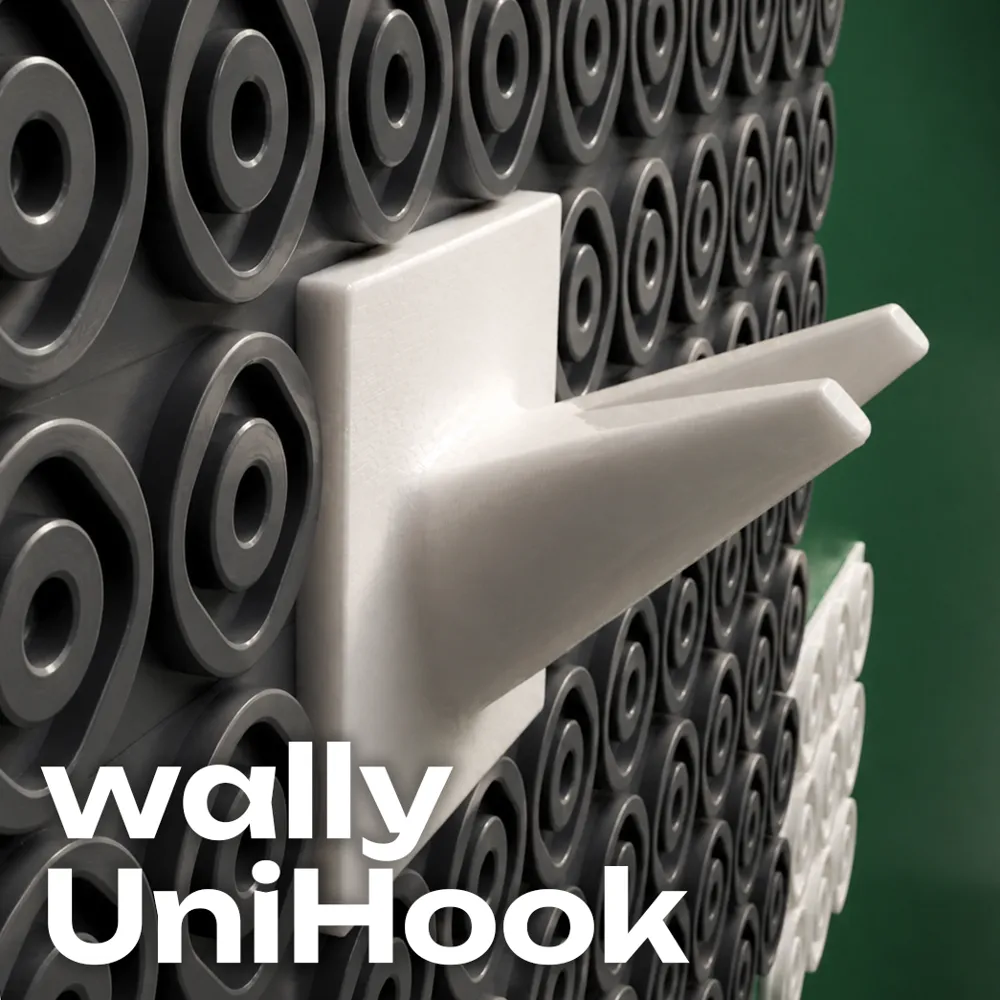
Universal hanger (UniHook) — a fork-shaped hanger. Works for key fobs, clothing, bags, and full-size headphones.
Plant Pots
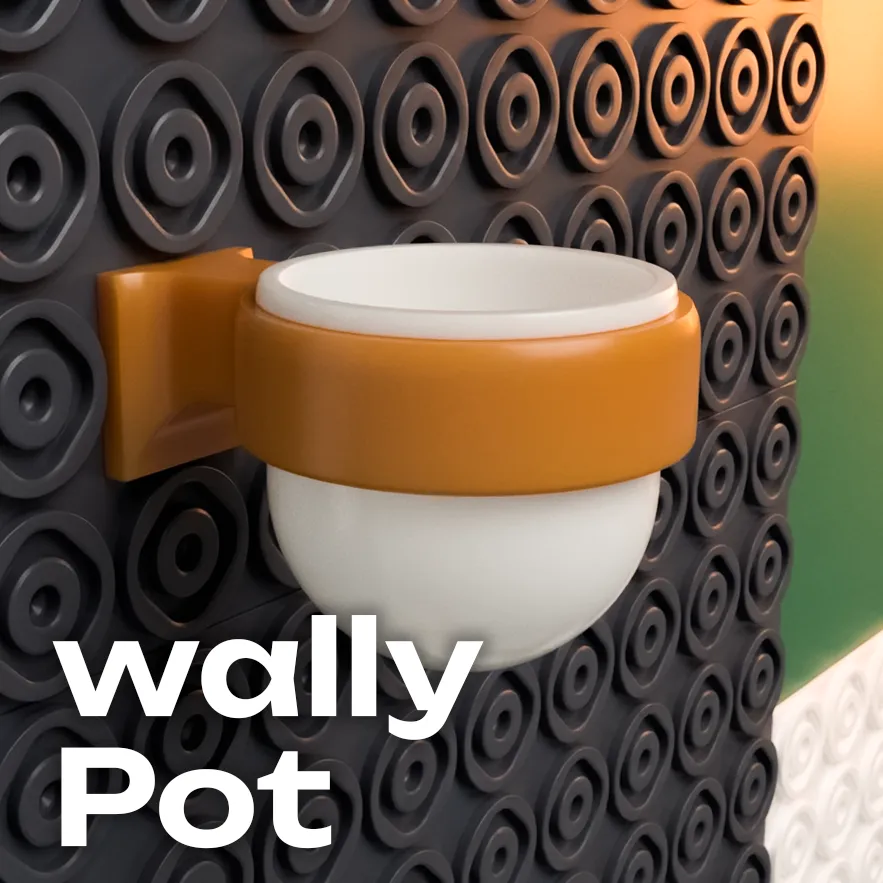
Plant pots with holders — a two-part module: a cylindrical pot and a ring-shaped wall-mounted holder. The pot sits in the holder and can be easily removed when needed — for repotting, soil work, or repositioning. Available in four diameters: 6, 8, 9.2, and 12 cm. Pots have no drainage holes — ideal for succulents, cacti, and other plants that don’t require frequent watering. Can also be used for storing small items.
Drainage pot (thePot) — a pot with drainage holes, wall-mounted via a holder. Suitable for plants that require regular watering. Available in one size.
Tumbler with Holder
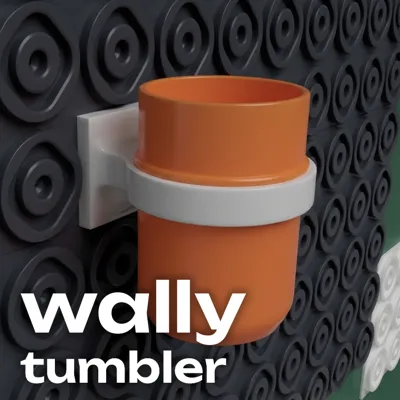
A two-part module: a cylindrical tumbler and a wall-mounted holder. The tumbler slides out easily. Suitable for storing pens, pencils, brushes, and similar items, as well as any other contents of appropriate size. Two tumbler variants are available, differing in wall thickness: 2 and 3 mm.
Pen, Marker, and Test Tube Holders
Pen and pencil holder — a horizontal rack with 13 mm diameter slots arranged at a slight angle for easy viewing of contents. Each module features a chamfer along the top edge indicating correct installation orientation. Available in multiple variants of different sizes and capacities.
Marker holder — similar to the pen holder, but with 16 mm slots. Suitable for markers and similarly sized items. Also available in multiple capacity variants.
Test tube holder — a vertical rack with 16 mm diameter slots. Unlike the pen and marker holders, slots are oriented vertically. Suitable for test tubes, markers, and items of similar diameter. Available in multiple capacity variants.
Photo and Illustration Frames
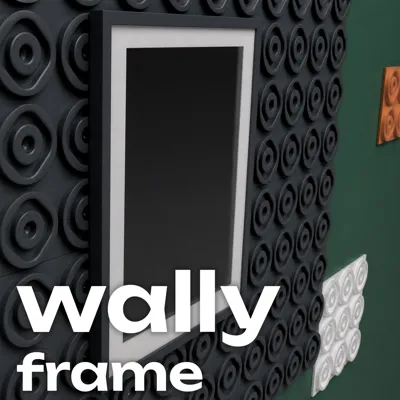
Modular frames aligned to the Wally 5 cm grid. Available in six sizes:
| Frame | Passepartout |
| 10×15 cm | 9×13, 7×10, 6×9, 5×7 cm |
| 15×15 cm | 12×12, 10×10, 9×9, 7×7 cm |
| 20×15 cm | 10×15, 9×13, 13×18 cm |
| 20×20 cm | 10×10, 13×13, 15×15 cm |
| 20×25 cm | 10×15, 13×18, 15×20, A5 (14.8×21) cm |
| 25×25 cm | 10×10, 13×13, 15×15, 18×18, 20×20 cm |
The passepartout is printed separately and inserted into the frame — it is entirely optional. The frame accommodates an optional cover plate of acrylic or glass, 2–3 mm thick, cut to size by the user.
Acoustic Diffuser
A wall panel made of rectangular columns of varying heights that scatters sound and reduces room reverb. Effective in the mid and high frequency range — useful for addressing echo in living spaces. A noticeable acoustic effect is achieved when covering at least 10–15% of the wall surface; in smaller quantities, the modules work well as a decorative element.
The panel is assembled from individual fragments available in two group formats: 3×3 and 5×5 cells.
Boards and Decorative Panels
Decorative panels — flat modules for filling unoccupied cells in the Wally grid. They close off empty spaces and help create a unified wall composition. These modules can be personalized with a custom image or text directly in the slicer. (see customization guide)
Board — a module with a flat surface suitable for sticky notes. The surface can optionally be fitted with a 2 mm acrylic plate — acrylic’s smooth surface works well with dry-erase markers and wipes clean easily. The plate is secured with double-sided tape or silicone adhesive around the perimeter. Alternatively, self-adhesive whiteboard film can be used — it cuts to size and requires no additional adhesive.
Filament Spool Holder
A wall-mounted filament spool holder assembled from standard Wally rod parts. It consists of a horizontal rod with a retaining cap onto which the spool is placed. Rod length is adjustable by adding extra sections as needed, depending on spool width.
Lighting
Both lighting modules are compatible with the LED Lamp Kit from Bambu Lab.
Wall pocket sconce — a pocket-shaped module mounted directly to the wall. Provides diffused ambient lighting.
Articulating rod lamp — a wall-mounted desk lamp equivalent. The stand is assembled from standard Wally rod parts with an angle-adjustable joint. Cable guides are included for clean wire routing. Two shade variants are available: minimalist and classic desk lamp style.
Assembling the pivot joint. The pivot joint consists of three parts printed together. Moving the object in the slicer is not recommended — the parts are not grouped as an assembly, and disturbing their relative positions will cause them to fuse during printing. Immediately after printing, the parts will be slightly stuck together. To release: 1) knock the central locking pin upward from the bottom — the side that was on the print bed; 2) once the pin shifts up, the remaining two parts can be rotated around the shared axis; 3) fully extend the pin and apply light force for the first rotation — after that, the joint will move freely.
Print Notes
All models were tested in basic PLA. Other materials may be used, but their properties should be taken into account — particularly strength and shrinkage: the system is designed for use under load, and fit tolerances are critical for reliable module engagement.
Plate layout has been set up with print quality requirements in mind. Modules with mounting elements are oriented so the mount lies flat on the bed — printing vertically does not fully prevent engagement but noticeably compromises it. Scaling models is not recommended: it alters tolerances and disrupts module fit.
Most models are arranged individually on the beds — both for clarity and to allow printing one item at a time, which is the most practical approach.
Recommended print settings are included in each model’s print profile. Experienced users may experiment with their own settings, keeping the above in mind.
Models are designed to minimize the need for supports. In most cases, printing without supports is possible; exceptions are noted in the print profile.
Proper printer calibration is always encouraged — it is especially important for mounting modules, where tolerance accuracy directly affects engagement quality.
General recommendation: if adjustments are needed, change only print parameters without compromising strength. Avoid repositioning models on the print bed where possible.
Assembly
For multi-part modules, it is recommended to review the relative positioning of parts in the slicer’s assembly view before printing. If assembly difficulties arise with any module, documentation and diagrams will be published as a supplement.
Module Fitment
Mount tolerances are set to provide secure engagement with minimal insertion force. When mating a module with multiple mounts simultaneously, somewhat greater force may be required — this is normal and does not indicate a print issue.
Customizing the Rod Cap
The removable platform of the customizable rod cap can be personalized directly in Bambu Studio — no third-party software required.
Adding text:
- Select the cap platform part in the slicer
- Open the Text Shape tool from the toolbar
- Enter the desired text, choose a font and size
- Select type: Part — embossed above the surface; Cut — engraved into the surface
- If needed, assign a separate filament to the platform to print it in a different color
Adding an SVG image:
- Prepare an SVG file — all paths must be closed; open paths are not supported
- Import the SVG via File → Import
- Position it on the platform surface and adjust the size
- Select Part or Cut mode, same as for text
The SVG file must contain only closed paths — Bambu Studio does not handle open paths correctly. The free editor Inkscape can be used to prepare SVG files.
Customizing Decorative Panels and Boards
The surface of decorative panels and boards can be personalized with text or an SVG image directly in Bambu Studio — using the same method as for the rod cap platform. This allows for custom name plates, decorative lettering, patterns, or themed illustrations.
Adding text:
- Select the panel or board part in the slicer
- Open the Text Shape tool from the toolbar
- Enter the desired text, choose a font and size
- Select type: Part — embossed; Cut — engraved
- If needed, assign a separate filament to print the text in a different color
Adding an SVG image:
- Prepare an SVG file — all paths must be closed
- Import the SVG via File → Import
- Position it on the panel surface and adjust the size
- Select Part or Cut mode
The SVG file must contain only closed paths — Bambu Studio does not handle open paths correctly. The free editor Inkscape can be used to prepare SVG files.
License

You shall not share, sub-license, sell, rent, host, transfer, or distribute in any way the digital or 3D printed versions of this object, nor any other derivative work of this object in its digital or physical format (including - but not limited to - remixes of this object, and hosting on other digital platforms). The objects may not be used without permission in any way whatsoever in which you charge money, or collect fees.


Comment & Rating (0)