
Pocket Calipers - 70mm, 0.025mm resolution
Print Profile(1)
Description
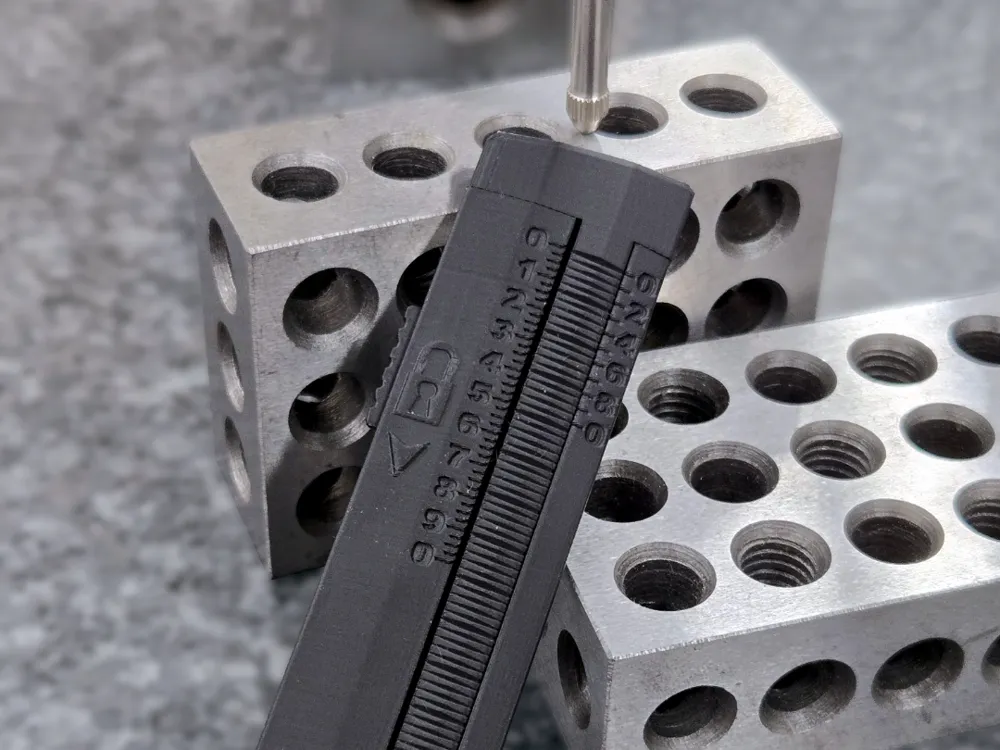
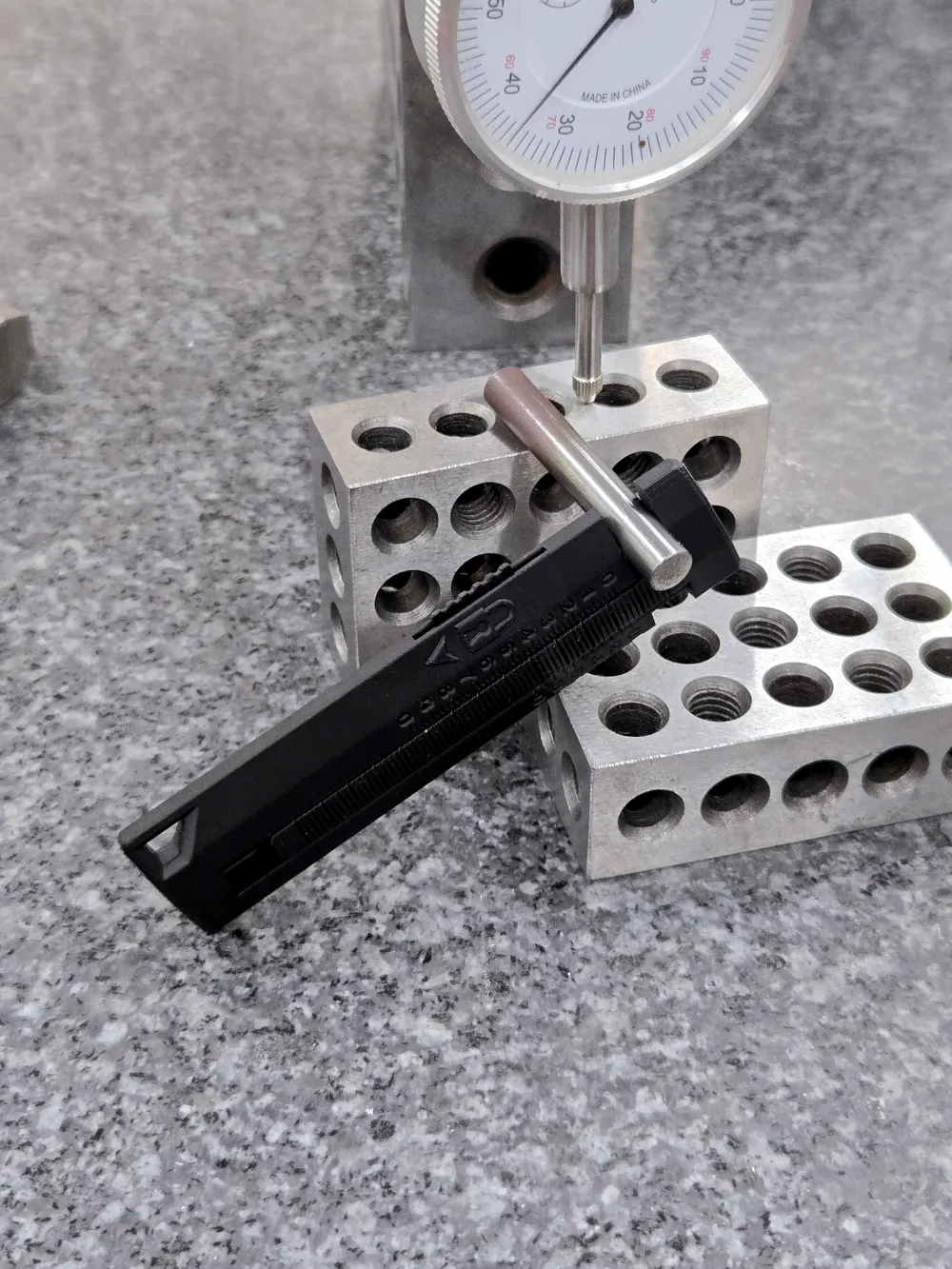
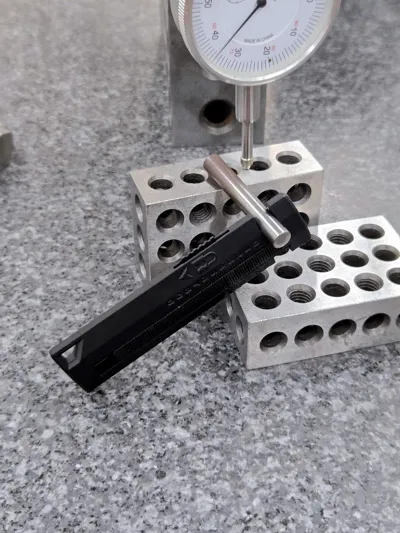
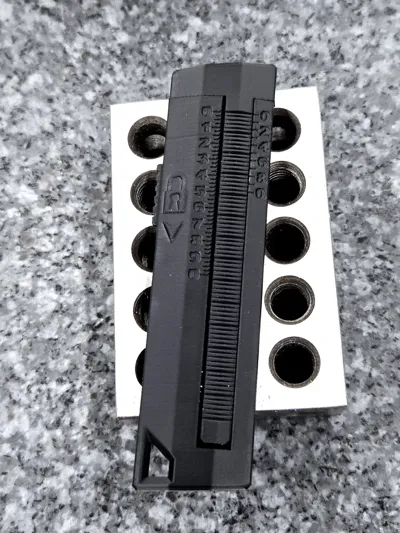
0.025 mm Vernier Pocket Calipers
I designed these as a functional set of vernier calipers. The goal was to push what’s realistically usable with a 3D printer while still keeping the tool straightforward to read. Nice for every day carry.
This version includes:
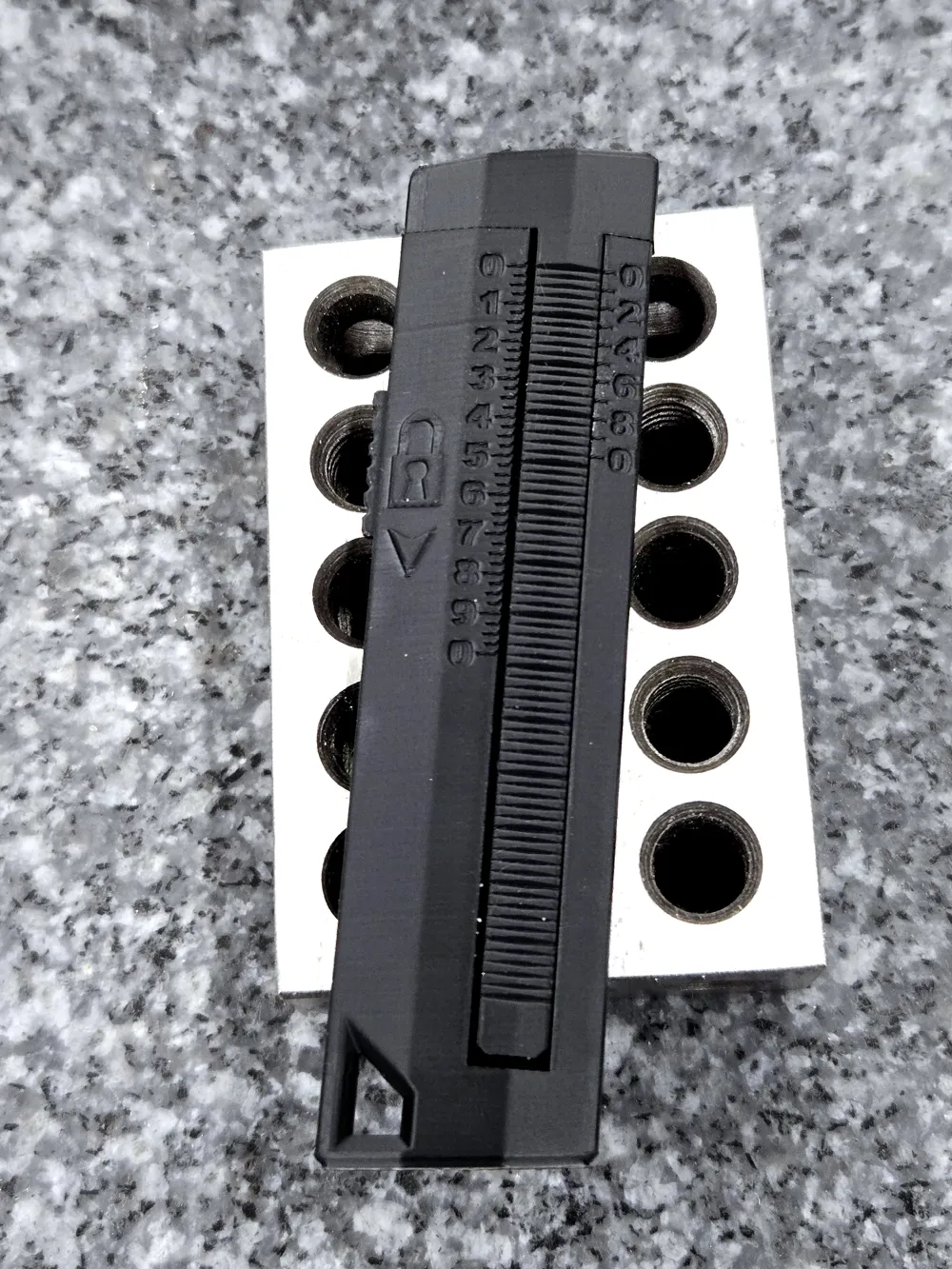
- A main millimeter scale on the moving slide
- A 0.025 mm vernier scale on the left side of the body (primary precision scale)
- A 0.100 mm vernier scale on the right side (for faster, less precise readings)
- A slide lock on the side. Push it down to lock, either push it up, or pull up on the jaws to unlock
Why Vernier Scales Exist (and Why They’re Still Around)
The vernier scale goes back to Pierre Vernier in the 1600s. The idea is simple: instead of trying to subdivide a single scale smaller and smaller, you use a second scale with a slightly different spacing.
When two lines line up, that offset tells you the fractional measurement.
No batteries, no electronics, nothing to drift or die—just geometry. That’s why this method is still used in real metrology equipment.
How to Use It
If you’ve never used a vernier before, here’s the quick version:
1. Read the main scale - Look at the slide and note the last whole millimeter before the vernier zero.
2. Find the aligned line - Scan the vernier scale and find the line that lines up cleanly with a line on the main scale.
3. Add them together
That’s your measurement.
Example:
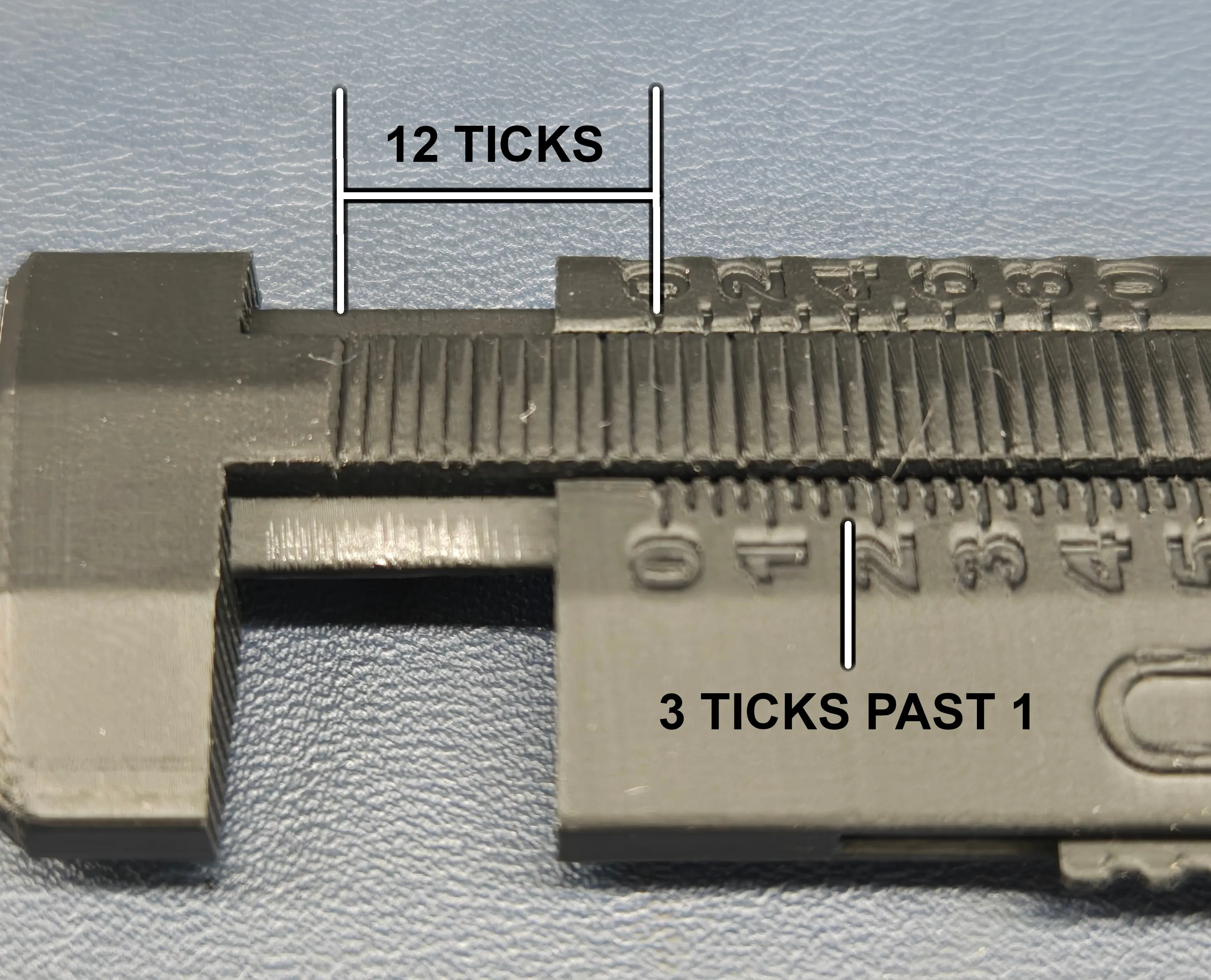
Main scale: 12 mm
Aligned line: 3 ticks past the 1 (on the 0.025 scale)
0.100 + (3 × 0.025) = 0.175 mm
Final = 12.175 mm
(in the sample image, I recognize that lens distortion maybe makes it look like the 0.175 line doesn't line up best with a scale line, but I assure it in real life it does. I could have just lied about it, I guess, and you never would have known…)
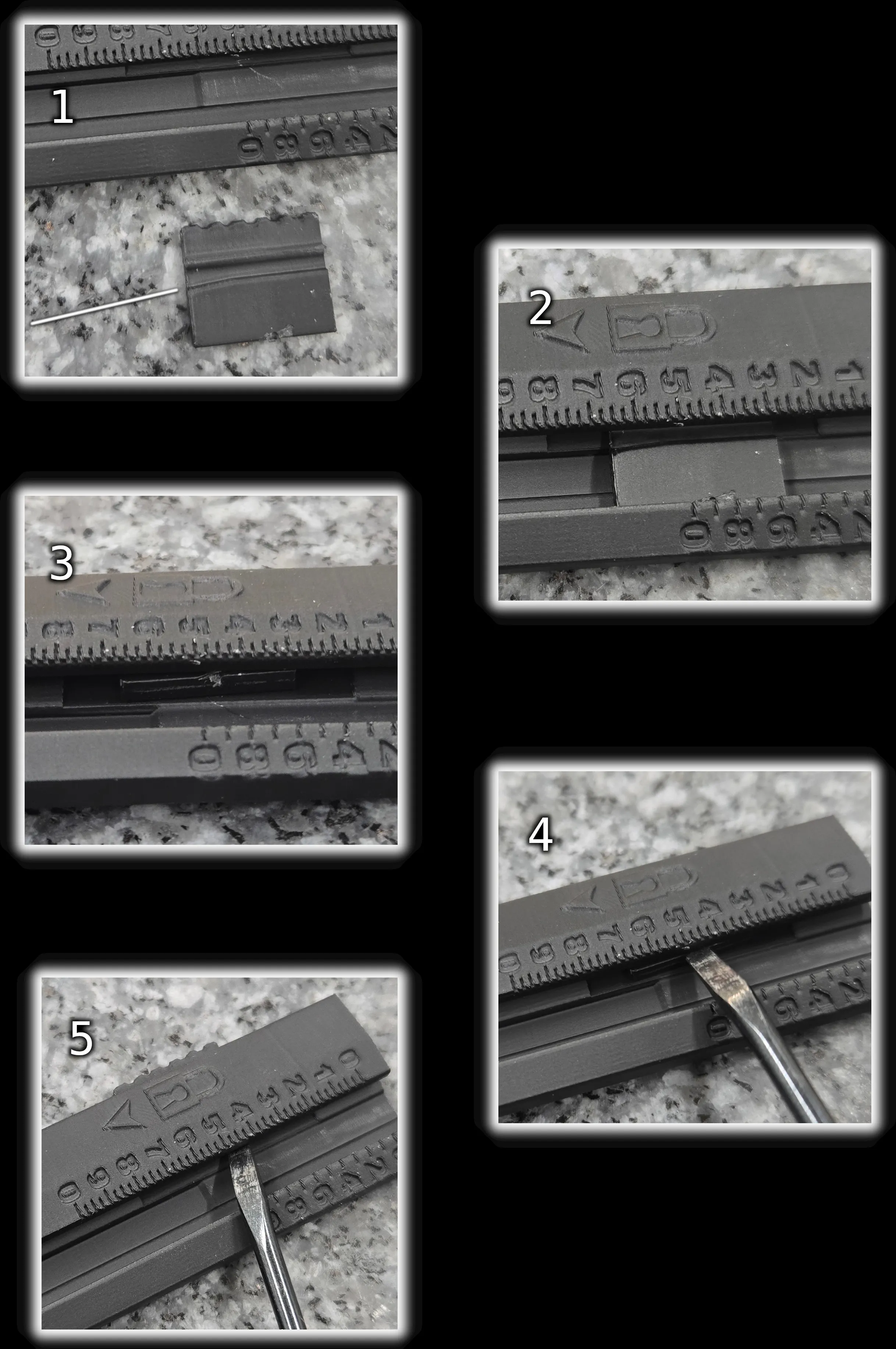
Assembly
- Arrange the lock with the angle toward the bottom of the caliper body
- Slide the lock into the body through the main slide channel, aligned with the center of the lock slot (too high or too low, and you'll split the body in the next steps)
- Press the lock in until you meet resistance
- with a small flat implement (I use precision screwdrivers or the flat end of a 6" scale/ruler) press the lock into position
- When you hear a click and the lock starts moving freely, it is fully installed.
- Slot the main scale/slide in from the top. You'll need to hold the lock up to get it up and out of the way.
Realistic Expectations
These are not replacing a set of Mitutoyos.
But if your printer is tuned well, they are absolutely usable for:
- Checking printed parts
- General shop measurements
- Sanity-checking dimensions before moving to higher-end inspection
Design Intent
Most printable calipers stop at 1.0mm - 0.1mm and call it done. I wanted to see how far that could be pushed without turning it into a gimmick.
The 0.025 mm vernier is the point of this design.
The 0.100 mm scale is there so you don’t have to think too hard when you don’t need that level of precision.
Boost Me (for free)
Shoot me a boost if you like the design. I've got more stuff like this I'm working on.
License

You may create derivative works based on this object, provided that all such derivative works are published exclusively on the MakerWorld platform and include proper attribution to the original creator. You may not share, upload, host, distribute, or publish this object—or any derivative work of this object—on any other digital platform, marketplace, or distribution channel. Commercial use of this object and any derivative works is strictly prohibited. This includes, but is not limited to, selling, renting, sublicensing, or using the object in any context in which you receive monetary compensation or other financial benefits.


Comment & Rating (0)