Search models, users, collections, and posts

Rediced – Dice Molds for 3D Printing Waste
Print Profile(1)
All
A1
H2C
A1 mini
P1P
H2S
X1 Carbon
P2S
P1S
H2D Pro
X1E
H2D
X1
X2D
A2L

0.2mm layer, 6 walls, 25% infill
Designer
16.3 h
8 plates
4.5(8)

Open in Bambu Studio
Boost
589
1681
40
19
459
260
Released 

Description

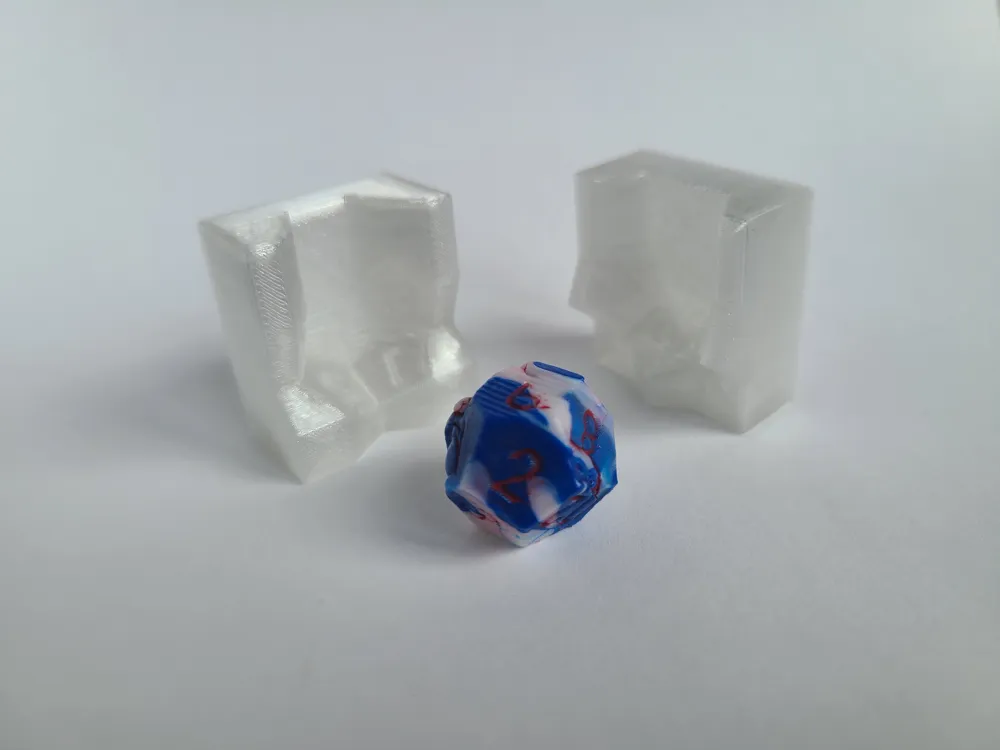
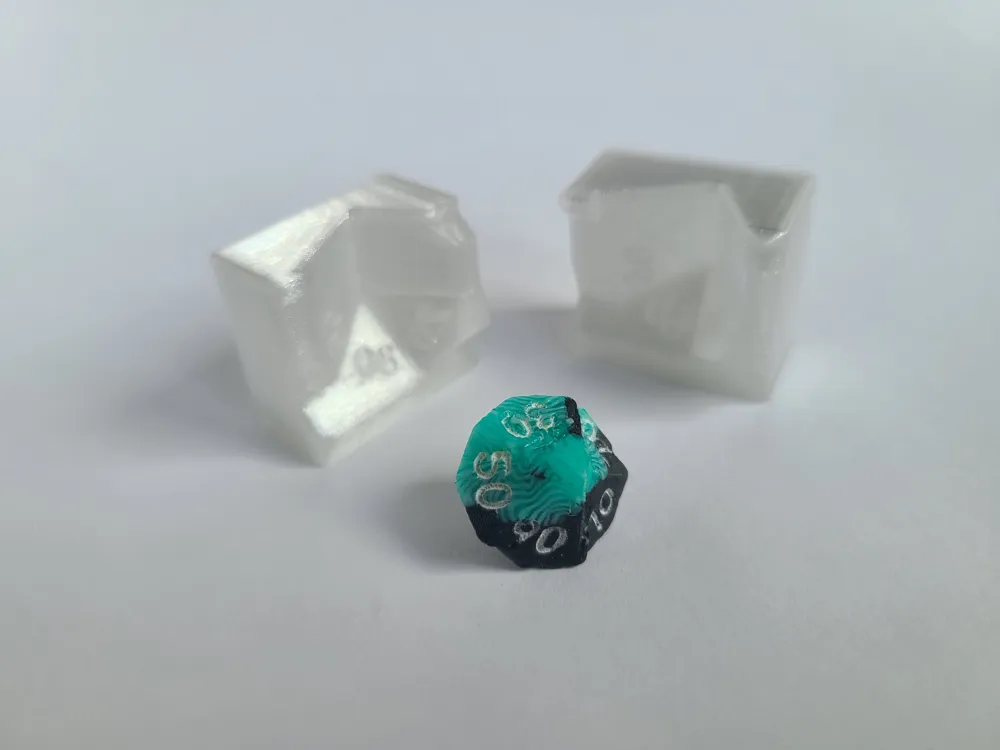
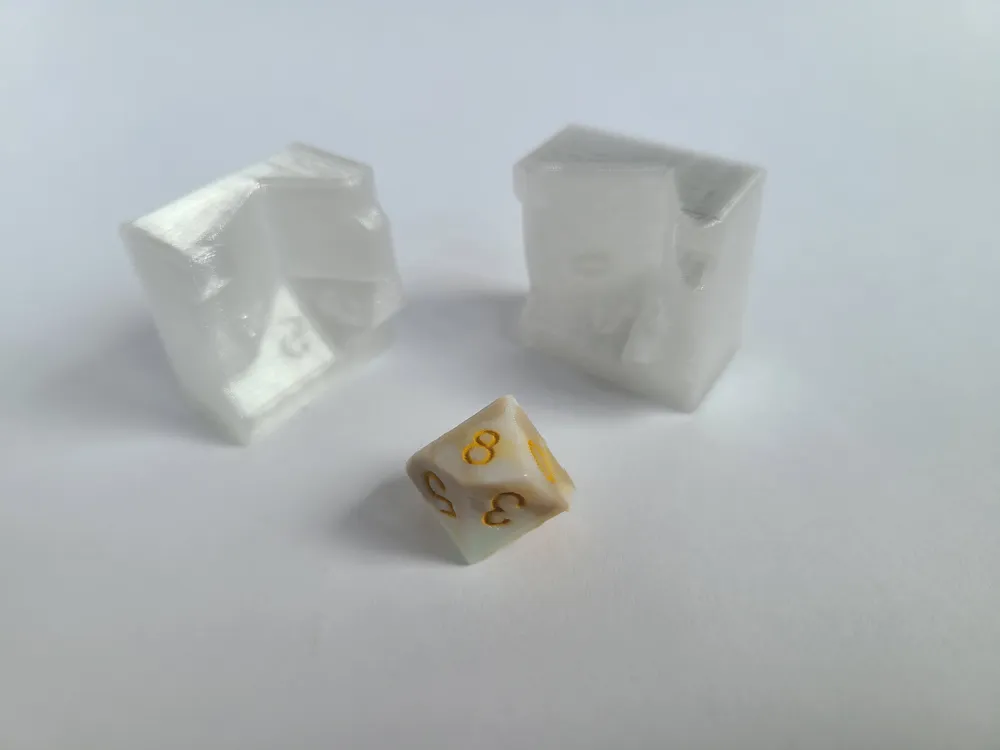
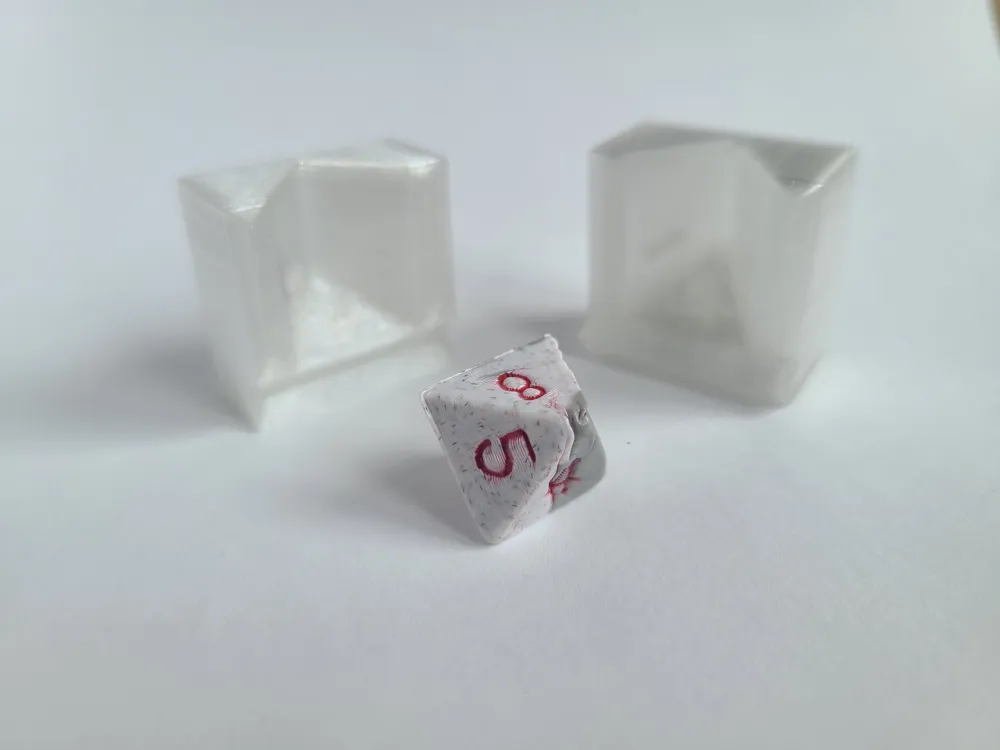
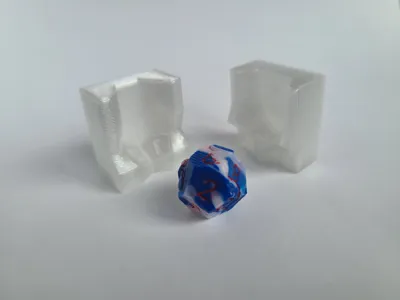
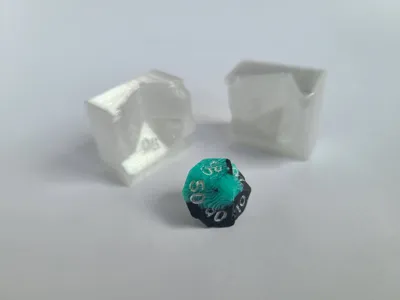
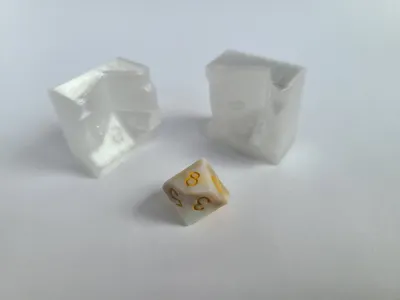
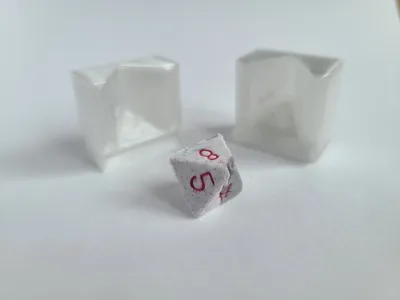
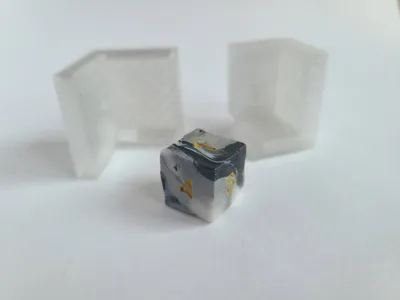
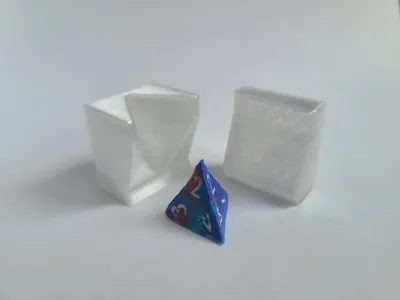
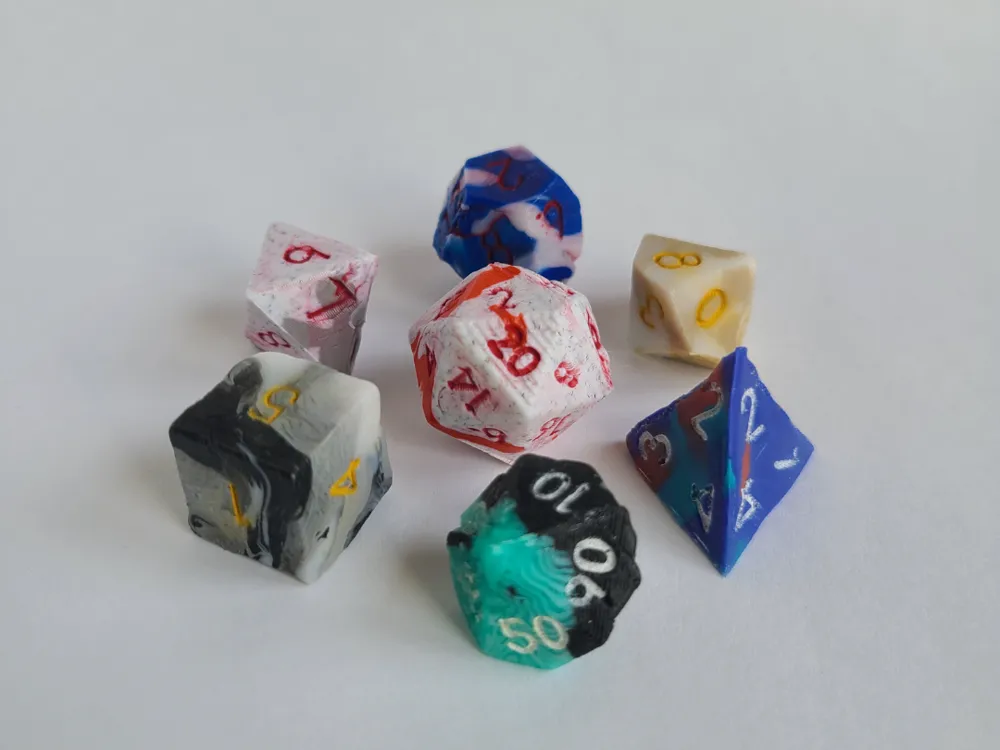
Rediced – From “Print-Poop” to Dices

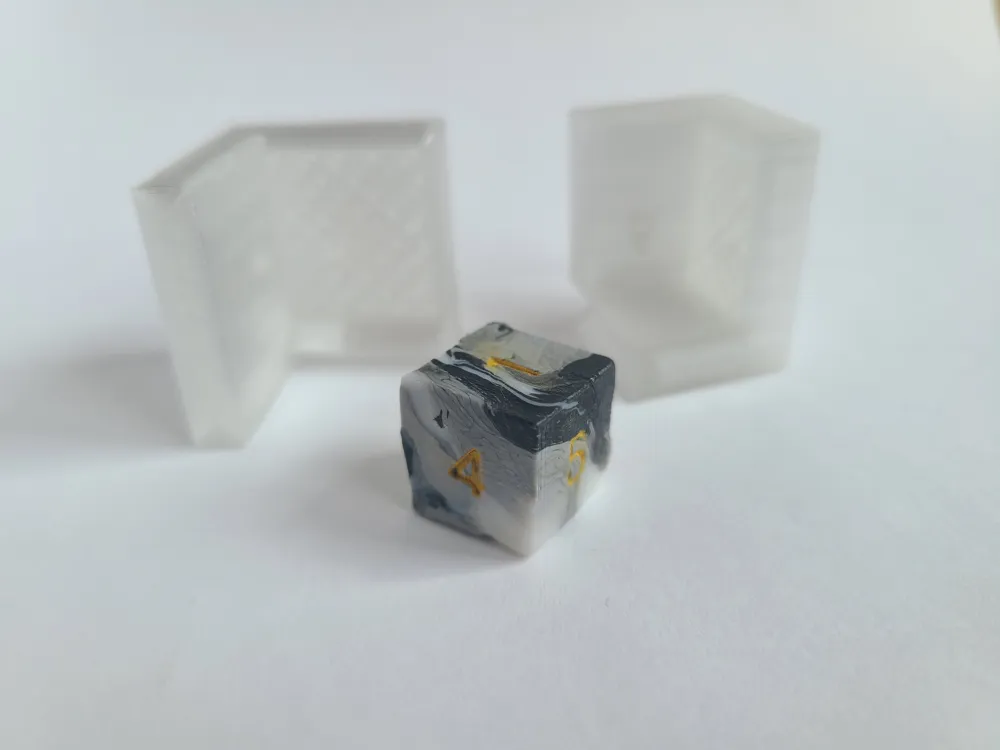
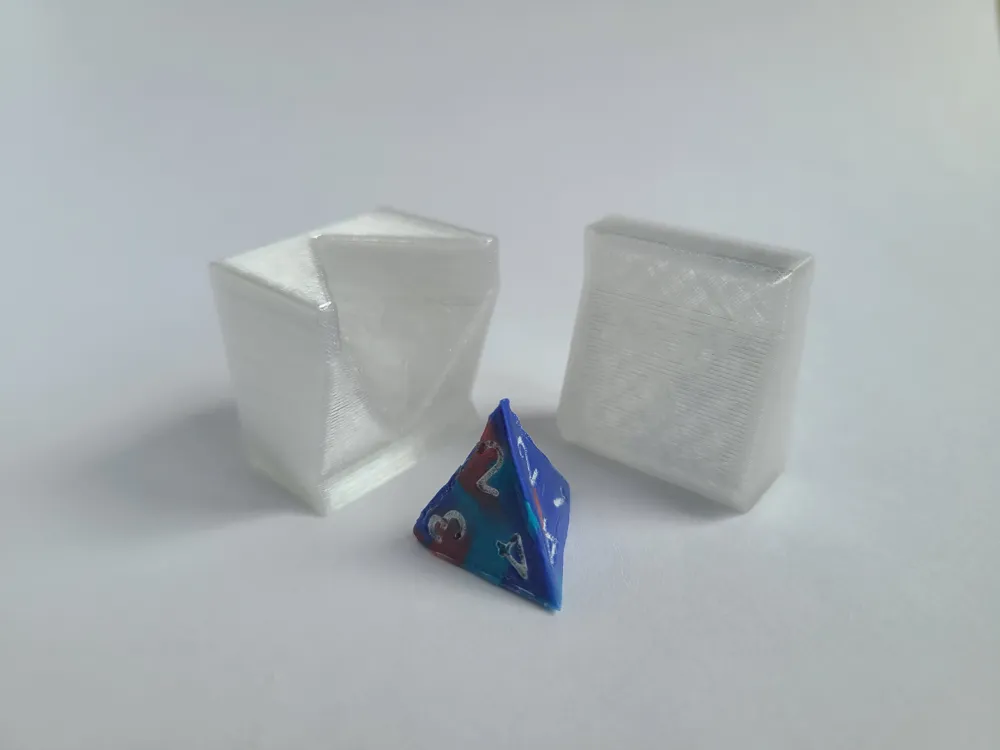
3D printing is fun, but it can create a lot of waste. With this method, you can recycle leftover filament from supports, color changes, or calibration and turn it into a dices.


Warning: High temperatures and fumes may occur. Work in a well-ventilated area and wear heat-resistant gloves. No liability for injuries or damages.


What you need

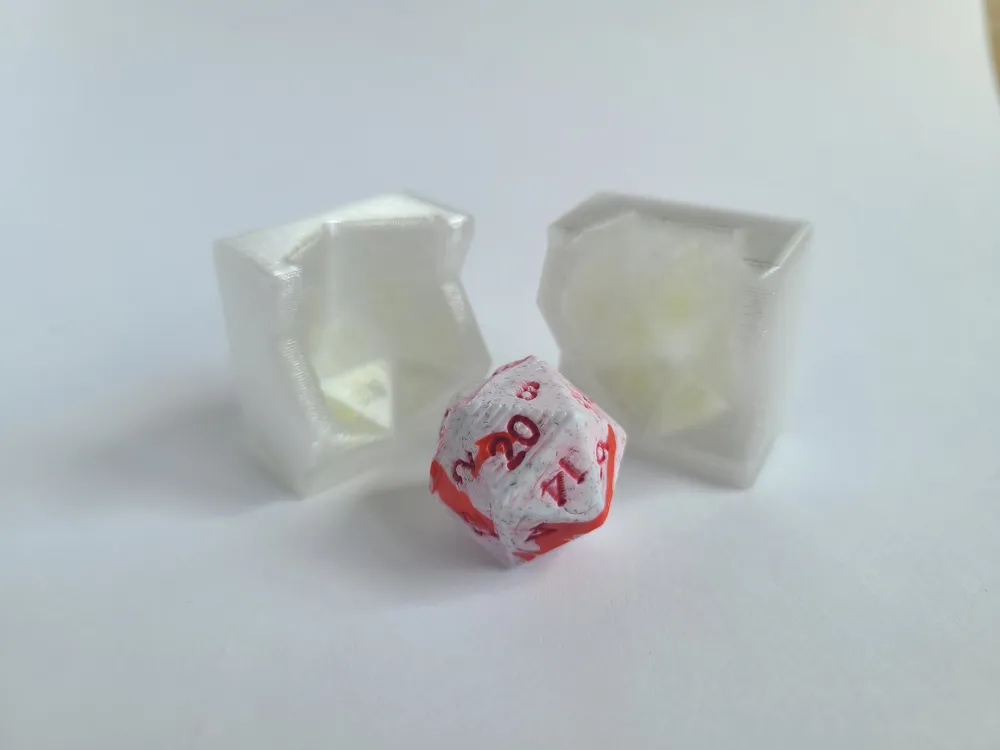
  • Dice press mold
  • Filament scraps
    • D4 ≈ 2.1g
    • D6 ≈ 5.1g
    • D8 ≈ 3.25g
    • D10 ≈ 2.9g
    • D12 ≈ 5g
    • D20 ≈ 6.3g
  • Heat gun or oven
  • Silicone mold
  • Heat-resistant gloves

Important: Print the mold in a different material as the scrap-material, e.g. PETG if you’re using PLA.


Instructions

  1. Prepare the mold: Assemble the mold, so that the opening is facing upwards. Optionally, grease the mold for easier release.
  2. Soften the material: Heat the sorted scraps in a silicone mold until soft, not fully liquid.
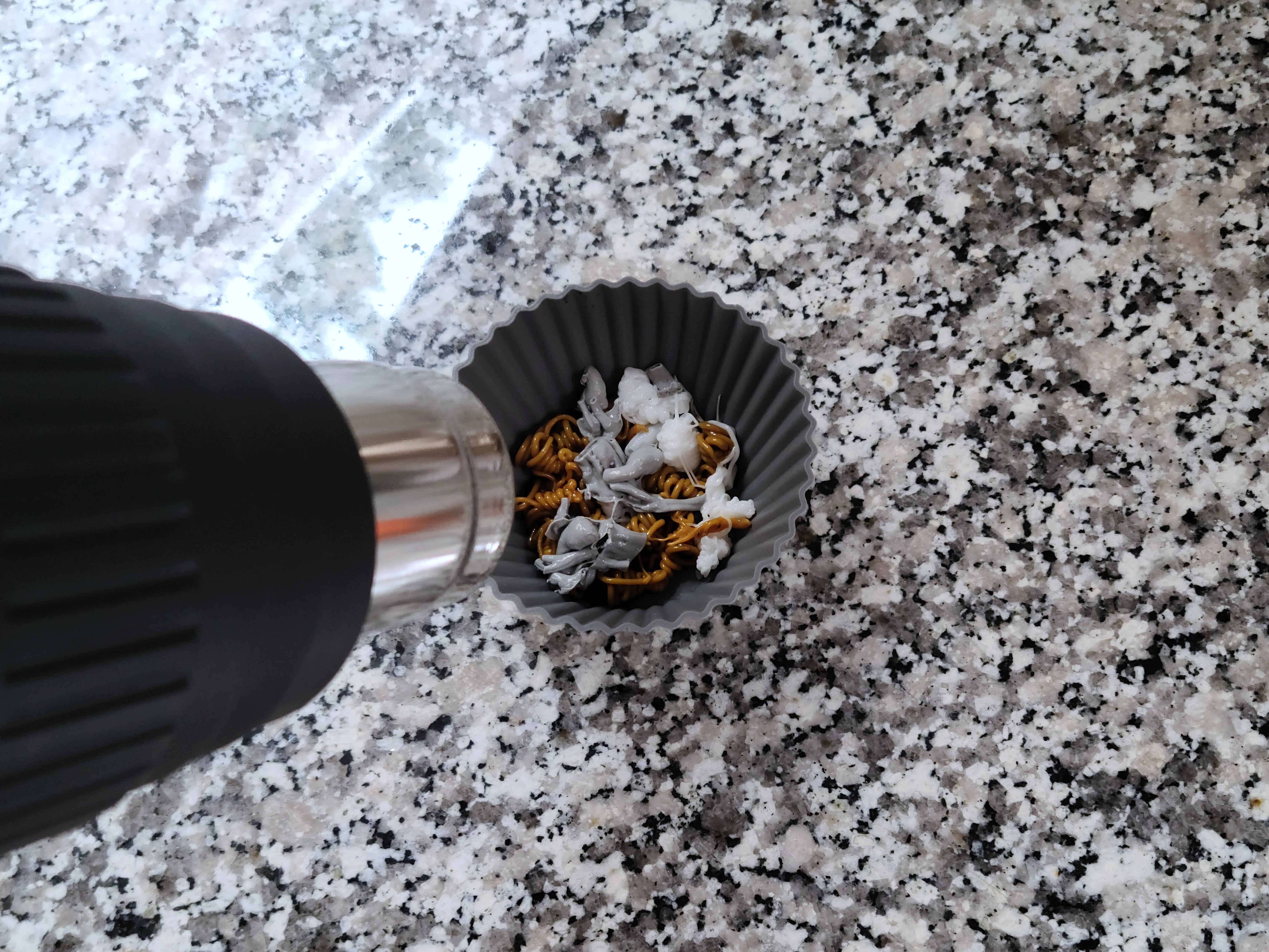
  3. Shape & press: Form the softened material to fit into the mold opening, then press it using the lid. Hold for a few seconds and let cool for 1–2 minutes.
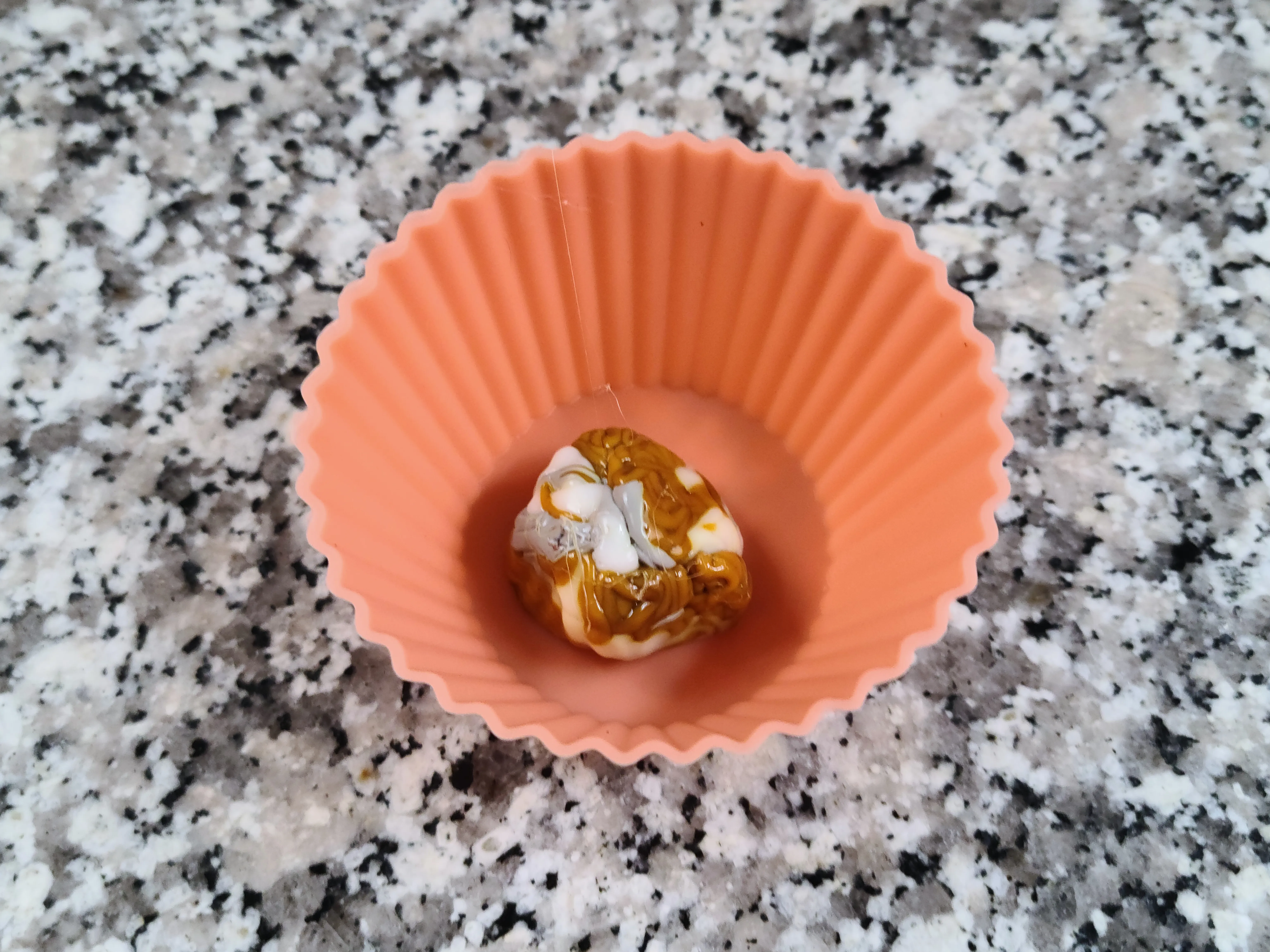
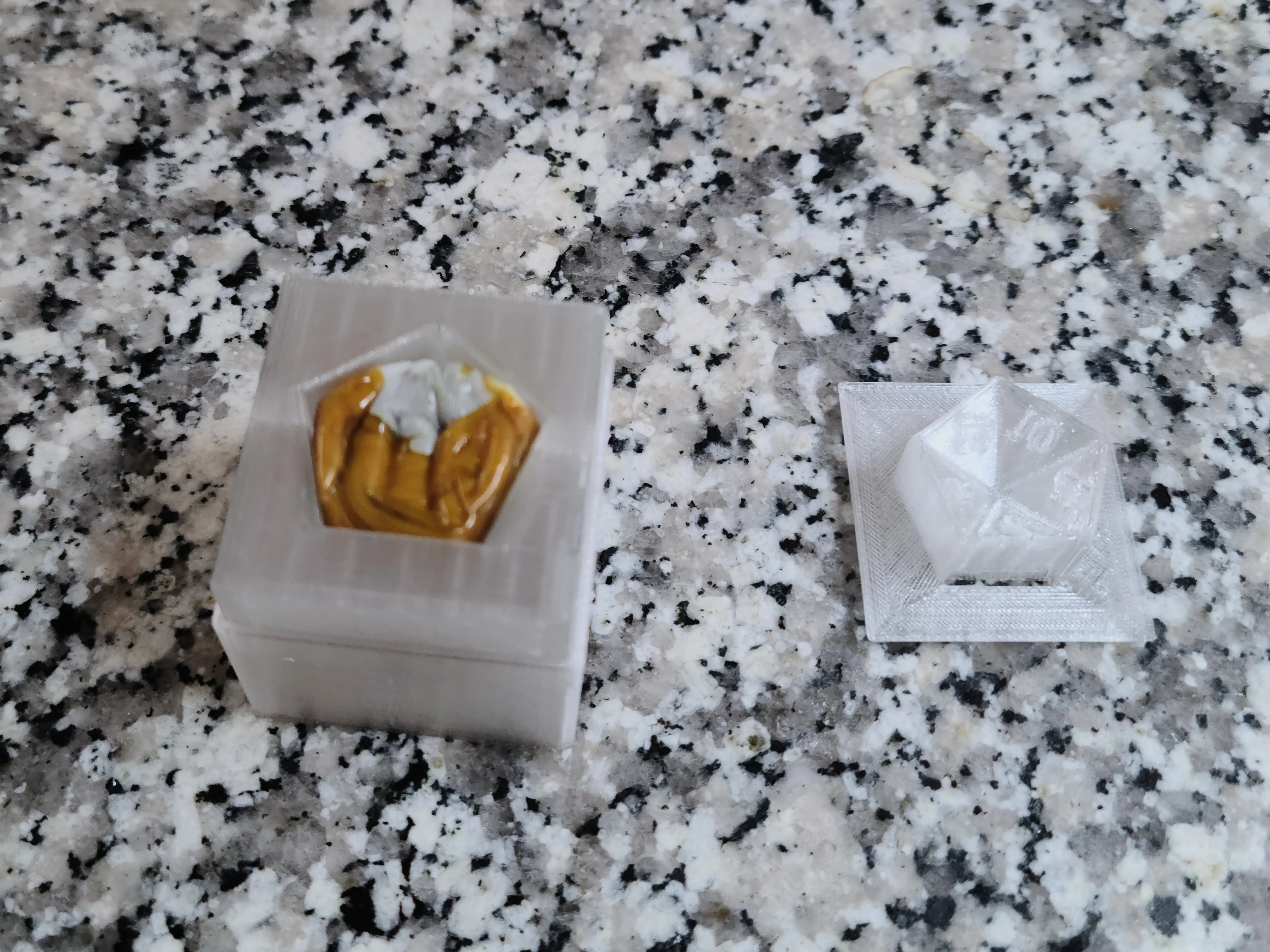
     

  4. Remove the dice: Take it out while still lukewarm, trim excess, and paint the numbers if desired.
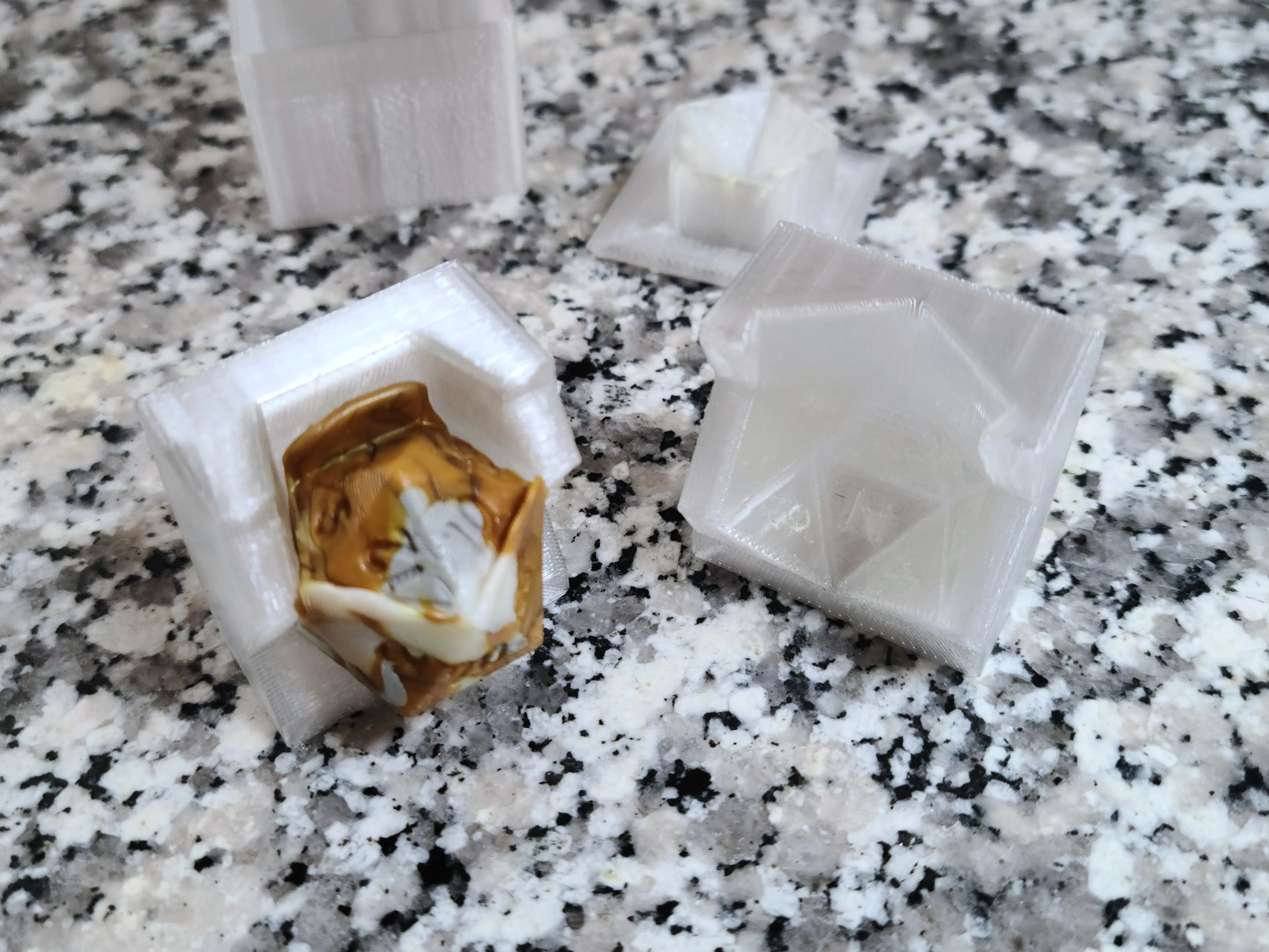
 

Voilà – your own “Re-Dice”, made from recycled 3D printing leftovers!


You can find a more detailed guide here.
Enjoy your new die and have fun making many more, happy printing!


Disclaimer: The dices may not turn out perfect, but they will still work and be fun to use :)


Documentation (8)
Assembly Guide (8)
GIF
1-assembly.gif
GIF
2-weight.gif
GIF
3-heating.gif
GIF
4-flip.gif
GIF
5-reheat.gif
GIF
6-press.gif
GIF
7-open.gif
GIF
8-finish.gif

Comment & Rating (40)

(0/1000)

Print Profile
0.2mm layer, 6 walls, 25% infill
i really likes the idea, but It was only a waste of time, material and toxic smoke. printed in petg and poop in pla (also scaled up at 150%)
2
Reply
Did you try it in layers or pour the whole mixture at once? You have to try in small layers
Show original
0
Reply
ugh… I know I am entering this contest as well… but omg… this mold… if it works well… I will happily lay down my sword if you win! I will be printing all of these to play with tomorrow while finalizing my designs…
The designer has replied
designer
5
Reply
ooops mould… *glares at whiteclaw*
0
Reply
haha thanks and i'm looking forward to see your model. Cheers!
1
Reply
Boosted
Print Profile
0.2mm layer, 6 walls, 25% infill
Wonderful! A very fun project that resulted in some super nice dice! Boosted!!!
1
Reply
Print Profile
0.2mm layer, 6 walls, 25% infill
model works, was able to create a d20 successfully. there is a bit more nuance to creating than what the instructions imply. I then trimmed, sanded, then painted.
The profile uploader has replied
0
Reply
yeah it can be a little bit tricky. But I'm glad it worked and looks great!
0
Reply
Nice, going to try to make myself a set. My go to way for melting is using an old toaster, it goes fast and keeps more resident heat into it so it's maleable for longer. I've had good results making keycaps in the same way. Going to update this with the dice when I make them.
The designer has replied
1
Reply
Alright, thanks for the input! Sometimes i had indeed struggles with keeping the mass heated. How do you place the scraps into the toaster?
0
Reply
Replying to @lmpify :
between 2 sheets of parchment papers and then I let it heat up until the light turns off, then it nice and maleable to form a ball and compress in a mold. there's a youtube channel called brothers make that recycles plastic and shows their process with panini pressed and I kinda used that one for 3d printed PLA
0
Reply
Replying to @owengraven :
Okay thanks! I will try it and check it out.
0
Reply
I really like your D20 mould, and have used it to make lots of dice These ones I have printed with multiple filaments, multiple printers, multiple settings (including your base settings with a fresh roll of PETG) and... they just don't work I cannot get any of the top pieces to actually slide into the molds, because the tolerances are too tight, including the outside casing barely fitting over the assembled mould pieces. I scaled the mould pieces to 103% and the cover to 105% and now find it fits together better I think that this is caused by the top piece having such a thin wall, ending at an acute angle that can't really be printed at this orientation.
The designer has replied
2
Reply
Hm okay, that's strange. What color did u use to print them? I can imagine that some colors may "change size" after cooling. I made the moulds intentionally with a very small tollerance, so that the plastik doesnt fits throught the gaps.
0
Reply
@lmpify thanks for doing this! any tips on what grease to use for the mold?
The designer has replied
designer
1
Reply
I usually use a little of WD40. But i think any grease should do
0
Reply
Replying to @lmpify :
THANK YOU!!
0
Reply
This looks awesome an I can't wait to print it but I don't have PETG for the moment. Does anyone know if the mold still works if done in pla ?
(Edited)
The designer has replied
0
Reply
No PLA will not work, because the melted PLA will stick to the mold. The mold needs to be in an other material than the scraps.
0
Reply
Replying to @lmpify :
Ok got thanks
0
Reply
what filament do you recommend printing it it? PETG OR ASA?
The designer has replied
0
Reply
I used PETG and it worked well. But I think ASA should work too
0
Reply
Almost worked but getting the PLA hot enough to get into the mold melted the PETG. Cool idea though, too bad it didn't work out
1
Reply

License

This user content is licensed under a Standard Digital File License.

You shall not share, sub-license, sell, rent, host, transfer, or distribute in any way the digital or 3D printed versions of this object, nor any other derivative work of this object in its digital or physical format (including - but not limited to - remixes of this object, and hosting on other digital platforms). The objects may not be used without permission in any way whatsoever in which you charge money, or collect fees.