
Sata IDC Power Cable Support and Punchdown Tooling
Print Profile(1)
Description
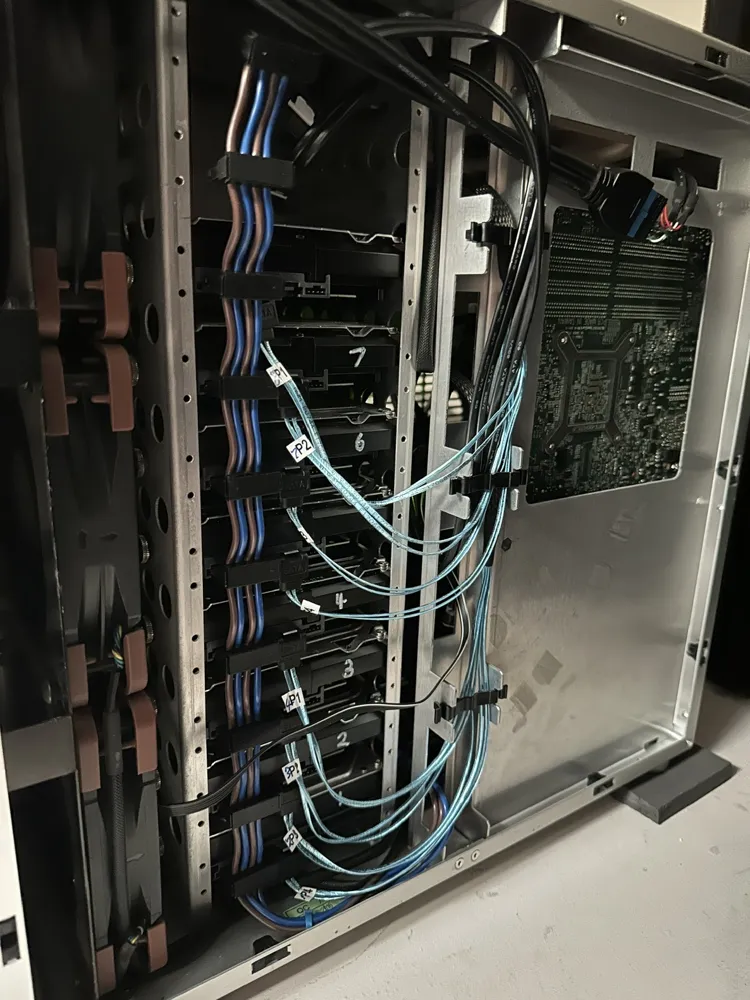
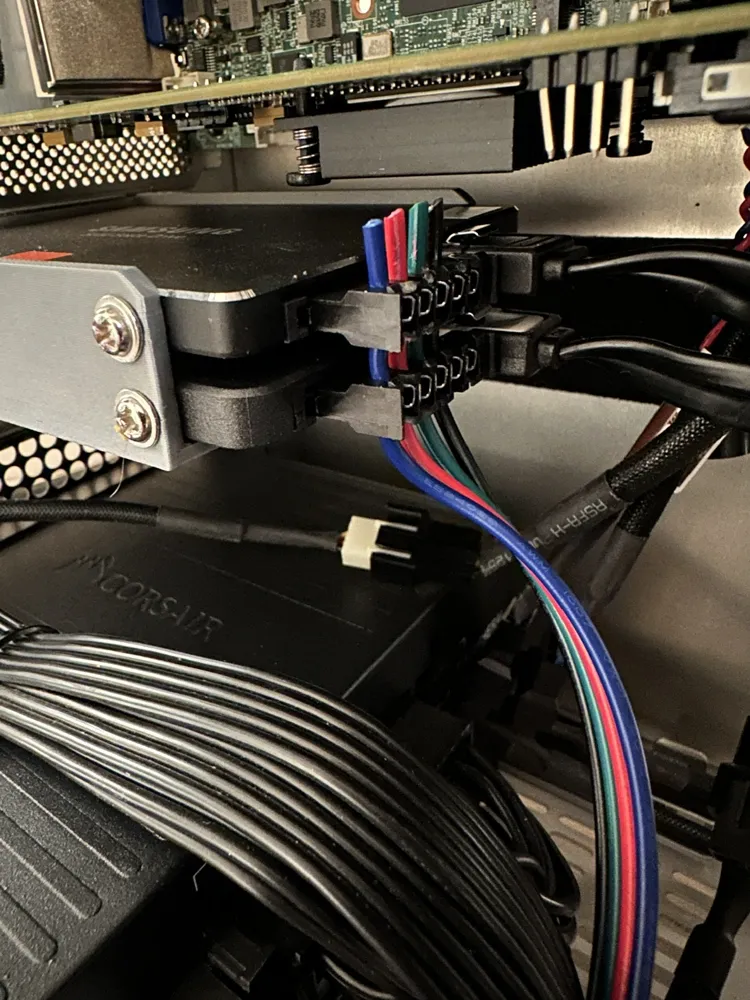
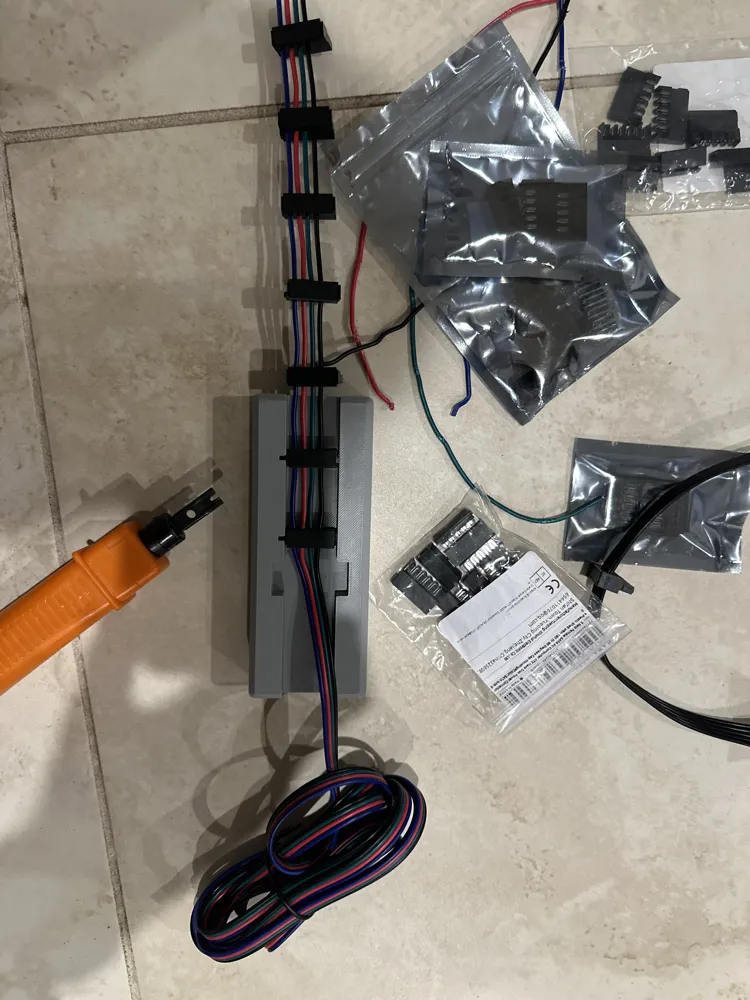
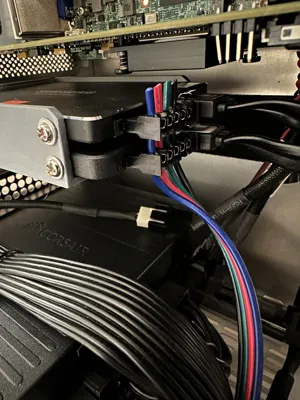
I needed custom power cables for my small server and doing sata power connectors reliably by hand was a pain. The molex tool is AU$60 and rare so I decided to make my own.
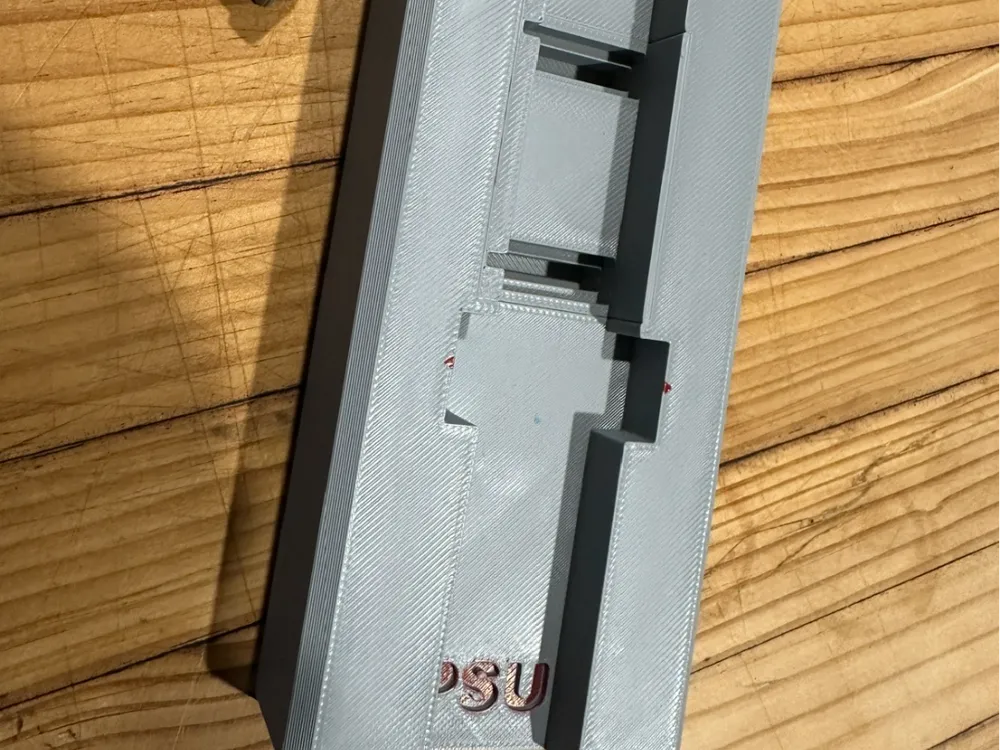
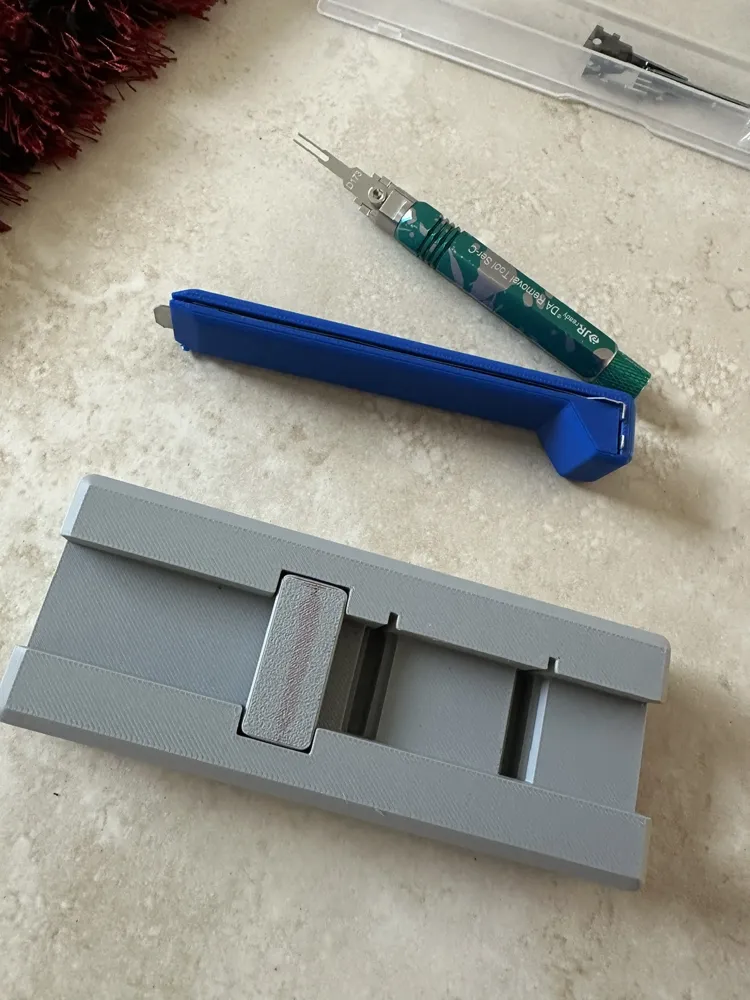
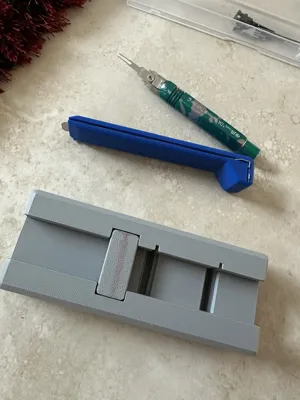
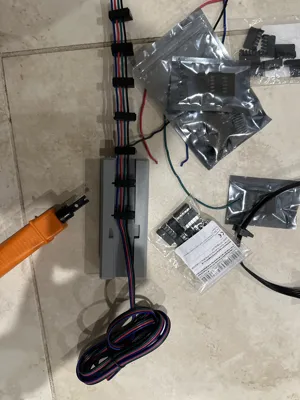
This support can be adjusted to give the space you need for your drives, and the tool uses a standard PCIE backplate from a card or your case to create the punchdown tool. Just be sure to use one thin enough to slide between the teeth that bite into the cable to make contact.
On Connector and cable power:
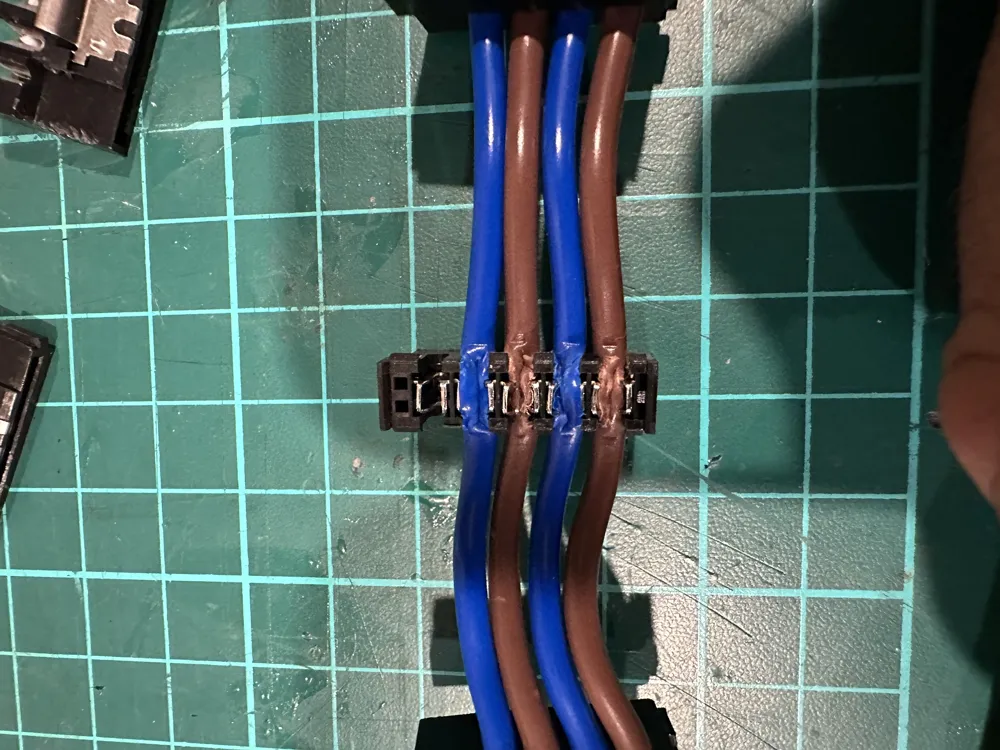
I had specific goals using 16AWG wire and avoiding crimps to maximise the amount of power I could push through the setup. I use 2 ground wires to facilitate better power handling as well.
The 16AWG goes in ok - avoid cable with really thick insulation though. Silicone insulation is common now and can be problematic.
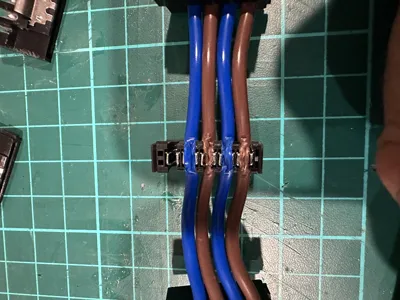
My first attempt the cable sent was actually 20awg not 18 which I ordered. The silicone was pushing around the teeth of the connector not slicing to enable contact on the copper. About 3-5 connections would register as failures. Be aware of this! It's why at minimum you need continuity testing on any cable you make.
Also there are broadly 3 types of SATA IDC:
1. Teeth with a blade at the bottom so full seating pushes onto it making for a higher contact area.
2. Teeth on side where the join is below the shell and the wire does not bottom out on tooth - only plastic shell. more contact failures on these.
https://www.aliexpress.com/item/1005002438886357.html
I made good cables with 16AWG for these but they are not as well built as the ones below. I'll likely replace them just for assurance long term.
3. Proper Molex spec which have thicker teeth in 2 rows with a tiny plastic retention to resist cable displacement, and they have a metal locking tab for the sata.
https://www.aliexpress.com/item/1005007307433379.html
These are becoming rarer.
Tools:
The punchdown tool for this is AU$70 (p/n 0638133503) and quite rare so I made my own using a PCIE backplane and printed handle to stop it bending. It fits between the blades on the connector to push the cable through the 4 teeth. A standard 110 punchdown doesn't push the middle section between rows of teeth - so not as good as I had hoped. The Molex tool has a 3rd 'tooth' compared to the 110 to do this.
Using the metal backplate on its own cuts hands and it bends ... my way works well.
License



Comment & Rating (0)