
Y-Splitter for Bambu Lab P2S
Print Profile(1)
Description
Boost Me (for free)
If you like my work, please support me by following my page 🙏
This way you won't miss any new developments, updates, or improvements and will always stay up to date.
Anyone who is particularly dedicated is also welcome to leave a Boost 🚀
Thank you for your great support! 💚
Y-Splitter for Bambu Lab P2S – TPU Direct Feed
Description
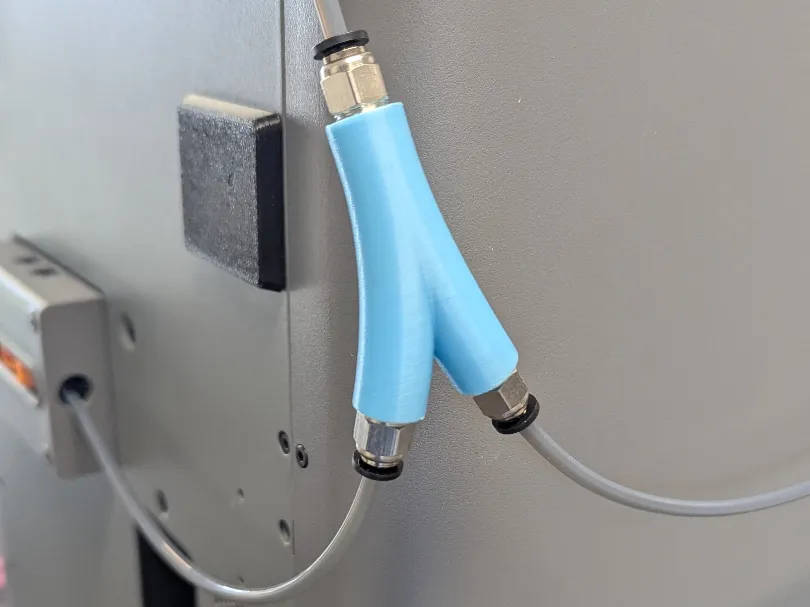
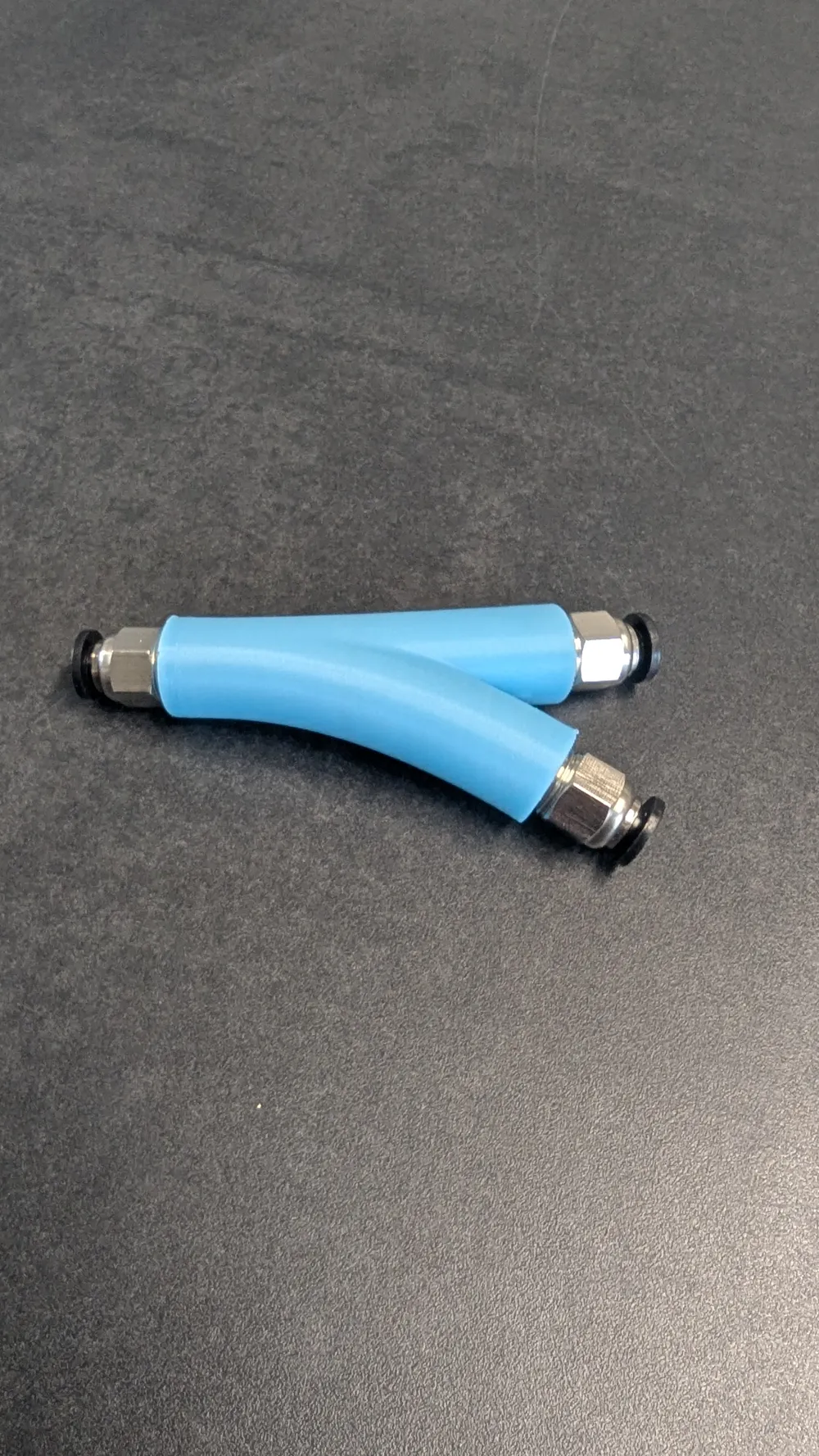
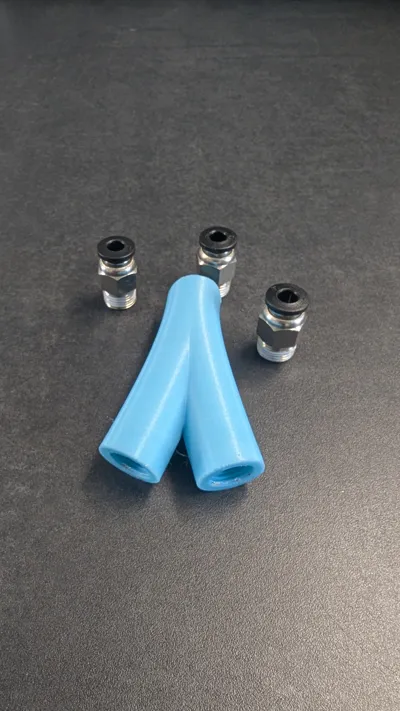
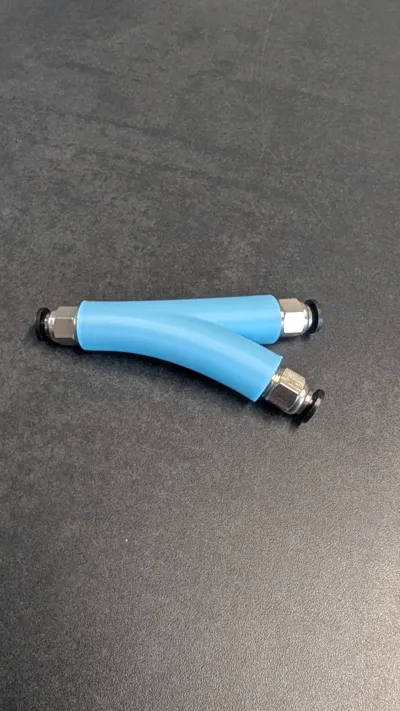
This compact **Y-splitter** was specifically developed for the **Bambu Lab P2S**
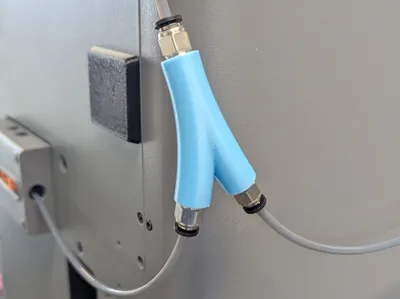
It allows the **filament input of the printer to be split**, so that in addition to the normal filament path, **TPU or other flexible filament can also be fed directly into the printer**
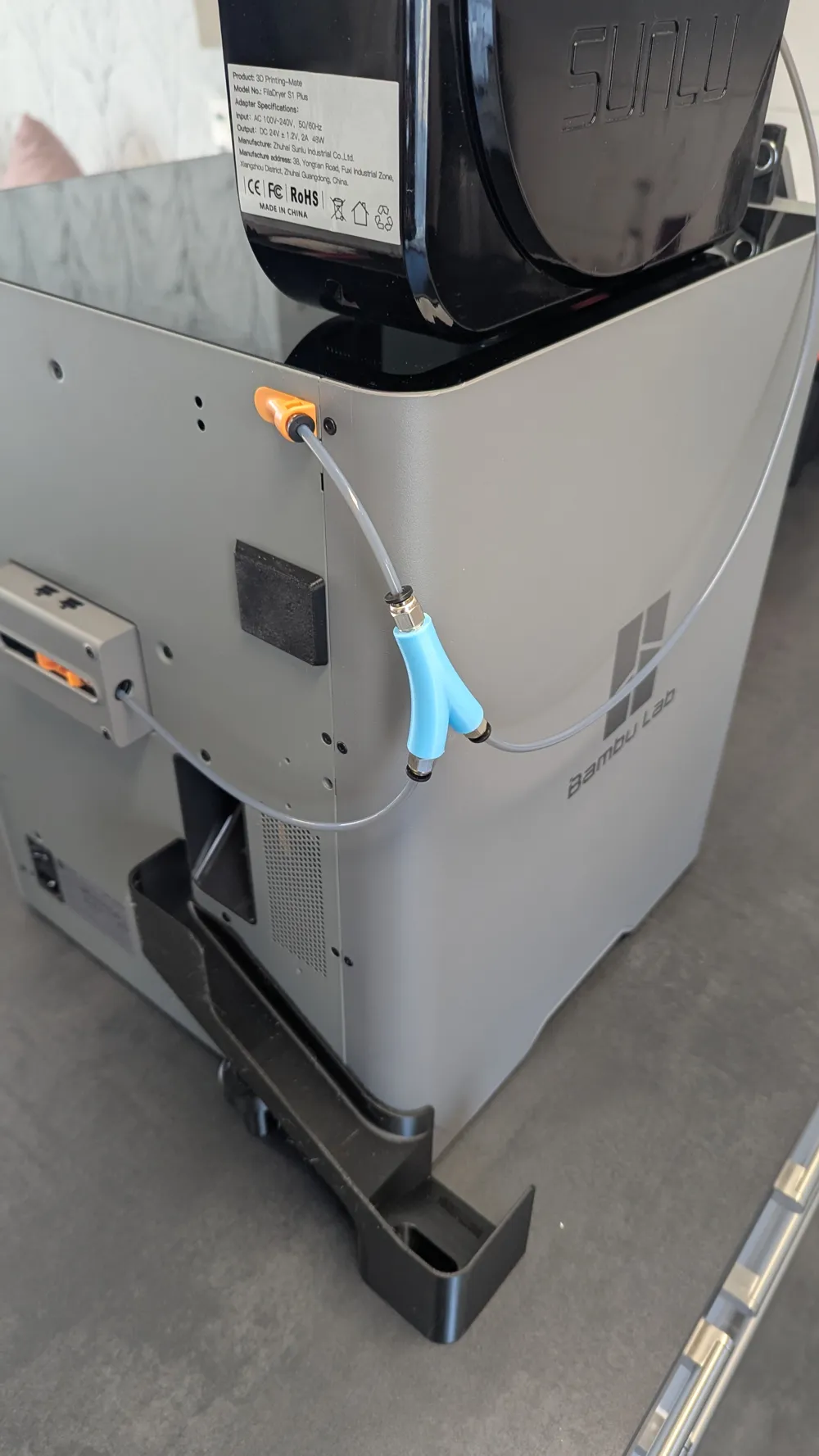
There are already some splitter variants, but many of them are designed **for the Bambu Lab P1S**. Since the filament input on the P1S is located much more centrally, these models often protrude very far from the printer on the P2S
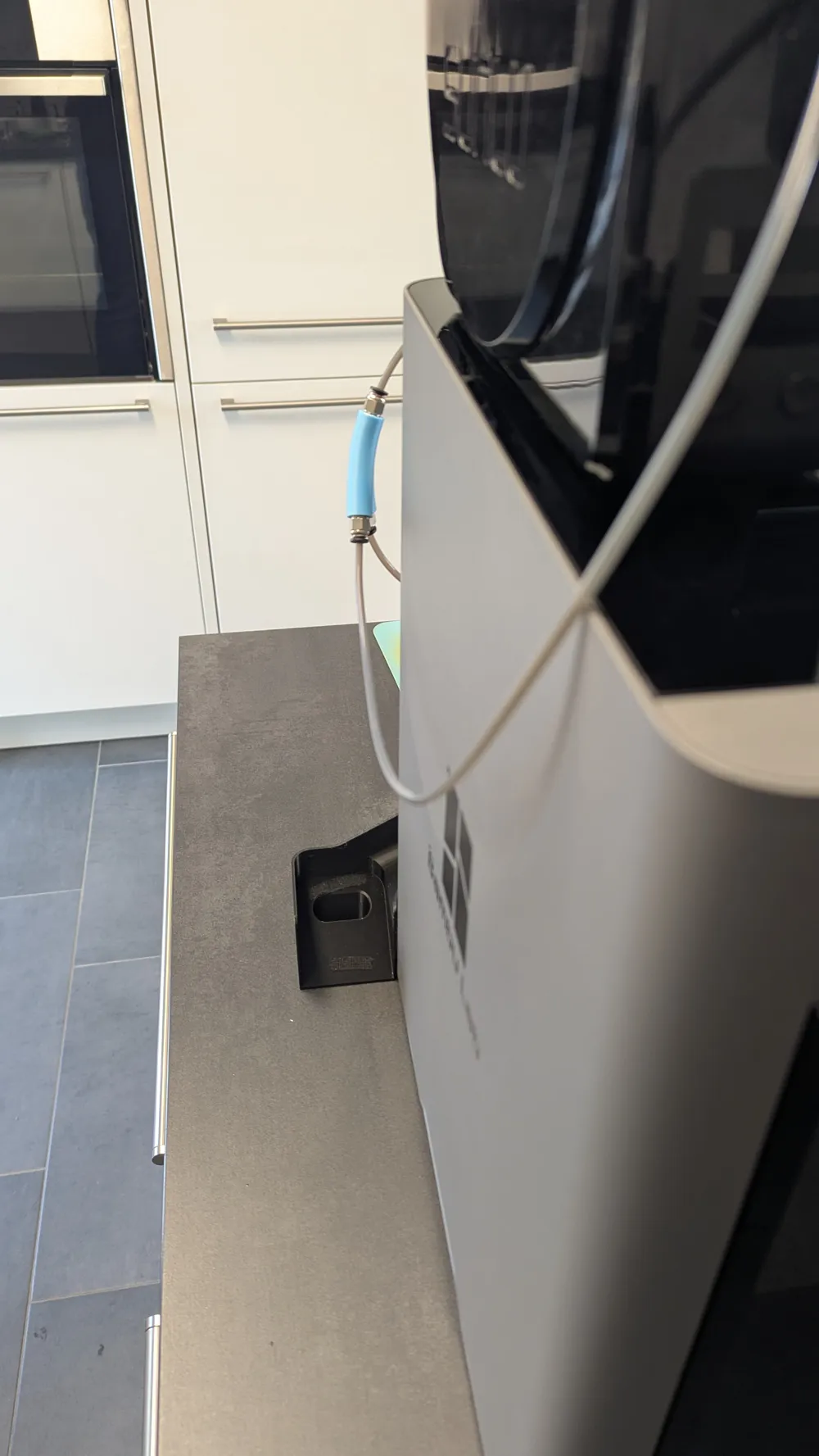
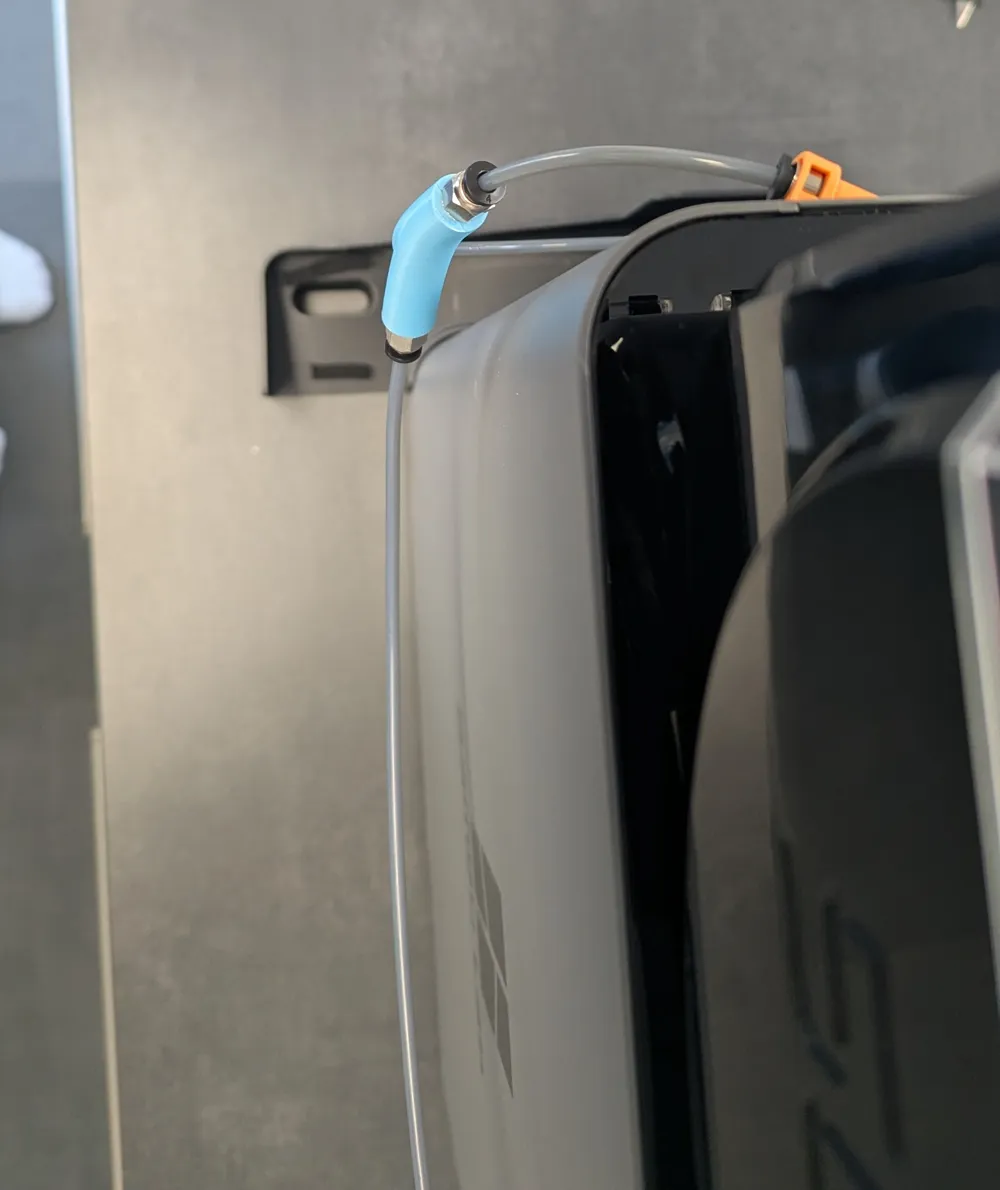
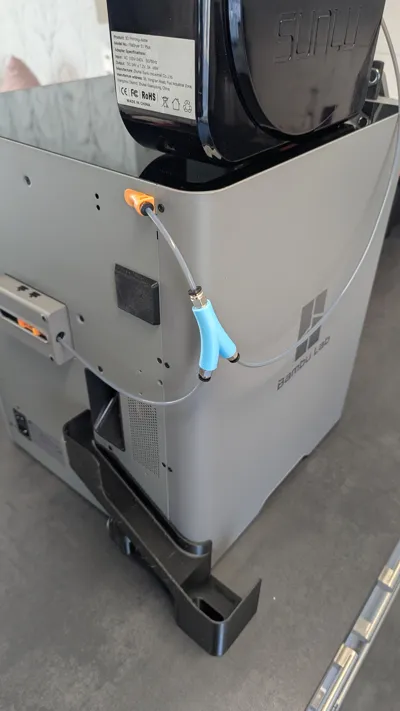
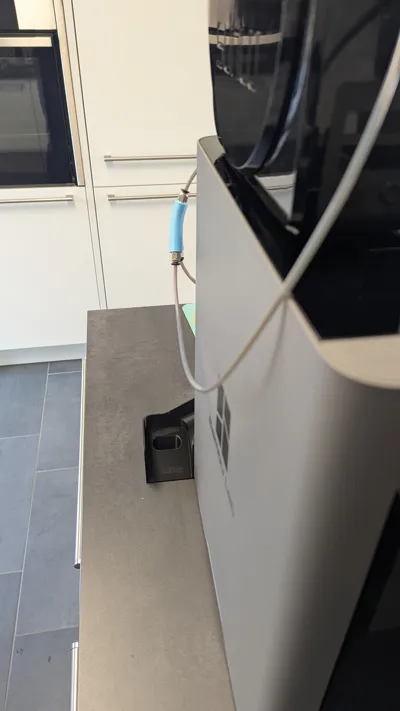
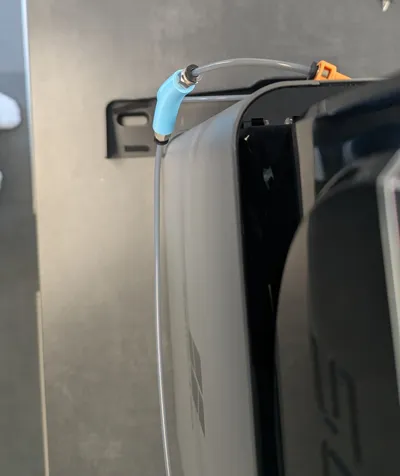
This splitter was therefore **specifically designed to be compact**, so that it can be neatly integrated into the filament path of the P2S
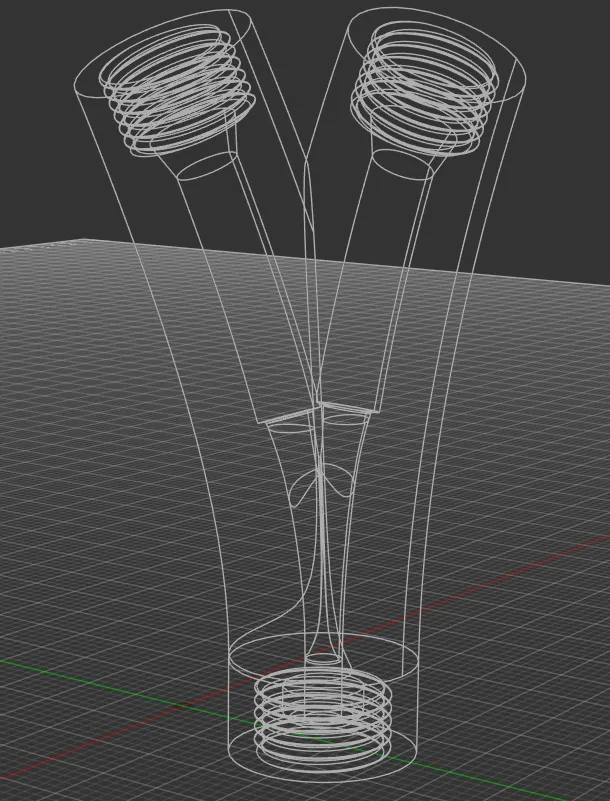
Thanks to its **curved design**, the splitter can be easily integrated into the last PTFE tube **after the buffer** without requiring much installation space
Required Parts
The following components are required for assembly
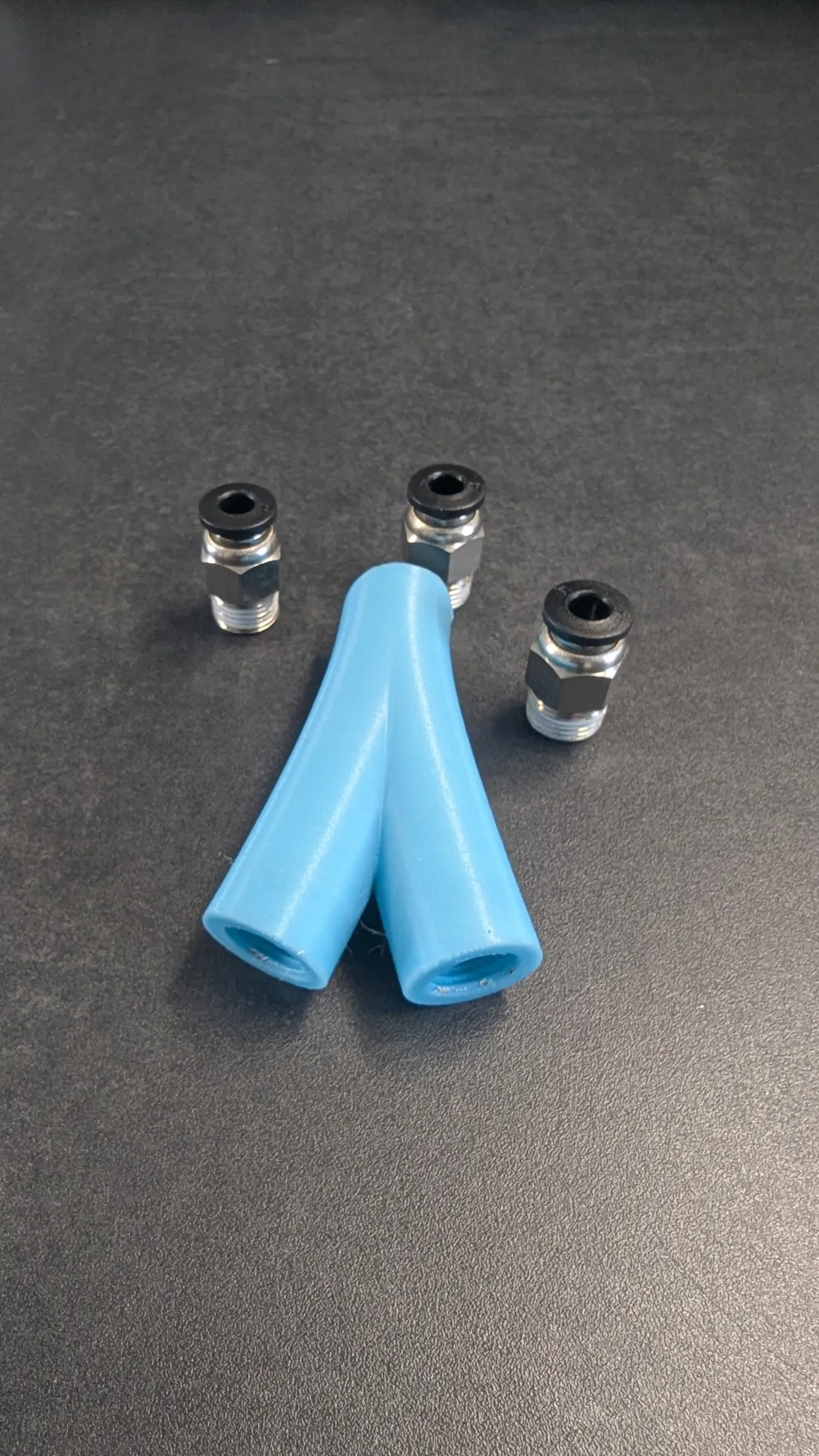
- 1× printed **Y-Splitter**
- **3× PC4-M10 pneumatic connectors**
- existing **PTFE tubes**
The pneumatic connectors are **screwed directly into the splitter's threads**
Installation
1. Assemble pneumatic connectors
The **3× PC4-M10 pneumatic connectors** are first **screwed into the threads of the Y-splitter**
2. Prepare PTFE tube
The **last PTFE feed tube after the buffer** is **cut** at a suitable point
3. Insert splitter
The prepared Y-splitter is then **inserted between the two tube ends**
4. Insert PTFE tubes
The PTFE tubes are now **pushed into the connectors** until they **reach the internal stop**
Technical Feature
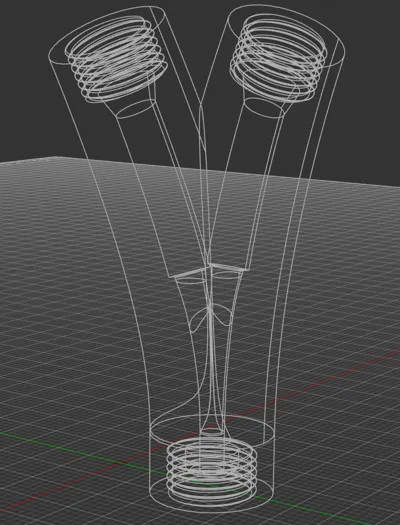
On the **two inlet sides**, the splitter was designed so that the **PTFE tube extends very far into the interior**
Advantages of this design
- The filament path **within the actual splitter is extremely short**
- The filament runs **in the PTFE tube for as long as possible**
- **Friction is minimized**
- Especially **flexible materials like TPU can be fed more reliably**
Advantages of this Design
- compact for **P2S installation position**
- requires **significantly less installation space**
- ideal for **TPU direct feed**
- low friction resistance
- quick installation without printer modification
💡 **Note:**
This splitter was originally developed for my own printer and then optimized. Suggestions for improvement or feedback from the community are always welcome
License

You shall not share, sub-license, sell, rent, host, transfer, or distribute in any way the digital or 3D printed versions of this object, nor any other derivative work of this object in its digital or physical format (including - but not limited to - remixes of this object, and hosting on other digital platforms). The objects may not be used without permission in any way whatsoever in which you charge money, or collect fees.


Comment & Rating (13)