
Print Profile(3)


Bill of Materials


Description
Boost Me (for free)
I love designing practical solutions for the community.
If you enjoy this model and want to support future projects, feel free to give it a Boost – much appreciated! 💙
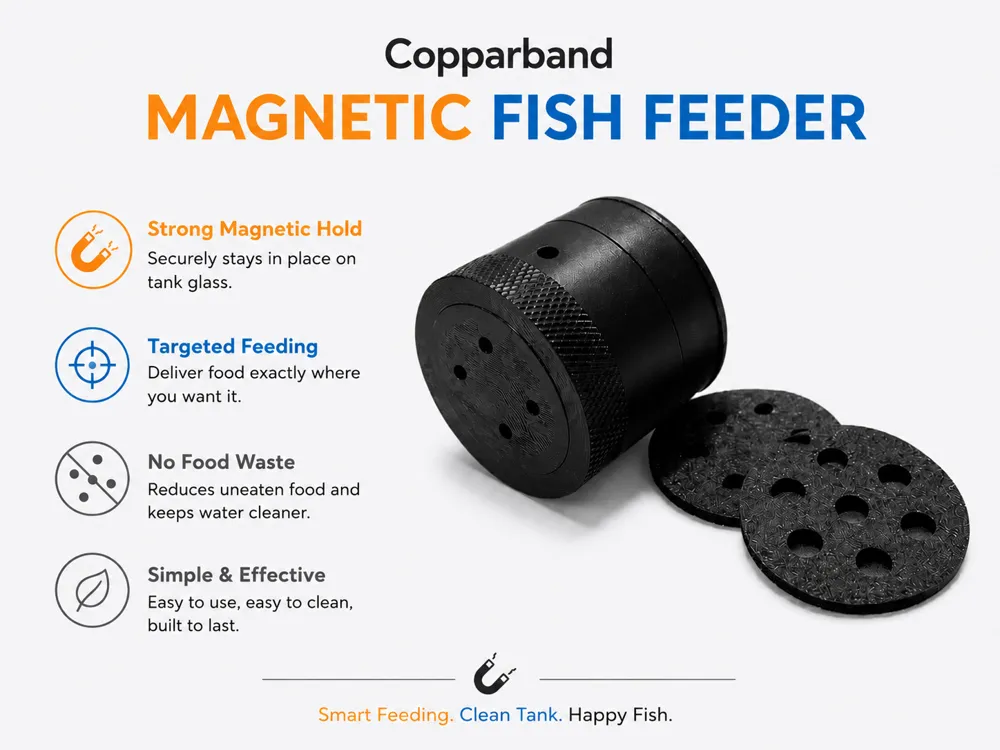
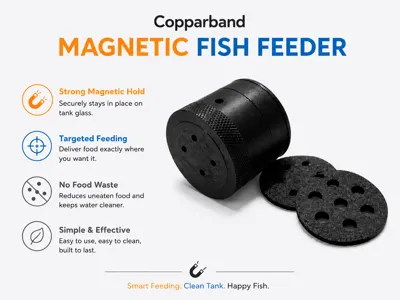
Copperband Magnetic Fish Feeder
In the marine aquarium hobby, species such as the Copperband Butterflyfish are highly sought after—but also among the most challenging fish to keep long term. In many aquariums, Copperbands struggle to compete for food and are often outpaced by faster, more aggressive fish. This frequently results in insufficient feeding and, in worst cases, loss of the fish.
The Copperband Magnetic Fish Feeder was developed primarily with the Copperband Butterflyfish in mind, but the concept also applies to other fish species that rely on frozen or targeted feeding, such as dragonets and similar slow or selective feeders. The design is based on fish anatomy—particularly long, narrow snouts—as well as natural feeding behavior.
The goal is to create a controlled feeding zone where shy, deliberate feeders have the time and access they need, while limiting interference from more opportunistic species.
Design Philosophy
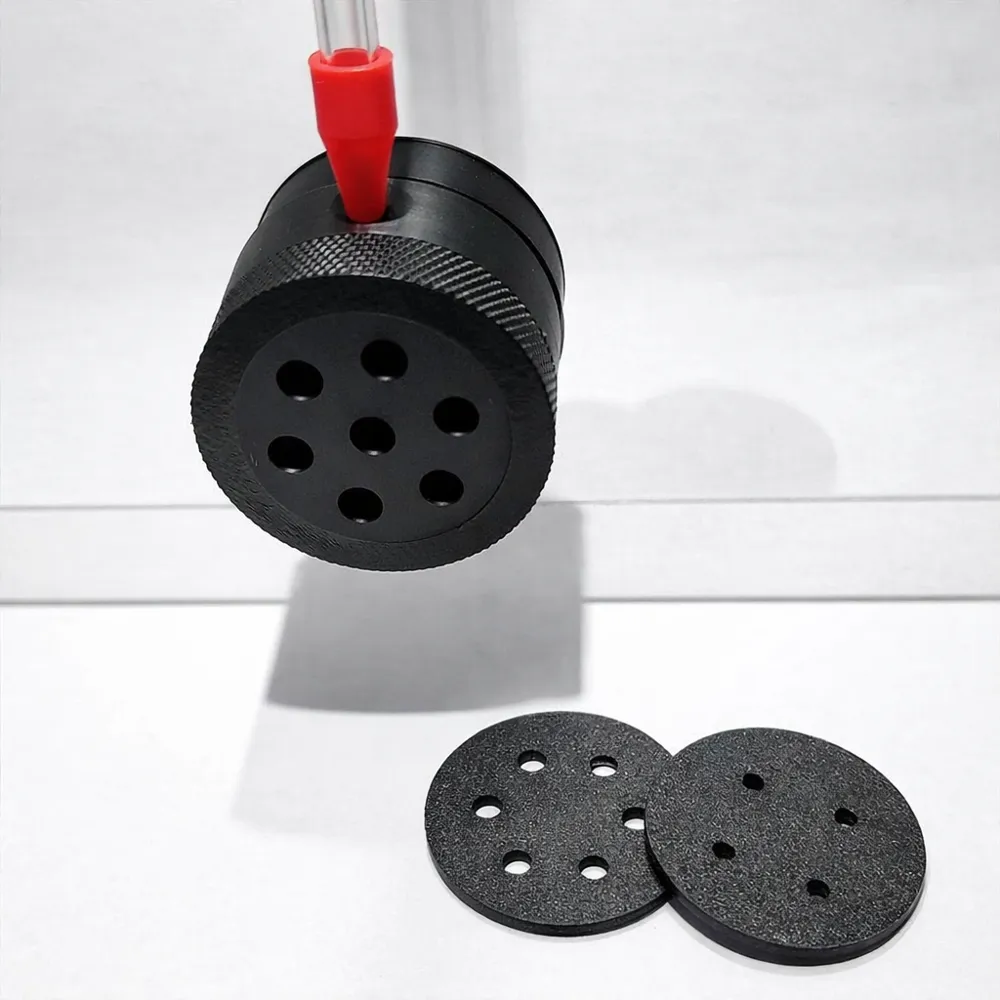
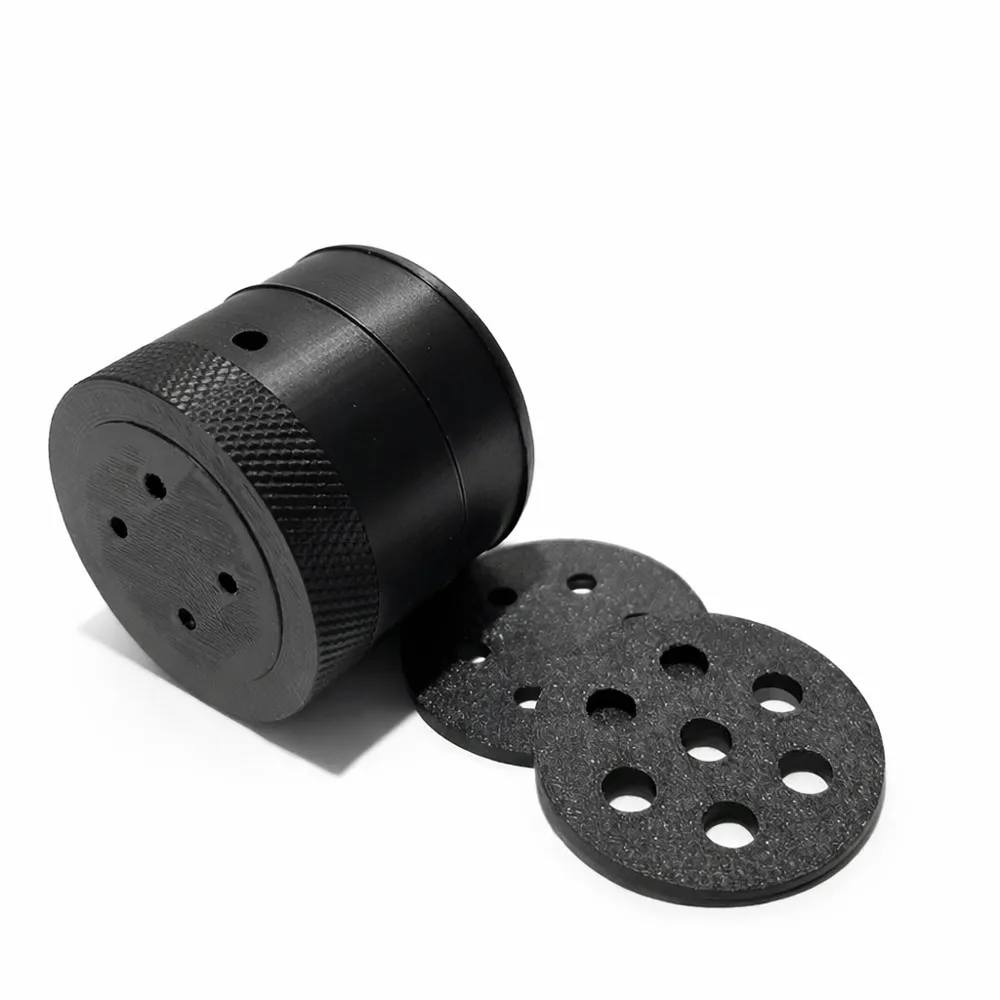
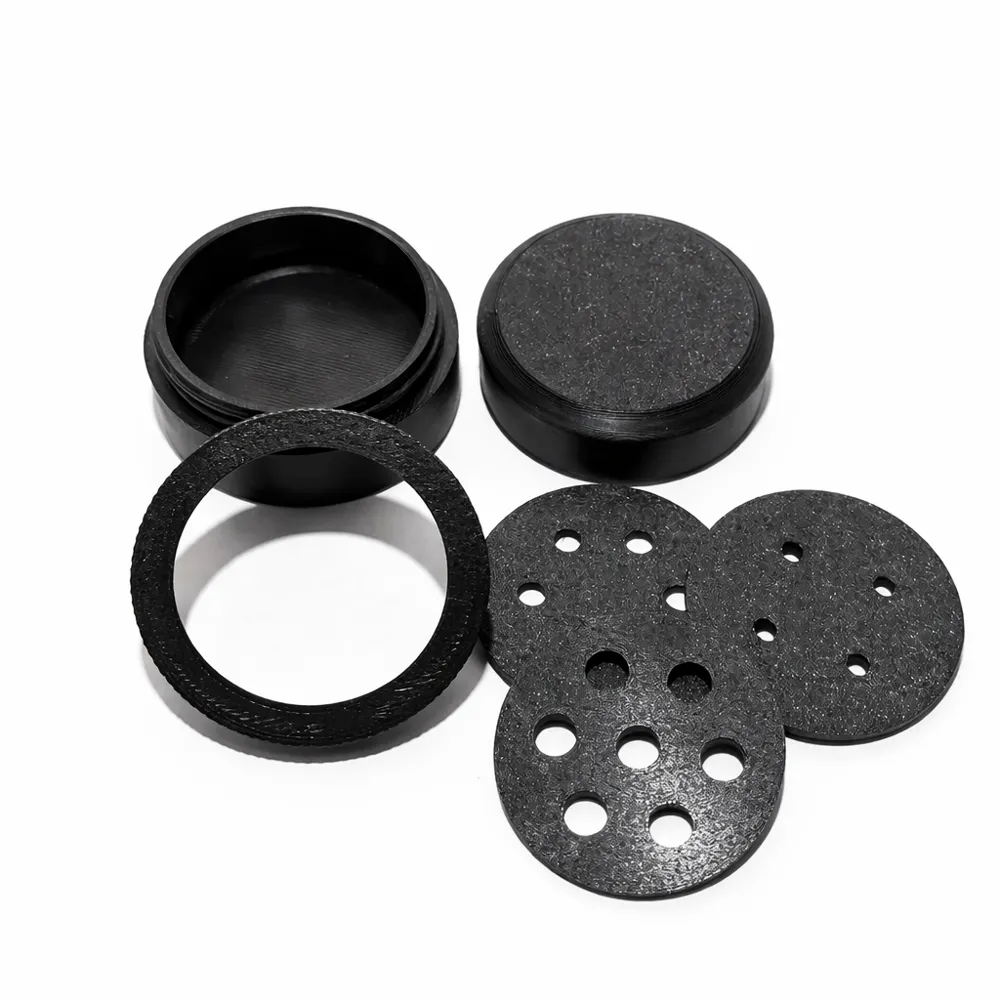
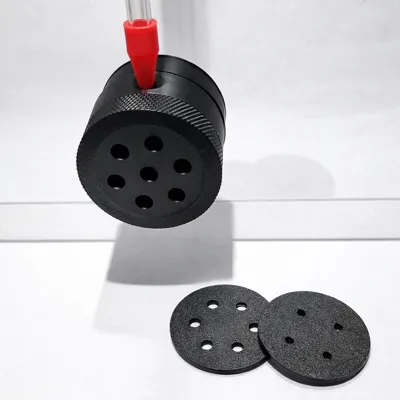
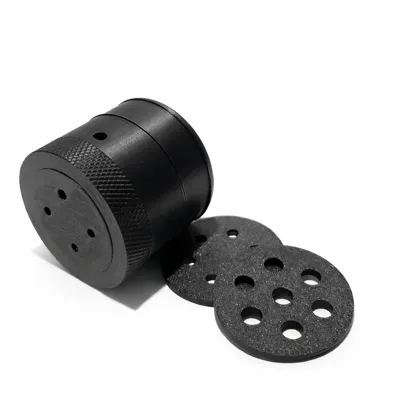
The feeder is built around the idea of gradual training and selective access. It mounts directly to the aquarium glass and uses interchangeable front plates with different hole sizes. This allows the aquarist to adapt the feeder to both the learning curve of the fish and the competitive dynamics within the aquarium.
Interchangeable Feeding Plates
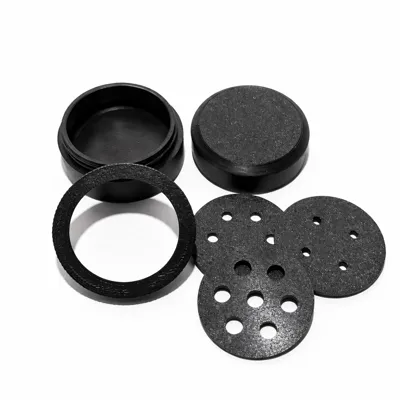
The feeder includes three removable plates, each designed to support a specific stage of adaptation:
- Large Plate
The starting point for training. The large openings make it easy for the fish to discover and understand the feeder, encouraging acceptance of frozen or prepared foods. - Medium Plate
Once the fish is familiar with the feeder, this plate increases selectivity. It helps restrict access for faster or more aggressive fish while remaining well-suited for Copperband Butterflyfish and similar species. - Small Plate
Intended for aquariums with high feeding competition. The small openings are optimized for long-snouted, precise feeders and significantly limit access for larger, more aggressive fish.
Top-Fill Access for Frozen Food
A dedicated top opening allows frozen or soft foods to be added using a pipette or syringe. This makes it possible to feed directly into the feeder without removing it from the glass or placing hands in the aquarium, reducing stress on the fish and helping maintain stable tank conditions.
Magnetic Mounting
The feeder is designed for magnetic mounting on aquarium glass up to 19/32"/15 mm thick. Magnets are not included, allowing flexibility in sourcing. The intended magnet setup is:
- 1 × N42 waterproof, rubber-coated neodymium disc magnet – Ø22 mm, height 11.4 mm
- 1 × N42 waterproof, rubber-coated neodymium disc magnet – Ø22 mm, height 6.4 mm
The design requires pausing the print at the correct layer to insert the magnets before the print continues and seals them in place.
We did want to go for N52Magnet (to fit ¾"/19mm glass) but sadly they are not rubber-Coated(in our Magnet store).
Background and Real-World Use
This feeder was developed through hands-on experience, feedback from fellow aquarists, and careful observation of feeding behavior in mixed-species reef aquariums.
In real-world use, an early version of this design allowed a previously struggling Copperband Butterflyfish to successfully consume frozen food without direct competition from more aggressive fish—contributing to improved feeding consistency and long-term stability.
This design is not intended as a universal solution, but rather as a purpose-driven tool for aquarists who want to give Copperband Butterflyfish—and other frozen-food-dependent species—a better chance to thrive in competitive reef environments.
License

You shall not share, sub-license, sell, rent, host, transfer, or distribute in any way the digital or 3D printed versions of this object, nor any other derivative work of this object in its digital or physical format (including - but not limited to - remixes of this object, and hosting on other digital platforms). The objects may not be used without permission in any way whatsoever in which you charge money, or collect fees.


Comment & Rating (2)