
Rainbow - Foam Dart Blaster
Print Profile(0)
Description
It's been more than a decade since our release of the Rainbow, and it has proven to be an effective, durable, and influential design. The design of the catch was a reflection of the fabrication techniques that were common at the time: hand cut polycarbonate plates, nylon rods, skirt seals and PVC tubes. Home 3D printers were in their infancy, but would soon become a core fabrication tool for nerf homemades.
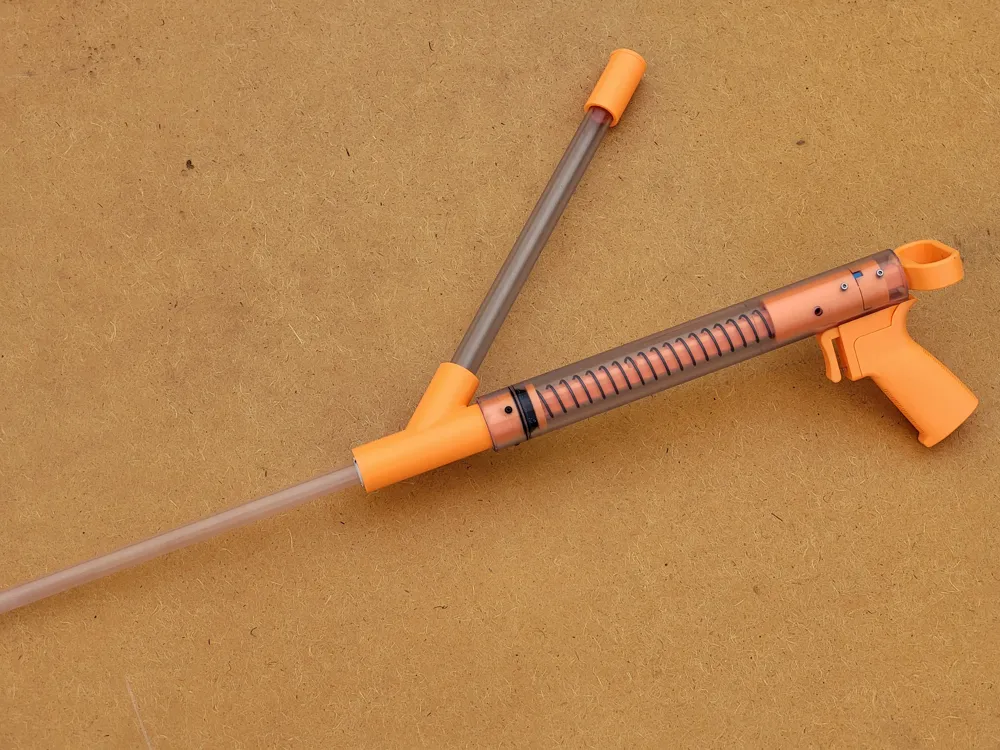
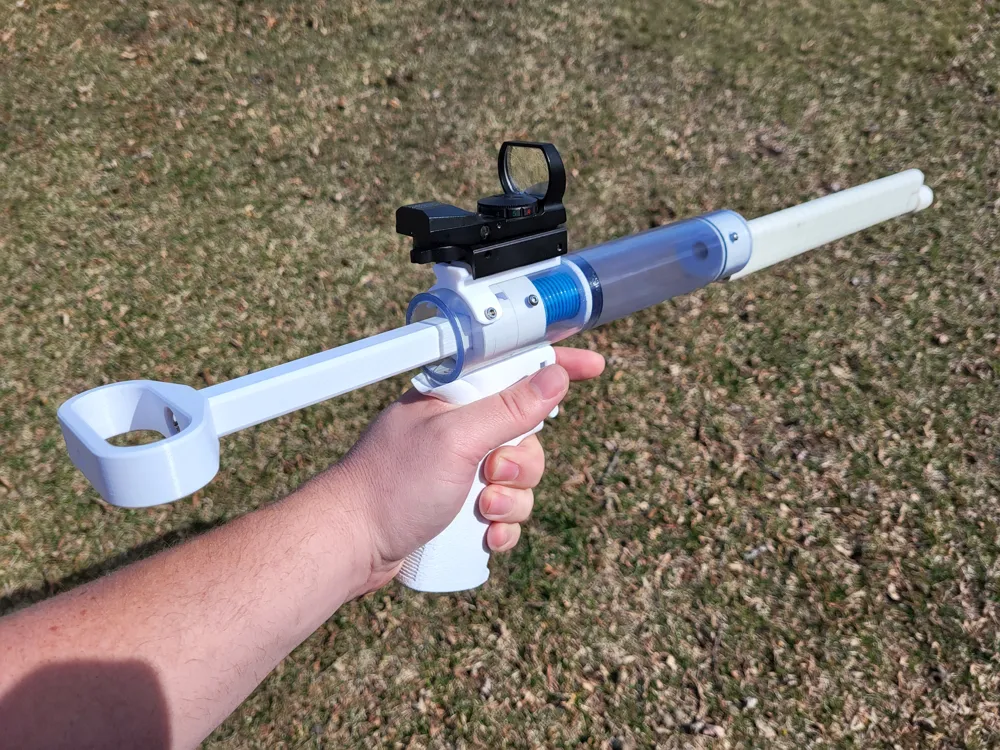
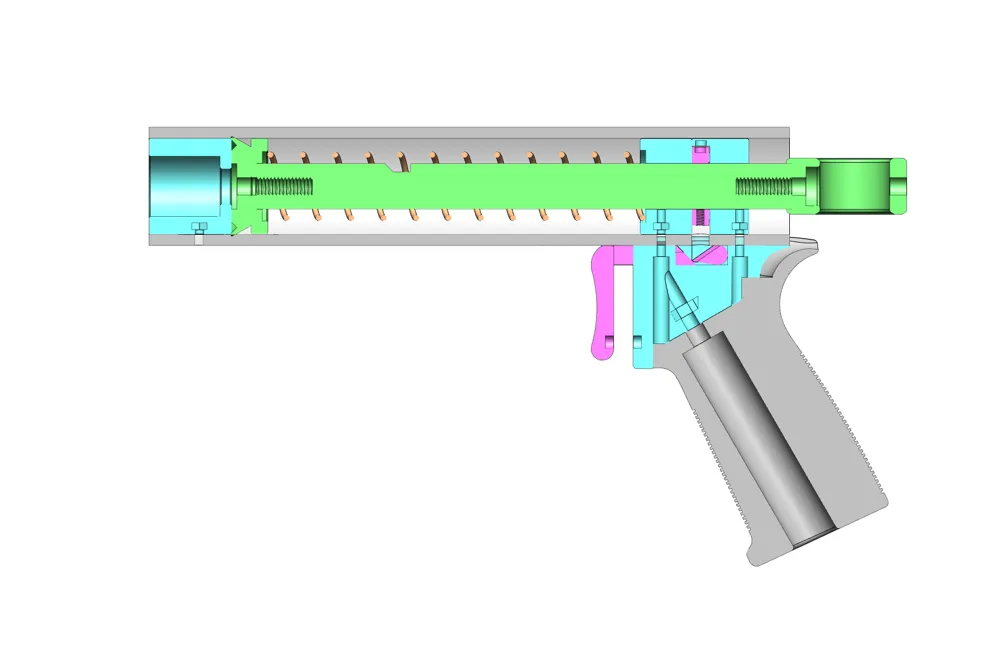
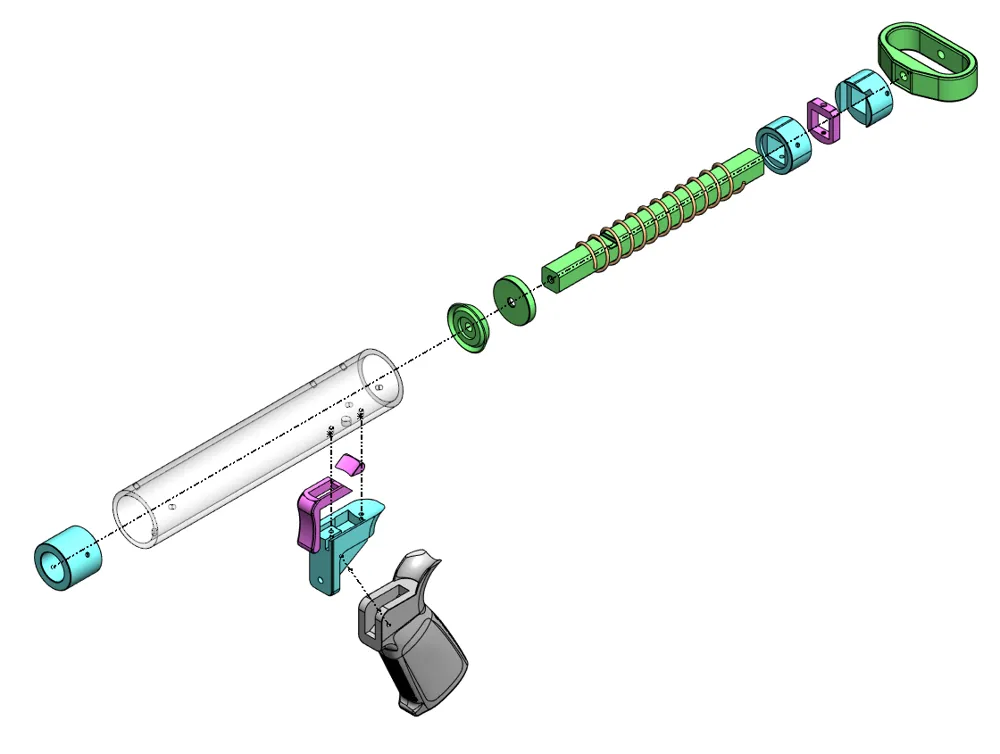
The Rainfaux is my attempt at creating a classic style Rainbow using as many parts created using Fused Filament Fabrication as possible (this project started it's life as the RainFFFow). This is more than just a single blaster: this is meant to be an interchangeable system of parts that can be used to create many types of blaster configurations. With that in mind, the goals of this project are:
- Create as many parts as possible using a consumer grade desktop 3D printer with common materials.
- The blaster should be durable enough to last through years of hard play with minimal or no maintenance.
- Maintain the performance characteristics of the classic Rainbow
- Improve on the ergonomics of the Rainbow
- Create manufacturing jigs to aid in the easy fabrication of non 3D printed component
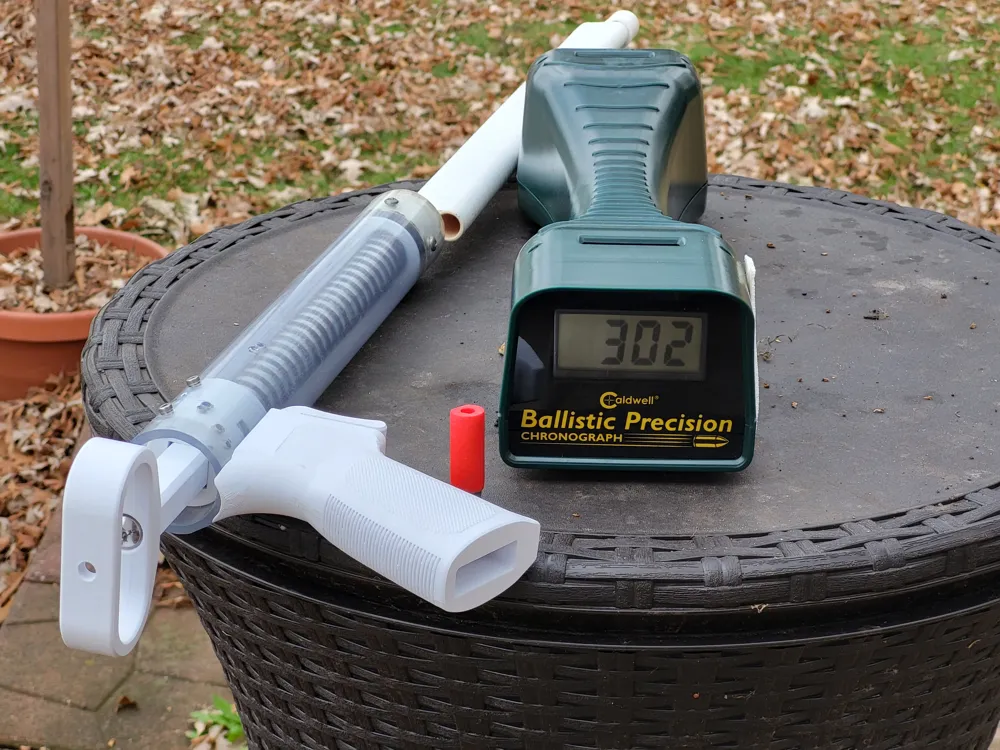
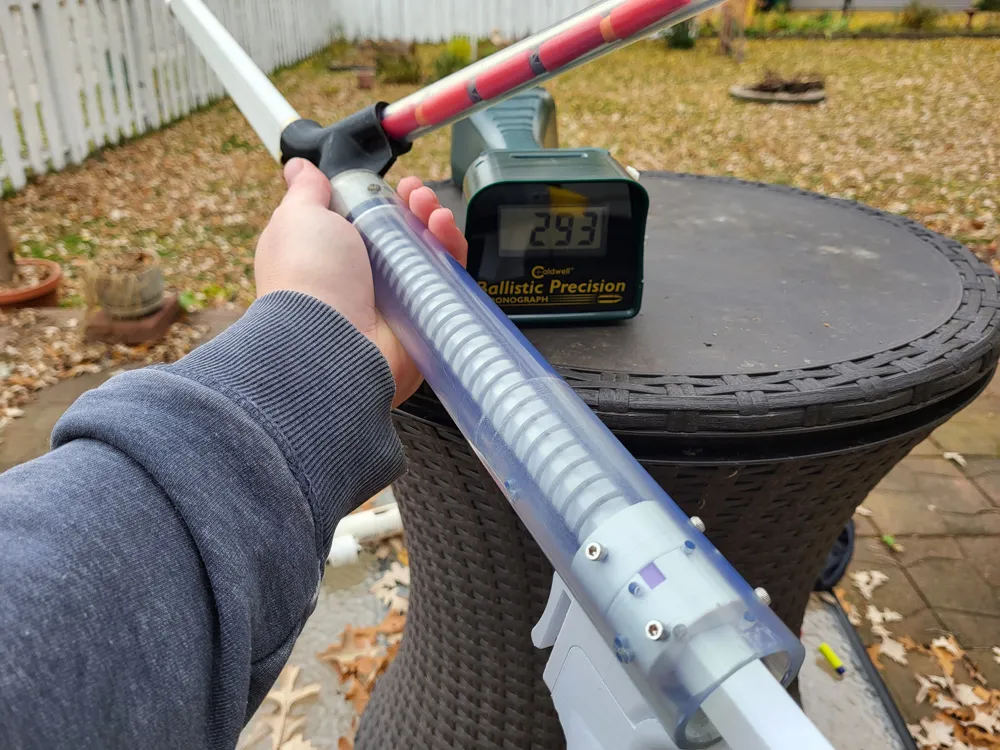
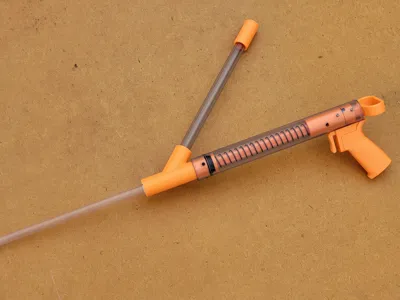
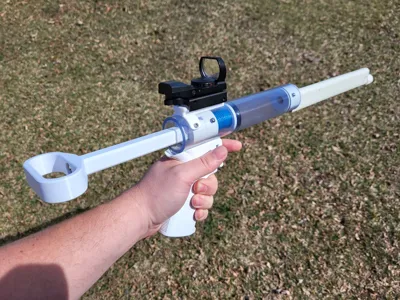
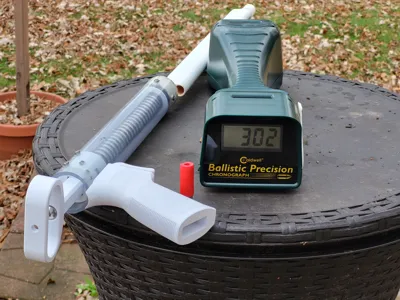
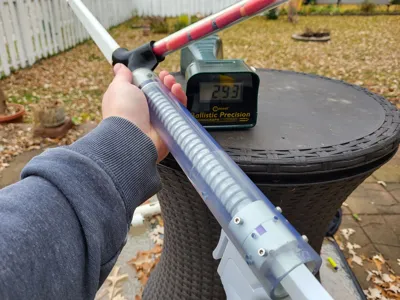
The current source models contain files for a full and half length Rainfaux pistol. The full length is a highly performant blaster, capable of 300fps velocities, and the half length will get about 240fps. My two prototypes have been war-tested a couple of times now, but long-term testing is necessary.
Bill of Materials
- PLA Filament
- TPU Filament
- 13" of 1-¼" PVC (9" for a half-length)
- k25 spring
- qty 2 ¼-20x-0.75" screws
- qty 8 M3 x 8mm screws
- qty 2 M3 x 12mm screws
- qty 9 M3 hex nuts
- qty 1 M5 x 16mm screws
- qty 1 M5 hex nut
- qt2 4x2mm magnet
- ballpoint pen spring 0.5" Long, 0.125" OD
- #33 o-ring
- AR compatible grip
Printing guide
Print all parts in PLA in the default orientation. Print skirt_seal using TPU. All parts should be printed with at least 4 walls and 25% infill. The catch should be printed with 100% infill. The trigger and lever should be printed using ironing on the top layers. Some parts will need supports.
Assembly
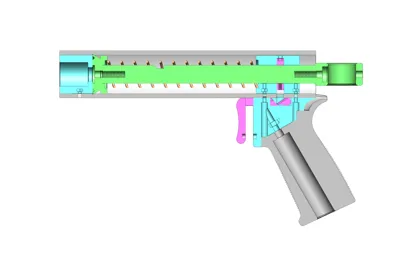
Use drill_guide as a guide for drilling the holes in the PVC for the catch. A 1/8" drill bit will give you clearance for the M3 screws. The hole under the catch itself will need to be at ¼" to accommodate the catch screw.
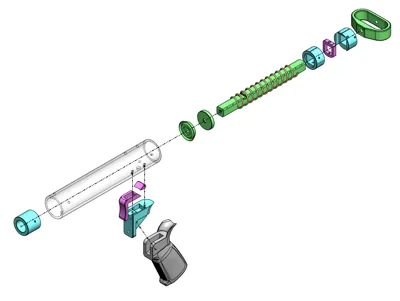
On spring_rest_k25, catch_guide_k25, and the coupler, add pauses mid-print so that you can add internal M3 square nuts.
Not all PVC is the same size, so it is possible you will need to use diameter_gauge_1.25PVC to figure out if the parts need to be resized. Clear PVC 49035K46 on McMaster is the optimal material.
Use silicone grease on the plunger head to ensure a low friction seal.
The catch uses two 4mm magnets which should be oriented to repel each other. The trigger and grip have retainer holes for a small pen spring.
Us an M5 screw to fasten an AR compatible grip into the receiver. When printing the receiver, add a pause mid-print to add an interior M5 nut. There is also a version of the receiver with printed ¼-20 threads if you want to use that instead, but you may have to use Nylon or Polycarbonate to avoid cracking.
Use a tight 18" barrel for maximum power. CPVC is an optimal barrel mateial. For a half length blaster, use a 12" barrel. Using a hopper or RSCB is recommended.
License



Comment & Rating (0)