
Math Class Magic: The Lucas Fan (Binary System)
Print Profile(1)


Description
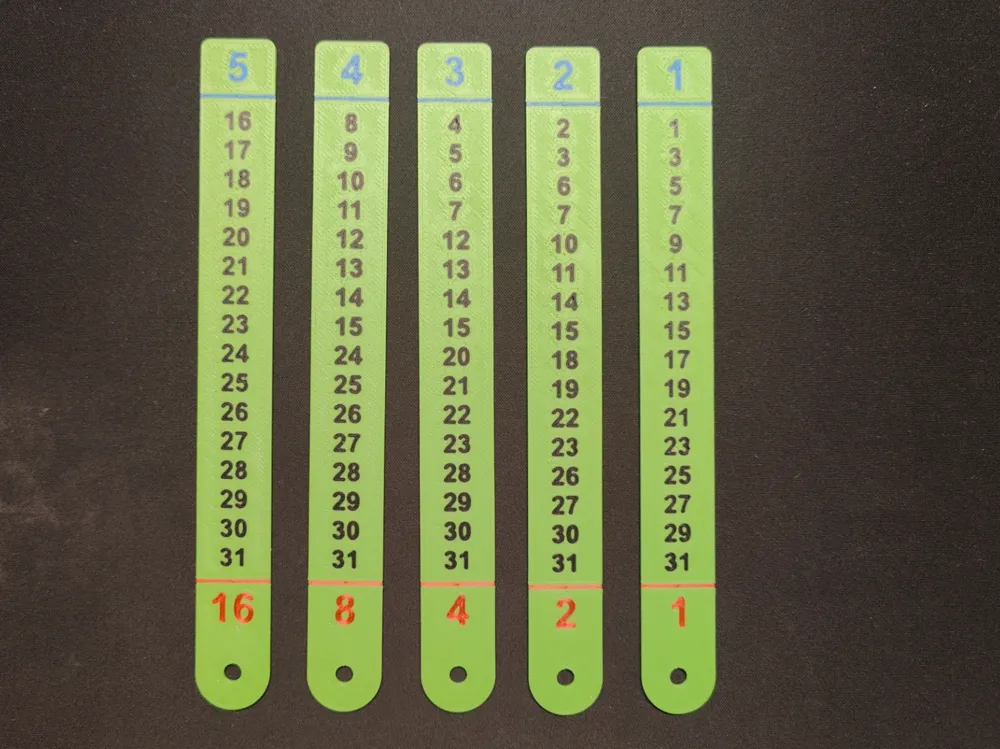
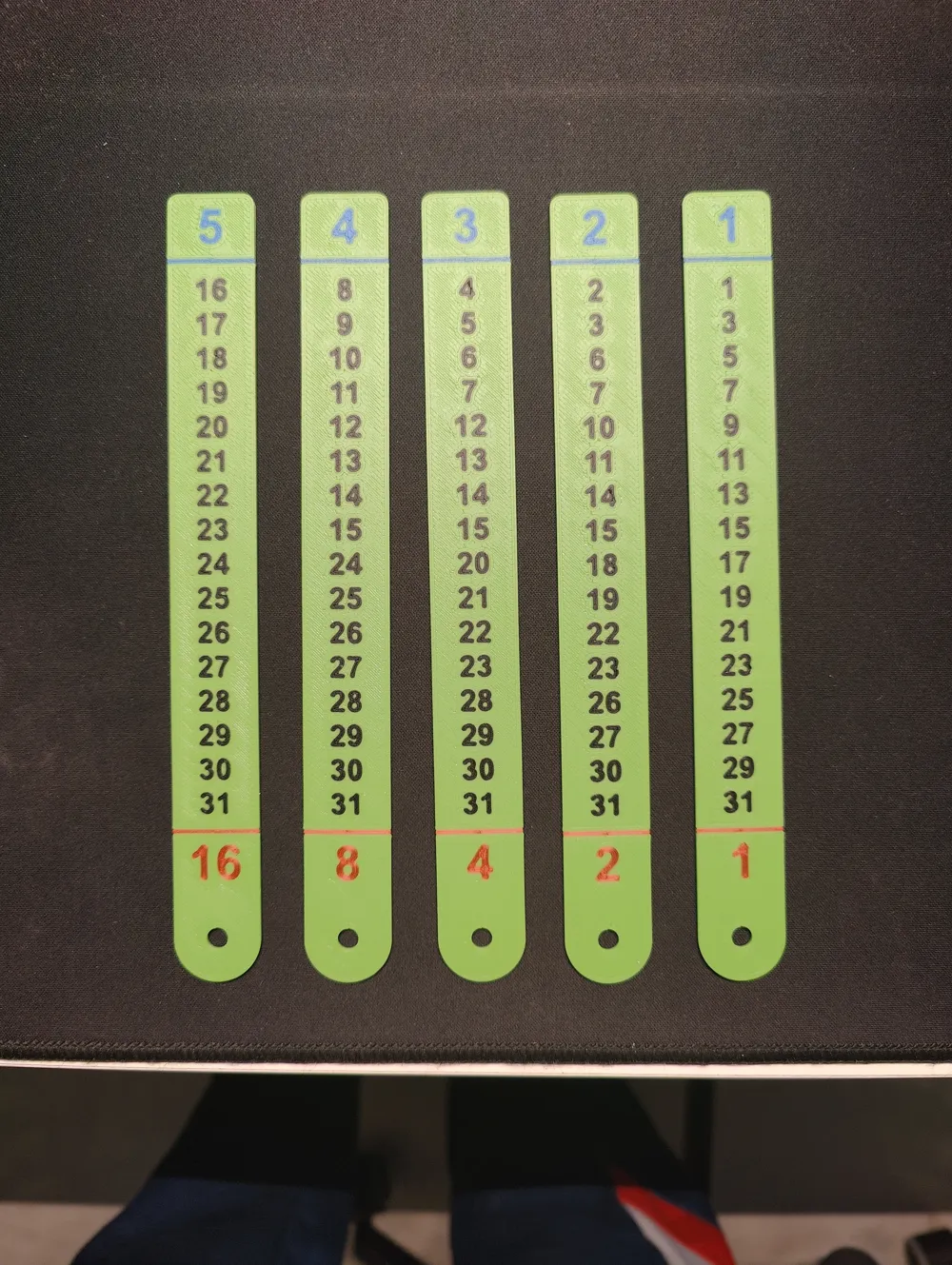
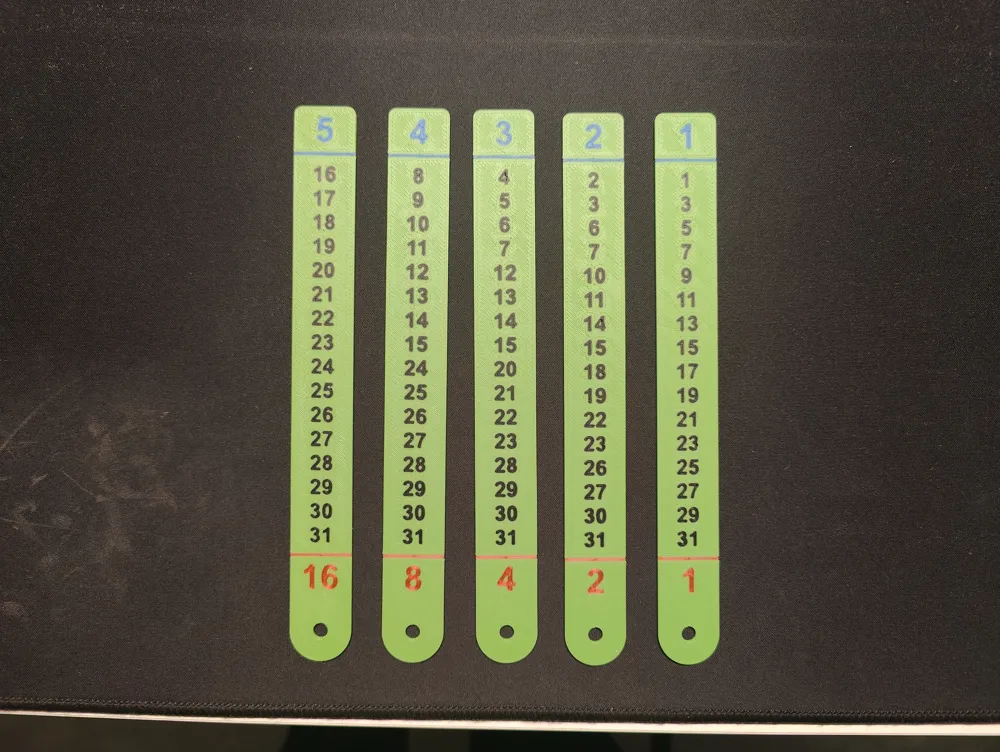
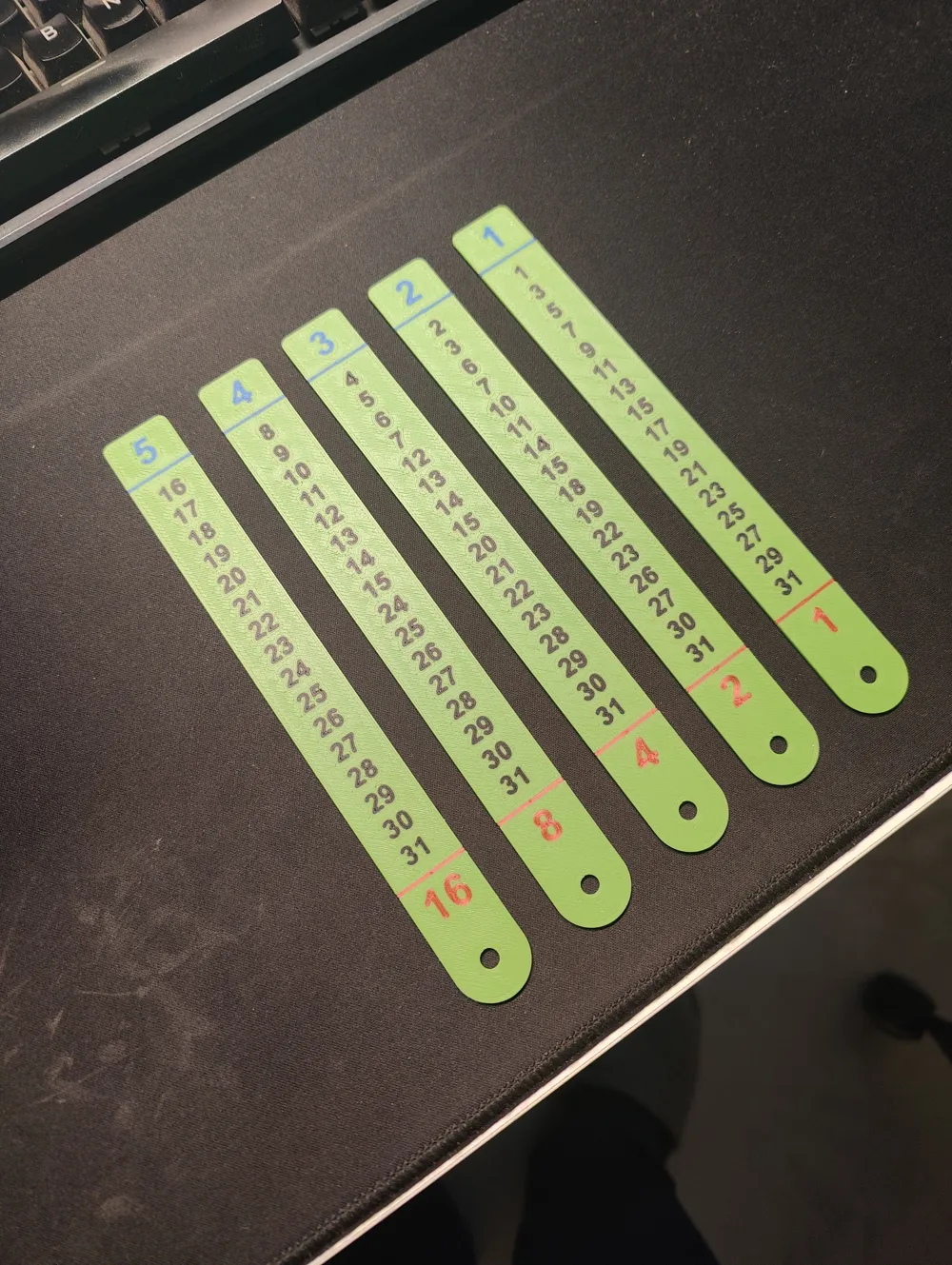
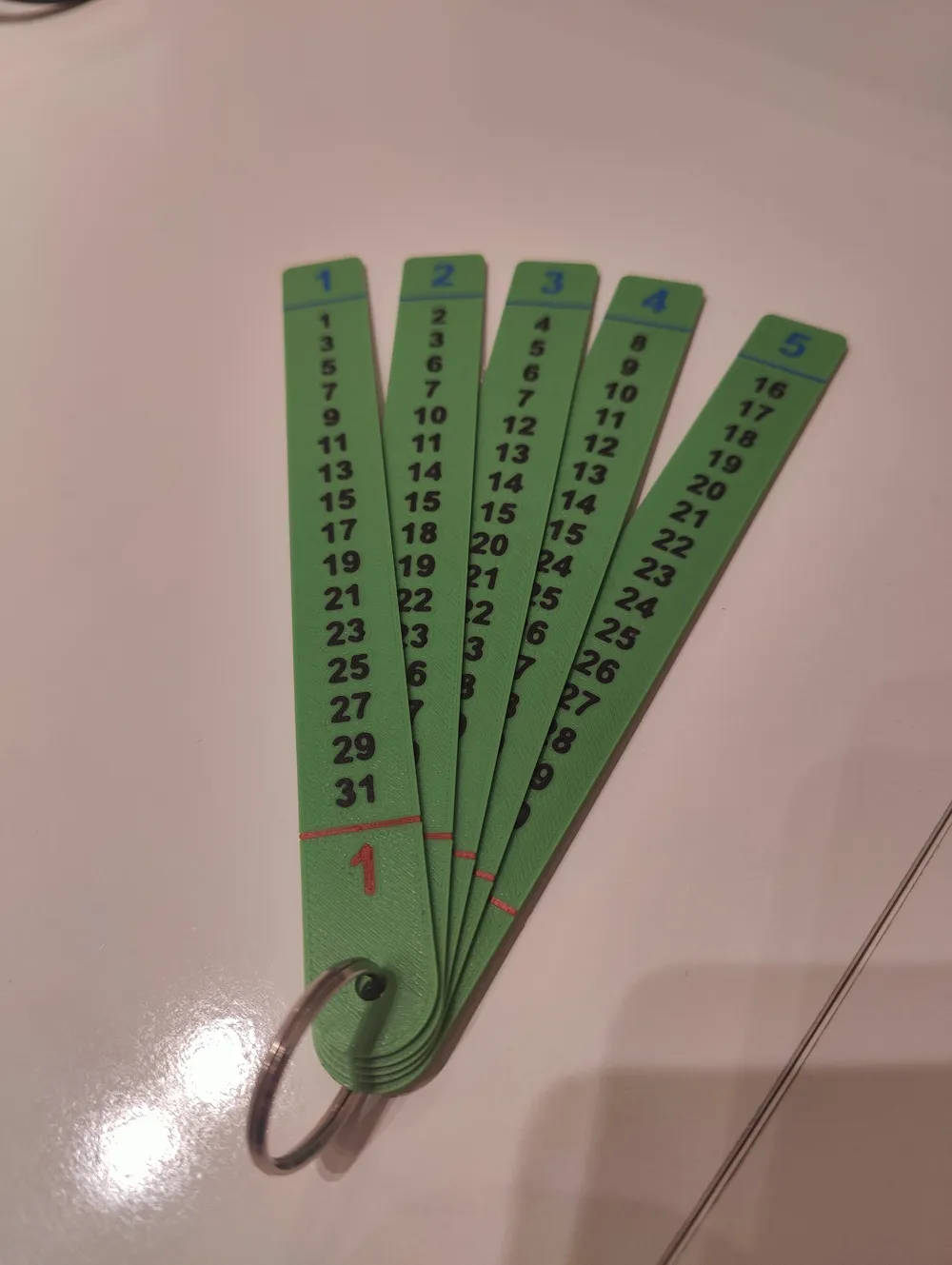
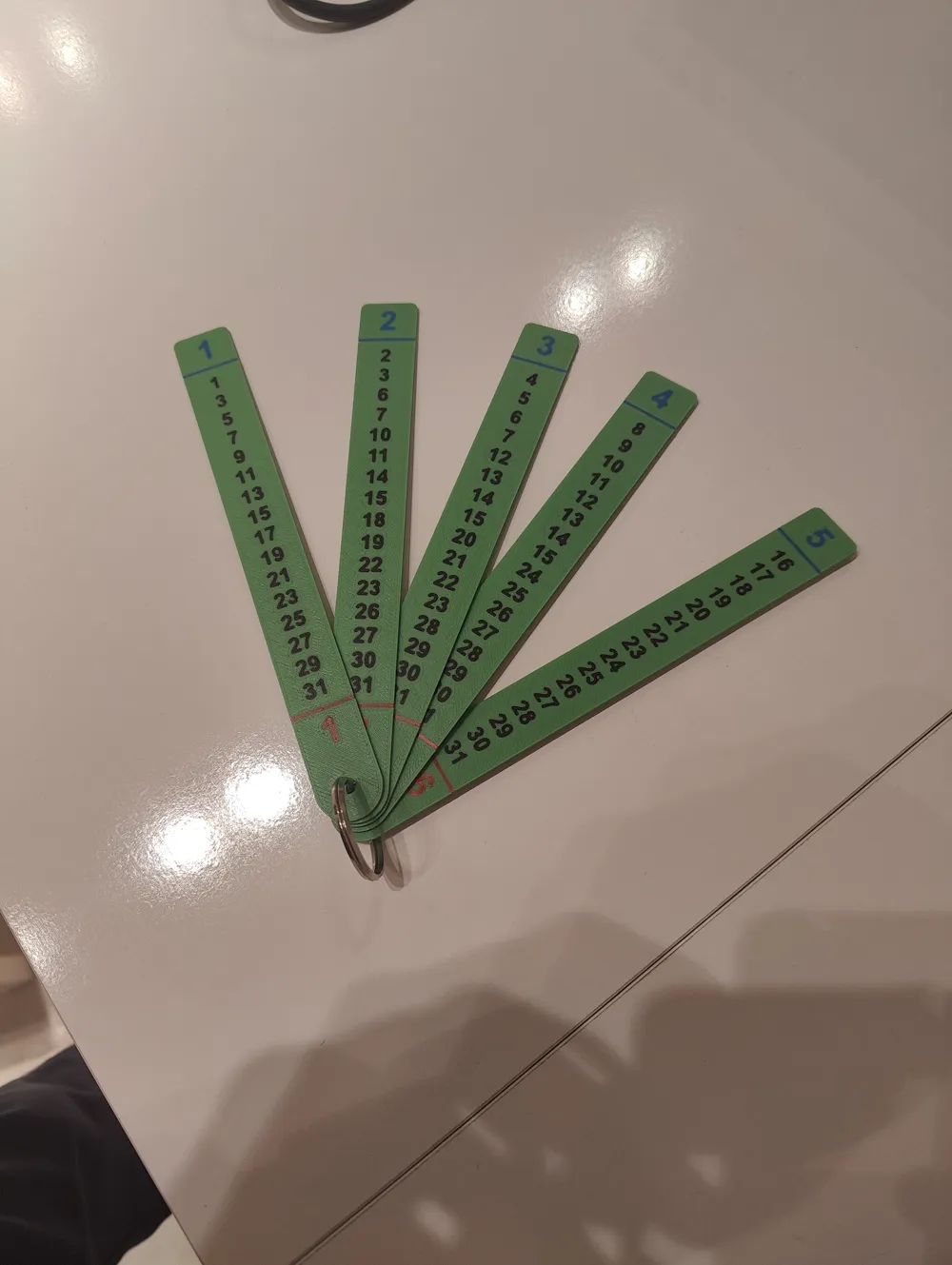
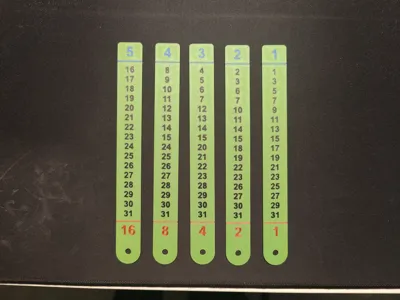
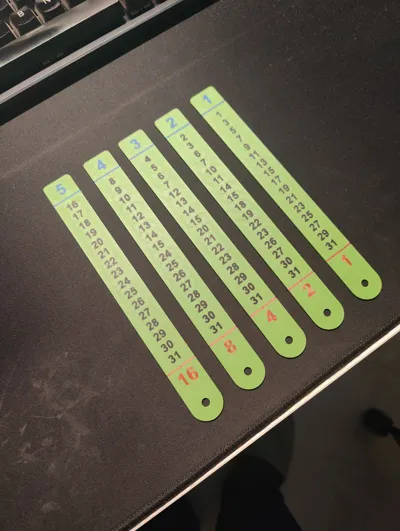
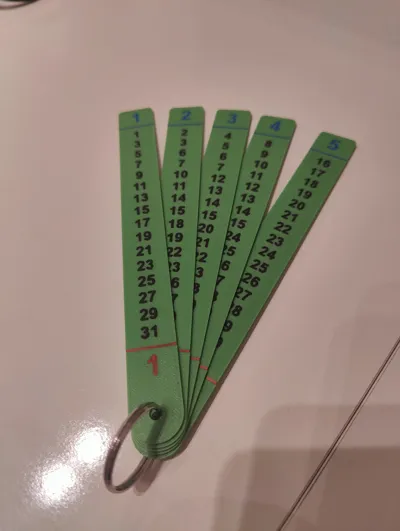
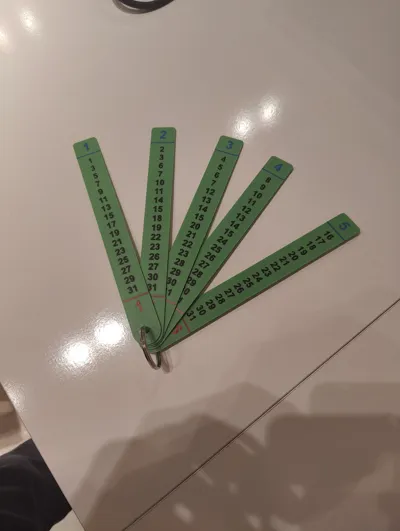
A classic mathematical "magic trick" designed by French mathematician Édouard Lucas in the 19th century. With these 5 simple strips, you can guess any number between 1 and 31 that a friend thinks of!
It is a fantastic STEM educational tool to introduce children (and adults) to the concept of the Binary System in a fun and interactive way.
🎩 How to Perform the Magic Trick:
- Ask a friend to think of a number between 1 and 31.
- Show them the 5 strips one by one.
- Ask: "Is your number written on this strip?"
- If they say YES, keep that strip in your hand. If they say NO, put it aside.
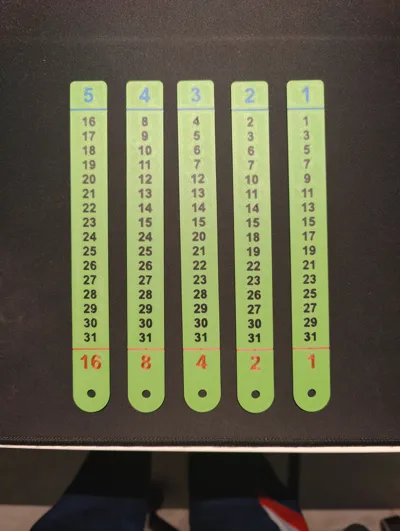
- Once you have checked all 5 strips, look at the Red Numbers at the bottom of the strips they said "YES" to.
- Sum them up. The total is exactly the number they thought of!
Example:
Your friend thinks of 25.
- Is it on strip 1 (Red 1)? -> YES (Keep it)
- Is it on strip 2 (Red 2)? -> NO
- Is it on strip 3 (Red 4)? -> NO
- Is it on strip 4 (Red 8)? -> YES (Keep it)
- Is it on strip 5 (Red 16)? -> YES (Keep it)
- Calculation: 16 + 8 + 1 = 25. Magic!
🎓 Educational Activity: How does it work?
This tool visualizes how computers "think" using the Binary System (Base 2).
Each strip represents a "Bit" or a power of 2:
- Strip 1 = 2^0 = 1
- Strip 2 = 2^1 = 2
- Strip 3 = 2^2 = 4
- Strip 4 = 2^3 = 8
- Strip 5 = 2^4 = 16
Every number can be broken down into a sum of these powers. The numbers printed on each strip are simply all the numbers that have a "1" in that specific binary position. By collecting the strips, you are physically "turning on the bits" needed to make that number.
Happy Teaching!
Documentation (1)
License

You shall not share, sub-license, sell, rent, host, transfer, or distribute in any way the digital or 3D printed versions of this object, nor any other derivative work of this object in its digital or physical format (including - but not limited to - remixes of this object, and hosting on other digital platforms). The objects may not be used without permission in any way whatsoever in which you charge money, or collect fees.


Comment & Rating (3)