
Luthier Spool Clamps for Guitar Building / Repair
Print Profile(1)

Bill of Materials



Description
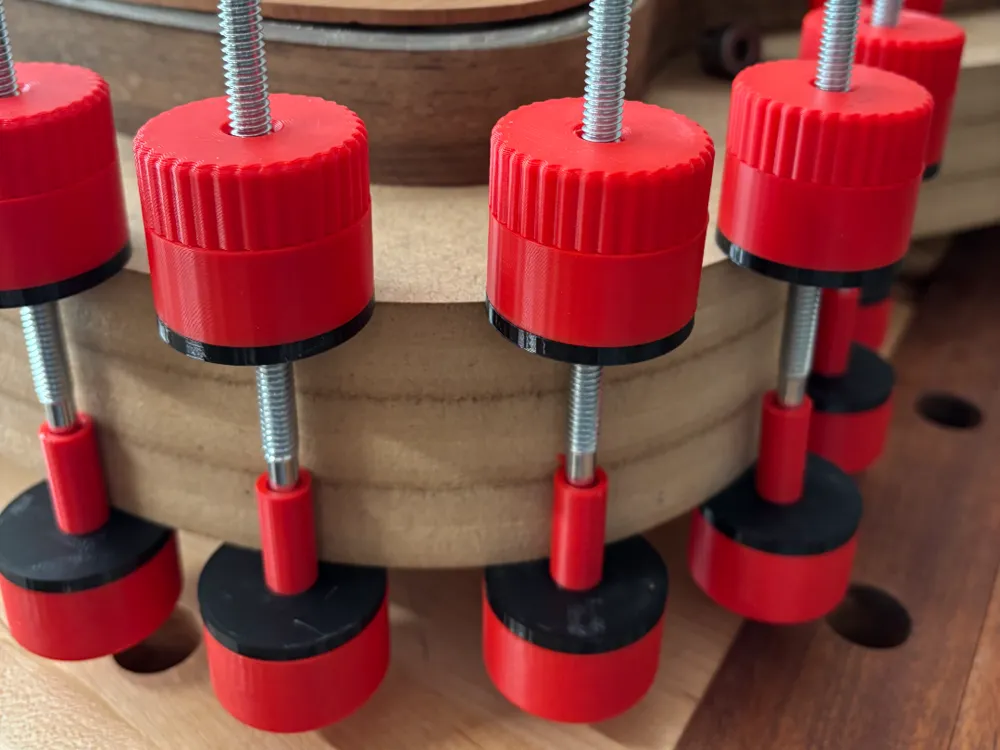
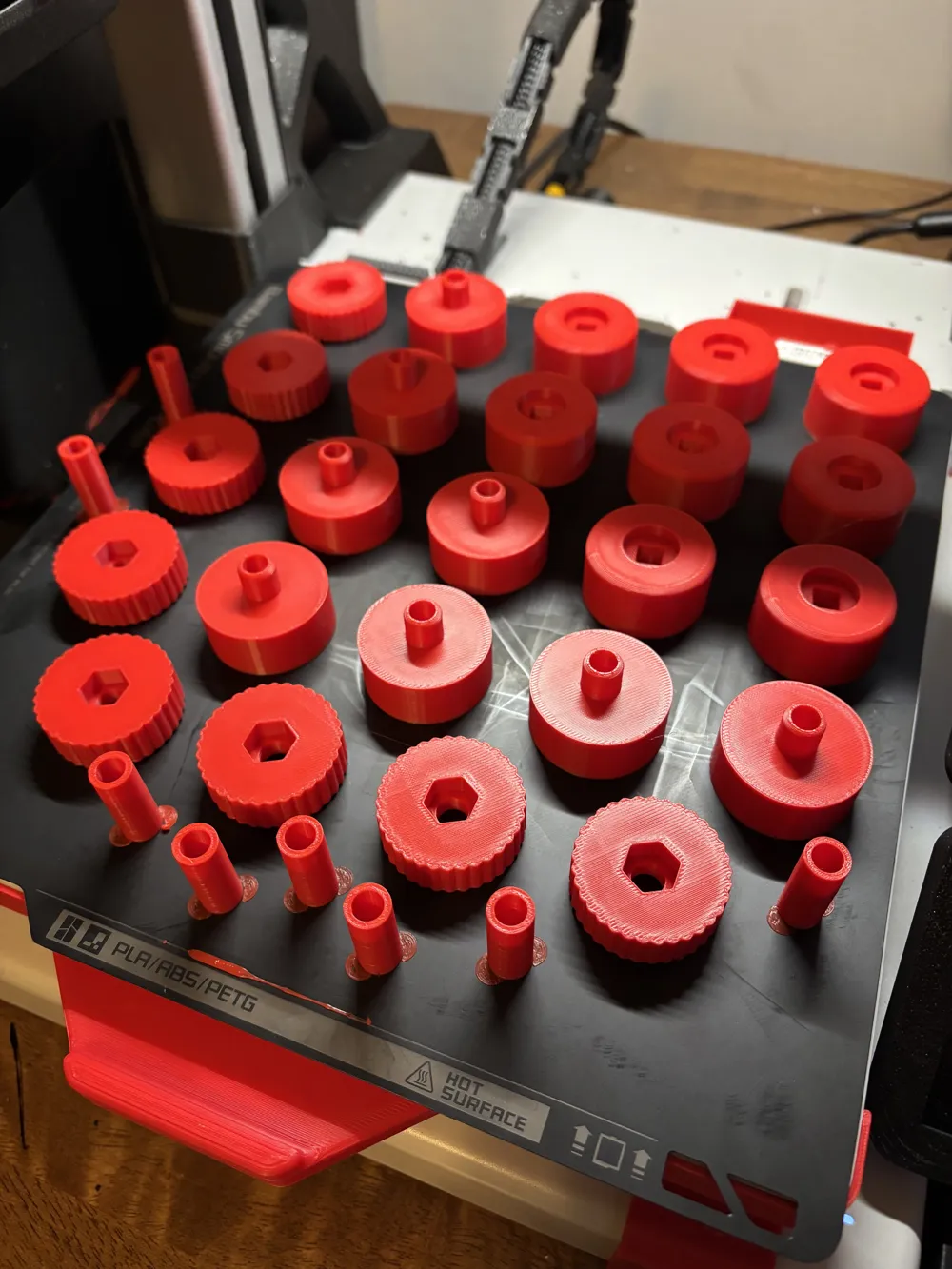
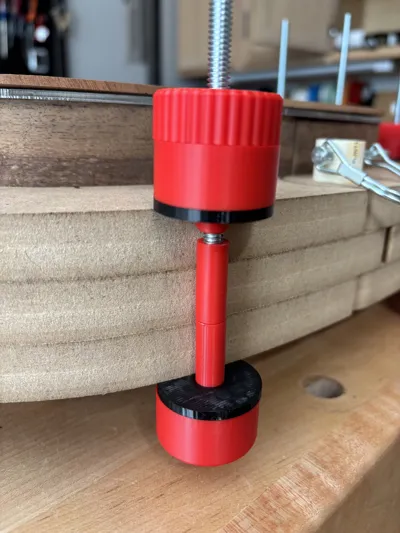
Here's another guitar building tool to save you some money! This is a set of spool clamps useful for a variety of luthier tasks and are especially good for gluing the top/back on an acoustic guitar. You normally need a lot of these, so they are often pricey to buy. Printing these will cost you about $40 / 25pcs.
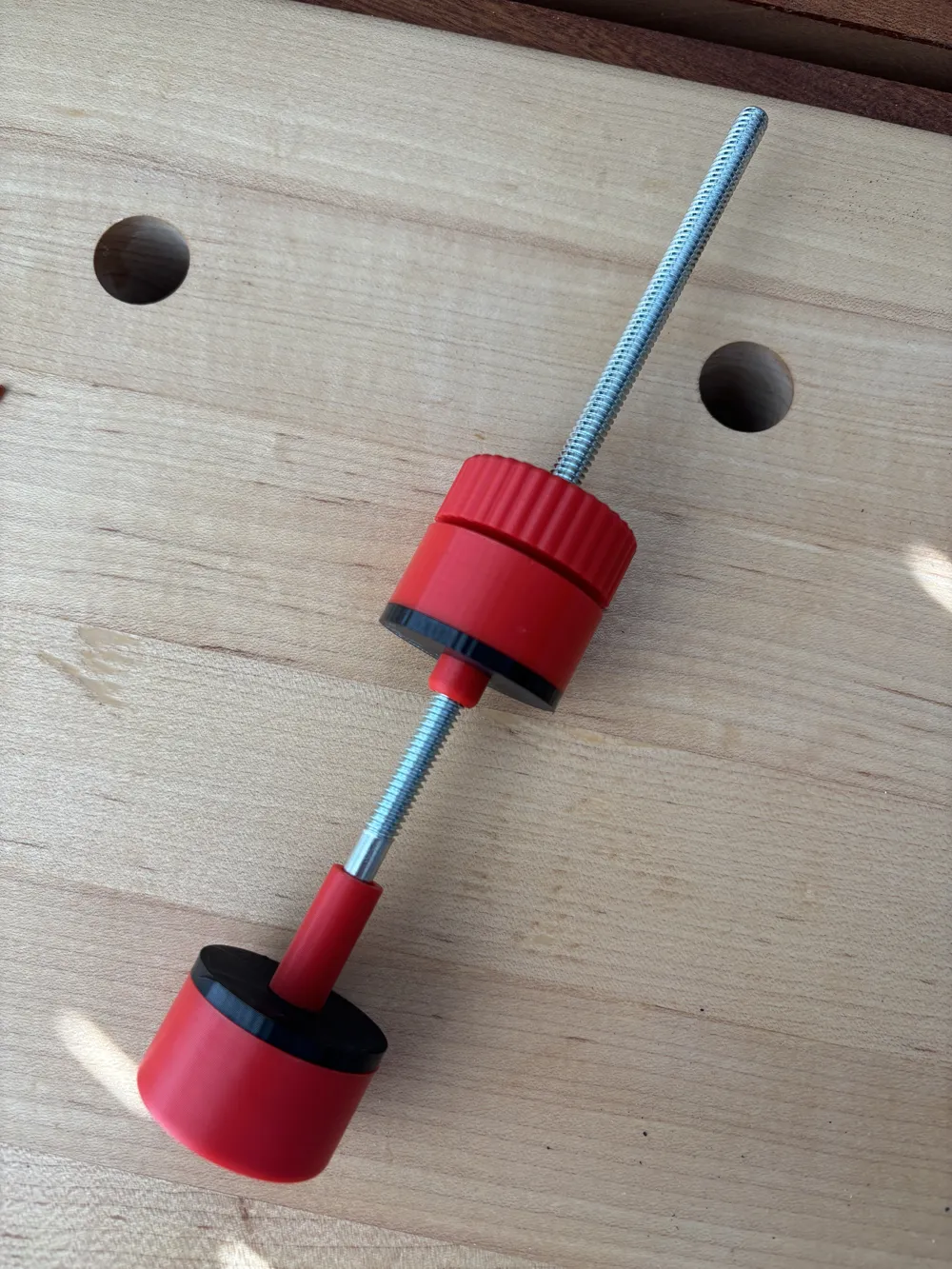
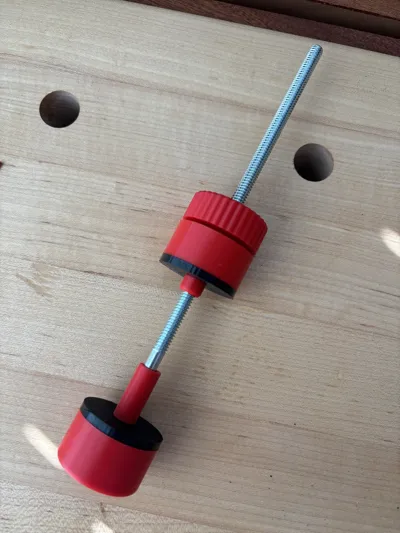
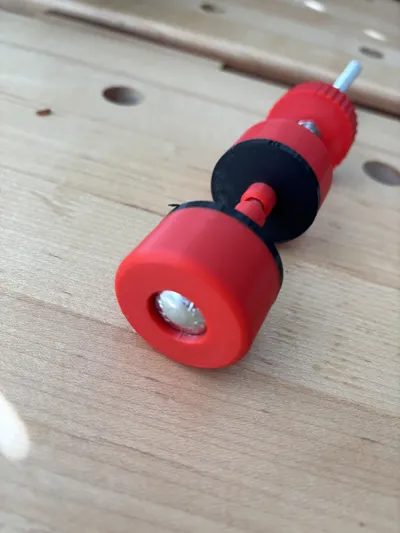
The file is made up of 7 components:
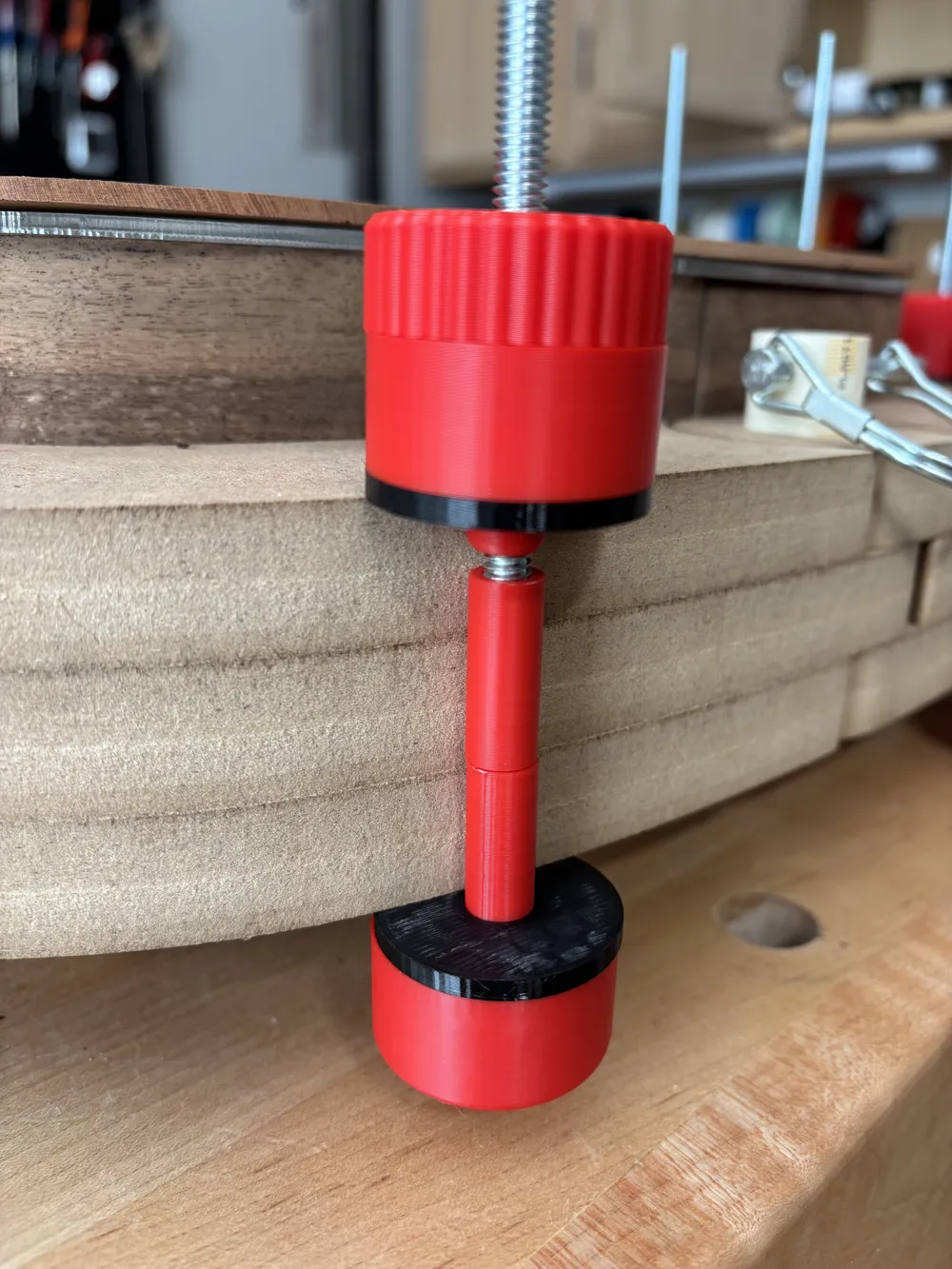
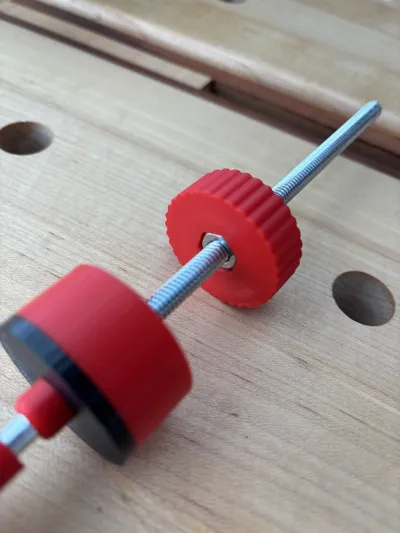
- Carriage Bolt - You need a ¼-20 carriage bolt per clamp. I used McMaster Carr P/N 93548A570, which is an 8" long, though I think the 7" length would fit most any guitar and shorter ones could be used for smaller instruments. You'll lose about 2 1/8" of the bolt length in clamping capacity from the 3D printed parts.
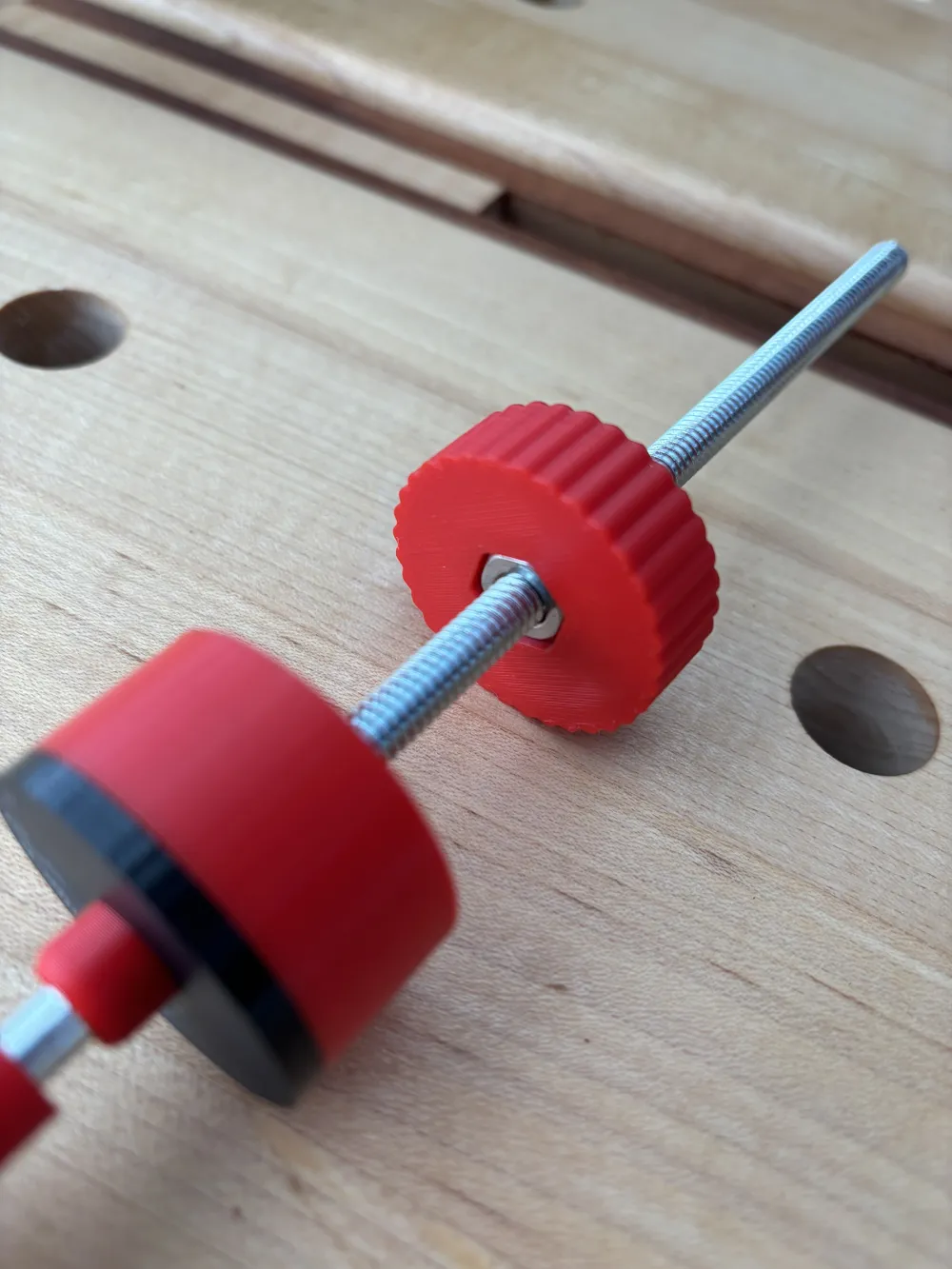
- Nut - You need a ¼-20 hex nut per clamp. I used McMaster Carr P/N 92673A113, but just pick something cheap in the quantities you need. You could alternatively use a wing nut and skip printing the thumb screw.
- Thumb Screw - This is a printed component with knurling on the ourside and a cavity for the nut. I used PLA, but PETG or another hard material would work fine. You need 1 per clamp.
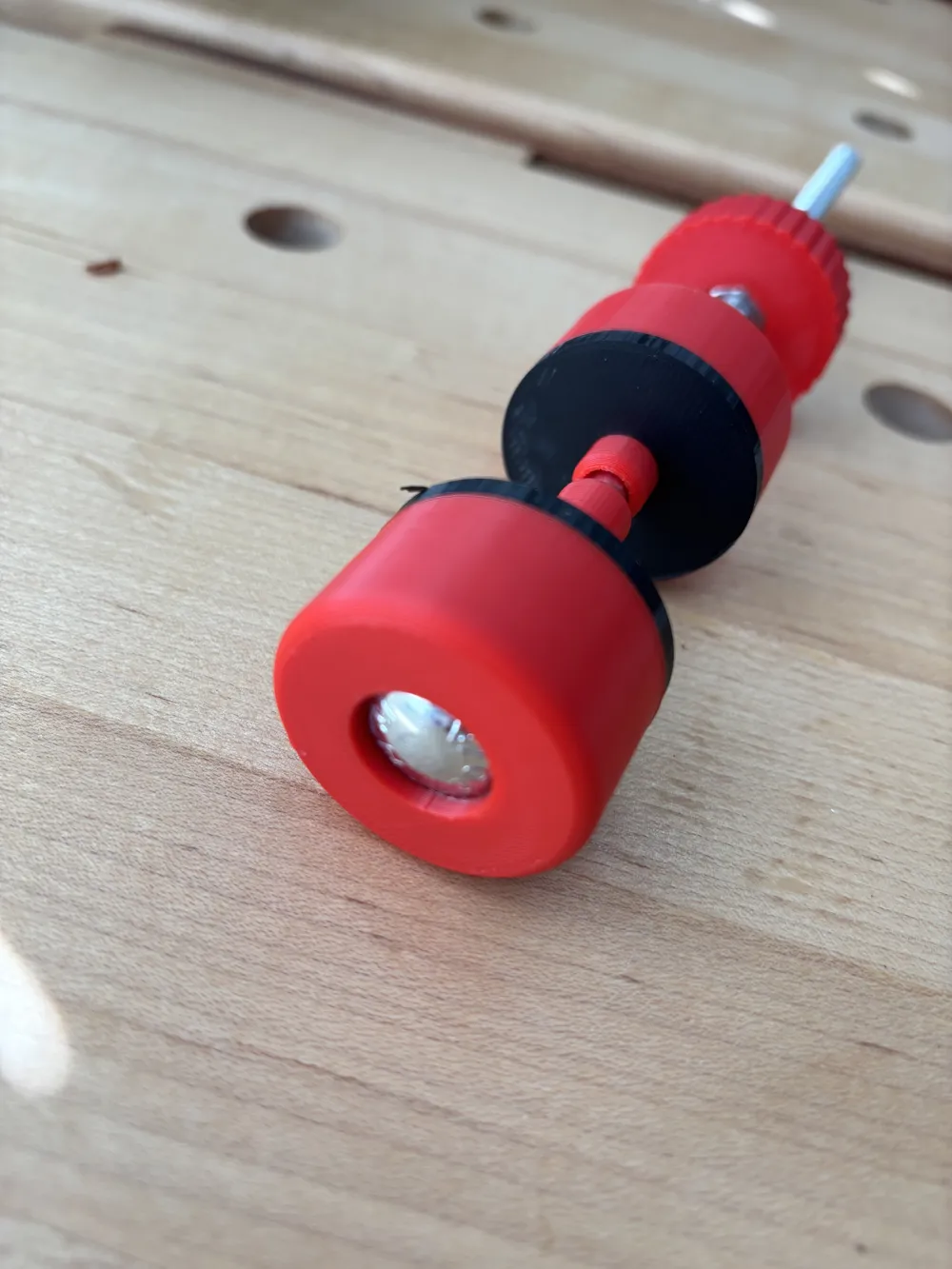
- Bottom Clamp - This is a printed component with the carriage bolt countersink. I used PLA, but PETG or another hard material would work fine. You need 1 per clamp.
- Top Clamp - This is a printed component. I used PLA, but PETG or another hard material would work fine. You need 1 per clamp.
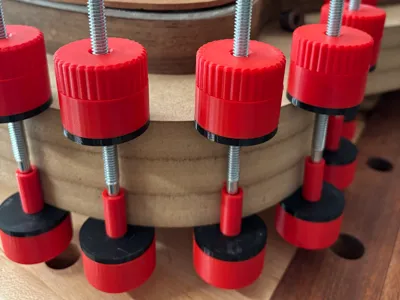
- Bolt Guard - This is a printed component and is intended to help protect your guitar from scratches when putting the clamps on and off. It is not strictly necessary and could be skipped or you can also print more to cover more of the bolt (see image of stacked guards). These are 1" tall and oversized on the hole for quickly added/removing.
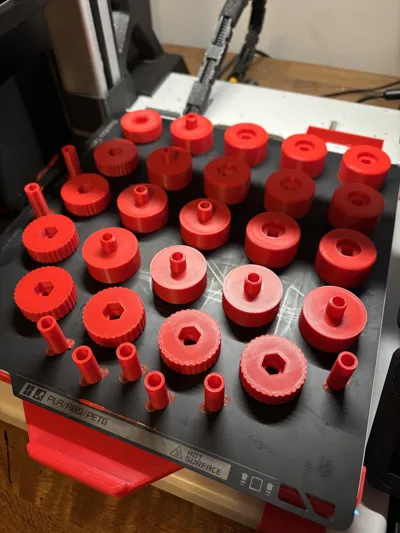
- Clamp Pads - This is a printed component, but you could also use leather or cork if you have some. You just want something a little soft and with some give for good clamping pressure. I used TPU for AMS and included a plate for these. You need 2 per clamp.
Boost Me (for free)
Boost me for more guitar building tools!
Assembly:
If you are building a guitar, you can probably assemble these from the pictures. I used a little dab of Medium-Viscosity Super Glue (Stewmac P/N 0020) to glue the parts together. It is not strictly necessary, but helps keep parts together for less fiddling while gluing. If you glue:
- Glue 1 bolt guard + clamp pad to the bottom clamp.
- Glue 1 clamp pad to the top clamp around the built-in bolt guard.
- Glue the carriage bolt into the countersink of the bottom clamp.
- Glue the hex nut into the countersink of the thumb screw.
The main print profile is sized for optimizing the A1 build plate. You could print fewer on the A1 mini, or more on a larger printer. Let me know if you need help modifying for one of these.
Links to components:
- Carriage Bolt - https://www.mcmaster.com/93548A570/
- Nuts - https://www.mcmaster.com/92673A113/
- Super Glue - https://www.stewmac.com/luthier-tools-and-supplies/supplies/glue-and-adhesive/glues/stewmac-super-glues/stewmac-super-glue/?queryid=d1f3dc2345bf4b1460a338c40cf2cd7e
For a riser to raise your workpiece off your bench, check out these: https://makerworld.com/en/models/2009482-riser-for-luthier-spool-clamps-0-75-3-4-hole#profileId-2164545
FYI, the general concept for this design was inspired by “Spool clamp” by JK_Prints on Thingiverse. However, I modeled this completely from scratch and made several modifications from his design.
License

You shall not share, sub-license, sell, rent, host, transfer, or distribute in any way the digital or 3D printed versions of this object, nor any other derivative work of this object in its digital or physical format (including - but not limited to - remixes of this object, and hosting on other digital platforms). The objects may not be used without permission in any way whatsoever in which you charge money, or collect fees.


Comment & Rating (4)