
Protector Palm Pistol by Chicago
Print Profile(1)

Description
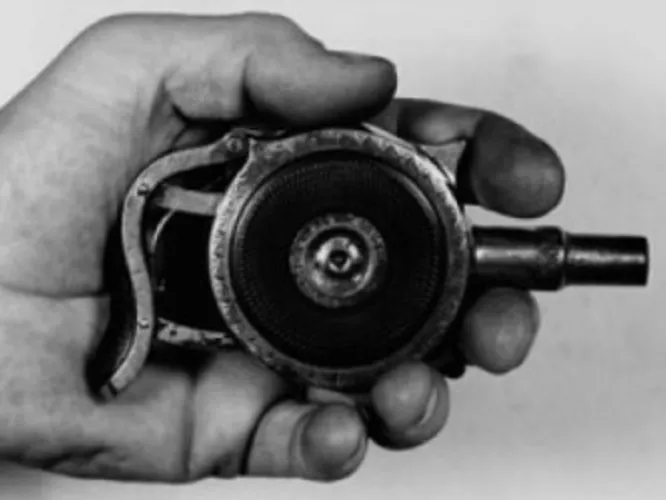
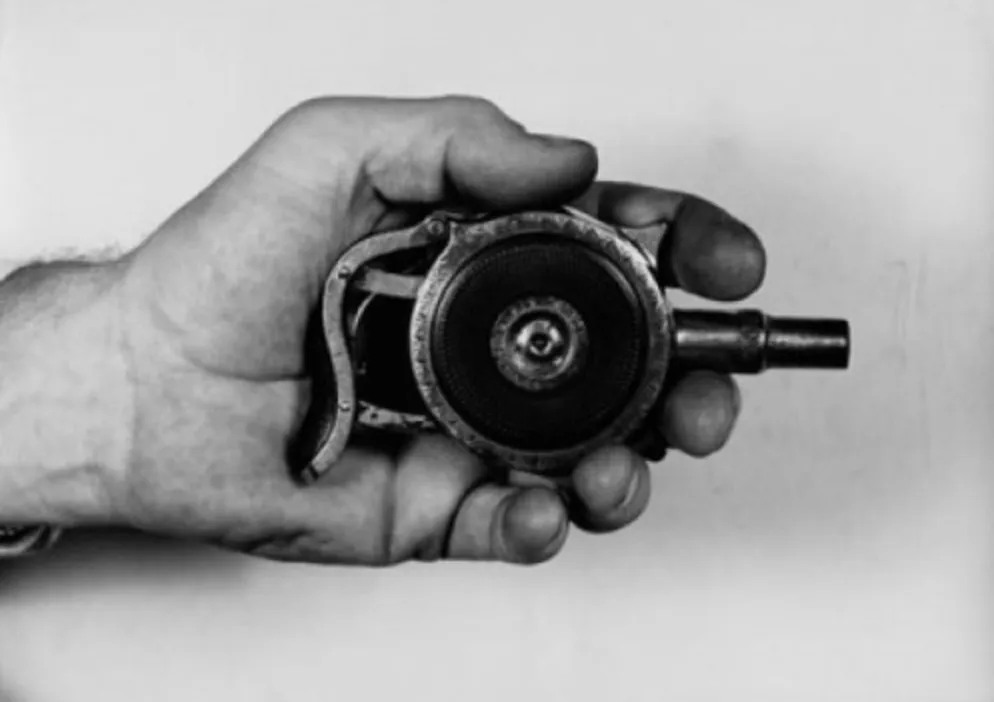
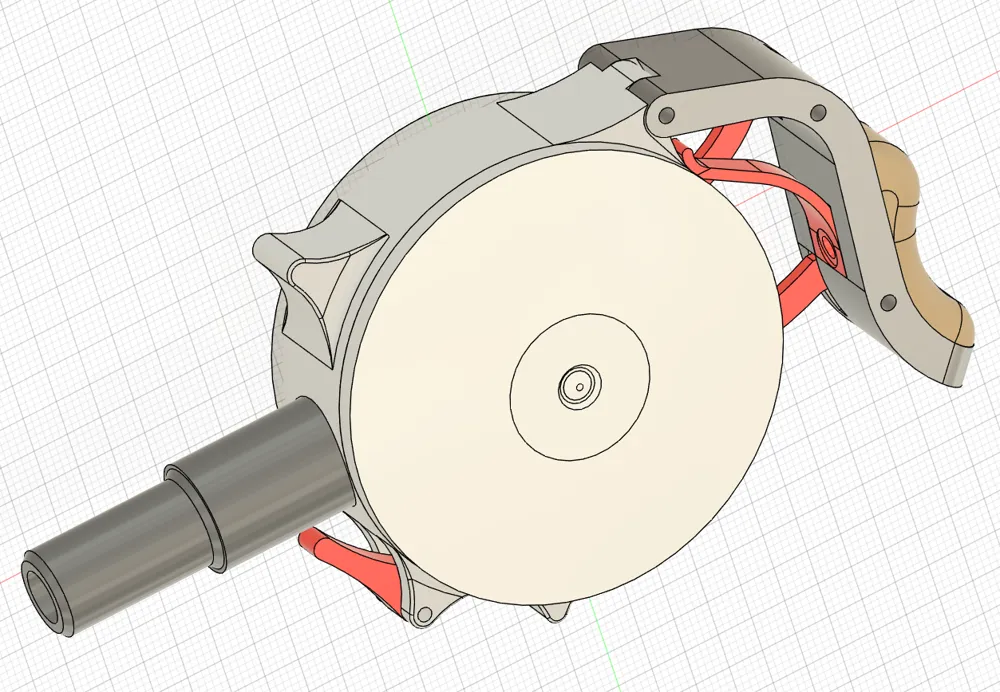
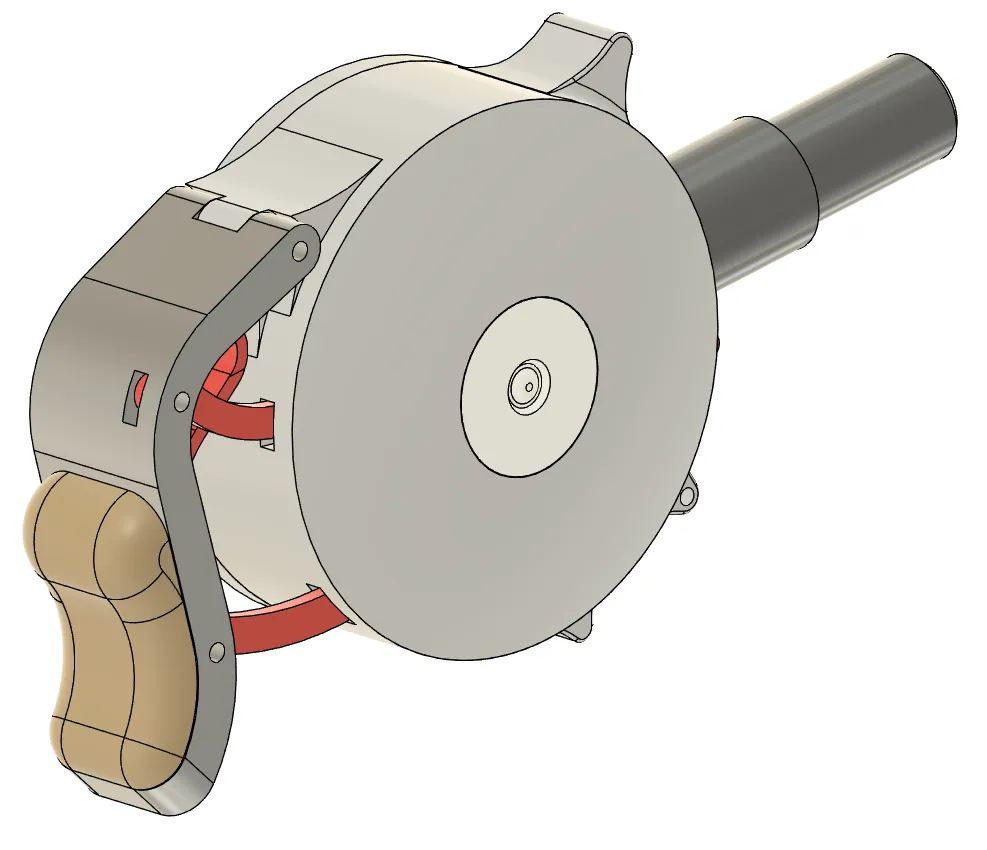
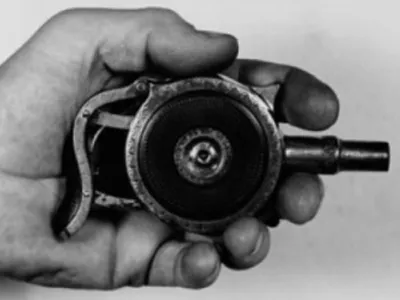
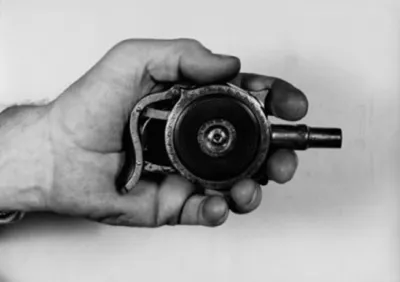
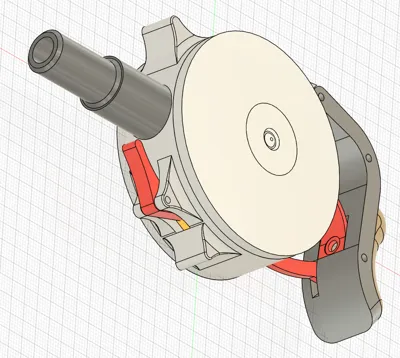
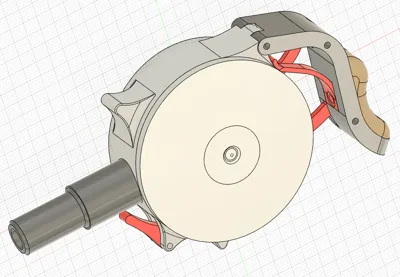
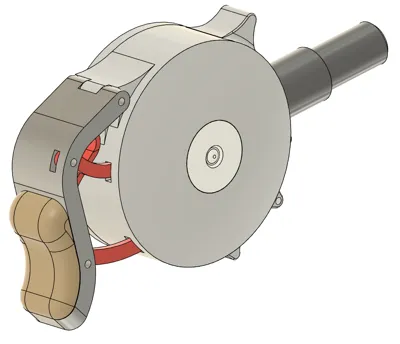
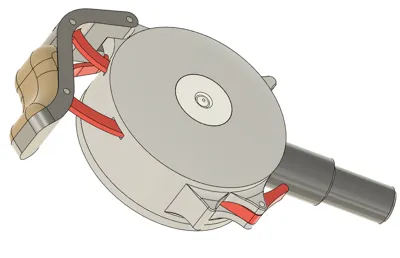
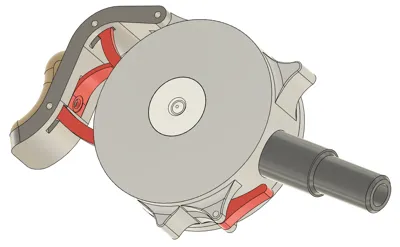
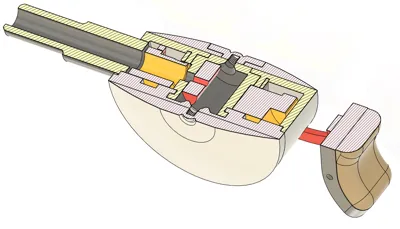
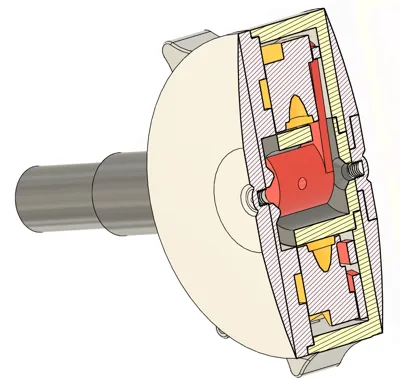
The Protector Palm Pistol is a small revolver designed to be concealed in the palm of the hand. It was unique in that the revolver was clasped in a fist with the barrel protruding between two fingers and the entire handgun was squeezed in order to fire a round. The design was meant to resemble a pocket watch to the extent of being carried on a chain.
History:
The Protector Palm Pistol was first patented and built in France in 1882 by Jacques Turbiaux and sold as the "Turbiaux Le Protector" or the "Turbiaux Disc Pistol". Later in 1883 it was built in the USA as The Protector by Minneapolis Firearms Co. Peter H. Finnegan of Austin, Illinois bought the patent in 1892 and founded the Chicago Fire Arms Co. to make and market the pistols. In anticipation of the World's Columbian Exposition in 1893, he contracted the Ames Sword Company of Chicopee, Massachusetts to manufacture 15,000 pistols. Ames made 1,500 of the pistols by the deadline of the exhibition. Finnegan sued for damages and engaged in a lawsuit with Ames. The company countersued and settled with Finnegan, but, through the years, had amassed a large production run of 12,800 pistols. The company sold the inventory and abandoned the design by 1910.
Remington manufactured the rimfire ammunition for this pistol, 32 Extra Short and alternatively 32 Protector, until 1920.
The guns were made in a few different calibres. Surviving examples have been noted in 6 mm, 8 mm, and .32 caliber. 6 mm is marked on some surviving boxes of the French version, and .32 caliber is noted on the boxes of the Chicago Fire Arms Co. pistols. The European and American versions used different designs of safety catches with the European pistols having two different versions of their sliding bar safety.
Assembly:
Material:
- countersunk head screw M3x5 mm 3x
- axle nail diameter 2-1.75 mm
- printing filament diameter 1.75 mm
- superglue
- sandpaper grain 600
- needle files
- tap M3
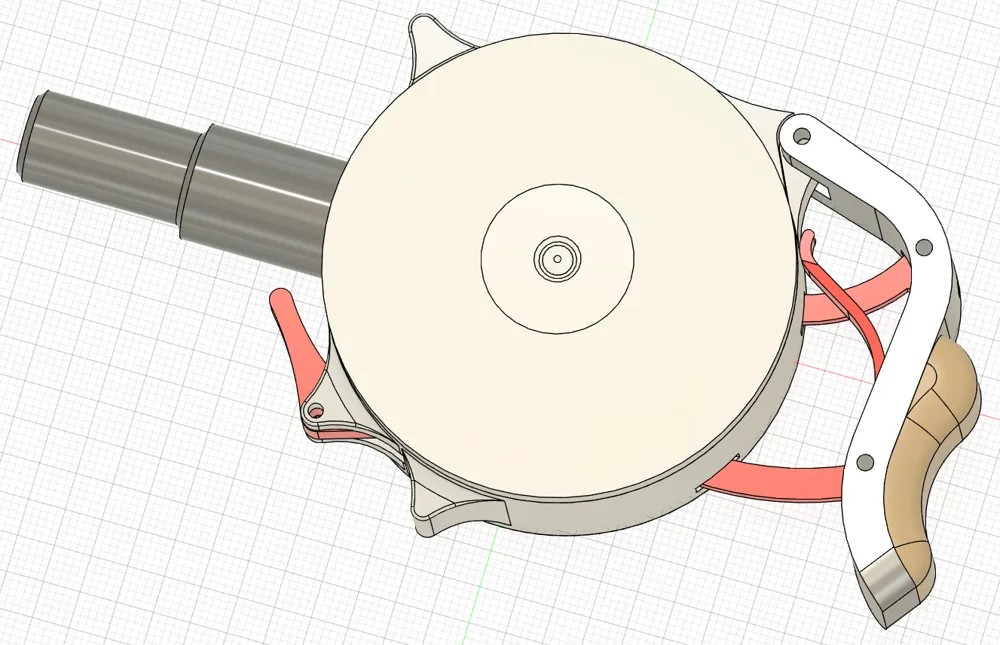
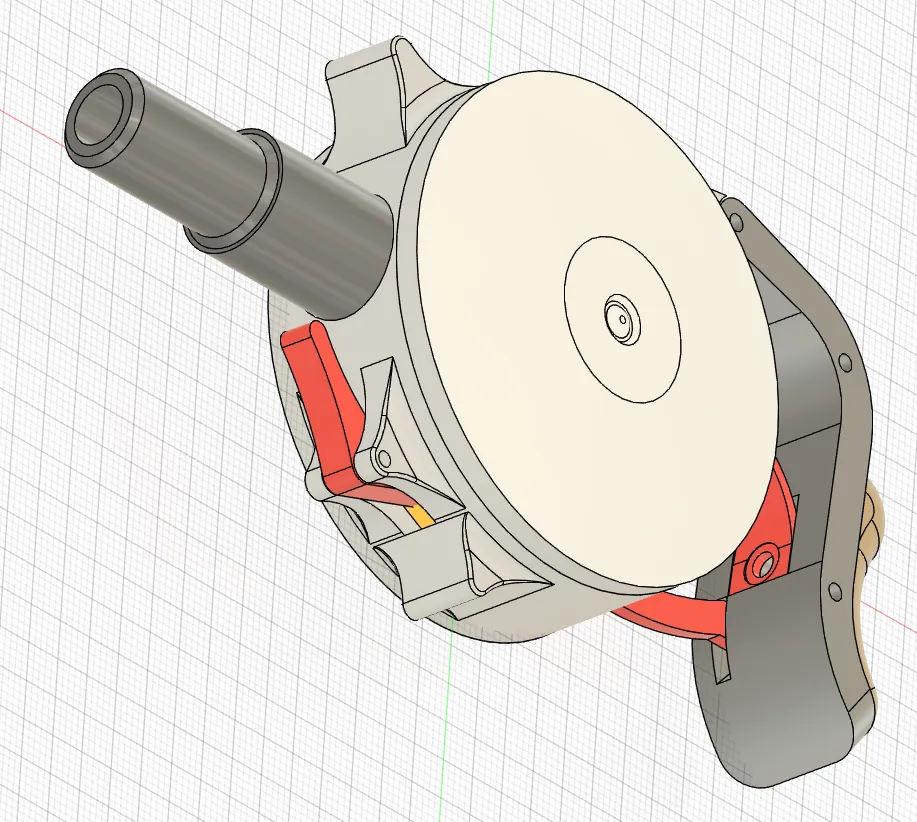
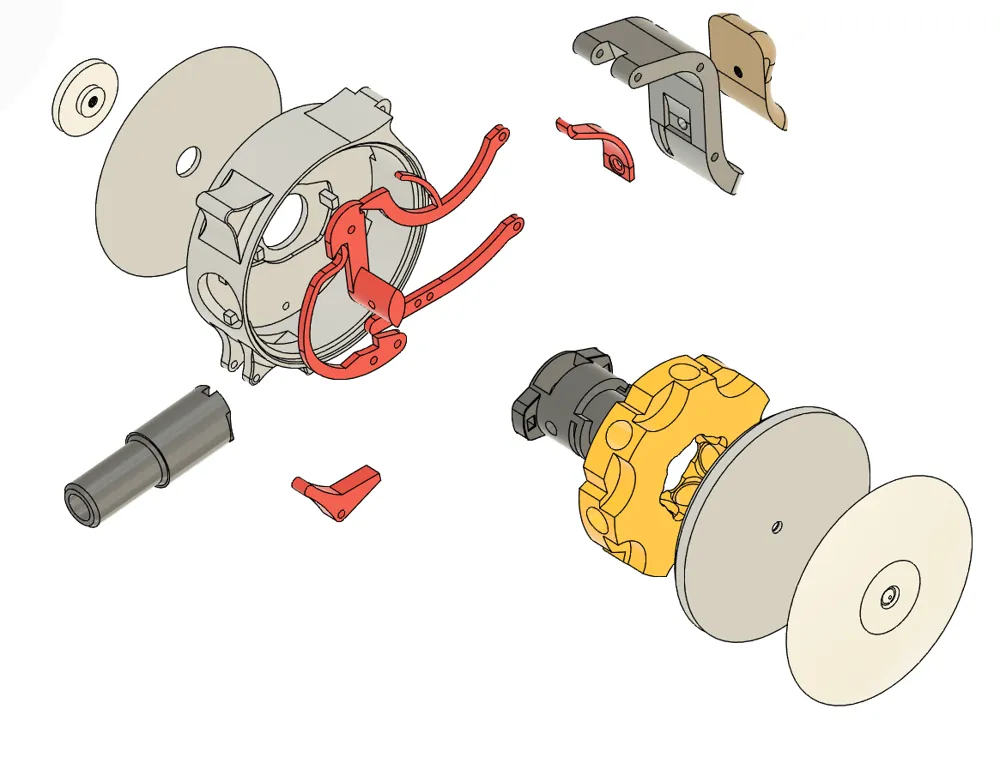
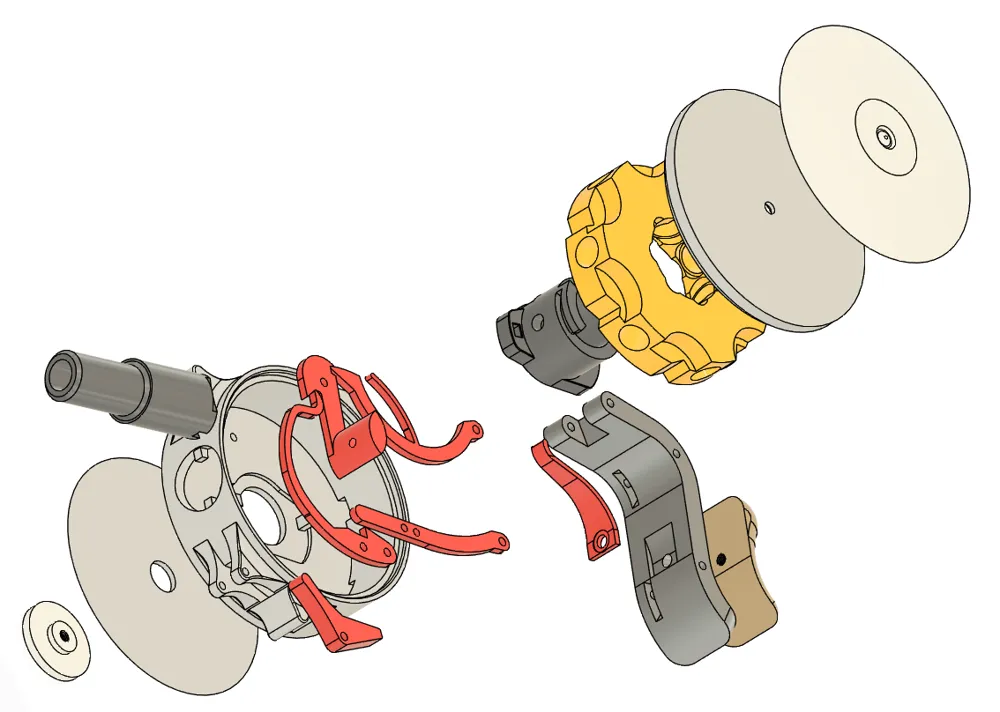
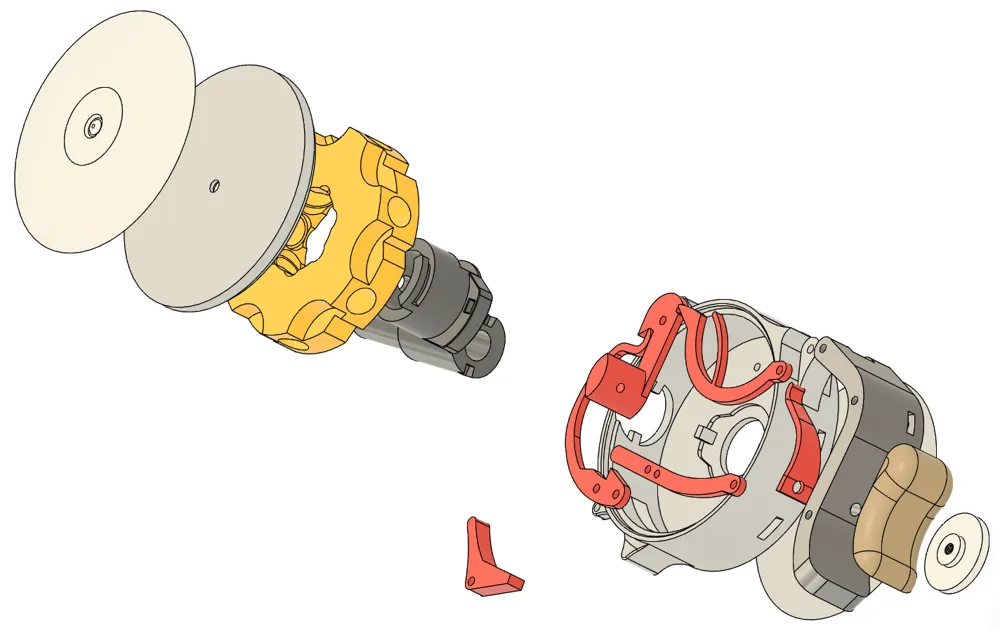
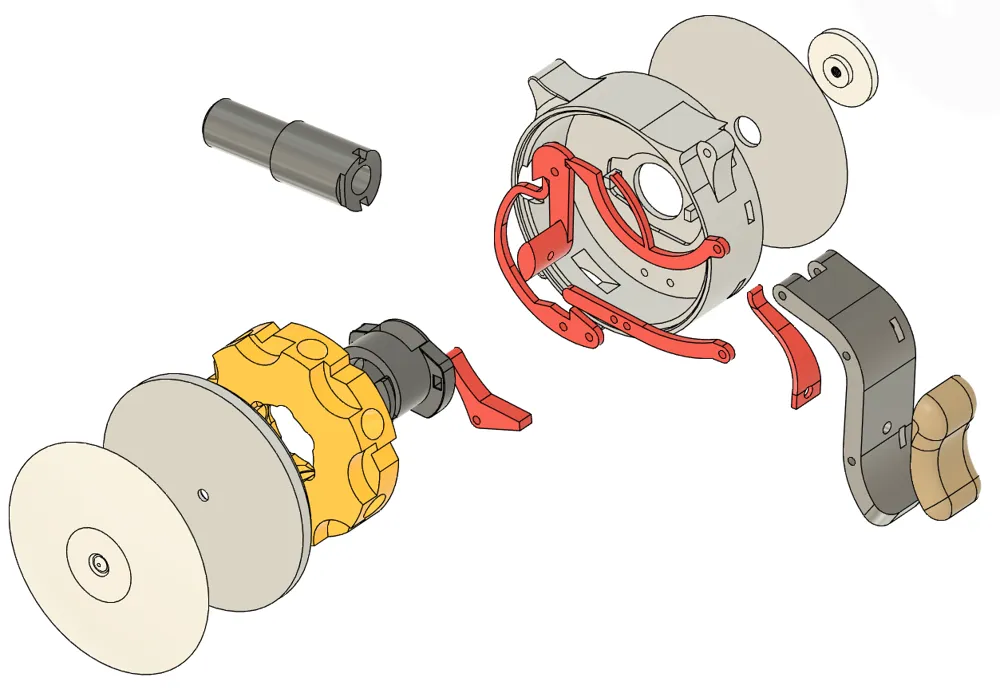
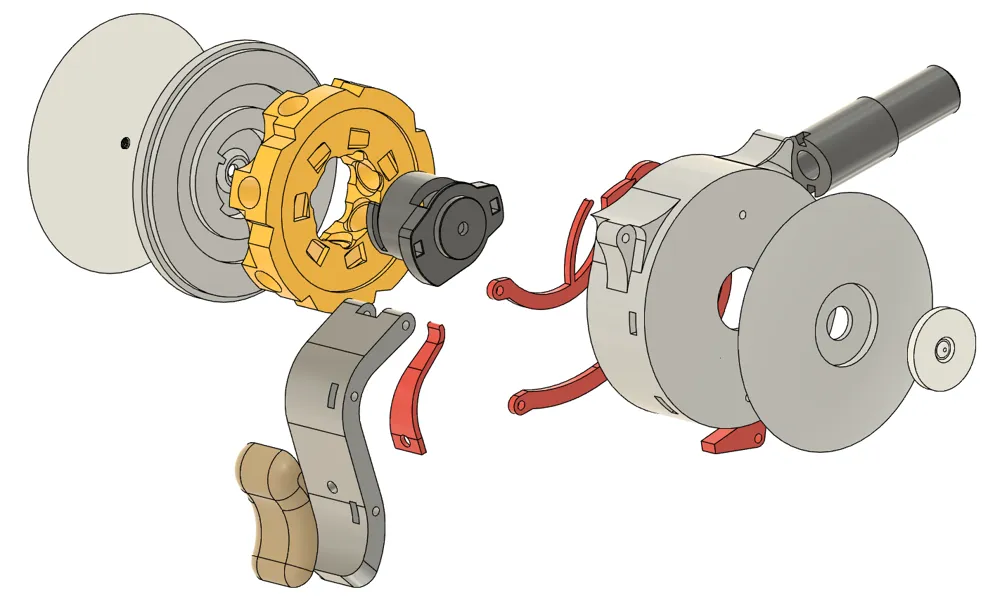
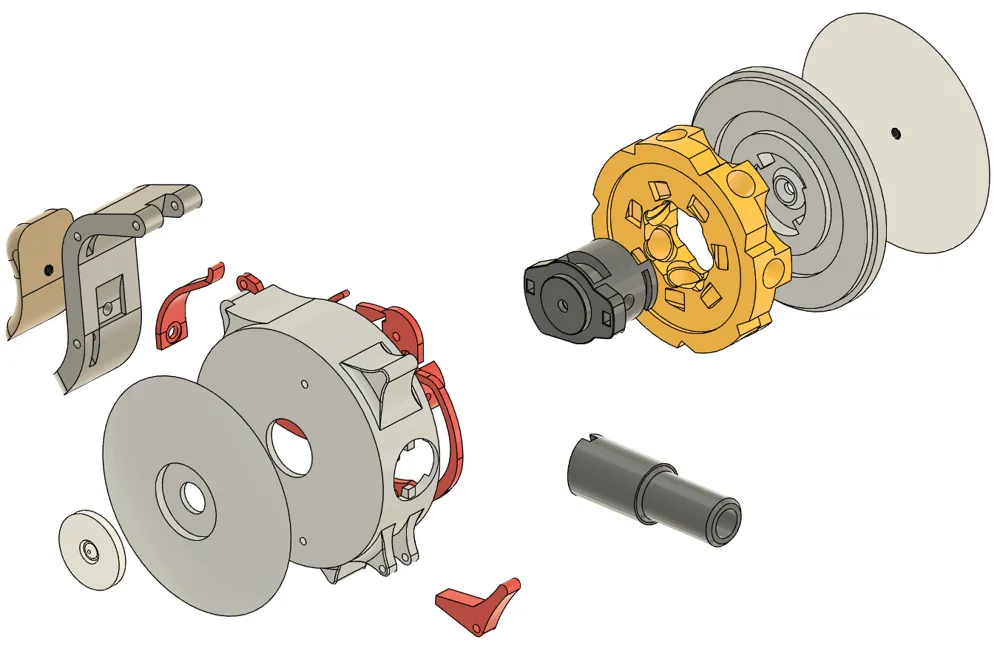
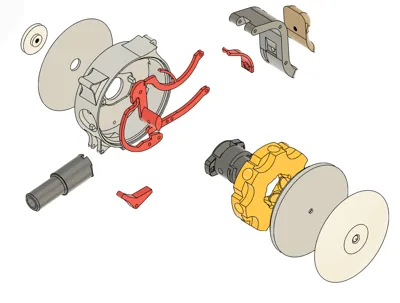
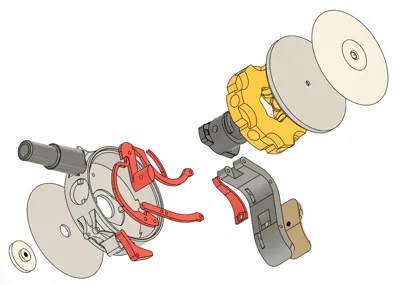
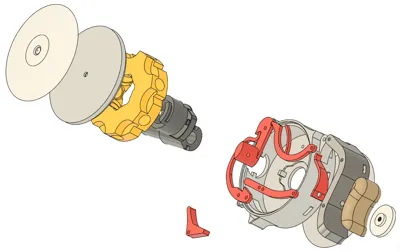
First, a thorough preparation of the individual parts is necessary. Cleaning from supports and thorough grinding with a needle file of all the penetrations in the main casing. The trigger handle must move freely in the hinge, All parts of the mechanism must freely pass through the casing penetrations and the screws must be screwed into the threads.
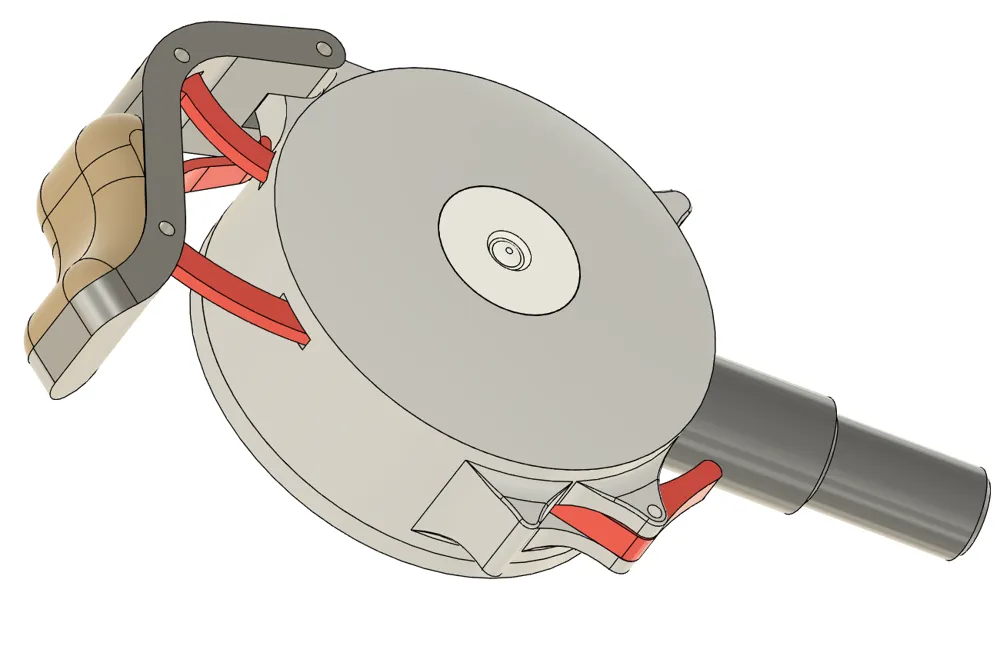
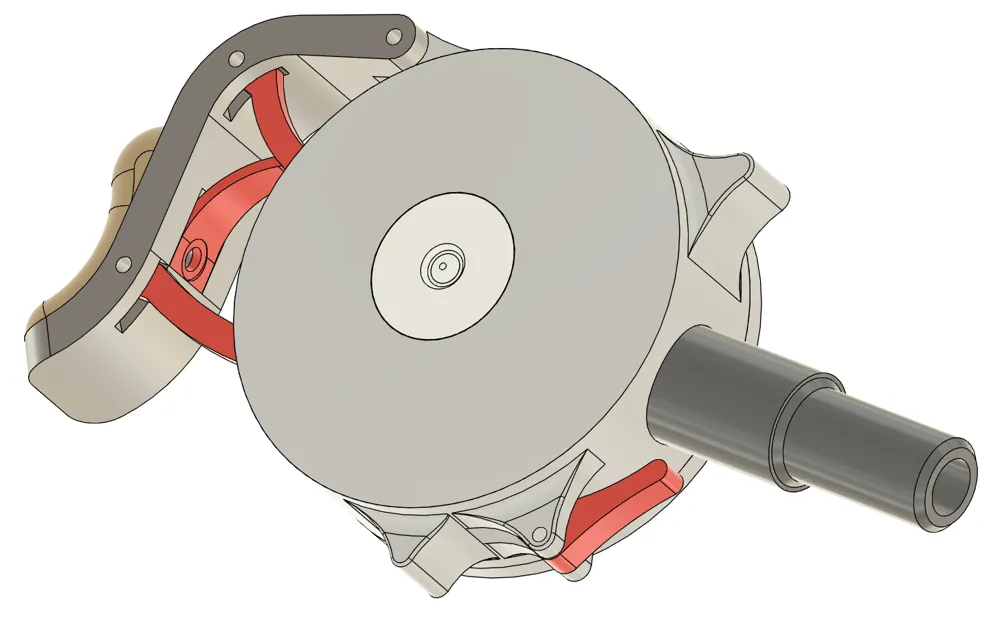
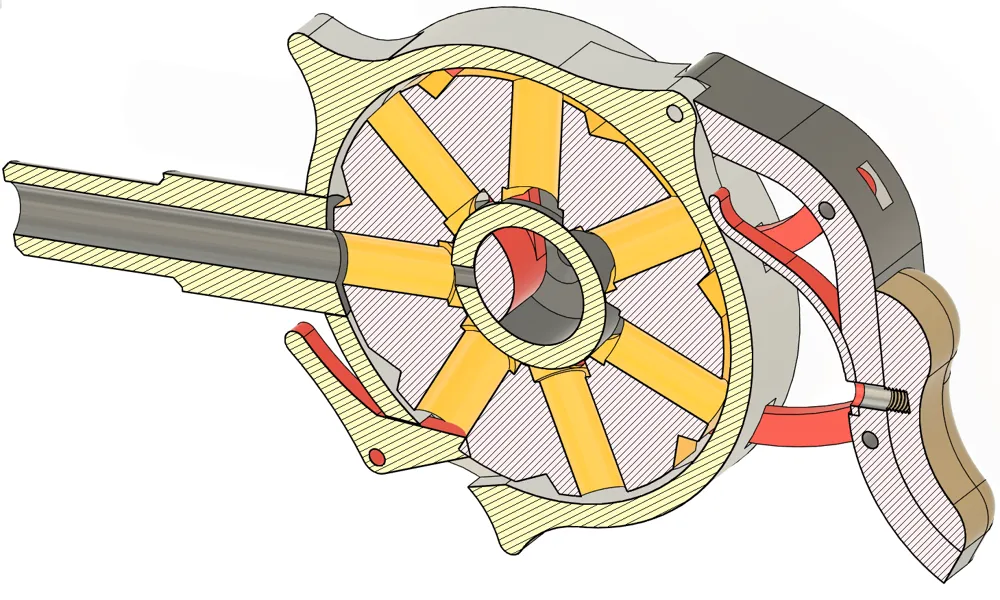
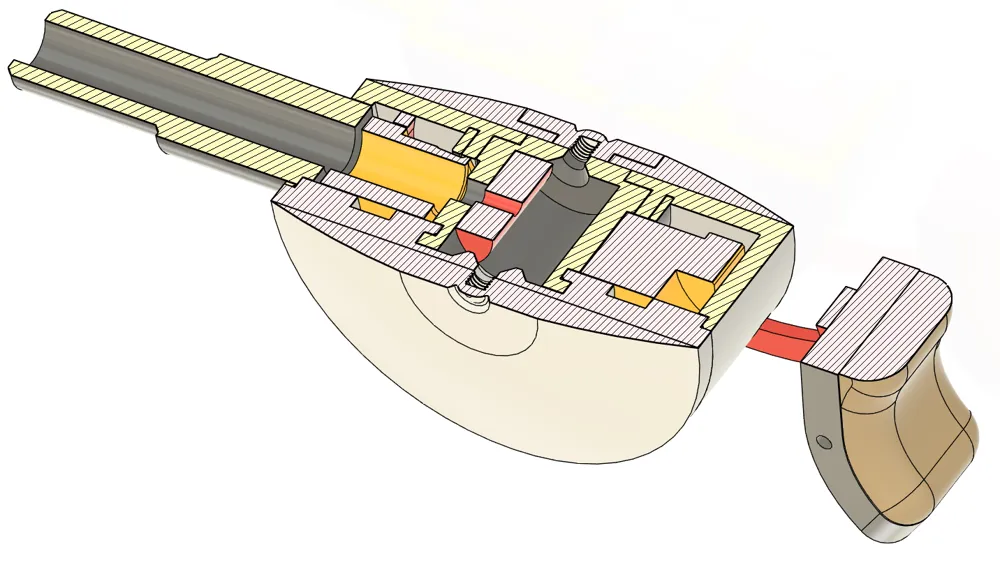
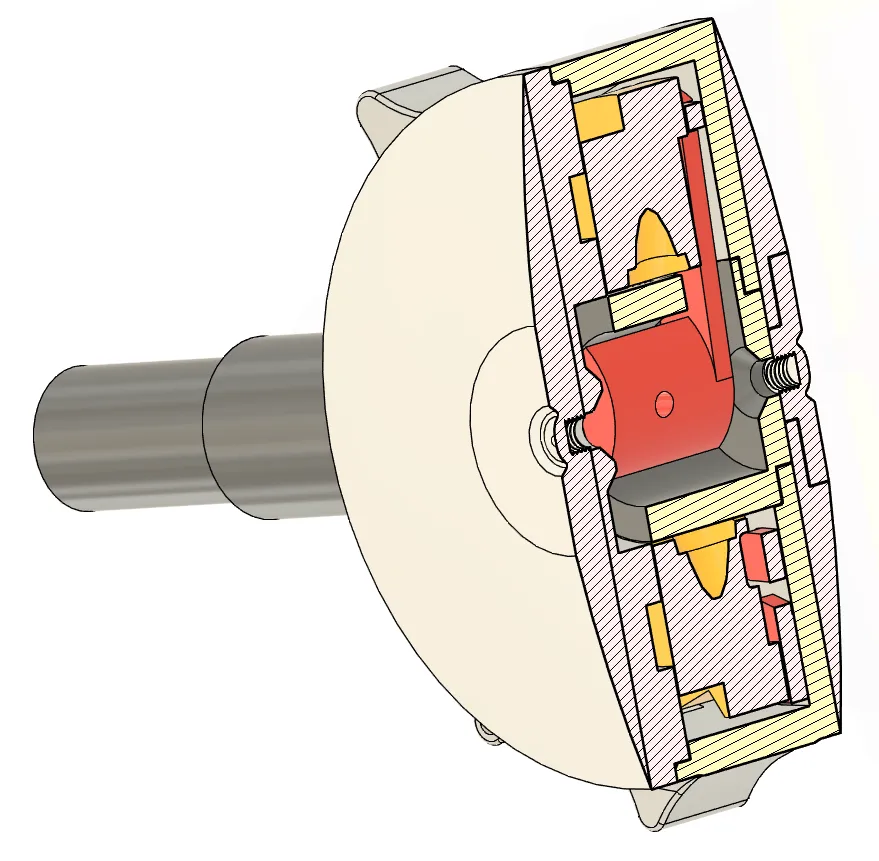
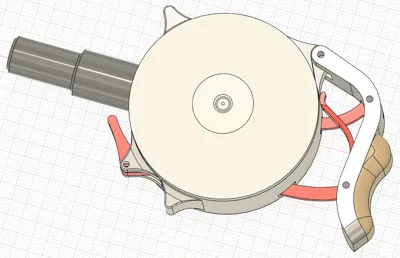
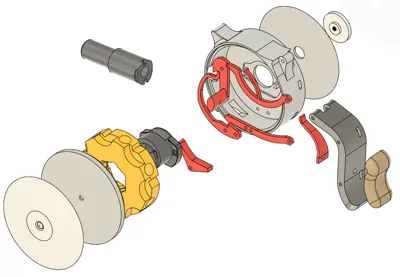
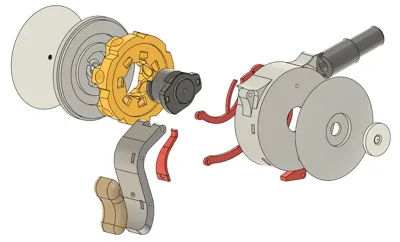
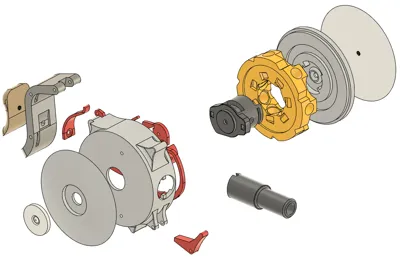
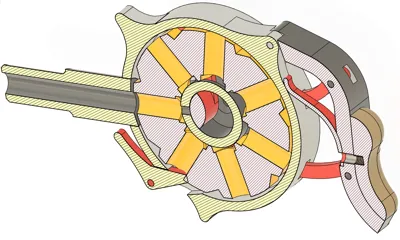
First, the mechanism is assembled into the casing and the central part. On the cartridge drum pusher, we install a strip of plastic from a transparent container. For example, a yogurt cup. For precise placement, there are two holes on the pusher in which we use a piece of printing string as pins. Then the trigger lever and the drum pusher are installed. Everything is connected with axles made of nails. A spring is installed on the trigger lever and is screwed through with an M3x5 mm screw with a handle on the trigger. Then the barrel is glued to the casing. The lower decorative convex cover is attached over the central part with an M3x5 mm screw, which can also be glued with superglue. Now we assemble the upper decorative convex part and screw it with an M3x5 mm screw. The upper decorative part is connected to the central part using a lock. This completes the model.
Everything is visible in the photo gallery.
The model is intended only as a functional study object. The model cannot be fired with real bullets.
License



Comment & Rating (7)