
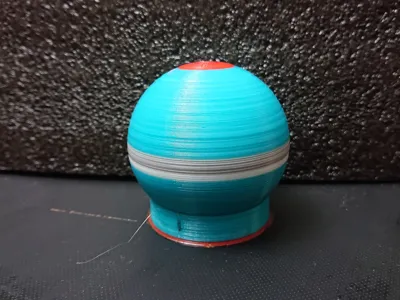
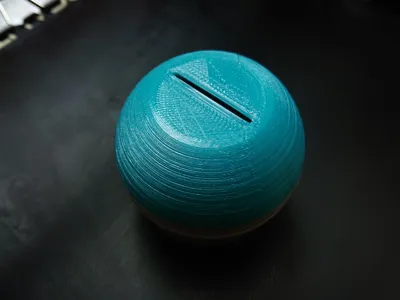
Sphere for demonstrating the Dzhanibekov effect


Print Profile(0)
Description
Summary
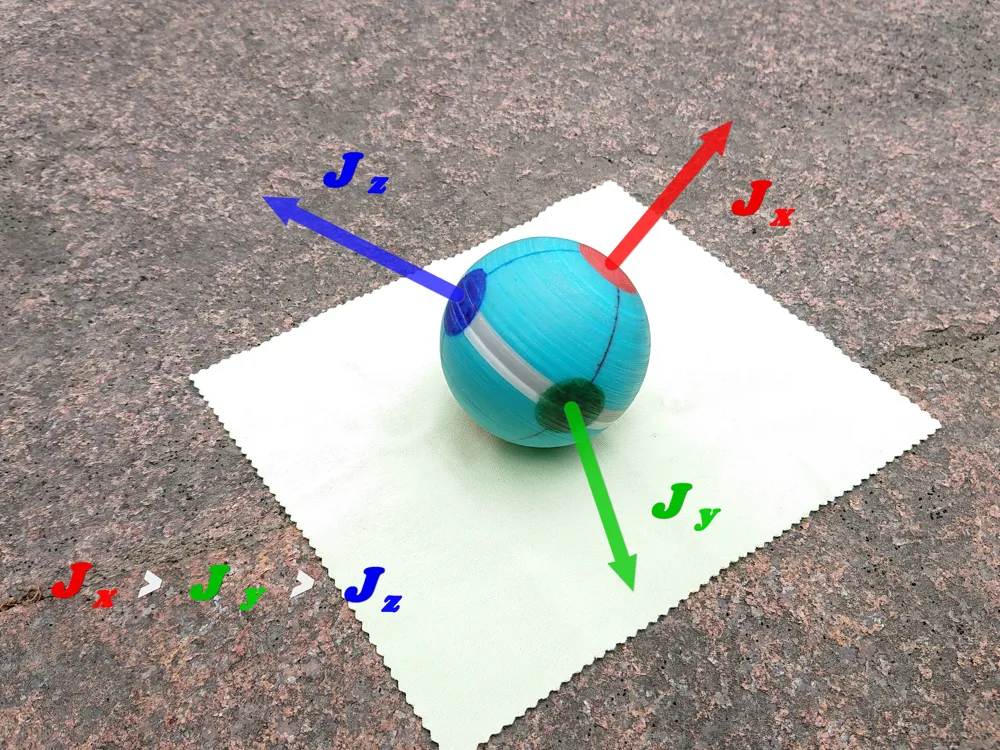
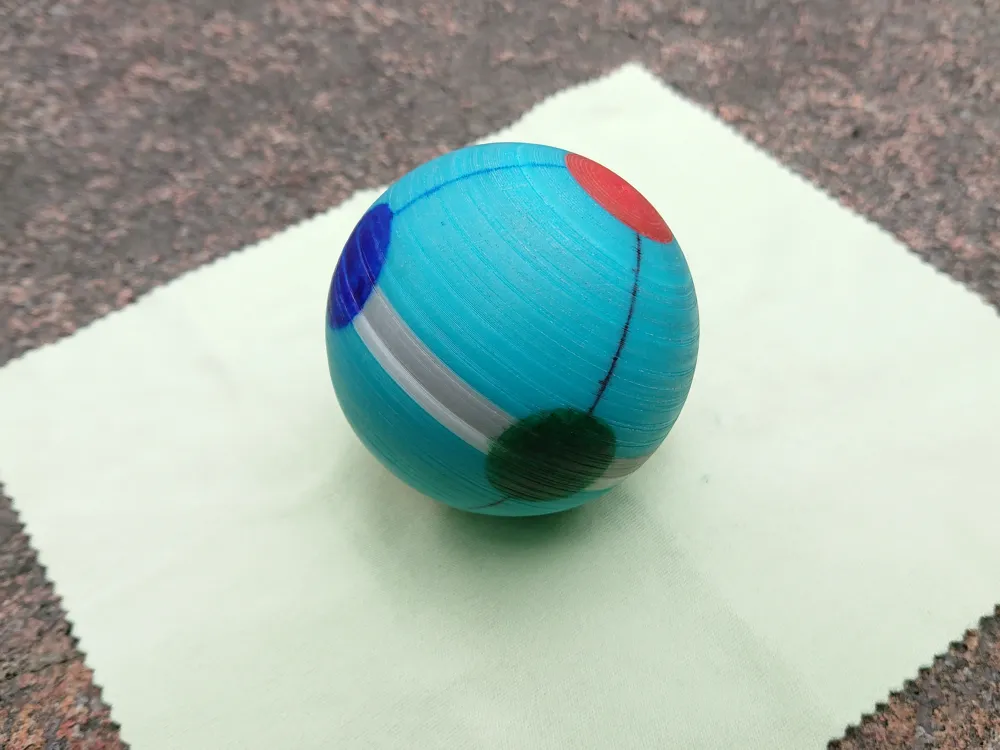
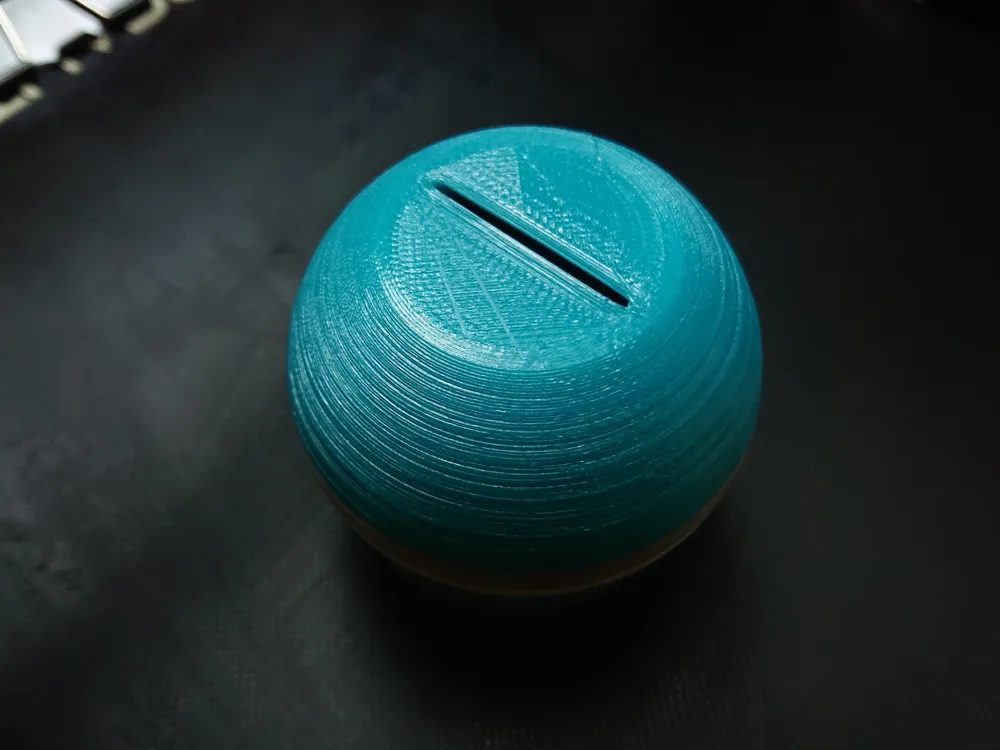
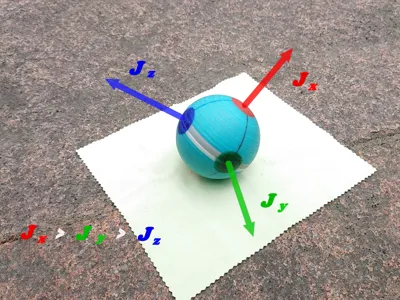
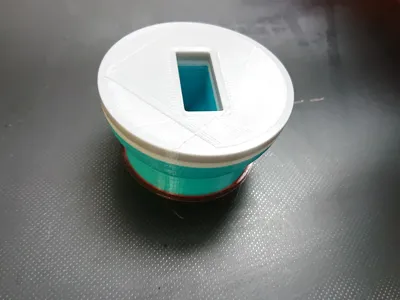
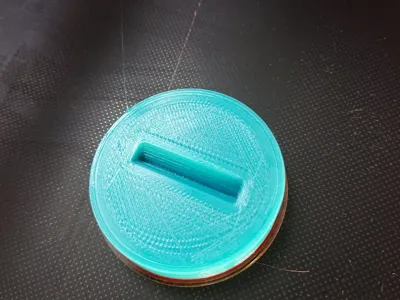
There are two ways to observe the remarkable Dzhanibekov effect with your own eyes. 1) fly to a space station or 2) throw a tennis racket or smartphone, etc. The first is not available to everyone, the second is low-information, lasts only a second and can damage the thrown object. I made a demonstration sphere so that you can observe this effect by rotating it right on the table. The peculiarity of the sphere is that it is not solid, it has a cavity inside. The shape of the cavity is such that the sphere has three different moments of inertia J max, J min, J intermediate. Their vectors are mutually perpendicular. If the cavity is a rectangular parallelepiped, we use the formula J = Jsp - Jpar . Then:
Jmax=(2/5)Mr^2-(1/12)m(b^2+c^2)
Jint=(2/5)Mr^2-(1/12)m(a^2+c^2)
Jmin=(2/5)Mr^2-(1/12)m(a^2+b^2)
M- mass of solid sphere
r- radius of sphere
m- mass of solid parallelepiped
a- b- c- sides of parallelepiped
a>b>c
The center of mass of the sphere coincides with its geometric center.
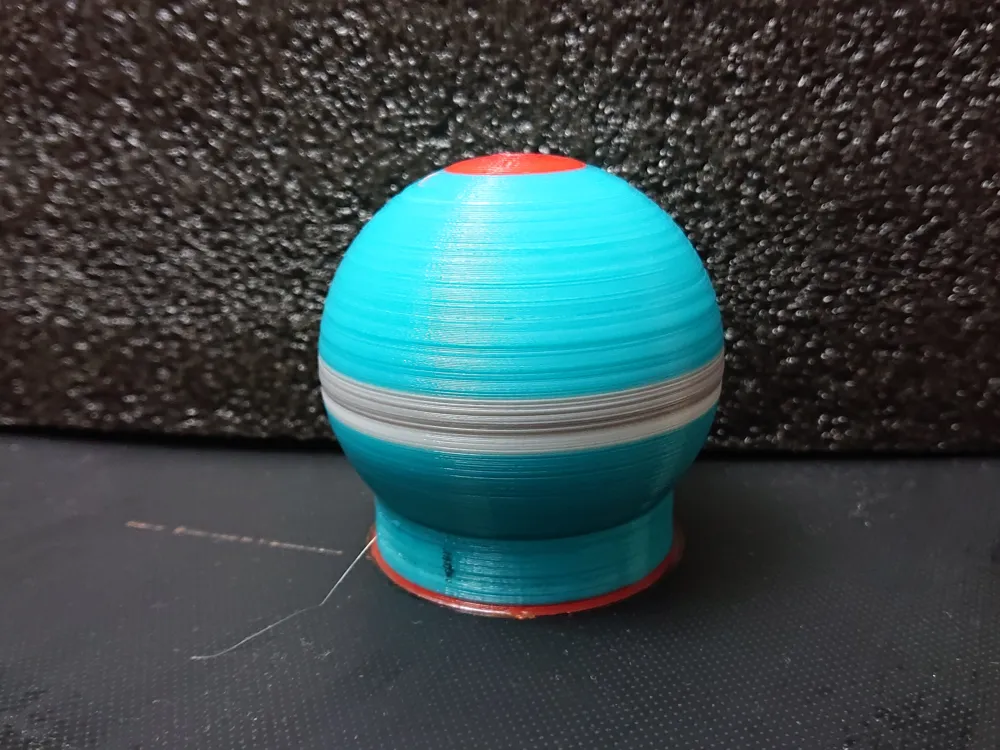
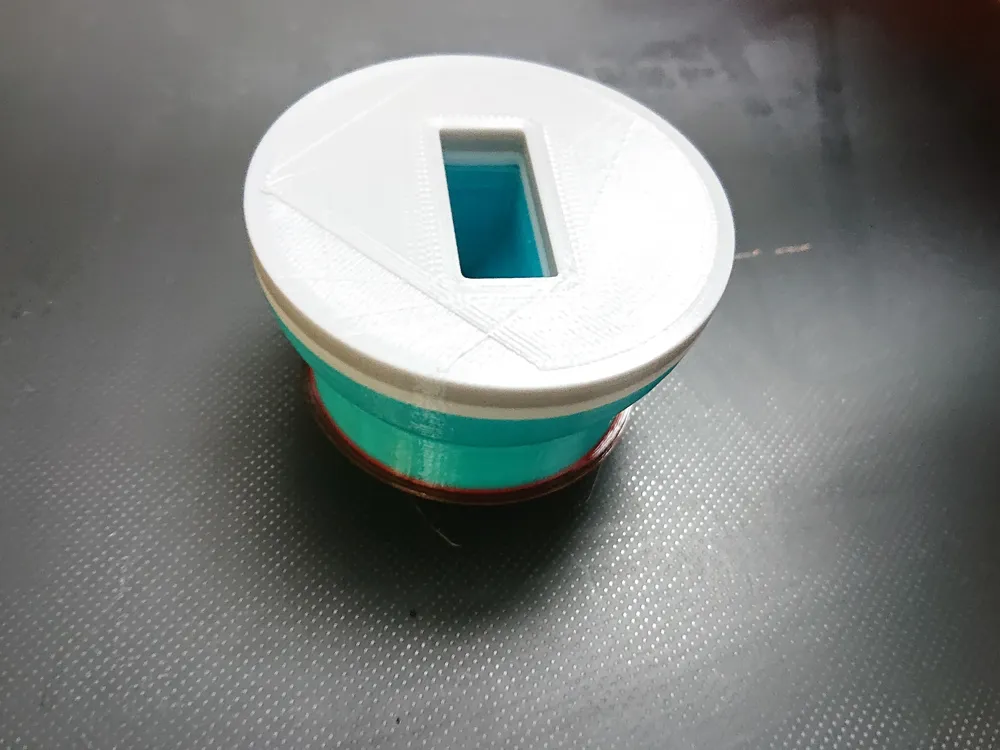
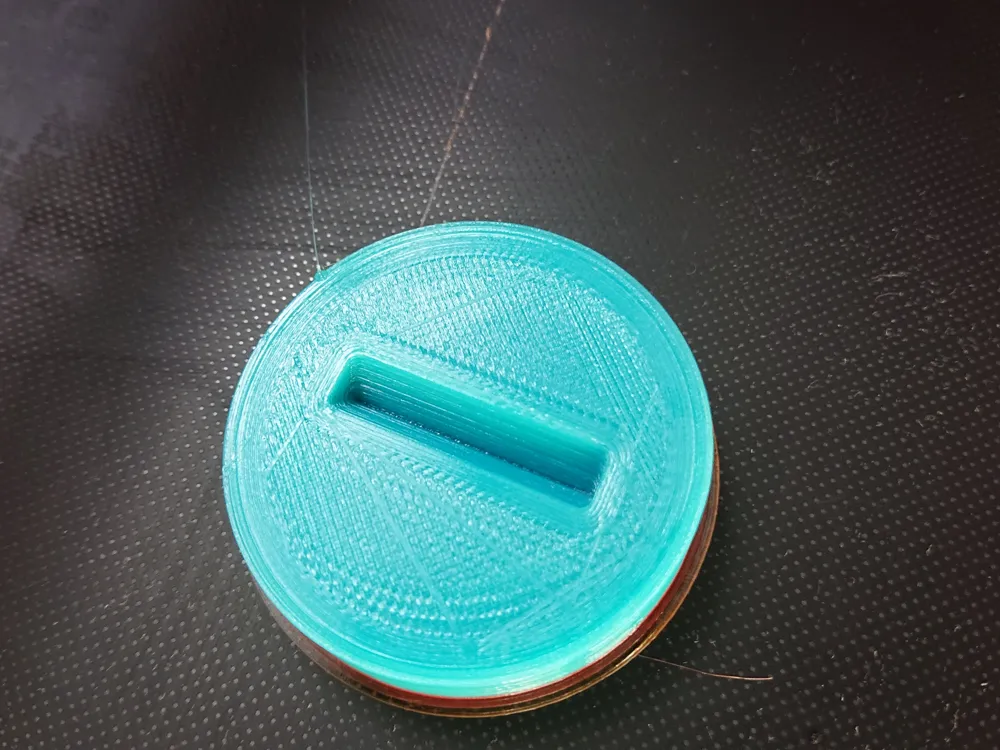
The sphere is printed with 100% filling, do not make support in the cavity!
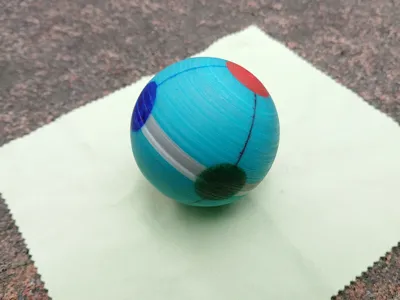
Ideally, the surface of the sphere should be uniformly processed to the state of a billiard ball.
Green and blue marks are drawn with a permanent marker.
I used a horizontally mounted glass plate, it has a low coefficient of friction.
License



Comment & Rating (2)