
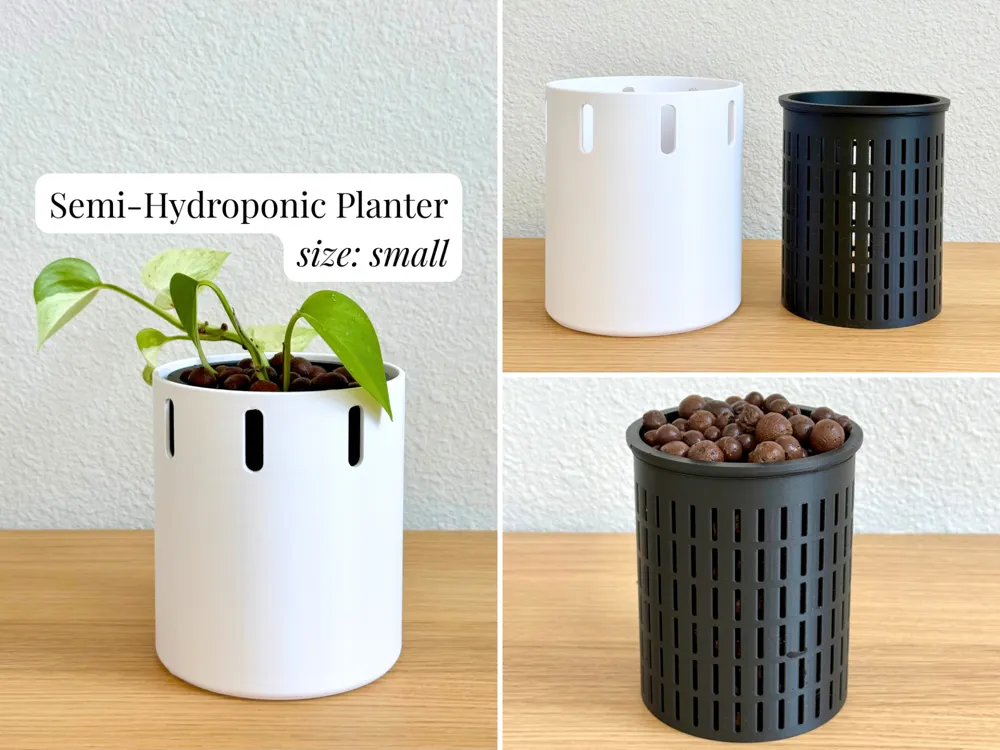
Semi-Hydroponic LECA Planter (Small)
Print Profile(1)

Bill of Materials

Description
I designed this passive semi-hydroponic planter after learning about aeroponics and hydroponics—growing methods that seem to produce faster and healthier growth as compared to traditional soil. I struggled to find models for my idea, so I designed my own!
My goal was to bring hydroponic/aeroponic benefits to my indoor plants in a simple, low-maintenance way. The result is this passive semi-hydroponic setup, and it’s been a fun way to try something new with my houseplants. I hope you enjoy it as much as I’ve enjoyed making and that you’ll try it out with me!
A Brief Overview of Semi-Hydroponic Planters
Semi-hydroponic planters use a passive water reservoir system instead of traditional soil to keep plants hydrated. Roots grow into an inert medium—like LECA or pumice—that wicks up water and nutrients from below. This approach encourages stronger root systems, improves oxygen flow, and helps reduce common issues like overwatering or root rot.
There are a few common styles:
- Single-pot setups, where water is manually added and maintained in a single container.
- Submerged systems, where a separate pot sits in a water container.
- Wicking setups, where a wick draws water from a reservoir to the plant roots.
This planter is designed as a submerged system with two pots because I felt it matched the right balance of simplicity, efficacy, and full printability.
Features
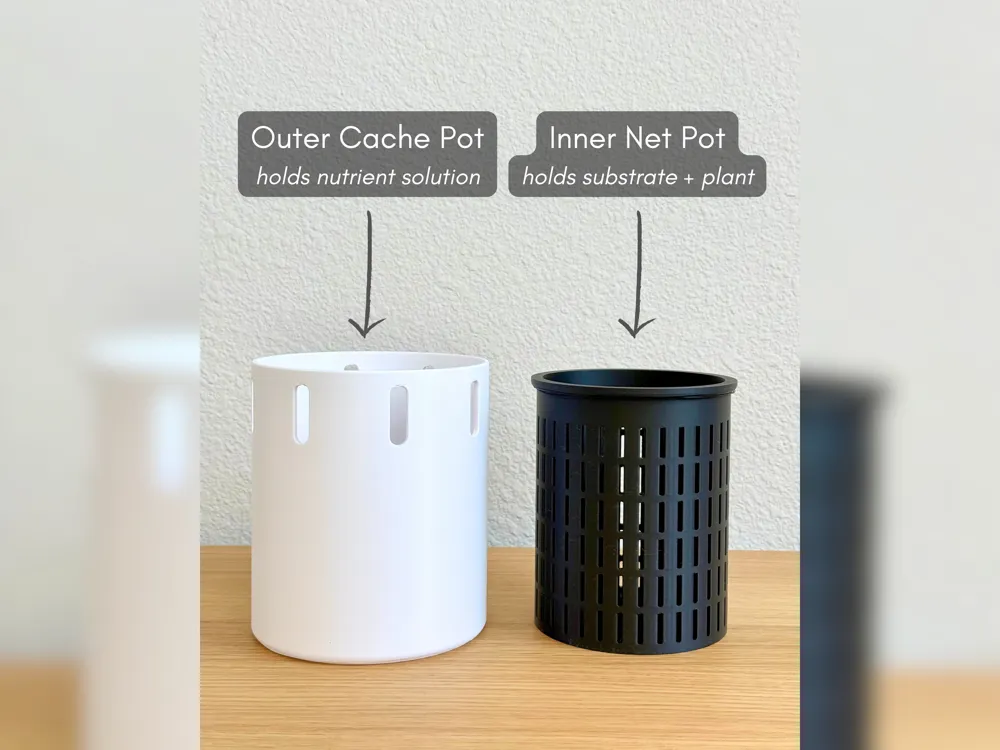
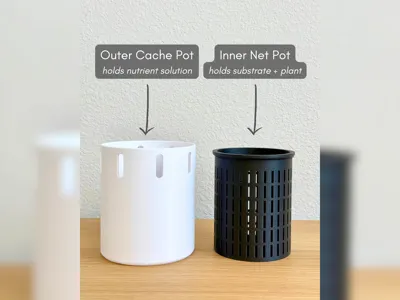
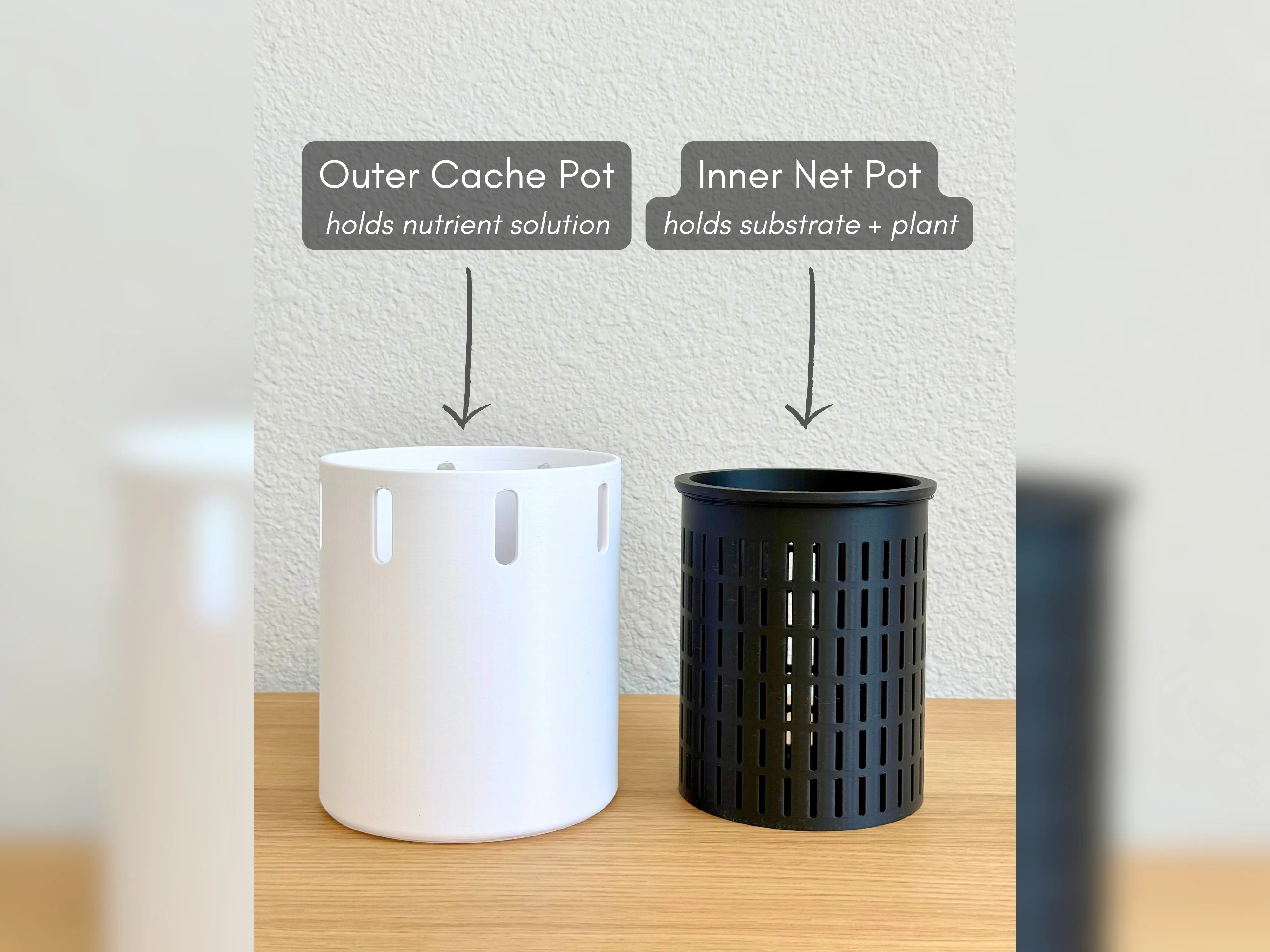
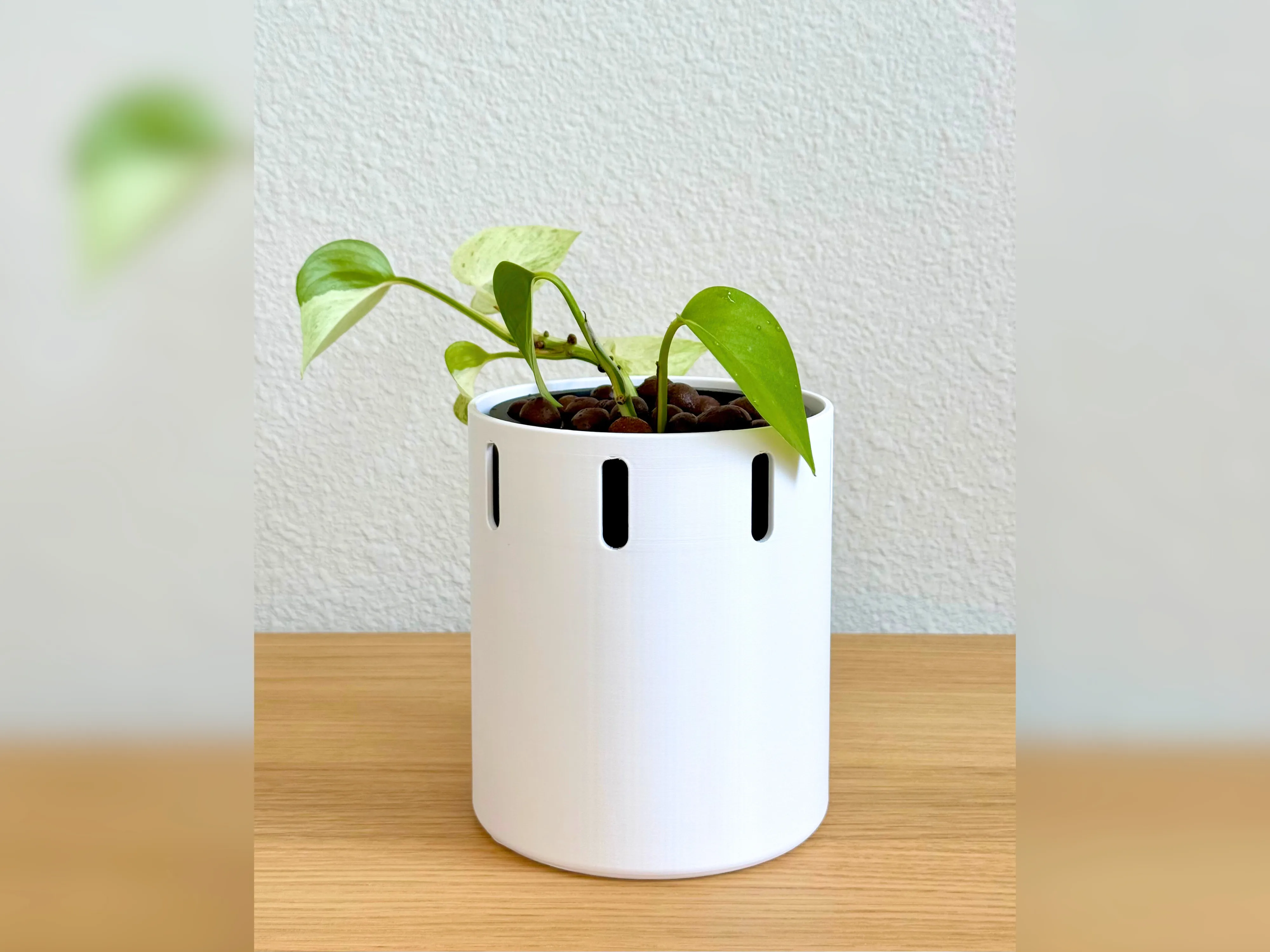
- Two-piece design: Includes an outer cache pot to hold the nutrient solution and an inner net pot to support the plant and substrate.
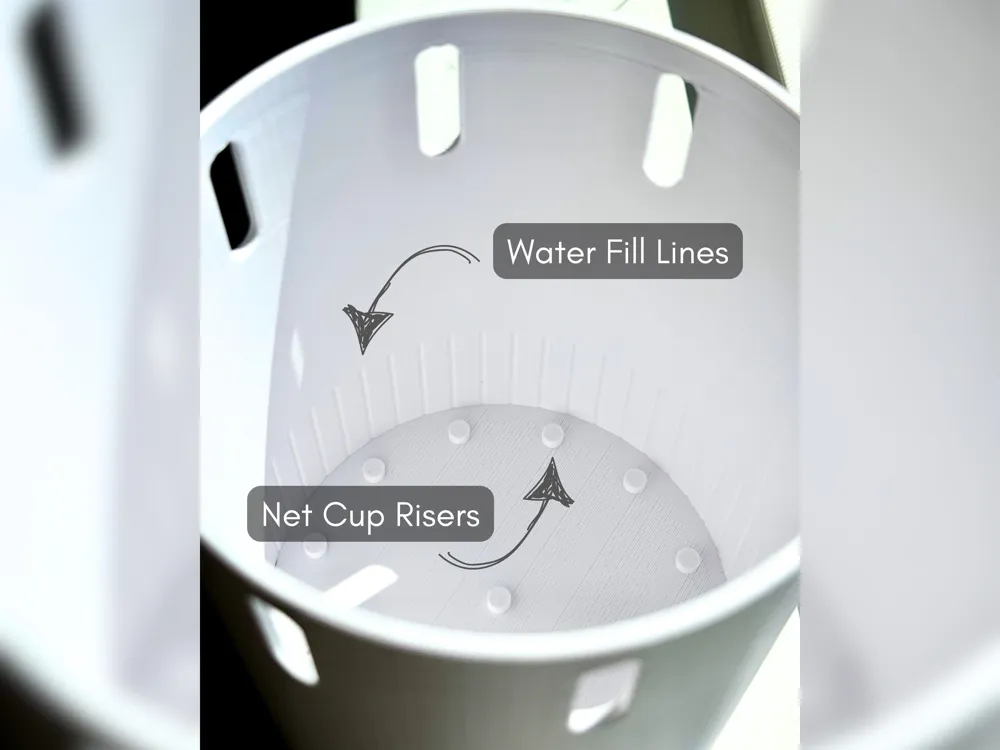
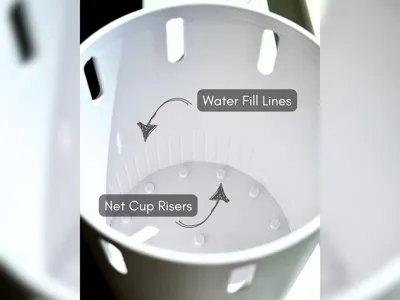
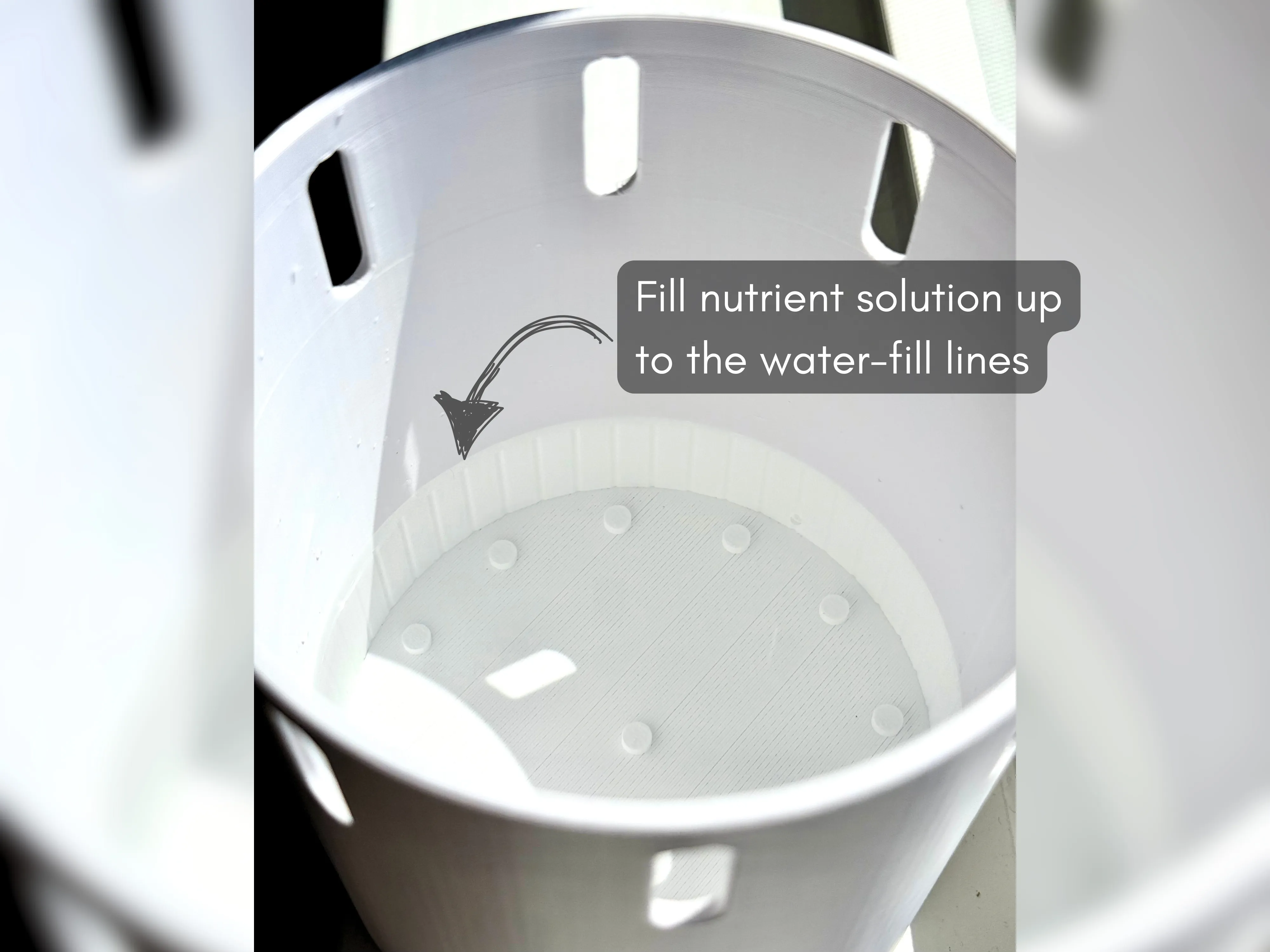
- Integrated water fill lines: Easy-to-see markers inside the outer pot help monitor and maintain proper water levels.
- Elevated inner pot: Built-in risers keep the net cup from sitting flush against the bottom, improving drainage, wicking, and root breathability.
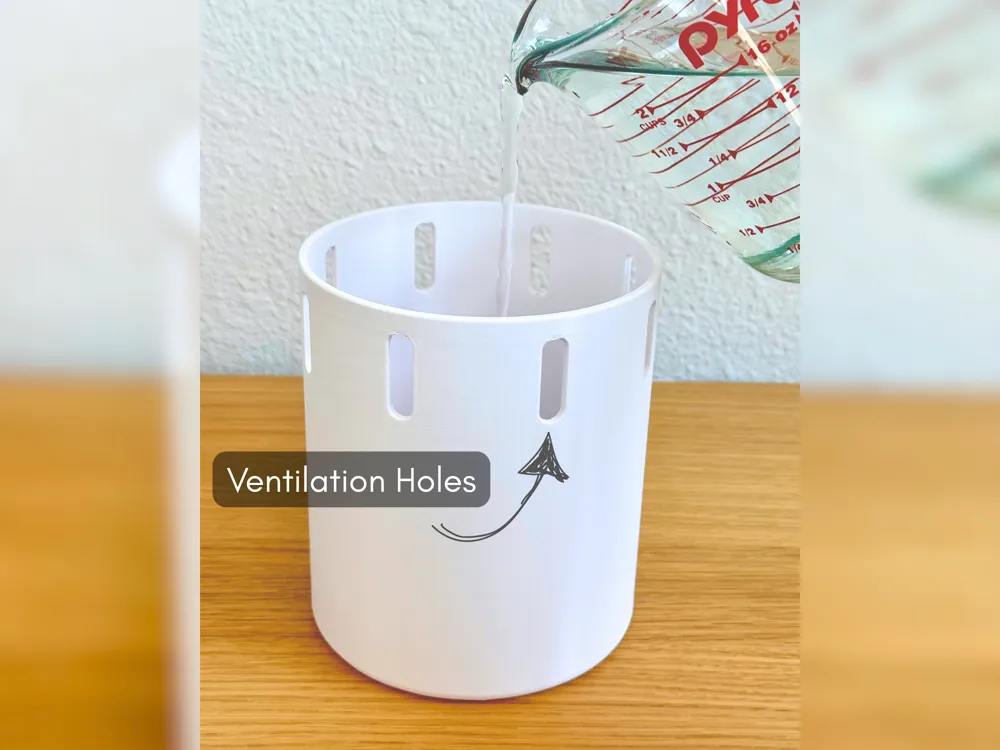
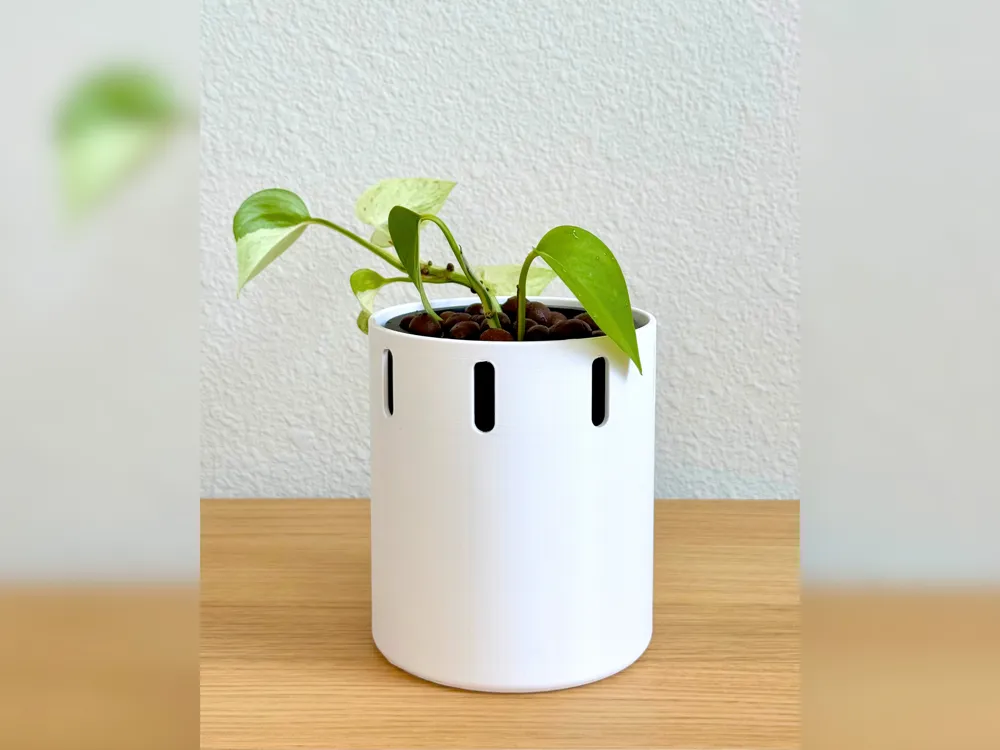
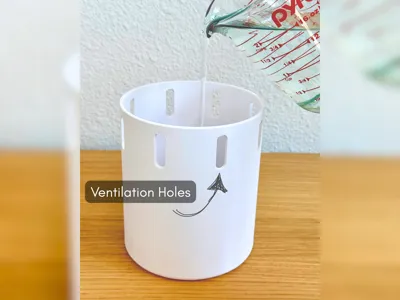
- Top ventilation slots: Small openings near the top of the outer pot allow for gentle airflow, supporting healthier root systems.
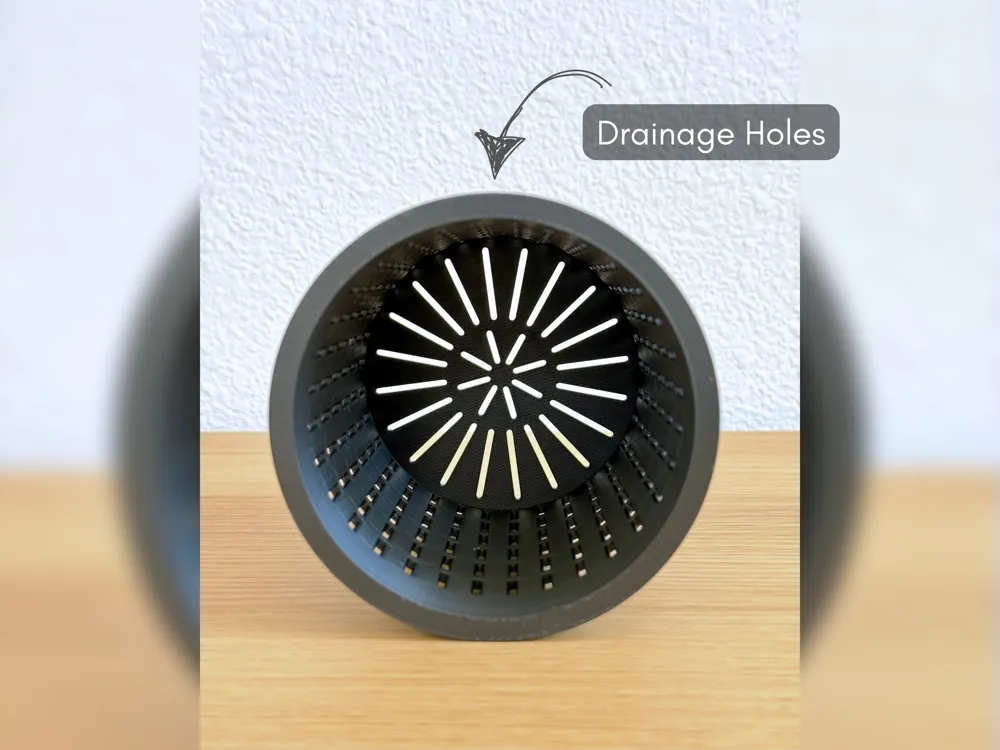
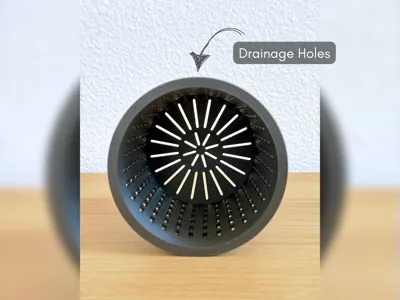
- Well-ventilated net cup: The inner pot has plenty of small openings to encourage air exchange and proper wicking while keeping the growing medium from spilling into the reservoir.
- Durable, watertight construction: Both pots are designed with thick walls and no sparse infill to ensure they're strong, watertight, and hold up well with regular use.
Dimensions
This is the Small size of the planter set, great for compact spaces or starter plants.
- Inner net cup diameter: 100mm
- Outer cache pot diameter: 120mm
- Assembled height: Approximately 135mm
If you're interested in larger sizes, I may explore releasing additional versions in the future!
Print Material
This planter was designed with both function and printability in mind. I used two different materials for the parts, but there’s flexibility depending on your preferences and what you have on hand:
- Outer cache pot: Printed in Bambu Lab PETG-HF (White)
- PETG was chosen for its durability, water resistance, and ability to hold up well over time when in contact with nutrient solution.
- While I used white for a clean look, a darker color may help reduce light exposure, which can prevent algae growth in the reservoir.
- Inner net pot: Printed in Bambu Lab PLA Matte Black
- PLA works well here since it doesn’t need to hold water and is easier to print with.
- That said, you can also print this part in PETG if you want more durability or a matching material.
Planter Setup Guide
Setting up your semi-hydroponic planter is simple and rewarding. Here’s a step-by-step guide to get you started:
1. Print the Planter
- Print both parts: the outer cache pot and the inner net cup.
- I recommend using PETG for the outer pot (for durability and water-tightness) and PLA or PETG for the inner pot.
2. Choose and Prepare Your Growing Medium
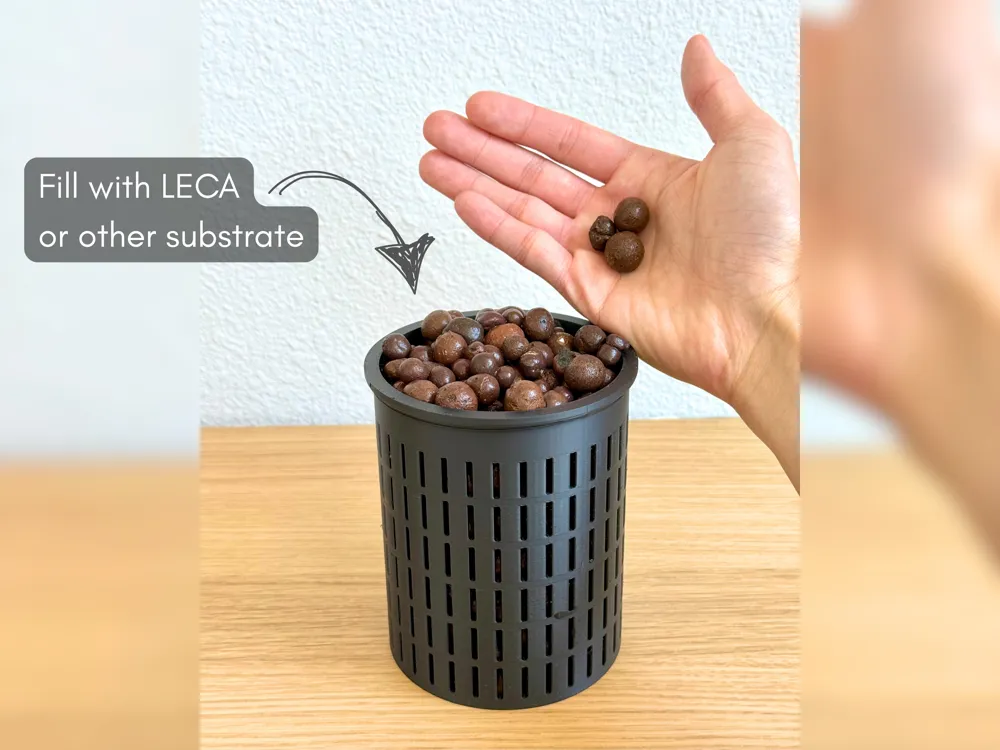
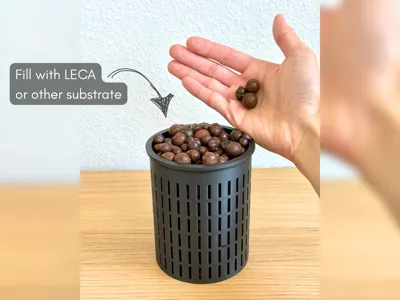
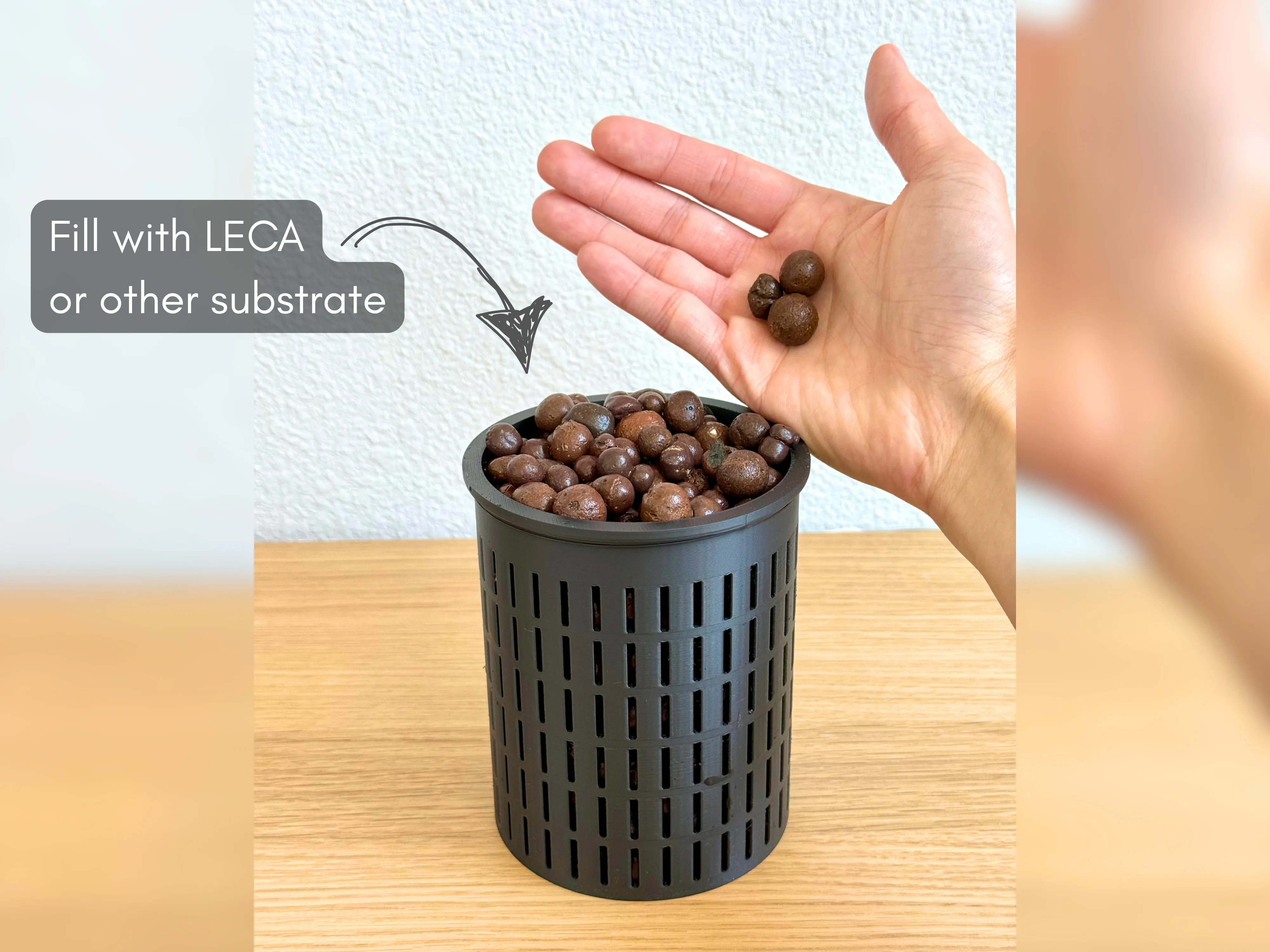
- Pick an inert growing medium like LECA, pumice, or pon.
- Rinse thoroughly and soak it in water for a few hours before use to remove dust and help with initial wicking.
3. Mix Your Nutrient Solution
- I’ve been using General Hydroponics MaxiGro, but any balanced hydroponic nutrient mix should work.
- Follow the instructions on the label to prepare your solution.
4. Fill the Outer Cache Pot
- Pour your nutrient solution into the outer pot up to the water fill line.
- Be sure not to overfill—roots should be encouraged to grow downward toward the moisture.
5. Prepare Your Plant for Transplant
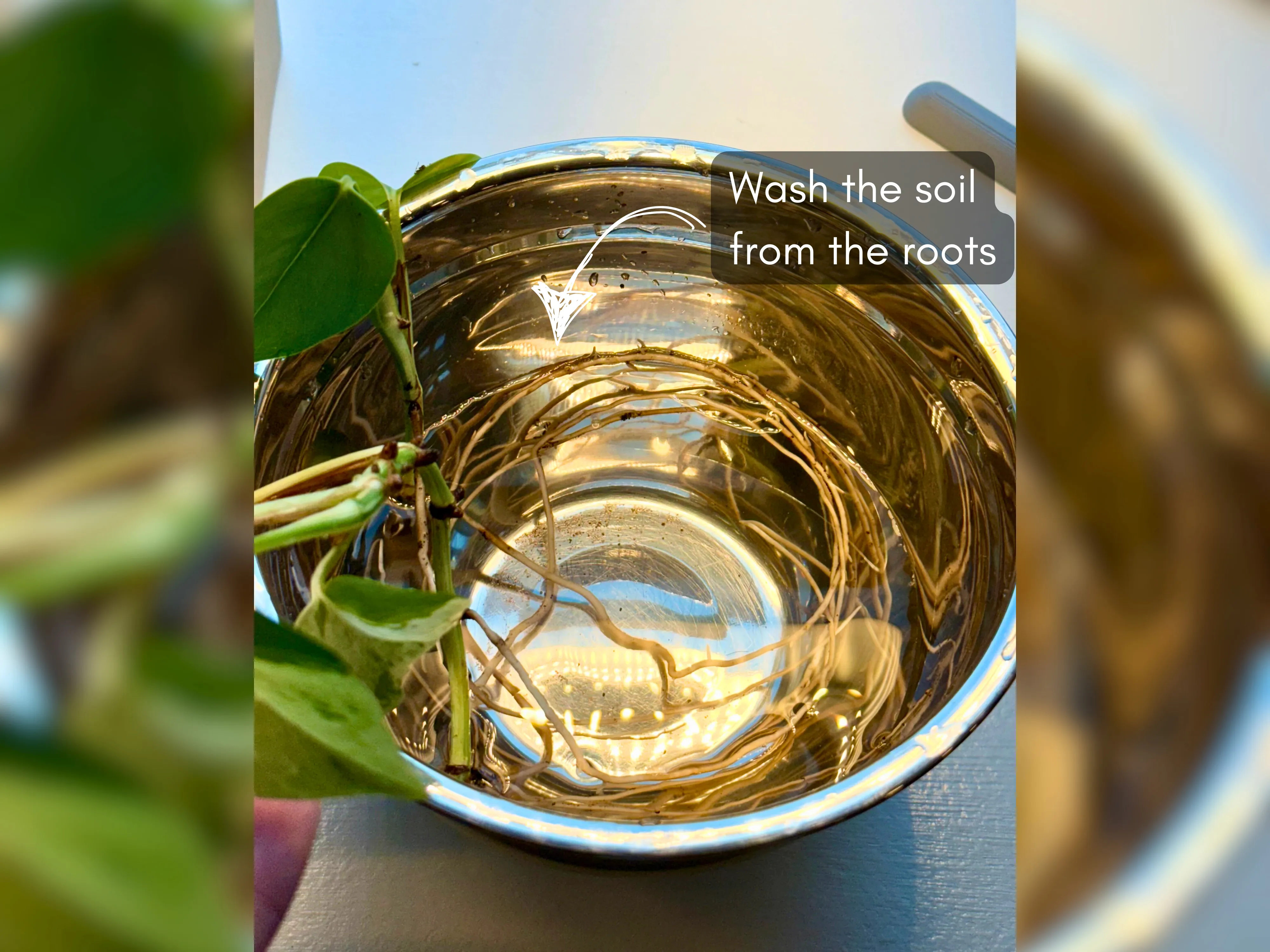
- Gently remove the plant from its original pot.
- Rinse the roots in room-temperature water to remove as much soil as possible. A bowl of water can help loosen stubborn bits.
6. Pot the Plant
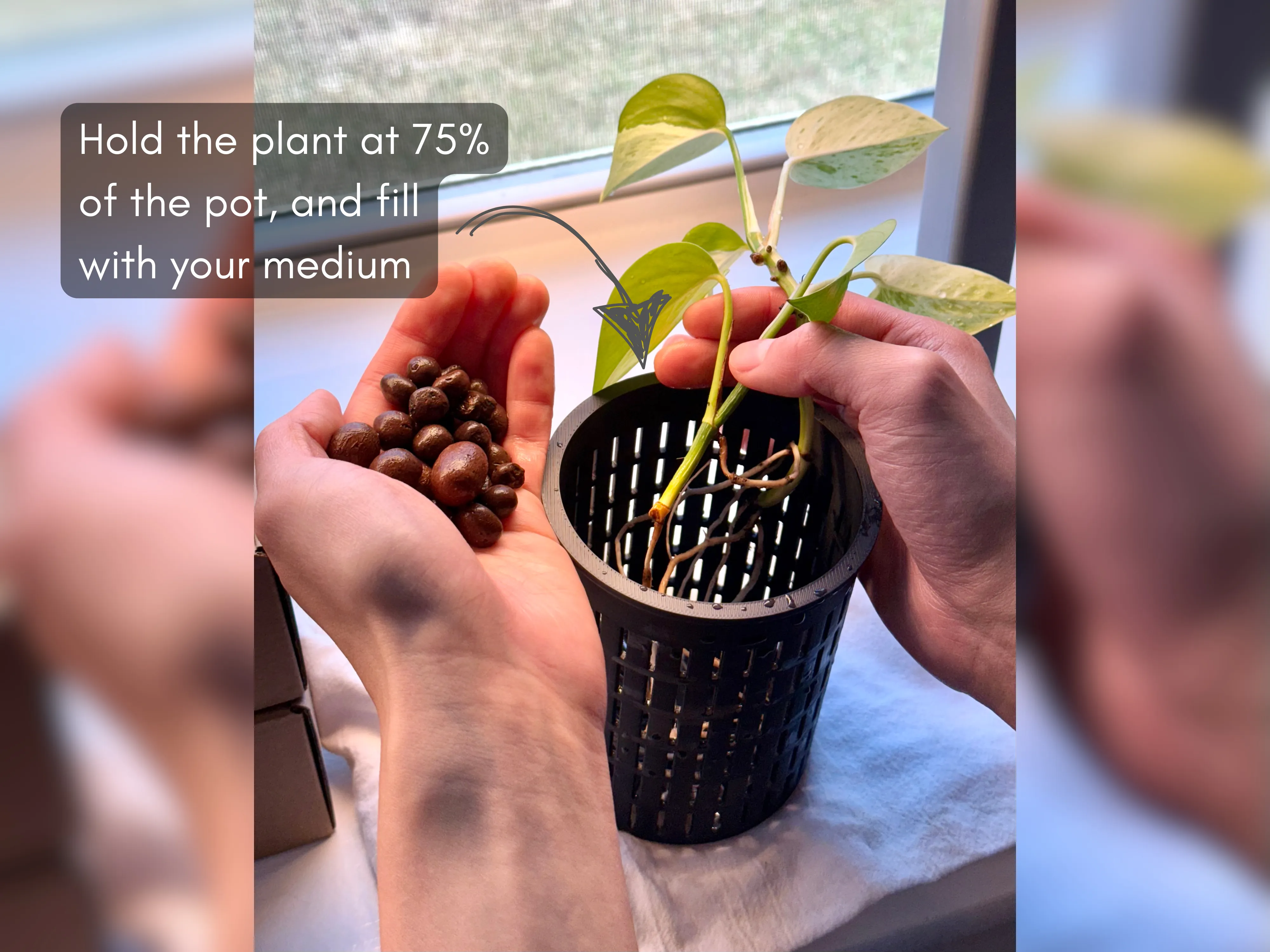
- Hold the plant in the inner net cup, positioning it about 75% of the way up the cup.
- Carefully fill in around the roots with your chosen medium to stabilize the plant.
7. Assemble the Planter
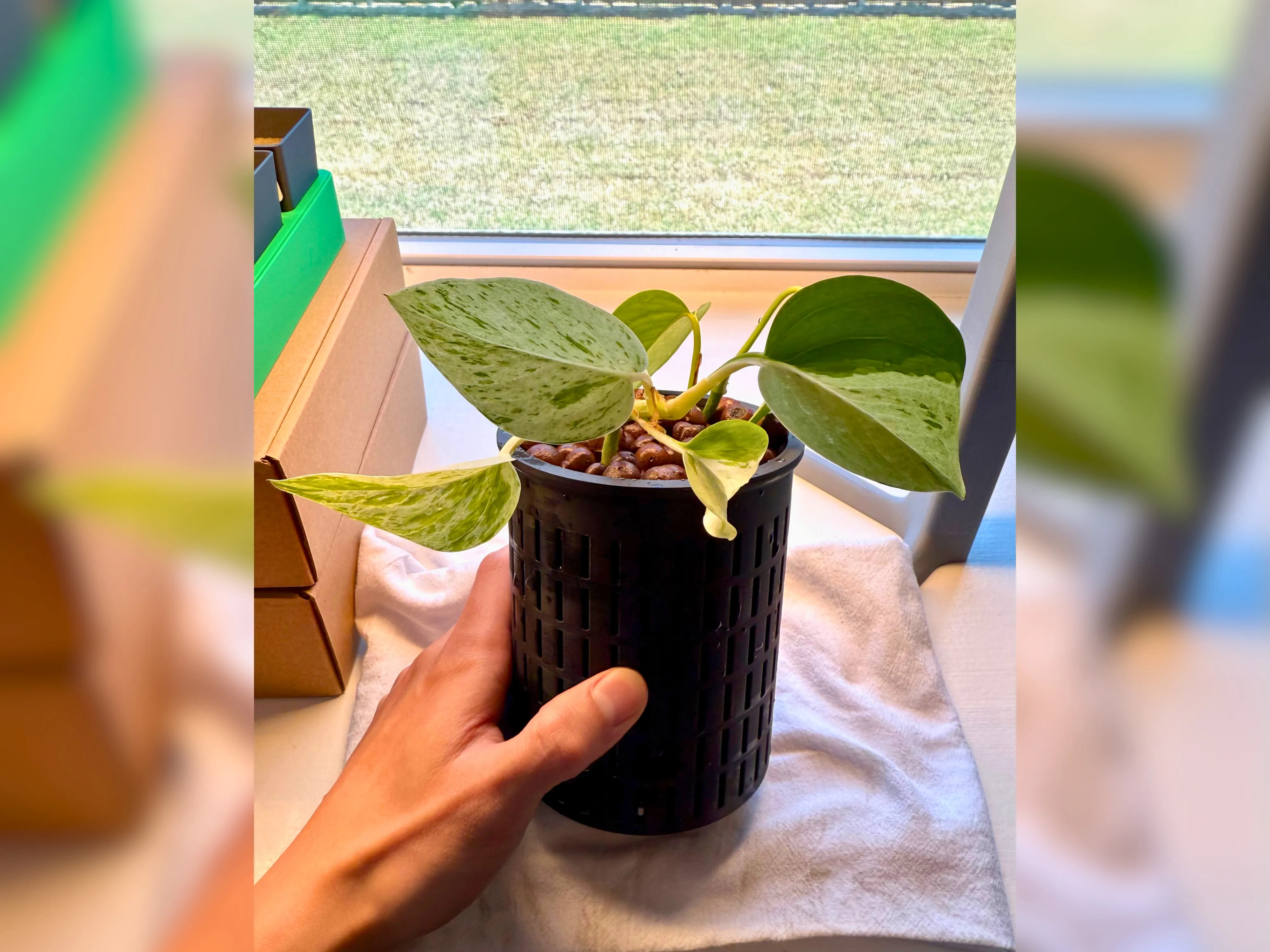
- Lower the net cup into the outer cache pot, resting it on the internal risers.
- Ensure the roots are able to reach down toward the nutrient solution, or will grow toward it over time.
8. Give It Light and Ongoing Care
- Place your plant in a well-lit area appropriate for its type.
- Keep an eye on the water level and refill as needed.
- You can alternate between plain water and nutrient solution to avoid buildup and give the plant some variety.
Conclusion
Thanks so much for checking out this planter and giving it a try! If you enjoy the design, I’d really appreciate a boost—it helps keep my design dreams alive and motivates me to keep creating more. I’d also love to see how your prints turn out, so feel free to share photos of your setup and tag me if you post them. Happy planting!
Boost Me (for free)
Boost me to keep my design dreams alive and help me create more! I really appreciate it! Thank you!
License

You shall not share, sub-license, sell, rent, host, transfer, or distribute in any way the digital or 3D printed versions of this object, nor any other derivative work of this object in its digital or physical format (including - but not limited to - remixes of this object, and hosting on other digital platforms). The objects may not be used without permission in any way whatsoever in which you charge money, or collect fees.


Comment & Rating (21)