
AMS Lite 2.0
Print Profile(2)


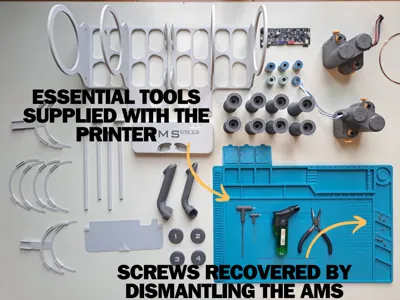
Bill of Materials




Description
NEW VERSION
About AMS Lite 2.0
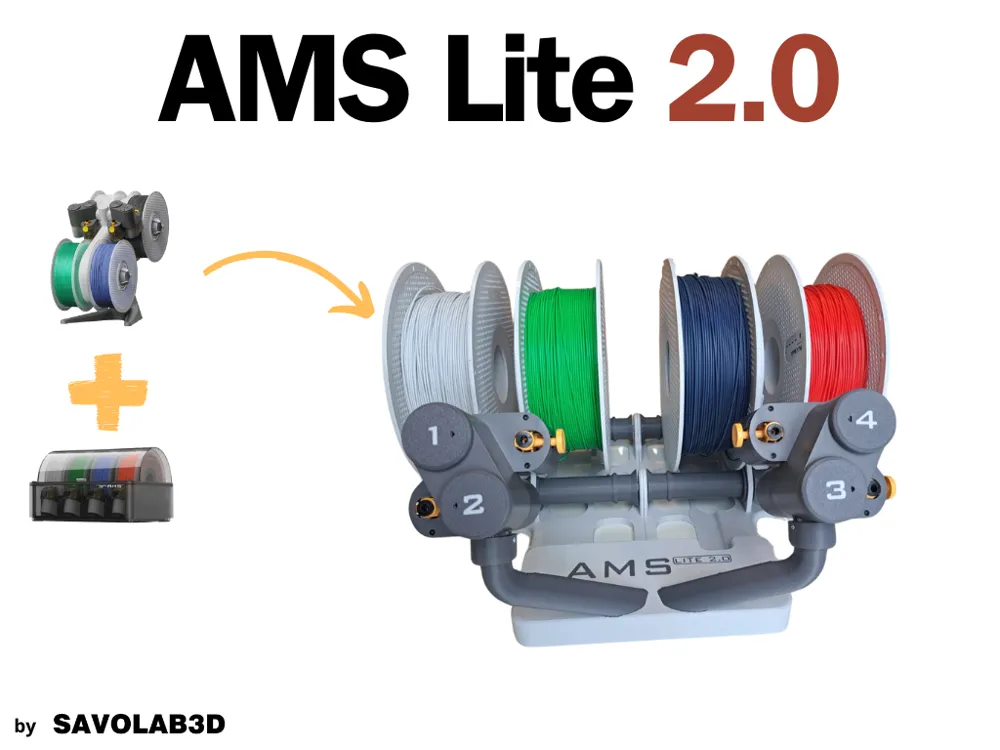
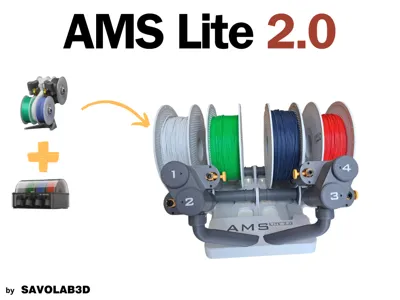
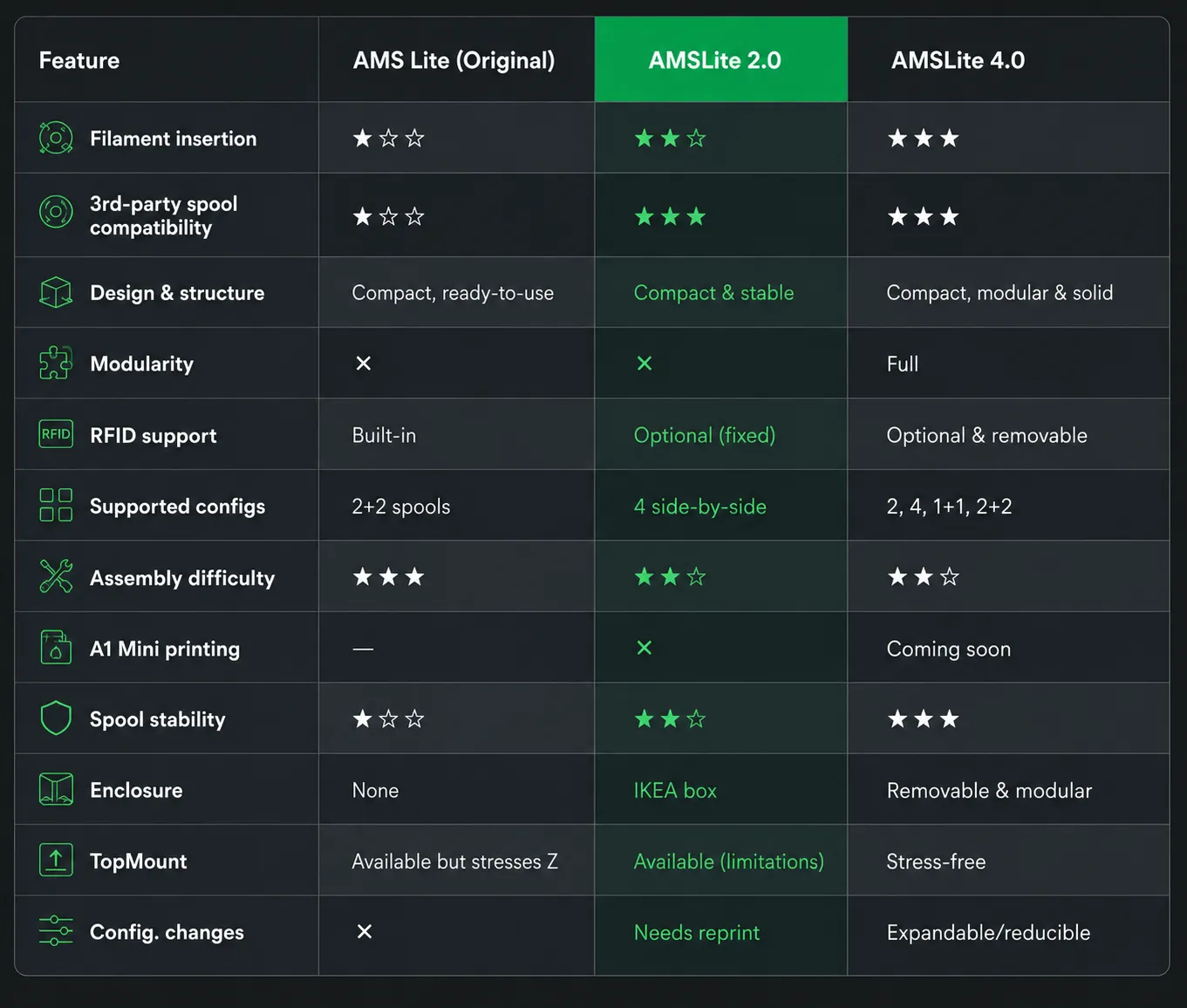
AMS Lite 2.0 was developed to improve compatibility, ease of use and the overall user experience compared to the original AMS Lite.
Thanks to a redesign of the spool support system and the positioning of the motor units, AMS Lite 2.0 addresses some of the main limitations of the original design while maintaining full compatibility with the Bambu Lab ecosystem.
Spool Compatibility
AMS Lite 2.0 has been designed to support a wide range of 1 kg spools available on the market.
The system is compatible with both plastic and cardboard spools, including many brands that are difficult or impossible to use with the original AMS Lite.
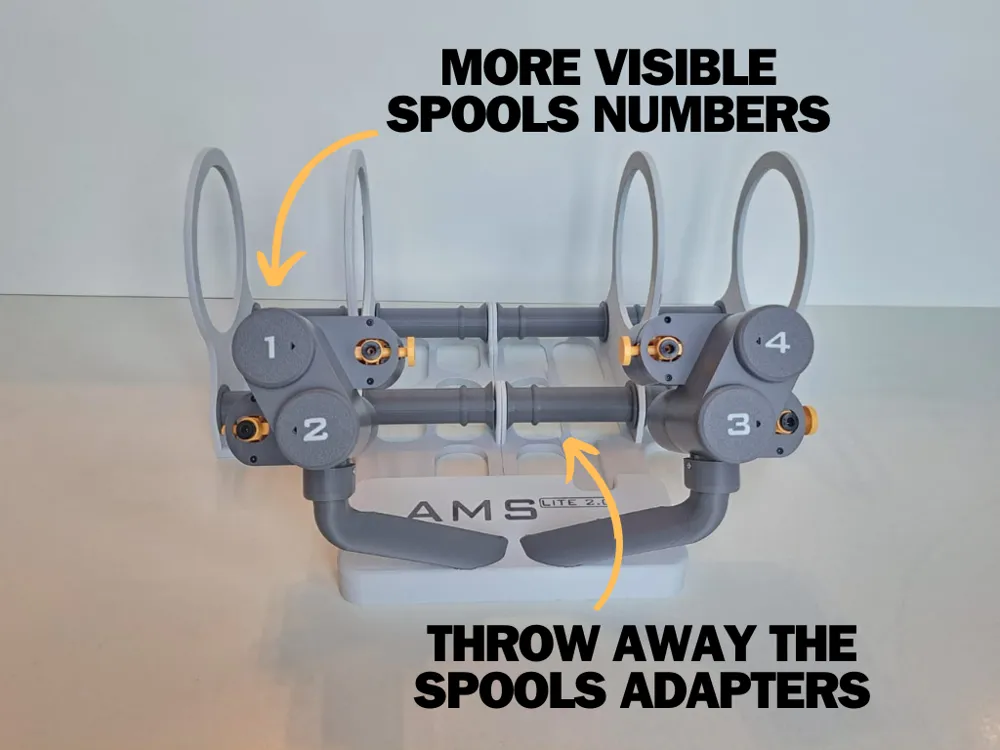
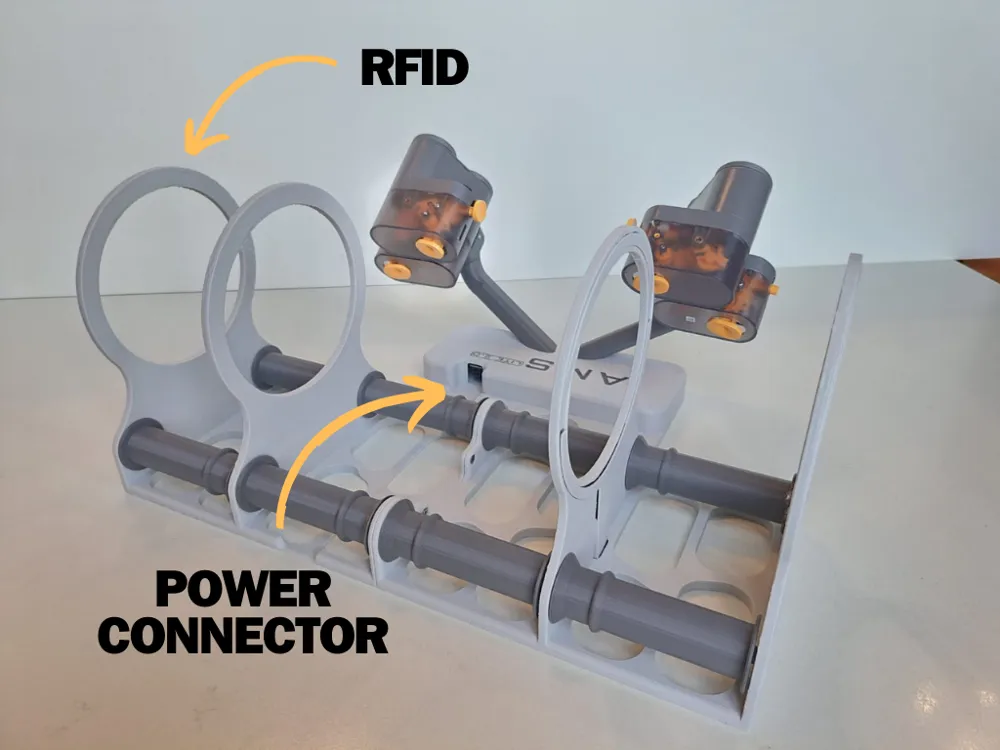
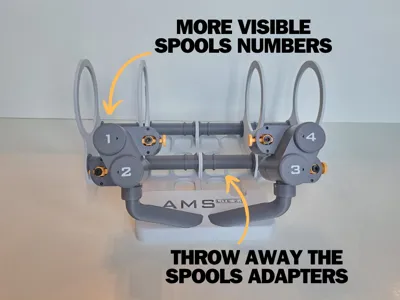
Unlike the original system, which relies on the spool's internal diameter, AMS Lite 2.0 uses a roller support system that eliminates dependence on the spool core diameter. This allows most spools to be used without dedicated adapters, significantly improving compatibility with third-party filament manufacturers.
Reuse of Original Hardware
One of the main goals of AMS Lite 2.0 was to minimize the need for additional hardware purchases.
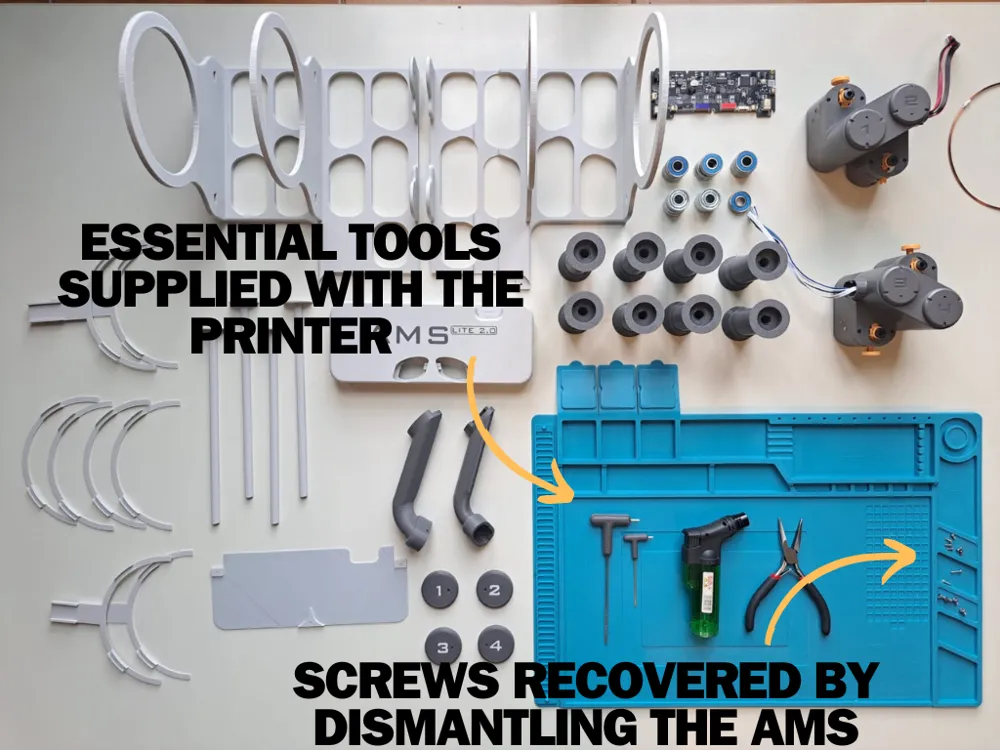
With the exception of the ball bearings required for the roller system, all electronic components, motors, screws and hardware are reused directly from the original AMS Lite.
AMS Lite 2.1 Enclosure
For users interested in protecting their spools from humidity, a dedicated project called AMS Lite 2.1 Enclosure is available.
This upgrade requires reprinting only a limited number of components, mainly the motor supports and the electronics compartment, allowing AMS Lite 2.0 to be installed inside an IKEA enclosure.
RFID Support
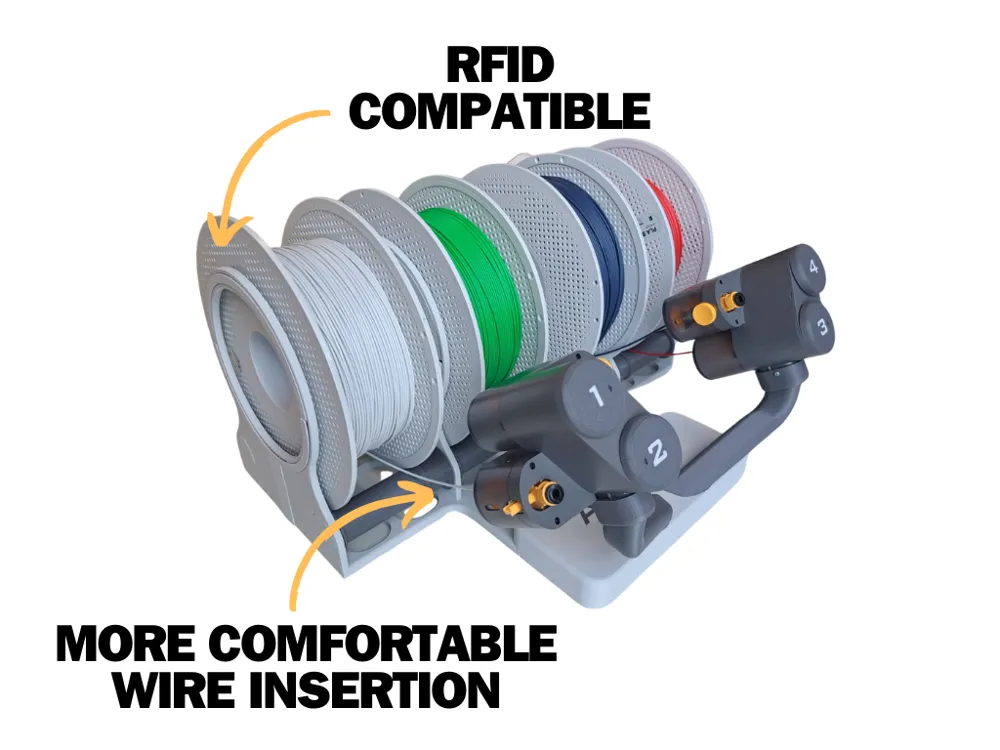
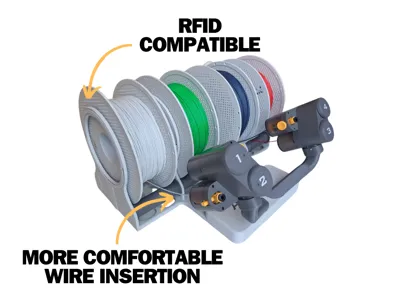
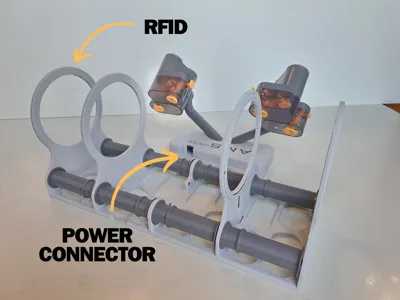
AMS Lite 2.0 maintains compatibility with the original Bambu Lab RFID system.
Users can choose between two versions of the project:
- No RFID version
- RFID-compatible version
For the RFID-compatible version, two possible solutions are available.
RFID Cable Extensions
It is possible to create extension cables using the connectors linked in this description, avoiding permanent modifications to the original wiring.
However, this solution has not been directly tested and therefore I cannot guarantee its effectiveness.
🔗 male connector (Optional product)
🔗 female connector (Optional product)
Direct RFID Cable Modification
The original cables can be cut and extended to fit the new configuration.
This solution has been tested and is fully functional, but it involves an irreversible modification that voids the product warranty.
Technical Recommendations:
- Use cables with a cross-section of 0.75 mm² for better signal transmission.
- Twist the wires together to reduce electromagnetic interference.
- Measure cable length after twisting, as twisting reduces the total length.
- Always add a 1–2 cm safety margin during installation.
Upper Holder
For users who want to reduce the space occupied on their desk, a dedicated project called AMS Lite 2.0 Upper Holder is also available.
Dimensions
For a visual reference of the system, please refer to the model cover images.
- Width : 41 cm
- Depth : 31cm
Required Original Components
AMS Lite 2.0 is designed to reuse the original AMS Lite hardware.
If you already own an AMS Lite, there is no need to purchase these components again, as they can be transferred directly to the new system.
If you do not own an AMS Lite, spare part availability and prices in your region, purchasing individual components may be more cost-effective than purchasing a complete AMS Lite.
The required components are:
- Mainboard
- L Feeder Motor
- R Feeder Motor
- Power Cable
- AMS Lite Side Panels (RFID version only)
- Screws for mounting the board and motor blocks
Due to the variables mentioned above, each maker is encouraged to compare both options and determine which solution is the most cost-effective for their specific situation.
Required harware
To complete the project, you will need to purchase PTFE tubes and ball bearings.
- The longer PTFE tubes will be cut from the purchased tubes and will have a length of 106 cm and 100 cm. These tubes will connect motors 3 and 4 to the extruder connectors located at top left and bottom left when looking at the printer from the front.
- For motors 1 and 2, the original longer tubes from the printer will be used, which will connect the motors to the extruder connectors at top right and bottom right.
To keep the tubes organized, I recommend downloading and printing the following hooks for optimal management.
🔗 Link to download hooks
RFID System
To maintain automatic recognition of official Bambu Lab spools, AMS Lite 2.0 has been designed to accommodate the original RFID readers.
It is important to note that this procedure requires cutting and extending the original RFID cables. Since this is an irreversible modification, it may void the AMS Lite warranty.
For this reason, each maker can freely decide whether or not to use the RFID system based on their own needs. It should also be considered that RFID is not essential, as A1 and A1 Mini printers allow material selection directly from the touchscreen.
Spool Rewinding
One of the most frequently asked questions concerns automatic spool rewinding.
Unlike the original AMS Lite, AMS Lite 2.0 does not use a dedicated mechanical rewinding system.
With current Bambu Lab firmware versions, the filament is only retracted a few centimeters during filament changes. This retraction creates enough tension to naturally rewind the filament onto the spool, keeping it properly positioned without any risk of tangling or jamming.
Conclusion and Video Tutorial
Now, I leave you with the links to the tutorial and the AMS Lite disassembly guide:
🔗 AMS Lite Disassembly Guide
🔗 Video Tutorial
Good luck and happy printing! 😄


Boost Me (for free)
🚀 Thank you for downloading my model! If you enjoyed it and would like to support me even more, you can use the Boost.me feature: every contribution helps me keep creating new projects.
License

You shall not share, sub-license, sell, rent, host, transfer, or distribute in any way the digital or 3D printed versions of this object, nor any other derivative work of this object in its digital or physical format (including - but not limited to - remixes of this object, and hosting on other digital platforms). The objects may not be used without permission in any way whatsoever in which you charge money, or collect fees.


Comment & Rating (458)