
Soprano Guitalele
Print Profile(7)


Description
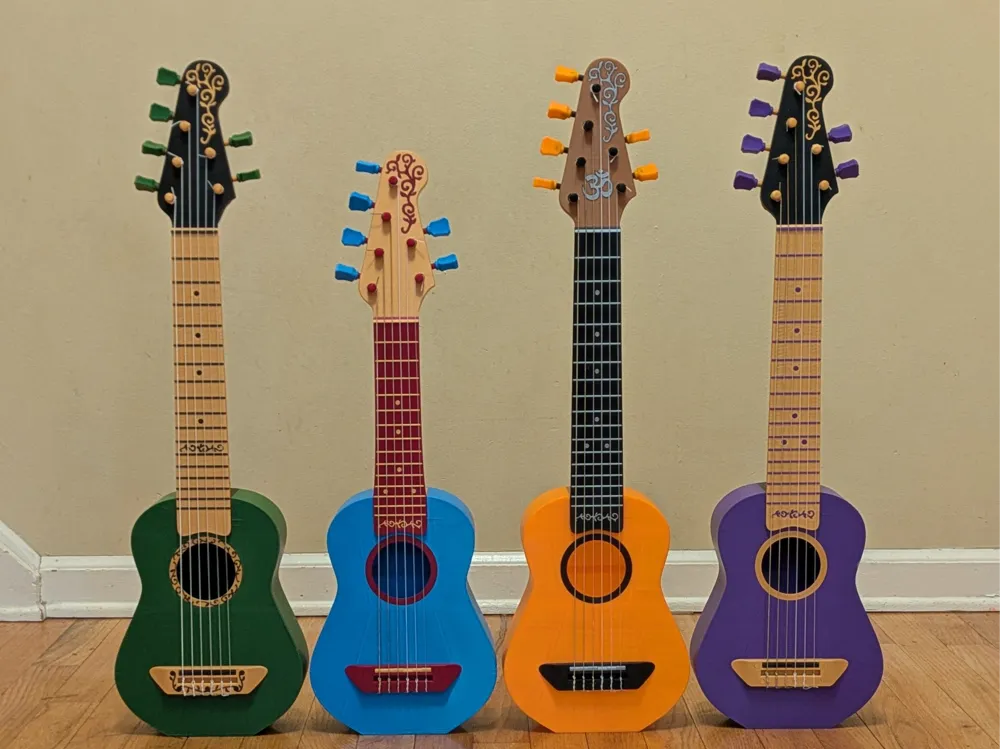
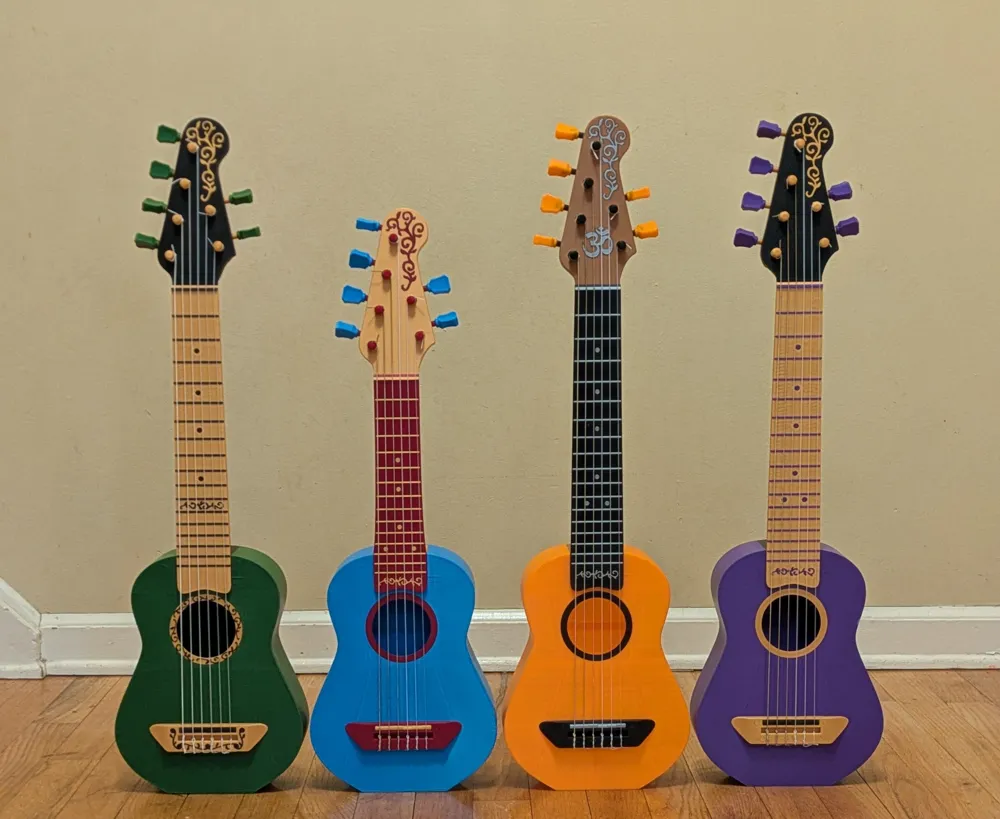
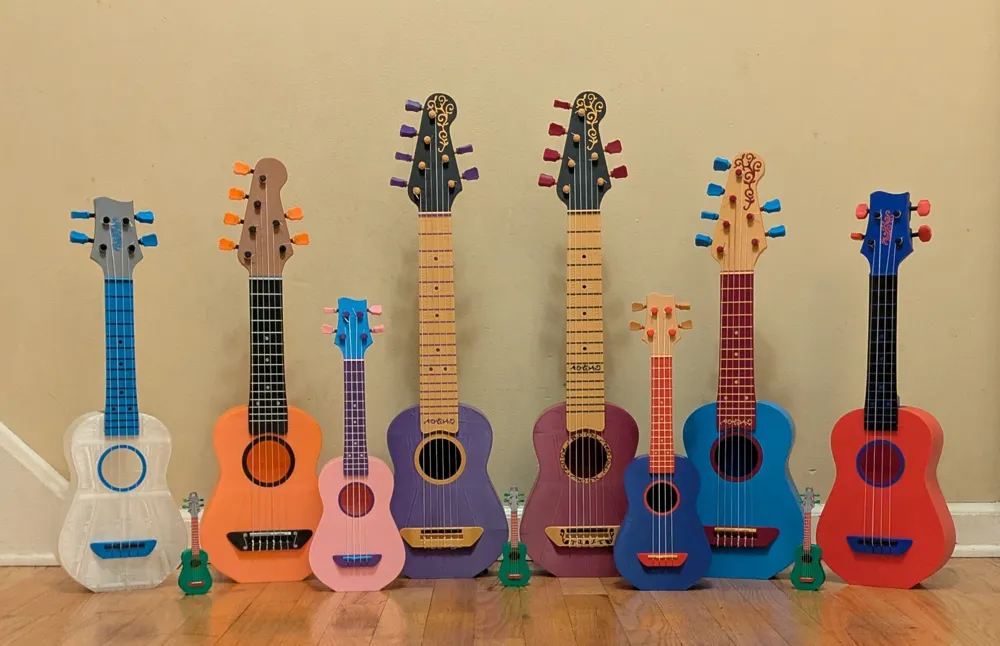
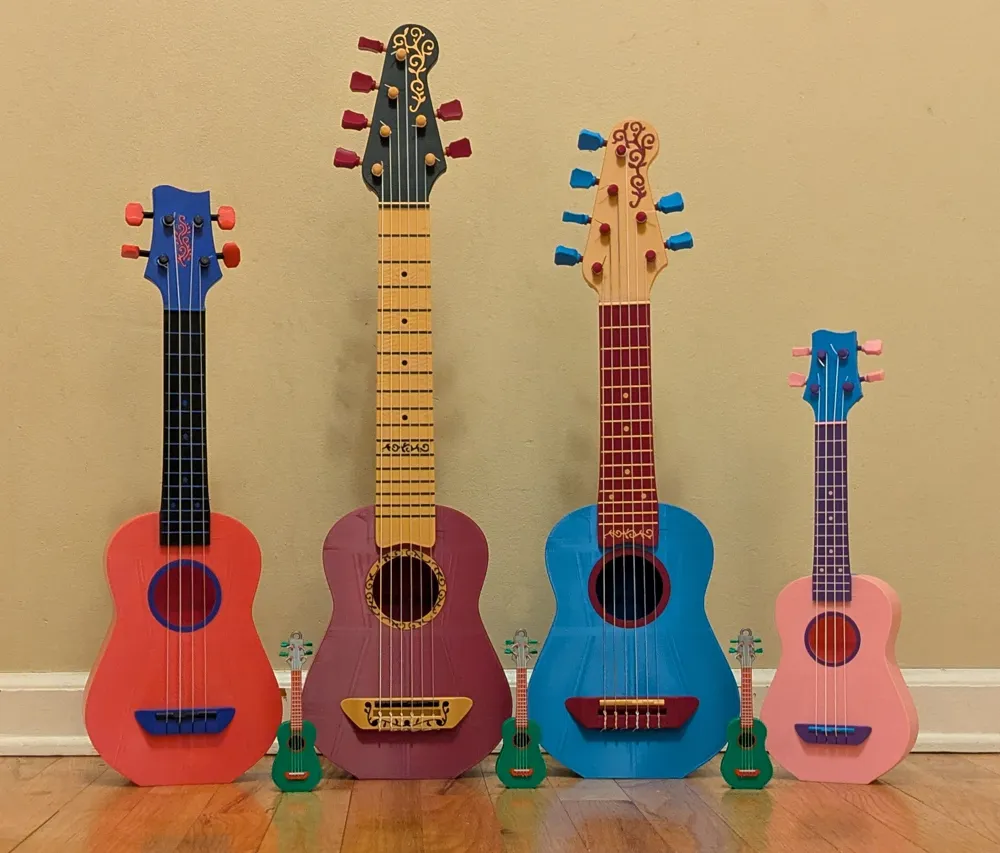
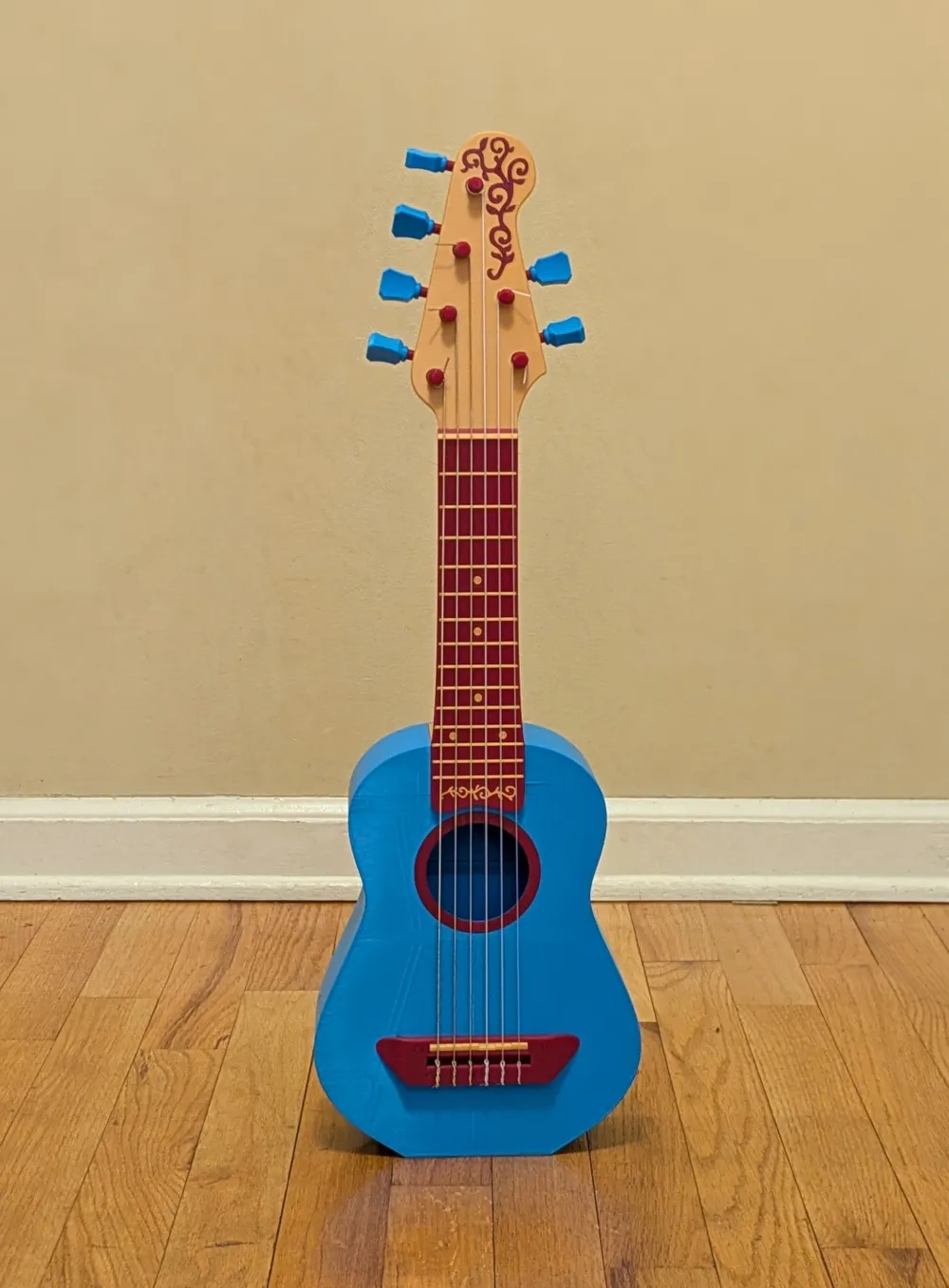
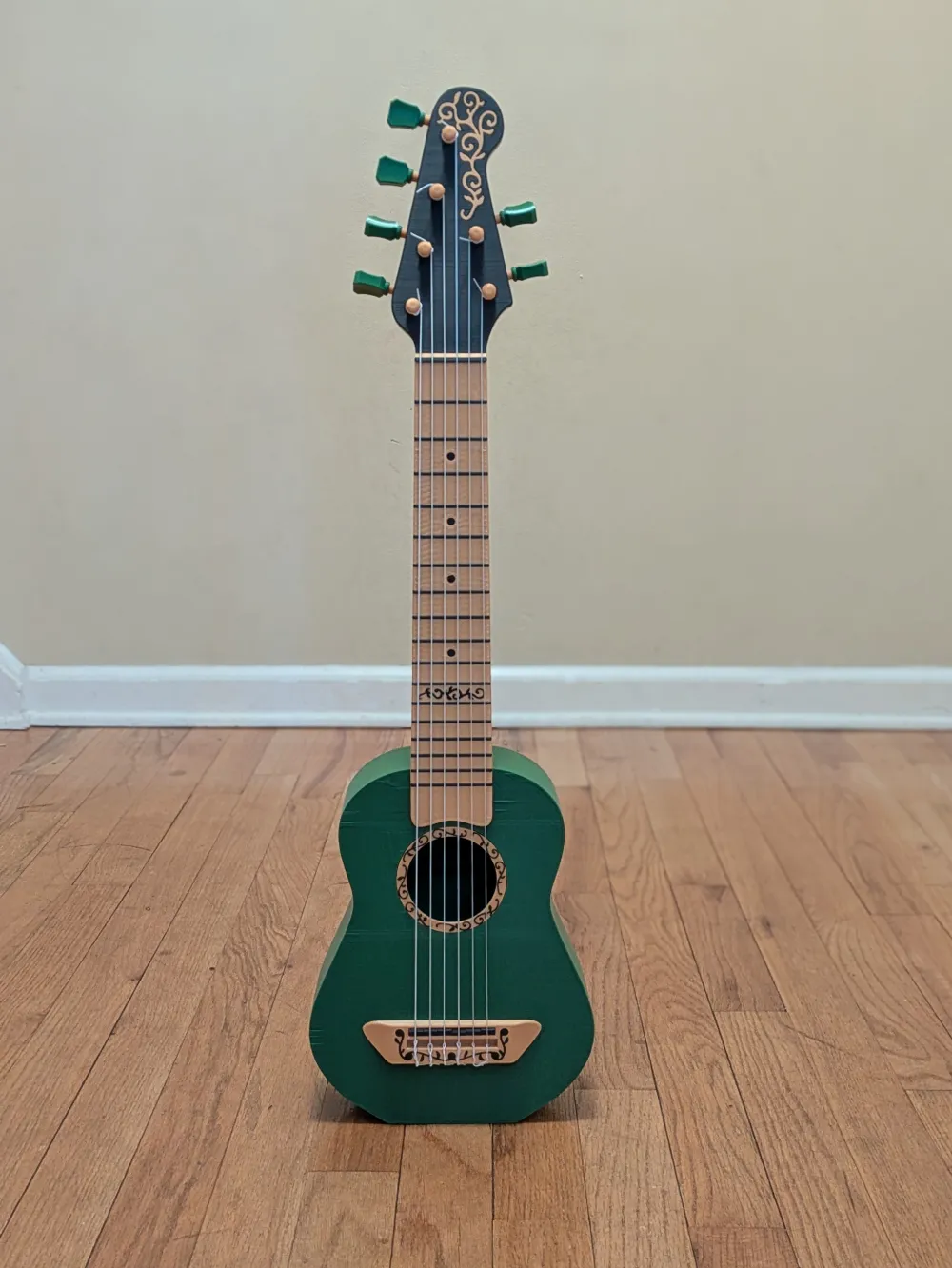
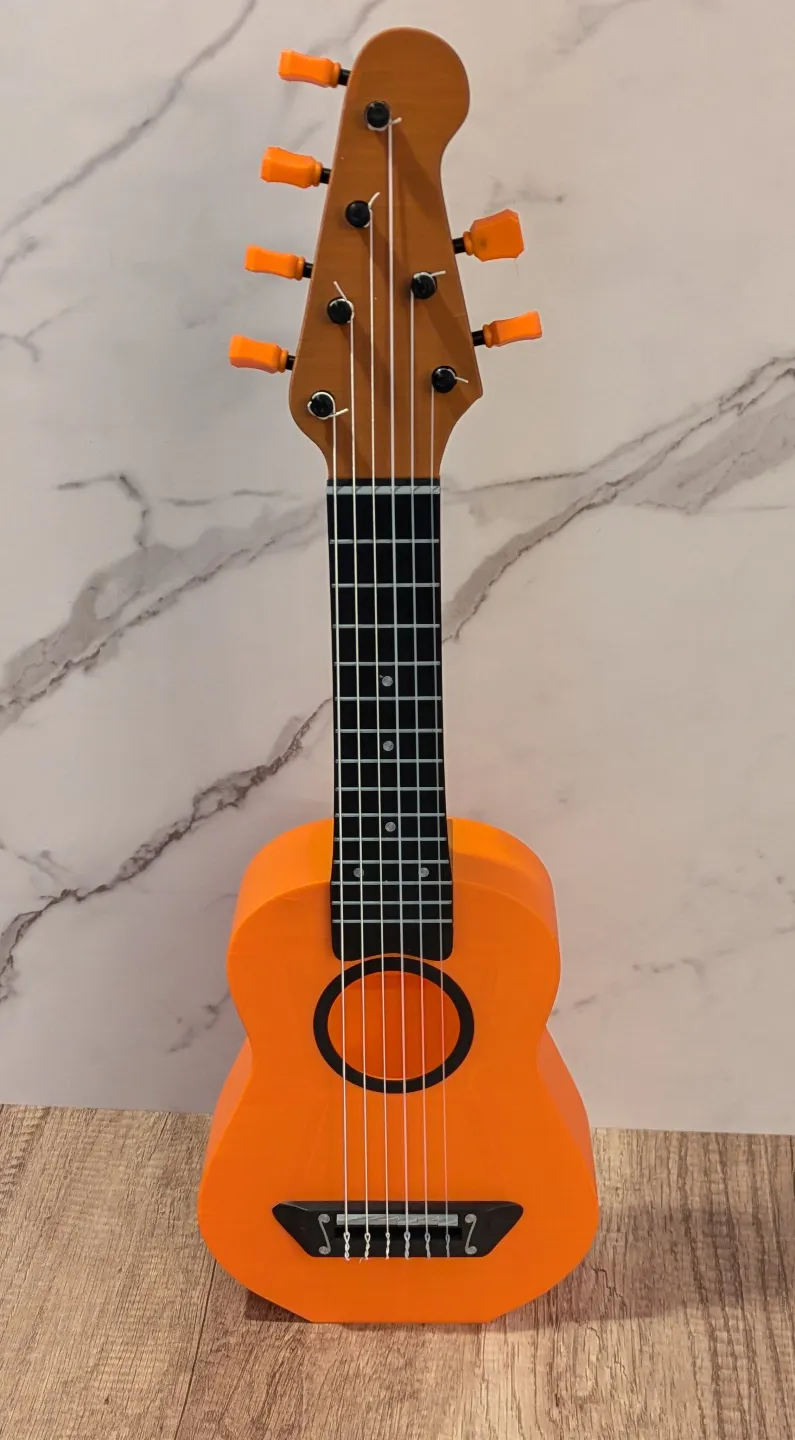
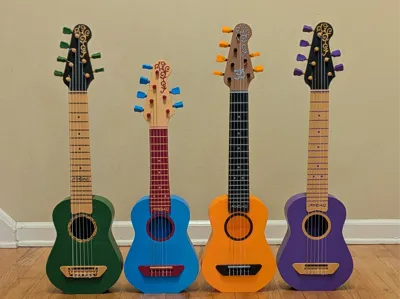
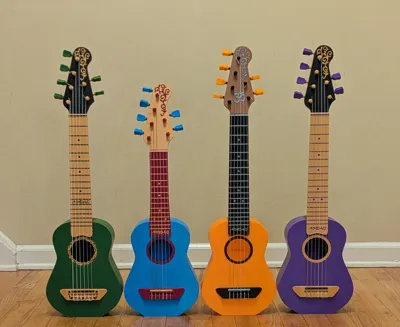
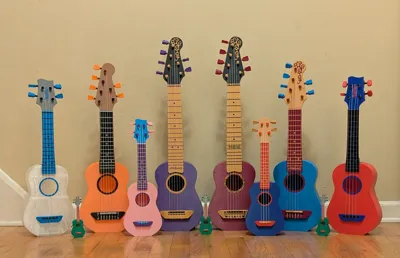
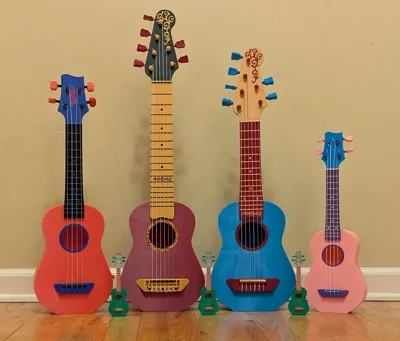
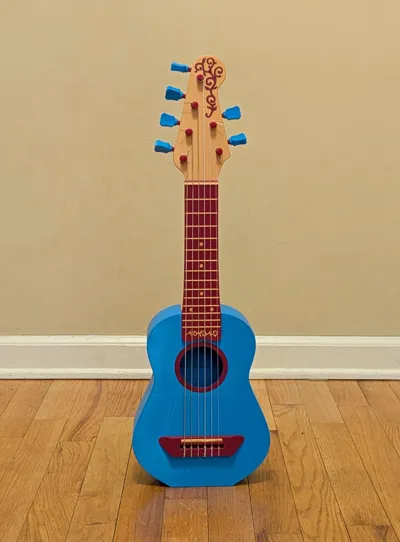
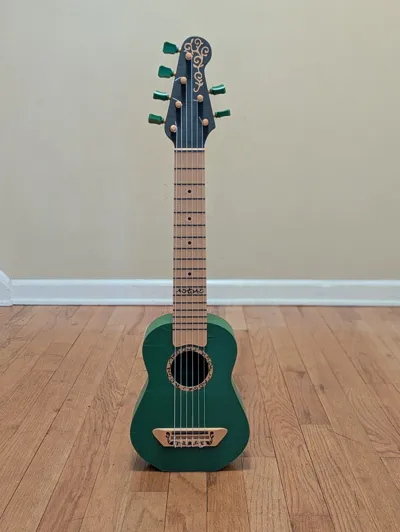
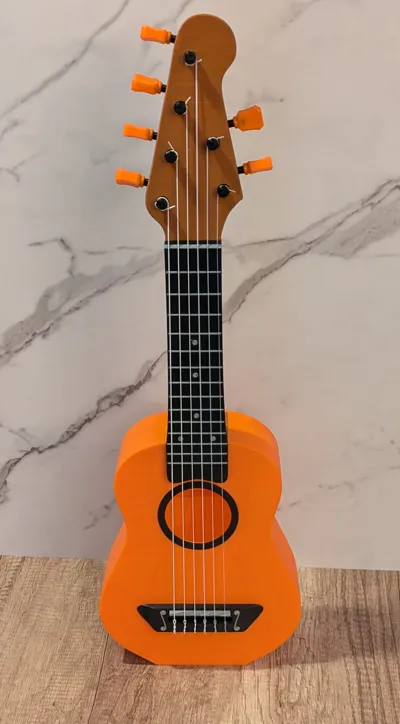
Introducing the soprano guitalele - the newest instrument in my family of 3D printed ukes . A guitalele (or guitarlele, or ukitar) is a cross between ukulele and guitar, with six strings tuned like a guitar but the small size of a ukulele. You can choose between two models, a soprano guitalele, with 13.625 inch scale length, or a super soprano guitalele with a longer neck and 17 inch scale length. It's small size makes it an ideal travel instrument.
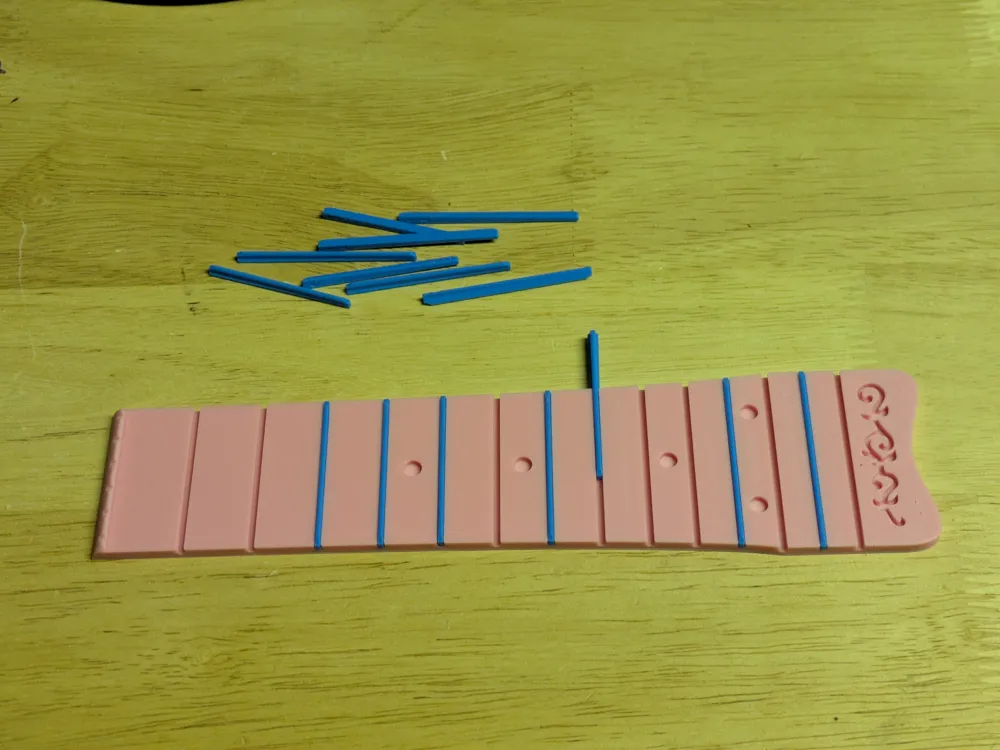
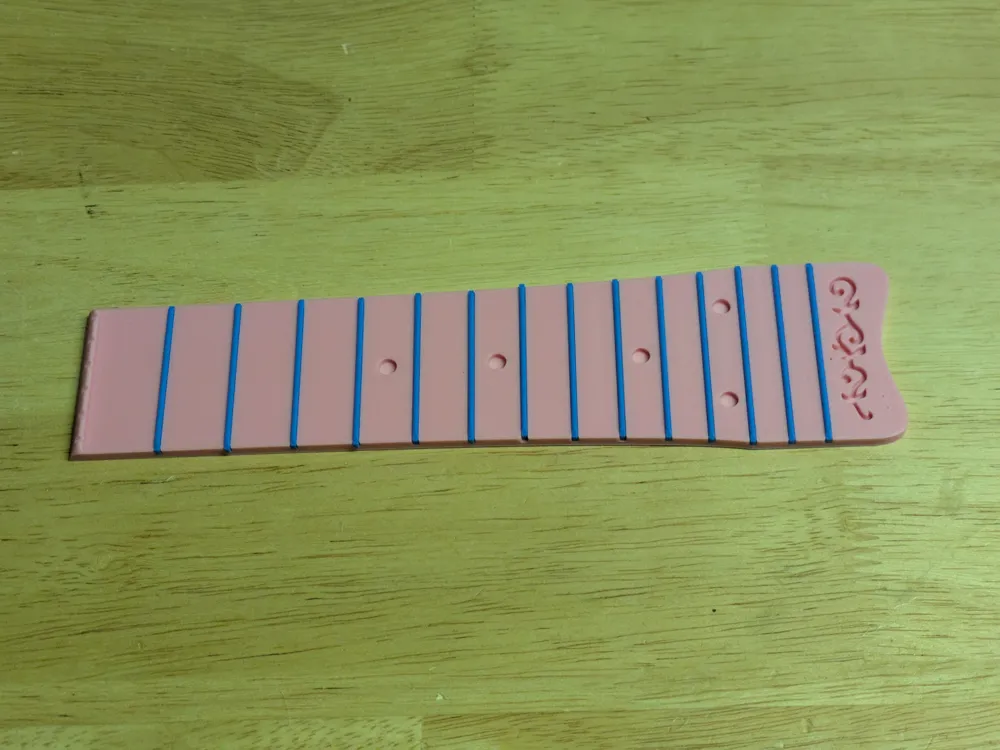
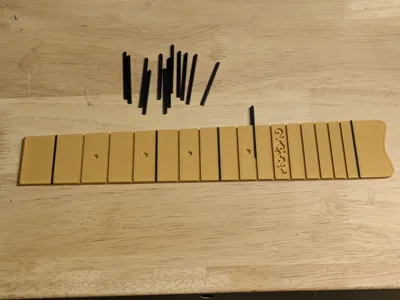
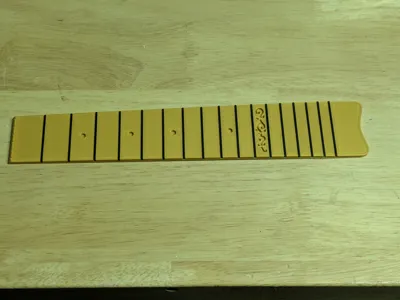
Update - 4/4/25: Turns out, the 3 metal plated bass strings wear the 3D printed frets much faster than I expected. So, I have added fretboards with replaceable frets. Just slide out the old worn fret and slide in a new freshly printed one!
The soprano guitalele is tuned to C, with the string tunings CFA#D#GC from lowest to highest.
The super soprano guitalele is tuned lower than the soprano, on A, with string tunings ADGCEA from lowest to highest.
Sound demo of the super soprano and build instructions are available in the video below:
Sound demo for the soprano guitalele and instructions on installing the tuners are available in this video :
Click here for Model 3 tuners I designed to go with ukes and guitaleles.
I also designed a mount to hang the guitalele from the wall.
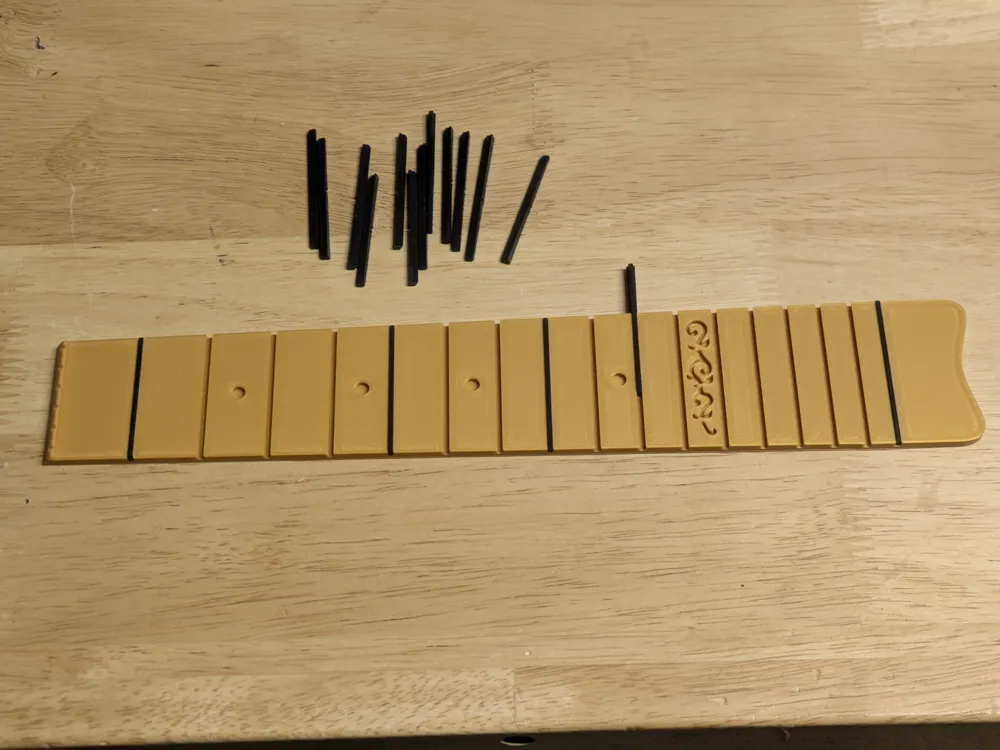
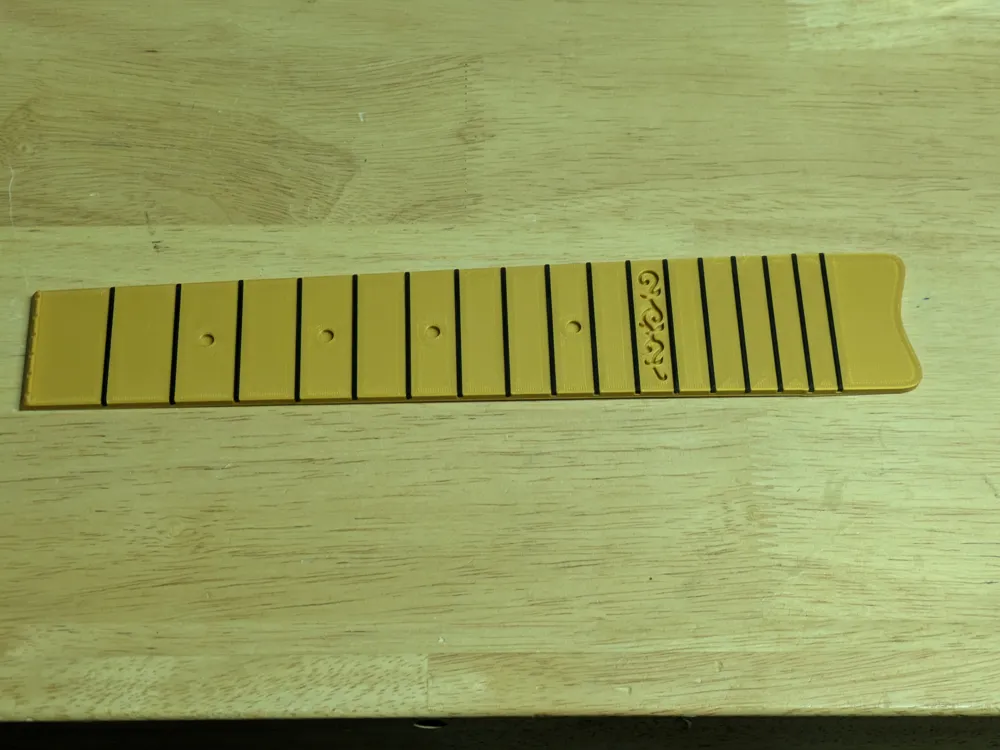
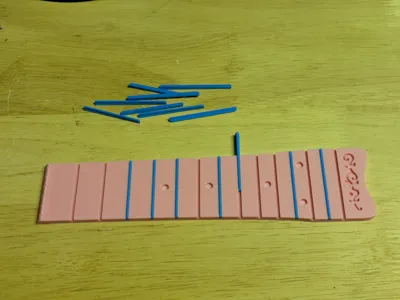
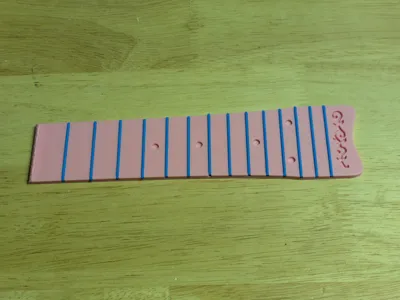
The 3 metal plated bass strings wear the 3D printed frets fairly quickly. To deal with this, I have designed a new fretboard with replaceable frets. This way, when a fret gets worn, you only need reprint a single new fret. Slide out the old fret, and replace it with a brand new one!
- There are fretboards for replaceable frets for both the soprano (13.6 inch scale) and super-soprano (17 inch) guitaleles, both with and without inlay
- The frets are tapered. They only go in one way. They should slide in easily, and then catch at the end for a snug fit due to the taper.
- There is a number on the bottom to help with identification after printing.
- 3D printing tolerances aren't that tight. So for both the soprano and super-soprano, I have designed three sets of frets - narrow, medium, and wide. I suggest starting with the medium frets. See how they fit. If they are too loose or too tight, you can switch an individual fret to either the narrow or wide as appropriate.
- Thanks to needing frets for both soprano and super soprano, with narrow, medium, and wide width, there are a LOT of stl files :) The file naming convention is SG for soprano, SSG for supersoprano, and -n, -m, -w for narrow, medium, and wide, respectively.
- On the soprano one of the guides for aligning the fretboard needed to be moved because it conflicted with a fret groove. I've updated the neck design and you'll need to re-download it if printing the soprano.
- I've left the original fretboard designs with frets printed directly on the fretboard for download if you want them, but I recommend against using them since they do wear quickly.
In addition to the printed parts, you'll need
- Strings for a guitalele. I like Aquila AQ-96.
- A carbon fiber rod in the neck for strength. For the soprano guitalele, I use a 200 mm long, 5 mm diameter carbon fiber rod. For the super-soprano guiltalele I use a 300 mm long, 8 mm diameter rod. Given the six strings in the guitalele the carbon fiber rod is essential to prevent excessive bending in the neck.
- For the soprano guitalele, one #4, 1'' wood screw to screw the headstock to the neck, For the super soprano guitalele, you'll need two #4, 1'' wood screws.
17, #2 3/8'' screws. 12 for the Model 3 tuners, and 5 to screw the bridge to the body, for additional strength.
Print Settings
- Printer : Bambu Lab P1S
- No Supports Rafts, or Brims
- Resolution: 0.12 mm
- Infill: 50 %
- Filament material: I've printed primarily with PLA as silk and wood PLAs are not as strong as regular PLA. For example, I use Bambu Lab PLA Basic. The Bambu Lab store give materials properties for different filaments and bending strength, bending modulus, and tensile strength of PLA Basic are all considerably higher than others like silk.
Notes:
All parts were printed with 5 shell layers and 50% infill for strength. No supports, rafts, required for any part. I use a brim for the headstock.
Various parts were glued together. I like Gorilla brand superglue gel. See the video for pictures of the build.
If the bridge isn't glued properly, it can pull off. I found lightly sanding the bottom of the bridge really helps. I also apply pressure using clamps for 10 or 15 minutes to make sure it is strongly attached. Then screw the bridge to the body using 5 #2, 3/8 inch wood screws for additional strength.
Most parts were printed with 0.12 mm resolution. However, the fretboard was printed with 0.08 mm resolution. For the fretboard, I paused the print at the top of the fretboard to change filament colors, so that the frets print in a different color than the fretboard.
The headstock, fretboard, bridge, and center ring are designed with decorative inlays. If you don't want to bother with them then you can print version without the inlays. For the center ring, I add a pause to switch color for the decorative part since they are too small to print separately.
You'll need
- Body
- Bridge
- Saddle
- Center ring
- fret markers
- Headstock, bridge, and fretboard inlays (if using)
- For the super soprano guitalele, print the neck, headstock and fretboard for the 17 inch scale
- For the soprano, print the neck, headstock, headstock screw cover and fretboard for the 13.6 inch scale
- Saddle - I added saddles with different heights to adjust the action. I typically use the 5 mm or 6 mm saddle for a lower action
- Strap pin (if you want to use a strap)
The fretboard for the 17 inch scale is long and only fits on the build plate at 45 degrees. I had to add some custom G-code to shorten the purge line so that it did not overlap with the fretboard.
The saddle is a compensated saddle. On the edges of the saddle are the numbers ‘1’ and ‘6’ indicating which string should be on that side of the saddle, 1 being the highest pitch, and 6 being the lowest.
License



Comment & Rating (84)