
Print Profile(1)
Description
I know the configurator can be a bit tricky; if the guide isn’t clear enough, please do feel free to message me. I’m currently putting together some more comprehensive example profiles featuring all the patterns and various options
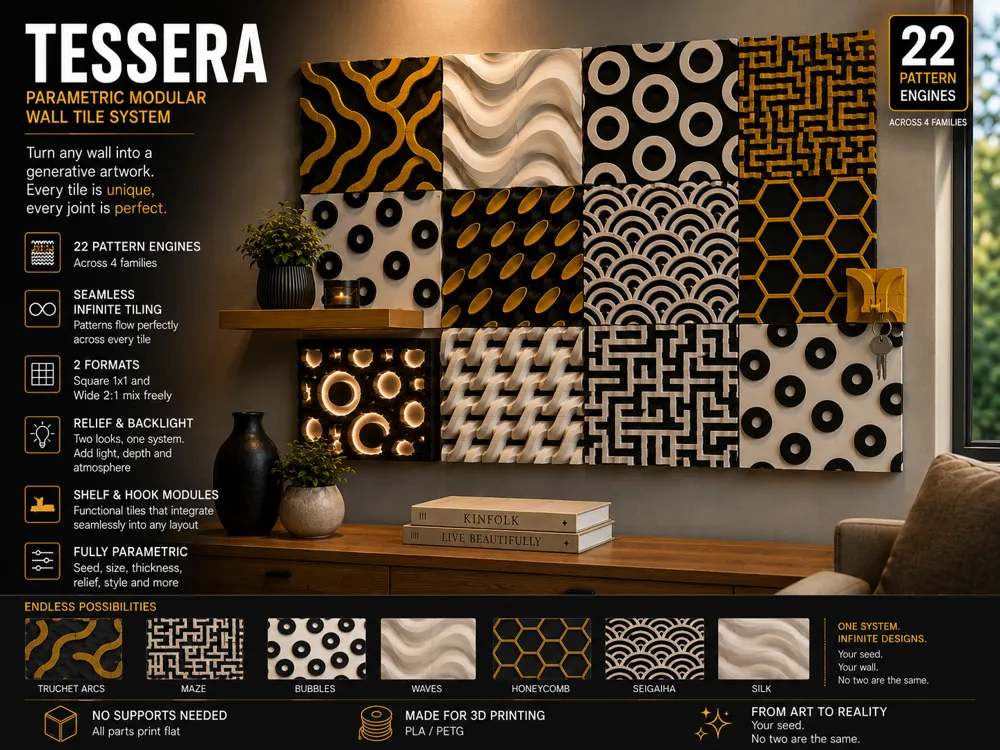
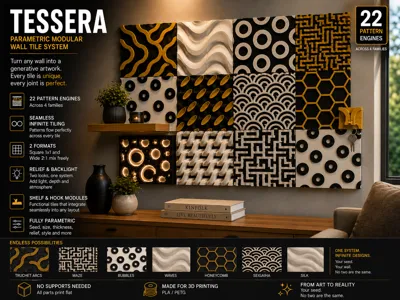
TESSERA — Modular Parametric Wall Tiles (22 pattern engines)
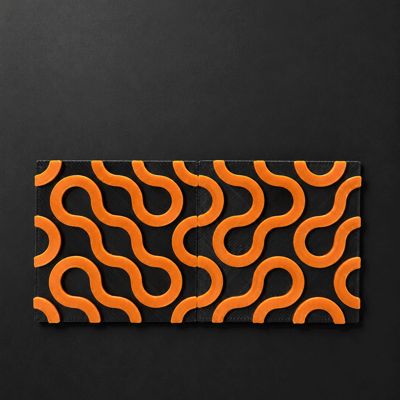
Turn your wall into a generative artwork. TESSERA is a fully parametric system of decorative 3D-printed wall tiles: pick a pattern engine, pick a seed, and build a wall where every tile is unique — yet every joint matches perfectly.
No two TESSERA walls in the world need to look the same. Yours won't.
🆕 What's new in v2.0
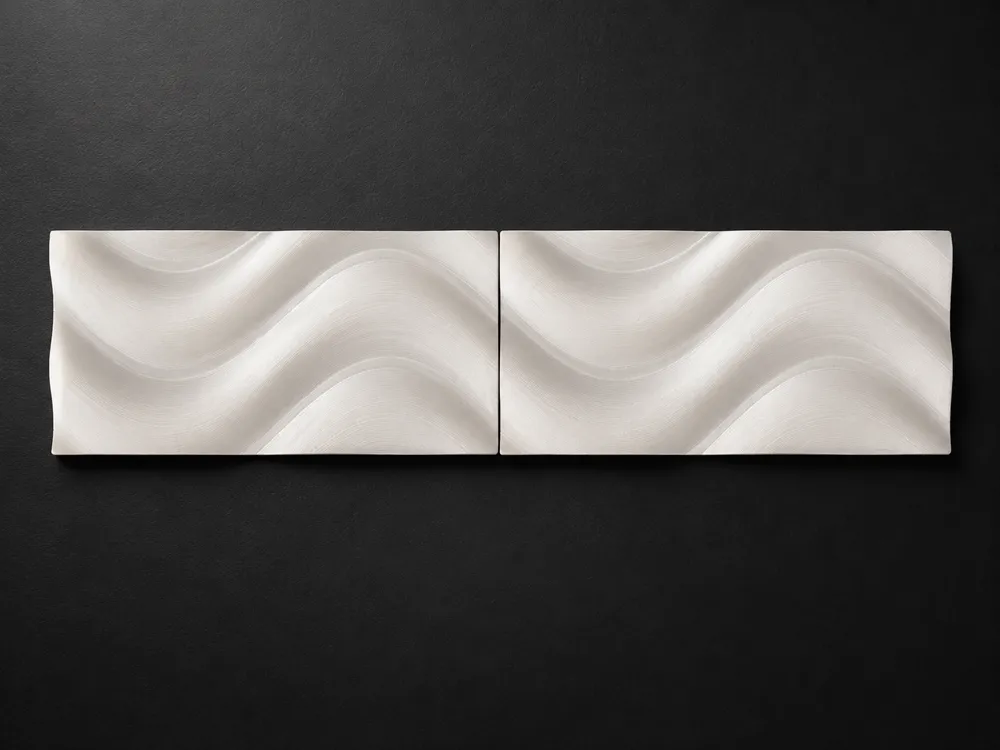
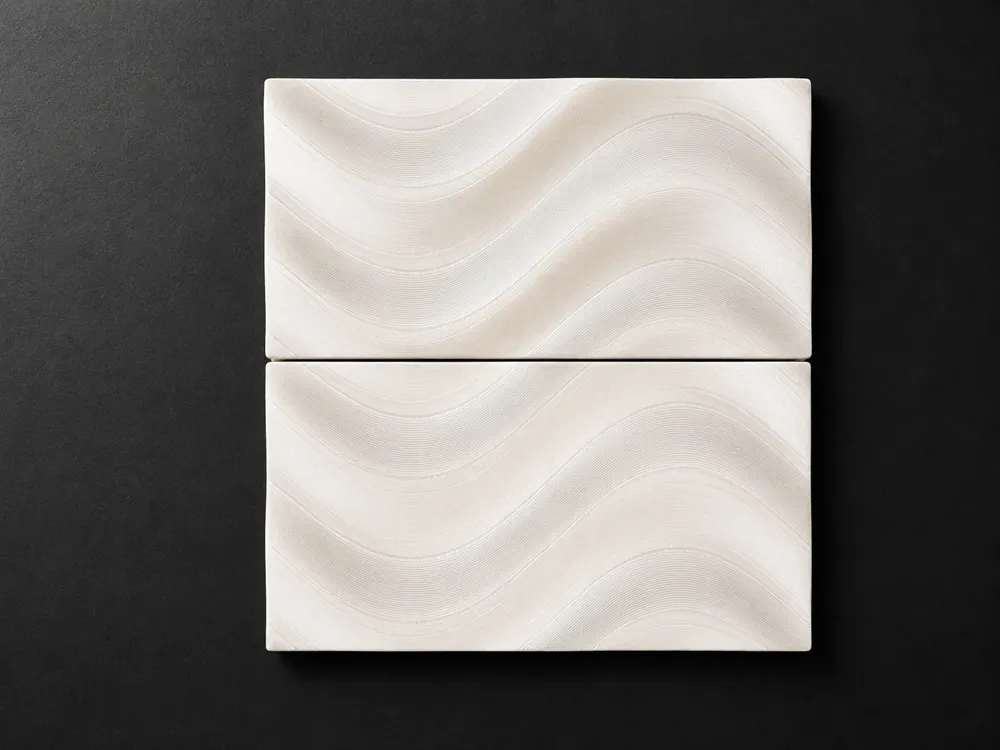
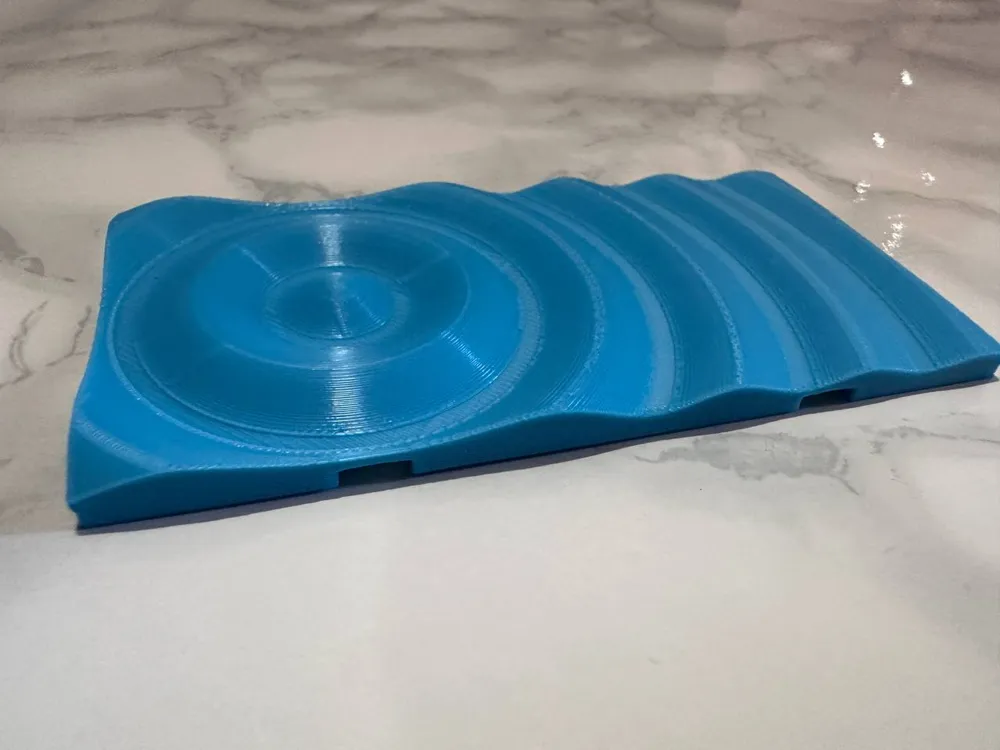
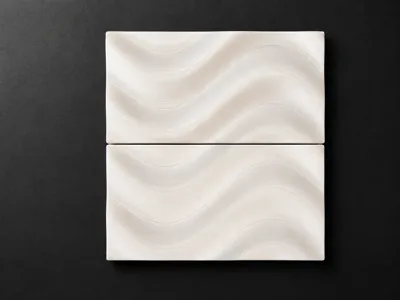
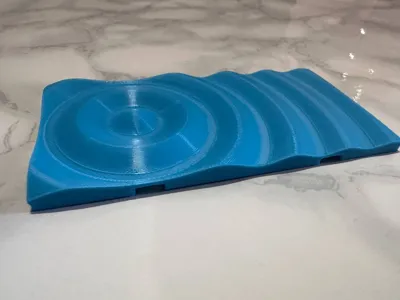
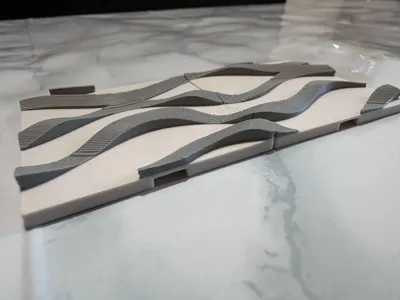
Relief modulation — the headline feature. Every 2D pattern can now be sculpted in height while keeping its exact design: the top of the relief follows a 3D field of your choice — waves (egg-crate), radial splash (one giant drop centered anywhere on the wall), organic (seed-driven noise), ridges, stepped terraces (contour bands crossing the design) or random plateaus (a block grid where every cell gets its own height — align the grid to the pattern cell and each element rises to its own level). A height floor keeps the design always readable, and a minimum-width guard drops unprintably thin slivers to the level below automatically.
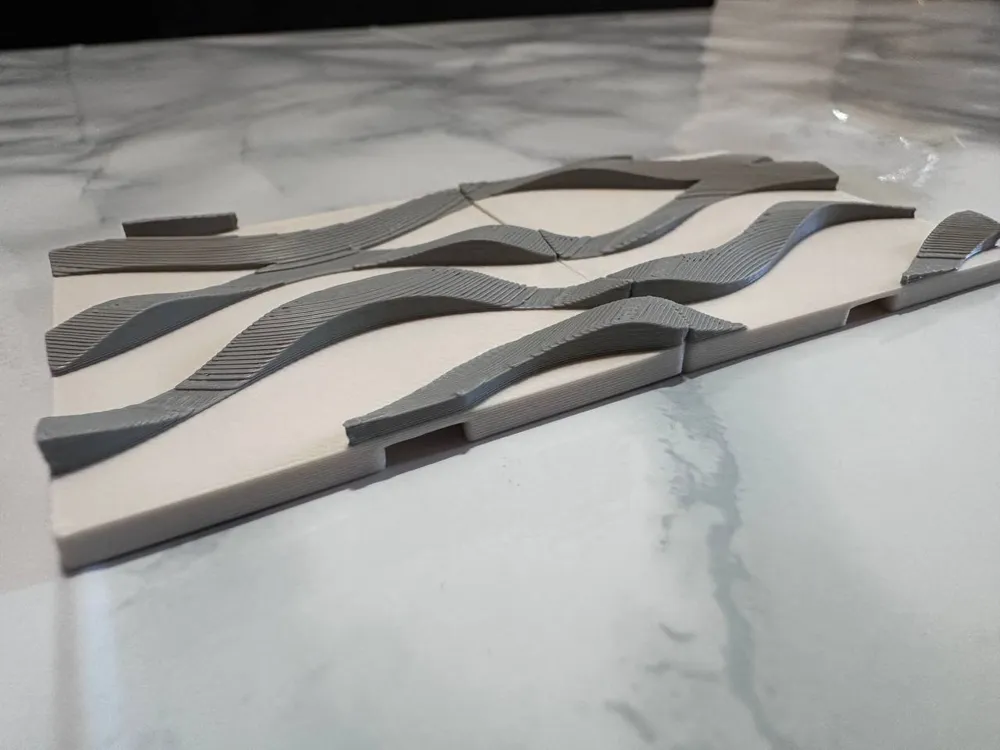
Three new sculpted engines (22 total): Crosswave (interfering sine waves — domes and saddles), Droplet (a water drop frozen mid-splash, rings fading with distance) and Topo (organic noise quantized into flat terraces — a contour-line terrain model, gorgeous with one filament color per level).
Functional tiles, upgraded: the hook tile now takes 1 to 3 evenly spaced prongs (hook_count), and shelf/hook add-ons ship as a separate third object in their own color — assign three filaments, or print just the add-on in PETG for extra strength.
Customizer polish: parameter groups reorganized in the order you actually use them (Pattern and Dimensions right after Part, backlight options at the bottom); curve resolution is now an exposed parameter (curve_res — the Quality section is no longer empty!); and sculpt_res moved next to it as the smoothness control for all sculpted engines, now up to 160.
✨ Why it's different
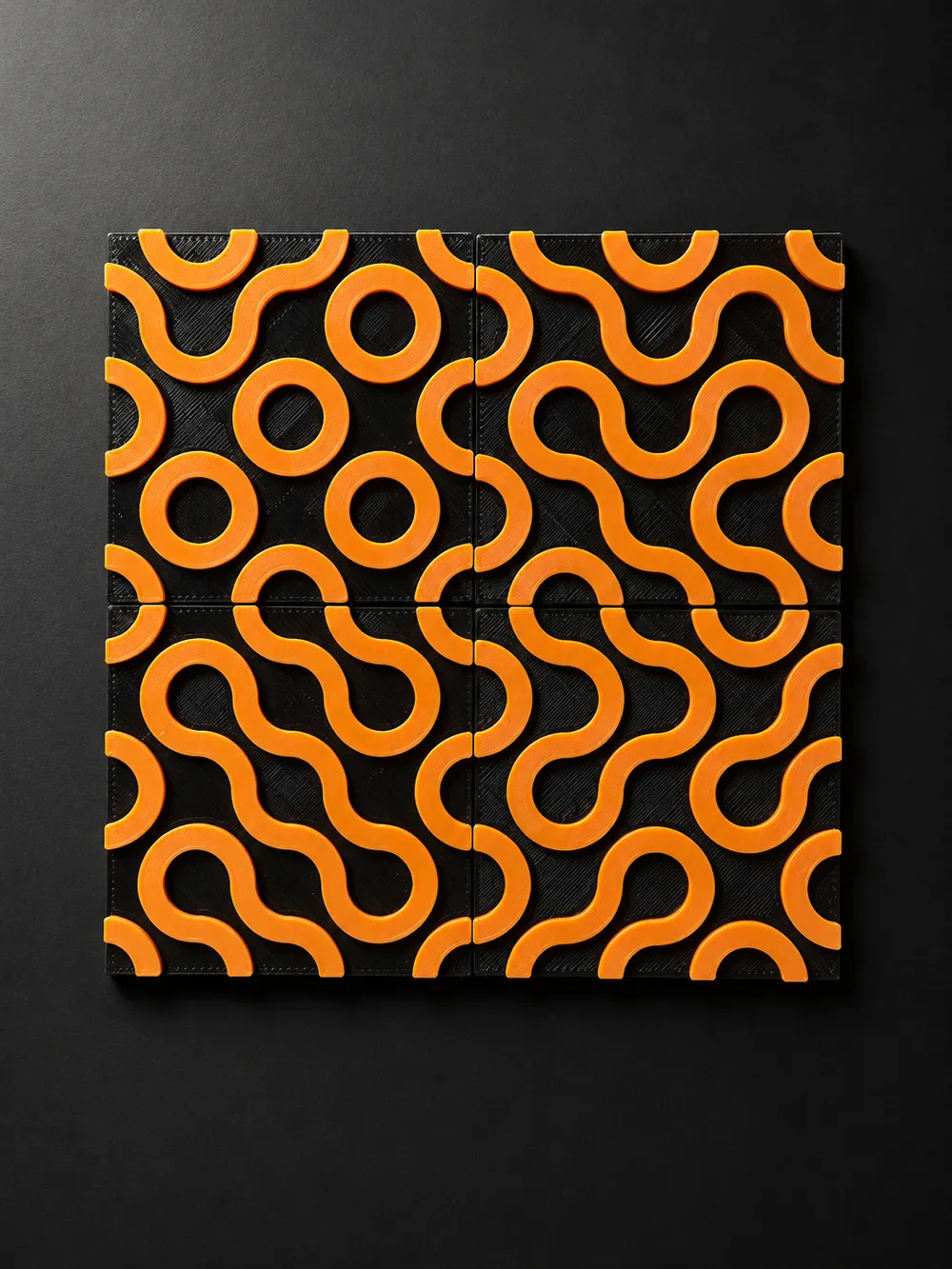
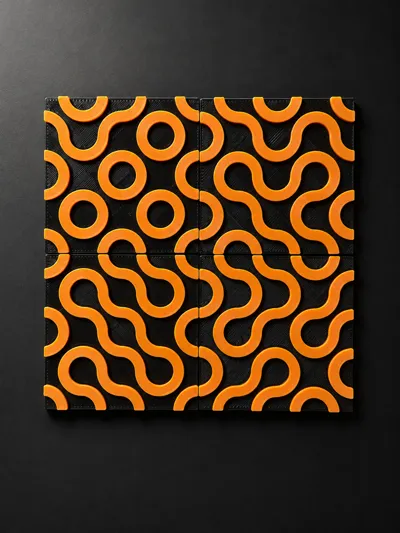
Most tile models repeat one identical piece. TESSERA doesn't: the pattern lives on an infinite virtual canvas, and each tile is just a window on it. Give every tile its position (tile_x, tile_y), keep the same seed, and the design flows across the joints — curves, mazes and dunes continue from one tile to the next as if the wall were printed in one piece.
Bonus: if a tile ever breaks, reprint it. Same seed, same position, identical tile. Write your seed on the back of the wall!
🧩 22 pattern engines, 4 families

- Global random field — every tile unique, always matching: Truchet arcs, Diagonal maze, True labyrinth, Voronoi web, Bubbles
- Global deterministic field — one continuous lattice across the wall: Hexagon honeycomb, Flowing waves, Fish scales/Seigaiha, Interlace lattice, Isometric cubes, Diamond plate, Celtic plait
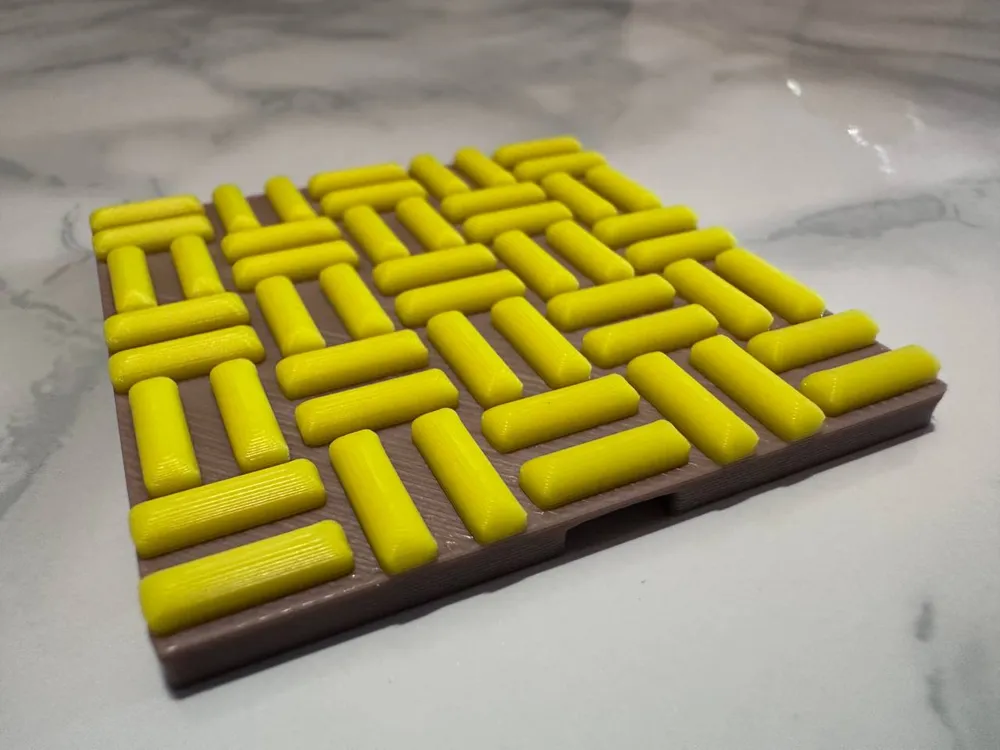
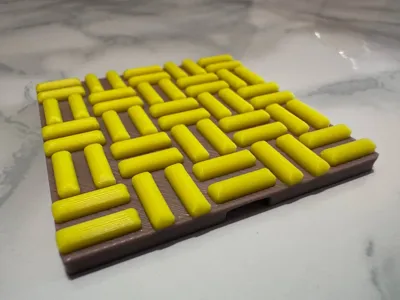
- Per-tile motif — identical tiles, infinite repetition: Concentric ripples, Sunflower, Star lattice, Girih strapwork, Basket weave
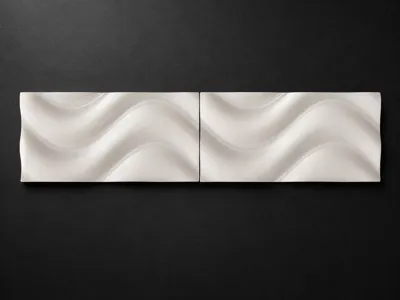
- Sculpted heightmap — continuous 3D surfaces, plaster-panel style: Silk, Dunes, Crosswave, Droplet, Topo
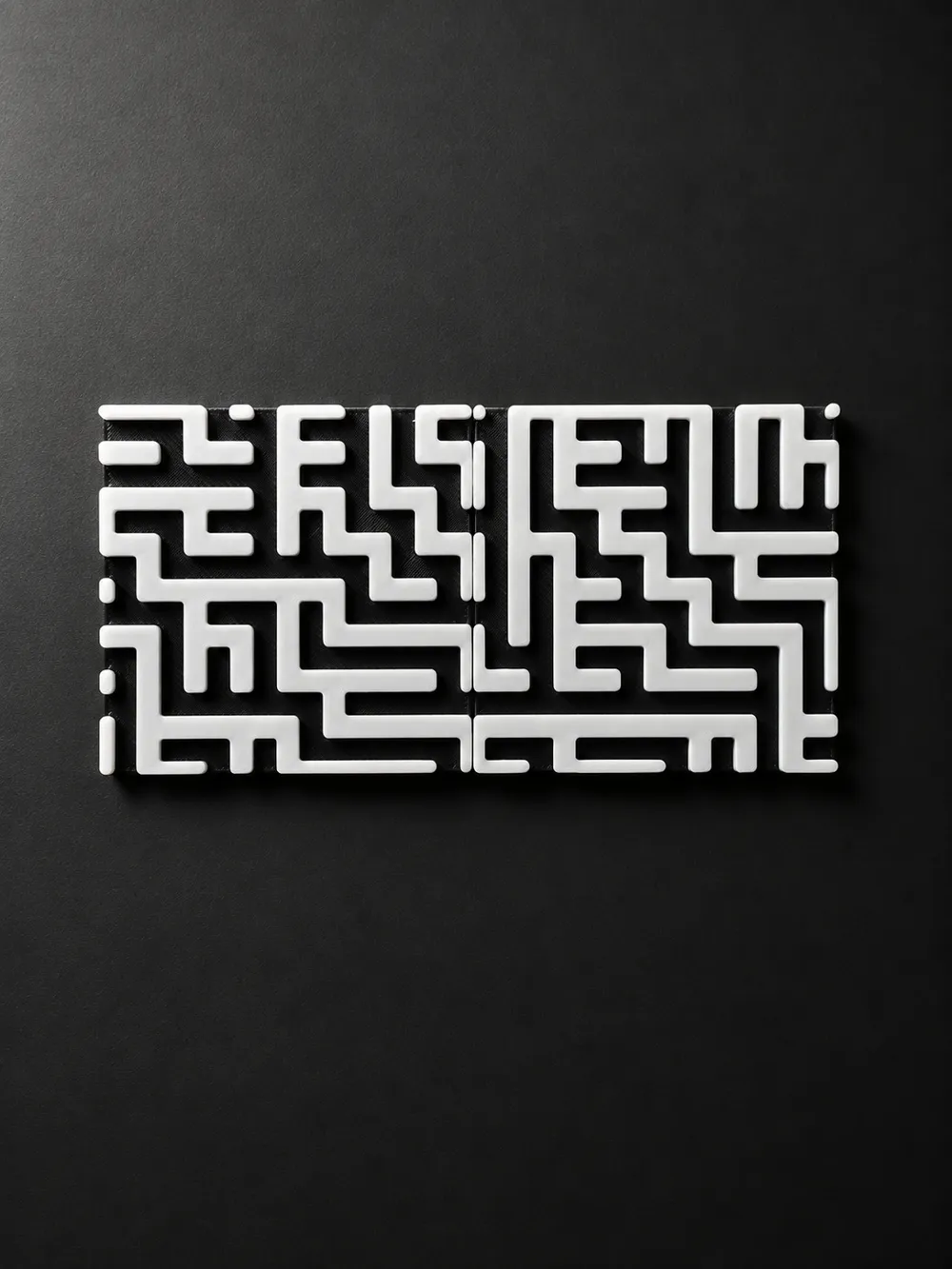
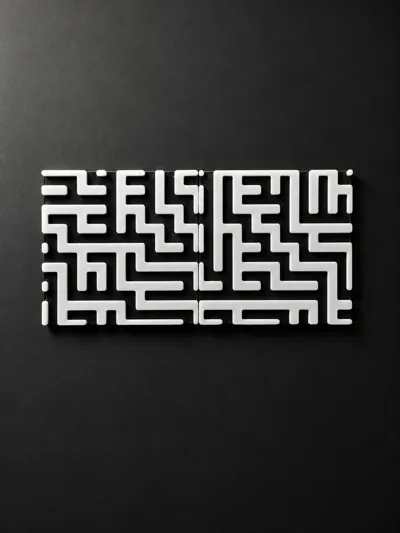
Two engines deserve a special mention. The True labyrinth is a genuine perfect maze (binary-tree algorithm): every corridor connects, no dead zones, and it continues across tiles — yes, you can solve your wall with a finger. 🌀 And the Sunflower is pure mathematics made visible: seeds placed at the golden angle (360°/φ²), exactly like a real sunflower — and its arms style draws the spiral arms themselves. The arm count is a Fibonacci number by theorem (8/13/21/34 — nothing else produces clean spirals). Switch 21 → 34 and watch the next term of the sequence appear on your wall. 🌻
🔧 The system
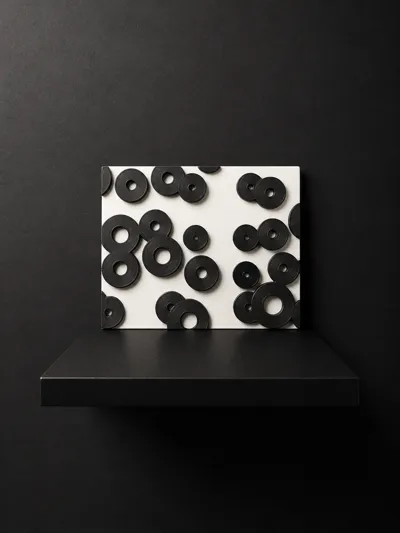
- Two tile formats: square 1×1 and wide 2:1, freely mixed — sockets share the same pitch, so brick-style running bond layouts just work
- Relief modulation 🌊: sculpt the height of any 2D pattern with waves, splashes, noise, terraces or random plateaus — same design, new depth
- Backlight mode 💡: switch to cutout and the tile becomes a pierced light panel with a smart support web (no floating pieces, with any engine). The included LED spacer frame mounts on the wall, hosts the strip, and the tile snaps into its front rebate
- Hidden bowtie connectors join tiles from the back — clean joints, nothing visible from the front
- Blind keyhole pockets (0/1/2 per tile) hang the wall on ordinary screws, invisible from the front
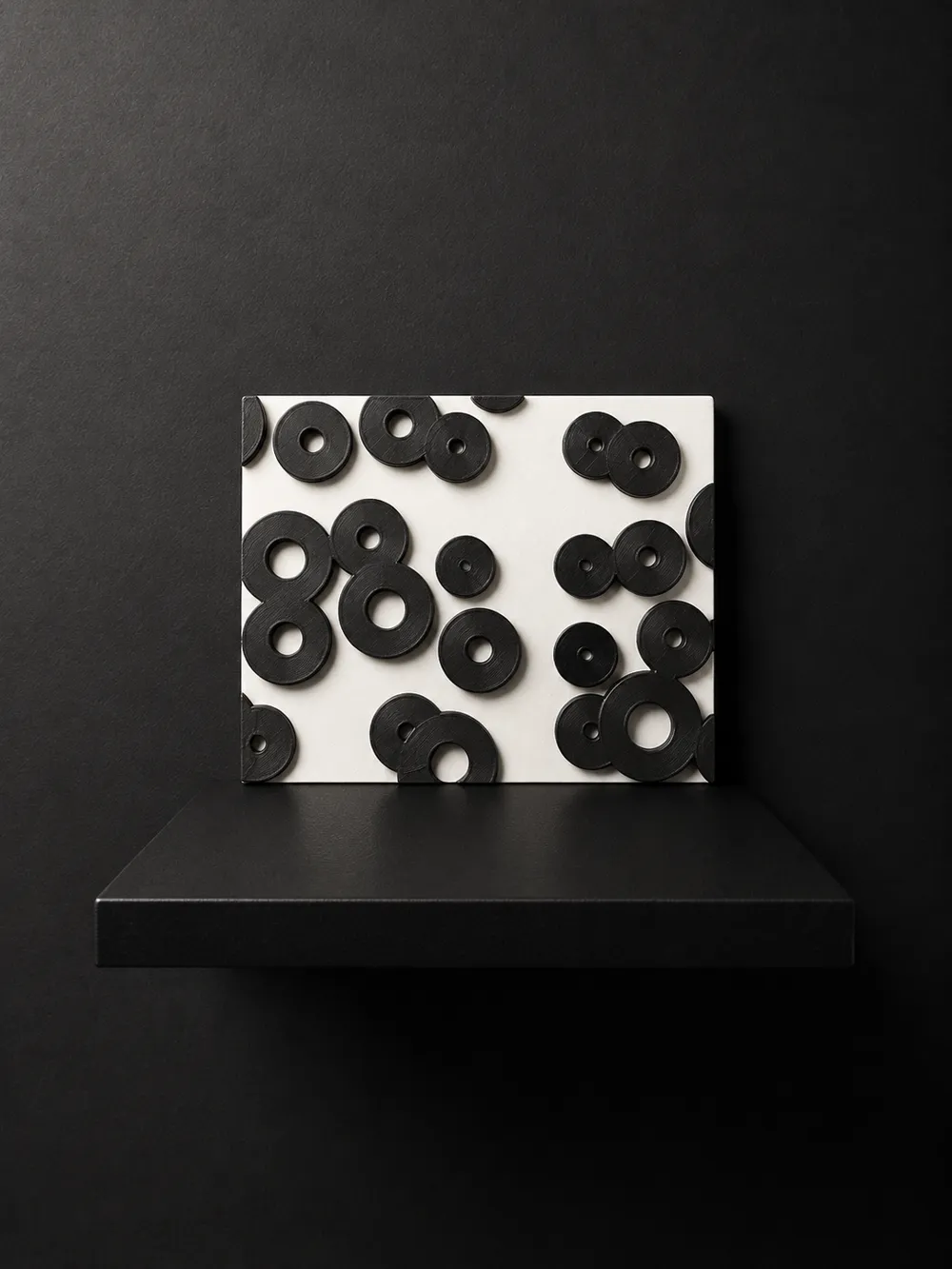
- Multi-color by design: base plate and relief are separate meshes, and functional add-ons are a third — use your AMS, or simply add a filament change at the base layer on any single-nozzle printer (on sculpted tiles this paints gorgeous topographic contour lines)
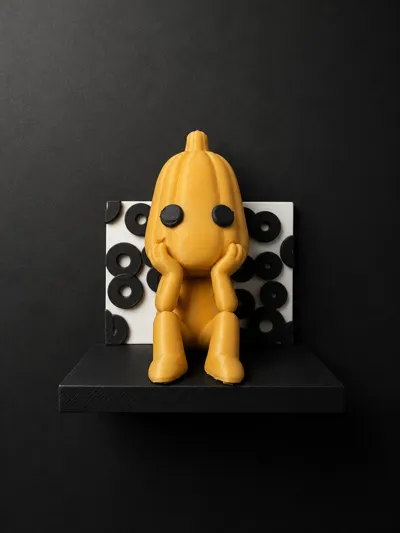
- Functional tiles: a shelf tile with ribbed ledge and a hook tile with a 45° lip — same footprint, same connectors, they click into any TESSERA wall
- Calibration part included: dial in the connector fit for your printer before committing to full tiles
- NxN preview (2×2 to 5×5): see your exact wall before printing a single gram
🖨️ Printing
Everything prints flat, no supports require. Tiles: base on the plate, 2 walls, 10–15% infill. Connectors: 4+ walls or 100% infill. PLA is perfect; PETG for humid rooms. Layer 0.16–0.20 mm (adaptive/0.12 mm recommended for the sculpted engines).
📖 A full illustrated PDF guide is attached — quick start, seamless-tiling explanation, per-engine reference, parameter tables, mounting steps and FAQ.
⚠️ For shelf/hook tiles: set keyholes = 2, put at least one screw in a stud or proper anchor, and load-test gradually. Connectors align tiles — they don't carry shelves.
🚀 Quick start
- Print the calibration part, tune conn_clearance
- Play with preview until you love a pattern + seed
- Export one tile per wall position (same seed, different tile_x/tile_y)
- Print, connect, hang. Done.
Show me your walls in the comments — pattern + seed, so others can remix your design! ❤️
Designed by Xeyos Design. Fully parametric — hit Customize and make it yours.
NOTE.
The uploaded profile contains just a few examples to illustrate some good print settings, but TESSERA offers a huge number of combinations – find the one you like best.
Boost Me (for free)
If you like my project, please give it a boost to help me expand it.
Documentation (1)
License

You shall not share, sub-license, sell, rent, host, transfer, or distribute in any way the digital or 3D printed versions of this object, nor any other derivative work of this object in its digital or physical format (including - but not limited to - remixes of this object, and hosting on other digital platforms). The objects may not be used without permission in any way whatsoever in which you charge money, or collect fees.


Comment & Rating (7)