
Print Profile(5)


Description
If you like my models, don't forget to boost, download, like, rate, share and all that good stuff!
Boost Me (for free)
Boosts enable me to keep going while still sharing all my models free 😎 So thanks for considering! 🎉🥳
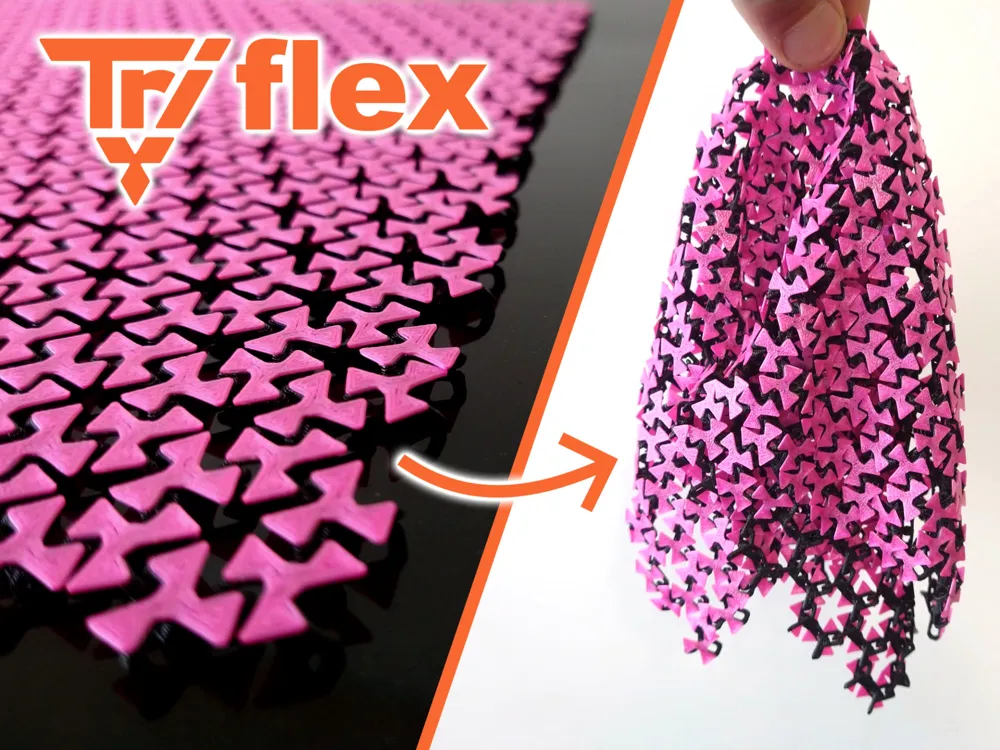
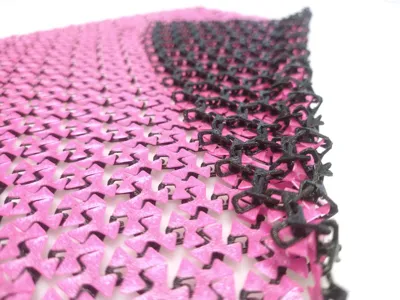
TriFlex
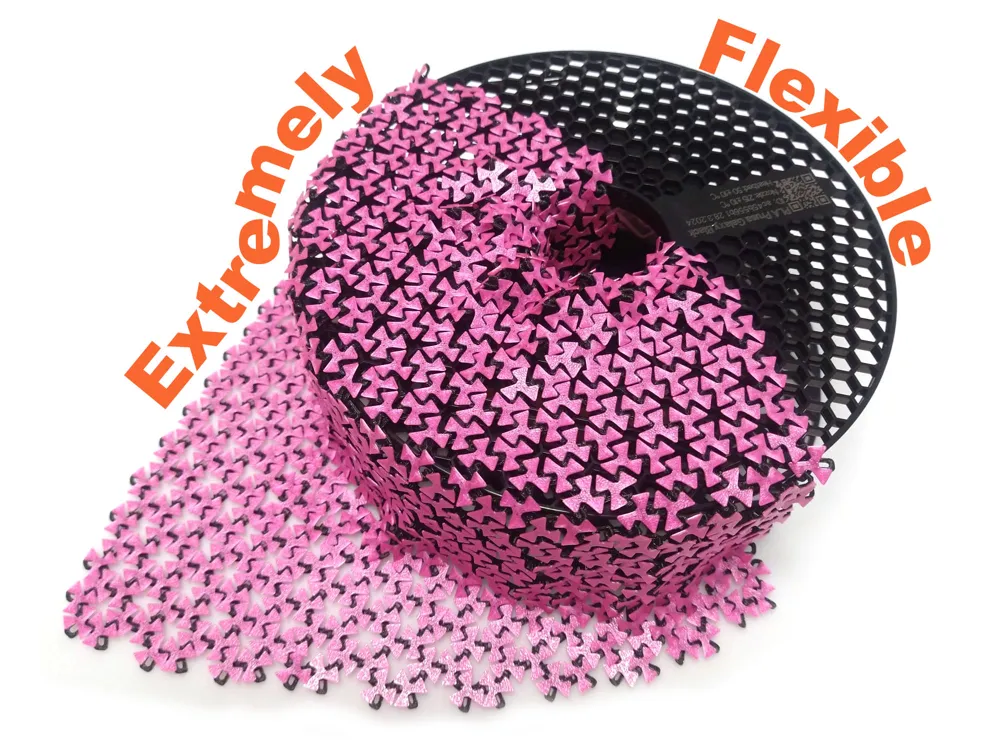
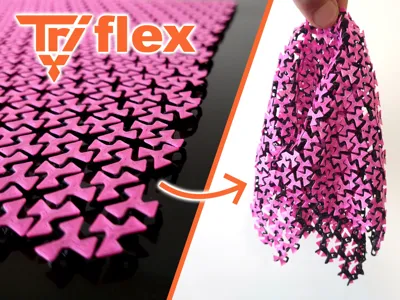
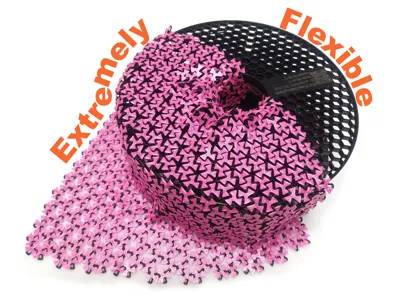
The extremely flexible 3D printable fabric!
Most fabrics have limited drapability so I really wanted to create a fabric that was truly fabric like, and I think I succeeded. This includes the following characteristics:
- Triangle based
- Easily printable
- Extendable
- Thin and lightweight
- Triple fold
Triangle based

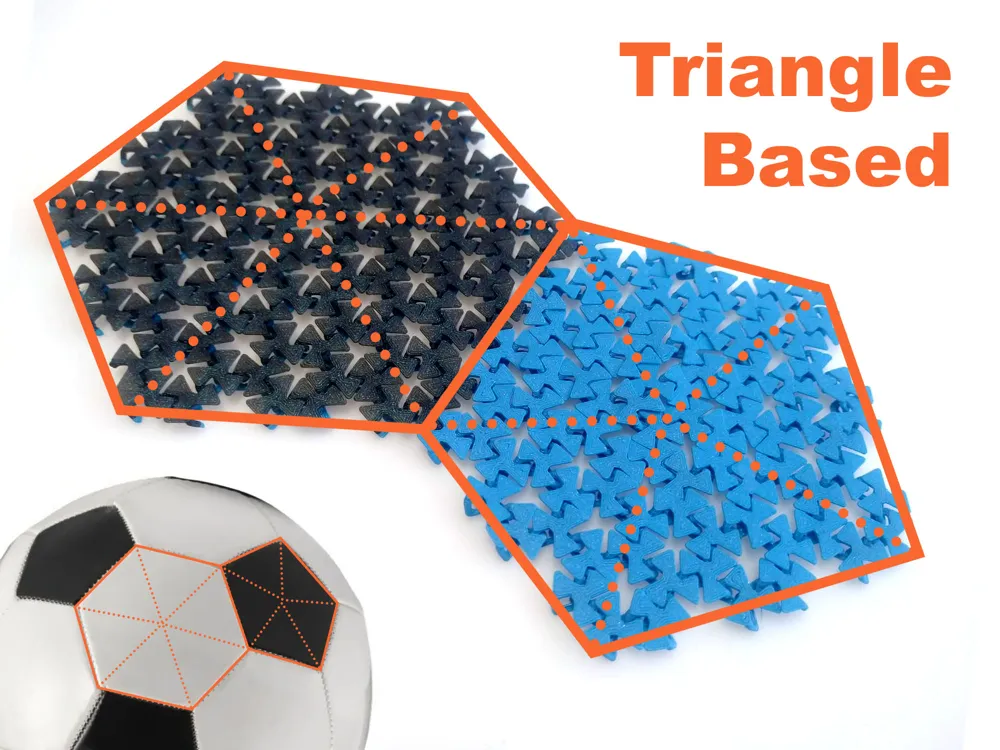
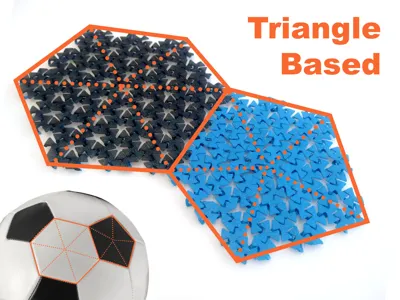
Almost all 3D printed fabrics are square or hexagon based, but these only tile a flat surface. TriFlex is based around a triangular grid, which can be assembled into hexagons (flat plane) but also pentagons and squares for concave and convex surfaces. My ultimate goal is to create a dress from this fabric, but here you can see how with triangular elements you can create complex shapes such as the building blocks of a soccer ball:
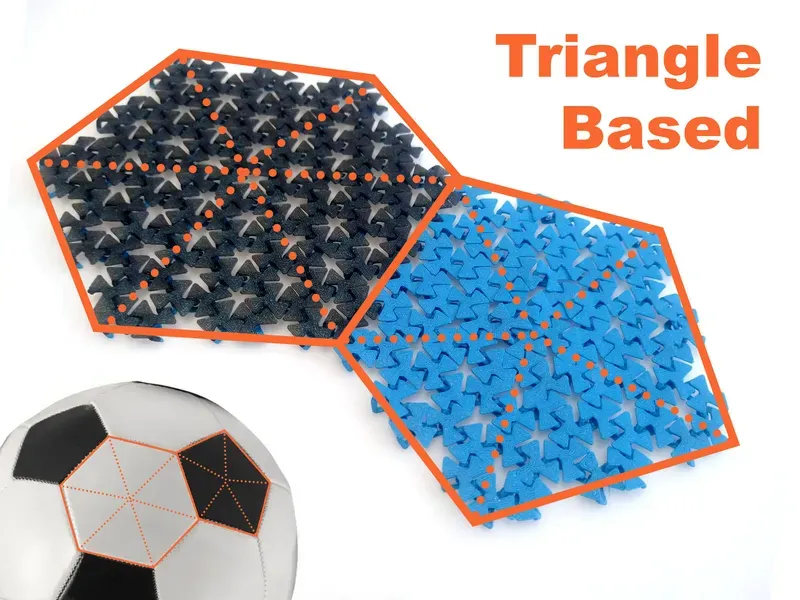
The file for the pentagon is included, it is just a hexagon with one of the triangles missing and reconnected using a 3D pen.
Easily printable
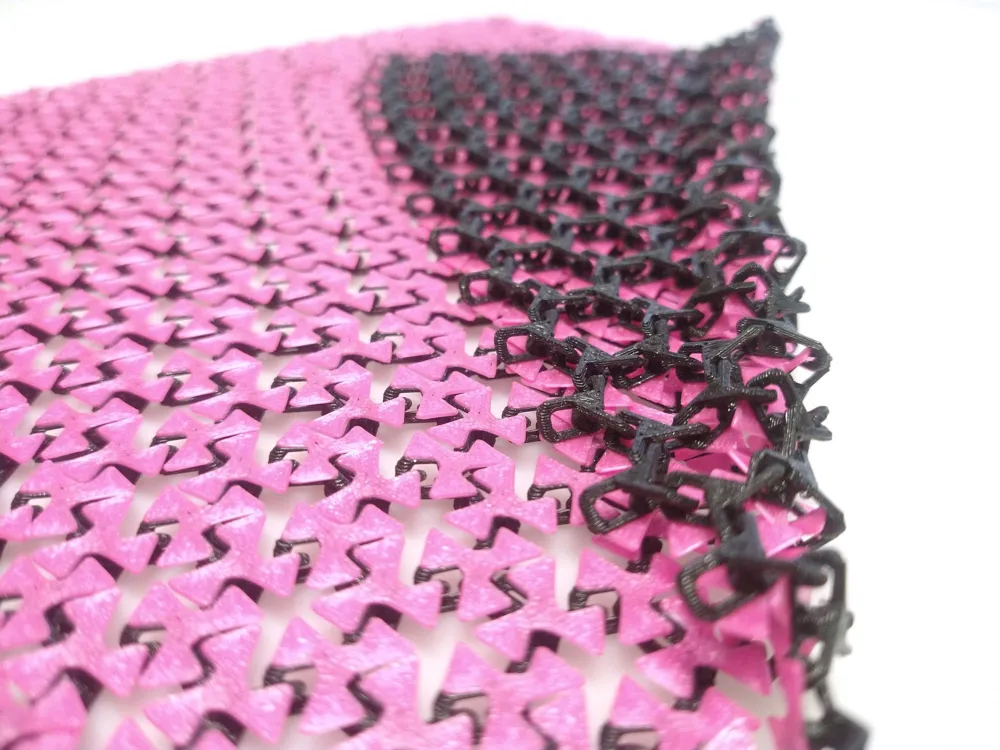
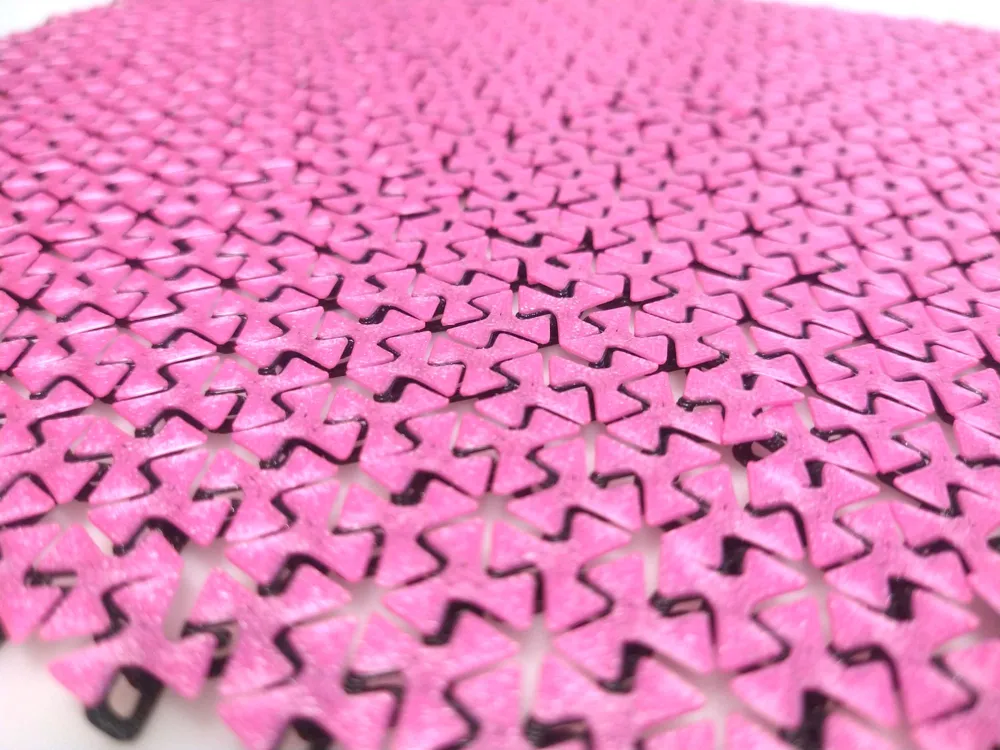
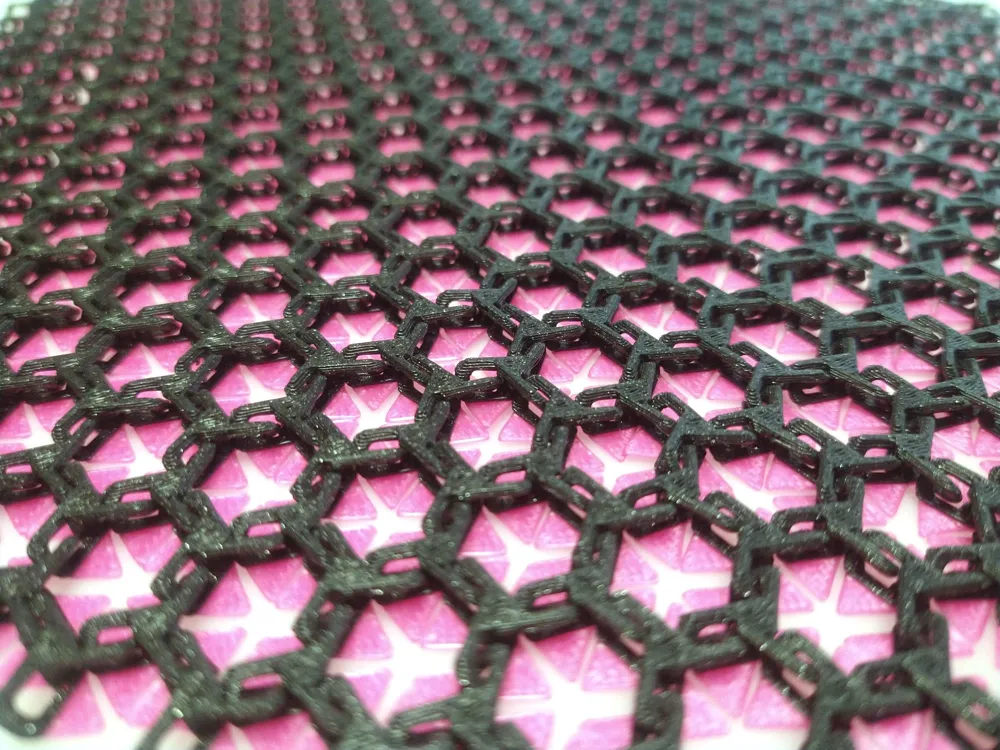
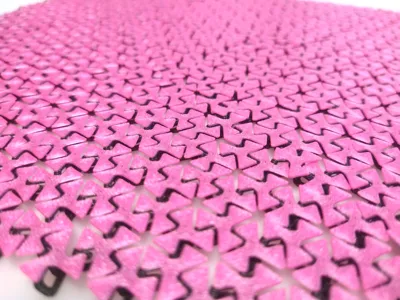
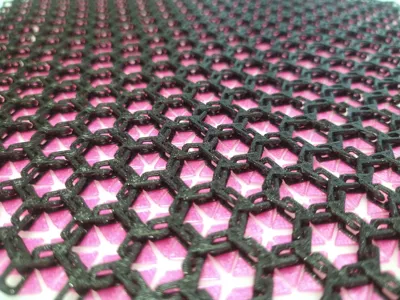
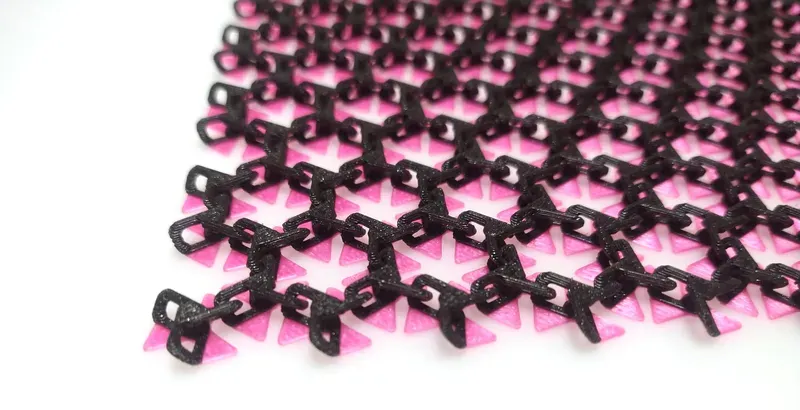
The elements are triangular flower pieces that have a big surface area on the bed for good bed adhesion. A strong central column, simple external columns and flat bridges to interconnect the different pieces. So no brim or support needed! This ensures good printability and strong connections. And as you can see, I opted to print the first two layers in the primary color and performed a filament swap, this really lets the pattern pop!
Extendable
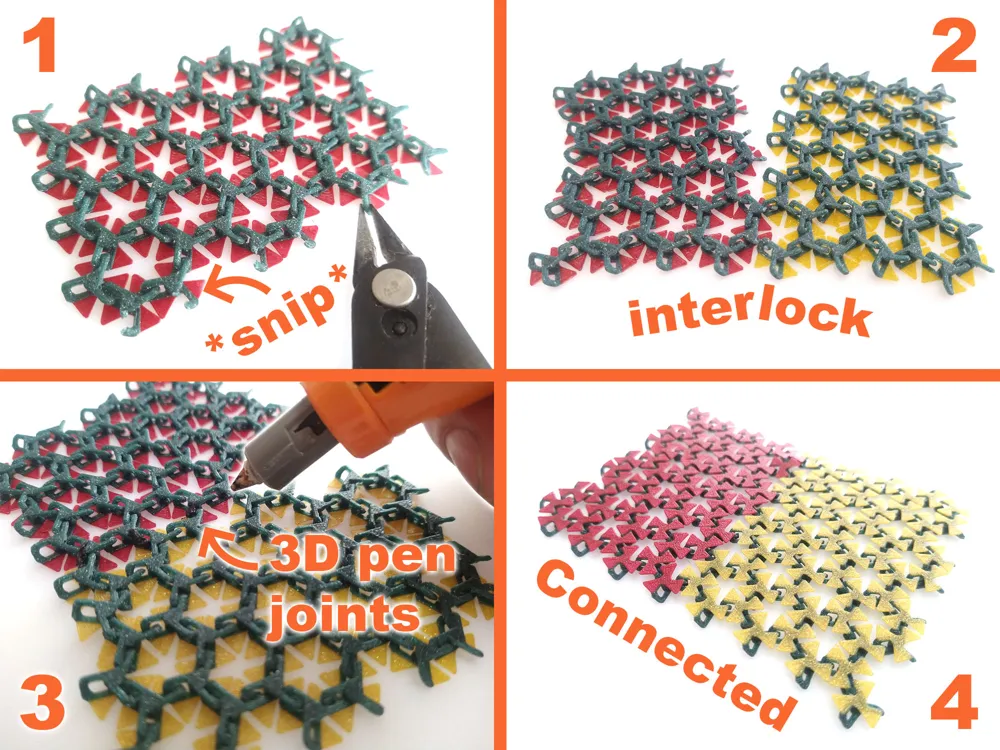
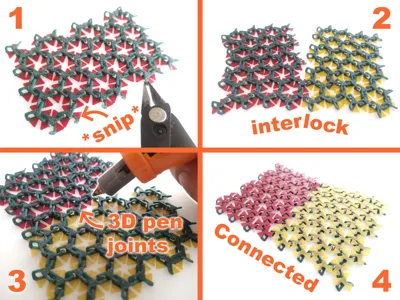
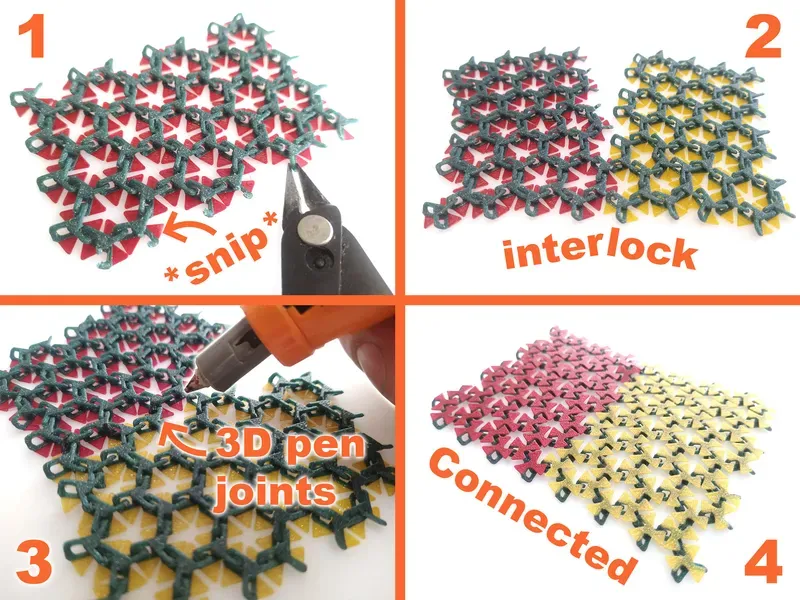
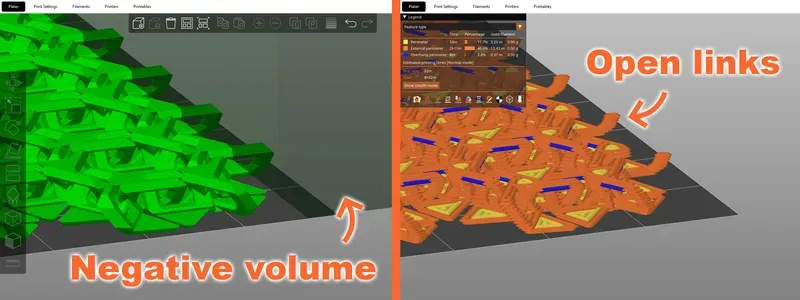
This one is a bit more advanced. I really wanted a strong fabric, so click connections were out of the question for me. I designed the links in a way that they can easily be closed with a 3D pen. To accomplish this, either open up the links in the slicer with a negative modifier (see the pentagon example in the STL files) or just carefully snip/grind them open. To reconnect them, interlock the two pieces and use the 3D pen to bridge the gap. Make sure to really heat up the connection points for a strong bond:
Thin and lightweight
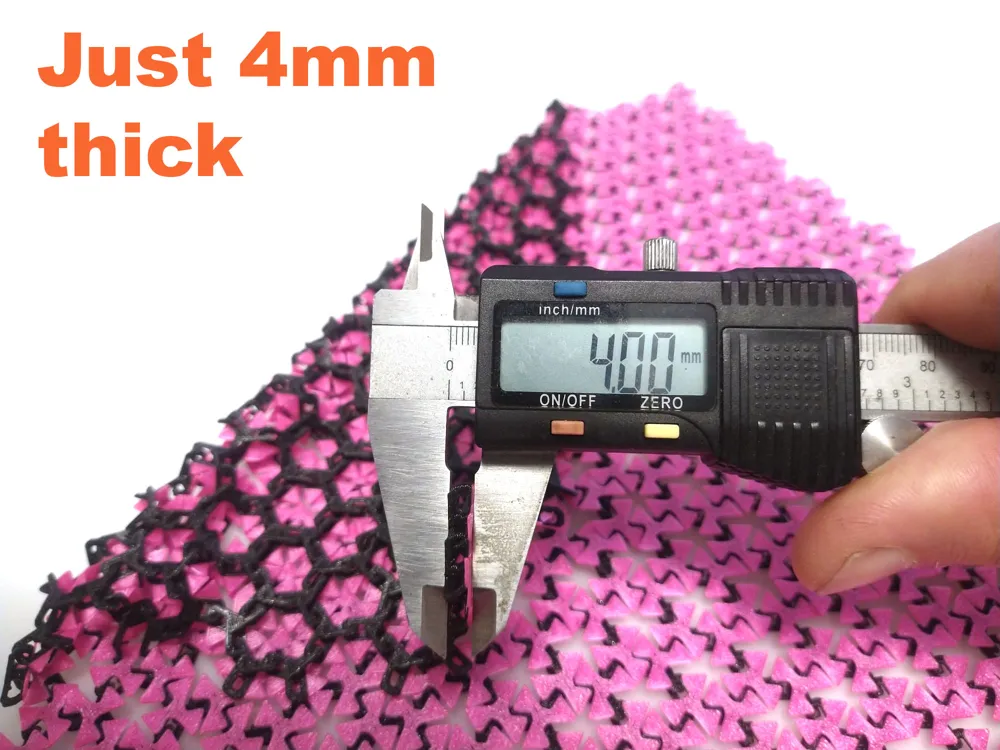
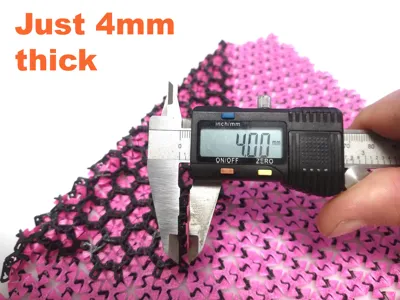
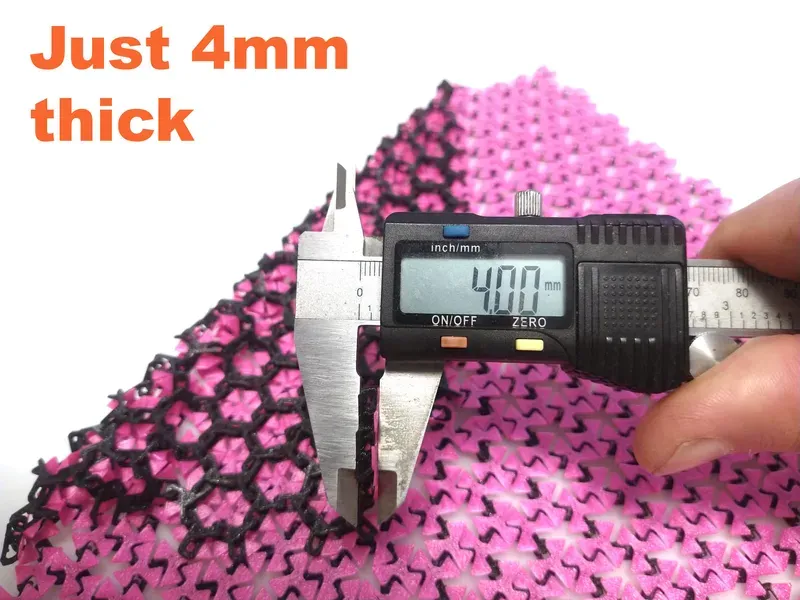
The fabric is just 4mm thick. This means a quicker print, a much lighter piece of fabric but also a more flexible fabric because each piece can hinge more before bumping into its neighbor.
Triple fold
The what now? The foldability of a piece of fabric/paper/brick says something about its flexibility. A standard piece of paper can famously only be folded 7 times before the stack becomes too thick to bend. But most 3D printed fabrics can only manage a single fold, maybe a second if you are lucky. This is because most printed fabrics behave more like thin cardboard, the moment you bend it one way, the other direction becomes much stiffer.
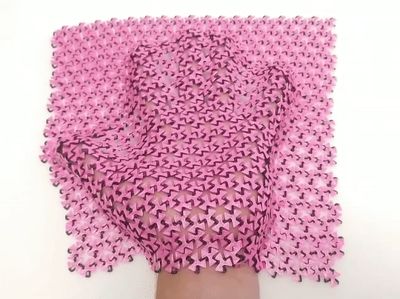


But what about TriFlex? Glad you asked! TriFlex has increased play between the links and is very thin, it can not just be folded once or twice but it can get the triple fold in! This really increases its drapeability:
I am working on a garment made from this stuff, I already printed a lot of sheets. When you want to do a custom project there are two things you need to consider:
- For custom sizes/shapes: In the slicer you can load the big sheet and hit “split to objects”. Now you can delete all the elements you don't need, don't forget to merge them together again before you start dragging stuff around though.
- For open links: This is more advanced but saves you from opening up the links manually later. In the slicer, right click on the model and “add negative volume”. Now scale and position the volume in a way that it intersects with the bridge part of one side of the links and it should not print the bridge. This makes connecting the parts later much easier (see TriFlex pentagon.STL as an example)
Happy Printing!
- Rossero
Don't forget to check out my latest models (clickable images):
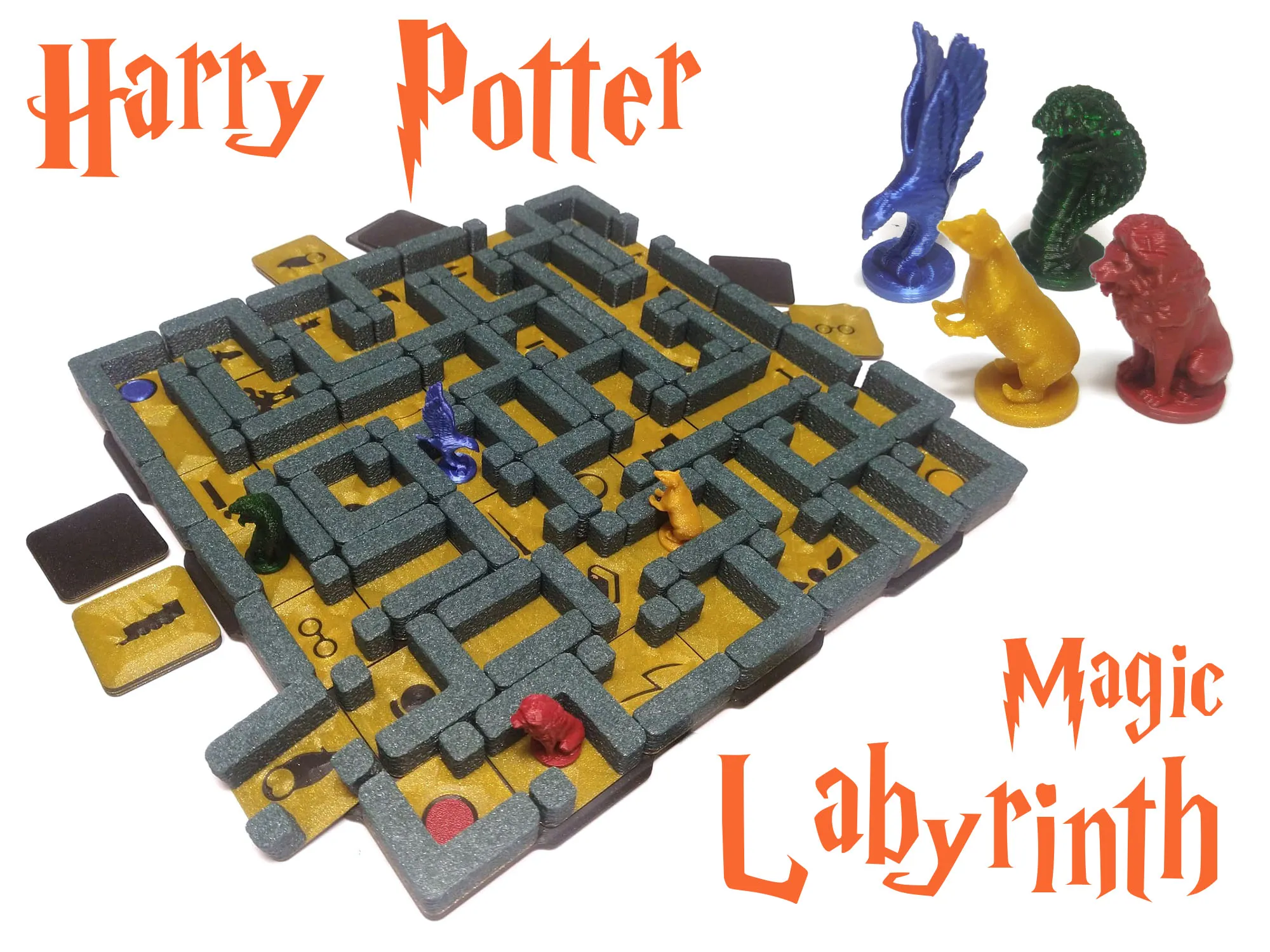

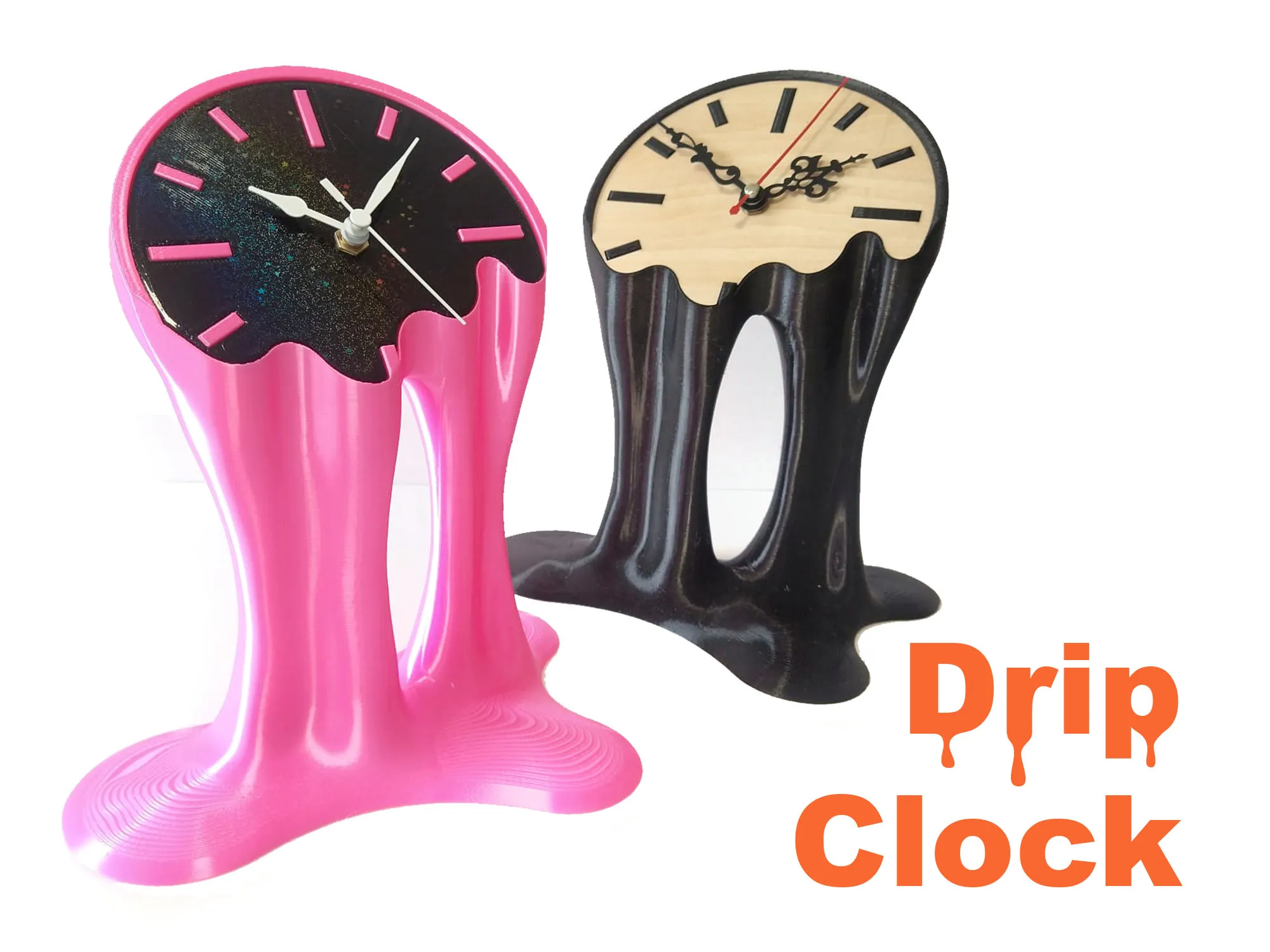
Harry Potter Labyrinth Game ~ TriFlex - Super Flexible Fabric ~ Melting Drip Clock
Membership
License

You shall not share, sub-license, sell, rent, host, transfer, or distribute in any way the digital or 3D printed versions of this object, nor any other derivative work of this object in its digital or physical format (including - but not limited to - remixes of this object, and hosting on other digital platforms). The objects may not be used without permission in any way whatsoever in which you charge money, or collect fees.


Comment & Rating (337)