
Headrest Hook
Print Profile(2)


Description
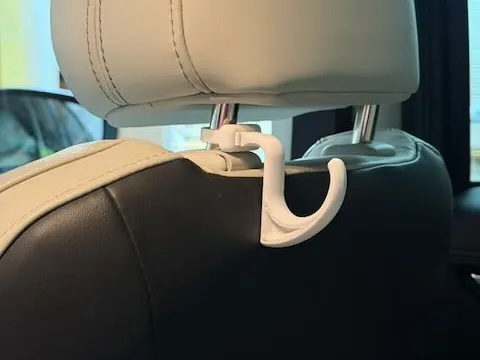
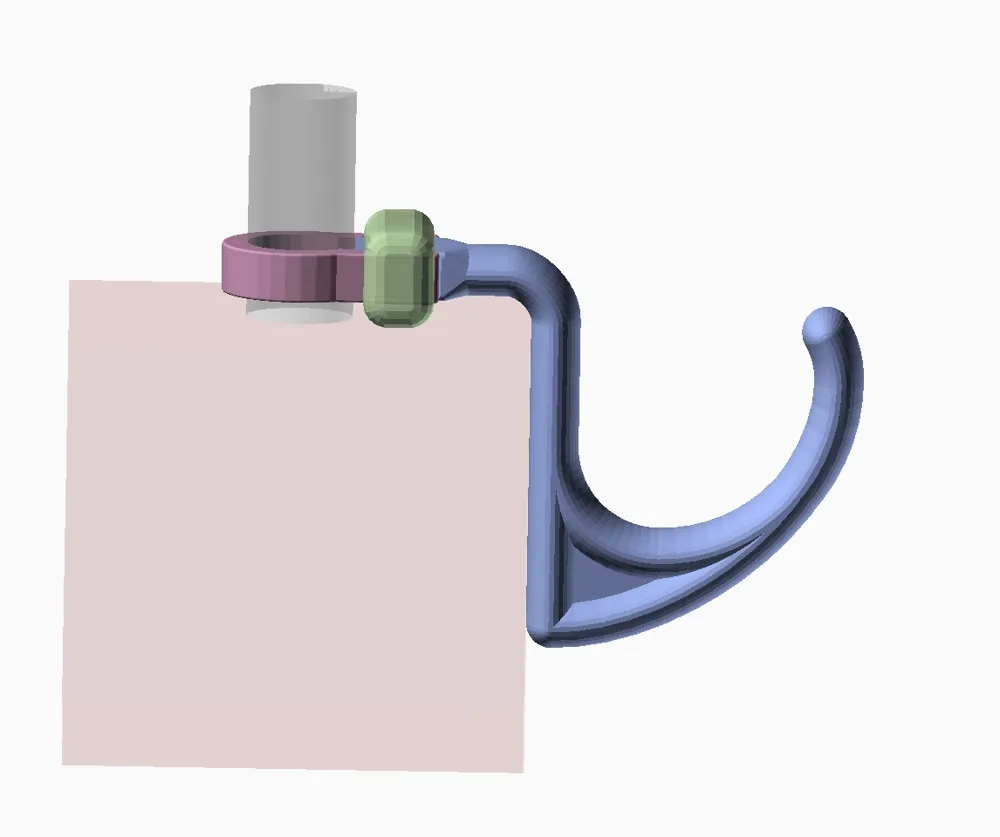
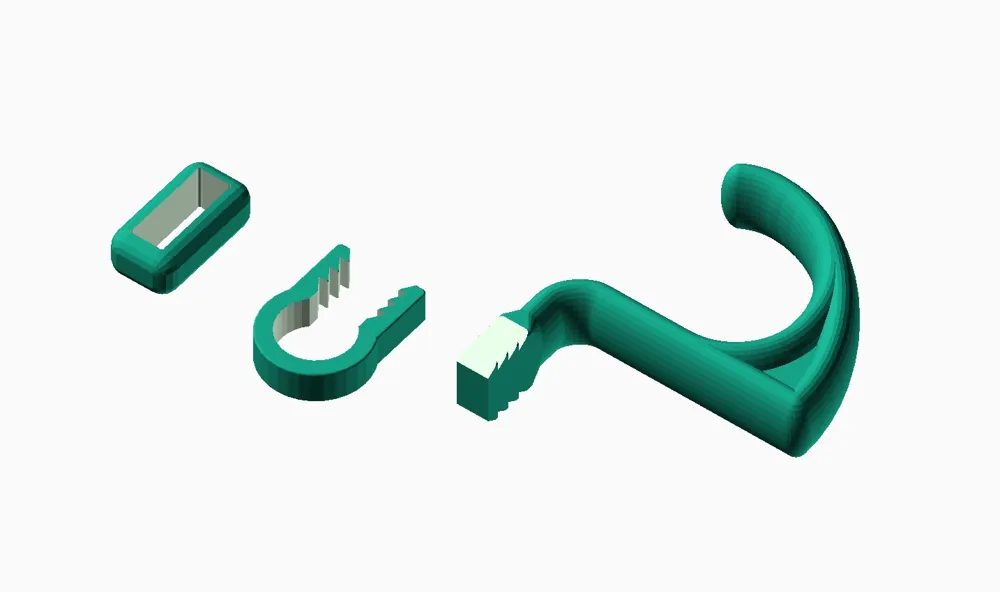
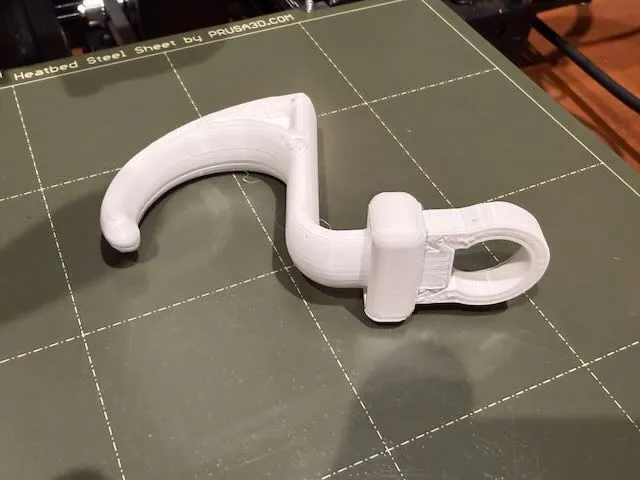
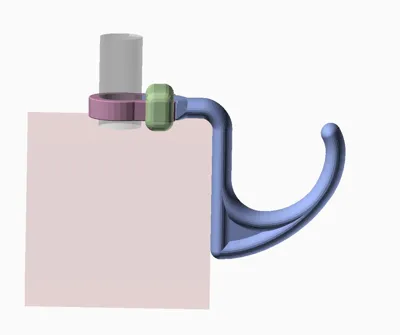
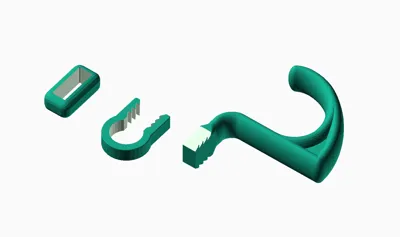
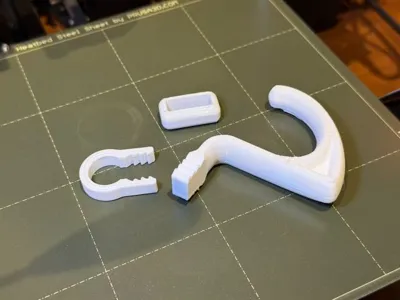
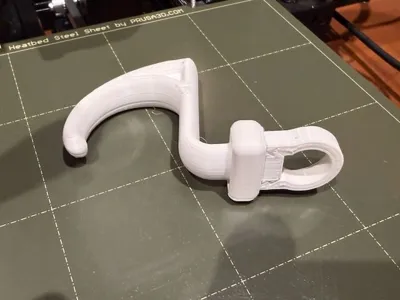
This OpenSCAD model is a parametric headrest-mounted hook assembly: a toothed hook body, a keyed U-clamp that locks around the headrest post, and a sliding loop band. It's tunable for different post diameters, tooth pitch/depth, and fit clearance via the top-level variables in the SCAD file.
Why it exists:
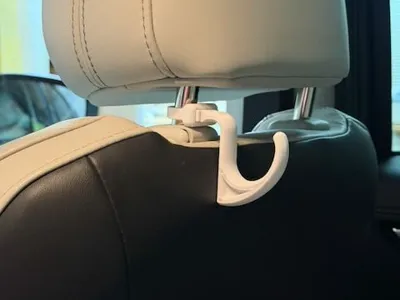
- We needed a simple place to hang a purse in the car without it sliding off the seat — this hook clamps to the headrest post and gives a secure hanging point. It also works well for shopping bags, small backpacks, or grocery totes where you want a reliable attachment point behind the seat.
New to OpenSCAD?
OpenSCAD is a script-based CAD tool: you edit variables and geometry in code, then preview or export STL files. For this project, that means you can quickly change values (post diameter, distance to seat back) and immediately see the result.
If you are new to OpenSCAD, start with the OpenSCAD User Manual and focus on the basics of variables, modules, and transformations. The OpenSCAD community is also very active and helpful if you have specific questions as you get started.
Customization
- Adjust headrest_post_diameter and post_to_seat_back to match your vehicle and where you want the hook to sit.
- If the fit is too tight, increase fit_tolerance slightly to increase sliding clearances for the loop and tooth engagement.
Printing recommendations
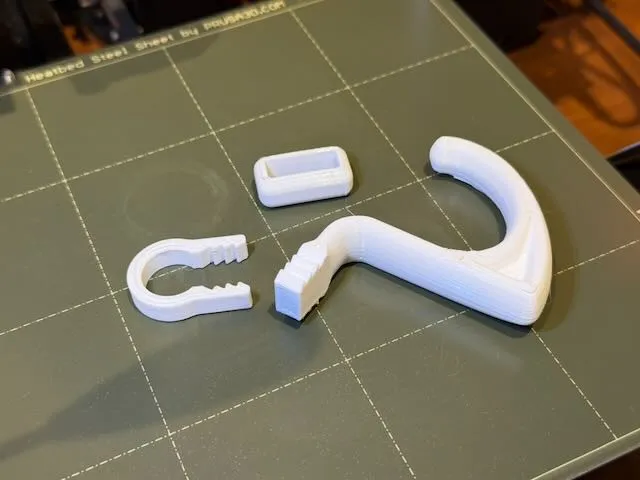
- Orientation: All parts are strongest when printed on their sides as shown in the printlayout view — the SCAD print_layout and view_mode helpers orient parts for printing (view_mode = "hook", "clamp", "loop"). The "assembly" preview mode shows how the parts fit together but is not optimized for printing orientation.
- Support: Use support material under the hook component so the tooth cavities print successfully. The teeth are subtractive fit features and rely on clean support removal to mesh properly with the clamp.
- Baseline slicer settings: 0.20 mm layer height, 0.4 mm nozzle, 2–3 perimeters. Increase perimeters for extra strength.
- Small features: use moderate print speeds and enable a small extra pause for retraction to avoid stringing inside tooth cavities.
- After printing: carefully remove support from inside the teeth, and if needed clean small bits with a pick or tapered reamer so the clamp teeth seat without binding.
Export / usage notes
- The SCAD exposes view_mode modes to export each part separately: hook, clamp, loop, or printlayout to get parts positioned for printing.
- You can take the STL file for the "printlayout" directly to your slicer. You can split that stl into objects in your slicer or export separate STLs from the SCAD using the view_mode variable to isolate each part. Either way, you can improve layer adhesion by enabling the print individual objects option in your slicer and orienting the parts as shown in the "printlayout" view mode.
- Example export commands from the header (adjust $fn as desired):
- openscad -D '$fn=128' -D 'view_mode="printlayout"' -o models/headrest-hook-printlayout.stl models/headrest-hook.scad
- openscad -D '$fn=128' -D 'view_mode="hook"' -o models/headrest-hook-part-hook.stl models/headrest-hook.scad
- openscad -D '$fn=128' -D 'view_mode="clamp"' -o models/headrest-hook-part-clamp.stl models/headrest-hook.scad
- openscad -D '$fn=128' -D 'view_mode="loop"' -o models/headrest-hook-part-loop.stl models/headrest-hook.scad
License



Comment & Rating (0)