
ESP-VoCat Rotary Base

Print Profile(3)



Bill of Materials
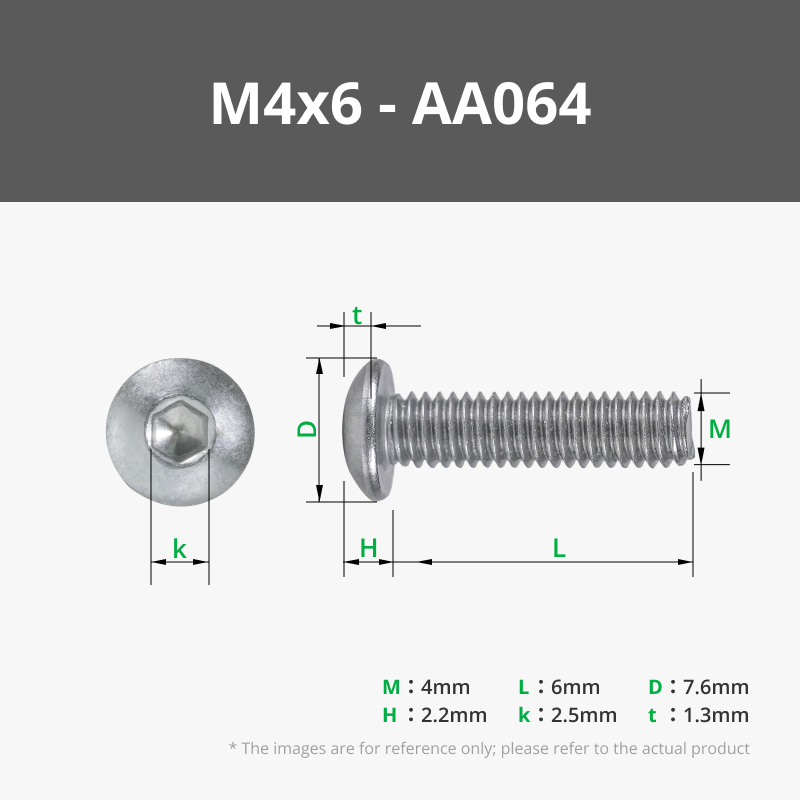




- 24BYJ-48 geared stepper motor x 1: 5V DC
- ESP-VoCat-Catbase Prototype Development Board x 1:
Description
ESP32-C61 VoCat Rotary Base
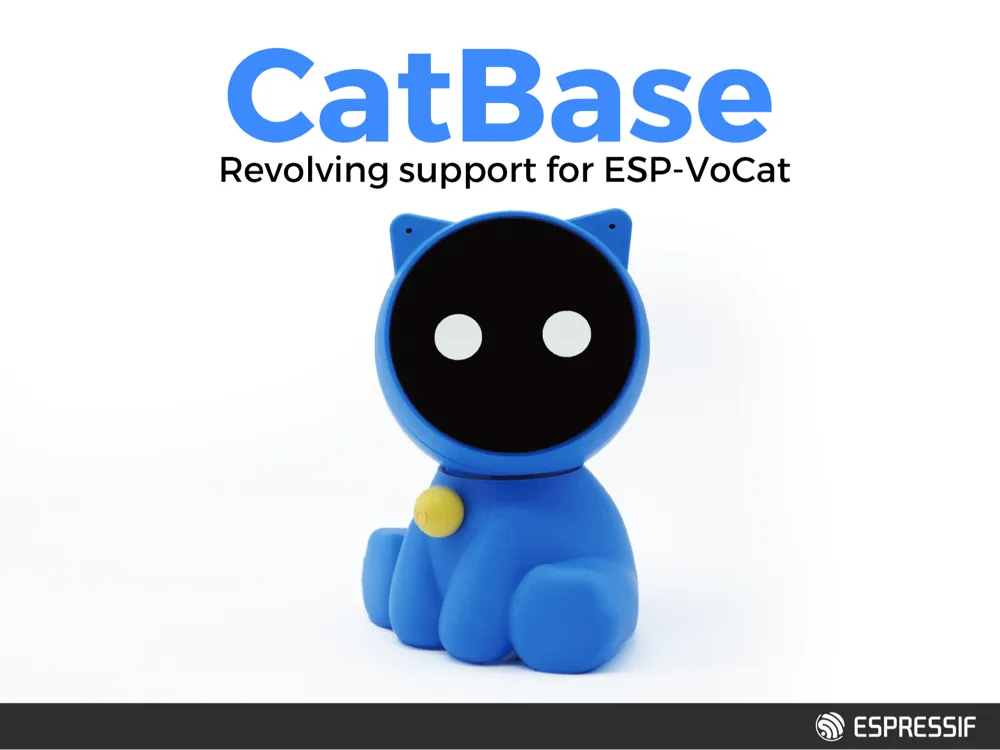
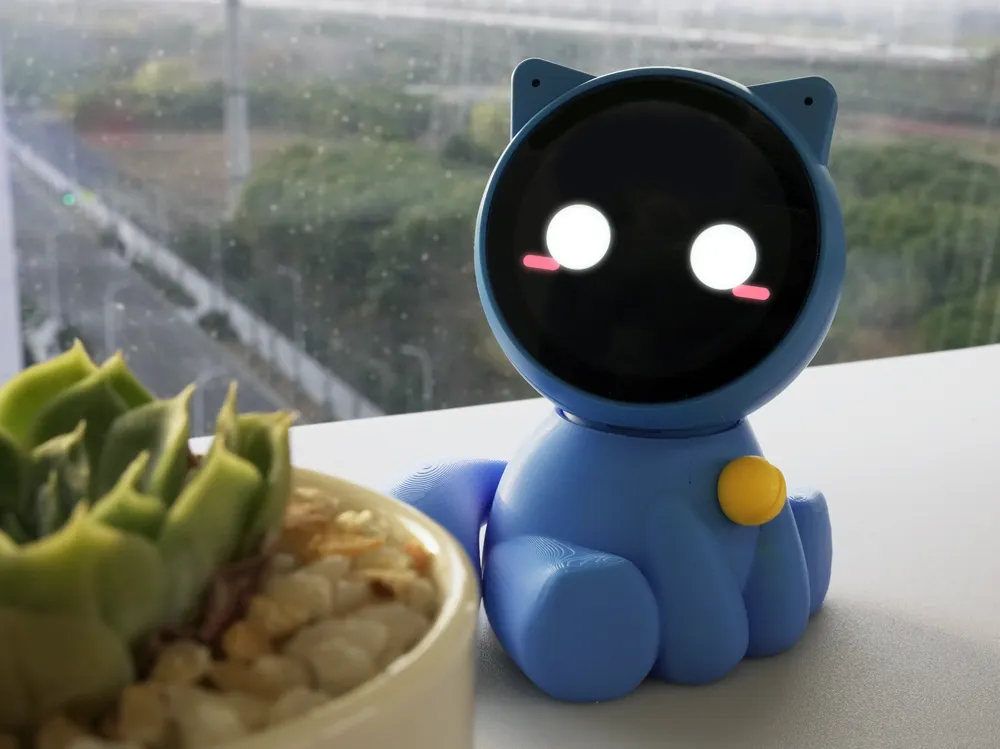
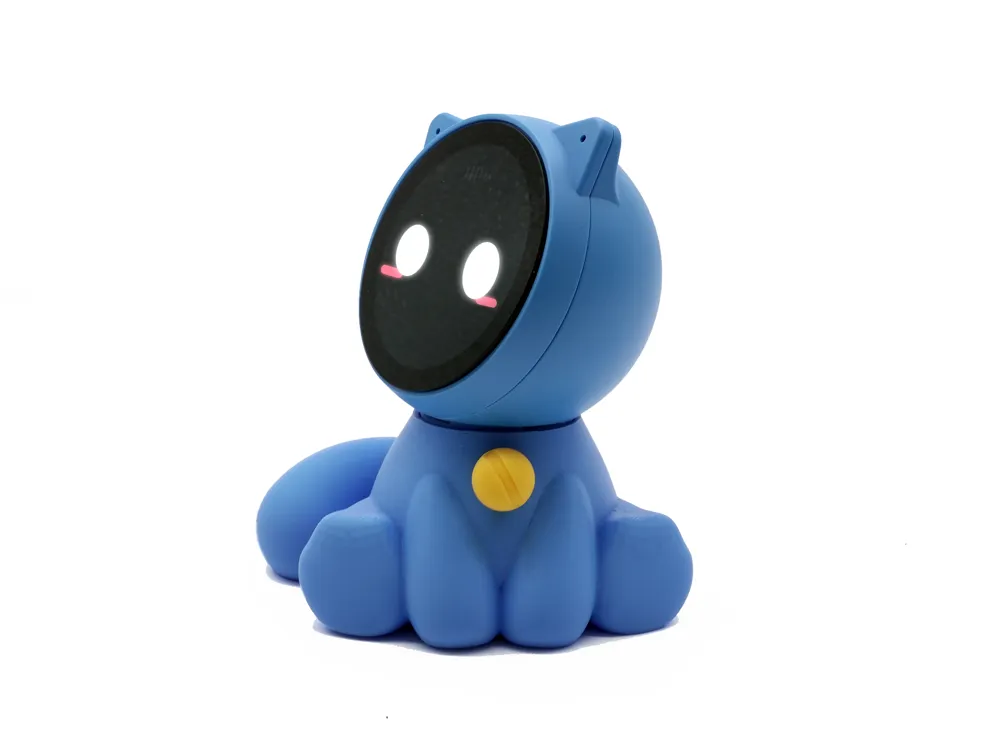
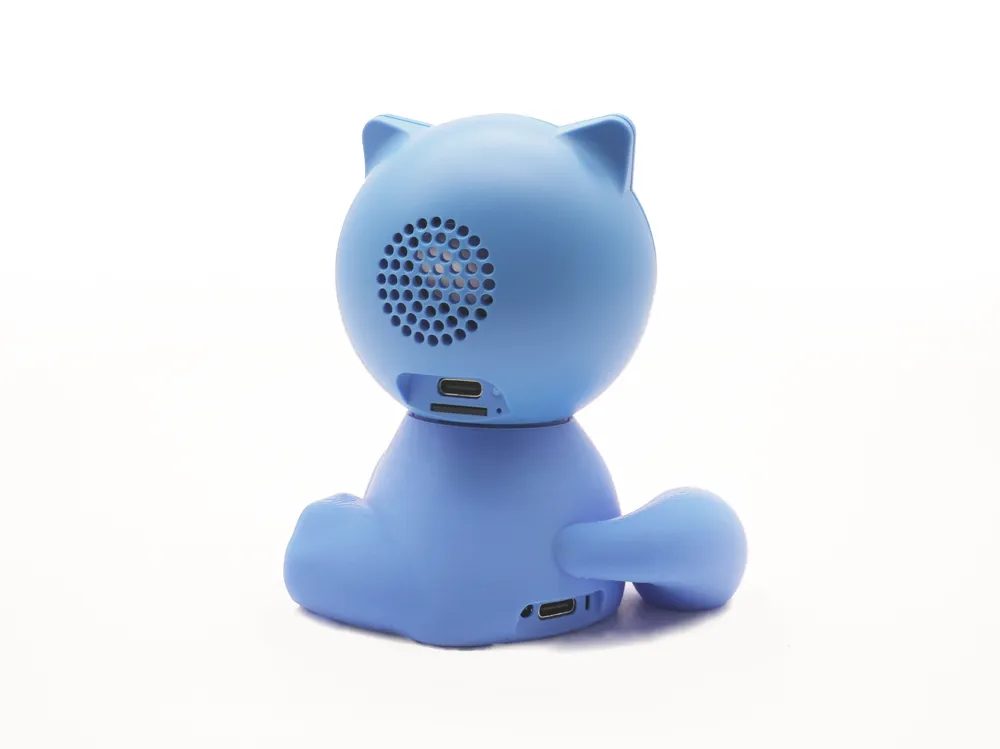
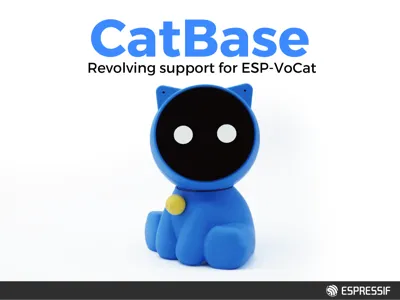
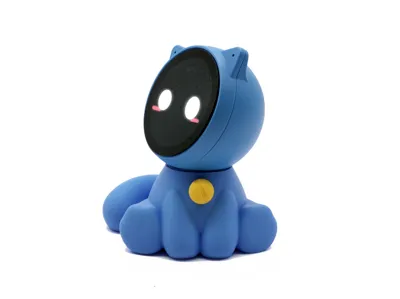
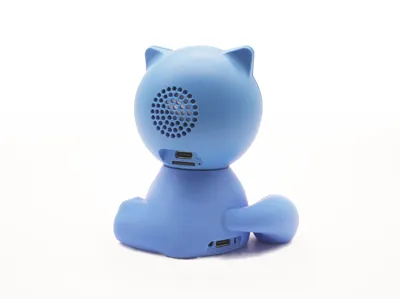

The ESP-VoCat Meow Companion Rotary Base is a customized smart rotary base specifically designed for the ESP-VoCat Meow Companion Development Kit, intended for products requiring large model voice interaction capabilities, such as toys, smart speakers, and smart central controls. The device uses the ESP32-C61-WROOM-1 module, supports USB Type-C power supply, and can power the ESP-VoCat main unit via a magnetic interface.
This project implements core functions such as high-precision stepper motor control, magnetic slide switch event detection, CSI sensing function, and stable UART communication, while also being able to automatically adjust its direction based on the ESP-VoCat 's Sound Source Localization results, achieving intelligent rotation towards the sound source. By combining motion control with sound source sensing, it provides a more natural and immersive human-machine interaction experience.
👇Hardware open-source solution at the link below👇
https://oshwhub.com/esp-college/esp-echoear-base
❗This model does not include the head ❗
Feature Showcase
The ESP-VoCat base uses the Espressif ESP32-C61-WROOM-1-N8R2 module and communicates with the ESP-VoCat main unit via a custom UART protocol. In terms of mechanical structure, the base is equipped with a 24BYJ48 stepper motor, enabling sound source recognition and various predefined rotational movements to enhance the interactive experience.
Additionally, the ESP-VoCat base features a magnetic slide switch, which can be used to unlock more interactive experiences.

Sound Source Localization
ESP-VoCat supports sound source localization, capable of real-time detection of sound direction and position in the environment. The system collects sound signals through a microphone array and analyzes them using information such as sound intensity and phase to determine the azimuth of the sound source. Coupled with an ultra-quiet rotary base driven by a stepper motor, it enables intelligent interaction oriented towards the sound source.
Multiple Preset Actions
The rotary base supports various predefined actions

- Head-shaking Motion
The head-shaking motion makes the base gently swing the Meow Companion's head left and right, simulating a cat's curious or subtle signaling movement.

- Curious Gaze Around
The curious gaze-around motion makes the base move the Meow Companion to look left and right, combined with small random offsets, simulating a cat's natural environmental observation behavior.
- Beat Rhythm
The beat rhythm motion allows ESP-VoCat to swing its head left and right according to the drum beat rhythm of external music, creating an interactive effect synchronized with the music.

- Gentle Rubbing Hand
The gentle rubbing hand motion simulates a cat's soft rubbing action: the base slowly twists to the left and then returns to the center, repeating several times. The motion is smooth and natural, and each pause enhances the real tactile sensation and gentle feeling.

Notes:
All actions are parameterizable, facilitating integration with large models like Doubao and XiaoZhi.
To better execute actions, the base's motor control has the following characteristics:Precise Angle Control: Supports rotation at any angle with an accuracy of up to 0.1 degrees, serving sound source localization.
Smooth Acceleration and Deceleration: Uses acceleration and deceleration algorithms for smoother and more natural rotation.
Automatic Homing Calibration: Since the ESP-VoCat rotary base is driven by a stepper motor, there is no angle feedback. Therefore, the base will perform zero-position calibration upon startup. The calibration process is as follows:
- After power-on, the motor automatically rotates left to find the limit switch.
- After touching the limit switch, the motor rotates right by 95° to the center position.
- After calibration is complete, the motor powers off.
Magnetic Slide Switch Interactive Control
The ESP-VoCat base achieves various interactive controls through a magnetic slide switch. Different positions of the slider change the magnetic field strength around the geomagnetic sensor, and the base identifies slider actions by real-time monitoring of these magnetic field changes. When a position change is detected, the base reports the corresponding event to ESP-VoCat, thus enabling a rich and intuitive interactive experience.
Supports 7 types of magnetic slide switch event detections:
- Slider moved from top to bottom (SLIDE_DOWN)
- Slider moved from bottom to top (SLIDE_UP)
- Slider removed from top position (REMOVE_FROM_UP)
- Slider removed from bottom position (REMOVE_FROM_DOWN)
- Slider placed in top position (PLACE_FROM_UP)
- Slider placed in bottom position (PLACE_FROM_DOWN)
- When the slider is in the bottom position, an additional single click action can be recognized (SINGLE_CLICK)
The magnetic slide switch control function supports multiple sensors:
- BMM150 3-axis geomagnetic sensor
- QMC6309 3-axis geomagnetic sensor
- Linear Hall sensor
Note:
- Any one of the three sensors above can be selected, with BMM150 as the default. When using a linear Hall sensor, only two event detections are supported: slider up and down (SLIDE_UP / SLIDE_DOWN)!
- Before using this function for the first time, to adapt to the magnetic field environment, calibration of the magnetic slide switch must be completed to record the baseline magnetic field strength values for its three states: top / bottom / removed. Calibration data will be persistently stored via NVS Flash. If re-calibration is needed during use, it can be triggered by sending a serial command from ESP-VoCat or by long-pressing the Boot button on the base.
Based on the detection results of the geomagnetic sensor and combined with motion determination algorithms, the base can identify seven types of actions.
CSI Sensing Function

The Meow Companion can perceive environmental changes through Wi-Fi CSI (Channel State Information) to achieve action triggering or environmental interaction.
- Movement Detection
By obtaining CSI information from the router via the Meow Companion, human movement within the entire space can be perceived, enabling human movement detection and data statistics. - Near-field Sensing
By exchanging packets between the Meow Companion and the base, the Wi-Fi transmission path can be controlled, achieving high-precision detection over a small range. For example, when a human finger is detected approaching, the base can automatically adjust its posture or perform preset actions, providing a more intelligent interactive experience.
Documentation (2)
License



Comment & Rating (18)