
Print Profile(1)

Description
Download the 3D Neuron Architecture Model!
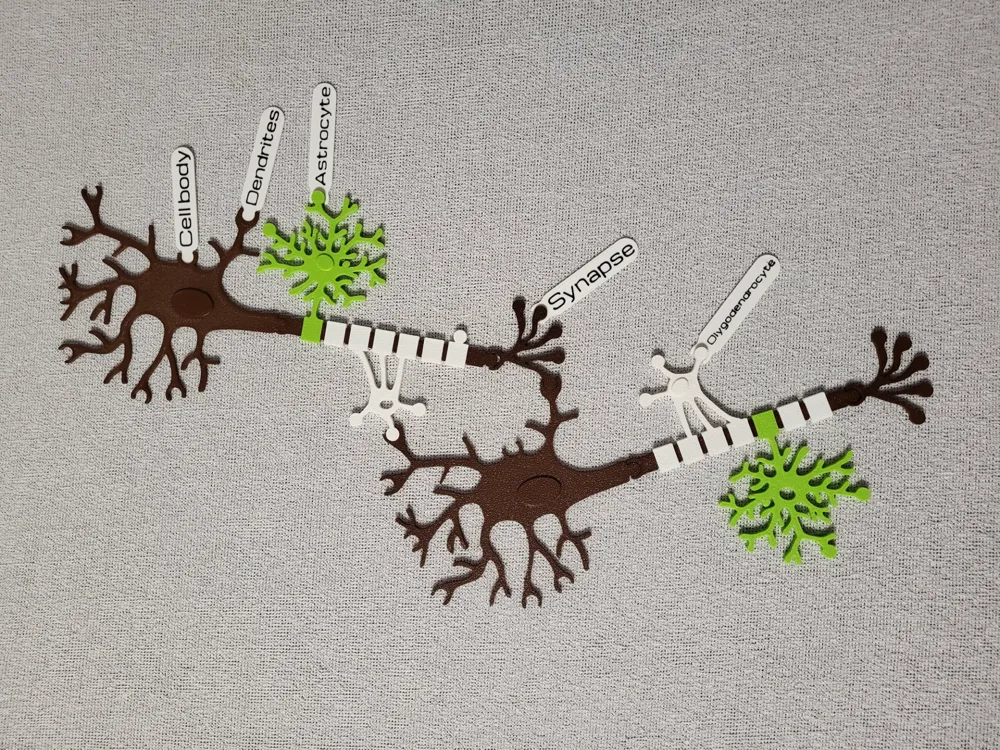
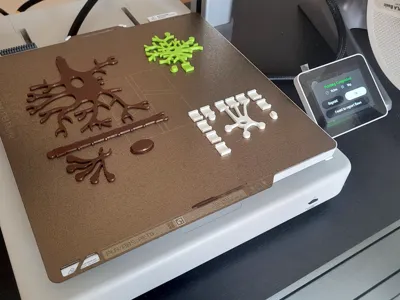
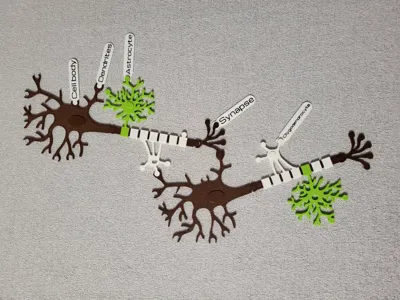
Unleash your creativity with our unique 3D model of a neuron, designed as a puzzle construction set that allows you to build your very own neural network! You can combine multiple copies of the model to create intricate and complex structures.
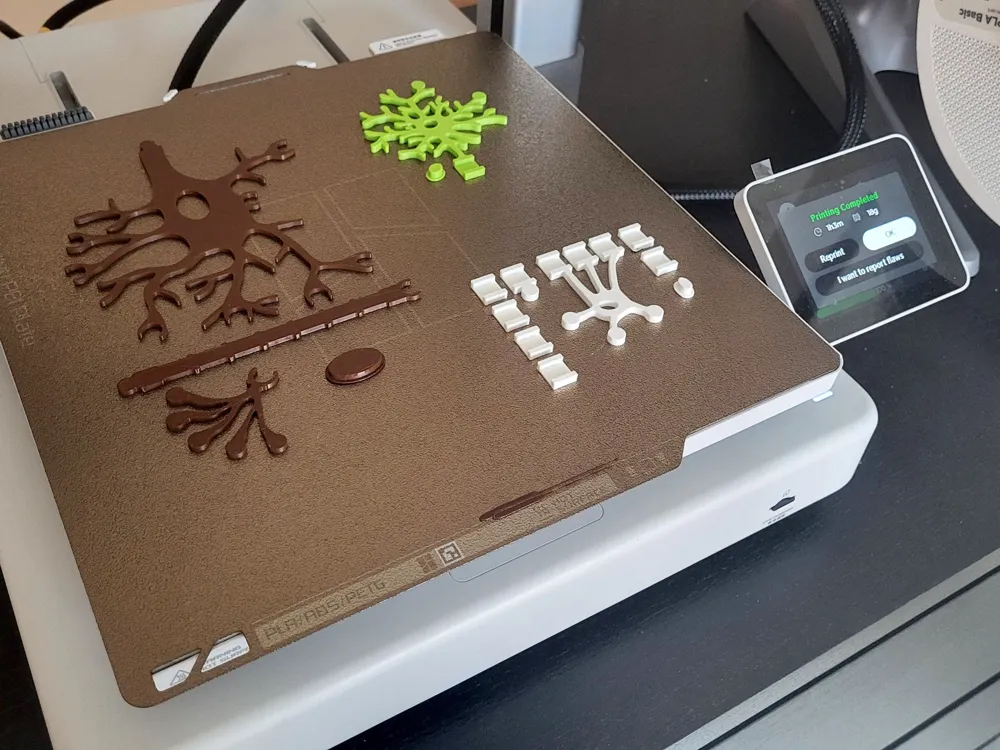
Each piece of the model can be individually colored and customized to your preference using a slicer, giving you the freedom to express your artistic vision. Whether you want a vibrant study aid or an eye-catching display, the possibilities are endless!
Furthermore, the individual parts of the model can be easily glued together or pinned to a bulletin board, making it an ideal project for classroom learning or personal exploration.
Don't miss out on this opportunity to engage with the fascinating world of neuroscience and enhance your understanding through hands-on experience.
Download your 3D model today and start building your neural network!
Structure and Function of a Neuron
- Soma (Cell Body):
- Contains the nucleus and organelles.
- Responsible for maintaining the cell's health and metabolic functions.
- Integrates incoming signals.
- Dendrites:
- Branch-like structures extending from the soma.
- Receive signals from other neurons and transmit them to the soma.
- Increase the surface area for connections with other neurons.
- Axon:
- A long, slender projection that transmits electrical impulses away from the soma.
- Ends at the axon terminals, where it communicates with other neurons or muscles.
- Often surrounded by myelin to speed up signal transmission.
- Astrocytes:
- A type of glial cell that supports and nourishes neurons.
- Maintains the blood-brain barrier and regulates ion balance in the brain.
- Plays a role in synaptic function and repair.
- Oligodendrocytes:
- Another type of glial cell, specific to the central nervous system (CNS).
- Produce myelin sheaths that insulate axons and enhance signal conduction.
- Support multiple axons from different neurons at once.
- Synapse:
- The junction between the axon terminal of one neuron and the dendrite or soma of another.
- Facilitates the transmission of signals through neurotransmitter release.
- Can be excitatory or inhibitory, influencing the activity of the receiving neuron.
Summary
Neurons are specialized cells that process and transmit information in the nervous system. Their unique architecture, including the soma, dendrites, axons, and supportive glial cells like astrocytes and oligodendrocytes, enables efficient communication via synapses.
License



Comment & Rating (7)