
White Tiger


Print Profile(13)


Description
Please consider casting your Boost token if this model/design helps you, and don't forget to press the like button. Many thanks!
Makerworld has significantly reduced the download/print points awarded to designers. Instead, they have introduced the "Boost" token, which you can apply to models that may not be the most popular (already gaining points from downloads and prints), but are useful or meaningful to you in general. This supports and encourages us, the "losers" (those not focusing on popular themes like Star Wars, car keychains, countless airless balls, etc.), to create more useful or niche designs.
A game to play with friends and family during the Chinese New Year seasons.
A board game worthy of gathering with family and friends during the Chinese New Year season
ShanHai ShanHai Realm: an ancient Chinese auspicious beast themed boardgame
ShanHai Realm: A board game based on ancient Chinese auspicious beasts
2024 is not merely the year of the Dragon, ….
2024 is not only the year of the Dragon,...
Ancient Chinese astronomers observed a recurring celestial phenomenon: every twenty years, Saturn and Jupiter align on a straight line, often coinciding with significant geological and natural disasters on Earth, accompanied by unusual human behaviors. Further studies revealed a sixty-year alignment involving Saturn, Jupiter, and Mercury. Additionally, every one hundred and eighty years, all nine major planets align on one side of the Sun, forming what ancient astronomers termed the "conjunction of nine planets." This celestial cycle persists endlessly, displaying remarkable consistency
Ancient Chineseastronomersobserved thatevery twenty yearsSaturn and Jupiter would align on a straight line. When Saturn and Jupiter align, there are often major geological and natural disasters on Earth, and people's behavior also shows some obvious abnormal reactions. Observations have also found that Saturn, Jupiter, and Mercury align on a straight line every sixty years, and every one hundred and eighty years, the nine major planets of the solar system will be on the same side of the Sun, distributed in a small fan shape, forming a grand conjunction of nine planets, which ancient astronomers called "a conjunction of nine planets." This celestial cycle is cyclical, never changing.
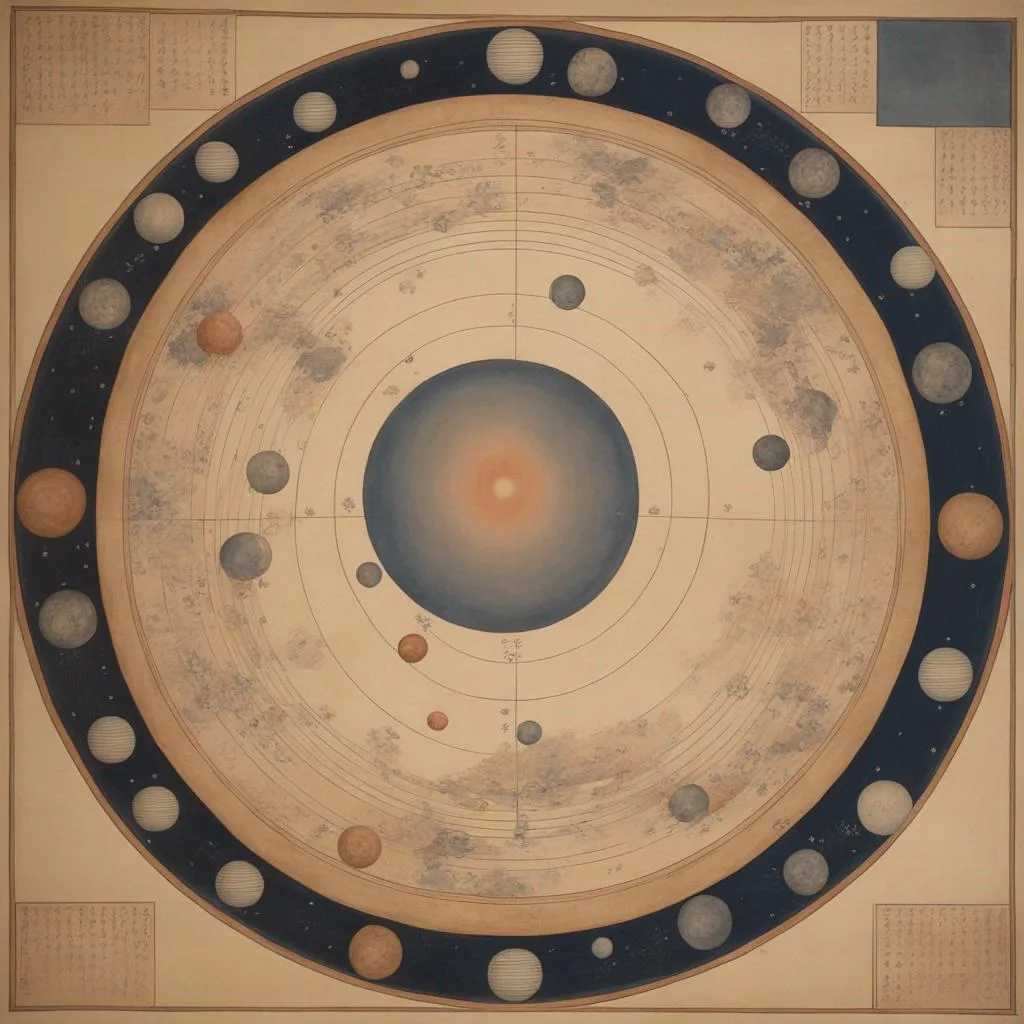
Recognizing this pattern, ancient Chinese scholars devised the "Three Yuan Nine Yun" system to organize time. They divided one hundred and eighty years into three periods: "Shang Yuan" (上元), "Zhong Yuan" (中元), and "Xia Yuan" (下元), each lasting sixty years and subdivided into three "Yun" (運), spanning twenty years. This system comprised three Yuan and nine Yun, grouped into "Yuan Yun" (元運).
Ancient scholars understood this celestial phenomenon and created the "Three Yuan Nine Yun" system to organize time. They divided one hundred and eighty years into three periods: "Shang Yuan" (上元), "Zhong Yuan" (中元), and "Xia Yuan" (下元), each lasting sixty years, and each period was further divided into three "Yun" (運), spanning twenty years. This system consisted of three Yuan and nine Yun, grouped into "Yuan Yun" (元運).
In 2024, we enter the ninth Yun (九運), which spans from 2024 to 2043 and corresponds to the Li hexagram in BaGua. The Li hexagram symbolizes fire, armor, weapons, and the like, evoking thoughts of war and chaos on Earth, our mortal world.
In 2024, we enter the ninth Yun (九運), which lasts from 2024 to 2043 and corresponds to the Li hexagram in BaGua. The Li hexagram symbolizes fire, armor, weapons, and the like, and people will think about war and chaos on Earth, our mortal world.
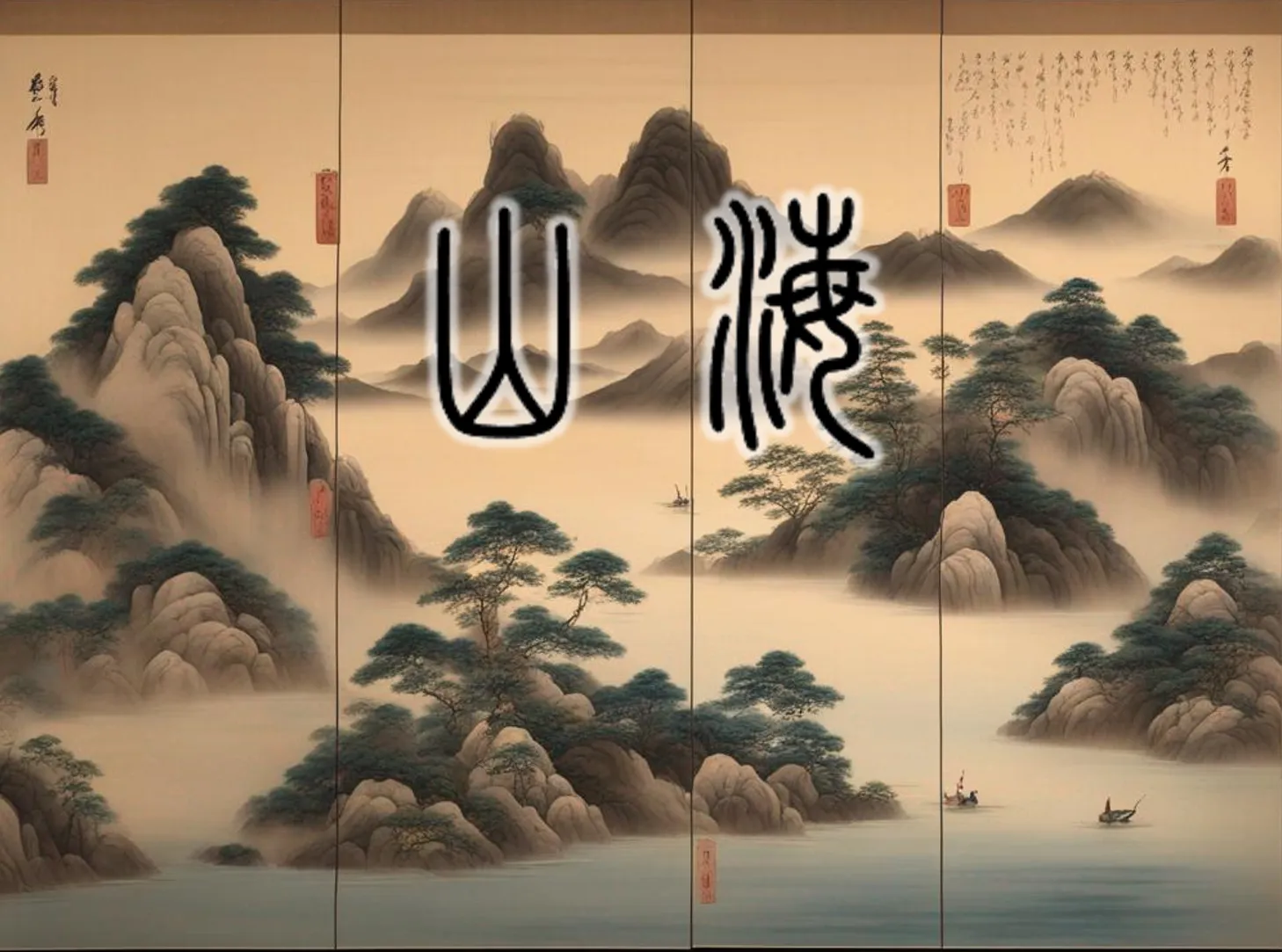
But beyond our mortal sight lies another realm—the celestial ShanHai (山海)realm, where mountains soar and seas churn with ancient power. Here dwell the auspicious beasts, guardians of balance and bringers of fate. Yet amidst the celestial harmony, a shadow looms. In the ShanHai realm, a fierce battle rages between the Yin and Yang clans, each striving to maintain the balance of the universe—Yin and Yang. Their conflict spans across time and space, profoundly shaping the destiny of the world, even that of mortals.
However, beyond the mortal realm, there is another parallel celestial realm—the ShanHai (山海) realm, where mountains soar and seas churn with ancient power. Here dwell the auspicious beasts, guardians of balance and bringers of fate. Yet amidst the celestial harmony, a shadow looms. In the ShanHai realm, a fierce battle rages between the Yin and Yang clans, each striving to maintain the balance of the universe—Yin and Yang. Their conflict spans across time and space, profoundly shaping the destiny of the world, even that of mortals.
山海 ShanHai
The game employs hexagonal tiles to represent the diverse elements found in the ShanHai. A complete ShanHai set comprises 22 pieces (not including advance pieces), with 11 pieces allocated to each player, each symbolizing a creature and featuring distinct movement capabilities. The game also contain 12 pieces of landscape tiles, 6 mountains (Shan) and 6 seas (Hai).
This game uses hexagonal tiles to represent the diverse elements found in the ShanHai realm. A complete ShanHai set comprises 22 pieces (excluding advanced pieces), with 11 pieces allocated to each player, each symbolizing a creature and featuring distinct movement abilities. The game also includes 12 landscape tiles, 6 mountains (Shan) and 6 seas (Hai).
Main Pieces Main Pieces:
• 1x 應龍YingLong (Yellow-Gold)
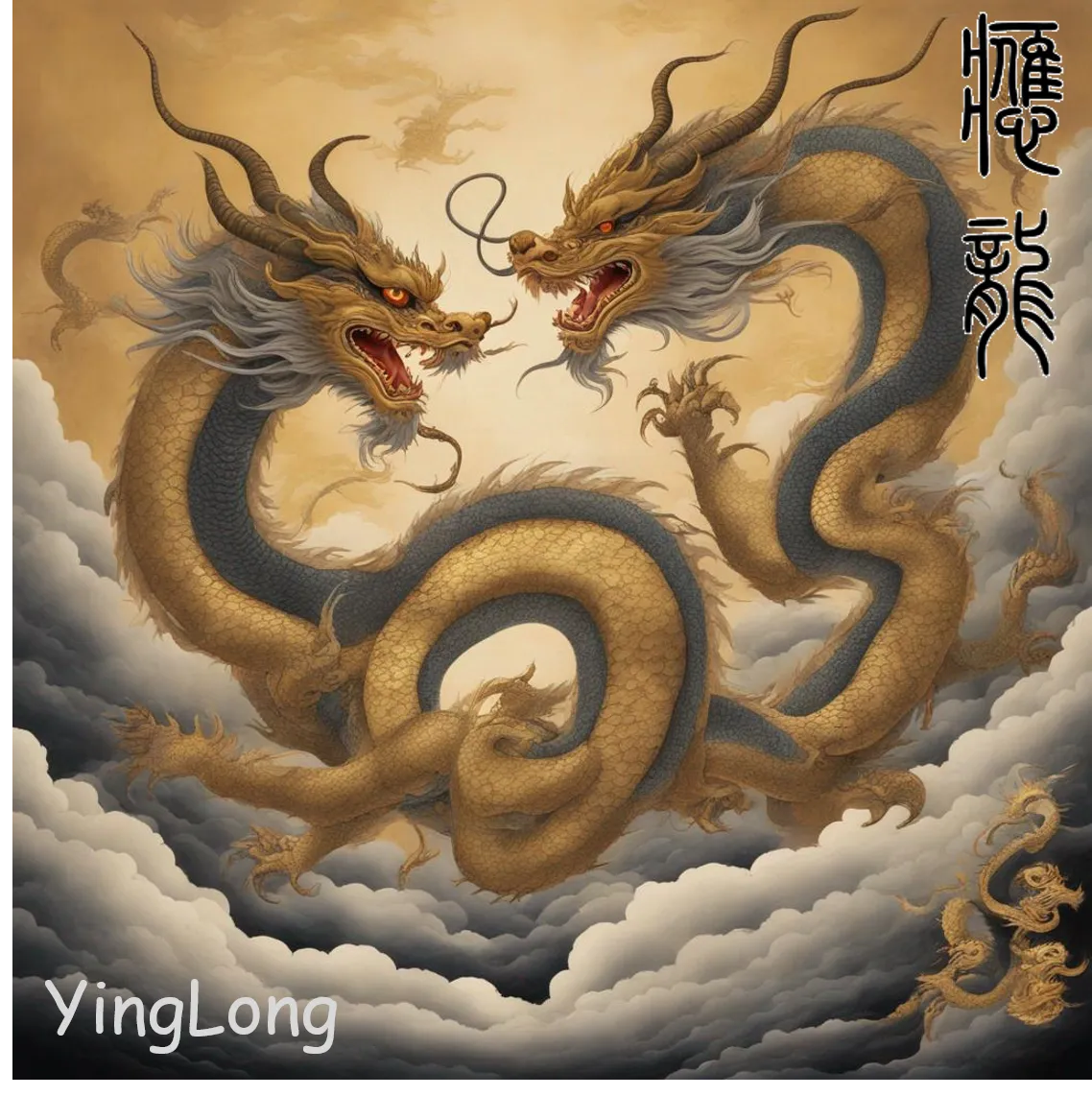
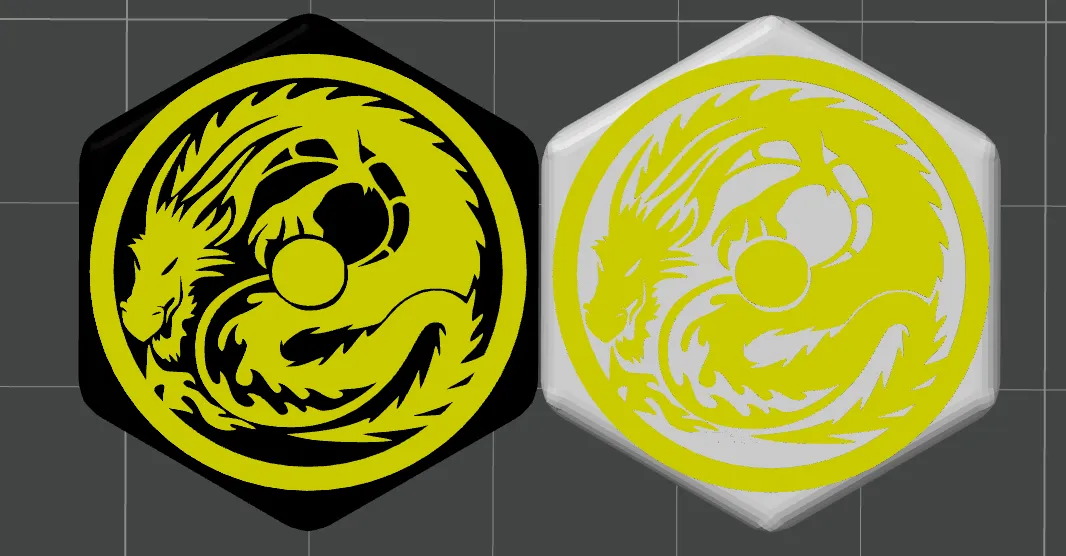
YingLong, also known as the Yellow Dragon, is a colossal deity in ancient Chinese mythology revered as the embodiment of creation, preservation, and destruction. Ancients bestowed upon YingLong the titles of "God of Creation of the materials and the world we know" and depicted it as a war god and a great general by the side of the Emperor Huang. Residing in the celestial realm, according to the Classic of Mountains and Seas: The Great Wild North《山海經·大荒北經》, YingLong assisted the Emperor Huang in battle against Chiyou, ultimately aiding in his defeat. YingLong's characteristic feature is its wings, symbolizing the fusion of the dragon and phoenix. Not only did YingLong play a role in the creation of heaven and earth, but it is also revered as the ancestor of the Phoenix and QiLin. Wherever YingLong's tail passed, rivers flowed and mountains rose along its banks.
YingLong, also known as the Yellow Dragon, is a colossal deity in ancient Chinese mythology, revered as the embodiment of creation, preservation, and destruction. The ancients bestowed upon YingLong the titles of "God of Creation of the Materials and the World We Know" and depicted it as a war god and a great general by the side of the Emperor Huang. Residing in the celestial realm, according to the Classic of Mountains and Seas: The Great Wild North《山海經·大荒北經》, YingLong assisted the Emperor Huang in battle against Chiyou, ultimately aiding in his defeat. YingLong's characteristic feature is its wings, symbolizing the fusion of the dragon and phoenix. Not only did YingLong play a role in the creation of heaven and earth, but it is also revered as the ancestor of the Phoenix and QiLin. Wherever YingLong's tail passed, rivers flowed, and mountains rose along its banks.
• 2x 玄武 XuanWu (Brown)
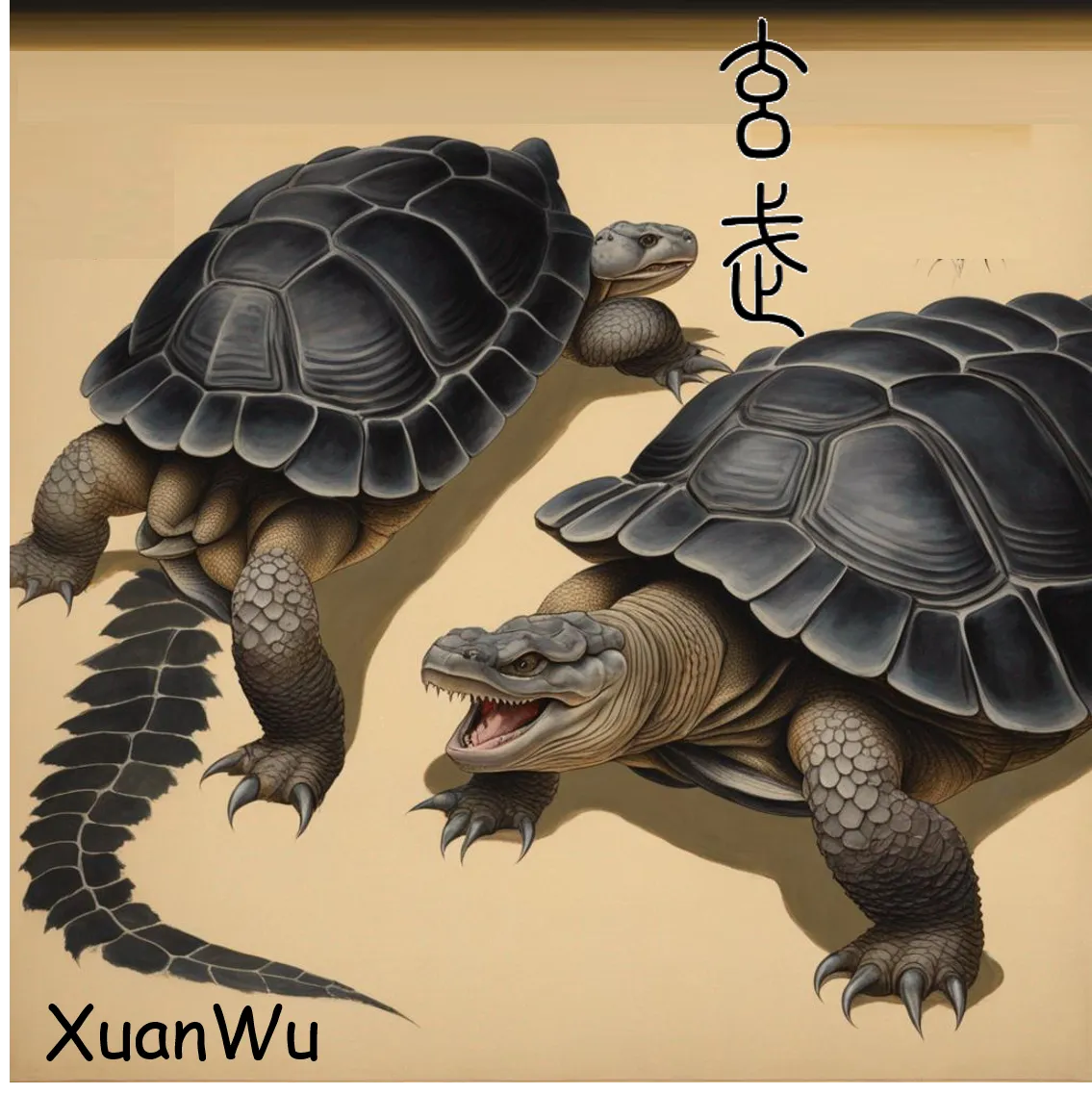
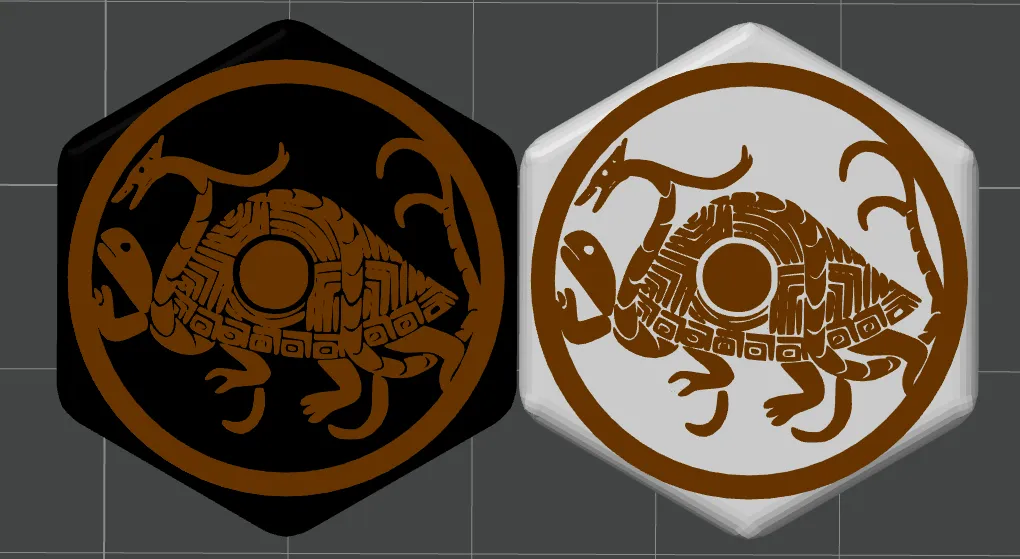
XuanWu, one of the four celestial guardians in ancient Chinese mythology, also known as the Turtle-Snake, originates from ancient star worship. It refers to the northern XuanWu constellation, composed of seven stars divided into four cardinal directions (east, south, west, and north) among the twenty-eight constellations.
XuanWu is a spiritual creature formed by the combination of a turtle and a snake. In traditional Chinese culture, the Four Symbols represent the cardinal directions, namely the Azure Dragon (QingLong), the White Tiger (BaiHu), the Vermilion Bird (ZhuQue), and XuanWu, representing the east, west, south, and north respectively. In the Eight Trigrams, XuanWu corresponds to the Kan trigram and is associated with the water element in the Five Elements theory, symbolizing the elderly Yin among the Four Symbols and the winter season among the four seasons, as well as the northern land of heaven.
The original meaning of XuanWu is "darkness," with "wu" sharing an ancient pronunciation with "ming." "Xuan" means black, while "ming" refers to the Yin aspect.
XuanWu, one of the four celestial guardians in ancient Chinese mythology, also known as the Turtle-Snake, originates from ancient star worship. It refers to the northern XuanWu constellation, composed of seven stars divided into four cardinal directions (east, south, west, and north) among the twenty-eight constellations.
XuanWu is a spiritual creature formed by the combination of a turtle and a snake. In traditional Chinese culture, the Four Symbols represent the cardinal directions, namely the Azure Dragon (QingLong), the White Tiger (BaiHu), the Vermilion Bird (ZhuQue), and XuanWu, representing the east, west, south, and north respectively. In the Eight Trigrams, XuanWu corresponds to the Kan trigram and is associated with the water element in the Five Elements theory, symbolizing the elderly Yin among the Four Symbols and the winter season among the four seasons, as well as the northern land of heaven.
The original meaning of XuanWu is "darkness," with "wu" sharing an ancient pronunciation with "ming." "Xuan" means black, while "ming" refers to the Yin aspect.
• 2x 白虎 BaiHu (Silver/Grey)
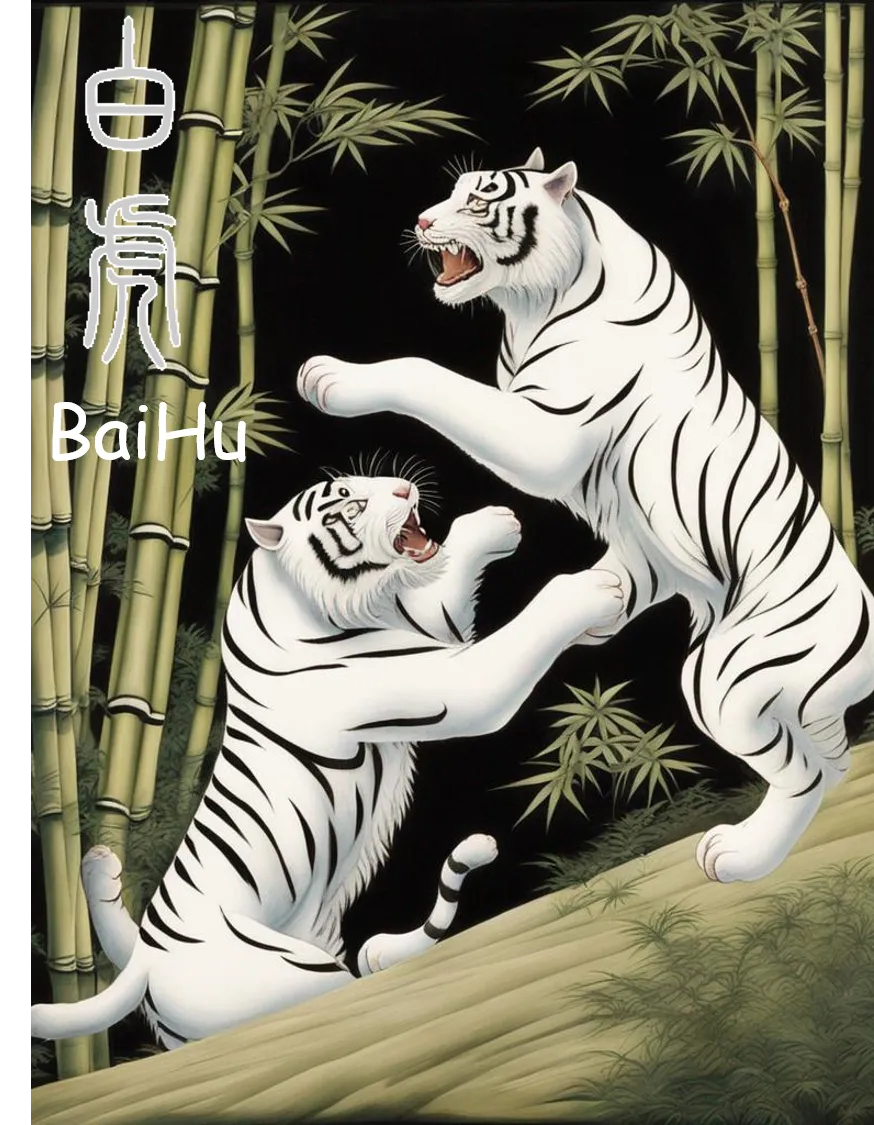
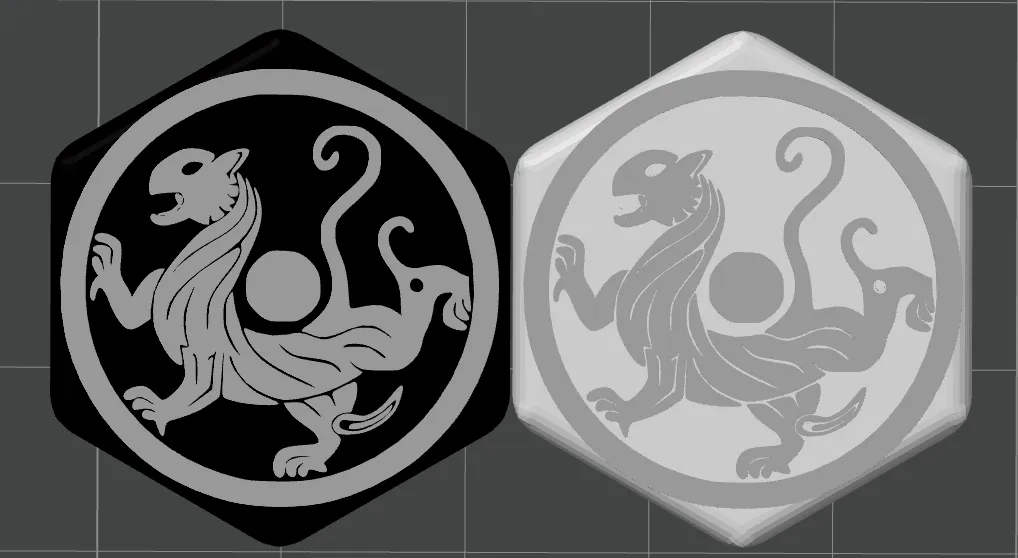
BaiHu, one of the four celestial guardians in ancient Chinese mythology, is the deity of the west. Later revered by Taoism, along with QingLong, ZhuQue, and XuanWu, collectively known as the Four Gods of the Four Directions.
According to "Zhongxing Zhengxiang," BaiHu is described as entirely white like snow, without any mixed fur. BaiHu originated from ancient Chinese star worship, representing the western seven constellations, and is one of the four celestial guardians. Taoism refers to BaiHu as the "Guardian of Soldiers," and various Taoist scriptures refer to it as "Emperor," "Holy General," "Spiritual General," or "Ghost-Capturing General." Among the twenty-eight constellations, BaiHu is the collective term for the western seven constellations (Kui, Lou, Wei, Mao, Bi, Zui, Shen). In terms of the Four Symbols, BaiHu represents the Lesser Yin, and in terms of the Five Elements, it represents Metal, symbolizing the west and the autumn season.
BaiHu, one of the four celestial guardians in ancient Chinese mythology, is the deity of the west. Later revered by Taoism, along with QingLong, ZhuQue, and XuanWu, collectively known as the Four Gods of the Four Directions.
According to "Zhongxing Zhengxiang," BaiHu is described as entirely white like snow, without any mixed fur. BaiHu originated from ancient Chinese star worship, representing the western seven constellations, and is one of the four celestial guardians. Taoism refers to BaiHu as the "Guardian of Soldiers," and various Taoist scriptures refer to it as "Emperor," "Holy General," "Spiritual General," or "Ghost-Capturing General." Among the twenty-eight constellations, BaiHu is the collective term for the western seven constellations (Kui, Lou, Wei, Mao, Bi, Zui, Shen). In terms of the Four Symbols, BaiHu represents the Lesser Yin, and in terms of the Five Elements, it represents Metal, symbolizing the west and the autumn season.
• 3x 青龍 QingLong (Green)
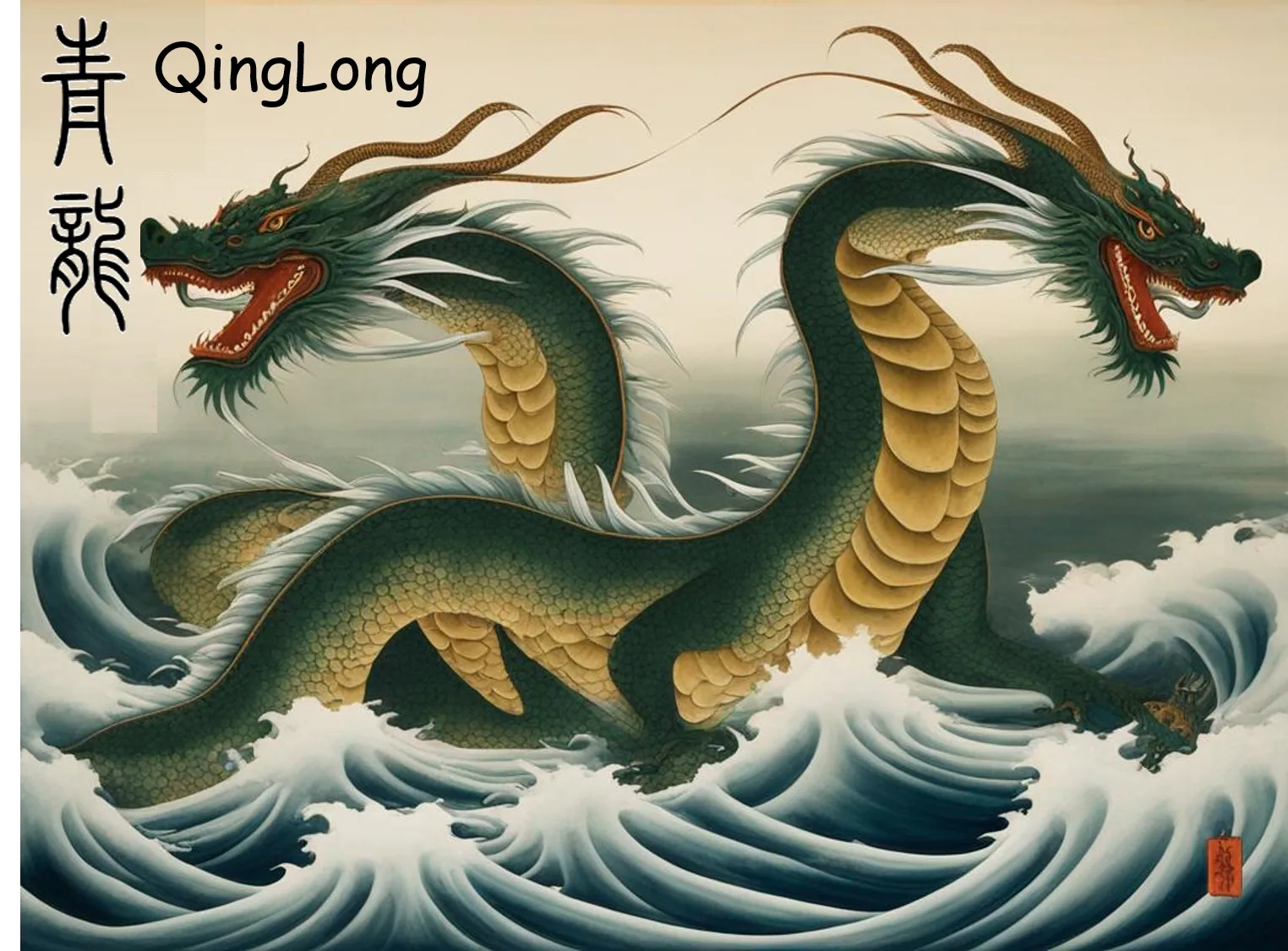
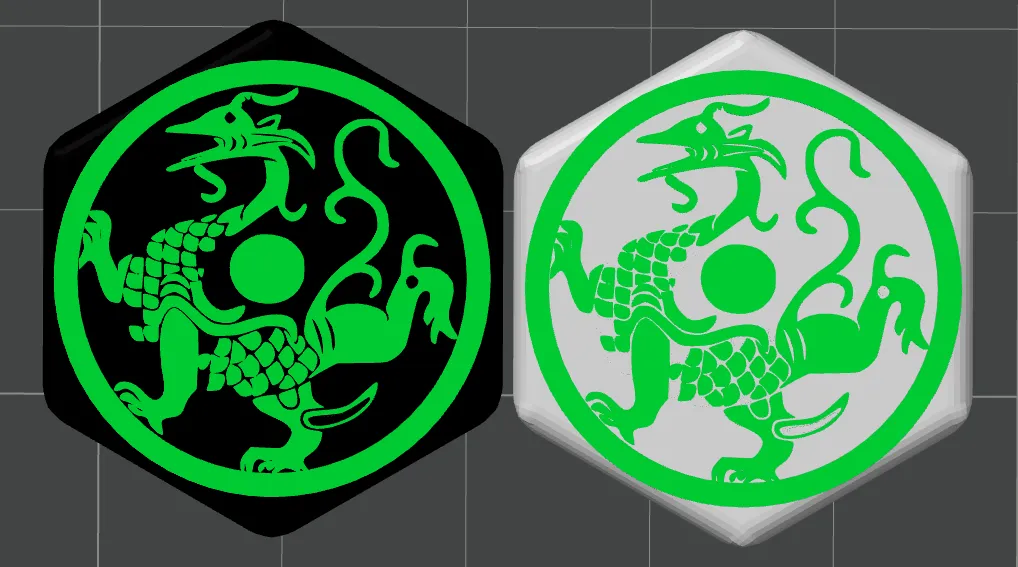
QingLong, also known as CangLong, is one of the Four Symbols and one of the Four Celestial Emblems in traditional Chinese culture. According to the theory of the Five Elements, it represents the eastern direction and is a green dragon. It belongs to the Wood element and symbolizes the spring season. In the Eight Trigrams, it corresponds to the "Zhen" trigram and is associated with the "Eastern Seven Mansions" among the "Four Symbols." QingLong has a long body with double horns on its head and scales covering its body. In ancient times, people believed that dragons, being associated with rain in the Wood element, controlled rainfall. Rainfall determined agricultural harvests, which in turn determined people's livelihoods, making dragons the primary totem of agricultural societies. Similar to YingLong, QingLong also possesses wings.
QingLong, also known as CangLong, is one of the Four Symbols and one of the Four Celestial Emblems in traditional Chinese culture. According to the theory of the Five Elements, it represents the eastern direction and is a green dragon. It belongs to the Wood element and symbolizes the spring season. In the Eight Trigrams, it corresponds to the "Zhen" trigram and is associated with the "Eastern Seven Mansions" among the "Four Symbols." QingLong has a long body with double horns on its head and scales covering its body. In ancient times, people believed that dragons, being associated with rain in the Wood element, controlled rainfall. Rainfall determined agricultural harvests, which in turn determined people's livelihoods, making dragons the primary totem of agricultural societies. Similar to YingLong, QingLong also possesses wings.
• 3x 朱雀 ZhuQue (Red)
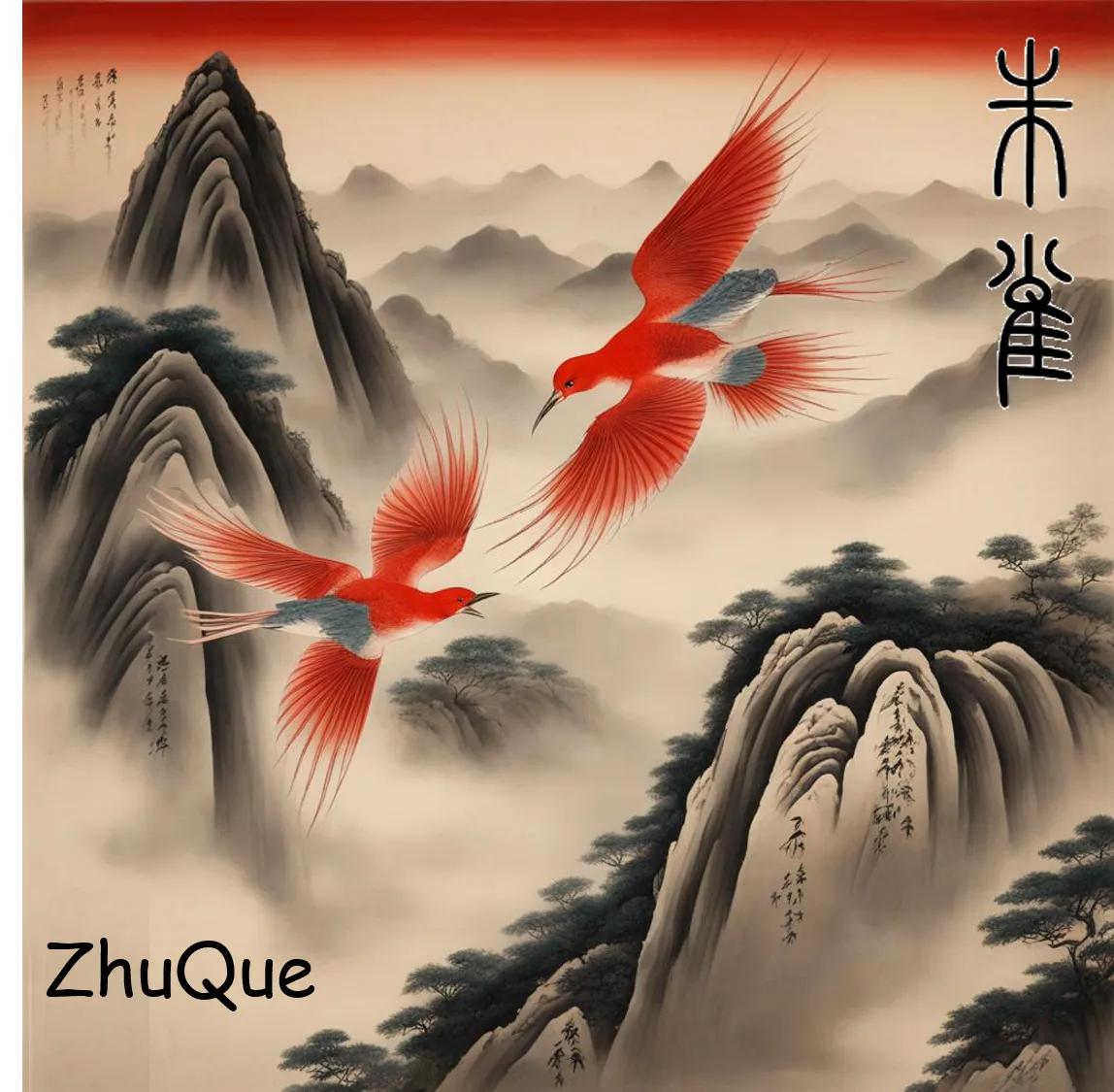
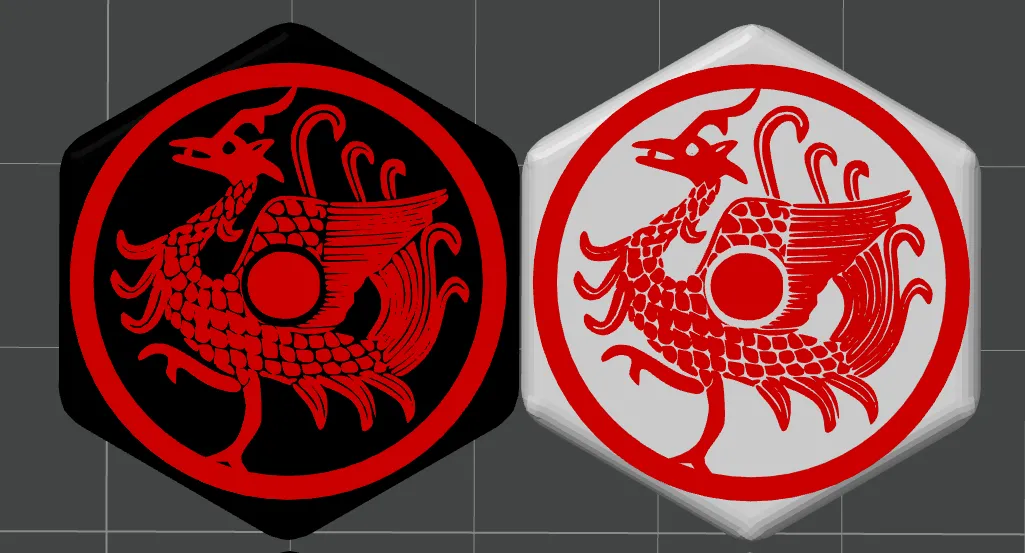
ZhuQue, also known as Zhuniao, is one of the Four Symbols and one of the Four Celestial Emblems in traditional Chinese culture, with origins dating back to at least the Spring and Autumn Period. It is one of the Four Celestial Emblems and represents the manifestation of the southern seven constellations among the twenty-eight mansions, with its body covered in flames that never extinguish. It symbolizes the southern direction and is the collective term for the southern seven constellations (Well, Ghost, Willow, Star, Extended Net, Wings, and Chariot) among the twenty-eight mansions. Its color is red, representing the sun among the Four Symbols, belonging to the Fire element in the Five Elements theory, corresponding to the "Li" trigram in the Eight Trigrams, and symbolizing the summer season, associated with Yan Emperor. In pre-Qin burial culture, ZhuQue was regarded as the deity guiding the souls of the deceased to ascend to the heavenly realm.
ZhuQue, also known as Zhuniao, is one of the Four Symbols and one of the Four Celestial Emblems in traditional Chinese culture, with origins dating back to at least the Spring and Autumn Period. It is one of the Four Celestial Emblems and represents the manifestation of the southern seven constellations among the twenty-eight mansions, with its body covered in flames that never extinguish. It symbolizes the southern direction and is the collective term for the southern seven constellations (Well, Ghost, Willow, Star, Extended Net, Wings, and Chariot) among the twenty-eight mansions. Its color is red, representing the sun among the Four Symbols, belonging to the Fire element in the Five Elements theory, corresponding to the "Li" trigram in the Eight Trigrams, and symbolizing the summer season, associated with Yan Emperor. In pre-Qin burial culture, ZhuQue was regarded as the deity guiding the souls of the deceased to ascend to the heavenly realm.
Setup and Placement Game Setup and Placement:
The game begins with an empty layout, and players arrange their pieces in stacks or as they prefer. During their turn, a player can either introduce a new piece from their supply or, if their YingLong has been placed, move a piece according to its unique function. Newly placed pieces must be adjacent only to the player's own pieces and cannot touch any pieces belonging to the opponent. However, an exception to this rule applies to the first piece played by each player, which cannot be adjacent to anything initially. Once placed, a piece can be moved to a new space, provided it remains adjacent to at least one other piece.
The game does not require a board; any flat surface can serve as the game board. The game begins with an empty layout, and players can arrange their pieces in stacks or place them as they prefer in front of them. The game uses a turn-based system. In each round, players can introduce a new piece from their supply to the central game area. If a player's YingLong has already been placed in the game area, the player can use that turn to move a piece based on each piece's unique function. If a player chooses to introduce a new piece, the newly placed piece must be adjacent and only adjacent to the player's own pieces and cannot touch any pieces belonging to the opponent. However, this rule has one exception: the first piece placed by each player at the start of the game. During the game, pieces can be moved to new spaces according to their properties, but they must remain adjacent to at least one other piece in the game. This is the most important rule in this game — "Single Realm Rule." Pieces cannot leave the realm.
After the YingLong is placed, players have the freedom to place or move pieces as desired. As the layout expands and pieces become surrounded, players typically strategize to avoid immediate entrapment of their stronger tiles. The YingLong must be placed within the first four turns, preferably before the fourth turn to enable subsequent piece movements.
Once YingLong is placed, players can freely place or move pieces as they wish. As the layout expands and pieces become surrounded, players typically strategize to avoid immediate entrapment of their stronger tiles. YingLong must be placed within the first four turns, preferably before the fourth turn to allow for subsequent piece movements.
Movement in ShanHai adheres to the hexagonal shape of the tiles, where one face of a tile must connect with the face of an adjacent tile. Each move corresponds to a transition to a different hex-shaped area adjacent to the current space and to another piece. Although the game lacks a physical board, it operates as if played on an infinite plane of tessellated hexagons.
In the ShanHai game, the movement of pieces follows the hexagonal shape of the pieces, where one side of a piece must connect with the side of an adjacent piece. Each move corresponds to a transition to a different hex-shaped area adjacent to the current space and to another piece. Although the game does not have a physical board, it operates as if played on an infinite plane of tessellated hexagons.
A fundamental rule in ShanHai is the One-Realm Rule, which prohibits moving a piece in a way that creates two separate groups of pieces during or after its movement. Even if the layout remains as one group after the move, if the realm becomes disconnected while the piece is in transit, the move is considered illegal. This rule enables the strategic tactic of "trapping" an opposing piece by maneuvering one's own piece to the outside, rendering the opposing piece unable to move legally due to being stranded.
The most basic rule in the ShanHai game is the "Single Realm Rule," which prohibits moving a piece in a way that creates two separate groups of pieces during or after its movement. Even if the layout remains as one group after the move, if the realm becomes disconnected while the piece is in transit, the move is considered illegal. This rule allows for strategic tactics such as "trapping" an opposing piece by maneuvering one's own piece to the outside, rendering the opposing piece unable to move legally due to being stranded.
Moves typically occur around the circumference of all layout pieces, and a piece cannot enter or exit a hexagon that is almost or completely surrounded, a principle known as the Freedom to Move Rule. However, there are two exceptions to this rule, as outlined below.
Pieces usually move around the circumference of all the layout pieces, and a piece cannot enter or exit a hexagon that is almost or completely surrounded, a principle known as the "Freedom to Move Rule." However, there are two exceptions to this rule, as outlined below.
The movement of pieces is as follows Piece movement rules are as follows:
The YingLong is the least mobile among the pieces, capable of advancing only one space at a time in any direction. Despite this limitation, a strategic maneuver of the YingLong at the right moment can prevent it from being cornered and disrupt the opponent's strategies.
YingLong is the least mobile among all the pieces, capable of advancing only one space at a time in any direction. Despite this limitation, a strategic maneuver of YingLong at the right moment can prevent it from being cornered and disrupt the opponent's strategies.
The XuanWu, on the other hand, moves similarly, advancing one space at a time. However, it possesses a unique ability to ascend atop any adjacent piece. Once perched, the XuanWu can then progress one space at a time across the upper surface of the layout. While a XuanWu occupies the top position, the underlying piece remains immobilized, and for placement purposes, the space adopts the color of the XuanWu tile rather than the underlying one. Additionally, a XuanWu can ascend onto another XuanWu, enabling the potential construction of a stack up to five tiles high. When positioned on top of the layout, a XuanWu can descend back onto the edge of the board or into any surrounded space.
XuanWu also moves forward one space at a time. However, it has the unique ability to ascend atop any adjacent piece. Once perched, XuanWu can then progress one space at a time across the upper surface of the layout. While XuanWu occupies the top position, the underlying piece remains immobilized, and for placement purposes, the space adopts the color of the XuanWu tile rather than the underlying one. Additionally, XuanWu can ascend onto another XuanWu, enabling the potential construction of a stack up to five tiles high. When positioned on top of the layout, XuanWu can descend back onto the edge of the board or into any surrounded space.
An uncommon yet significant movement limitation of the XuanWu is a variation of the Freedom to Move Rule. It cannot directly traverse between two adjacent hexes if such movement entails passing through a gap between two stacks of pieces, both of which are taller than the origin and destination hexes (excluding the XuanWu). However, the XuanWu can circumvent this restriction by taking two turns to navigate around the obstructing stacks.
XuanWu has an uncommon yet significant movement limitation that is a variation of the Freedom to Move Rule. It cannot directly traverse between two adjacent hexes if such movement entails passing through a gap between two stacks of pieces, both of which are taller than the origin and destination hexes (excluding the XuanWu). However, XuanWu can circumvent this restriction by taking two turns to navigate around the obstructing stacks.
The BaiHu is restricted to moving precisely three spaces around the periphery of the layout. While this limitation diminishes its effectiveness in later stages of the game, it serves as a valuable asset at the outset, either as a foundational piece for other units or as a swift attacking force when the layout is still compact. Even as the layout expands, a strategically positioned BaiHu retains its ability to significantly influence the game.
BaiHu is restricted to moving precisely three spaces around the periphery of the layout. While this limitation diminishes its effectiveness in later stages of the game, it serves as a valuable asset at the outset, either as a foundational piece for other units or as a swift attacking force when the layout is still compact. Even as the layout expands, a strategically positioned BaiHu retains its ability to significantly influence the game.
In contrast, the ZhuQue is a flying piece that traverses by flying over one or more other pieces in a straight line, landing on the first adjacent space on the opposite side of the pieces. It always moves in alignment with one of its faces, never diagonally. This mode of movement enables the ZhuQue to swiftly span the layout from one side to the other, akin to the XuanWu, and maneuver into enclosed spaces.
In contrast, ZhuQue is a flying piece that traverses by flying over one or more other pieces in a straight line, landing on the first adjacent space on the opposite side of the pieces. It always moves in alignment with one of its faces, never diagonally. This mode of movement allows ZhuQue to swiftly span the layout from one side to the other, akin to XuanWu, and maneuver into enclosed spaces.
The QingLong, akin to the YingLong or BaiHu, is confined to moving around the edge of the layout. However, unlike these pieces, the QingLong can traverse any number of spaces at the player's discretion. This exceptional freedom of movement renders the QingLong a formidable unit, capable of strategically positioning itself anywhere along the perimeter to ensnare an opponent's piece or liberate a trapped one.
QingLong, similar to YingLong or BaiHu, is confined to moving around the edge of the layout. However, unlike these pieces, QingLong can traverse any number of spaces at the player's discretion. This exceptional freedom of movement makes QingLong a formidable unit, capable of strategically positioning itself anywhere along the perimeter to ensnare an opponent's piece or liberate a trapped one.
Advanced tiles, which can be introduced into the game to enhance its complexity, includeAdvanced pieces that can be introduced into the game to increase its complexity include::
*All pieces are in the profiles, you will need to print each profiles twice, one time with black base and second time with white base.
*All the pieces are in the profiles, you will need to print each profile twice, once with a black base and the second time with a white base.
• 1 麒麟 QiLin (Orange)
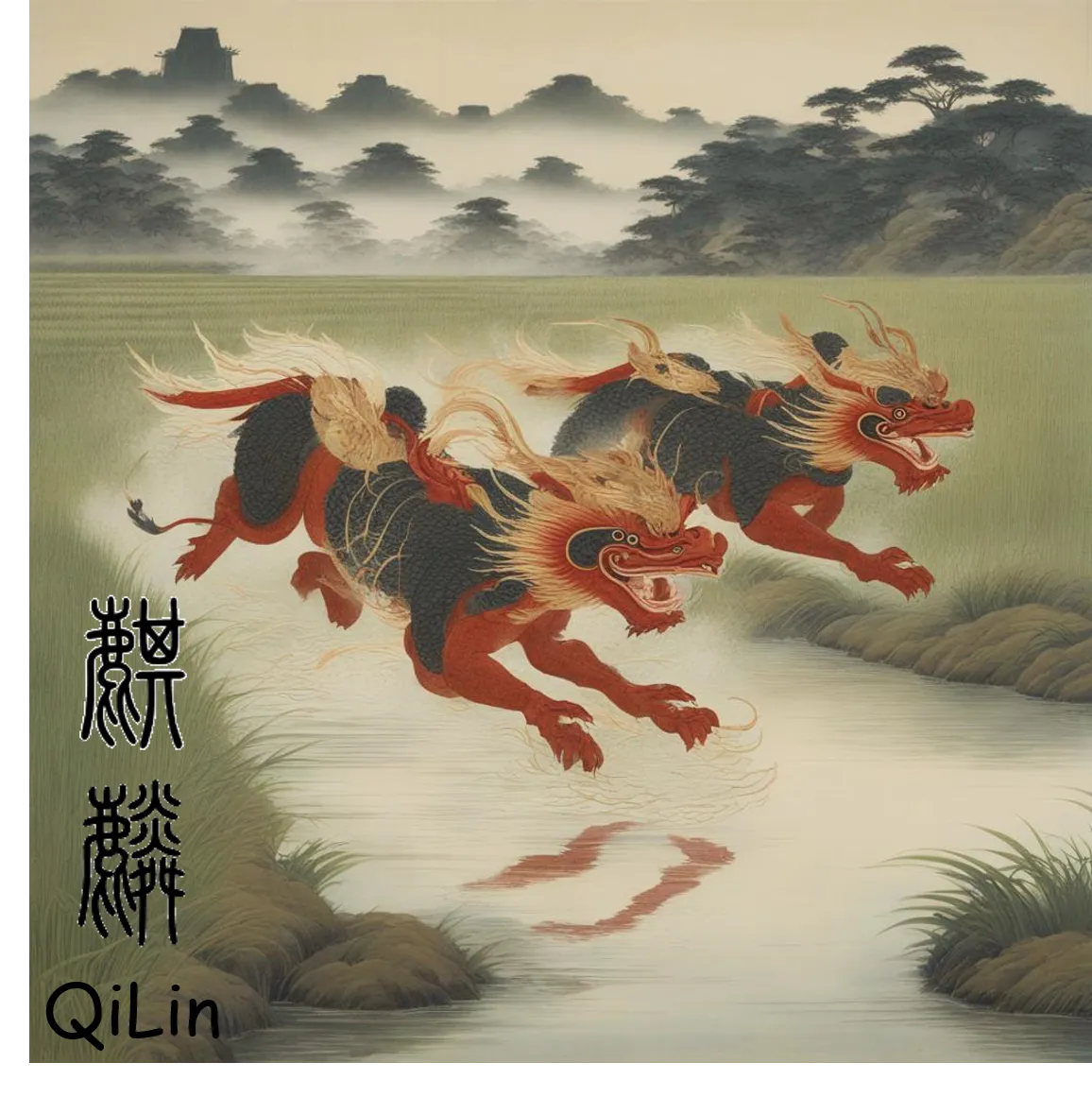
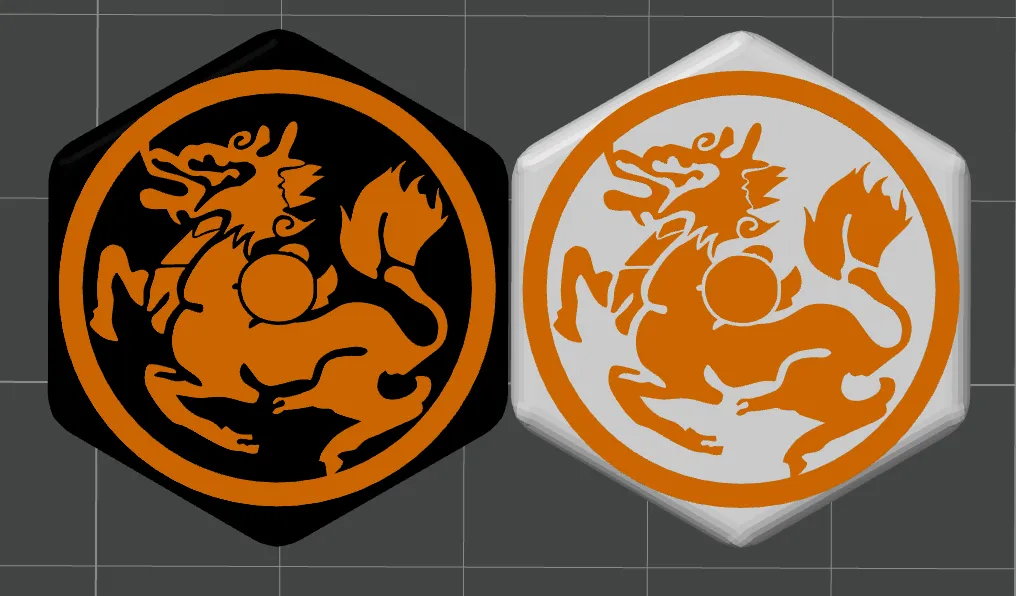
QiLin, also known as Gouchen, and Qìqiū, is a mythical creature in ancient Chinese mythology and is considered the descendant of the Jiangma. Its ancestor is YingLong. QiLin is often confused with the dragon horse. In ancient China, QiLin was used as a symbol of auspiciousness. The male is called "Qi," and the female is called "Lin." It is said to live for two thousand years. It has a gentle temperament and although it has weapons on its body to attack enemies, it does not harm humans or animals and does not trample on insects or flowers and grass. Therefore, it is called the benevolent beast. The head of the QiLin resembles a dragon, its body is like a deer, its feet are like a horse, its tail is like that of an ox, it has colorful patterns on its back, yellow fur on its belly, it can breathe fire, and its voice is like thunder. It is said to only appear in times of great peace or when there is a sage in the world, hence its name as the auspicious beast.
QiLin, also known as Gouchen, and Qìqiū, is a mythical creature in ancient Chinese mythology and is considered the descendant of the Jiangma. Its ancestor is YingLong. QiLin is often confused with the dragon horse. In ancient China, QiLin was used as a symbol of auspiciousness. The male is called "Qi," and the female is called "Lin." It is said to live for two thousand years. It has a gentle temperament and although it has weapons on its body to attack enemies, it does not harm humans or animals and does not trample on insects or flowers and grass. Therefore, it is called the benevolent beast. The head of the QiLin resembles a dragon, its body is like a deer, its feet are like a horse, its tail is like that of an ox, it has colorful patterns on its back, yellow fur on its belly, it can breathe fire, and its voice is like thunder. It is said to only appear in times of great peace or when there is a sage in the world, hence its name as the auspicious beast.
Movement and abilities Movement and Abilities
The QiLin moves a total of three spaces: two atop the Realm and one downward. It's required to specifically move two spaces atop the Realm and then descend on its final move. It's not allowed to circumvent the outer edges of the Realm, nor can it conclude its movement atop the Realm. Unlike the XuanWu, it doesn't obstruct other pieces by landing on top of them, but it can enter or exit surrounded spaces.
QiLin moves a total of three spaces
License

You shall not share, sub-license, sell, rent, host, transfer, or distribute in any way the digital or 3D printed versions of this object, nor any other derivative work of this object in its digital or physical format (including - but not limited to - remixes of this object, and hosting on other digital platforms). The objects may not be used without permission in any way whatsoever in which you charge money, or collect fees.


Comment & Rating (1)