
Reinforcement for Bambu Lab Vibration Dampeners
Print Profile(1)

Description
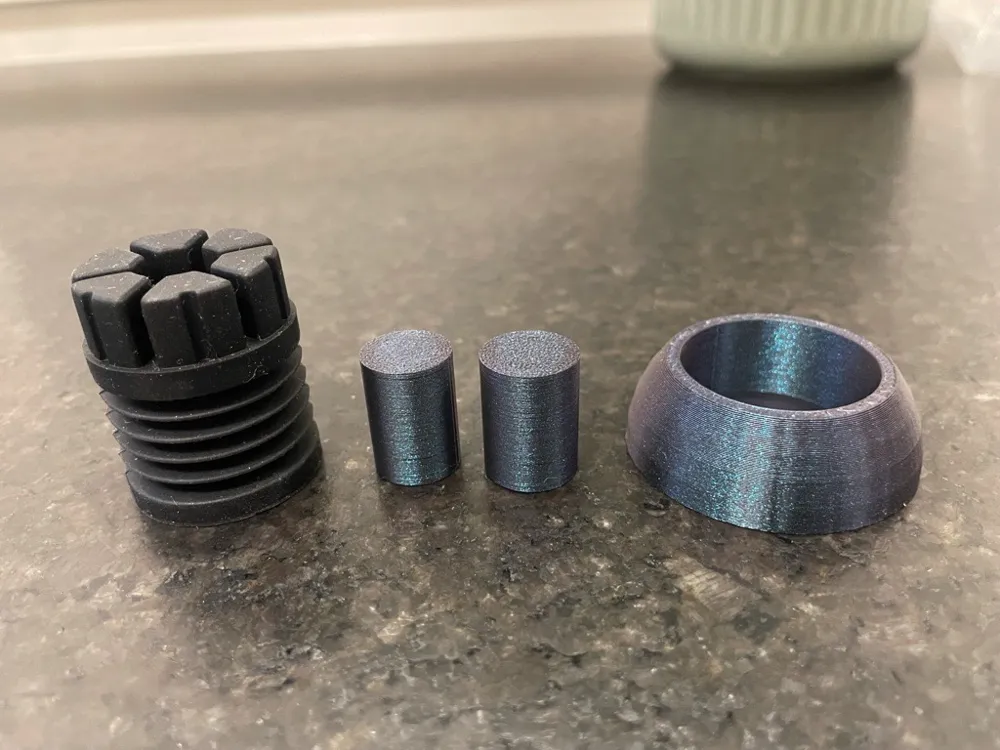
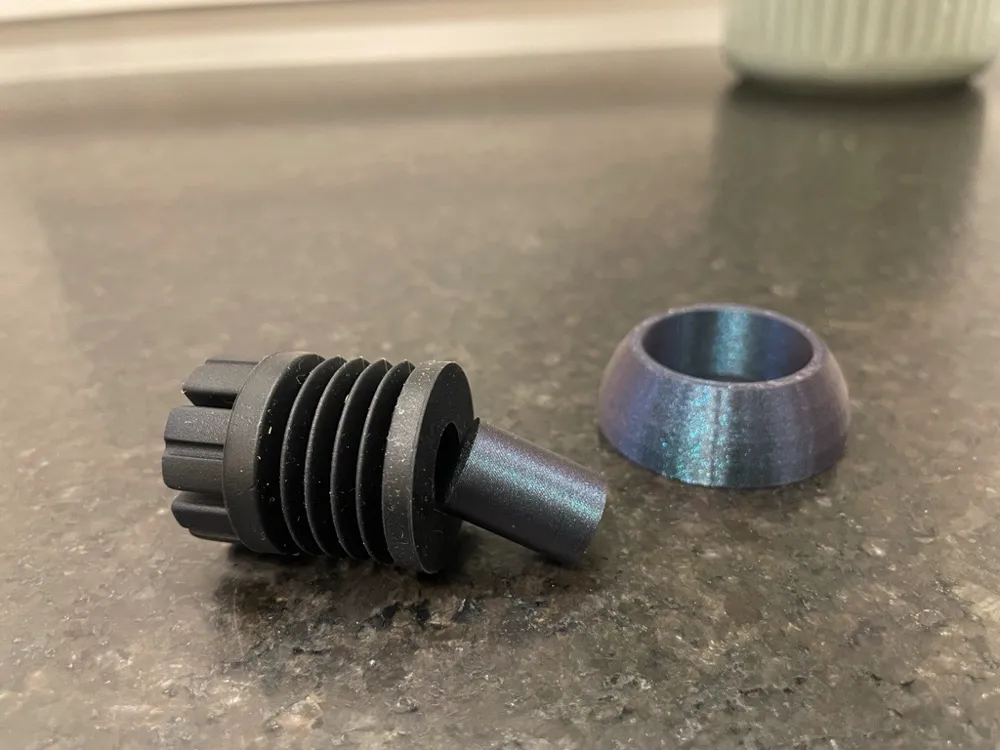
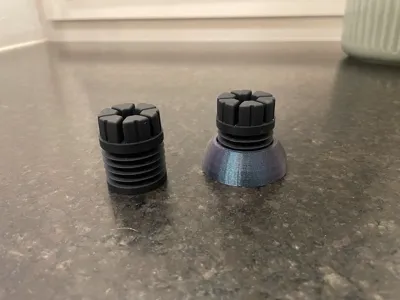
This is my optimization for the original Bambu Lab vibration damper feet.
Should anyone ask themselves “why do I need these?” or “what do they really do?”, the explanation follows at the end of the description.
Problem statement:
The problem with the original Bambu Lab anti-vibration feet is well known to many. They are simply too soft, which means that the printer has much more leeway during the printing process than would be necessary for effective damping, and the feet can therefore bend.
The solution:
I looked for a solution that is simple, can be variably adapted to individual requirements, and is quick to print.
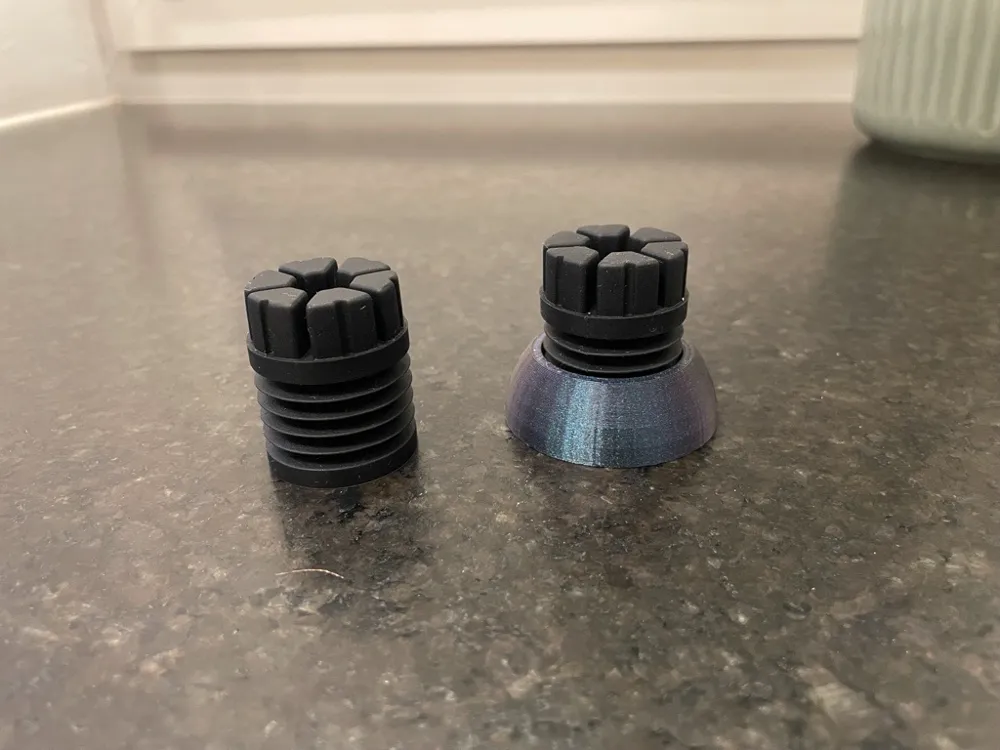
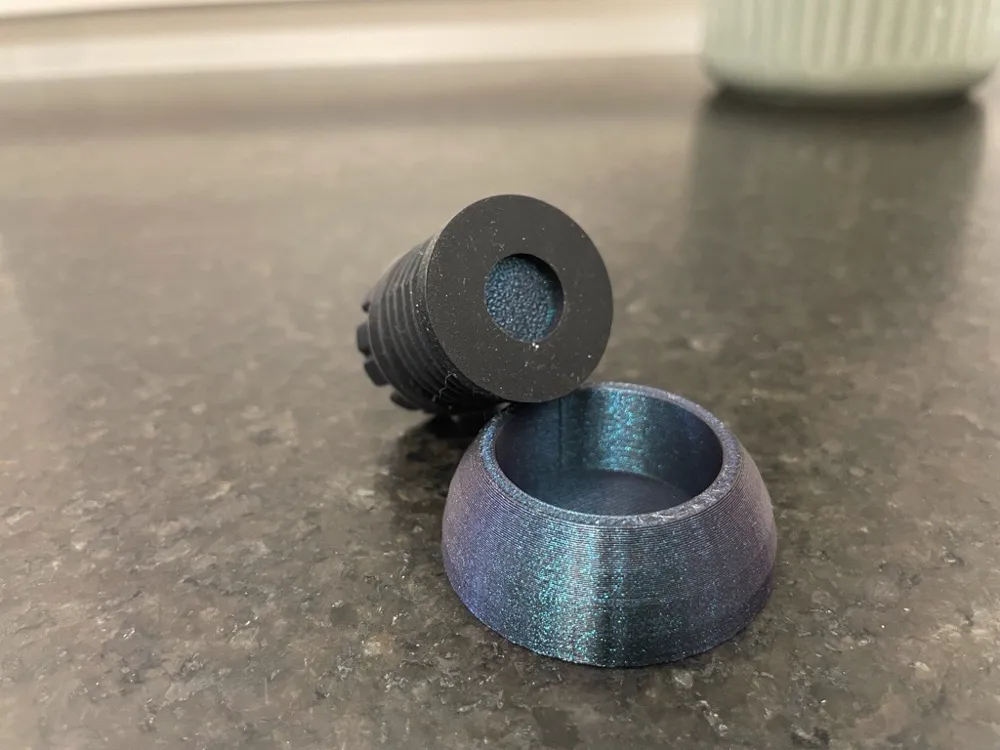
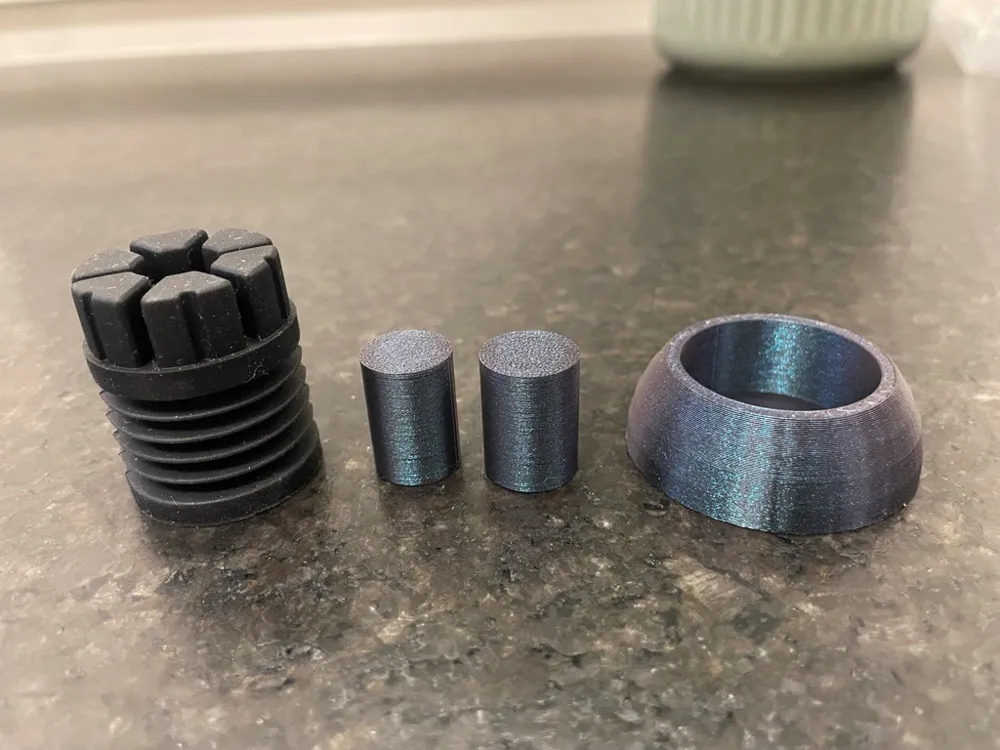
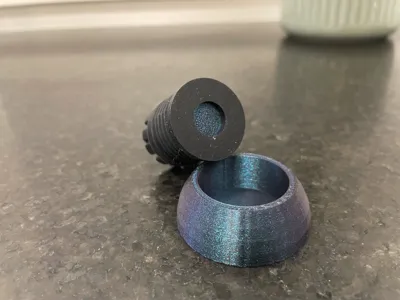
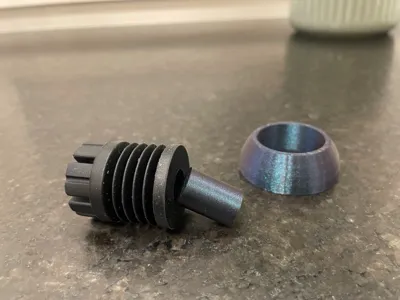
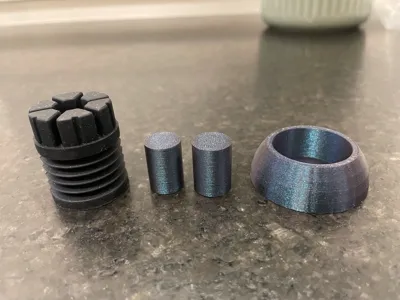
Therefore, I came up with the concept of sliding cylindrical rods into the interior of the damper feet to restrict the range of motion. The thicker the rods, the less play the bearings have.
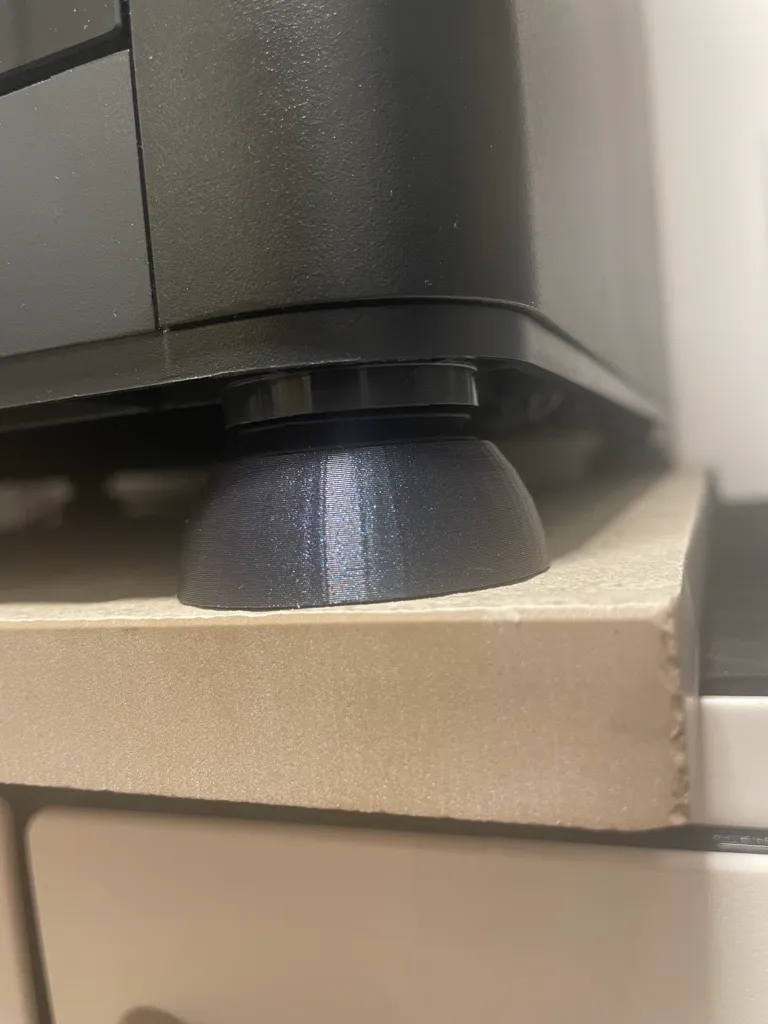
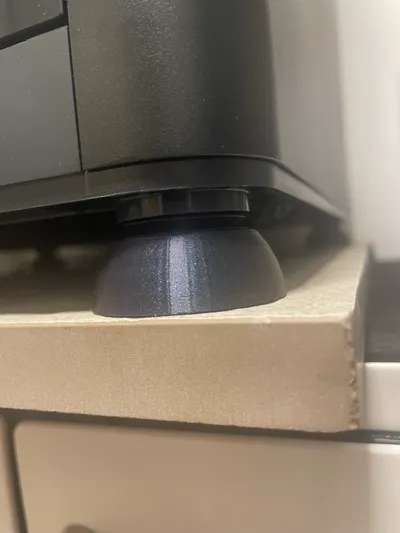
To solve the problem of buckling, the feet are placed in a “shoe” which simply consists of a hemisphere with a cylindrical cutout.
With this solution, I have now accumulated approximately 200 hours of printing time and can say that the bearings have eliminated some minor artifacts for me, but otherwise nothing has changed in the appearance (which is typically excellent with Bambu Lab anyway). The real strengths of the bearings will play out in the long term.
More on this in my explanation at the end of the description.
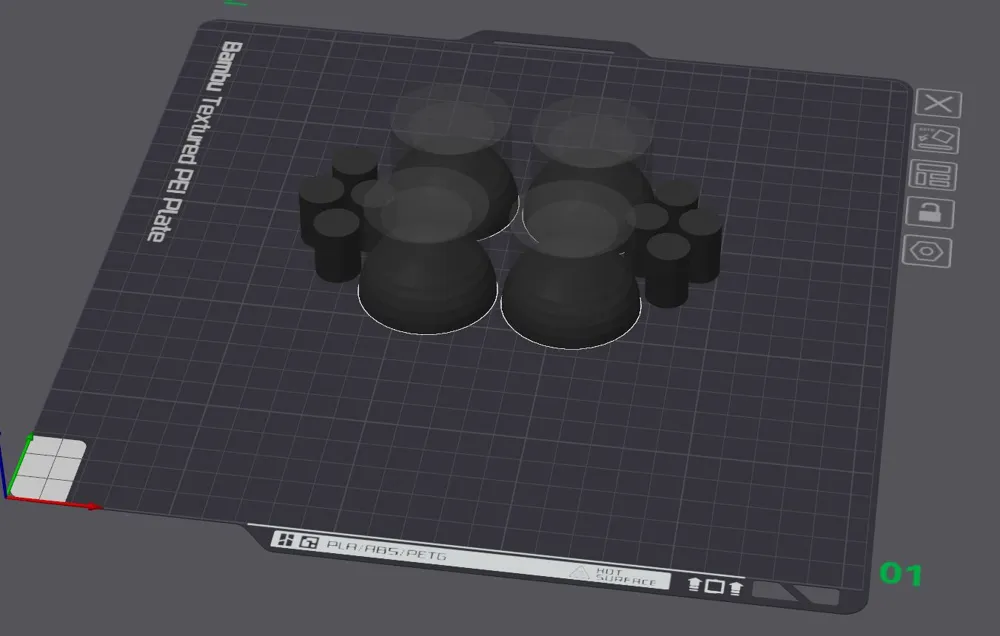
The components were designed entirely in Bambu Studio using primitive shapes (hence the hemisphere also has a faceted surface).
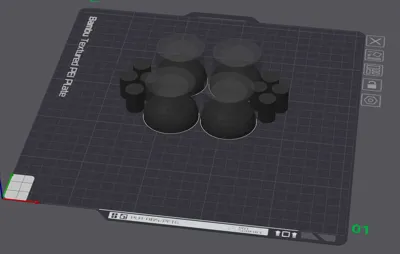
Printing takes only 1 hour and 20 minutes for all parts and uses only about 53g of filament.
No supports needed
PLA is perfectly sufficient for printing.
For me, the PLA shoes (hemispheres) stand on a concrete slab and have enough grip. If anyone places the printer on a smoother surface, a thin rubber mat or some foam rubber can simply be glued under the shoes.
Explanation of the damping principle:
Many rightly point out that the damping bearings primarily function as acoustic decoupling of the printer from the substrate and have no positive influence on the print image. However, this is only half the truth, because what everyone forgets is the positive effect on the printer's own components. While they do not offer any significant advantages for print quality directly, the absorption of shocks (caused by rapid changes in direction of the print head) can reduce the stress on other components such as bearings, guides, etc. This has the advantage that these bearings and guides wear out less quickly and thus the print quality remains constant for longer. However, if the printer were maximally stiff, for example, bolted to a wall, the vibrations (generated by the stepper motors and print head movements) would be transferred undamped to the printed part and the printer components would wear out much faster. Even the often-mentioned large industrial machines work according to the principle of a maximally rigid, stable substrate and a maximally rigid frame of the machine, and vibration damping is intended to occur in the damping bearings in between and not in the machine components themselves.
In short -→ The anti-vibration feet will bring minimal or no improvements to the print image for most people, BUT they reduce the wear and tear on the printer components AND provide acoustic decoupling so that neighbors or a sleeping baby are not disturbed.
License



Comment & Rating (12)