
Double Slit Experiment


Print Profile(1)
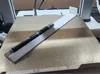
Description
The double slit experiment is a classic demonstration of the wave-particle duality of quantum objects. This experiment uses particles that exhibit both wave-like and particle-like behavior, such as electrons or photons.
The model creates two parallel slits in a screen, creating a narrow passage for particles to pass through. We then direct a laser towards the slits. Now, if we were to observe these particles individually, one by one, we would expect them to behave like classical particles: they would go through either slit and emerge on the other side.
However, when we try to measure which slit each particle passes through, something strange happens. If we shine a light through the system, allowing us to observe the particles as they pass through the slits, we notice that the particles exhibit an interference pattern on the screen behind the slits.
The interference pattern shows regions of constructive and destructive interference, which are characteristic of wave behavior. It's as if the particles are behaving like waves passing through two open slits!
The double slit experiment is a mind-bending demonstration of the strange implications of quantum mechanics, and it has sparked debate among physicists for decades.
The key to understanding the double slit experiment lies in recognizing that the wave-like behavior is not an emergent property of the particles interacting with each other; rather, it's an inherent property of the particles themselves.
Video describing the experiment:
Materials needed:
- A plane with two parallel slits
- A light source (laser) to direct towards the slits
- A smooth surface to project the light onto
- Laser safety glasses
Setup:
- Mount the slits in front of a smooth surface, such as a wall or a whiteboard. To begin, the slits should be about 2 meters from the wall or whiteboard
- Position the light source about 150mm behind the slits facing the wall or whiteboard
- Stand back from the setup and observe the screen or wall behind the slits. Take note of any patterns you see.
Tips:
- Experiment with different distances between the slits and the screen to adjust the intensity of the resulting pattern.
- Experiment with different distances between the slits and the screen to adjust the intensity of the resulting pattern.
Keep in mind that this is a simplified version of the double slit experiment. In an actual laboratory setting, you would need:
- Vacuum chambers and precision-made slits
- Advanced light sources (e.g., lasers) with tunable wavelengths
- High-speed cameras or detectors capable of capturing single-particle events
However, this DIY setup can still provide a fascinating introduction to the principles of wave-particle duality and interfereometry.
License



Comment & Rating (1)