
Atom Orbitals Electron



Print Profile(1)

Description
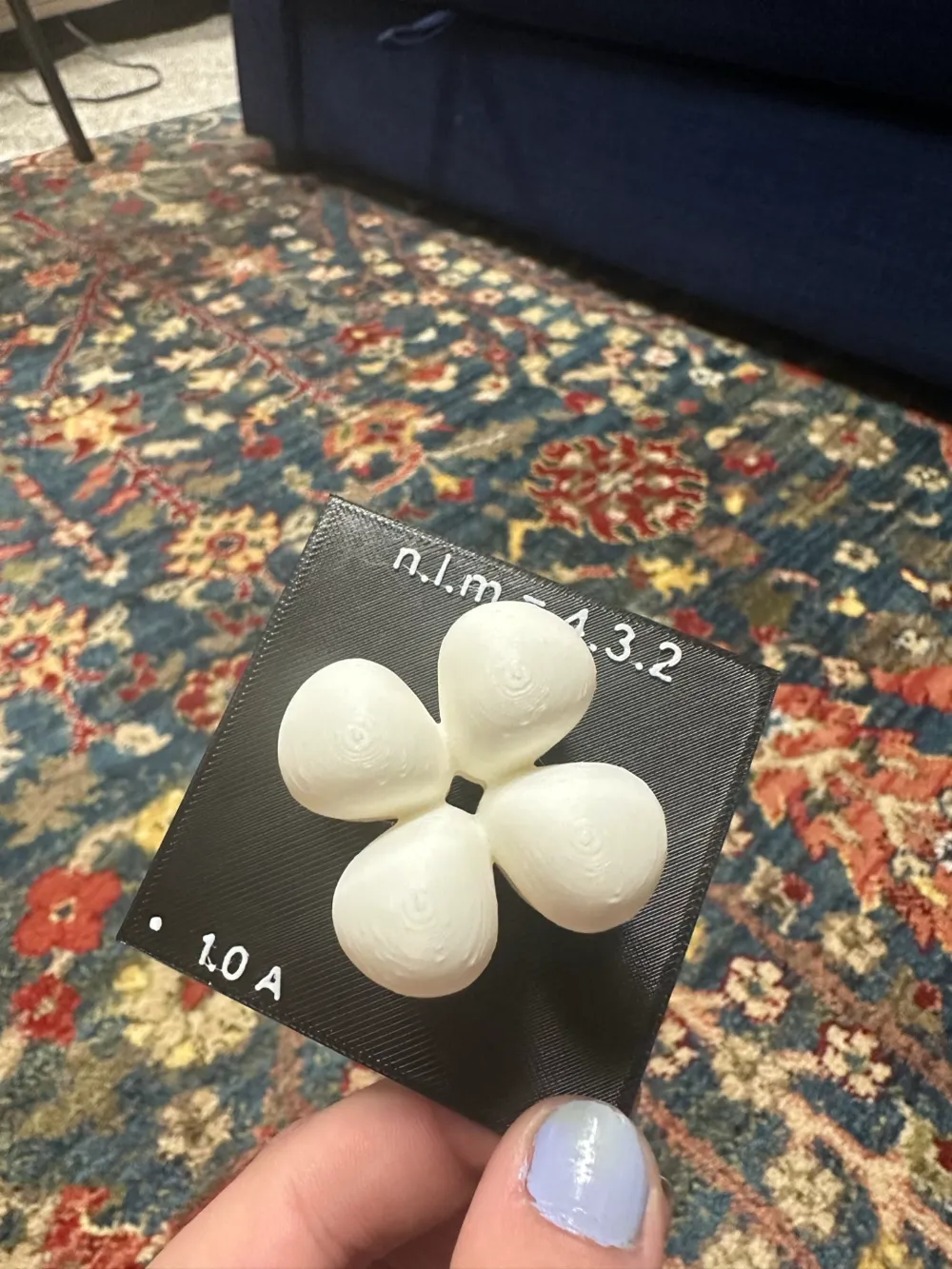
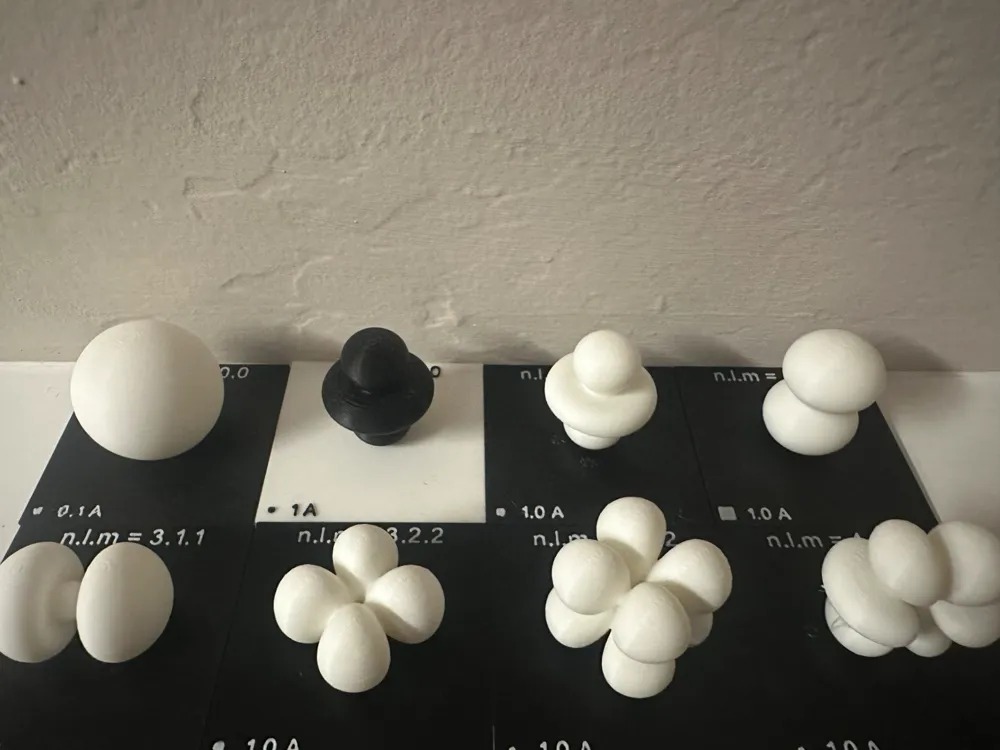
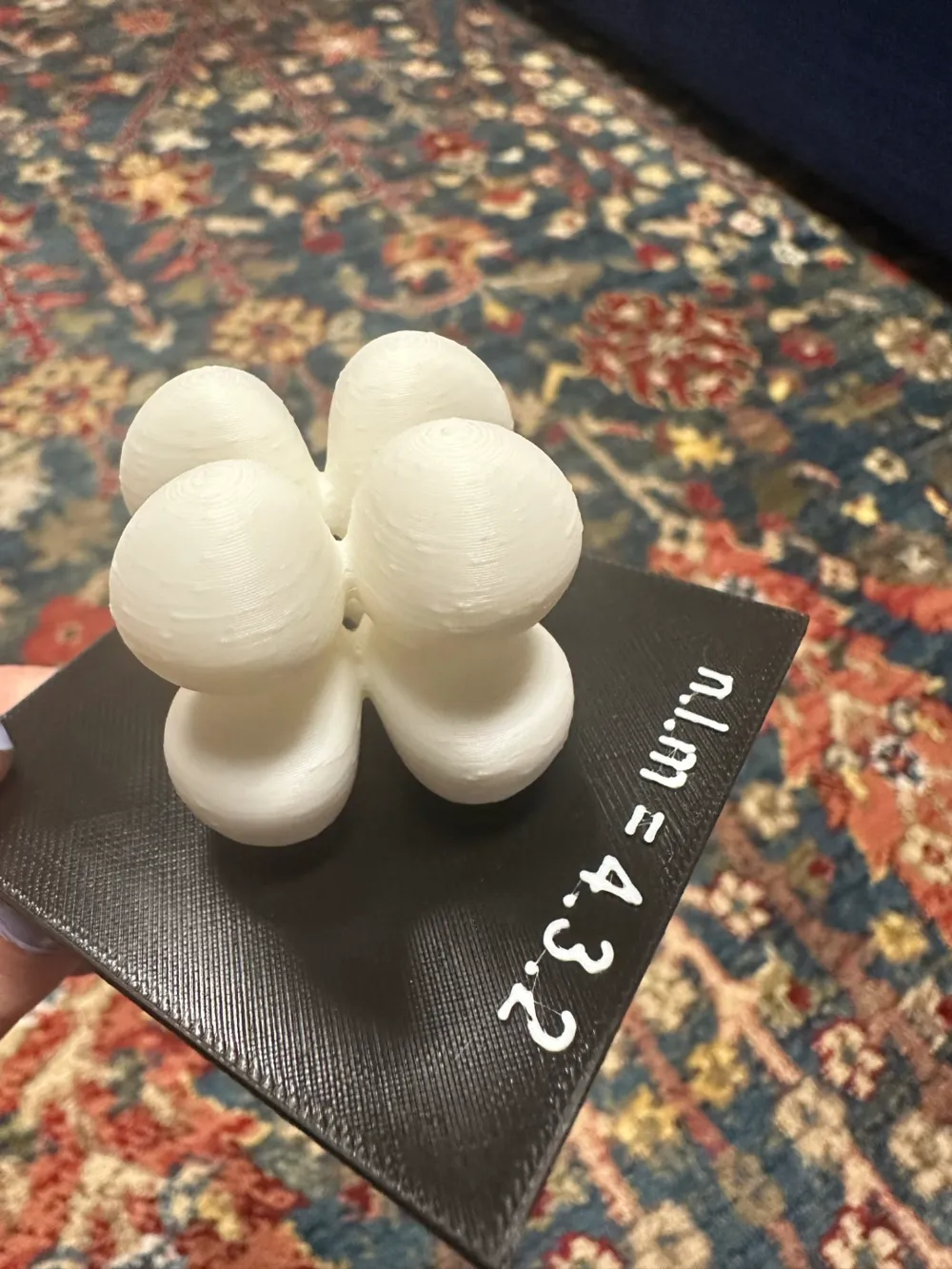
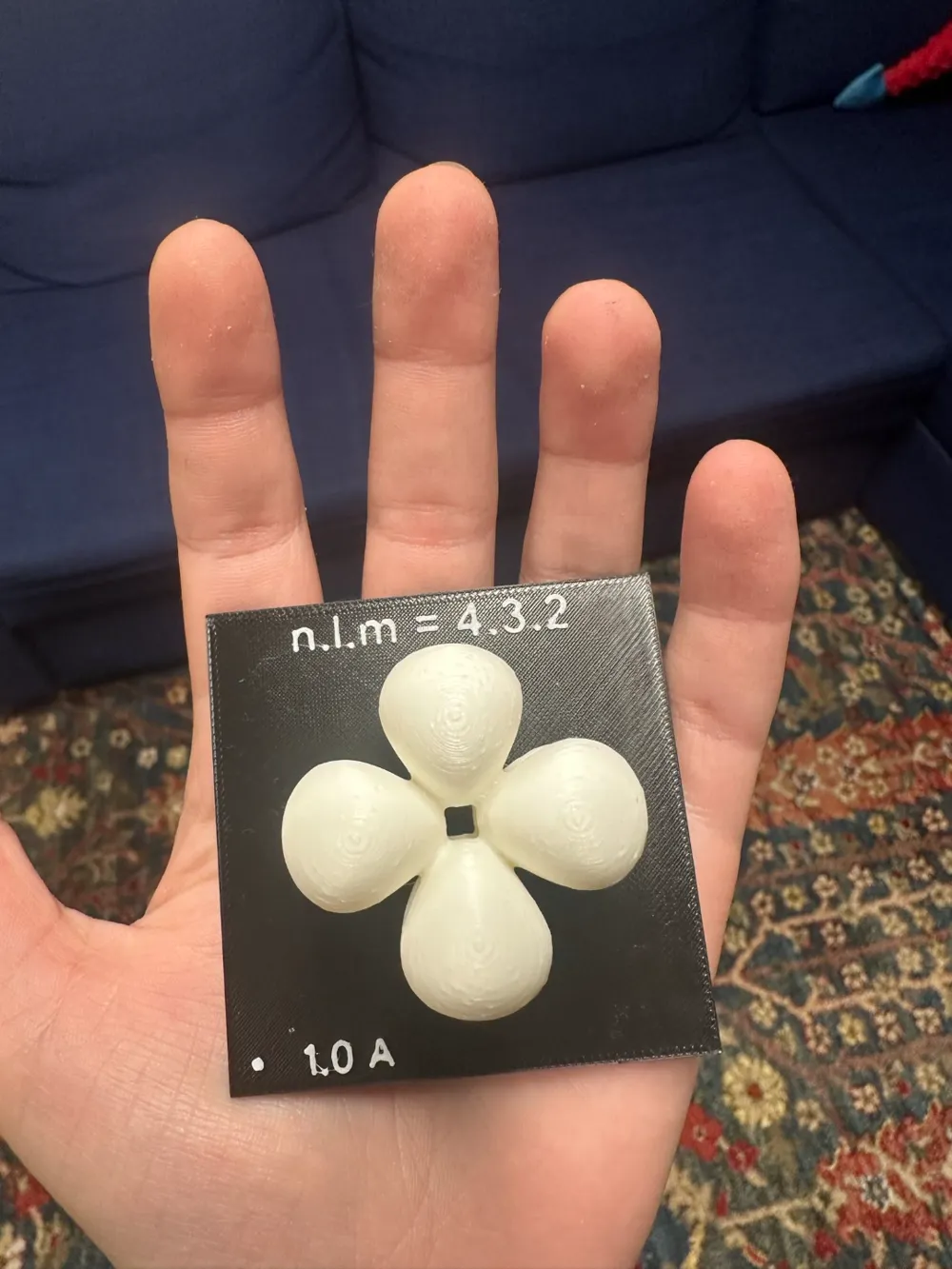
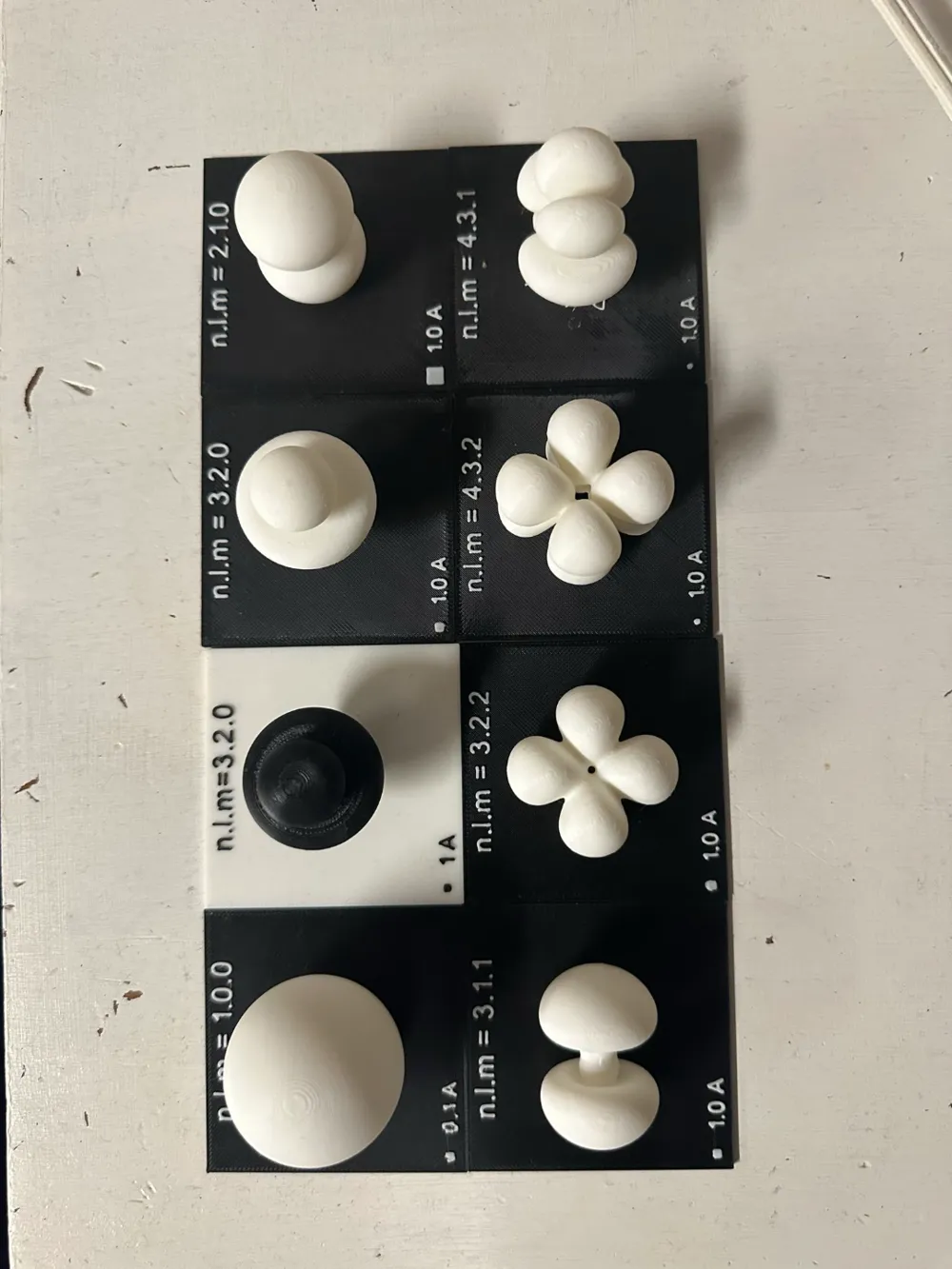
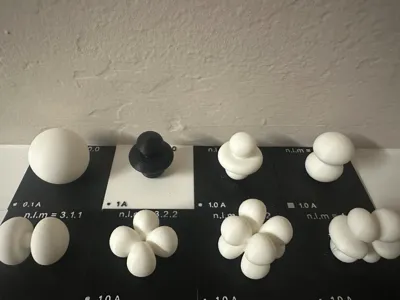
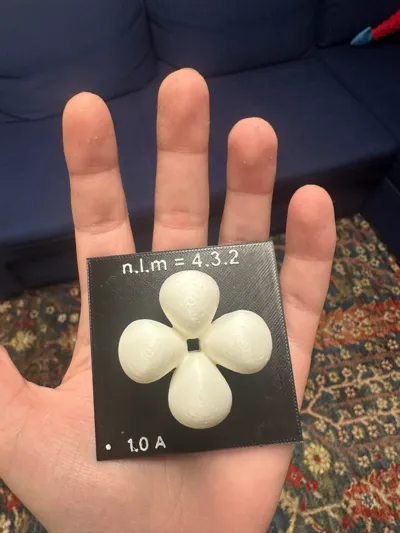
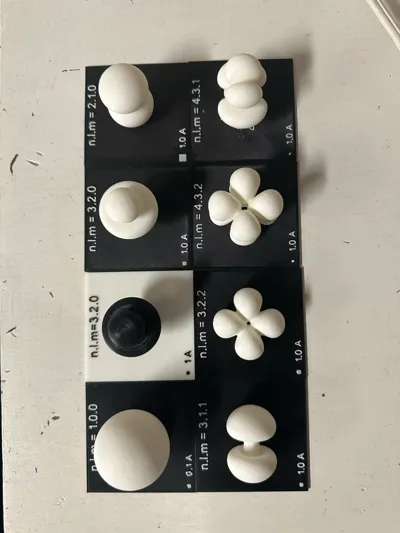
Atomic orbitals of electrons in atoms! Print-in-place, with base and square angstrom for scale.
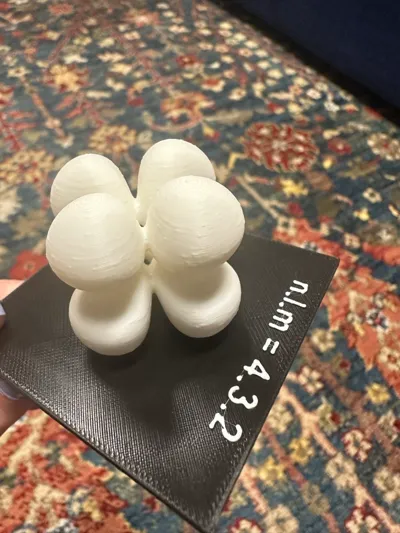
In these models, what is printed is the real part of the wavefunction solution describing the electron orbital, as well as base plates. Note, that some of the orbital number solutions may be disjointed.
I was really fascinated by how these orbitals pop up from underlying laws of physics. Electrons do not “orbit” the nucleus of an atom in the same way planets do around the sun. Instead, imagine an electron as a wave spread out around the nucleus, sort of similar to how waves spread on the head of a musical drum when it is hit.
The Schrödinger equation in quantum mechanics helps us understand how this wave behaves and where it's most concentrated, giving us the orbital shapes. This equation describes the behavior of electrons as waves, with real and imaginary parts. Solving it for a particular atom gives a set of mathematical functions (wave functions) that represent the different possible states of an electron. These wave functions, when squared, give the probability of finding the electron in a particular region of space – which we visualize as the shape of the orbital!
You can sort of think about orbitals like you would think about rooms in a hotel. The hotel room address is given by 3 numbers, n, l, and m. n tells you the energy level (floor of the hotel), l tells you the orbital shape (room type), and m tells you the orbital's orientation in space (specific room number). In the models with the base plates, these numbers are shown at the top, and a square angstrom for scale on the bottom left.
I generated these models in python, and they can be generated for any n, l, and m orbital numbers. If there is enough interest I can also upload the code or upload for other kinds of orbital numbers!
License



Comment & Rating (13)