
Tippe Top with Launcher
Print Profile(4)


Description
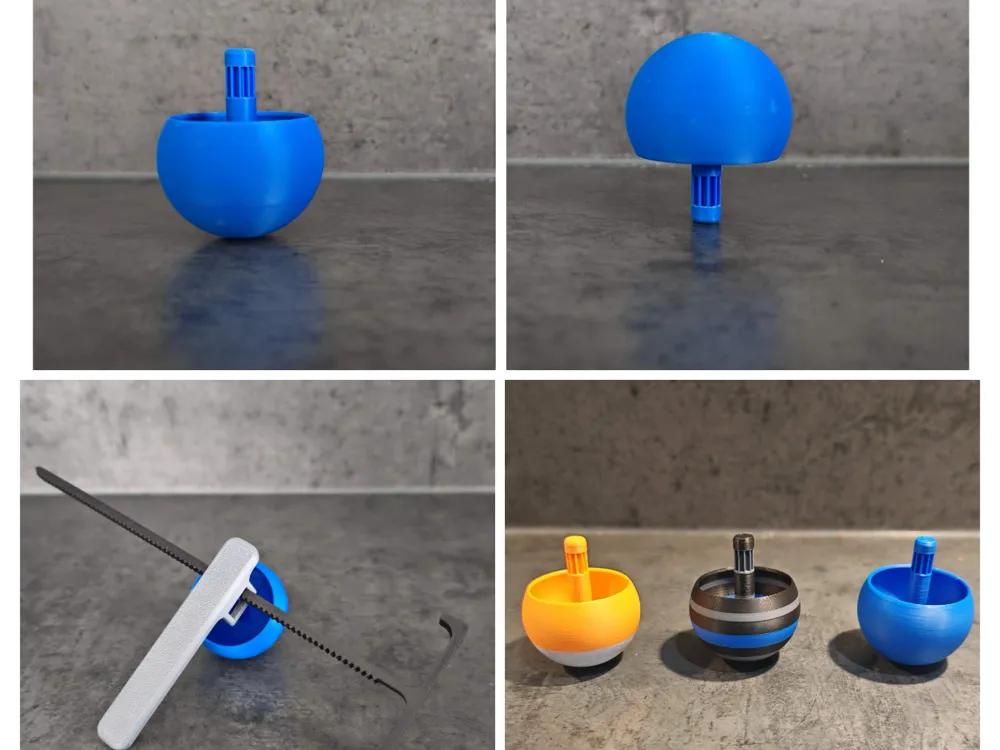
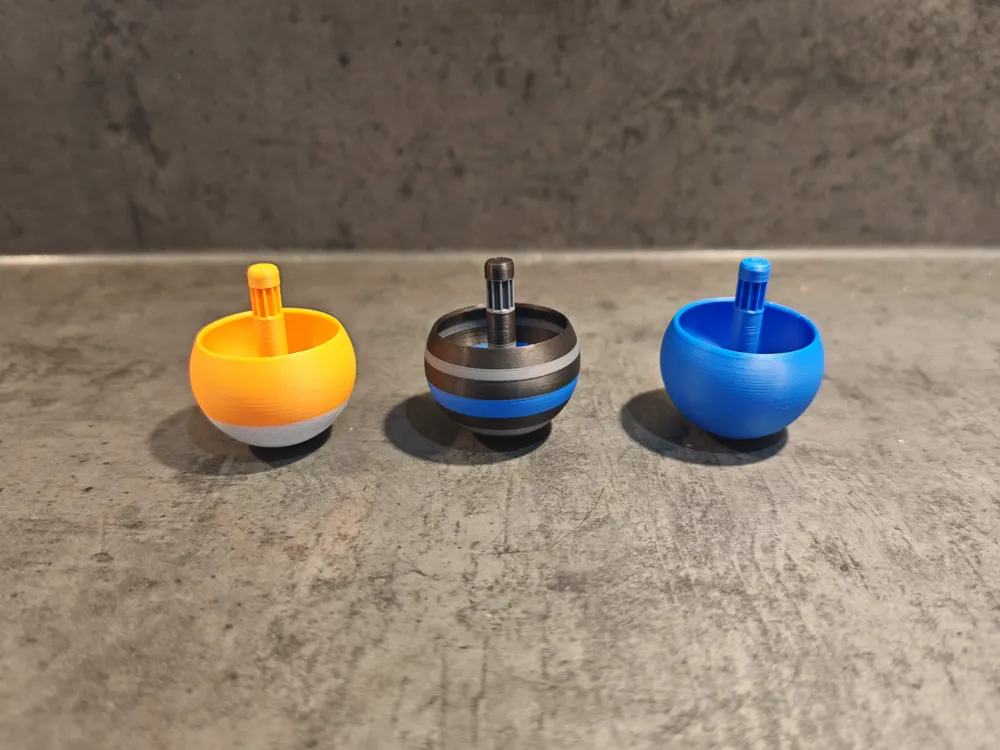
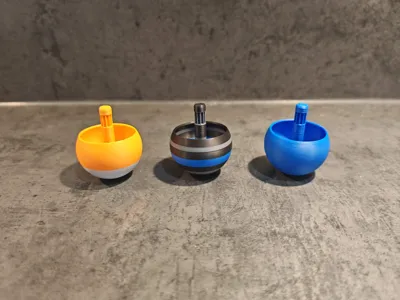
The Tippe Top is a captivating piece for showcasing a unique phenomenon in rotational dynamics. Unlike conventional tops, the Tippe Top inverts itself during spinning, turning upside down while maintaining its rotation. This intriguing behavior makes it a delightful toy and a fascinating educational tool.
Design and Features:


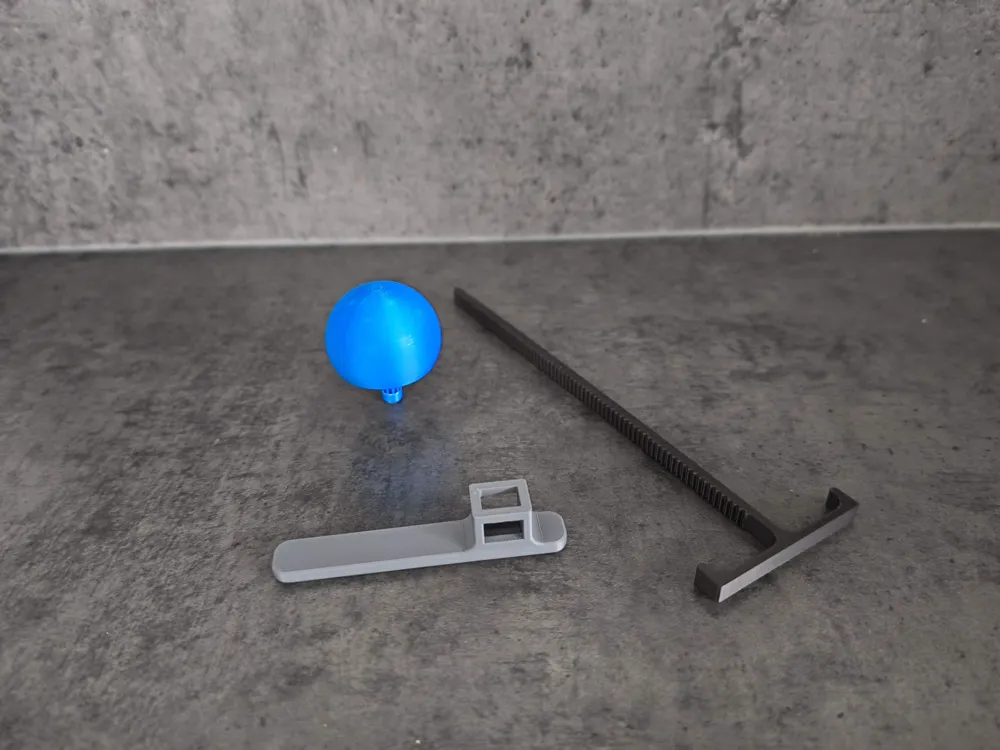
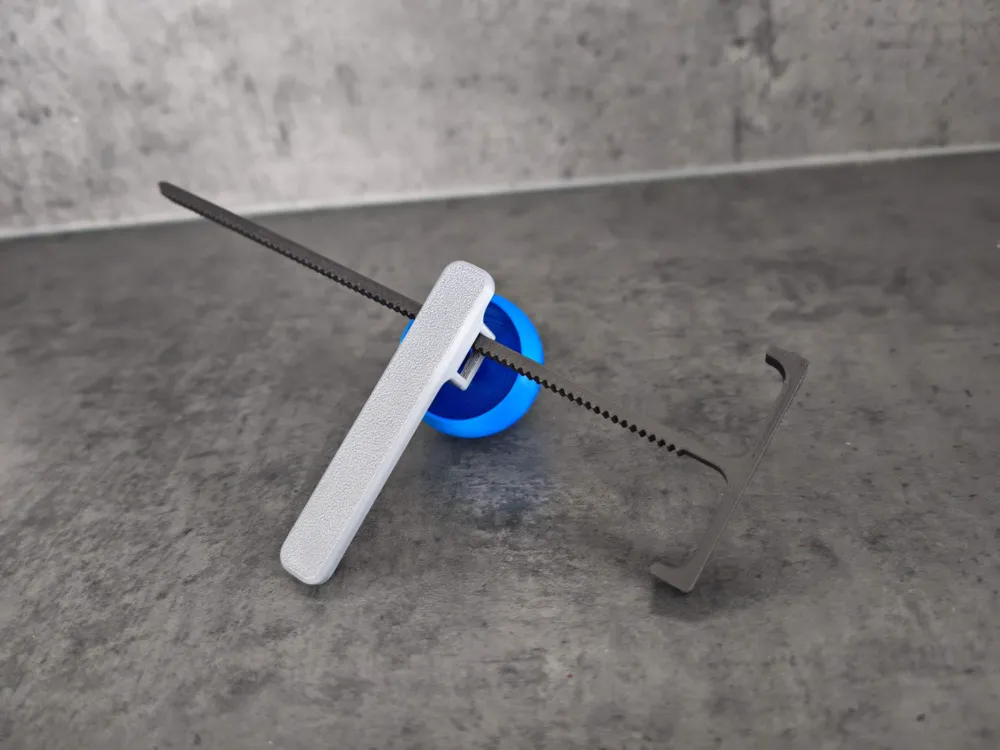
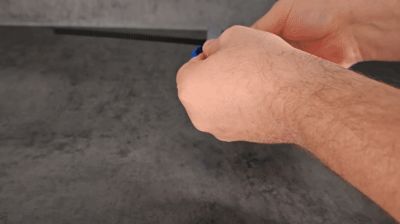
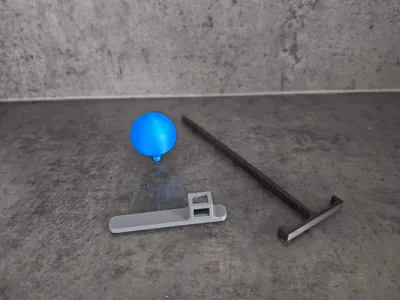
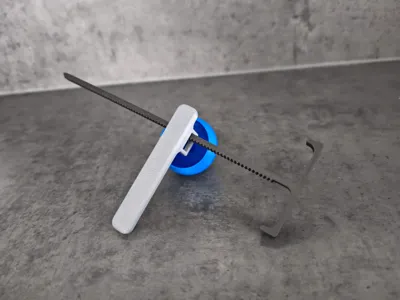
- Key Feature: Launch Mechanism: Noticing that children and other adults had difficulty starting existing Tippe Top models, this new design incorporates a dedicated launcher. This mechanism ensures ease of use, providing the necessary initial angular velocity to initiate the inversion process.
Inversion Mechanism: The defining feature of the Tippe Top is its ability to flip upside down while spinning. This is achieved through a carefully engineered shape that alters the top's center of mass during rotation.
Physical Principle of a Tippe Top
The Tippe Top’s self-inverting behavior is a fascinating example of physical principles at work, involving concepts such as angular momentum, torque, and the shifting center of mass.
1. Center of Mass Shift: The Tippe Top is designed with a spherical or semi-spherical base and a handle. When spun, the handle starts near the surface. As the top rotates, friction between the top and the surface causes the handle to lift and the base to flip, inverting the top. The shape and mass distribution cause the center of mass to shift above the point of contact, leading to the inversion.
2. Angular Momentum and Torque: Angular momentum is a property of any rotating object and is conserved in a system without external torque. In the case of the Tippe Top, the interaction between angular momentum and frictional torque at the point of contact causes the top to experience forces that lead to its inversion.
3. Gyroscopic Effects: As the top spins, gyroscopic stability initially maintains the top’s orientation. However, as the frictional forces act on the top, the distribution of forces changes. These forces cause the top to precess, leading to the unique self-inversion behavior.
4. Role of Friction: Friction between the Tippe Top and the surface is crucial for its self-inversion. This frictional force applies a torque that interacts with the top's angular momentum, causing it to rise and invert. Without sufficient friction, the inversion would not occur.
Boost Me (for free)
If you enjoy my designs and projects, consider boosting me. Its free and helps me to create more of these designs.
License

You shall not share, sub-license, sell, rent, host, transfer, or distribute in any way the digital or 3D printed versions of this object, nor any other derivative work of this object in its digital or physical format (including - but not limited to - remixes of this object, and hosting on other digital platforms). The objects may not be used without permission in any way whatsoever in which you charge money, or collect fees.


Comment & Rating (42)