
Martin Luther (Protestant Monk) Bust








Print Profile(1)

Description
Martin Luther and the Lutheran Church
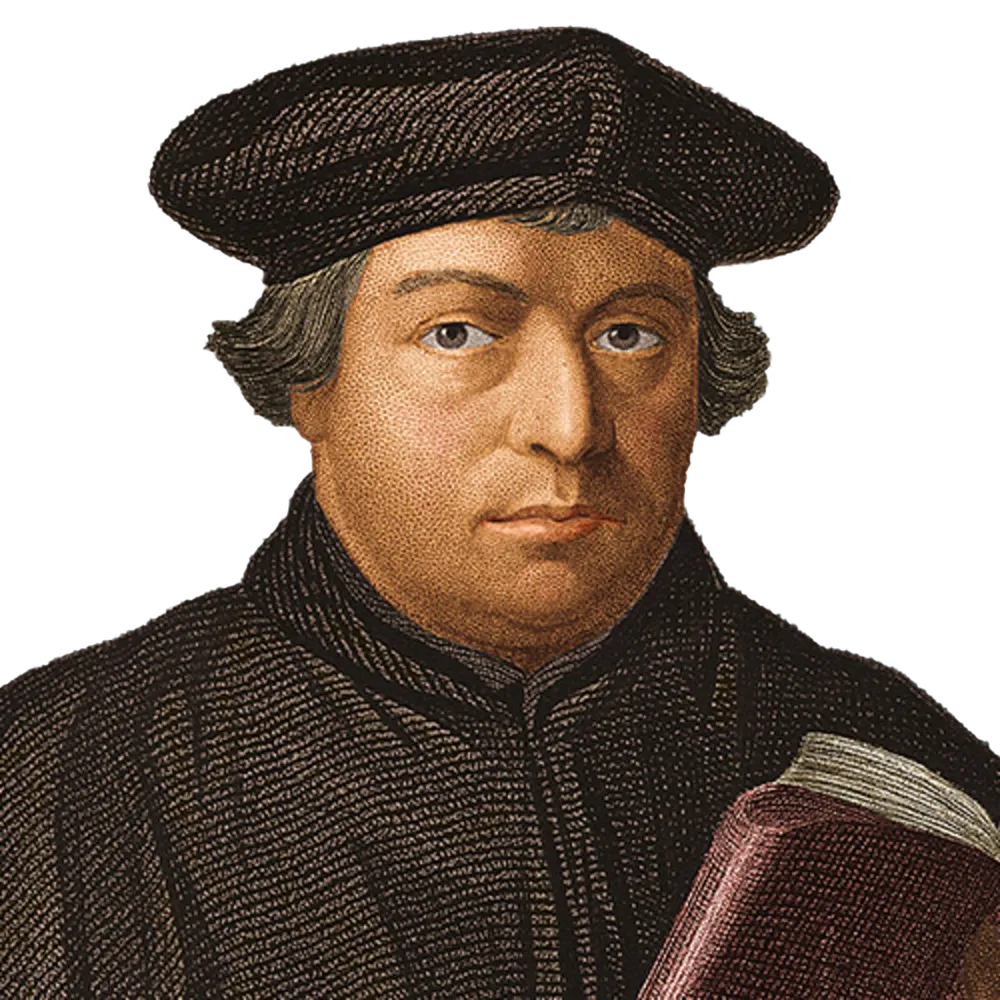
Martin Luther (1483-1546) was a German theologian, monk, and key figure in the Protestant Reformation. His writings and actions challenged the practices and doctrines of the Roman Catholic Church, particularly the sale of indulgences—payments made to the Church for the forgiveness of sins. Luther argued that salvation comes through faith alone (sola fide), scripture alone (sola scriptura), and grace alone (sola gratia), leading to the establishment of beliefs contrary to Catholic doctrine.
Luther's most significant act was the posting of his "Ninety-Five Theses" in 1517, which criticized the Church's practices and sparking debates that resonated across Europe. His beliefs led to his excommunication from the Catholic Church and the establishment of various Protestant denominations, of which the Lutheran Church is a prominent example.
The Lutheran Church is one of the largest Protestant denominations in the world. It adheres to the teachings derived from Luther’s interpretations of Christianity, emphasizing faith in Jesus Christ and the authority of the Bible. Lutheran worship typically includes elements such as liturgy, hymns, and communion, reflecting a balance of reverence and communal participation. The two main branches of Lutheranism are the Evangelical Lutheran Church in America (ELCA) and the Lutheran Church—Missouri Synod (LCMS), each with differing theological nuances and governance structures.
Statue Bust of Martin Luther
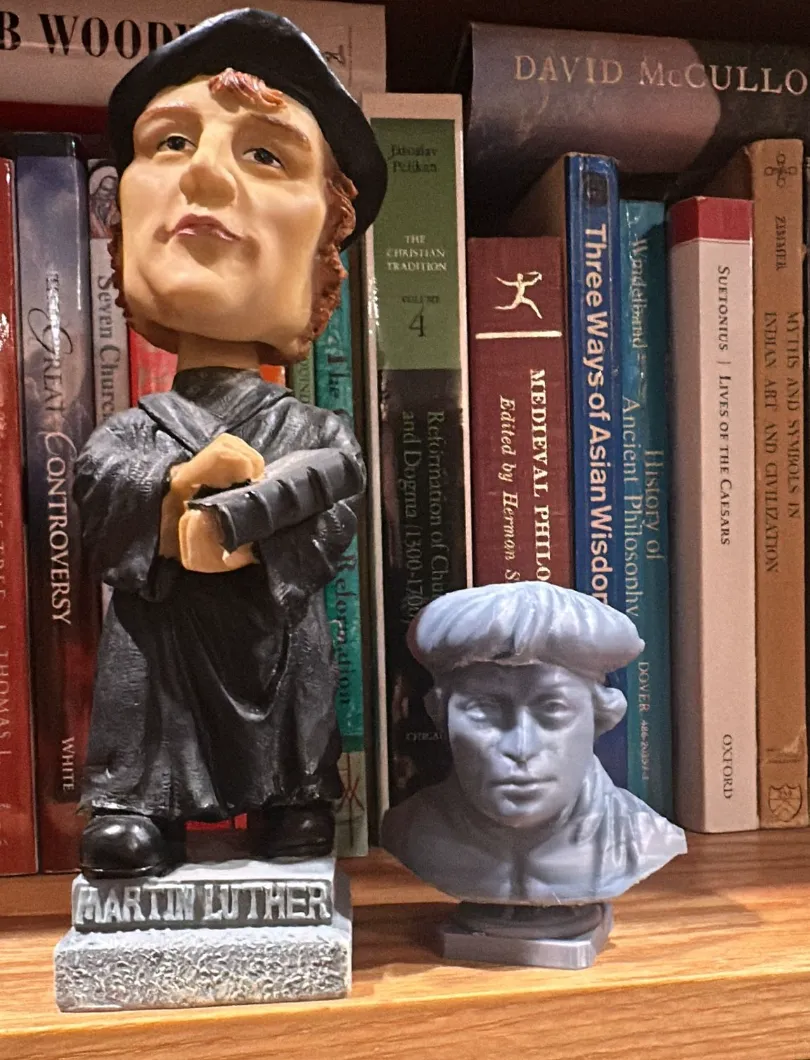
A statue bust of Martin Luther typically captures his likeness and serves as a representation of his significant role in religious history. Such busts commonly depict Luther in a scholarly pose, often with a furrowed brow indicative of deep thought, and may feature details characteristic of the late 15th and early 16th centuries, like a simple dress or collar. These elements reflect his role as a thinker and reformer.
The bust might be made of materials such as marble, bronze, or plaster, emphasizing a sense of permanence and reverence. The expression in the bust often conveys determination and conviction, which are traits associated with Luther’s steadfastness in his beliefs.
This statue serves not just as a tribute to Luther himself but as an icon representing the values of the Protestant Reformation, including the pursuit of religious truth, accountability to scripture, and the primacy of personal faith. Statues and memorials dedicated to Luther can be found in various locations, notably in Germany, reflecting his enduring legacy in Christian history and beyond.
License



Comment & Rating (8)