
3D Visualization of Euler's Helix


Print Profile(4)



Description
Description
Background
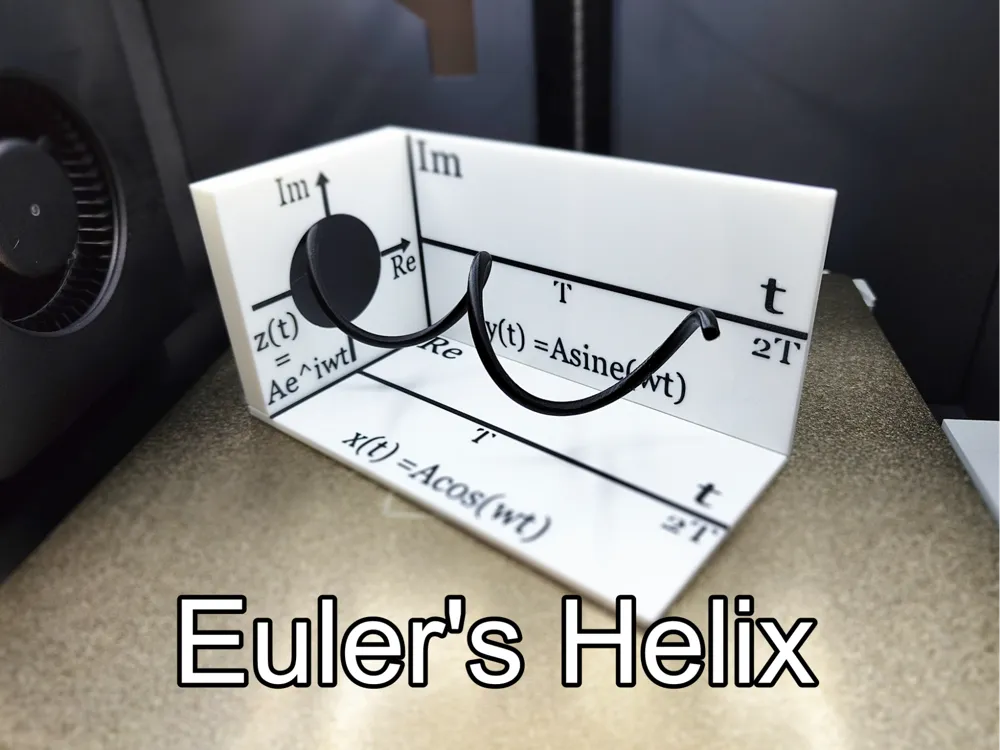

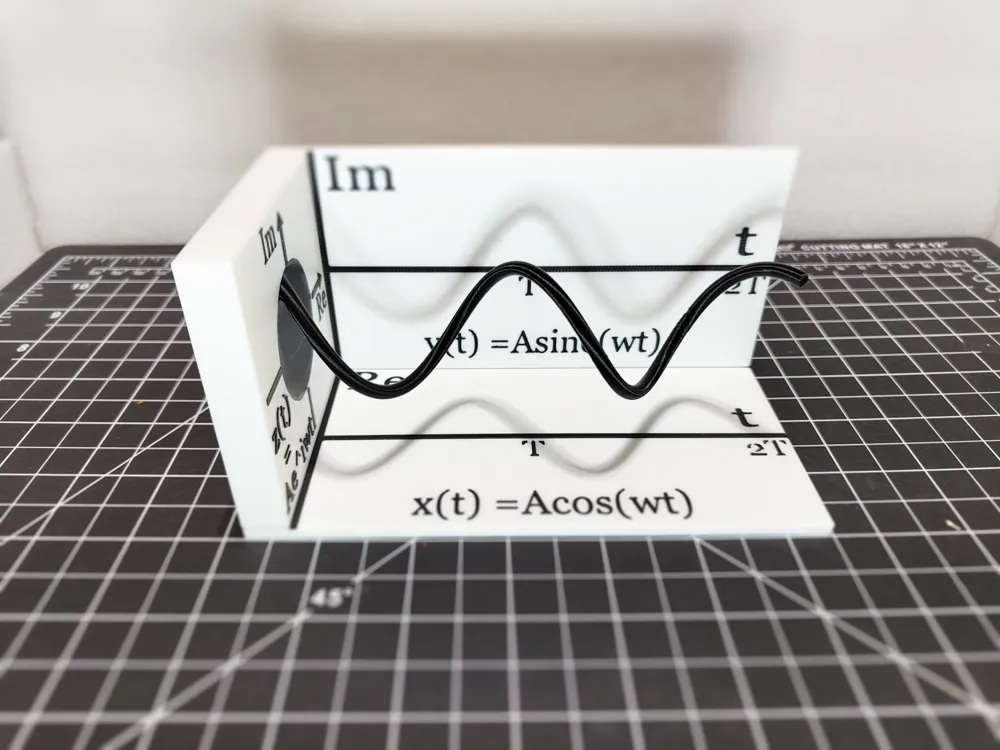
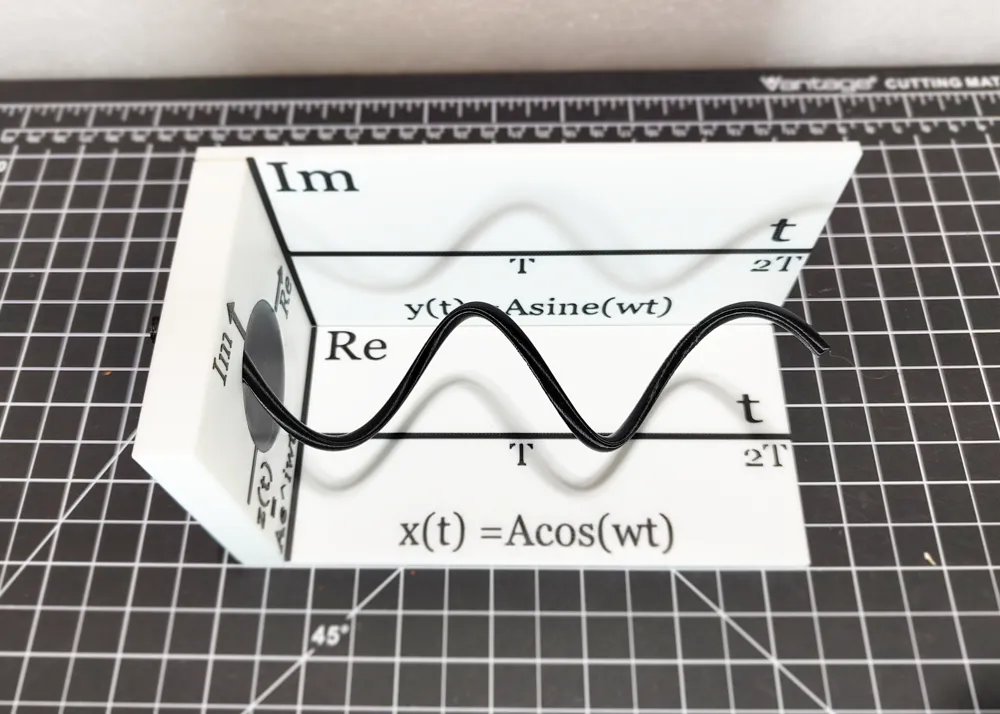
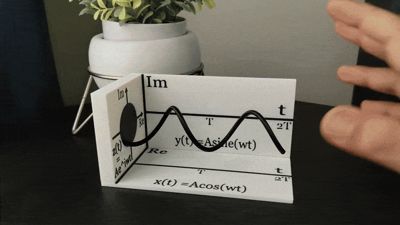
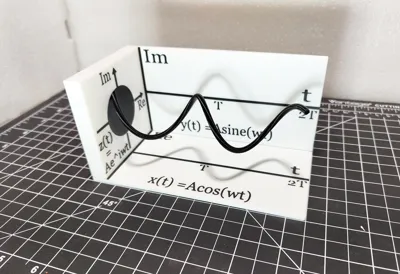
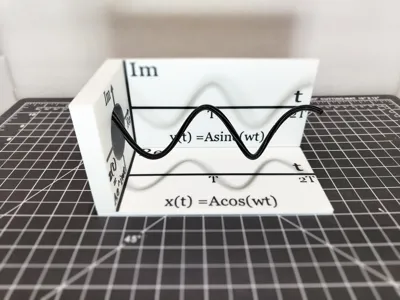
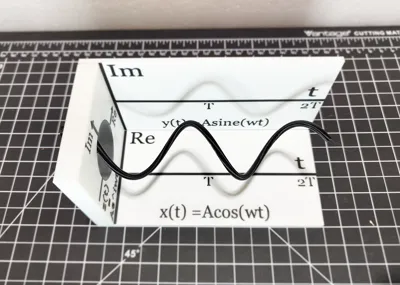

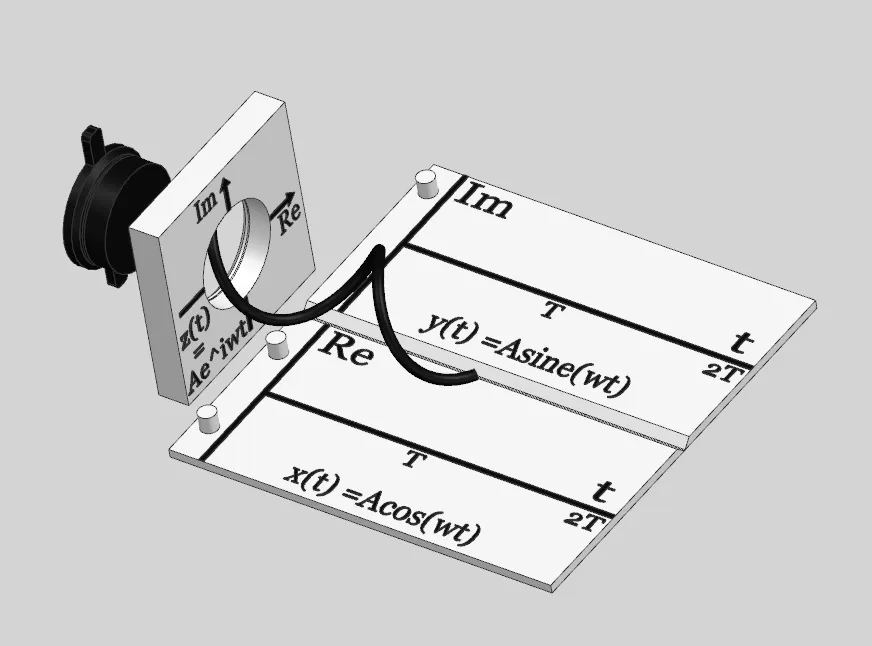
This model visualizes the Euler’s helix in 3D time space. This is a 3D representation of Euler's formula where the complex exponential function is plotted in 3D space, creating a helical curve that visually represents the relationship between sine and cosine functions as rotations around a central axis. The sine and cosine waves are orthogonal 2D projections of this 3D helix.
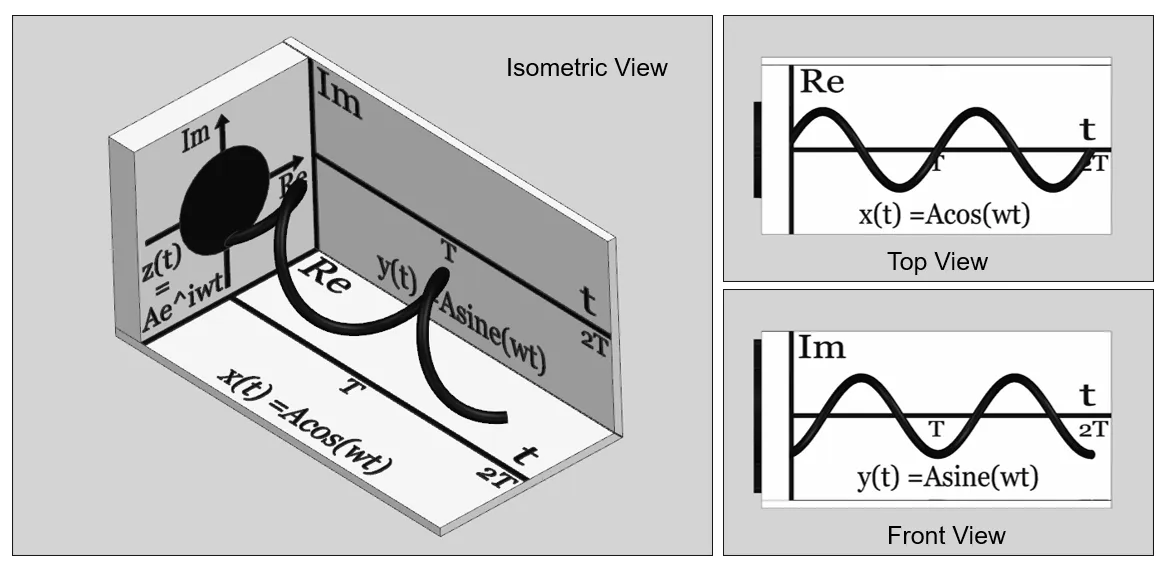
The images below are taken as the inspiration and reference for this project:
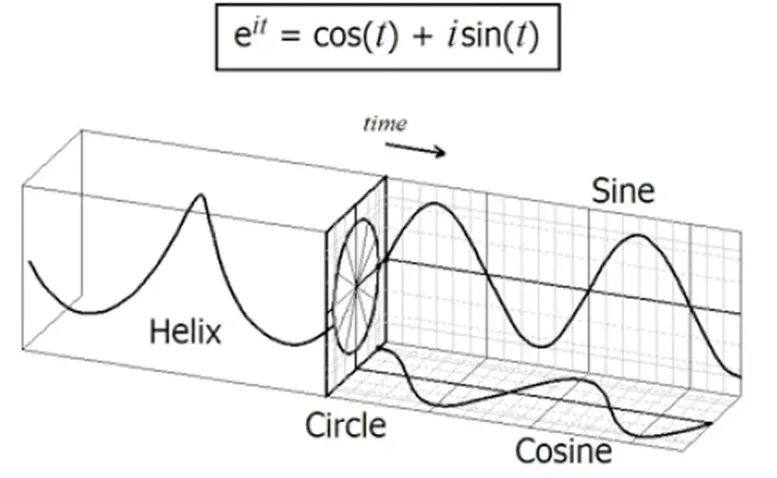

Now, this model has two planes (Real (Re) and Imaginary (Im) axes with time). The Complex number ‘z’ rotating anticlockwise in a circle at a constant rate with time.
𝑧(𝑡)=𝐴𝑒^𝑖𝑤𝑡 can be treated as a signal with time as independent variable and call it a complex sinusoid. The two equations from each plane are as follows:
𝑥(𝑡) = 𝐴𝑐𝑜𝑠(𝑤𝑡+𝜃)
𝑦(𝑡) =𝐴𝑠𝑖𝑛(𝑤𝑡+𝜃)
𝑧(𝑡) = 𝑦(𝑡) + 𝑖𝑥(𝑡)
𝐴𝑒^𝑖(𝑤𝑡+ 𝜃) = 𝐴𝑐𝑜𝑠(𝑤𝑡+𝜃) + i𝐴𝑠𝑖𝑛(𝑤𝑡+𝜃)
Where 𝑤 → 2𝜋𝐹
Frequency → 𝐹 (𝐹=1/𝑇)
Phase → 𝜃
Amplitude → 𝐴
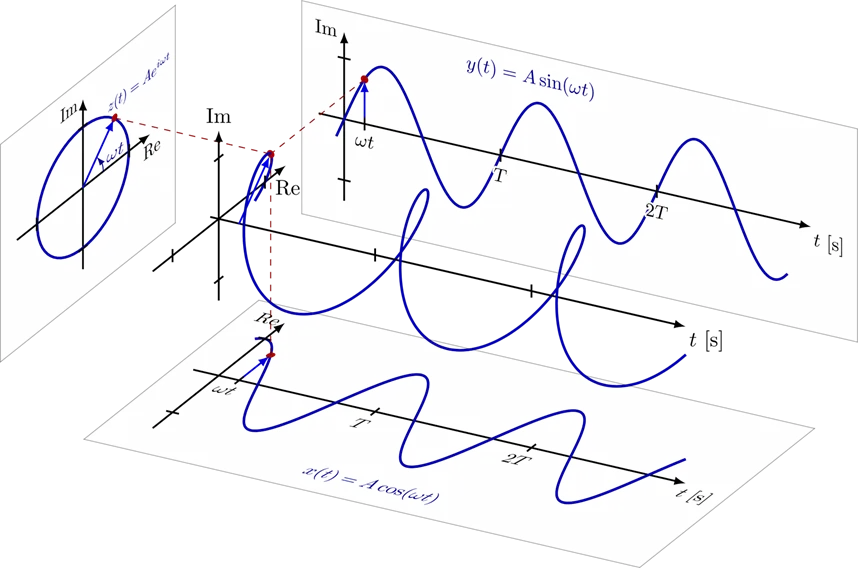
This model shows 2D and 3D representation of Euler's Formula for complex numbers and it will help understand and visualize how the Euler's Helix concept works. This concept is important for many mathematics and physics application such as Signal Processing, Fourier Transform, Frequency Analysis, and etc.
Print and Assembly
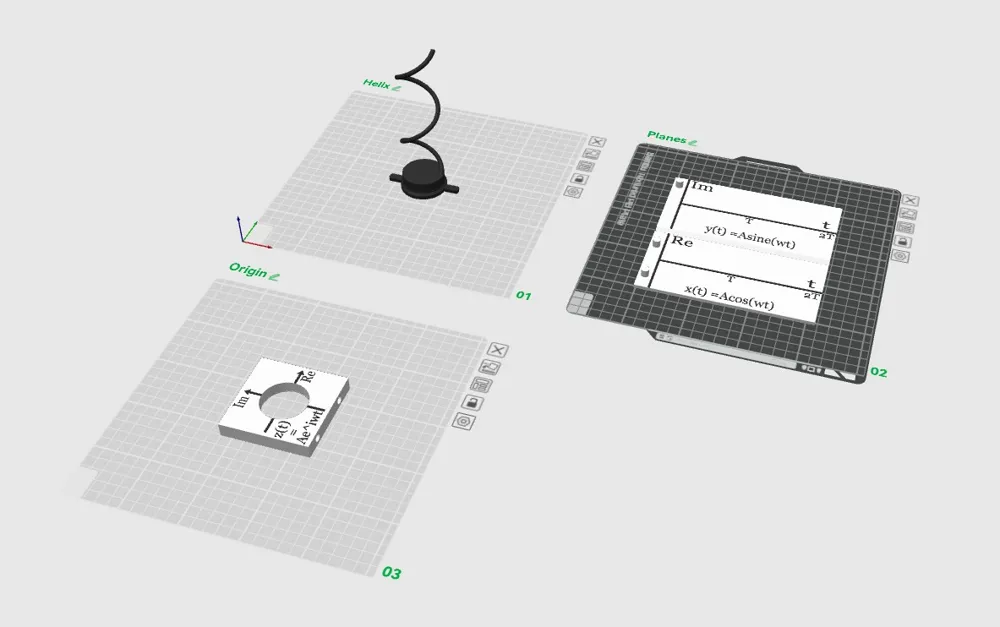
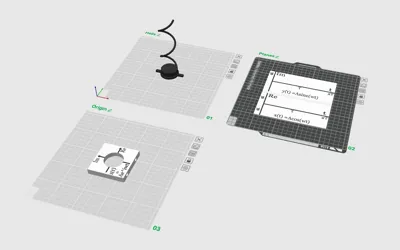
There are only 3 parts to this model. The planes, Origin and the Helix. I used AMS to have the black writings on white background. The following steps describes the assembly process:
- Insert the Origin face with two holes to the Planes with 2 cylinders
- Fold the other plane with one cylinder into the face of the Origin with one hole.
- Insert the Helix from the back of the Origin until you hear a click. The helix should rotate by twisting the two handle
- Everything is snug fit and no glue is needed.
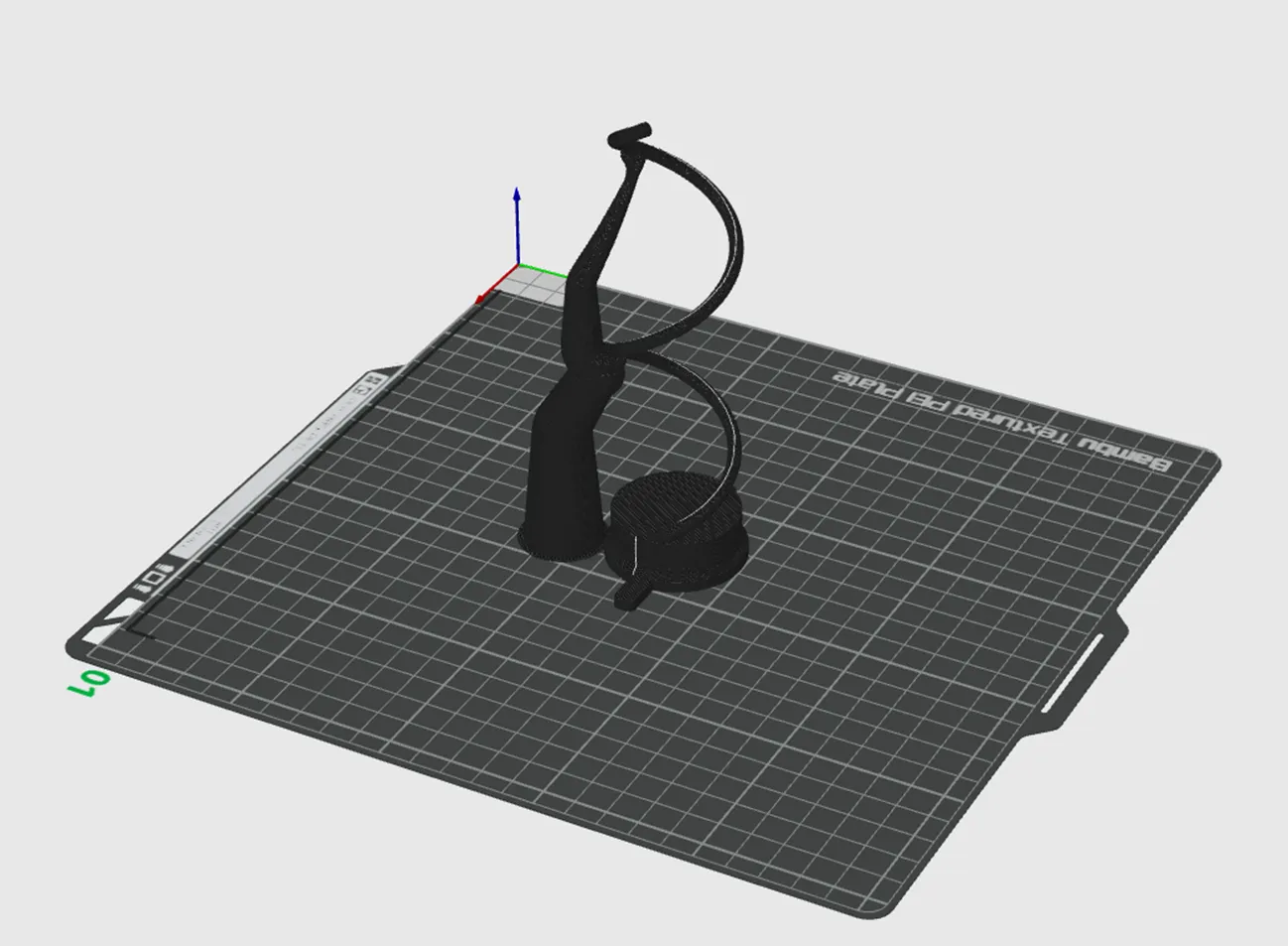
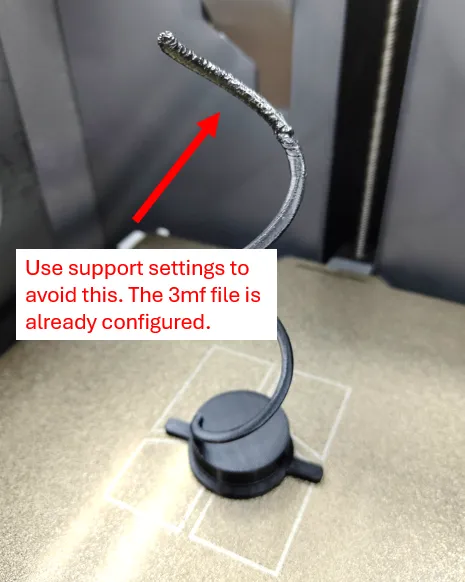
Also it is very important to keep the support for the Helix part as it can create layer shift near the top area due to it's thin and tall structure. The support helps stabilize the print. The support comes off very easily and will not damage the part if you keep the settings as is.
The below image shows a print without support:
Edit: I received a print profile review that says the Helix print fails for lack of support. Although my printer was able to print with the original print profile I added another print profile with more support for the Helix part. It passed mt test print and I had no issue at all.
Disclaimer: I am not a mathematician nor an expert in this subject. If you find any misinformation and would like me to correct them please let me know in the comment. I will highly appreciate it. Thank you!
References:
- https://wirelesspi.com/the-concept-of-frequency/
- https://mathematica.stackexchange.com/questions/283398/eulers-helix-and-wave-propagation-in-animated-plot
- https://dsp.stackexchange.com/questions/78924/connection-from-fourier-to-laplace-transform
- https://tikz.net/complex/
License



Comment & Rating (106)