
Solar System with Gravity Wells

Print Profile(2)


Description
Boost Me (for free)
Help me design more great models!
Membership
Want more great models? Help me out!
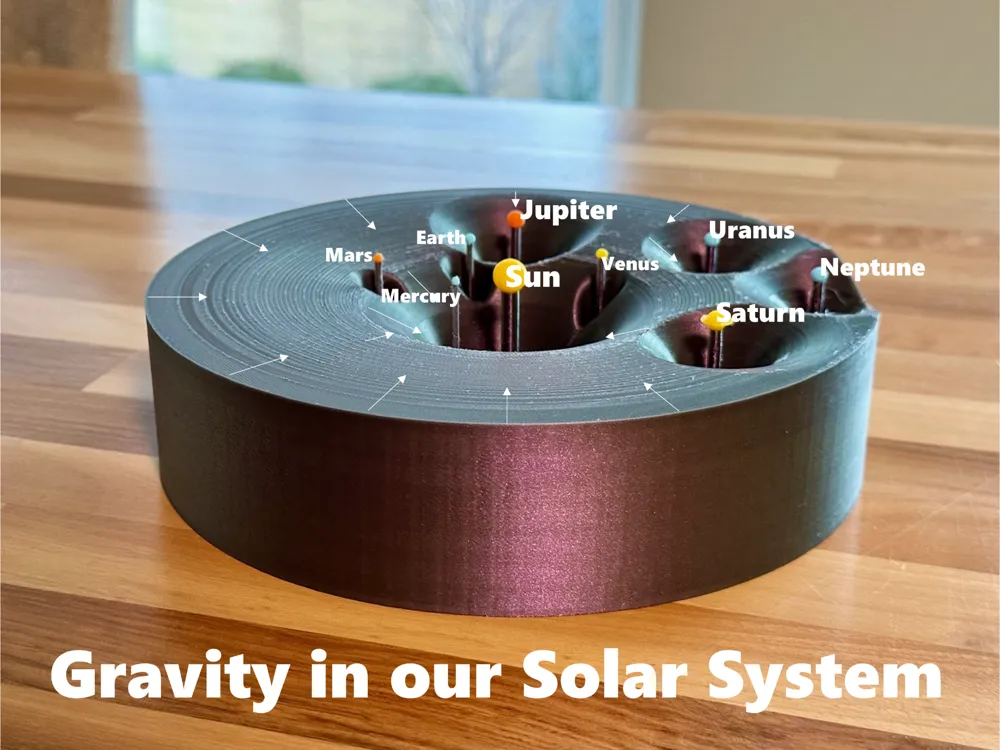
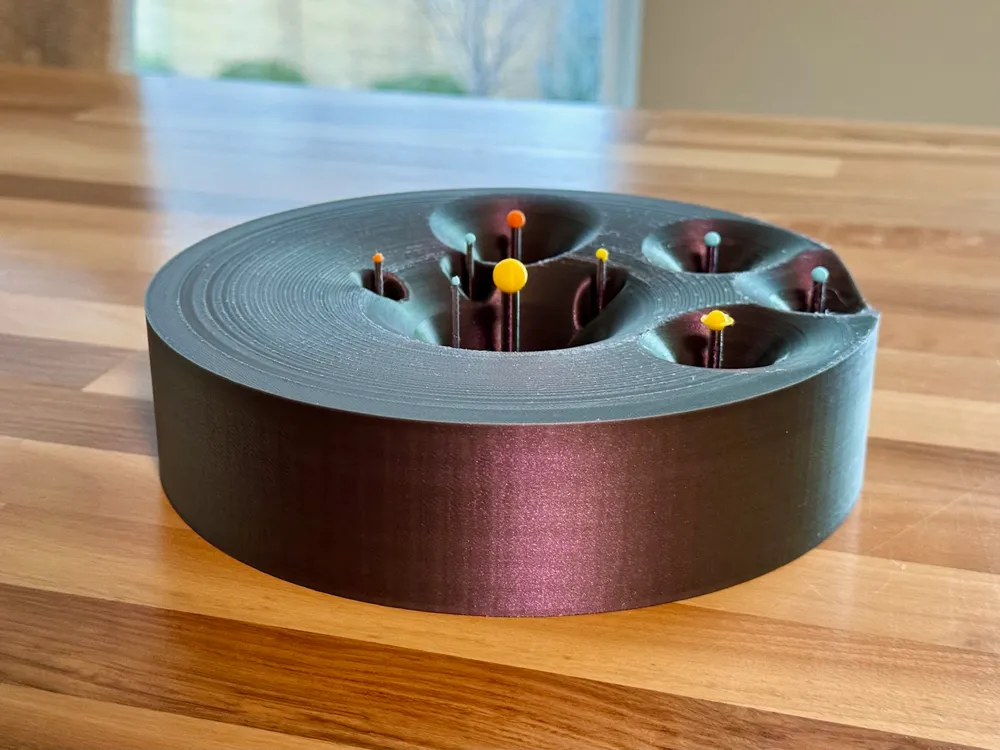
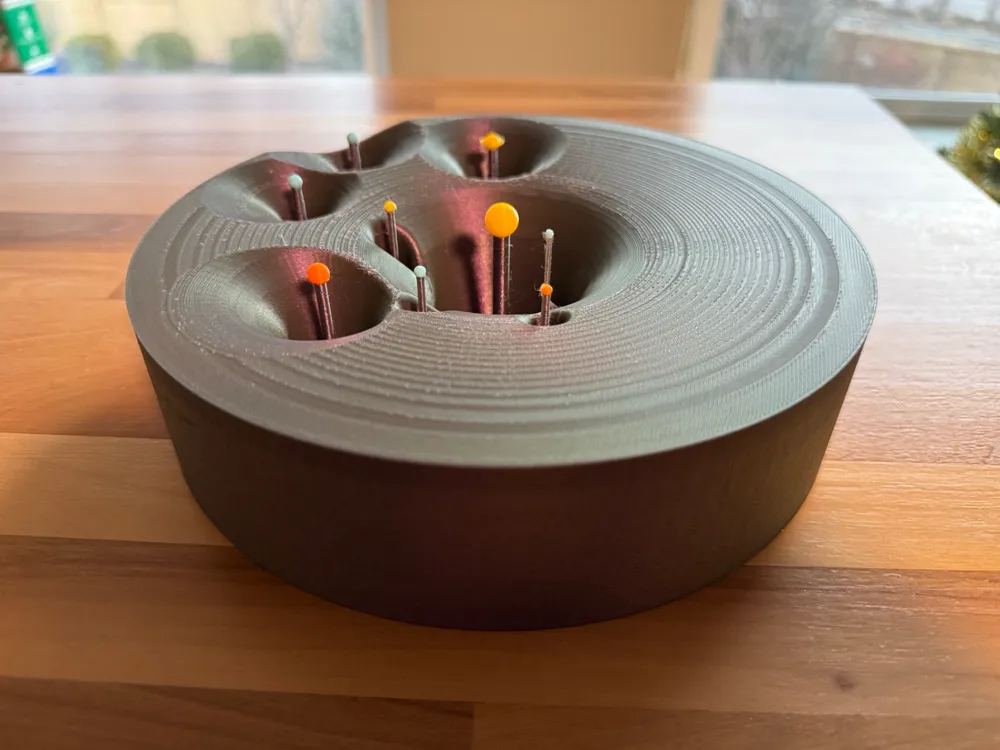
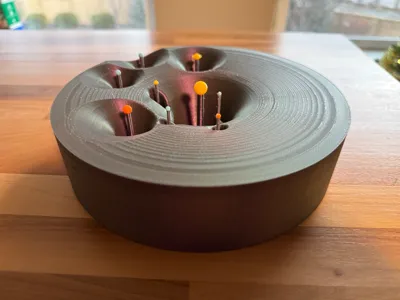
Model of the solar system demonstrating gravitational distortions of space.
Newton’s Law of Gravitational Attraction F=(G*m1*m2)/r^2.
This means that the gravitational field is proportional to the mass of a celestial body and inversely proportional to the square of the distance from the object, and that is what is plotted here, with some scaling done to better show the relative differences.
In an educational setting, this diorama demonstrates several things about gravity:
1) Gravitational attraction - the inverse square relationship between gravitational attraction and distance from a celestial mass is acurately pictured.
2) Region of strongest influence - a mass will roll into only one well at a time (can demonstrate with a marble).
3) Lagrange points - these are the saddle points between regions of influence where the gravitational pull from two bodies is equal.
4) Orbital mechanics - a round object (like a marble) can “orbit” around each well, but will fall into a well as it loses velocity due to friction (similar to air resistance). Without friction, the object could orbit forever.
5) Escape velocity - a marble can only escape from a well if it has sufficient velocity.
Since the gravity of the sun completely overwhelms the gravity from any of the planets, I used some scaling functions on the distances, masses, and diameters to bring them all to a more comparable scale. If you are curious, the diameters and distances were scaled by the (¼) power and the masses were scaled by a logarithmic function. The solar system configuration is roughly equivalent to that during this contest, December of 2025, with some slight artistic tweaks.
In addition to being an educational aid, I think the model makes for an attractive decorative piece showing the beauty of space.
License

You shall not share, sub-license, sell, rent, host, transfer, or distribute in any way the digital or 3D printed versions of this object, nor any other derivative work of this object in its digital or physical format (including - but not limited to - remixes of this object, and hosting on other digital platforms). The objects may not be used without permission in any way whatsoever in which you charge money, or collect fees.


Comment & Rating (166)