
The Falkirk Wheel - Archimedes principle
Print Profile(2)


Bill of Materials




Description
Please 👍If you think this model deserves it! Thank you :)
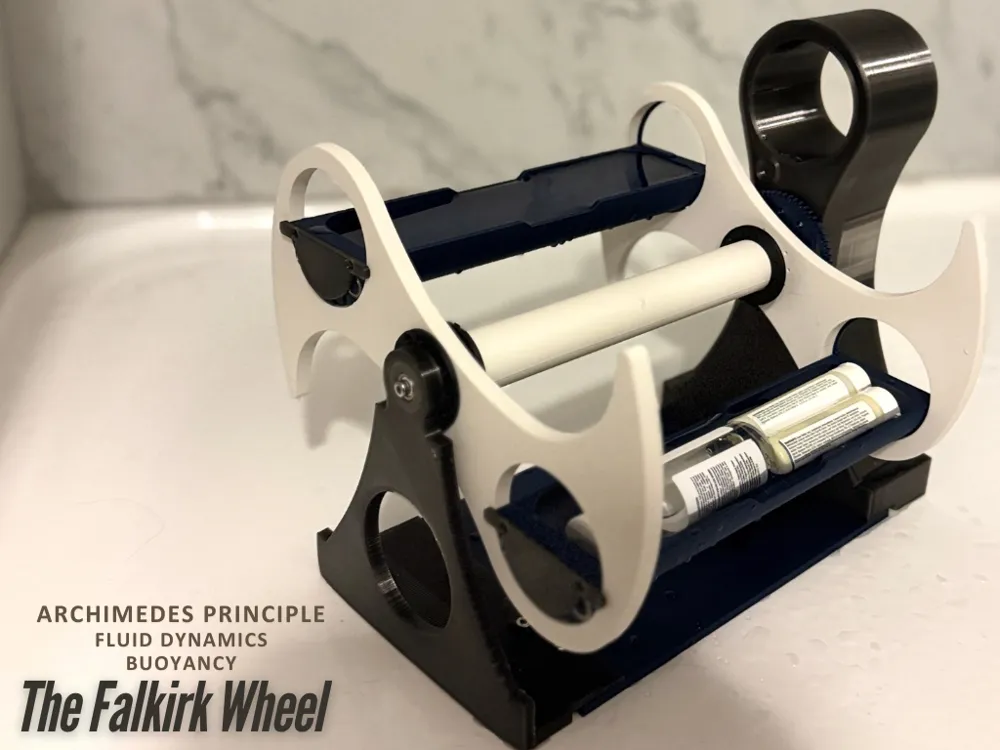
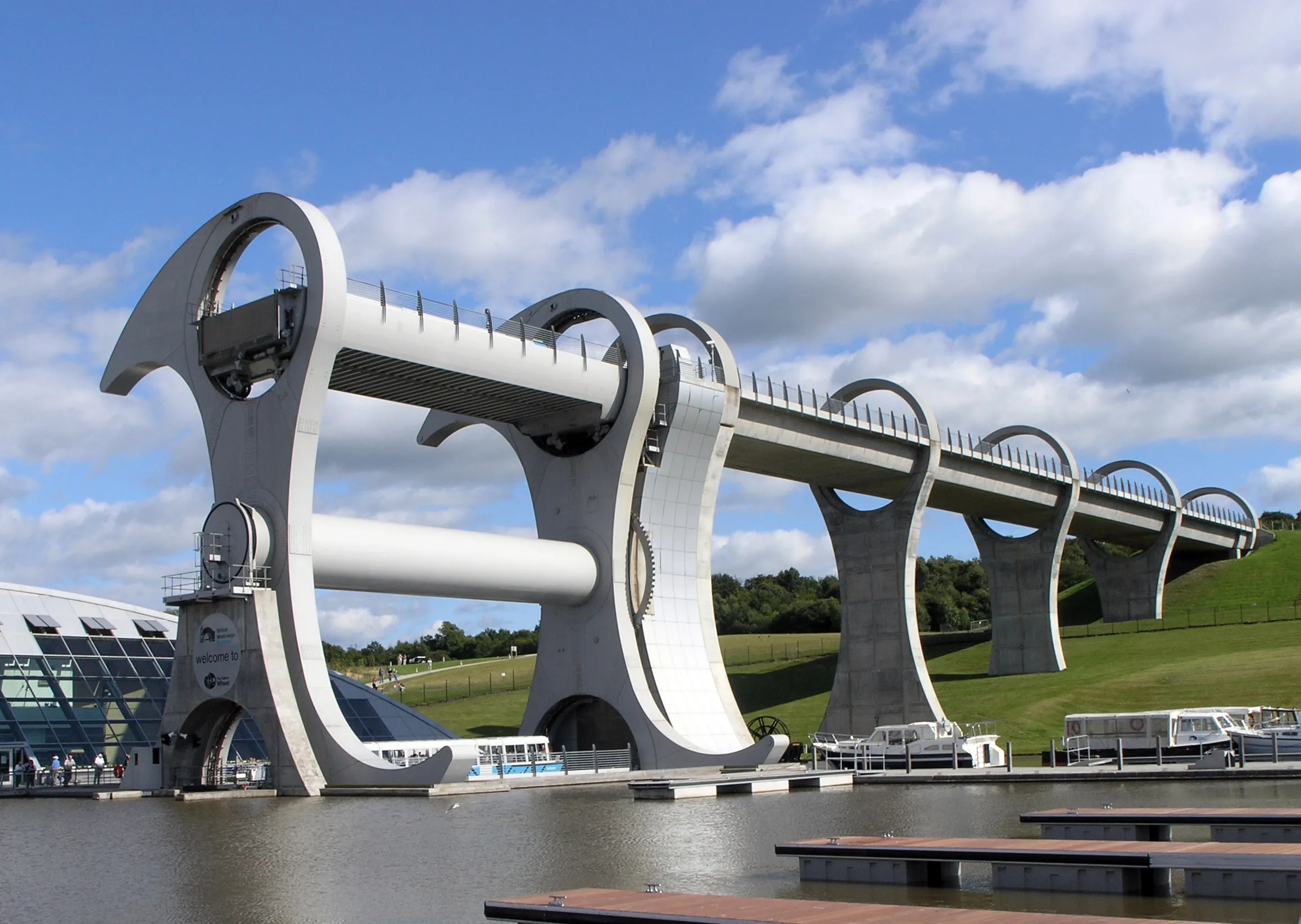

The Falkirk Wheel is a remarkable piece of engineering and a unique rotating boat lift located in Scotland. It connects the Forth and Clyde Canal with the Union Canal, allowing boats to traverse a height difference of 35 meters (115 feet). Fun fact: It only takes the power of eight electric kettles to rotate the wheel (That is very small).
Actual Wheel In Scotland
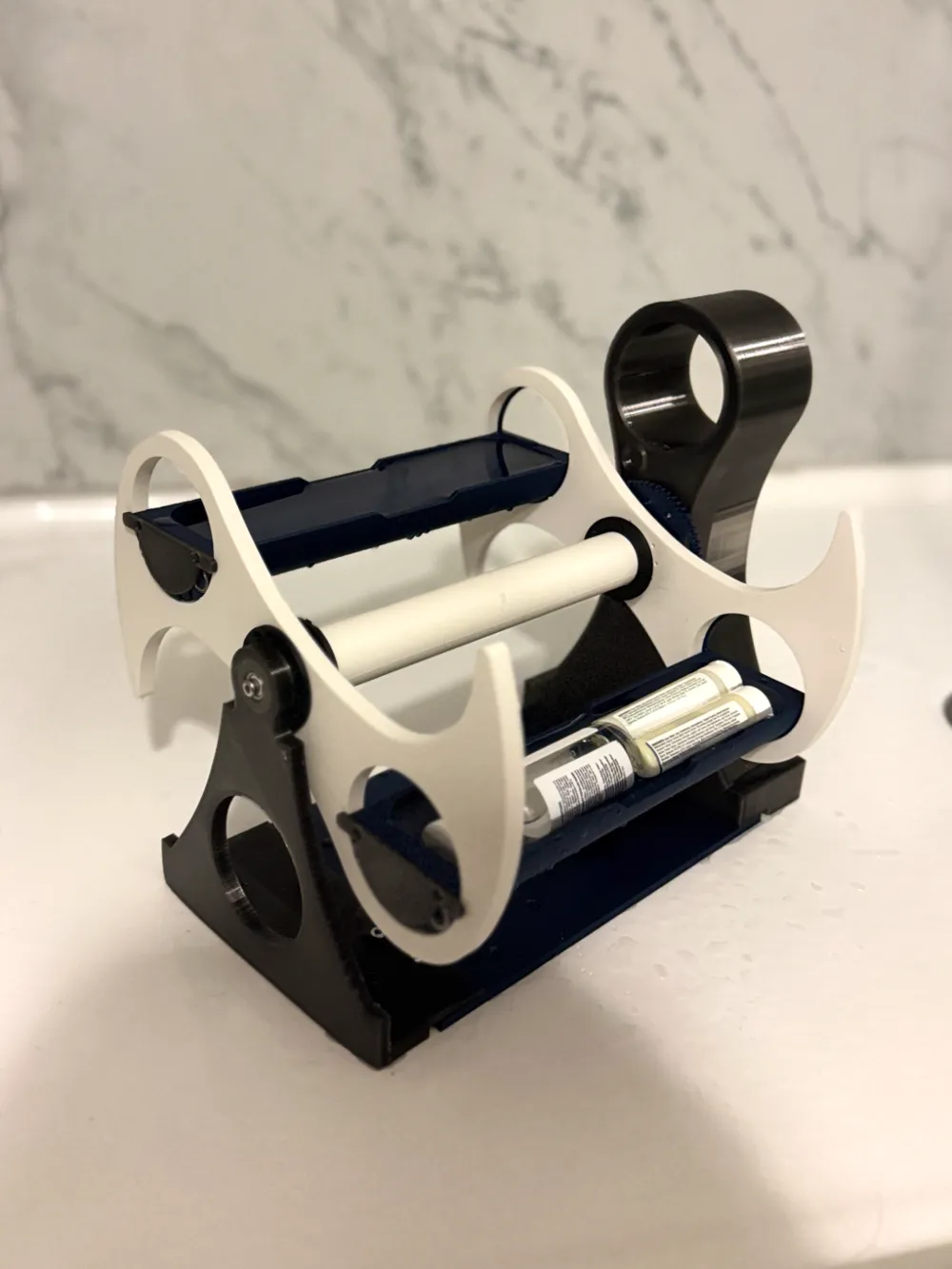


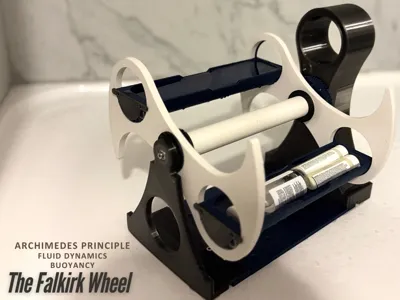
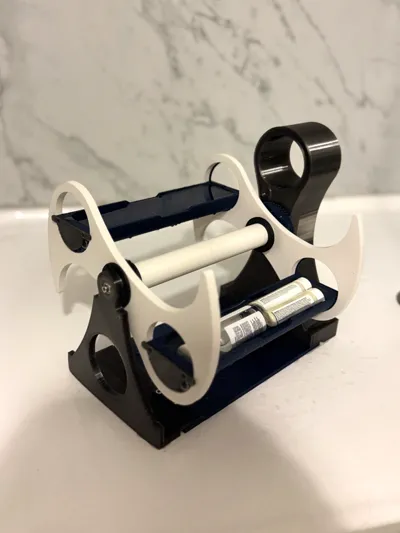
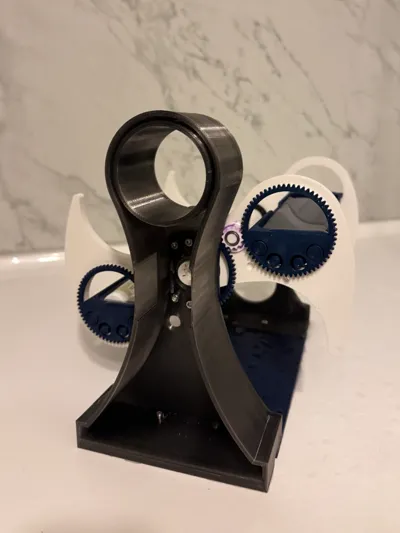
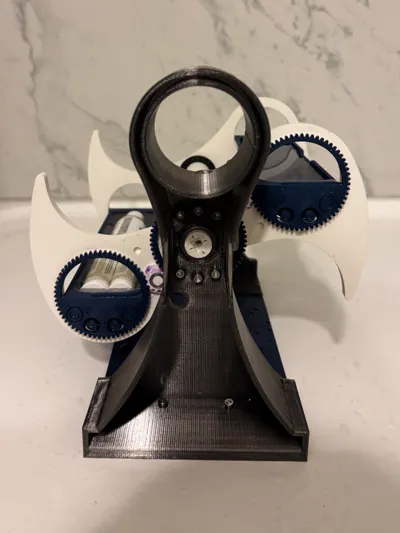


This model is a scaled simplified version designed to be an educational way to communicate the principles behind the Falkirk Wheel's design, blending the physics of fluid dynamics, efficiency, and practical function into an understandable & visual demonstration.
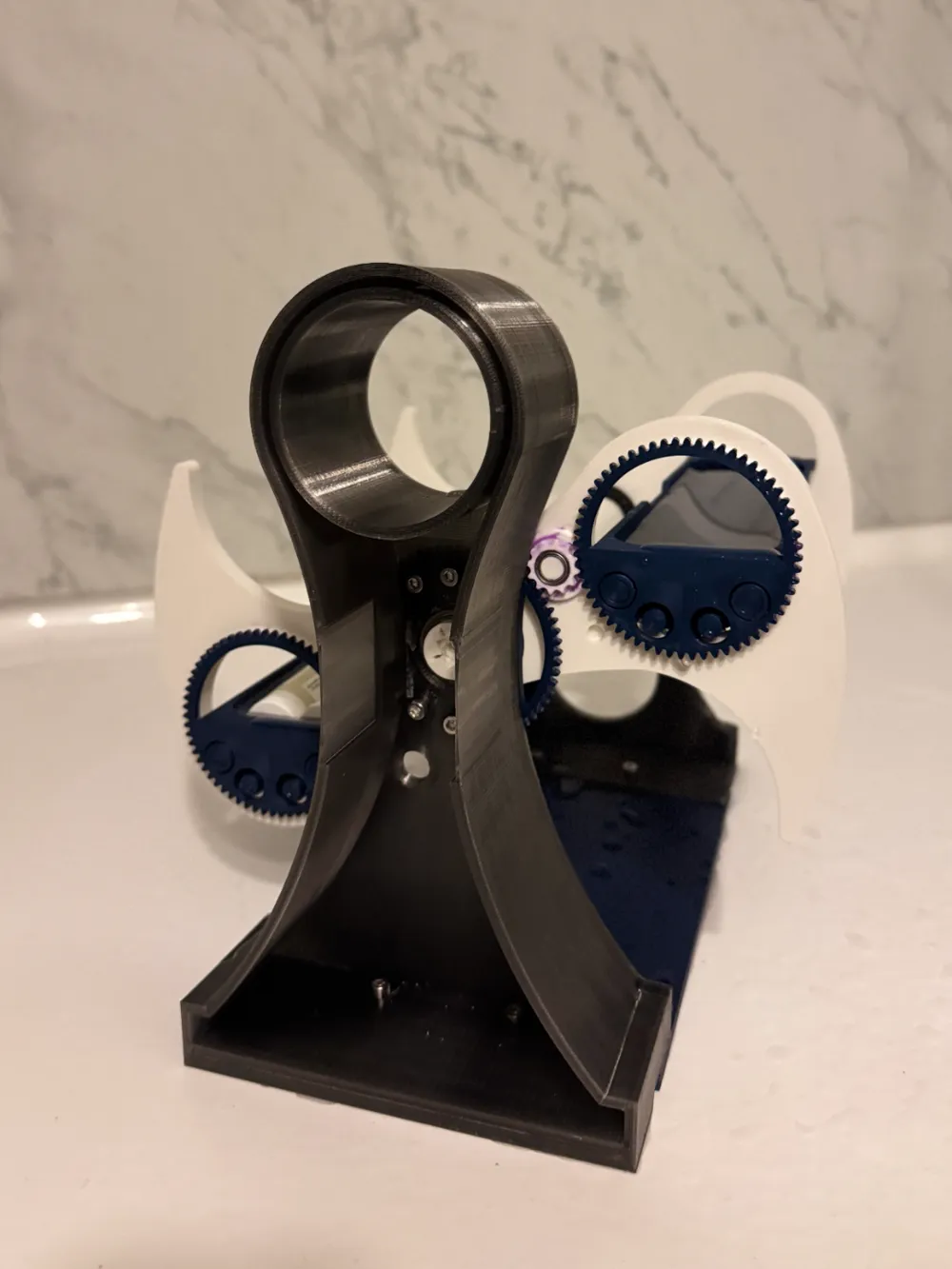
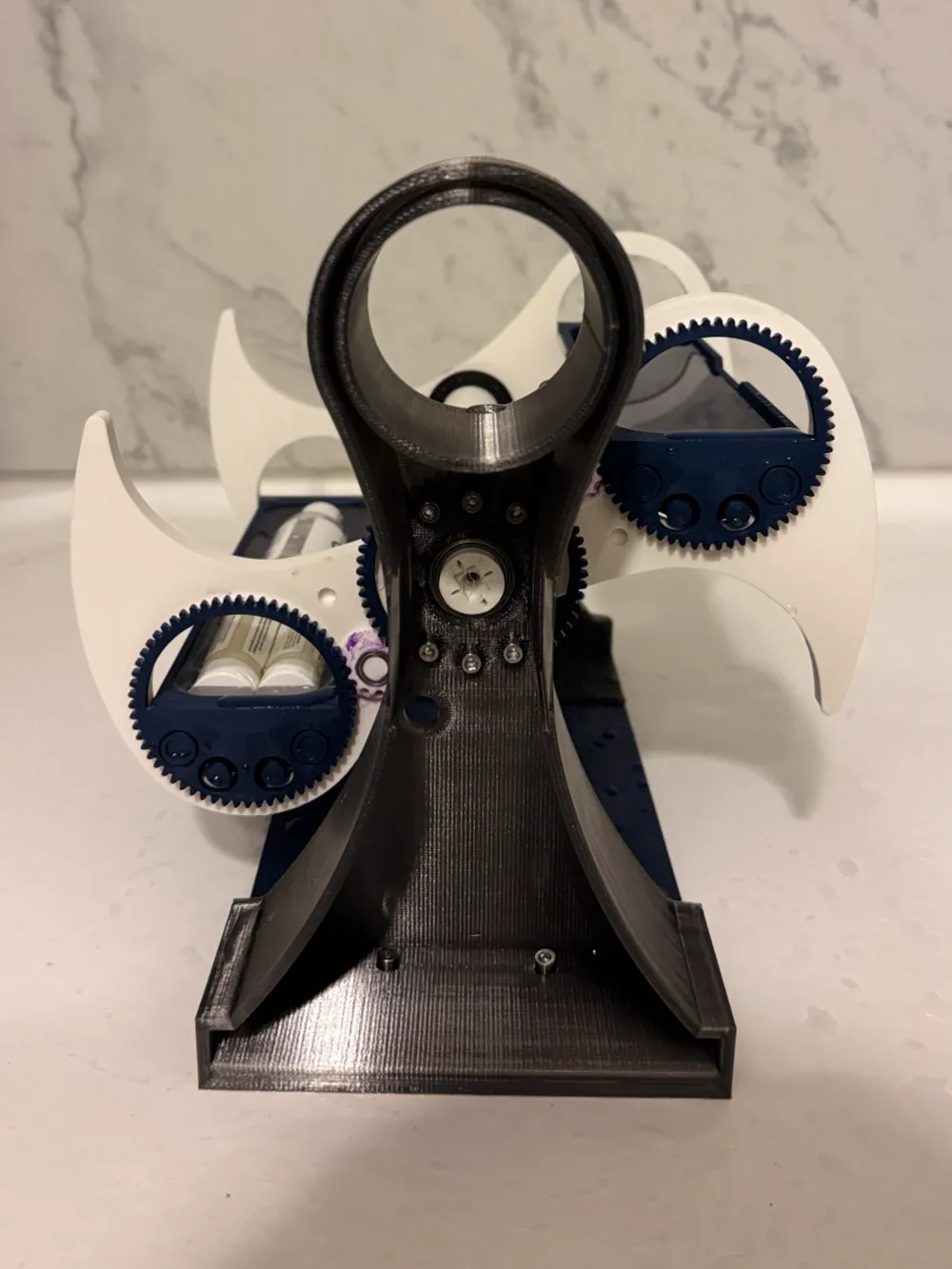
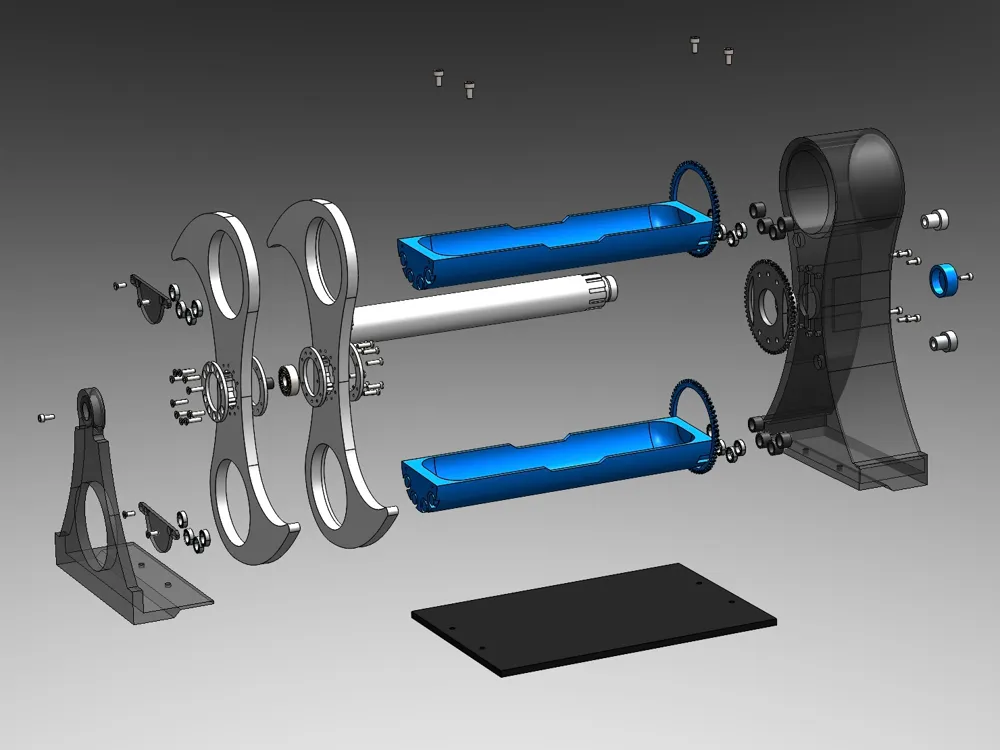
Currently, I have built this model to be used manually. However, if this model gains enough interest I'll be uploading ways to integrate motors & servos into the design. I have done my best to future-proof this model so even if you print it now you can still use the 6 holes in the entrance stand to make brackets for various motors. I will be using those as well to make my own add-on pieces. Even the shaft includes cutouts and a 4mm hole to add on extensions.
All external components used in this model are available on the Bambu labs store.
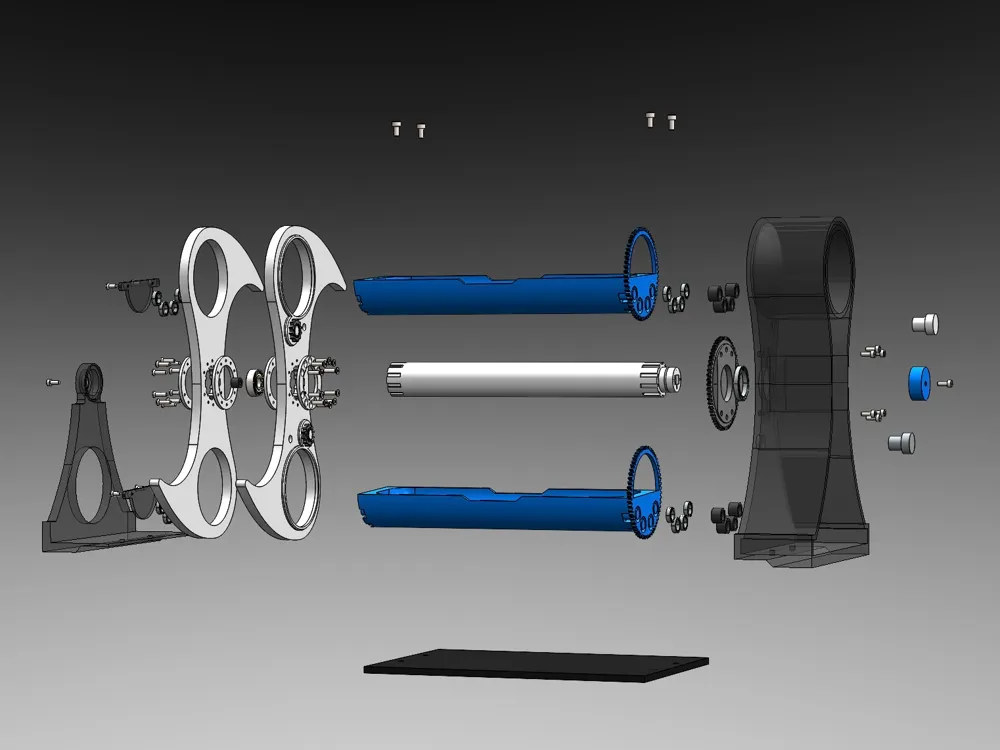
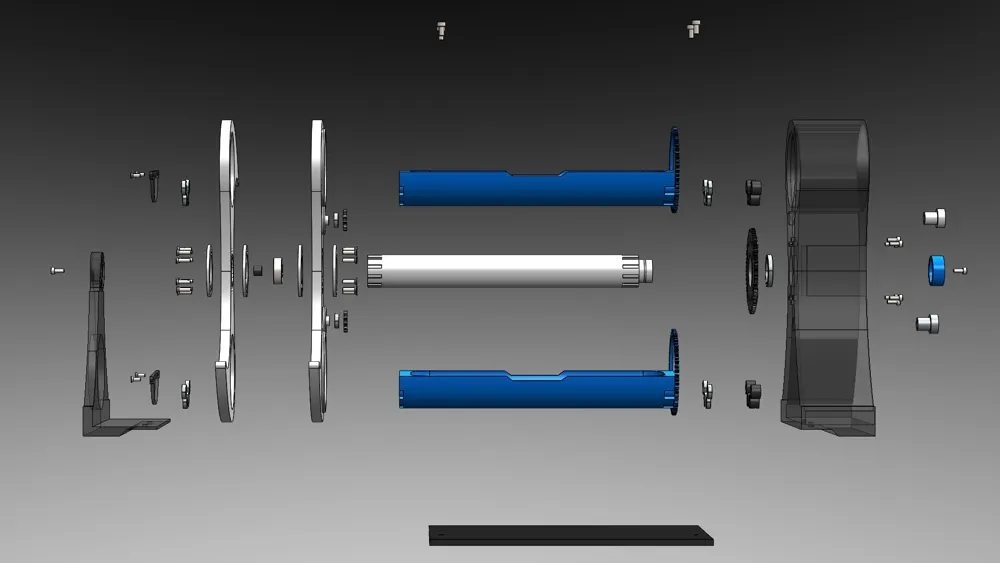

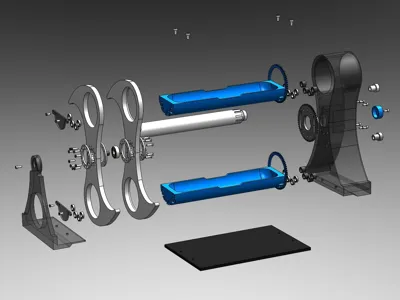
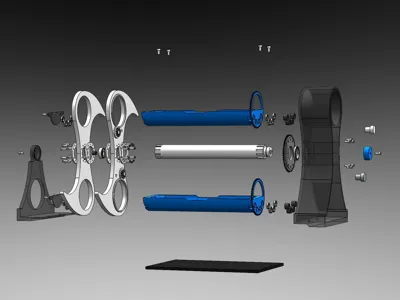
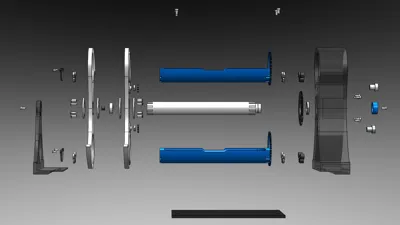
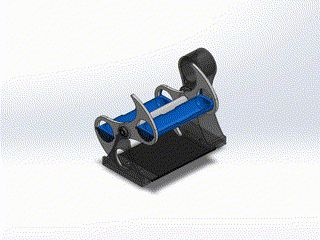
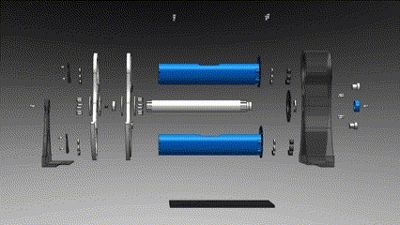
Please let me know if there are any suggestions/changes to be made to any aspect of this build. I have added exploded and assembled assembly models to the file list to help with the assembly. I have included both PETG clear and normal PETG profiles in the same 3mf file. Please only print the PETG Clear if you have a supertack plate or know how to set up an environment to prevent warping. I used PETG clear in my build however it takes longer to print and is more costly.
I have separated this description into sections. Many of these are repetitions of the functionality however you may read whichever sections interest you as they all provide similar and valuable information based on each topic.
Equations are provided in the documentation section of this post. This will help us understand the basic workings of the wheel in a theoretical sense.
-Functionality of the Model:
- Rotational Mechanism:
- The model showcases a pair of gondolas (caissons) attached to a central rotating axis.
- These gondolas are designed to lift and lower between different levels, similar to how the full-scale Falkirk Wheel connects two canals at varying heights.
- Water Balance and Archimedes' Principle:
- The operation of the model hinges on the principle of buoyancy. When a boat is placed in one gondola, it displaces an amount of water equal to the boat's weight.
- NOTE: You may use any weight you have that does not exceed the maximum weight of the water added to a single gondola.
- This ensures that the total weight in both gondolas remains constant, regardless of whether one contains only water or a combination of water and a boat.
- Energy Efficiency:
- Because the weights on either side are perfectly balanced, the model demonstrates how the real Falkirk Wheel requires only minimal energy to rotate. The balanced design reduces the force needed to lift one gondola while lowering the other. Just like a counterweight is used for elevators or lift bridges.
- Educational Purpose:
- The model serves as a visual and functional tool to explain complex engineering concepts. It shows how the system leverages the laws of physics to achieve efficiency and stability while performing a practical task.
-Teaching Applications of the Model:
This model of the Falkirk Wheel provides professors with an effective and versatile tool for demonstrating various principles of engineering mechanics. Its design and functionality make it ideal for use in educational settings, particularly in laboratory environments.
- Demonstration of Archimedes' Principle:
- Professors can use the model to show how buoyancy works in real-time. By placing different weights (representing boats) in the gondolas, they can explain how displaced water balances the system regardless of the load.
- Concept of Rotational Equilibrium:
- The balanced rotation of the wheel provides an excellent demonstration of torque and equilibrium. Professors can explain how the counterweights (gondolas) and their equal distribution minimize energy requirements for rotation.
- Energy Efficiency in Engineering:
- The model can be used to highlight how efficient systems can be designed using fundamental physics. This can serve as an example of sustainable and low-energy designs in mechanical engineering.
- Gear Mechanisms:
- The gear-like mechanisms in the model can be used to explain concepts such as rotational motion, synchronization, and the transfer of mechanical energy.
- Engineering Design Principles:
- Professors can guide students through the structural and functional design aspects of the wheel. Discussions can include materials selection, weight distribution, and the role of symmetry in engineering design.
- Dynamic Demonstrations:
- By rotating the model and placing different loads in the gondolas, professors can create dynamic demonstrations of mechanical principles such as center of gravity & moment of inertia.
- Case Study in Practical Engineering:
- The model can be used as part of a case study to explore how real-world engineering challenges (such as connecting two canals of different heights) can be solved with innovative designs.
Benefits of Using the Model
- Cost-Effective Education: The model's affordability makes it accessible for multiple classrooms or labs, offering hands-on learning opportunities without significant budget constraints.
- Interactive Learning: Students can engage directly with the model, enhancing their understanding of abstract concepts through physical interaction.
- Visualizing Complex Systems: The model simplifies and visualizes complex engineering systems, making it easier for students to grasp fundamental principles.
- Inspiration for Projects: The model can serve as a starting point for discussions on innovative engineering projects and inspire students to create their own solutions to practical problems.
Suggested Activities for Professors:
- Lab Assignments: Students can analyze the forces, energy requirements, and balance of the system as part of their coursework.
- Problem-Solving Exercises: Professors can pose challenges, such as modifying the model's design for improved efficiency or addressing potential integrations of different fluid dynamic principles.
- Cross-Disciplinary Lessons: The model can also be used in physics or design classes to emphasize the interdisciplinary nature of engineering & fluid dynamics.
This model bridges theory and practice, offering professors an engaging way to teach engineering mechanics while sparking curiosity and creativity among students.
-History and design of the actual wheel:
Design
- Rotating Wheel: The Falkirk Wheel resembles a giant rotating Ferris wheel with two gondolas (caissons) positioned opposite each other.
- Arch and Axis: The wheel is mounted on a central axis supported by large arches. The design ensures stability and smooth operation.
- Balanced Gondolas: The two gondolas are always in equilibrium, even when they contain boats and water. This is achieved by Archimedes' principle, which ensures that the weight of the displaced water equals the weight of the boat.
- Structural Materials: The structure is made of steel, weighing about 1,200 tons, and has a futuristic aesthetic blending engineering and artistry.
How It Works
- Loading: Boats enter the gondolas at either the upper or lower level of the canals. Each gondola holds a boat along with the water necessary to balance it.
- Rotation: The wheel rotates 180 degrees, lifting one gondola while lowering the other. This process takes only about 5 minutes.
- Minimal Energy Use: Thanks to the balanced design, the wheel uses very little energy—roughly the same amount as boiling eight kettles of water (about 1.5 kWh per rotation).
- Docking and Transition: Once the rotation is complete, the boats can seamlessly move onto the connecting canals. Each gondola is connected to a gated system that separates the canal from the gondola and reconnects it when the rotation is finished. Water levels are closely and precisely monitored.
Key Innovations
- Energy Efficiency: The balance of the gondolas minimizes energy requirements.
- Precision Engineering: Gear mechanisms ensure smooth and synchronized rotation.
- Iconic Design: Beyond functionality, the Falkirk Wheel is celebrated as an architectural and engineering landmark.
Impact
The Falkirk Wheel serves both as a functional infrastructure project and a major tourist attraction. It symbolizes modern ingenuity while revitalizing Scotland's canal network for recreational and commercial use.
Archimedes' Principle is a fundamental law of physics that states:
"A body submerged in a fluid experiences an upward buoyant force equal to the weight of the fluid it displaces."
This principle is crucial to the operation of the Falkirk Wheel, as it ensures that the system remains balanced and energy-efficient during operation.
Archimedes' Principle in the Falkirk Wheel:
The wheel uses two water-filled gondolas (caissons) to lift and lower boats between two canals at different heights. Here's how Archimedes' Principle is applied:
- Buoyant Balance:
- Each gondola is designed to hold the same volume of water.
- When a boat enters a gondola, it displaces an amount of water equal to its weight, as per Archimedes' Principle.
- This ensures that the combined weight of the boat and the water in each gondola is always the same, regardless of whether one or both gondolas are occupied.
- Equilibrium:
- Since the weights of the two gondolas are always balanced, the Falkirk Wheel does not need to exert significant force to lift one gondola and lower the other.
- The system relies on a balanced design to minimize energy use, as only a small amount of force is needed to overcome friction and initiate the rotation.
- Energy Efficiency:
- Thanks to Archimedes' Principle, the gondolas remain in perfect equilibrium at all times, which drastically reduces the energy required for operation.
- The energy savings are so efficient that the entire wheel rotation uses only about 1.5 kWh, the same as boiling eight kettles of water.
Why Archimedes' Principle Is Key
Without Archimedes' Principle, the weight of the gondolas would vary based on the boats' size and weight, leading to imbalances that would require significant energy to correct. By ensuring that the displaced water always equals the weight of the boats, the principle allows the wheel to function as a simple and efficient system. This ingenious use of a fundamental physical law is part of what makes the Falkirk Wheel a modern engineering marvel.
Boost Me (for free)
This model took a considerable amount of time and thought to get working. Please consider boosting to help makers like me make models available for FREE!
Instructional Use:
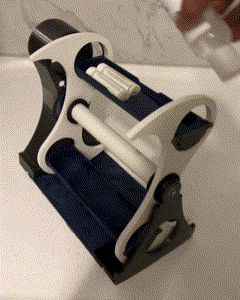
Demonstration Gif Below
- Place water in the gondolas. It is helpful to have someone else help you hold it steady even if the magnetic stoppers are in place. Ensure the water is filled until it reaches the overflow slots on the gondolas.
- Rotate the assembly and see how it is balanced.
- Try adding a small 50g Weight and ensure the water is level with the overflow slots. Notice the weight displaces the water and the balance is maintained. Removing the weight can cause an imbalance.
Due to the tolerance of 3D-printed components, the assembly will have its own frictional force that will sometimes overcome the balance. So if you do not see an imbalance after removing a weight (imbalance meaning the heavier side goes to the bottom), then try increasing the weight.
Surface tension can also cause the water to be higher than the overflow slot. Make sure this is not the case.

Demonstration & Assembly (Click the gif if on phone)
The actual Wheel In Scotland working
Change Log: EST -5
- 12/29/24 9:00 PM Model Published
- 12/30/24 9:05 PM Separated PETG Clear and PETG Basic Profiles.
- 1/3/25 9:05 PM Added Equations in documentation (I swear I'm not purposely only editing at 9)
- 2/16/25 9:44 PM Fixed bearing shaft end to be shorter so screw goes in more. Thanks, @RobotSamurai for the comment.
Documentation (2)
License

You shall not share, sub-license, sell, rent, host, transfer, or distribute in any way the digital or 3D printed versions of this object, nor any other derivative work of this object in its digital or physical format (including - but not limited to - remixes of this object, and hosting on other digital platforms). The objects may not be used without permission in any way whatsoever in which you charge money, or collect fees.


Comment & Rating (15)