
Tesla Turbine-Fully 3D Printable

Print Profile(3)



Description
Boost Me (for free)
This is my longest project yet, taking one month to finish, any support helps for better projects!



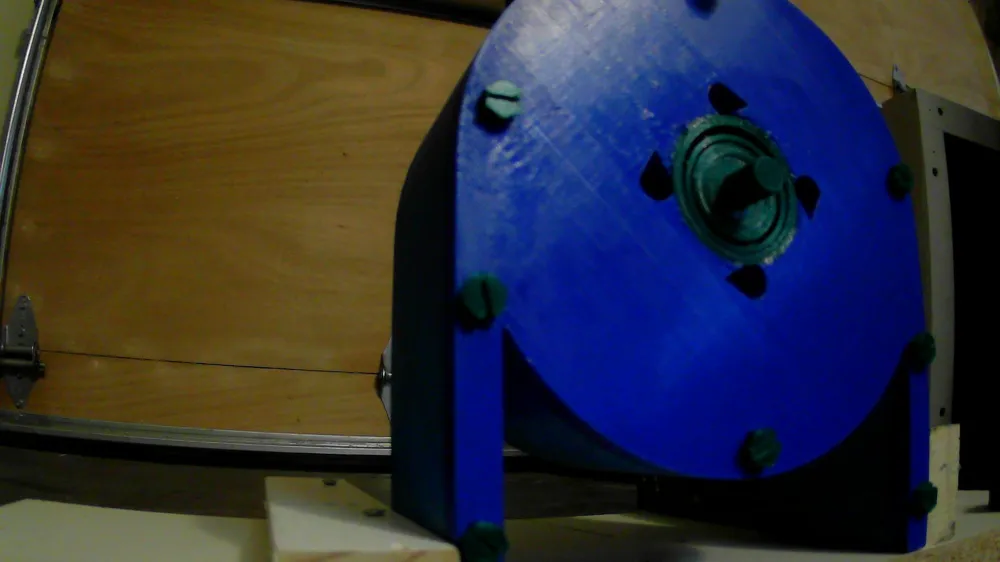
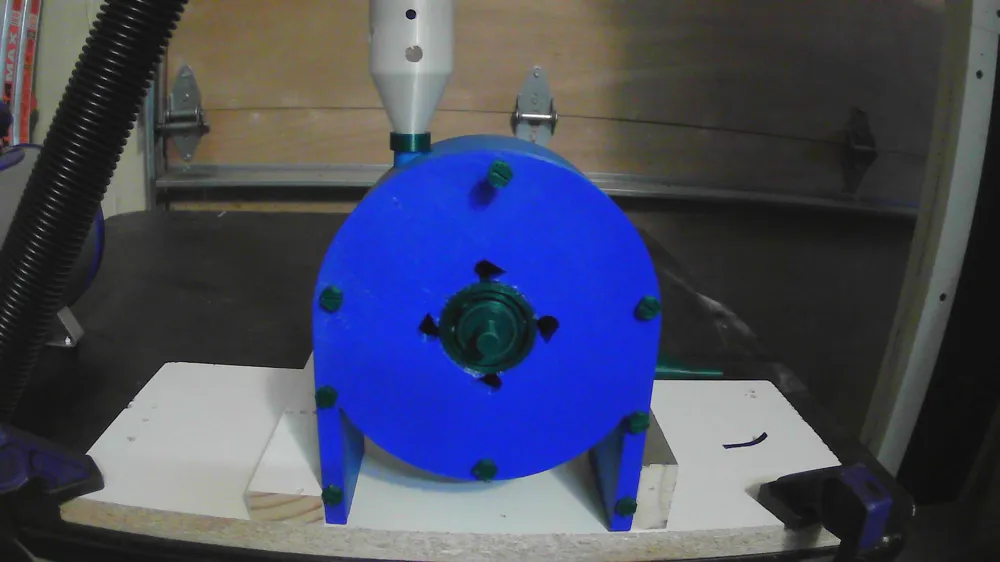
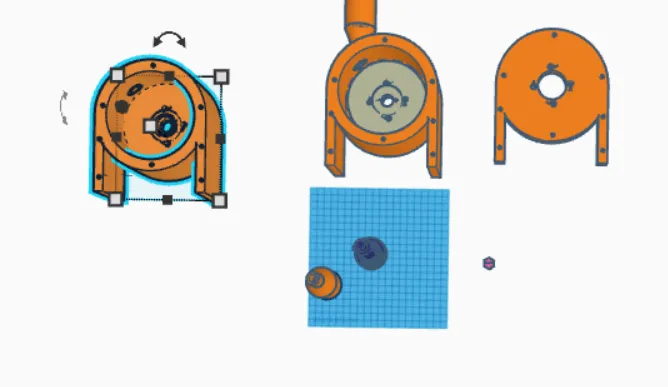
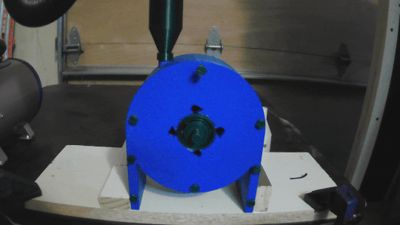
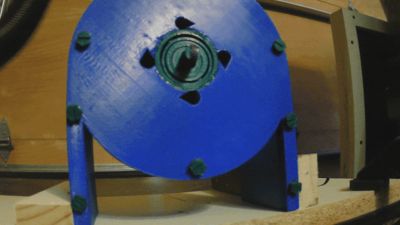
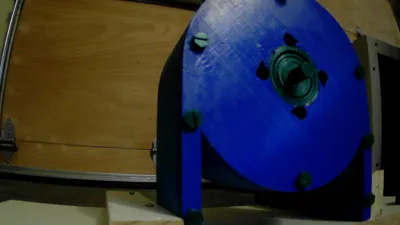
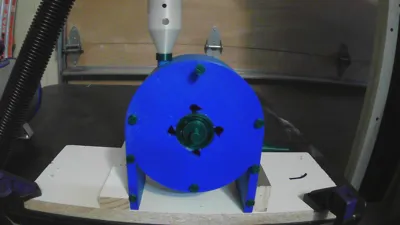
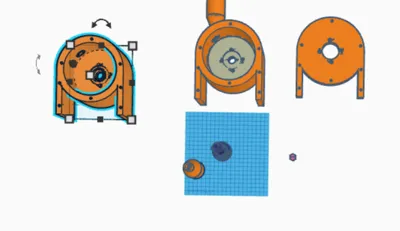
This is the Tesla Turbine, a bladeless Turbine that was created by Nikola Tesla in the early 1900's, he claimed it to be 97% efficient. It was originally designed to be made out of metal, but here it is in plastic, available to anyone who wants to experience the magic for themselves. It uses no blades, just disks. In this model, the bearings, screws, disk, casing, and shaft are all 3D printed. Several models exist, but none of them are 100% 3D Printable like this one. This model requires no metal bearing or shafts, so you if you have a 3D printer and some filament, you can make it yourself! Spins at high RPMs and has high torque once up to speed.
The Physics behind the Tesla Turbine: Surprisingly, The Tesla Turbine has no blades like most traditional turbines. How does it spin? Without any spots for the air or liquid to push on, how does it transfer it's energy? (hint the amazing law of fluid dynamics) Counterintuitively, some argue that the Tesla Turbine is even more efficient then the other types of turbines. Air acts like a viscous fluid, pushing on any object, transferring its energy to that object. The Tesla Turbine takes full advantage of this effect by having the air outlet closest to the center as possible. Since the only way to for the air to escape is at the center, forcing the air to make a spiral to the center, further transferring energy to the turbine, creating more speed and torque. I hope you learned something about physics, and enjoy using this educational tool to power anything you want, or be a good model of the original Tesla Turbine.
More Educational Videos:
Instructions:
Pre-Assembly:
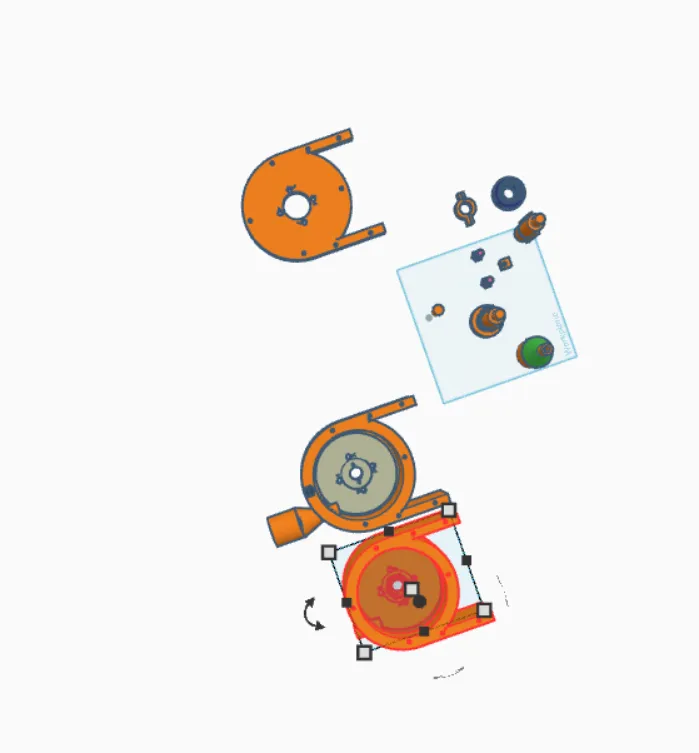
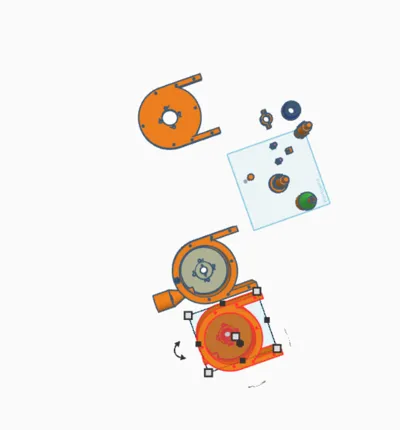
Lay out all parts (1 Base, 1 top, 14 or more disks, 8 screws or more for back up, 1 shaft, 1 bearing)
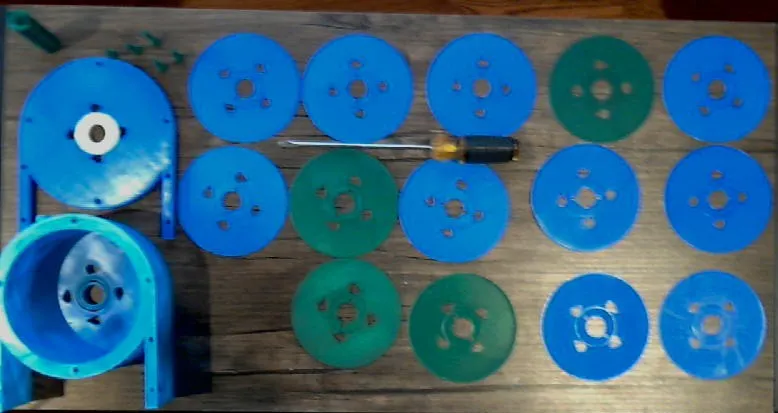
- Loosen Bearings with thin screwdriver. Add WD-40 to the bearings for optimal spin and speed.
Assembly:
Add disks to the shaft. I recommend that the disks with the tightest fit should be on top to prevent the disk from coming off of the shaft when spinning. If the disks are still loose, put the disk stopper on the top, if it is still loose solder the top disk to the shaft. DO NOT SOLDER THE DISK TO THE SHAFT IF YOU DO NOT HAVE TO, IT MAKES IT HARDER TO REMOVE BROKEN DISK IN THE FUTURE. All disk should be lined up with all of the holes in the same direction as the base. The disk stopper is not included in the print profile
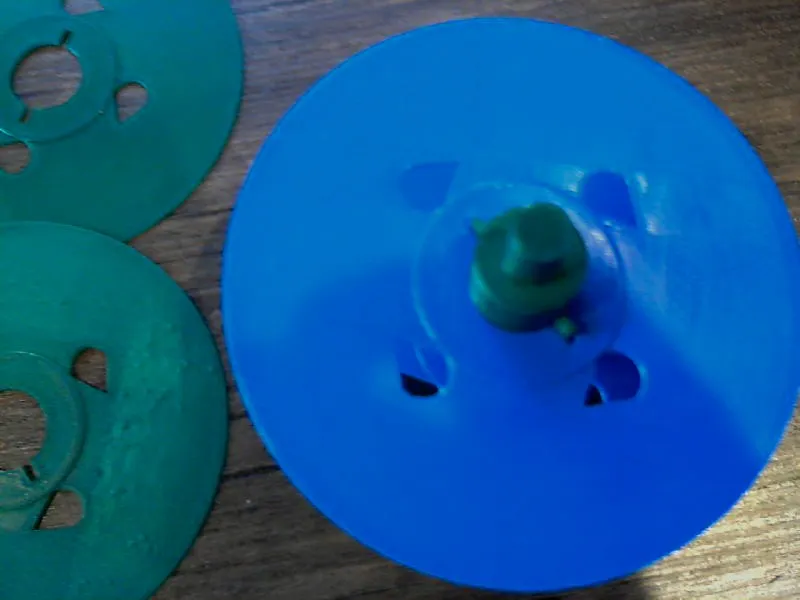
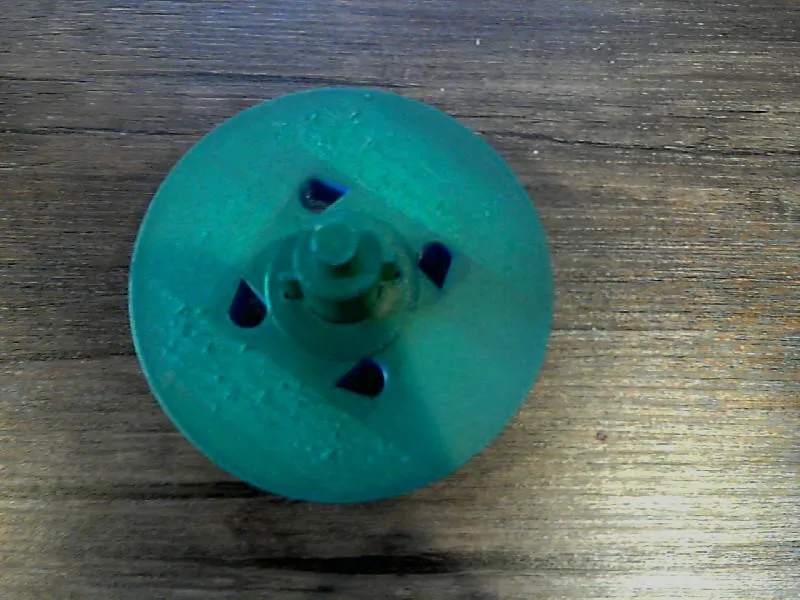
Place the shaft and disk in the bearing in the base of the Turbine, the light blue part.
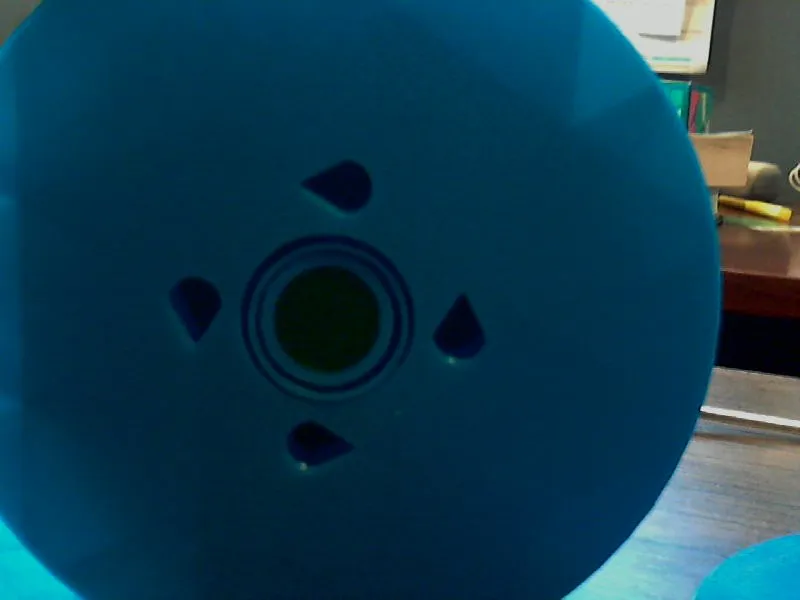
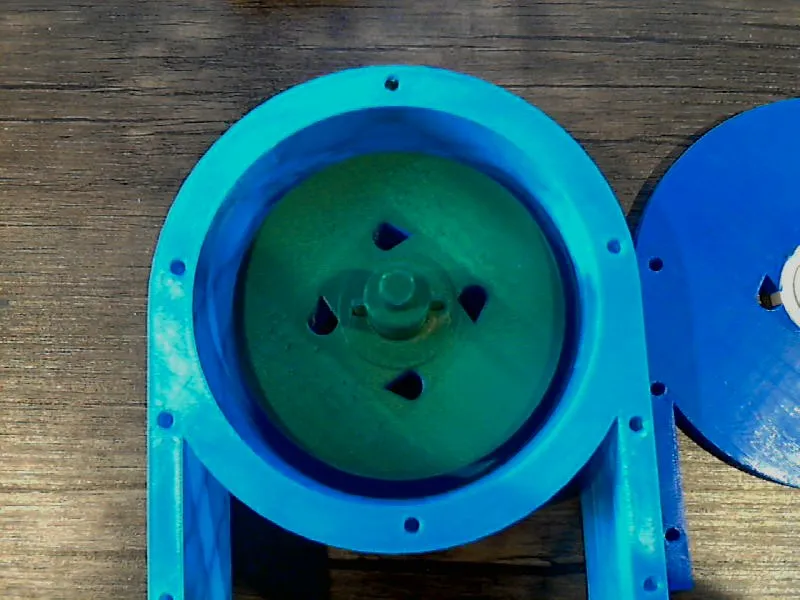
Put the loose bearing (the white part) into the top of the turbine (the dark blue part). Solder them together, just solder the rim of the bearing to the top.
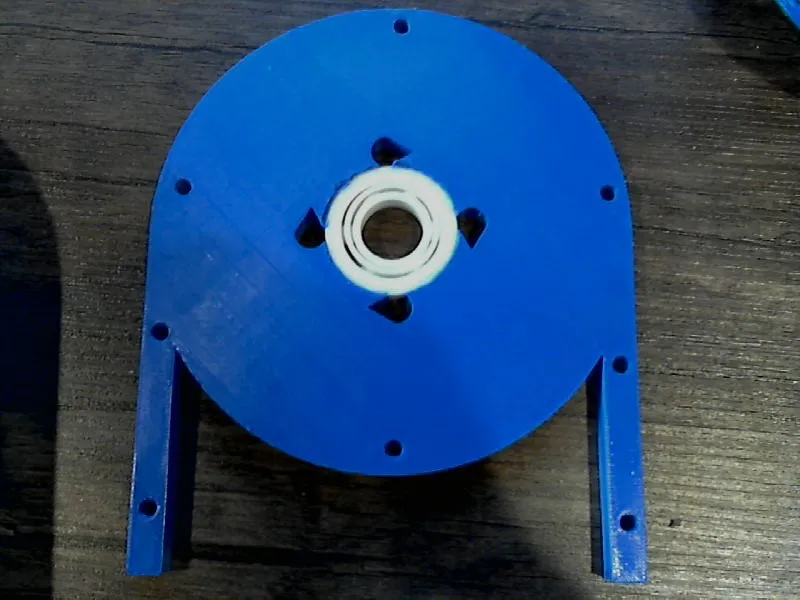
Place top on the shaft and base.
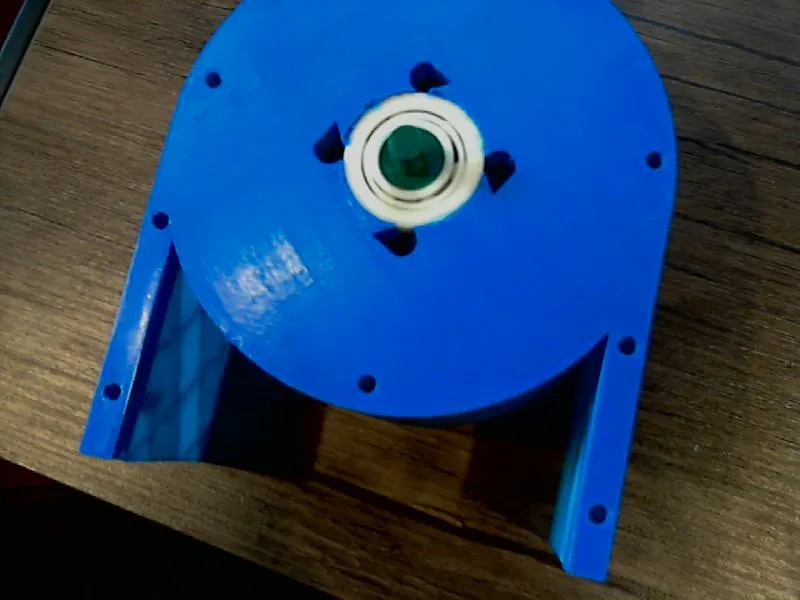
Gently screw the top of the Turbine to the base, do not tighten all the screws until all of them are in place.
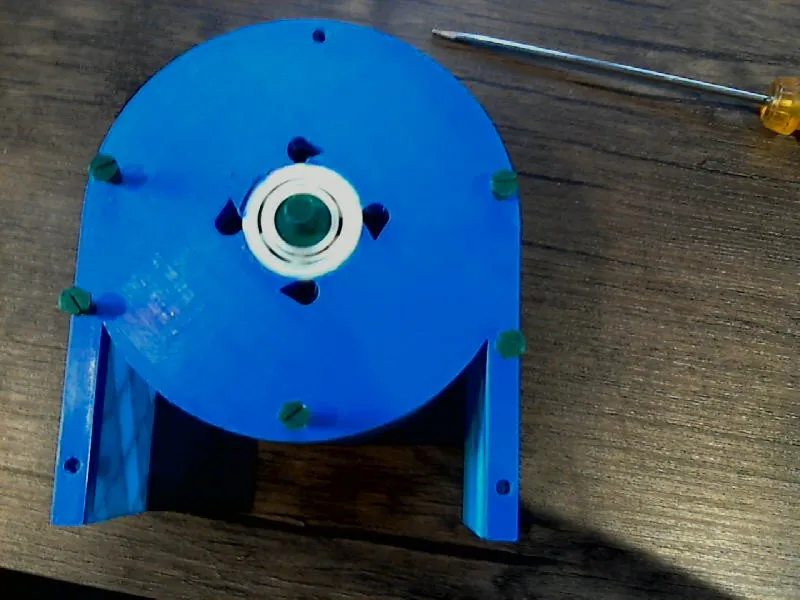
Tighten the screws until you feel some resistance. If you tighten too much, the screw could break and get stuck. (Just trust me from experience)
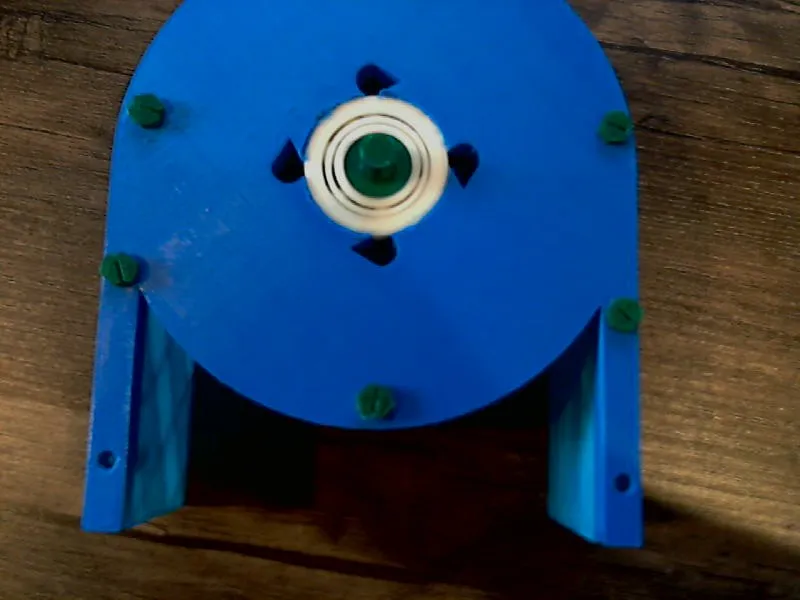
- You're Done!
Post Assembly:
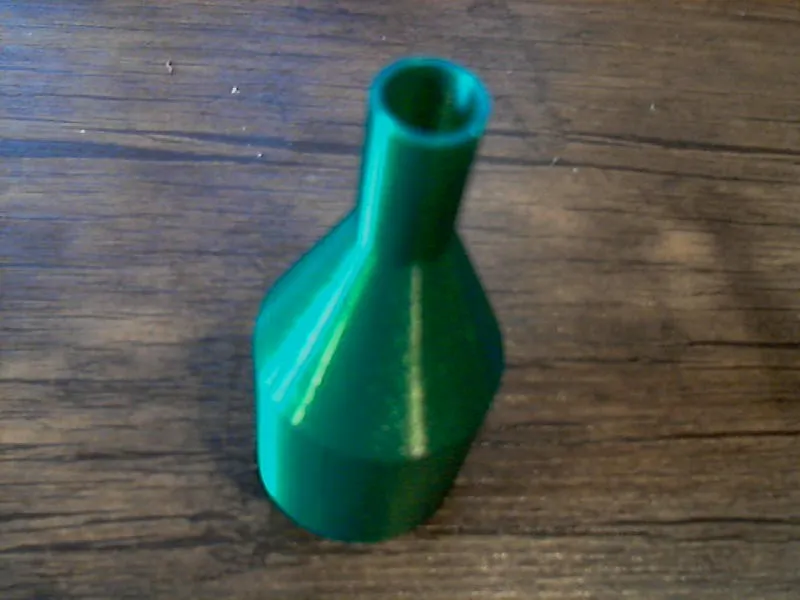
You can make an adapter to fit your air supply like I did. 12.8 MM to connect to the nozzle on the turbine base. 20 MM height.
Test Runs:
Notes:
Print Profiles have old openbearing except the A1 Mini profile, new one is stronger
The Turbine is very loud since the bearing rattle, since they are plastic bearing, not real bearings.
If any one has a RPM Display, can you tell be the RPM? I do not have one currently.
I recommend mounting it on a base to help reduce vibrations.
How to power:
In the opening in the top of the turbine, insert air, and the turbine will start spinning.
RPMs:
31,214 at most, 25,224 at average
Coming soon:
Motor mount to generate electricity using this motor: https://www.amazon.com/25GA-370-Micro-Reduction-Geared-Electronic/dp/B07JG23G3D/ref=sr_1_4?s=industrial&sr=1-4
Propeller Blade
Comment down below if you have any ideas!
License

You may create derivative works based on this object, provided that all such derivative works are published exclusively on the MakerWorld platform and include proper attribution to the original creator. You may not share, upload, host, distribute, or publish this object—or any derivative work of this object—on any other digital platform, marketplace, or distribution channel. Commercial use of this object and any derivative works is strictly prohibited. This includes, but is not limited to, selling, renting, sublicensing, or using the object in any context in which you receive monetary compensation or other financial benefits.


Comment & Rating (80)