
Heater Fan (120mm) Booster Fan
Print Profile(2)



Description
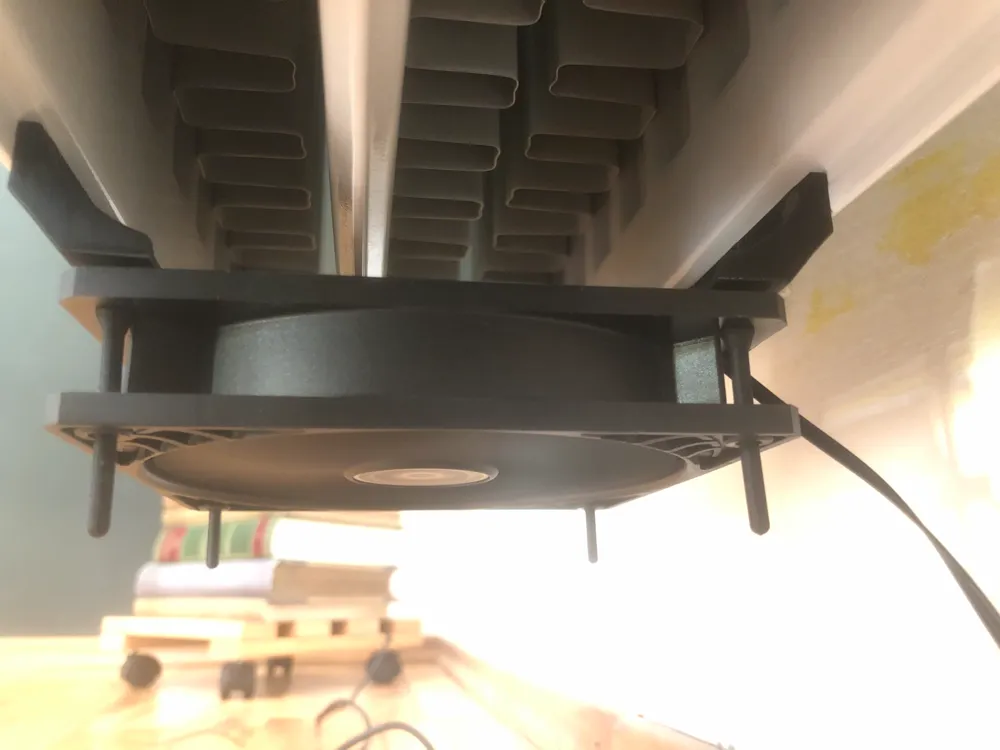
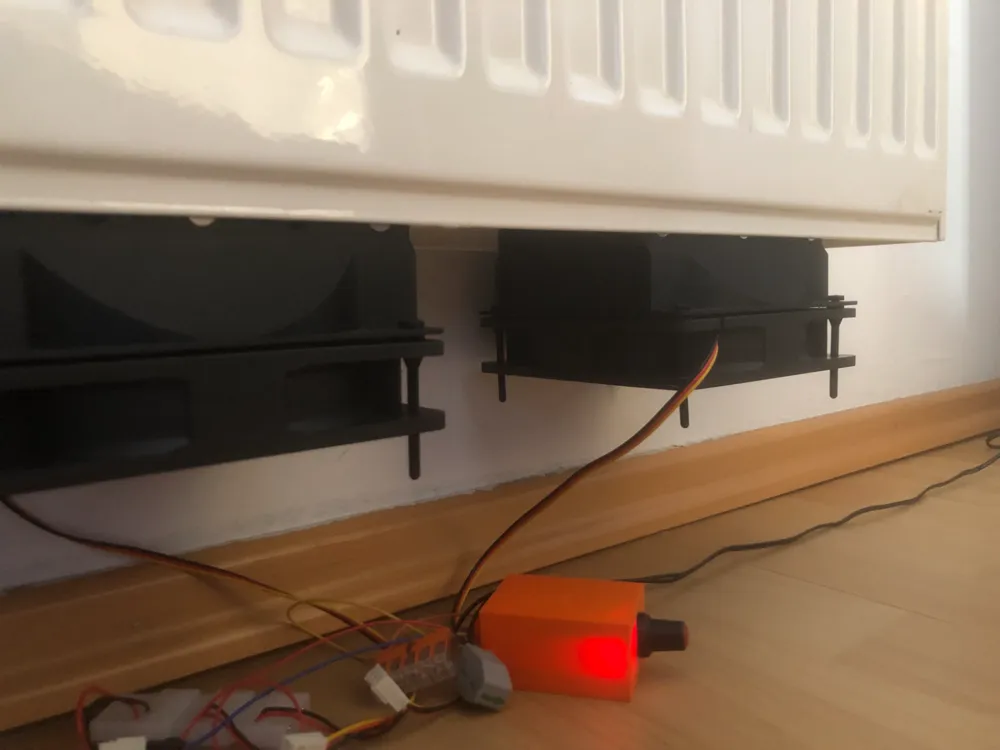
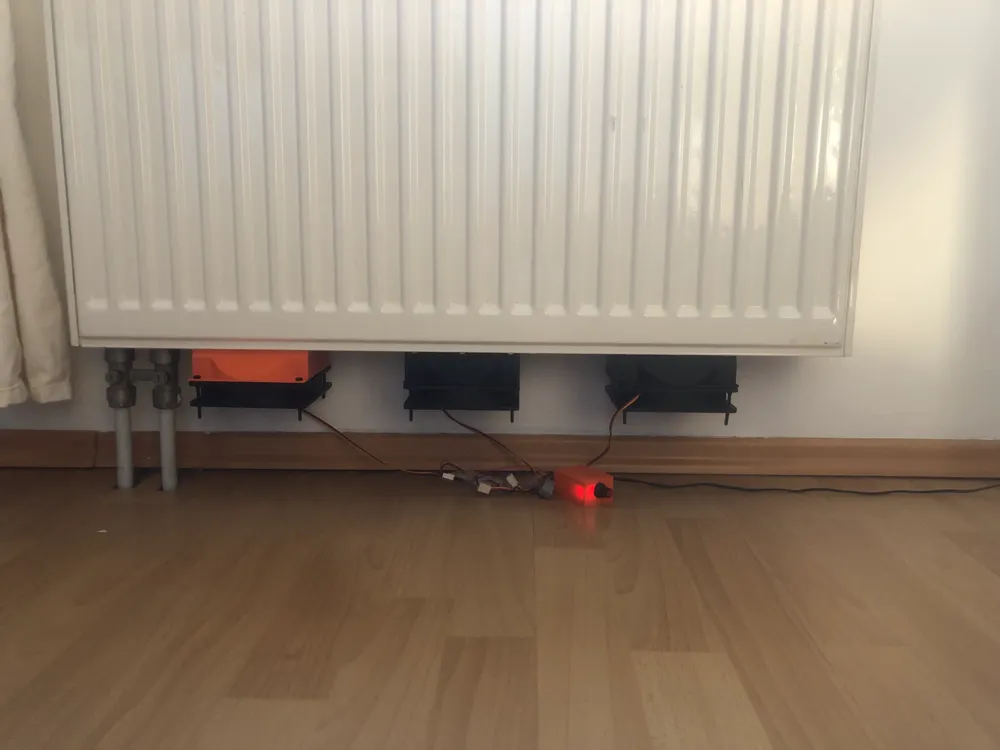
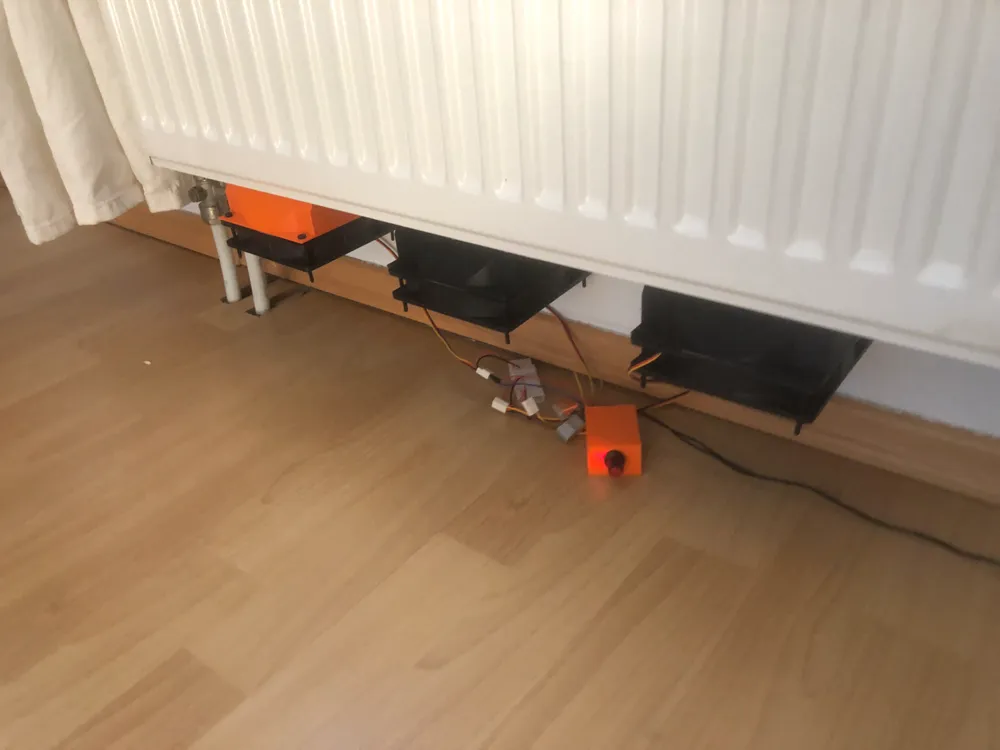
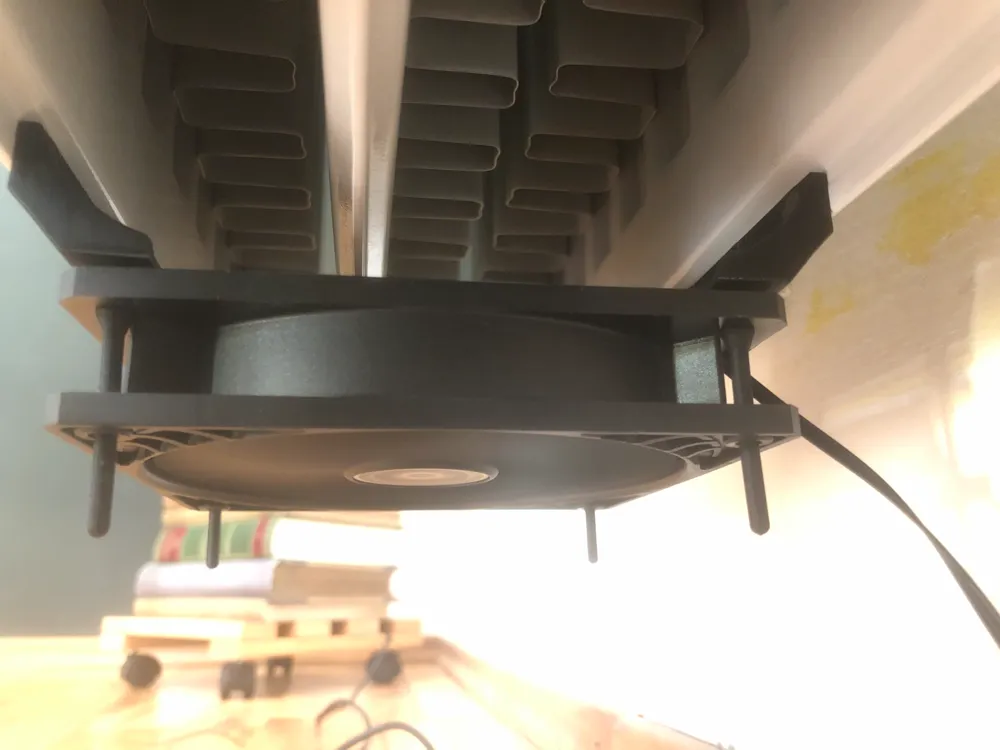
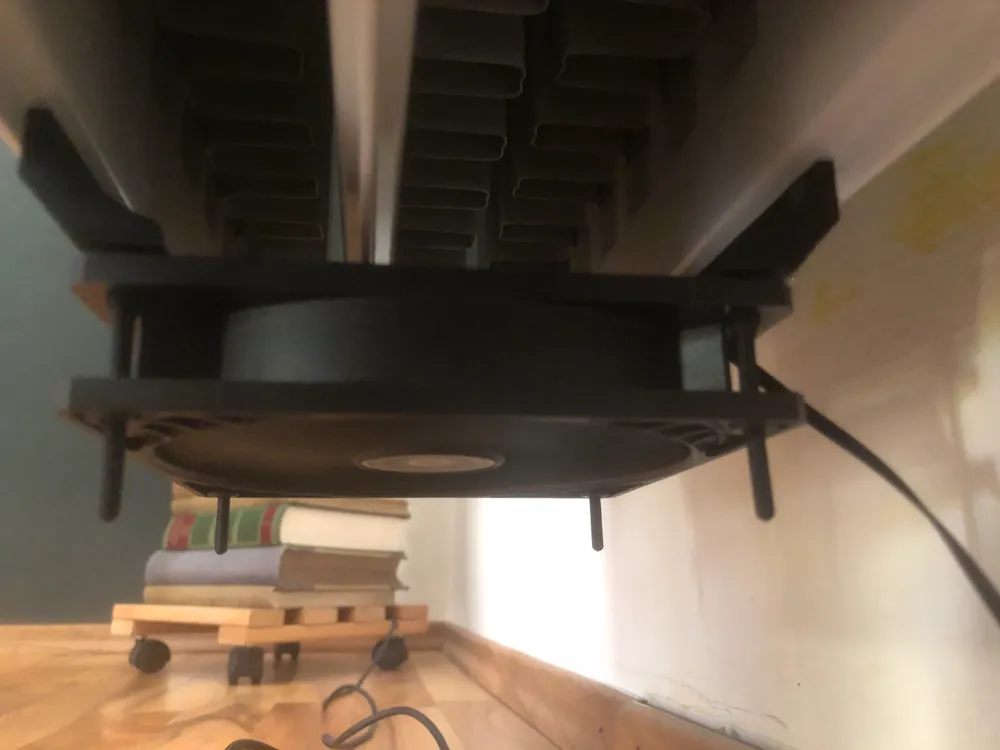
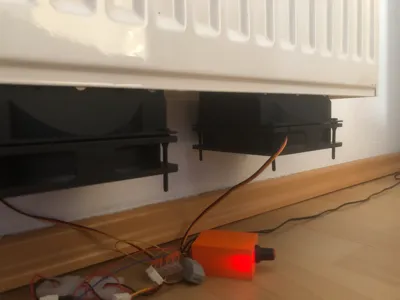
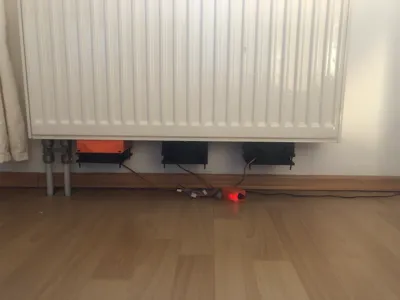
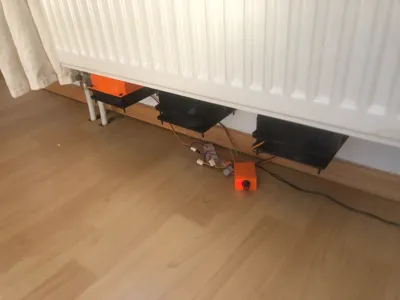
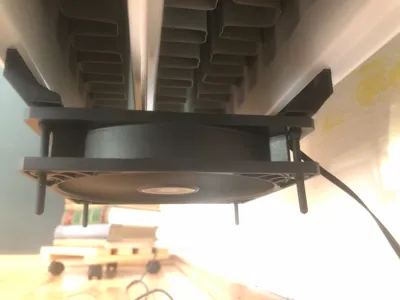
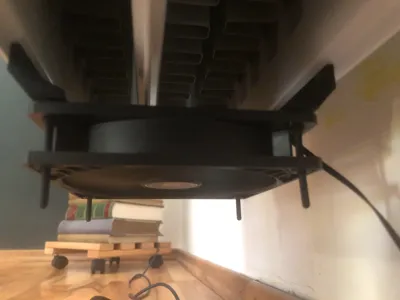
This radiator fan is designed for standard 120mm fans. Downloadable mounting plates facilitate construction of a radiator booster/fan for Type 22 and Type 33 radiators. Employing a heat pump enabled a significant reduction in my heating curve. Attachment is achieved using ø8x3mm neodymium magnets; a minimum of six, though up to ten, are recommended per fan. Testing encompassed two distinct fans. The Arctic P12 models operated pleasingly quietly at 5-6V. However, supplementary decoupling via rubber grommets is advised to mitigate noise transmission to the radiator. Fan control is managed via Home Assistant and a Shelly Plug S—automatically engaging when the flow surpasses a predefined threshold and disengaging when it falls below.
Approximately two to three fans are required for 80cm radiators; three are necessary for 100cm radiators.
English:
This radiator fan is designed for standard 120mm fans. You can download the mounting plates for building a radiator booster/fan for type 22 and type 33 radiators. I heat with a heat pump and was able to reduce my heating curve considerably. The fans are attached with neodymium magnets ø8x3mm. At least 6 neodymium magnets with ø8x3mm are required per fan - you can also fit 10 per fan. I tested two different fans. The Arctic P12 fans were pleasantly quiet at a voltage of 5-6V. However, you should also decouple the fans with rubber pins as otherwise more noise will be transmitted to the radiator. I control the fans via Homeassistant using a Shelly Plug S (automatically on when the flow exceeds a certain threshold and off when the flow falls below a threshold).
For 80cm radiators you need approx. 2-3 fans. For 100cm radiators you need 3 fans.
Should you wish to support me, please consider clicking the affiliate links below (please note: advertisement).
Here is the material I used:
-Magnets (6-10 pieces/fan): https://amzn.to/4fCukuO
-Rubber pins (4 pieces/fan for sound decoupling): https://amzn.to/4emADS3
-Affordable PLA: https://amzn.to/3YDknqd
-Speed controller for 3-pin fans (for variable speed control): https://amzn.to/3YDknqd
-Arctic P12 (quiet at 5-6V or approximately 50% with speed controller): https://amzn.to/3YDknqd
-Xilence XPF120 (louder than Arctic, but more economical): https://amzn.to/4gK2kWM
-Arctic F12 (untested): https://amzn.to/3ACtLlV
-Arctic P12 PWM—pleasingly quiet at moderate speed (NOTE: requires PWM control, e.g., with ESP32+Relay): https://amzn.to/3AvxXnx
-Shelly Plug S (for Home Assistant control or scheduled operation): https://amzn.to/4hHW5nr
-12V power supply (speed regulation required, e.g., using the speed controller above): https://amzn.to/3O1fna0
-3-12V adjustable power supply: https://amzn.to/3YBd4PI
-Wago connectors (my preferred choice): https://amzn.to/3O1fLW0
Additional wiring for fan connection is necessary
License

You shall not share, sub-license, sell, rent, host, transfer, or distribute in any way the digital or 3D printed versions of this object, nor any other derivative work of this object in its digital or physical format (including - but not limited to - remixes of this object, and hosting on other digital platforms). The objects may not be used without permission in any way whatsoever in which you charge money, or collect fees.


Comment & Rating (9)