
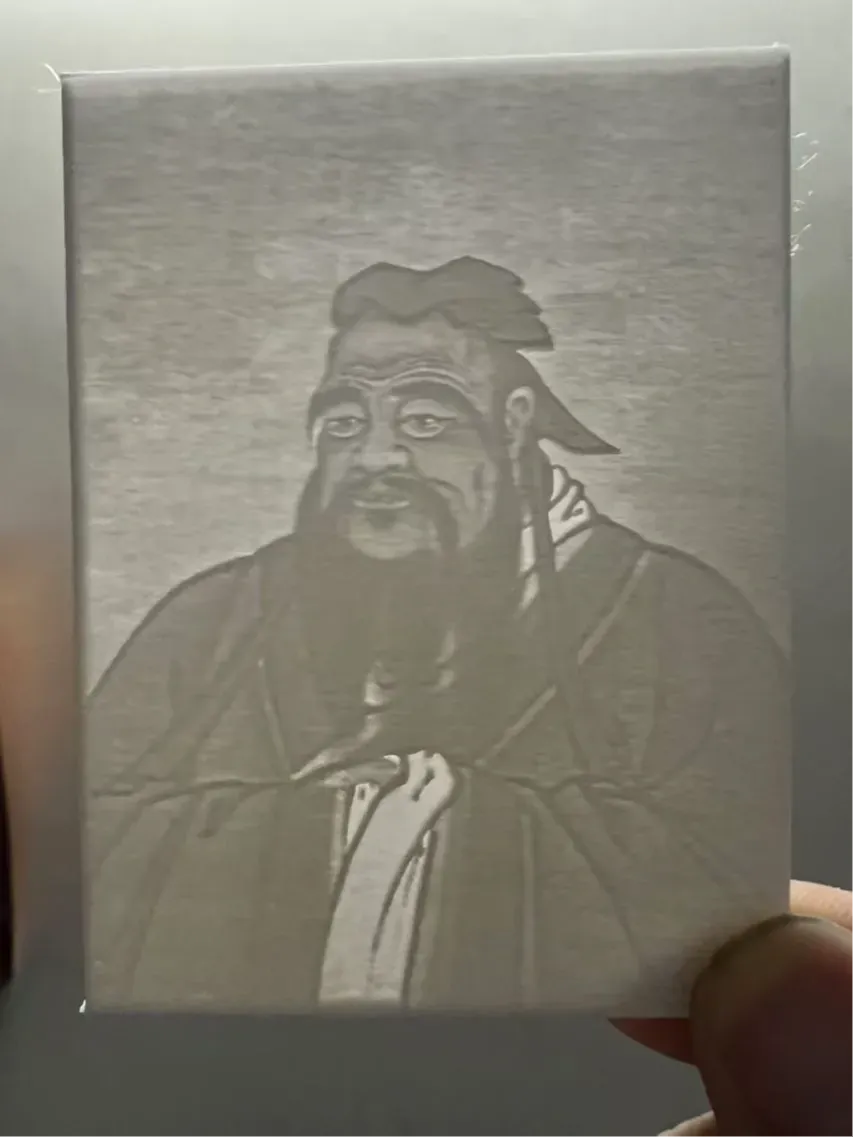
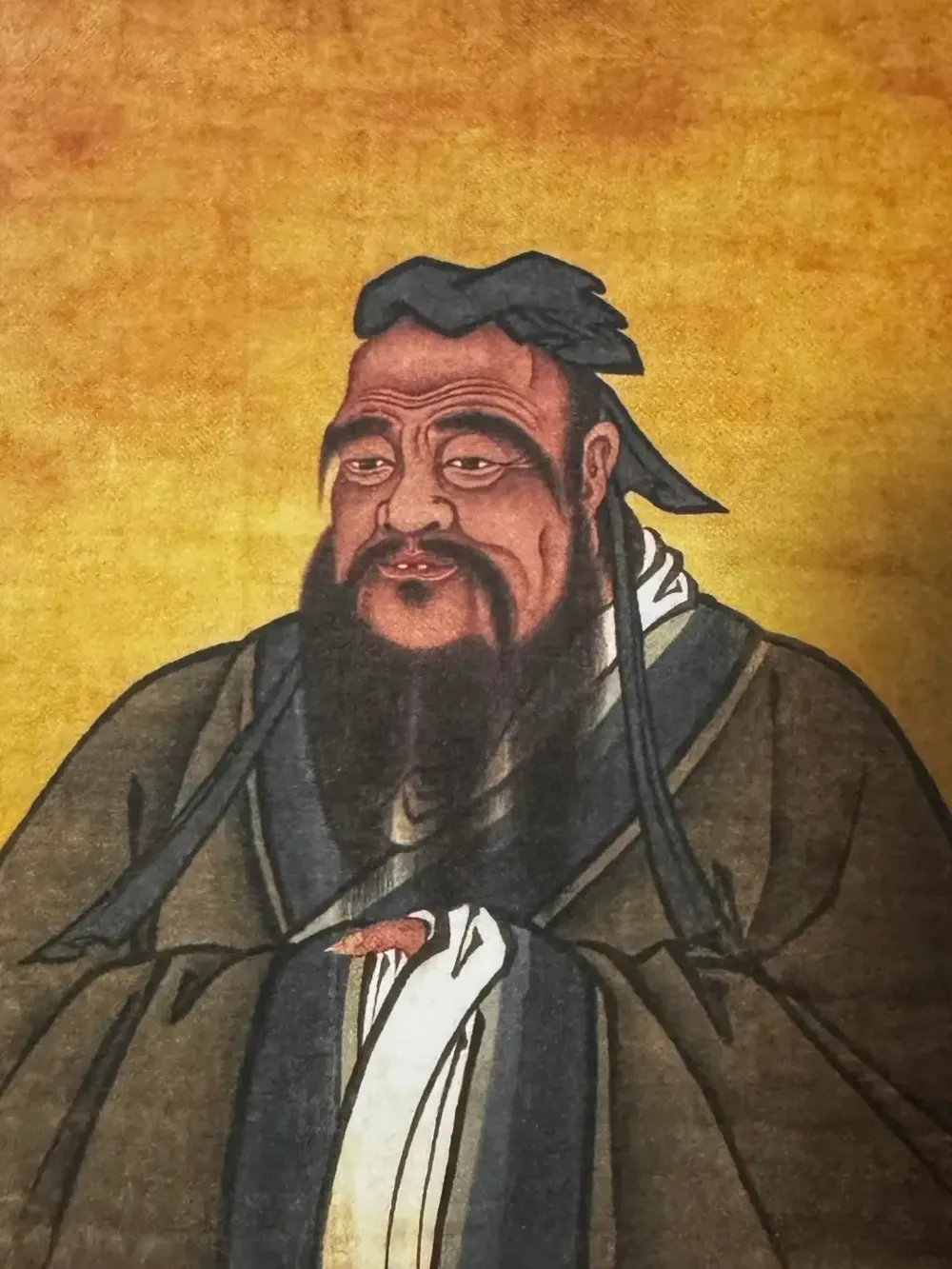
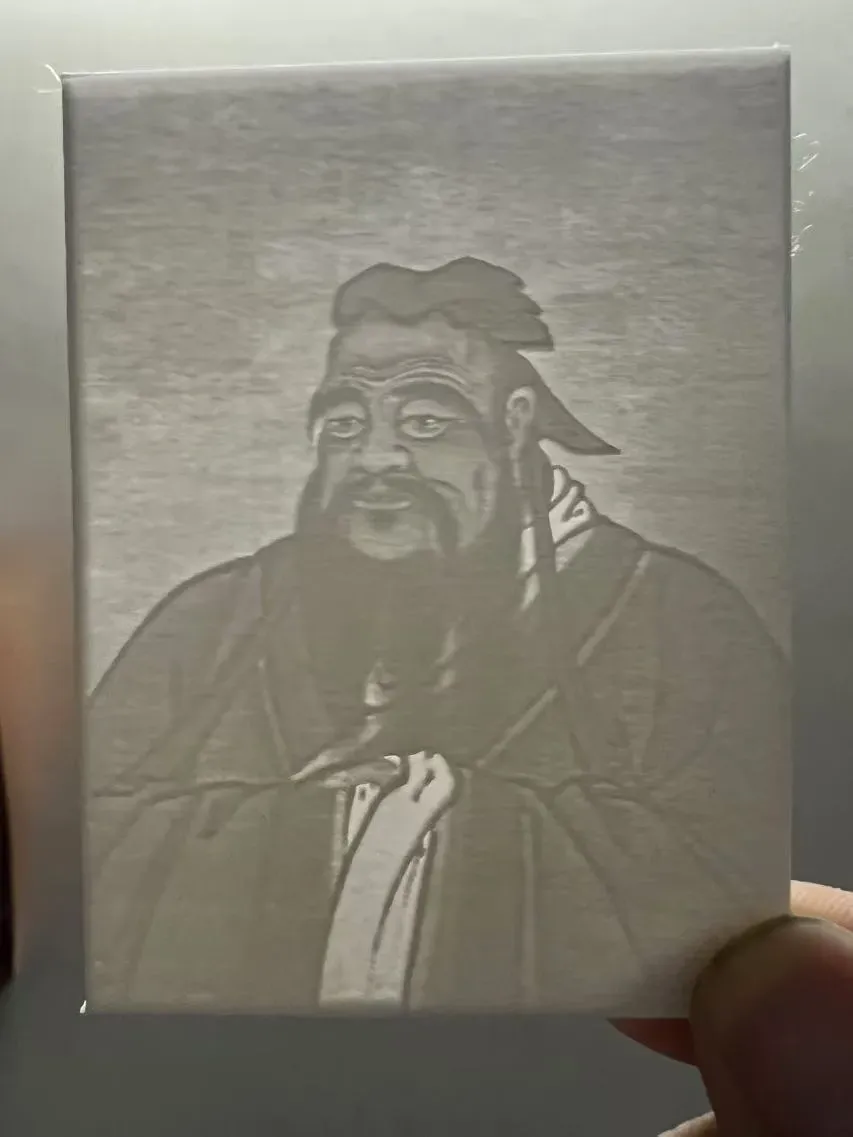
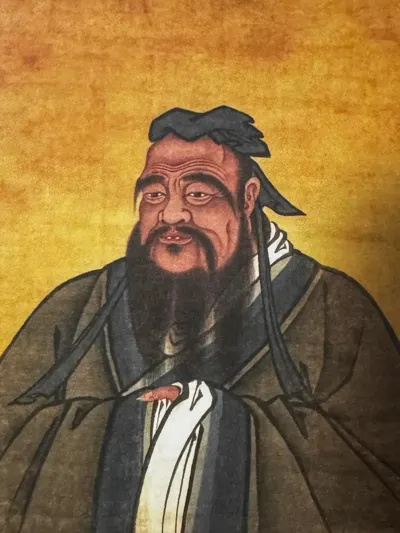
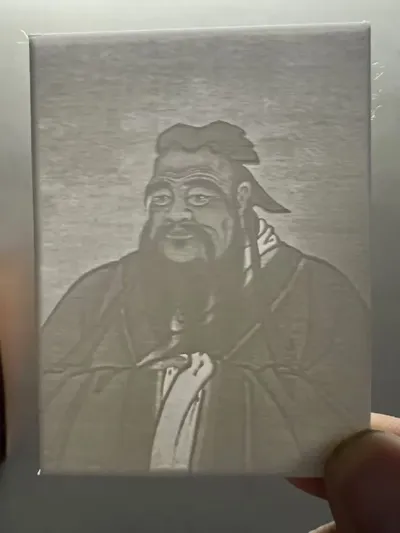
(Single color bas-relief) A historical figure every day "Founder of Confucianism" - Confucius (China)
Print Profile(1)
Description
Confucius (September 28, 551 BC - April 11, 479 BC), courtesy name Zhongni, was born in the Spring and Autumn Period in Lu, Zouyi (present-day Shandong Province, Qufu City), with ancestral roots in Song, Liyi (present-day Henan Province, Xia County). His father was Shuliang He, and his mother was Yan Shi. He was an ancient Chinese thinker, politician, and educator, and the founder of Confucianism. [1-3] [53] [56]
Confucius lost his father at the age of three, and his family fell into poverty. In his early years, he held minor positions such as managing the granary and tending livestock. He was "fond of rituals" from a young age, and was familiar with traditional rituals. In his youth, he was known throughout Lu for his vast knowledge of rites and music, and he pursued the profession of a Confucian scholar, earning a living by performing rites of mourning and sacrifice. In middle age, he gathered students to lecture and teach. At the age of fifty, he served briefly as the Chief Minister of Lu, assuming the duties of prime minister. He actively promoted his political ideals, but soon left office due to disagreements with those in power and traveled with his students to various states, promoting his political ideas and philosophical doctrines, but to no avail. In his later years, he returned to Lu and devoted himself to education, compiling the "Classic of Poetry" and the "Classic of Documents", and editing the "Spring and Autumn Annals", making the transmission of the Six Arts his lifelong career. [53]
Confucius led some of his students on a journey through the states for fourteen years, revising the Six Classics. After his death, his disciples and their descendants compiled his sayings and teachings into the "Analects". This book is considered a Confucian classic. [1] Confucius's influence on posterity has been profound and lasting. His "benevolence" and "rites" became important principles for governing the state and for personal self-cultivation; the idea of "education for all" enabled the infinite transmission of Chinese civilization; and his systematic organization of ancient literature not only fulfilled his own ideals but also gave the cultural heritage of the Chinese nation profound depth. [54]
Boost Me (for free)
Founder of Confucianism
License

You shall not share, sub-license, sell, rent, host, transfer, or distribute in any way the digital or 3D printed versions of this object, nor any other derivative work of this object in its digital or physical format (including - but not limited to - remixes of this object, and hosting on other digital platforms). The objects may not be used without permission in any way whatsoever in which you charge money, or collect fees.


Comment & Rating (0)