
Tipping Bucket Rain Meter
Print Profile(0)
Description
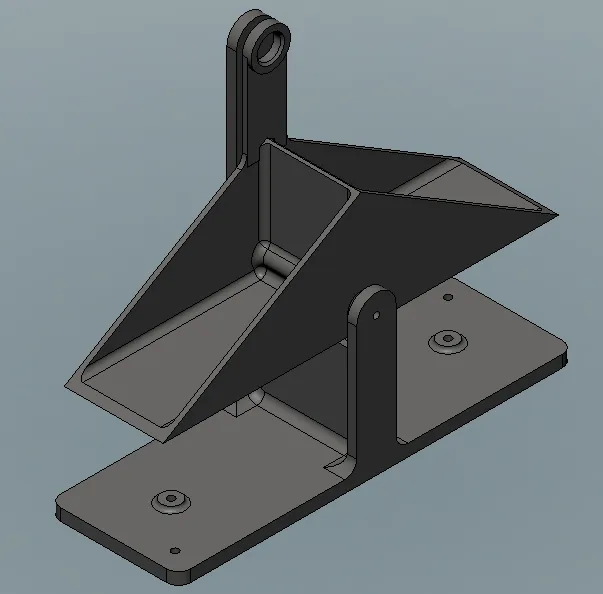
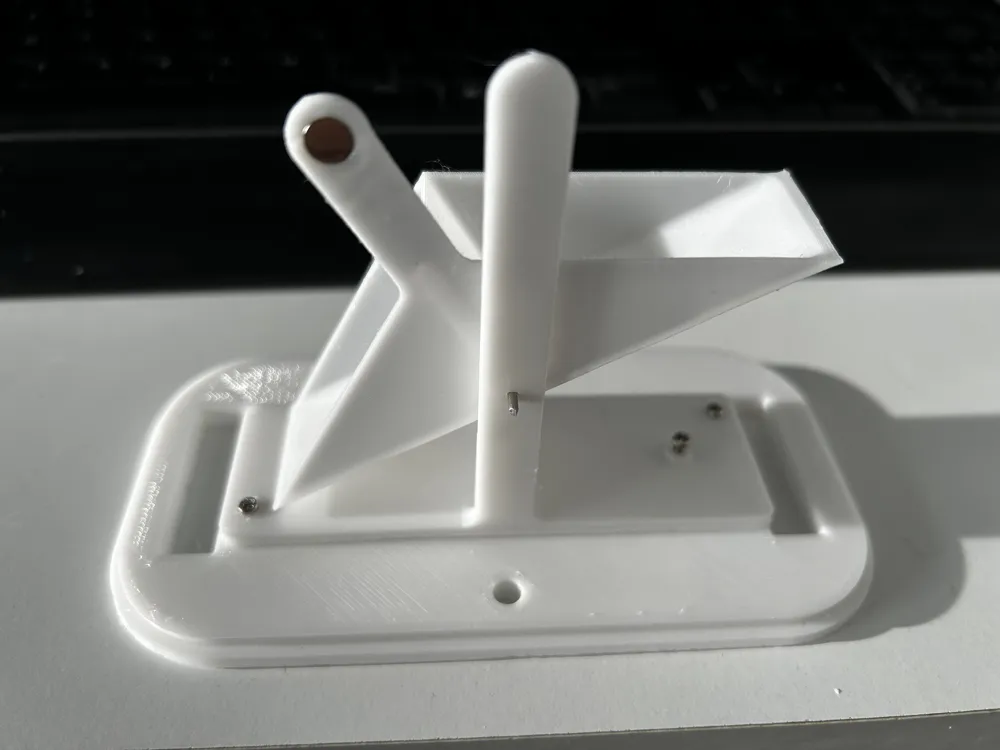
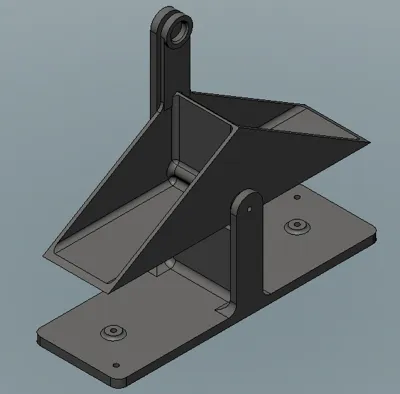
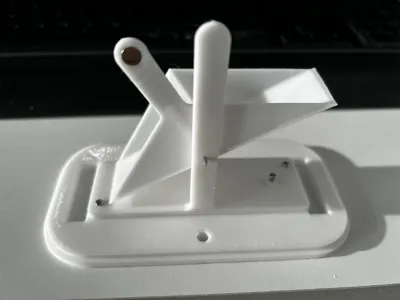
This is an automated rain meter generating a countable pulse that can be converted to millimetres of rainfall.
Also see the wind meter/anemometer project here: Modular Anemometer with roller scate bearing by jattie | Download free STL model | Printables.com
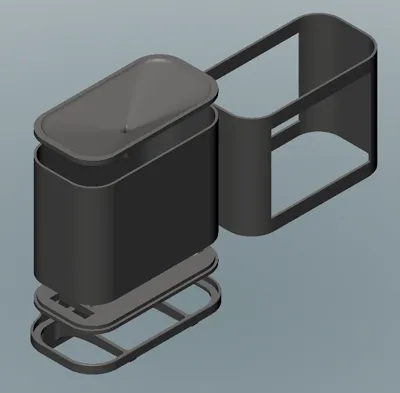
Printed Mechanical parts for a rain meter using a raspberry PI as a data logger.
Calibration
There will be subtle differences in calibration based on the print, assembly and screw settings, but I would assume if printed to 100% scale, the catchment area will be consistent.
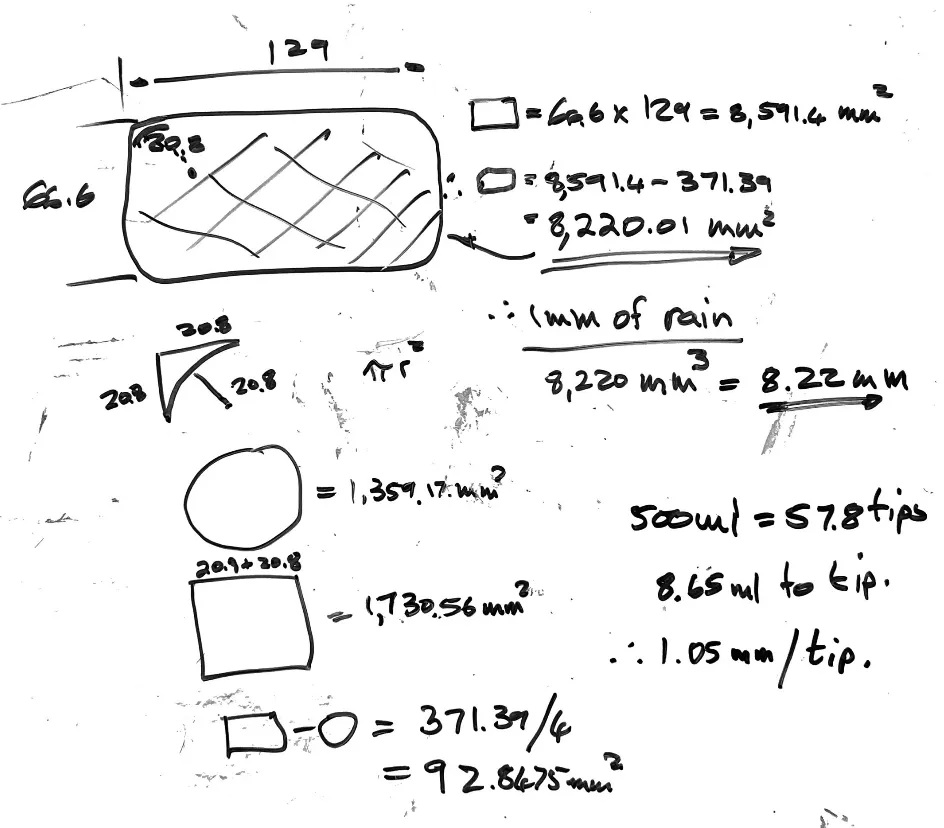
Calculating the catchment area
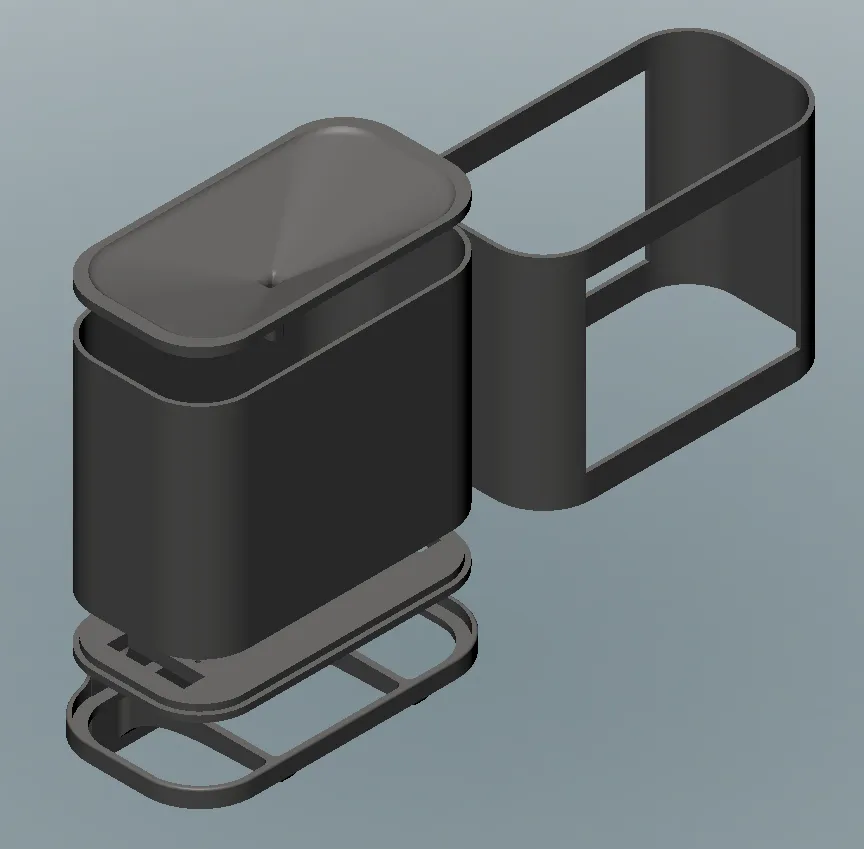
The corners are curved at a radios of 20.8mm, so if we calculate the surface area of the rectangle less the four corners, we should get the correct surface area catching the rain.
So 66.6 x 129 mm results in 8591.4mm total square are less the four corners of 371.39 that leaves us with an effective collection area of 8,220 mm squared and this is equivalent of 8.22 ml of water when we get 1mm of rainfall.
Calculating the volume required for one tip.
This was done by setting up the assembly with an open side for observation and pouring 500ml of water at a steady pace into the funnel and counting the tips. This was repeated a couple of times to ensure repeatability. The first time I got 58 tips and the second and third times 57. I notices an almost full bucket at the last attempt, realising that we have 57 and some fraction. Playing with measuring spoons I deduced that we were at about 57.8. This can probably be done more accurately with a small syringe. (I will try and get one to improve the calibration process)
Dividing the 500ml by 57.8 tips it suggests we need 8.65ml to tip the bucket. This is almost prefect match, I am sure we can adjust the set screw to get an exact match to get a tip for every 1mm of rainfall, however in this instance a tip would equate to 1.05 mm of rainfall.
License



Comment & Rating (0)