


Print Profile(1)

Description
Membership
You want to make money with it? become a member.
Boost Me (for free)
You like it? give it a boost.
English
3D Printing of a Fabric in Conjunction with a Laundry Net:
Description:
The 3D printing of a fabric in conjunction with a laundry net presents an innovative approach to creating stable and flexible structures. Here is a comprehensive guide for this process:
Materials:
- 3D printer equipped with a metal build plate or alternative securement method for a glass bed
- Filament of your choice
- Thin magnets (5x1mm round)
- Laundry net
Steps:
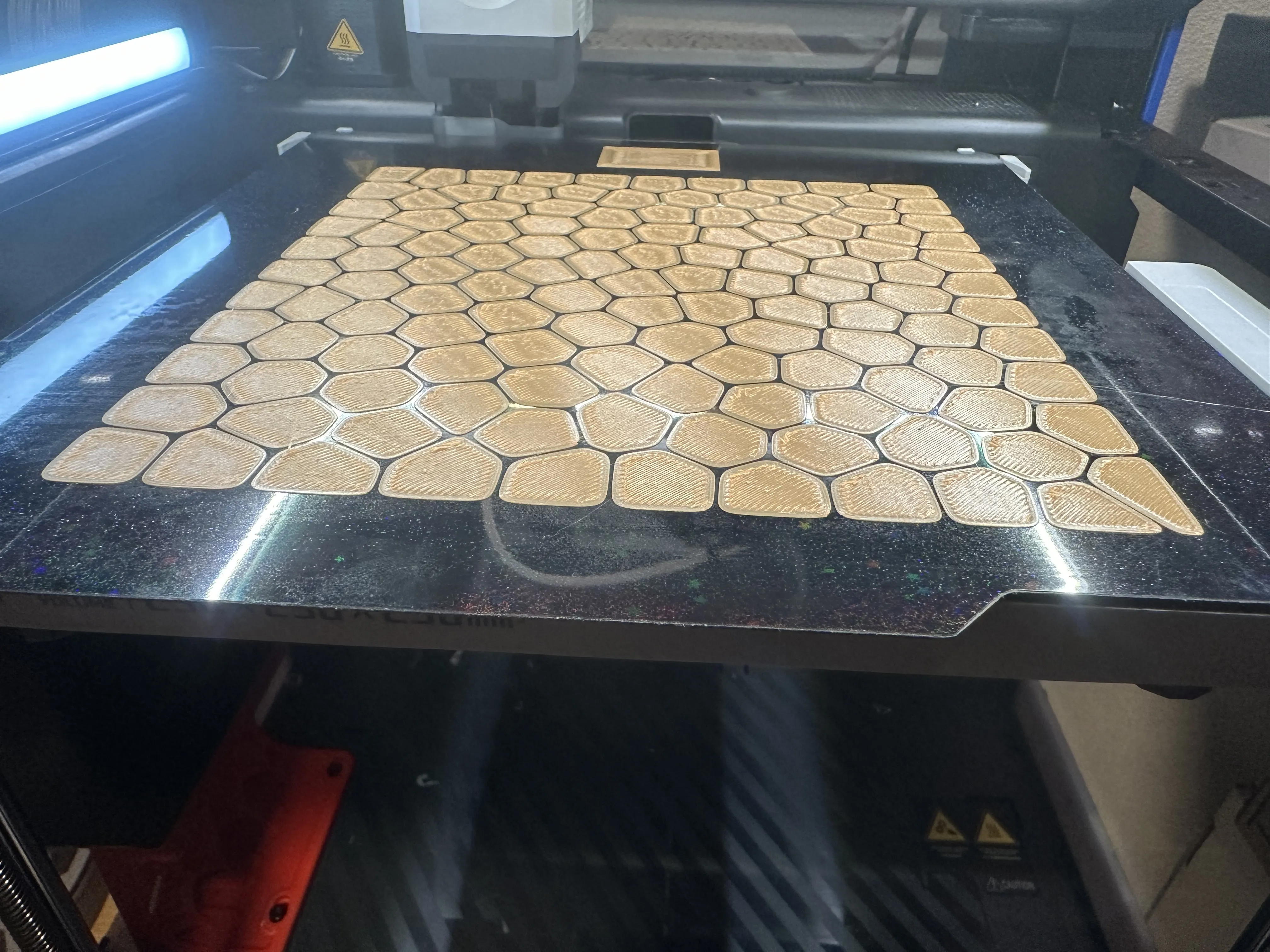
Printing the First Layer:
- Initiate the 3D printing of the desired fabric. The initial printed layer constitutes the fundamental structure.
Pause the Print:
- Pause the print subsequent to the first layer. This facilitates the attachment of the laundry net.
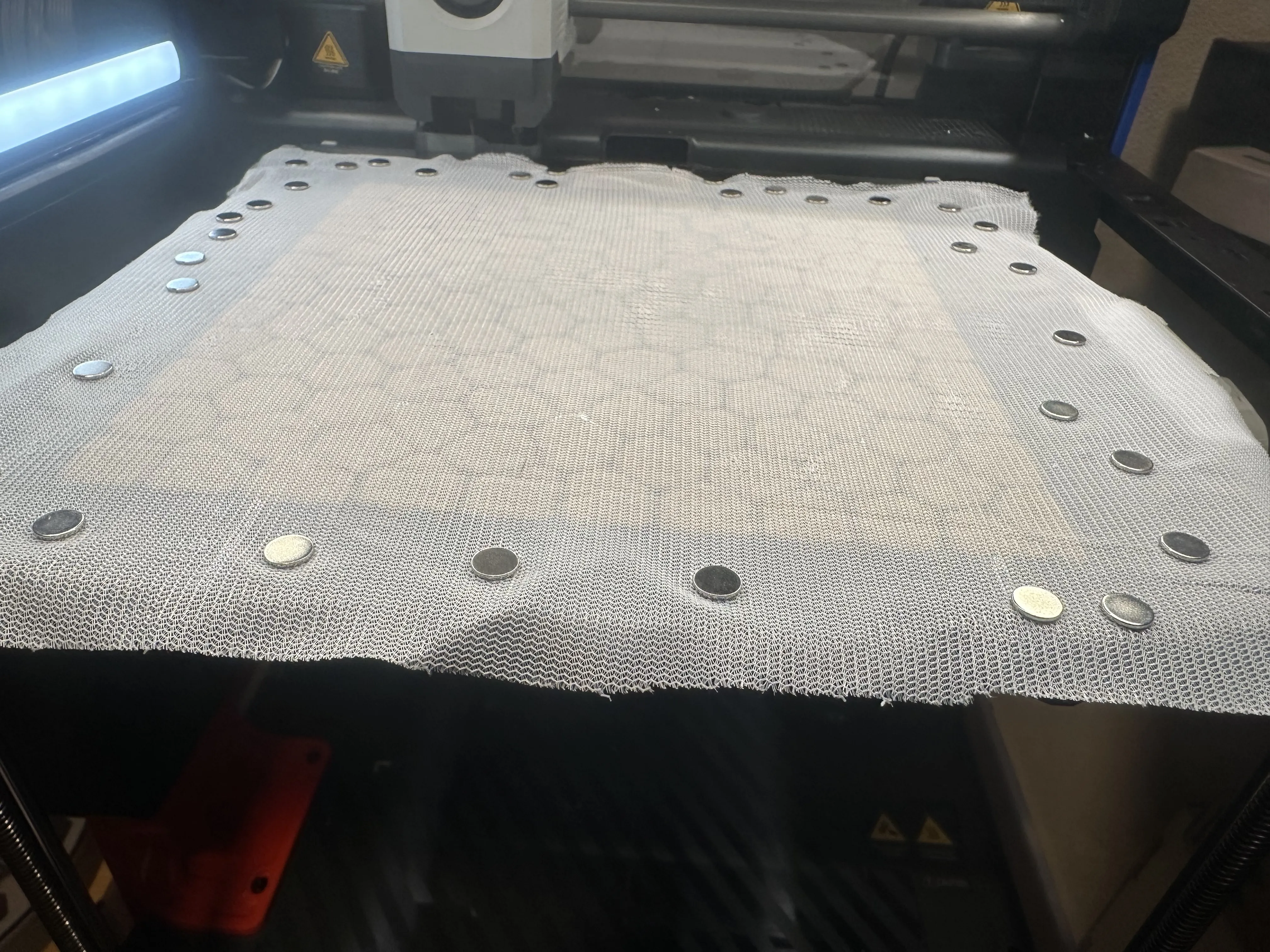
Attaching the Laundry Net:
- Position the laundry net atop the printed surface and secure it using thin magnets (5x1mm round). Ensure that the net spans the printed area devoid of creases.
Resuming the Print:
- On a metal build plate, all components will remain flat. If utilizing a glass bed, employ appropriate clips or other fastening mechanisms to guarantee a flat surface. Resume the print.
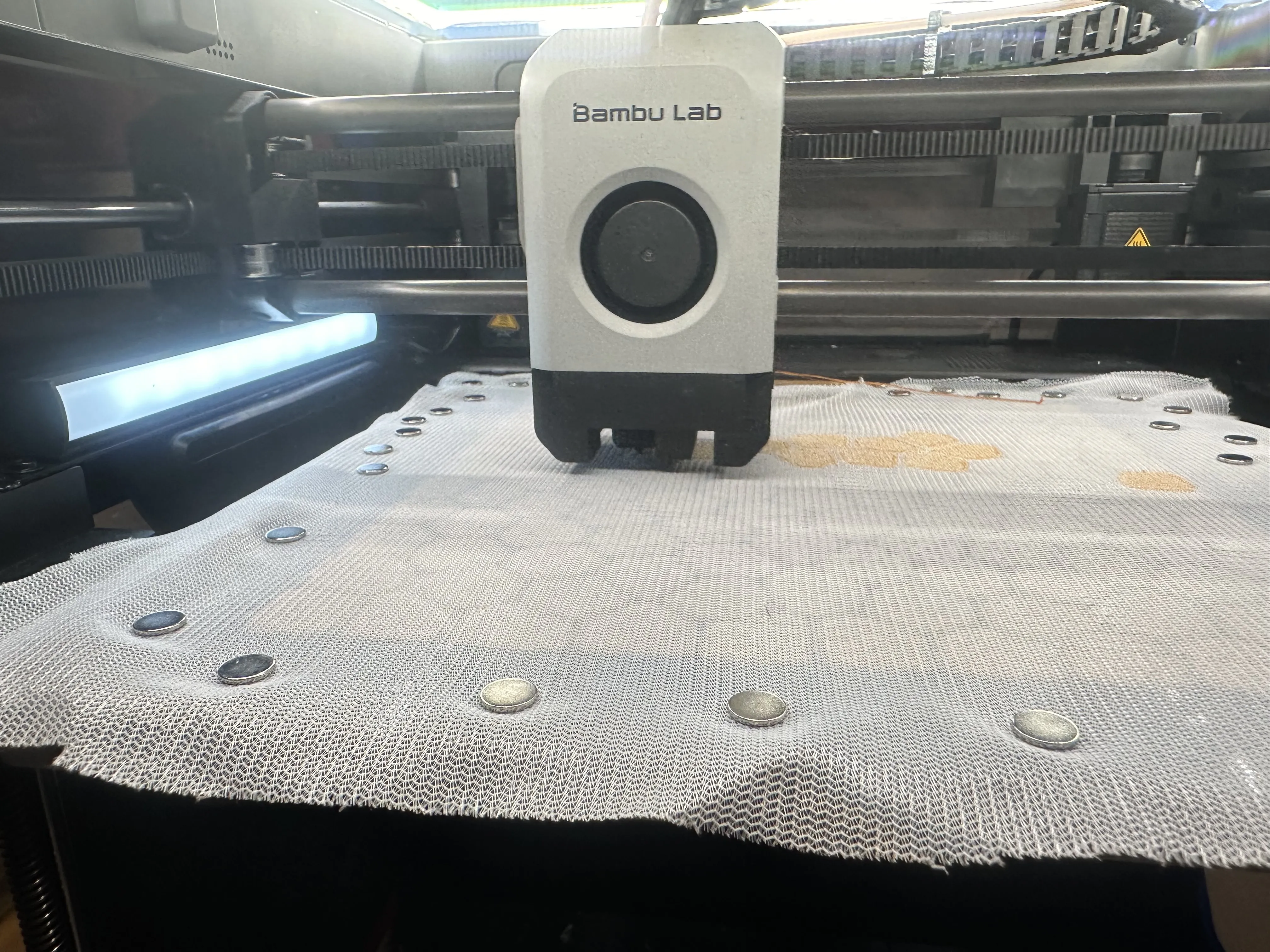
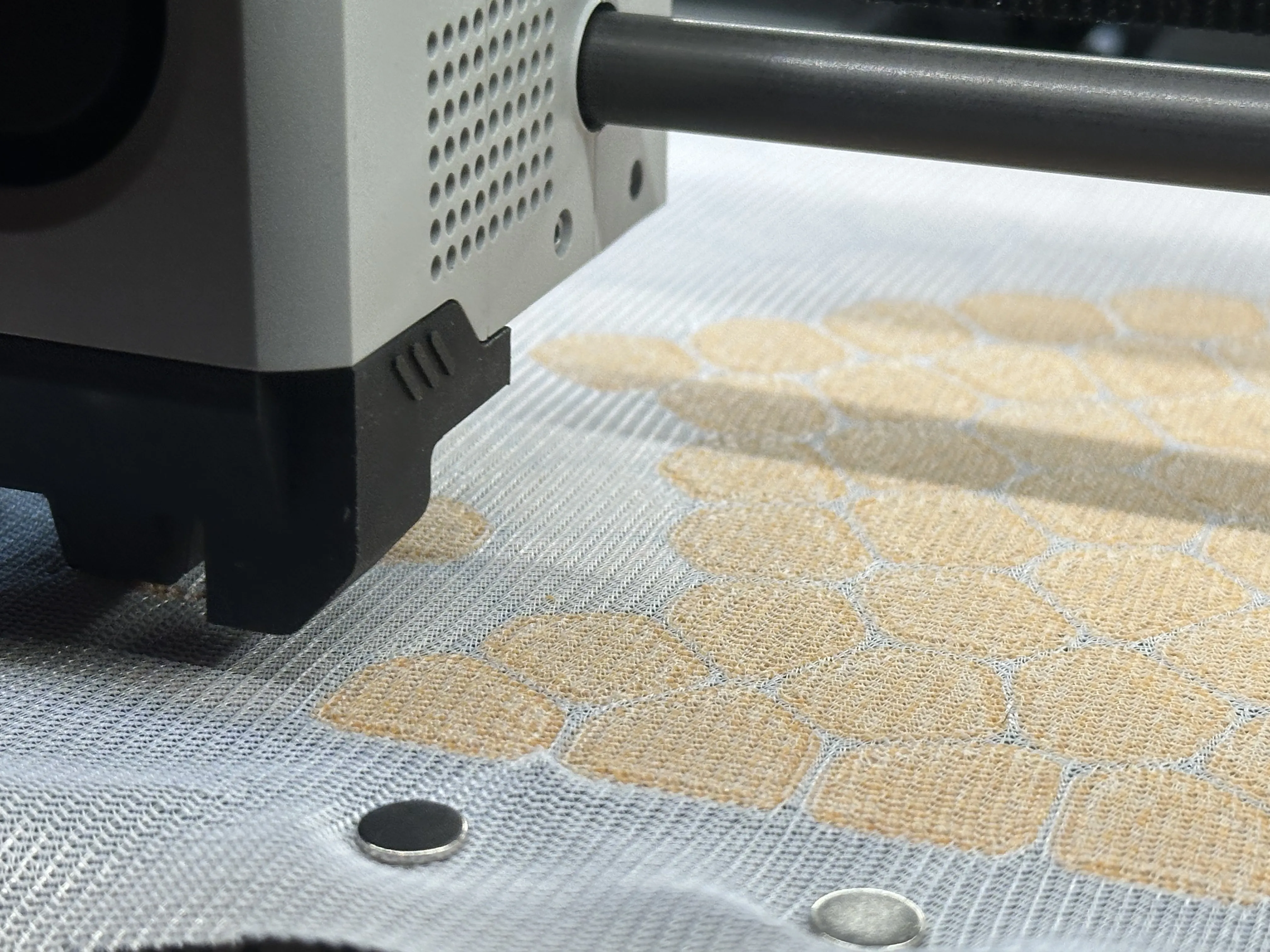
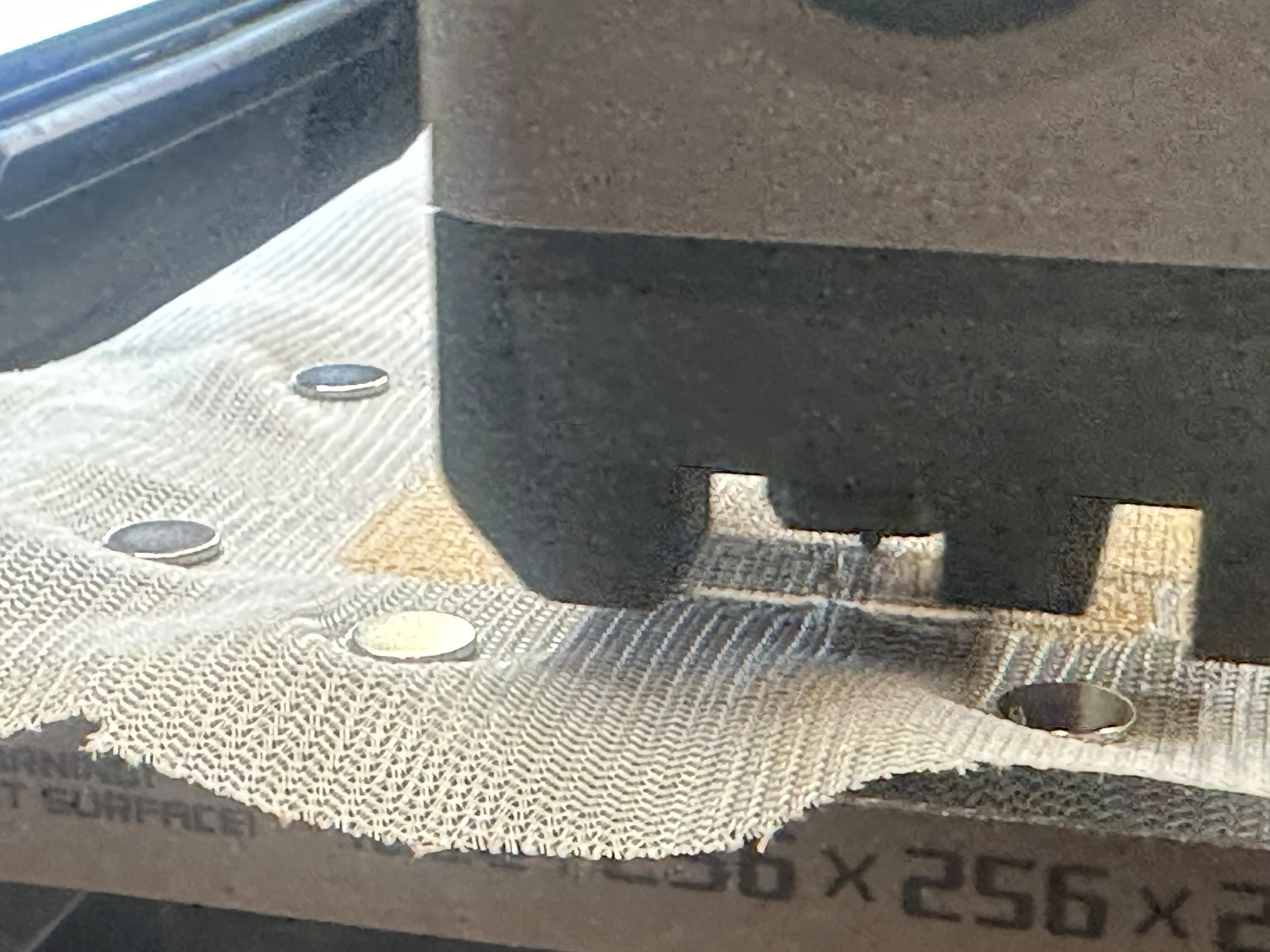
Observation During Printing:
- During the printing of the second layer, it is imperative to meticulously monitor the process for proper functionality. If any issues arise, immediately halt or pause the print to implement necessary adjustments.
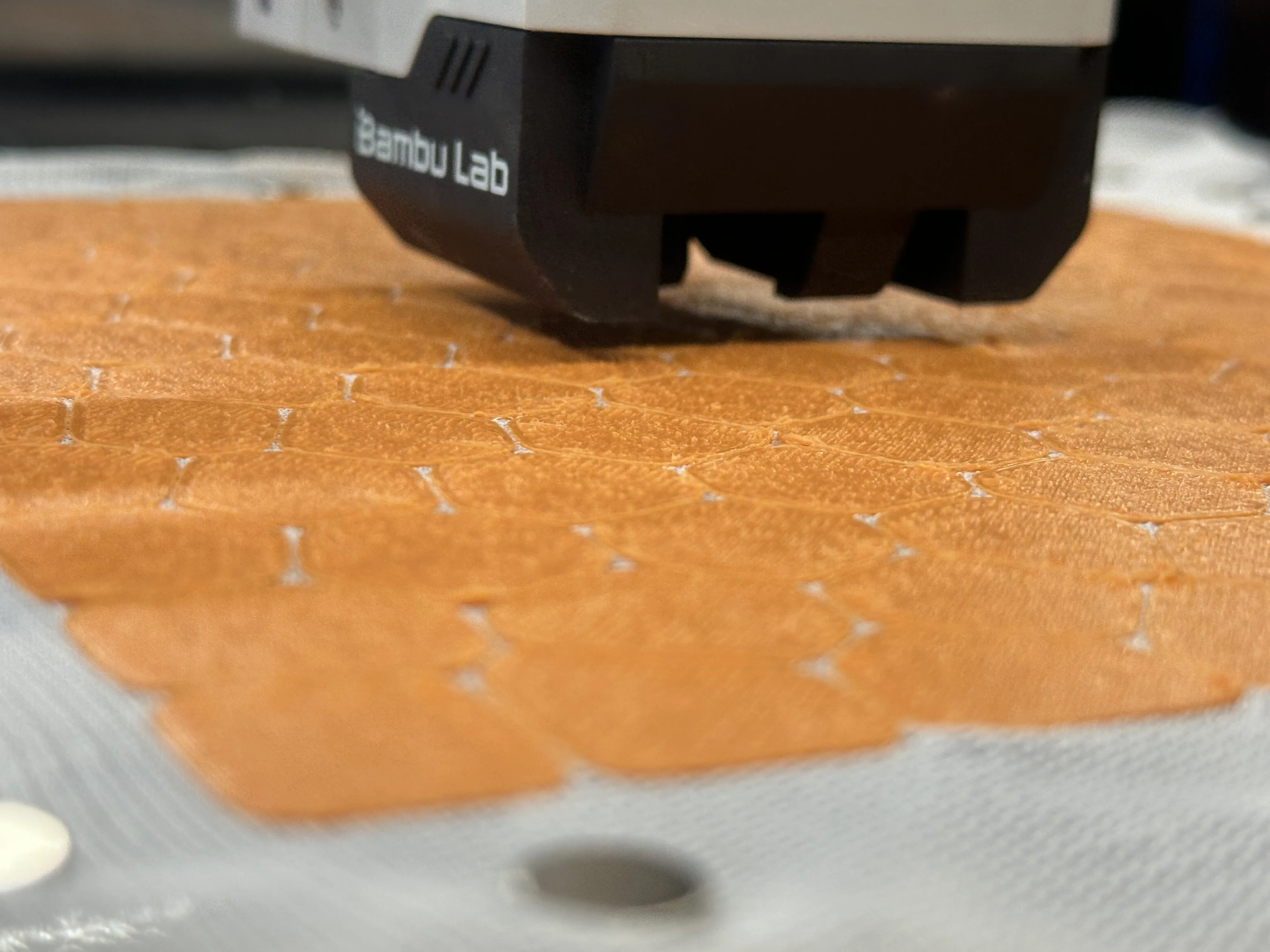
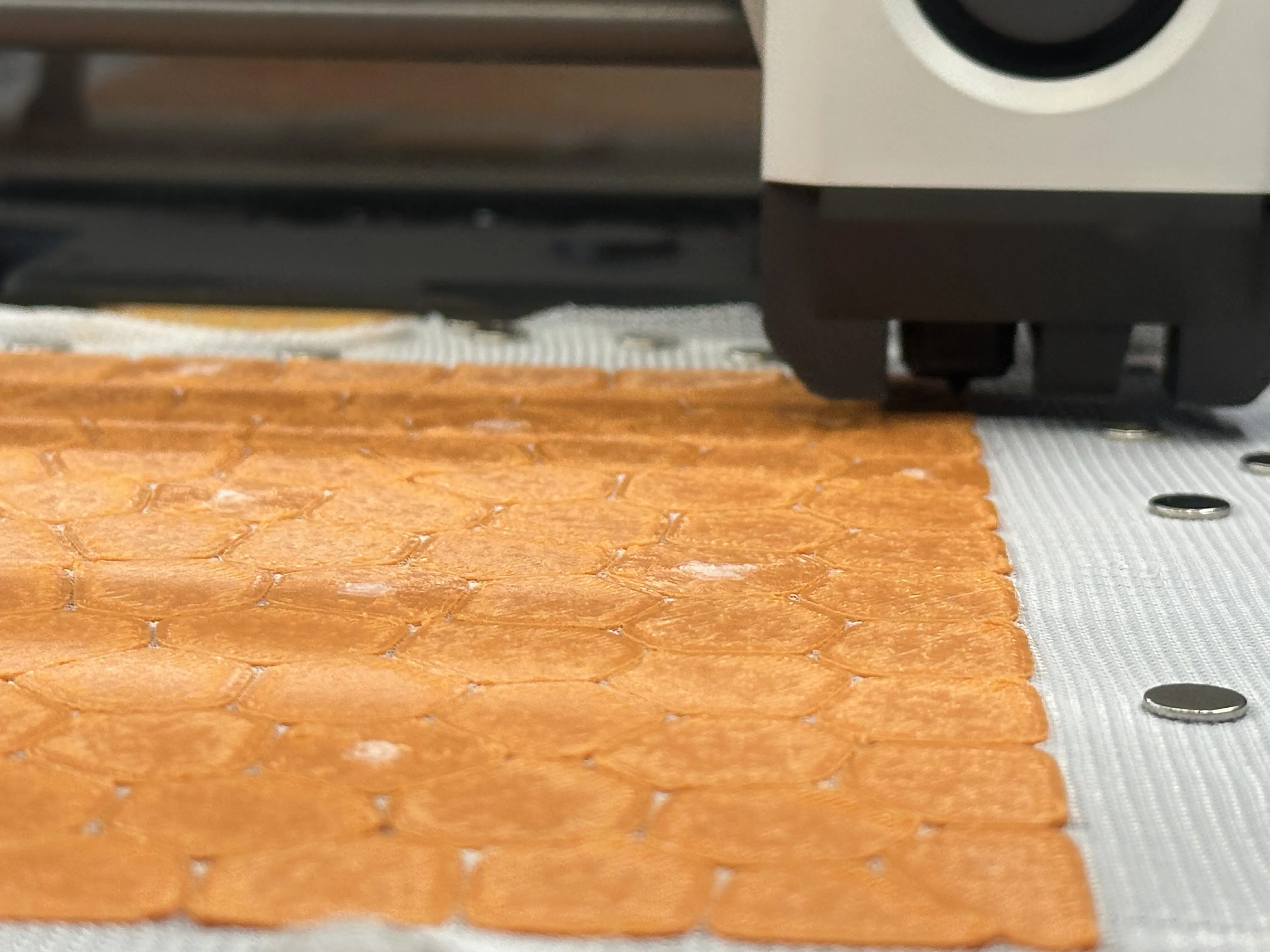
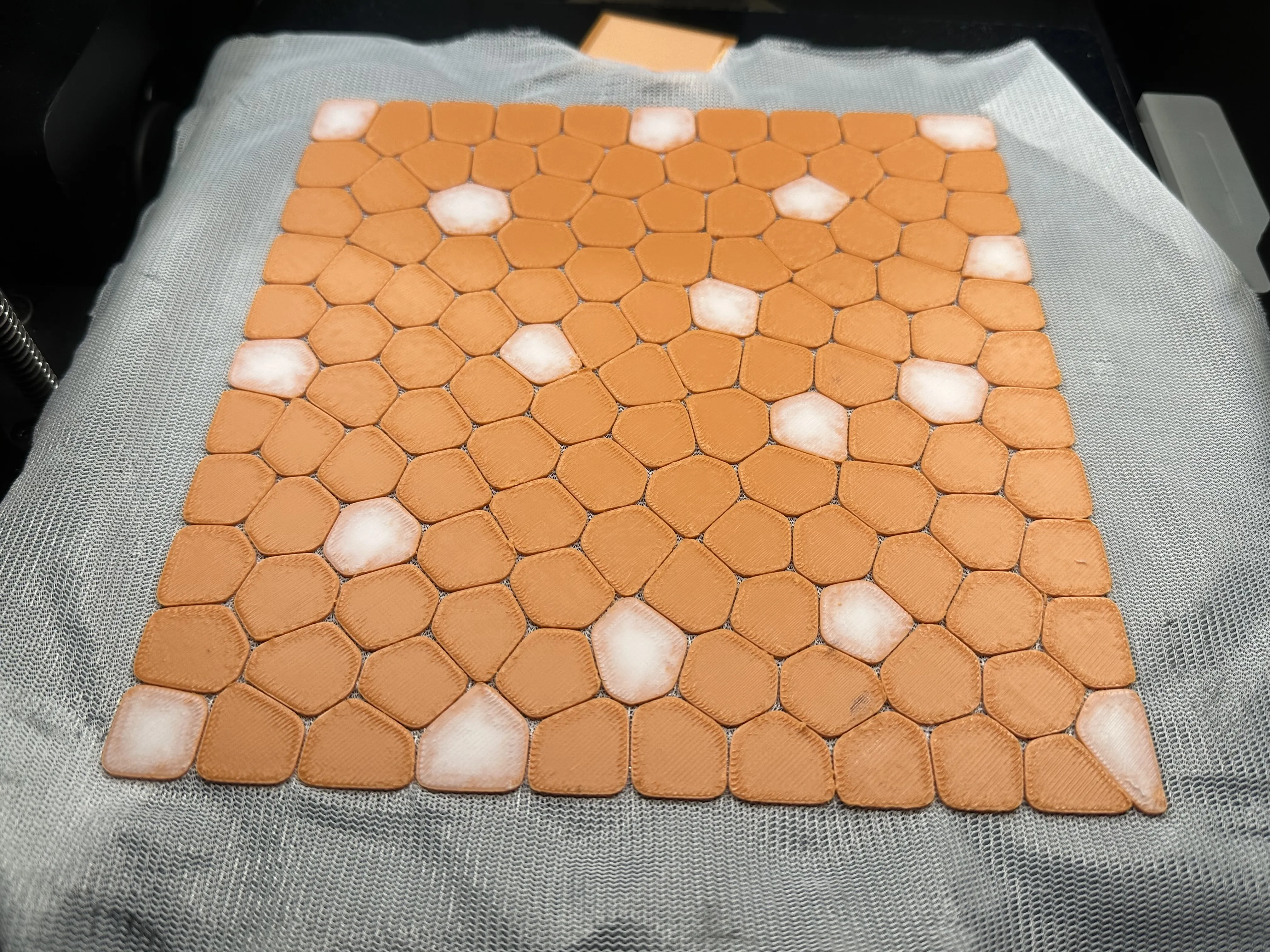
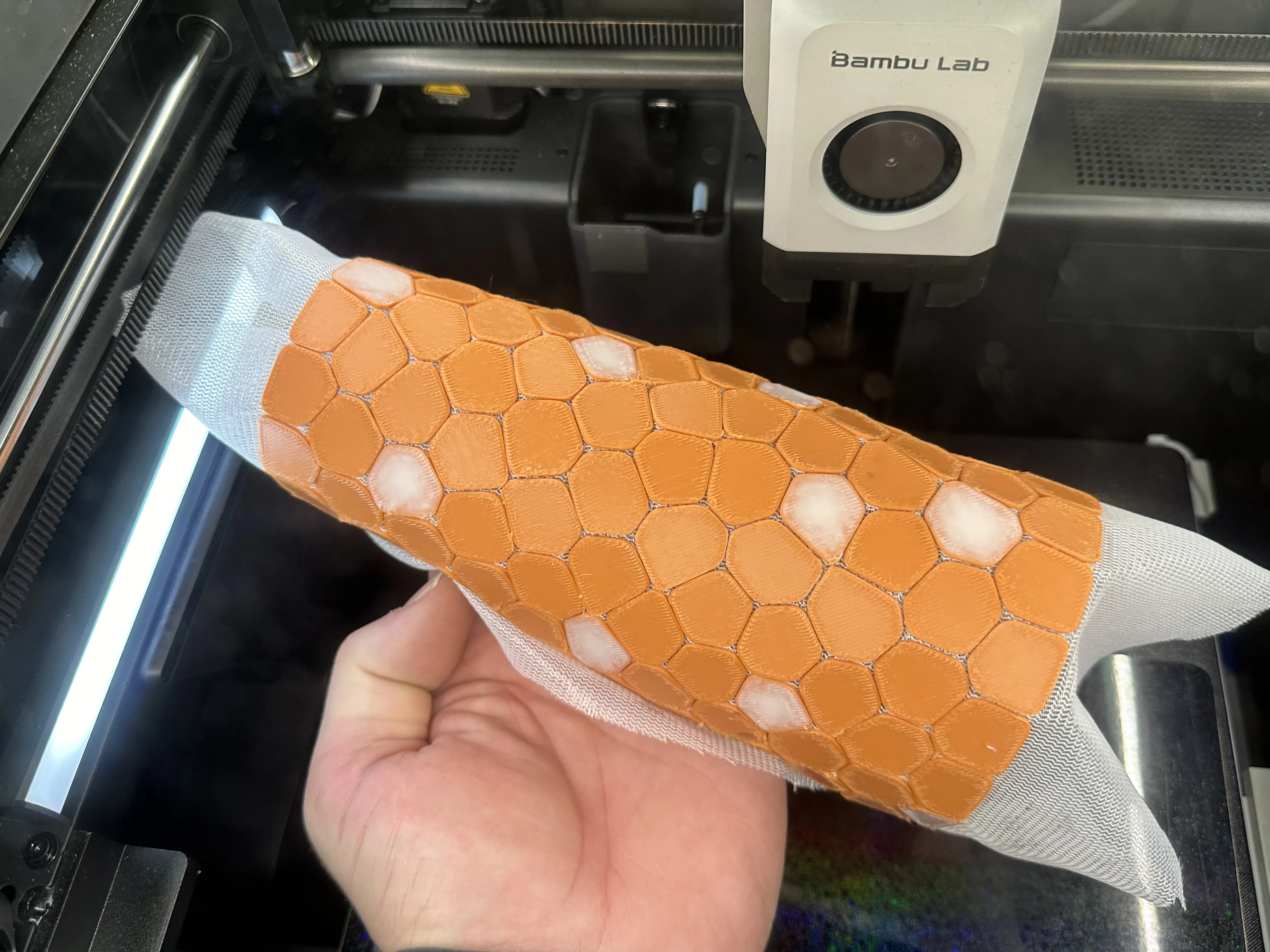
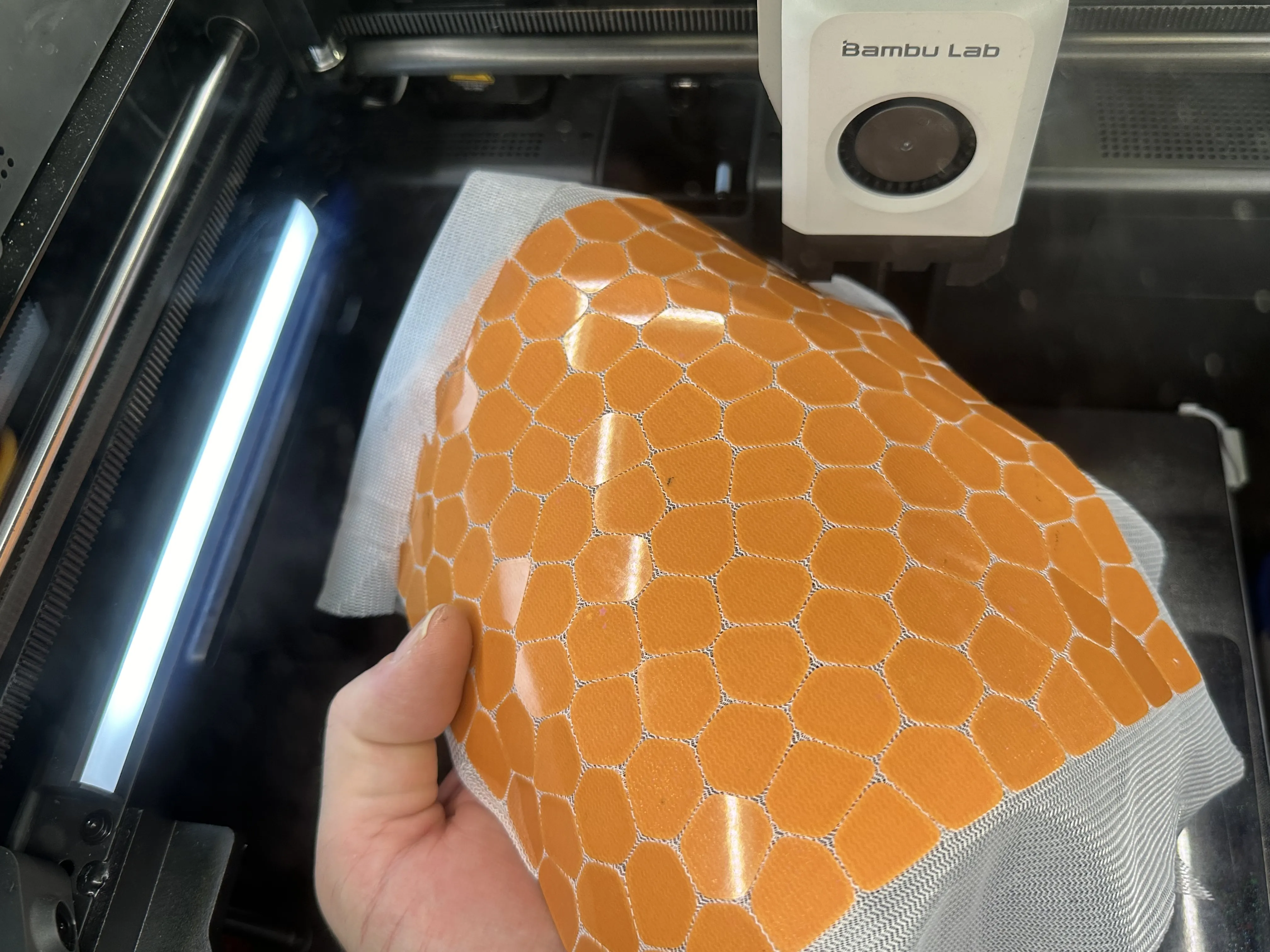
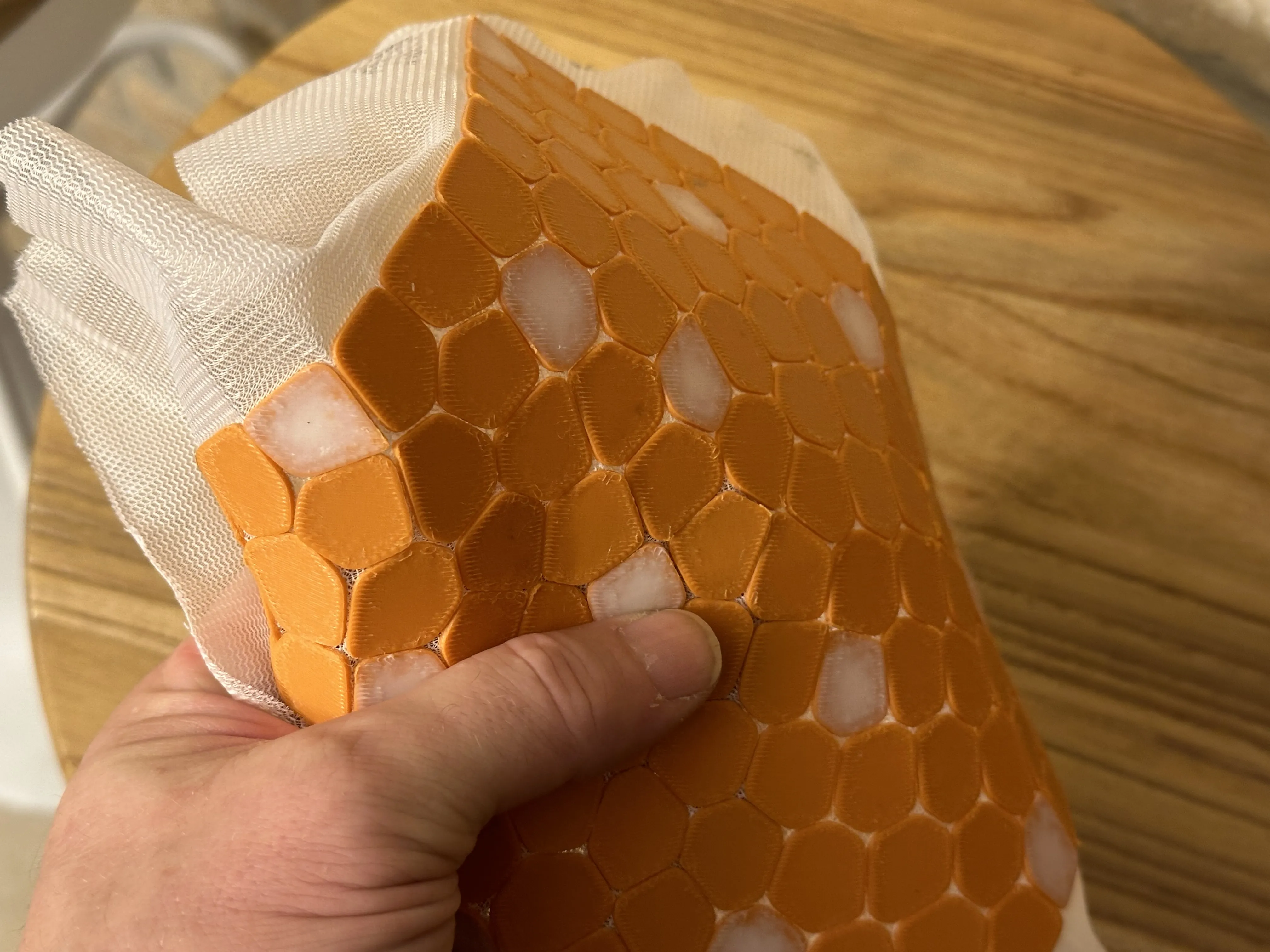
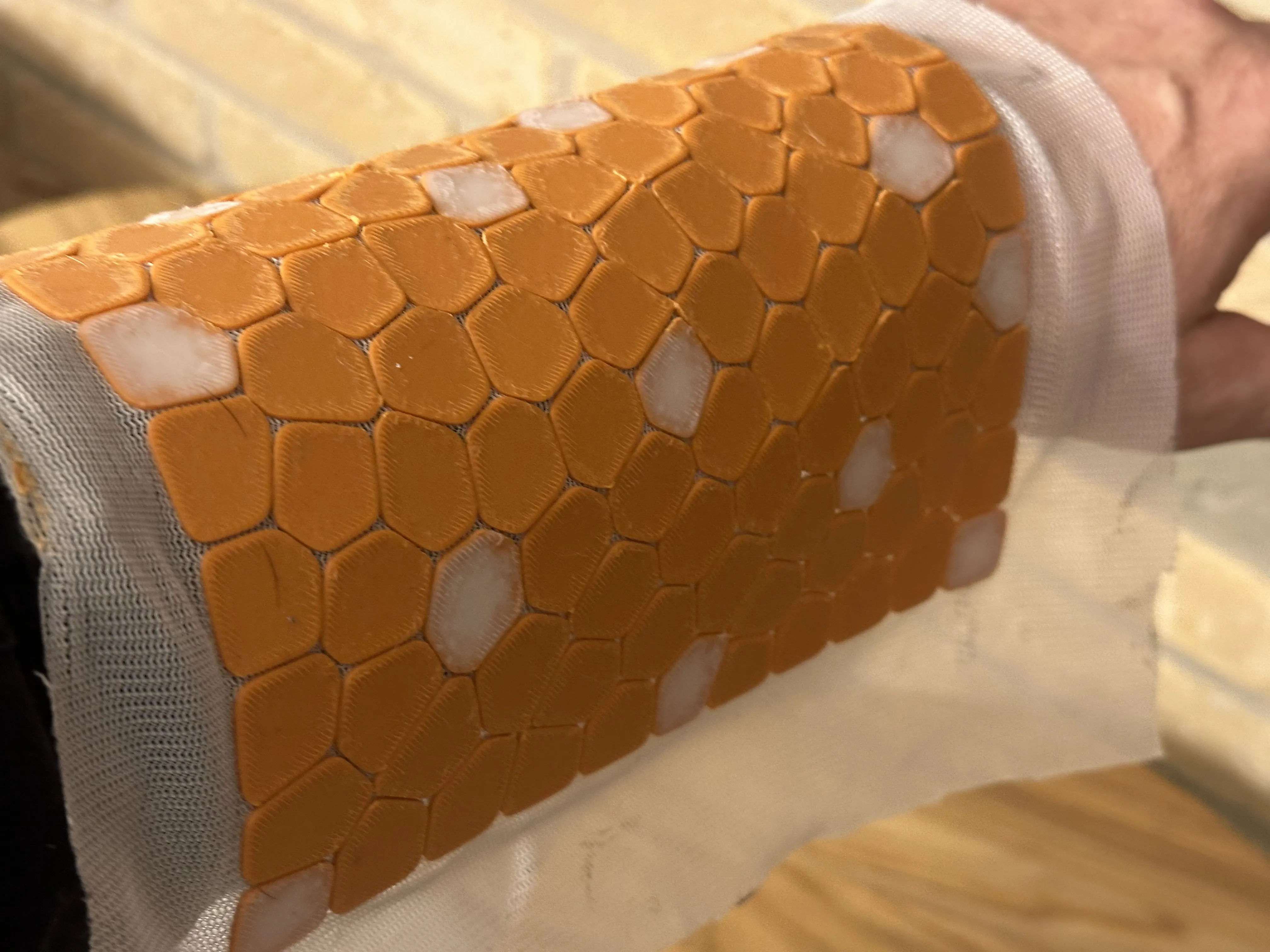
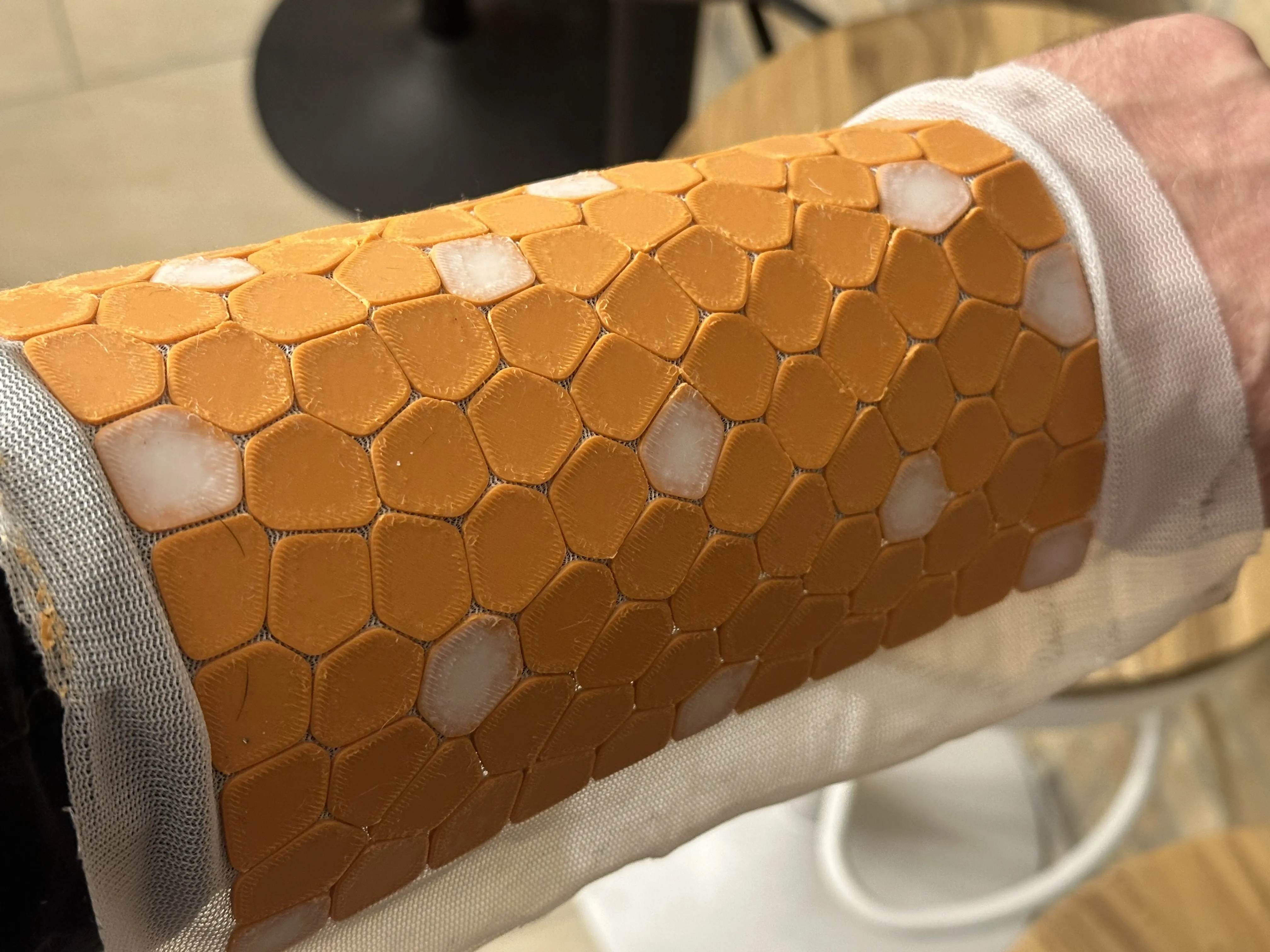
Finished Fabric:
- The completed fabric exhibits remarkable stability and flexibility. It can be utilized in modified forms and designs for cosplay costumes or decorative purposes.
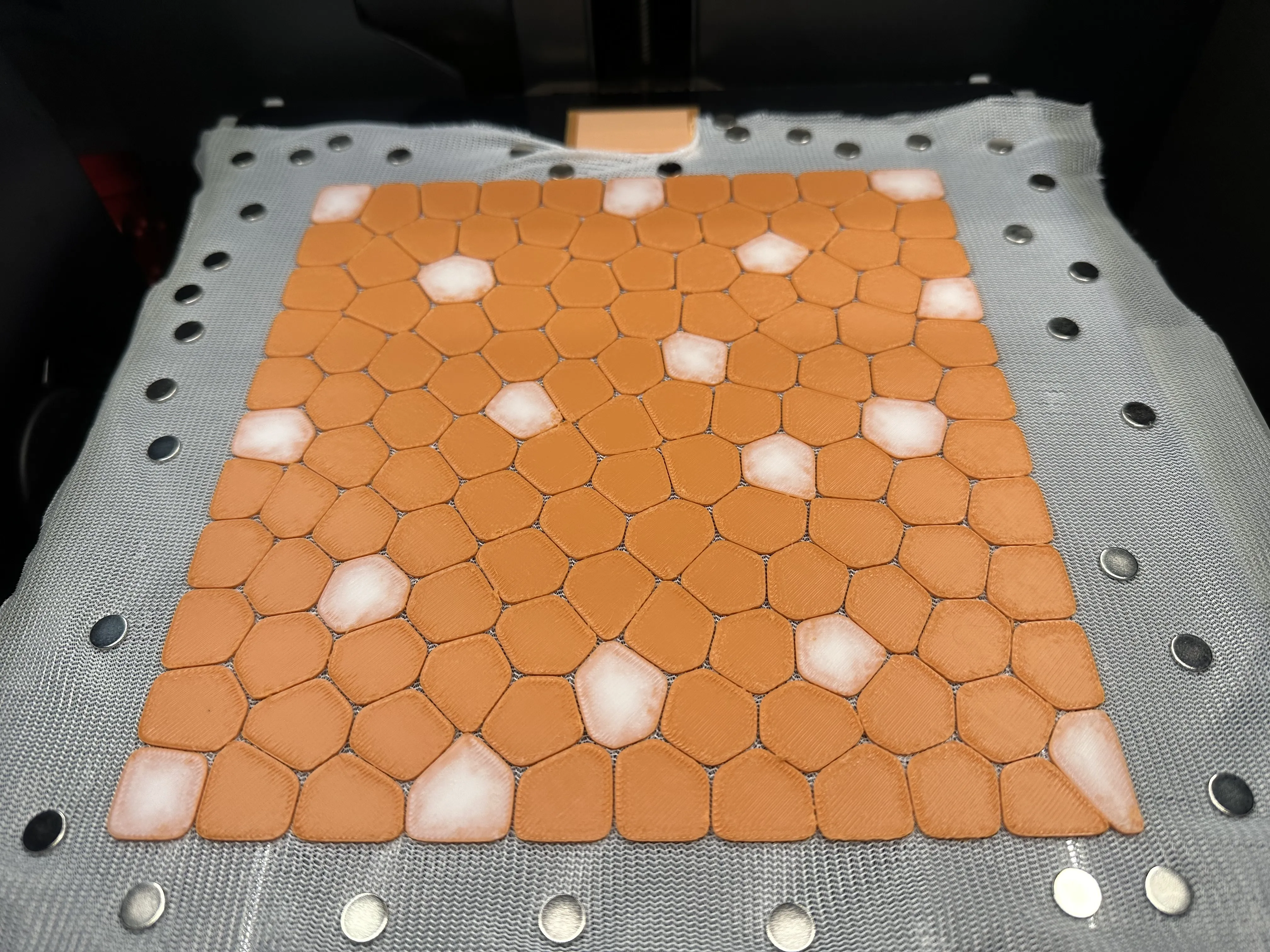
Note:
- Selecting the appropriate magnets and meticulously positioning the laundry net are pivotal for a successful outcome.
- Printing on a metal build plate provides a level surface, whereas on a glass bed, additional precautionary measures are necessary.
This innovative technique unveils creative possibilities for crafting robust and adaptable fabrics for a variety of applications.
Deutsch
3D-Druck eines Gewebes mit Wäschenetz:
Beschreibung:
Der 3D-Druck eines Gewebes in Verbindung mit einem Wäschenetz bietet eine innovative Möglichkeit, stabile und flexible Strukturen herzustellen. Hier ist eine detaillierte Anleitung für diesen Prozess:
Materialien:
- 3D-Drucker mit Metall-Buildplate oder alternative Befestigungsmethode für Glasbed
- Filament nach Wahl
- Dünne Magnete (5x1mm rund)
- Wäschenetz
Schritte:
Druck der ersten Lage:
- Starten Sie den 3D-Druck des gewünschten Gewebes. Die erste gedruckte Lage bildet die Grundstruktur.
Druck pausieren:
- Nach der ersten Lage pausieren Sie den Druck. Dies bietet die Gelegenheit, das Wäschenetz anzubringen.
Befestigung des Wäschenetzes:
- Legen Sie das Wäschenetz über die gedruckte Fläche und befestigen Sie es mit dünnen Magneten (5x1mm rund). Achten Sie darauf, dass das Netz die gedruckte Fläche ohne Falten bedeckt.
Fortsetzung des Drucks:
- Auf einer Metall-Buildplate liegt alles flach auf. Bei einem Glasbed sollten entsprechende Klammern oder andere Befestigungsmethoden genutzt werden, um sicherzustellen, dass alles flach bleibt. Fortsetzen des Drucks.
Beobachtung während des Drucks:
- Während des Druckvorgangs der zweiten Schicht ist es wichtig, sorgfältig zu beobachten, ob alles richtig funktioniert. Bei Problemen sofort abbrechen oder pausieren, um eventuelle Anpassungen vorzunehmen.
Fertiges Gewebe:
- Das fertige Gewebe ist sehr stabil und flexibel. Es kann in veränderter Form und Gestaltung für Cosplay-Kostüme oder als Dekoration verwendet werden.
Hinweis:
- Die Wahl der richtigen Magnete und die präzise Platzierung des Wäschenetzes sind entscheidend für ein erfolgreiches Ergebnis.
- Das Drucken auf einer Metall-Buildplate bietet eine flache Oberfläche, während bei einem Glasbed zusätzliche Vorkehrungen getroffen werden müssen.
Diese innovative Methode eröffnet kreative Möglichkeiten für die Herstellung von stabilen und anpassungsfähigen Geweben für verschiedene Anwendungen.
License



Comment & Rating (5)