
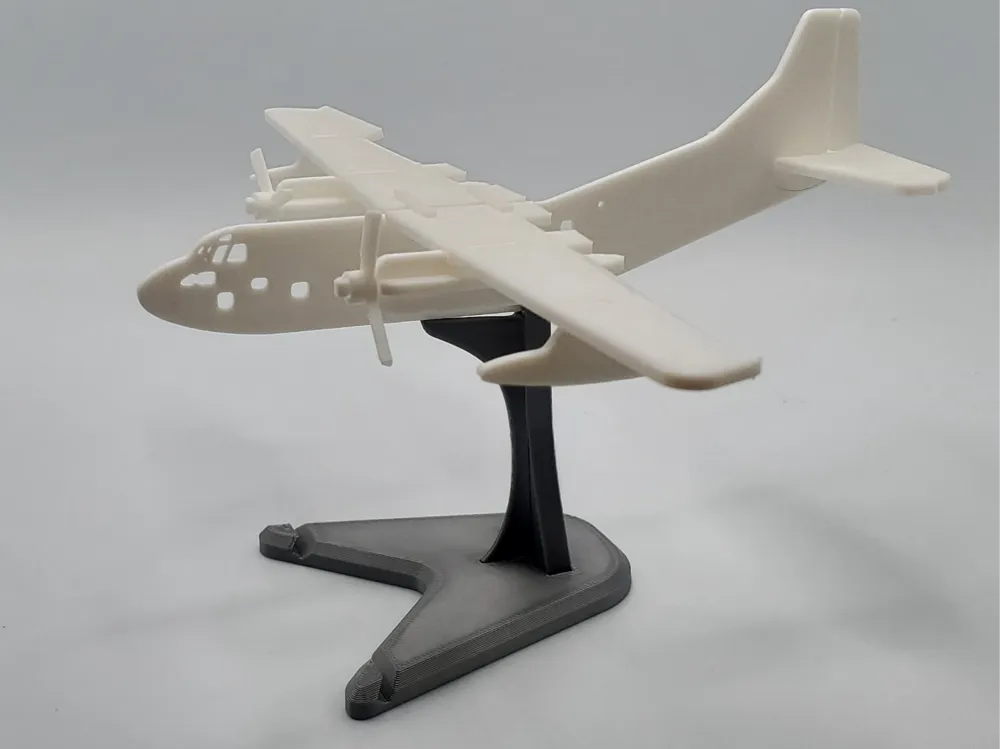
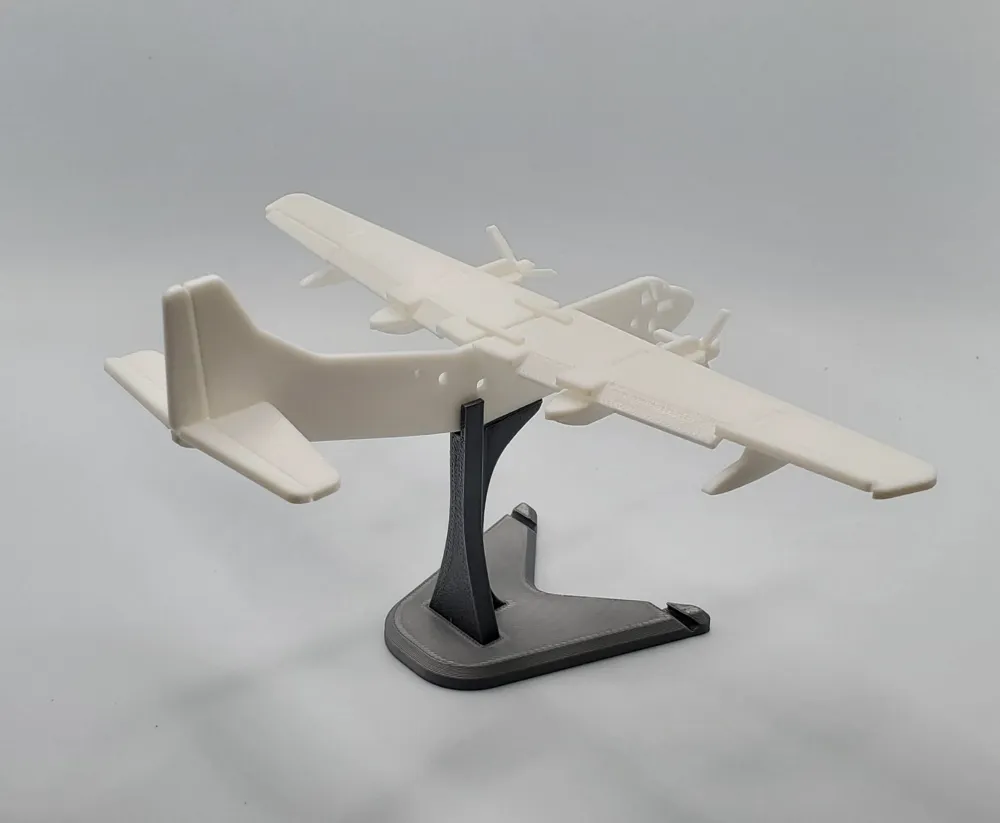
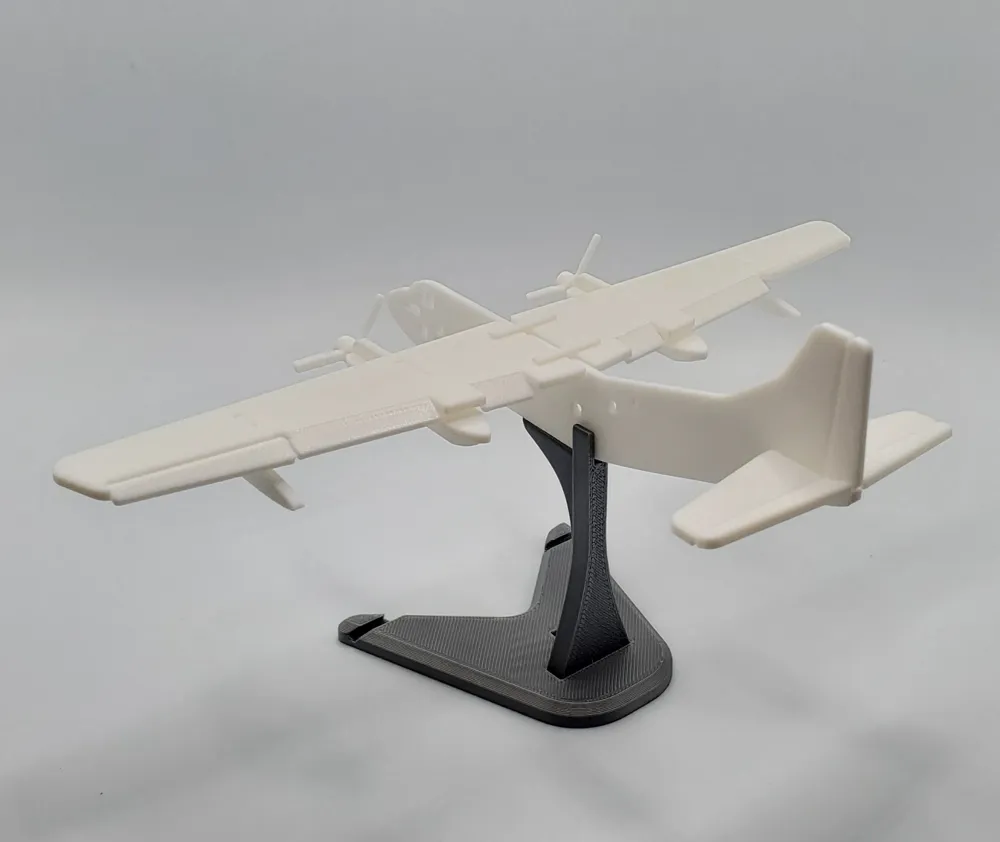
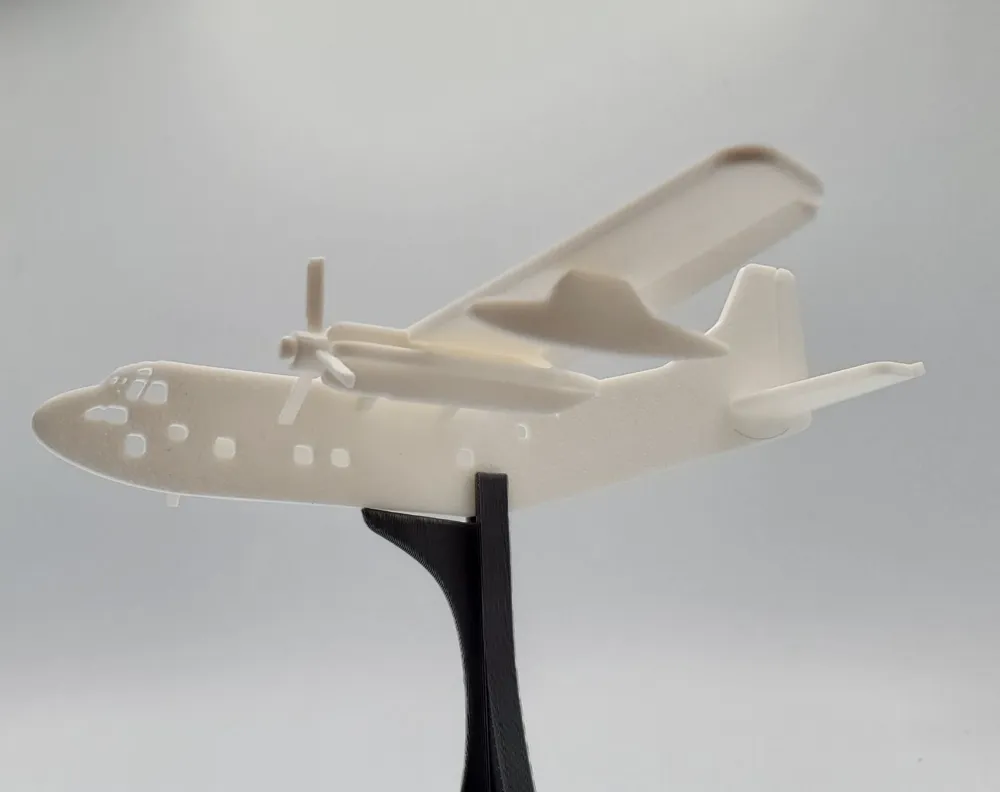
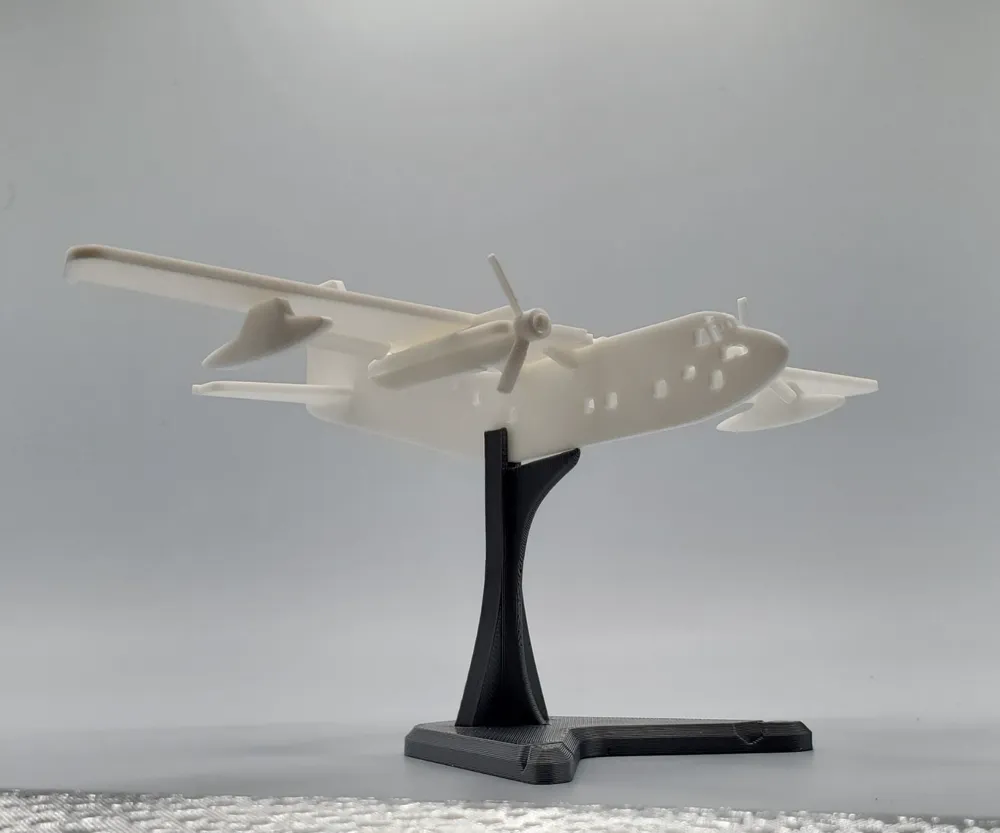
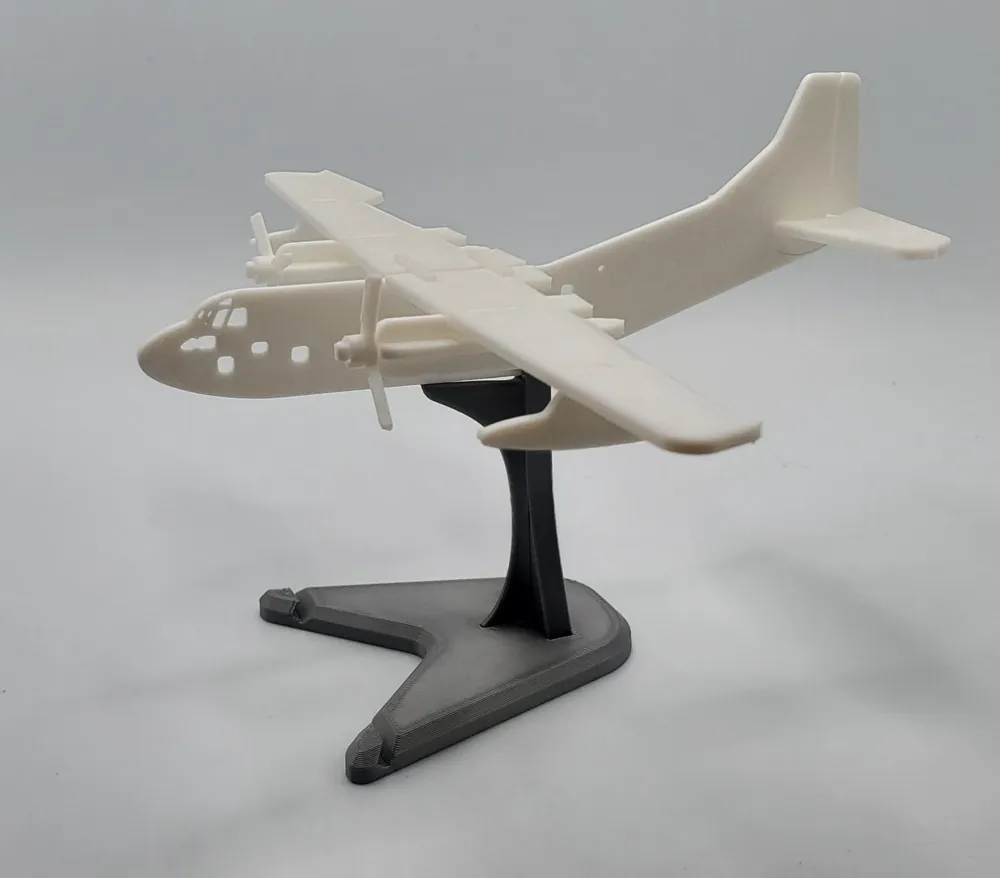
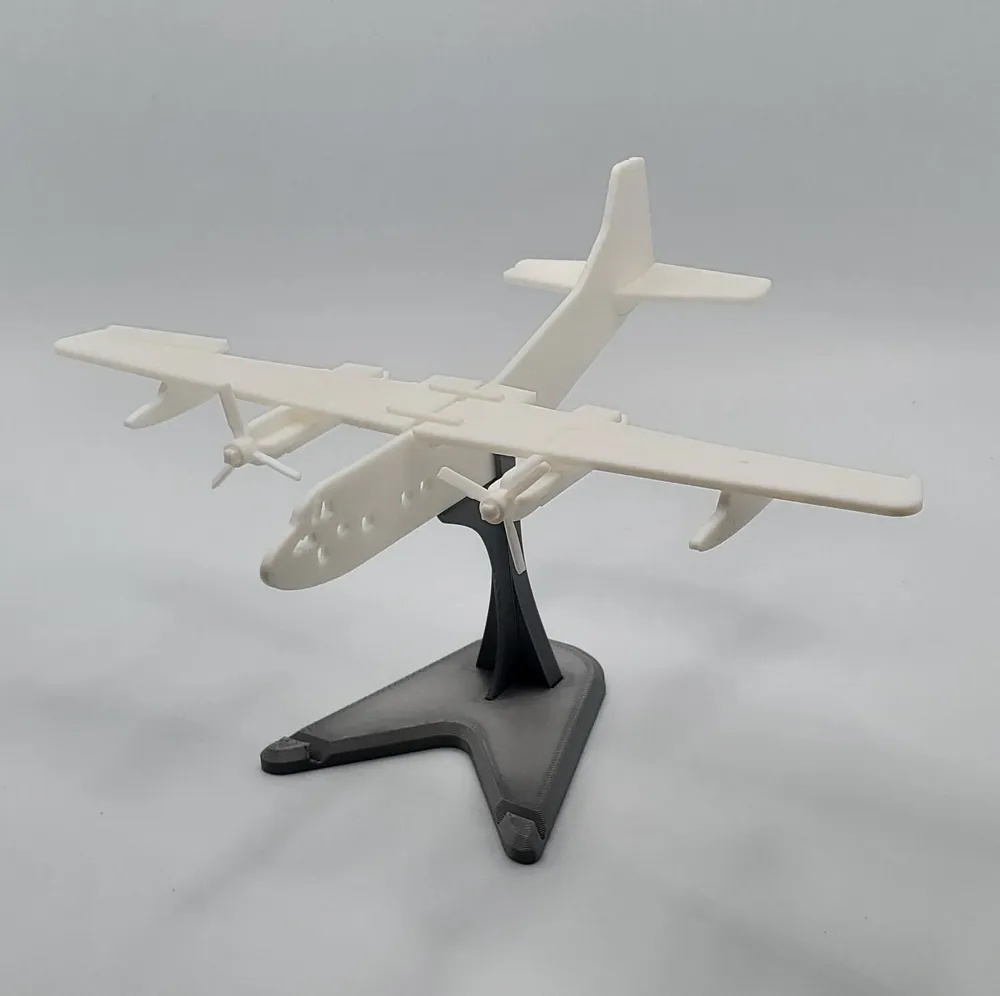
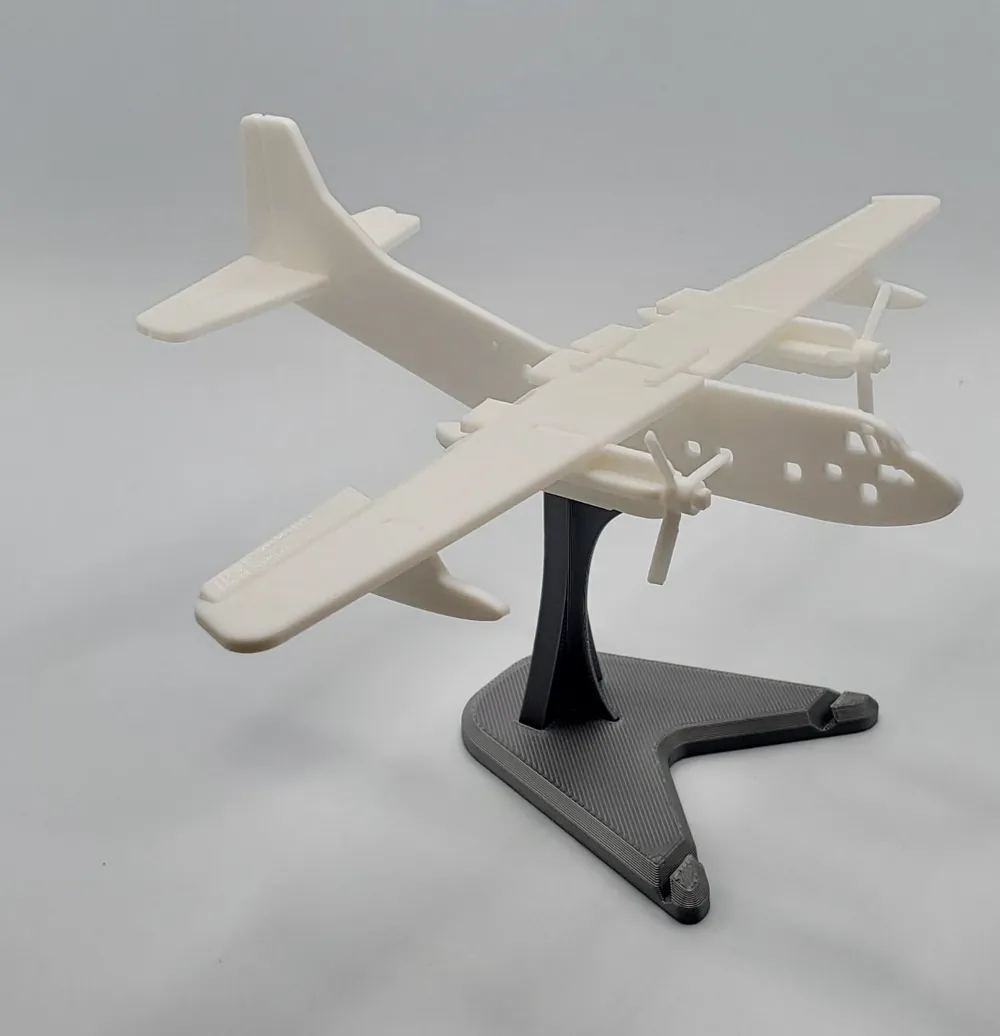
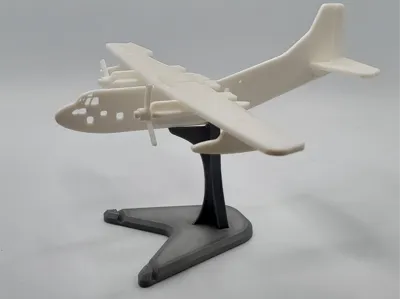
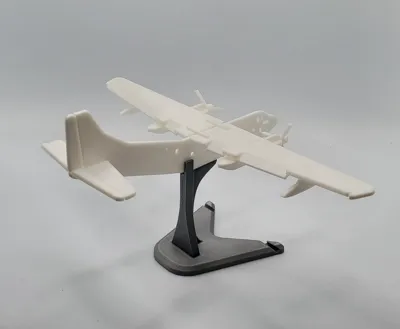
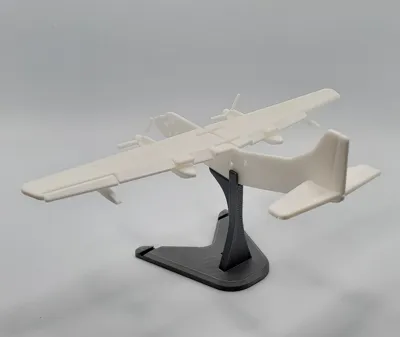
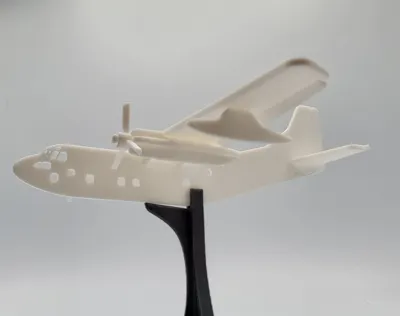
Fairchild C-123B Provider Cargo Airplane Model Kit
Print Profile(1)

Description
The Aircraft
The development of the Fairchild C-123 Provider began in the late 1940s as a military cargo aircraft capable of both short takeoffs and landings (STOL) and rugged operations from unprepared airstrips. Initially designed by Chase Aircraft, the C-123 was conceived as a glider for the U.S. Air Force under the designation XCG-20. Chase’s goal was to create a large glider capable of carrying heavy cargo or personnel for airborne operations.
The first prototype flew in 1949, but soon after, the U.S. Air Force expressed interest in a powered version of the glider, recognizing that a powered aircraft would be far more versatile. Chase responded by modifying the design into a twin-engine aircraft, replacing the glider’s unpowered configuration with two Pratt & Whitney R-2800 radial engines, resulting in the XC-123. A second prototype, the XC-123A, was fitted with four jet engines mounted in pods under the wings, but this version was not pursued due to high fuel consumption and complexity.
The C-123’s rugged design made it ideal for a variety of roles, from cargo and troop transport to medical evacuation and supply drops in austere environments. The aircraft was capable of carrying 60 fully equipped troops or 12,000 pounds of cargo and could operate from short, unprepared airstrips, which was critical for operations in remote or combat zones.
Chase Aircraft faced financial difficulties and was unable to continue production, so the design was taken over by Fairchild Aircraft in 1953. Fairchild refined the aircraft and produced the C-123B, which became the first production model. The C-123B made its first flight in 1954 and entered service shortly thereafter. The aircraft quickly proved its worth during the Vietnam War, where its STOL capabilities and ability to operate in difficult terrain made it indispensable for resupplying remote outposts and supporting tactical operations.
Throughout the 1960s and 1970s, the C-123 was heavily used for a wide variety of missions, including cargo transport, troop deployment, and medical evacuation. One of the aircraft's more infamous roles was in Operation Ranch Hand, where modified C-123s were used to spray defoliants, such as Agent Orange, over Vietnamese jungles to remove cover for enemy forces.
Several variants of the C-123 were developed over the years, including versions equipped with jet-assisted takeoff (JATO) rockets for even shorter takeoffs, as well as aircraft fitted with auxiliary jet engines to enhance performance. Despite its relatively slow speed and basic design, the C-123 remained in service into the 1980s, thanks to its reliability, versatility, and ability to perform in challenging environments.
The C-123 Provider ultimately became a workhorse for the U.S. Air Force and other operators, serving in military, humanitarian, and civilian roles. Its legacy endures as one of the most capable and durable tactical transport aircraft of its time.
The Model
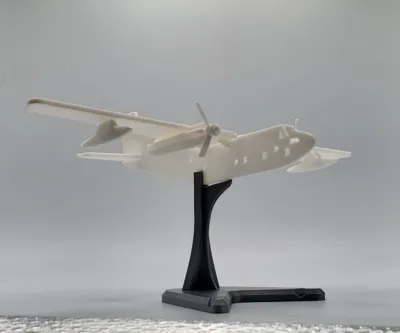
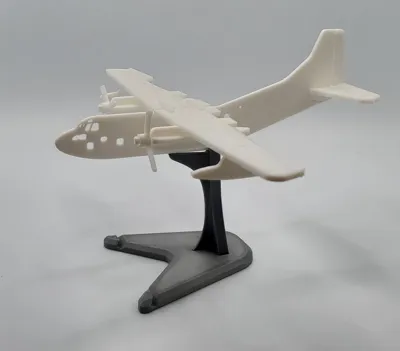
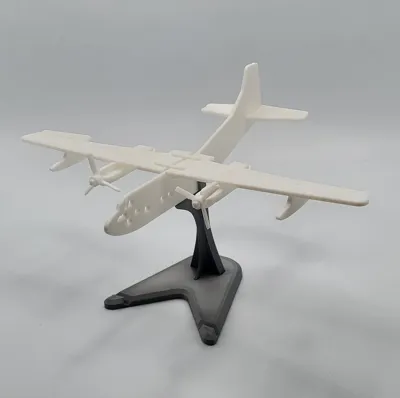
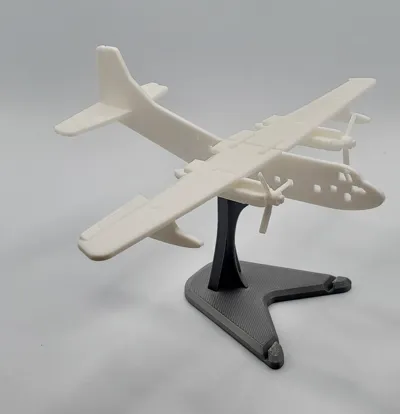
This is another fun and easy to build aircraft in the cargo series. Pieces fit snugly and did not require any glue. Please enjoy!
License

You shall not share, sub-license, sell, rent, host, transfer, or distribute in any way the digital or 3D printed versions of this object, nor any other derivative work of this object in its digital or physical format (including - but not limited to - remixes of this object, and hosting on other digital platforms). The objects may not be used without permission in any way whatsoever in which you charge money, or collect fees.


Comment & Rating (1)