
Print Profile(2)


Description
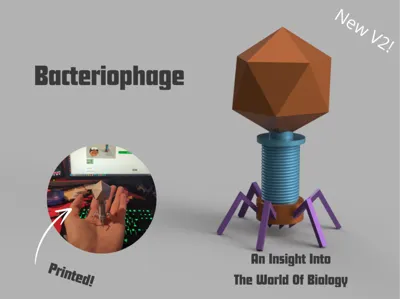
New version! V2 Changes:
Changed the position of the tail fibers to the base plate (more accurate depiction).
Made spikes more defined (V1 had a little bit to small spikes)
Better adhesion
Description:
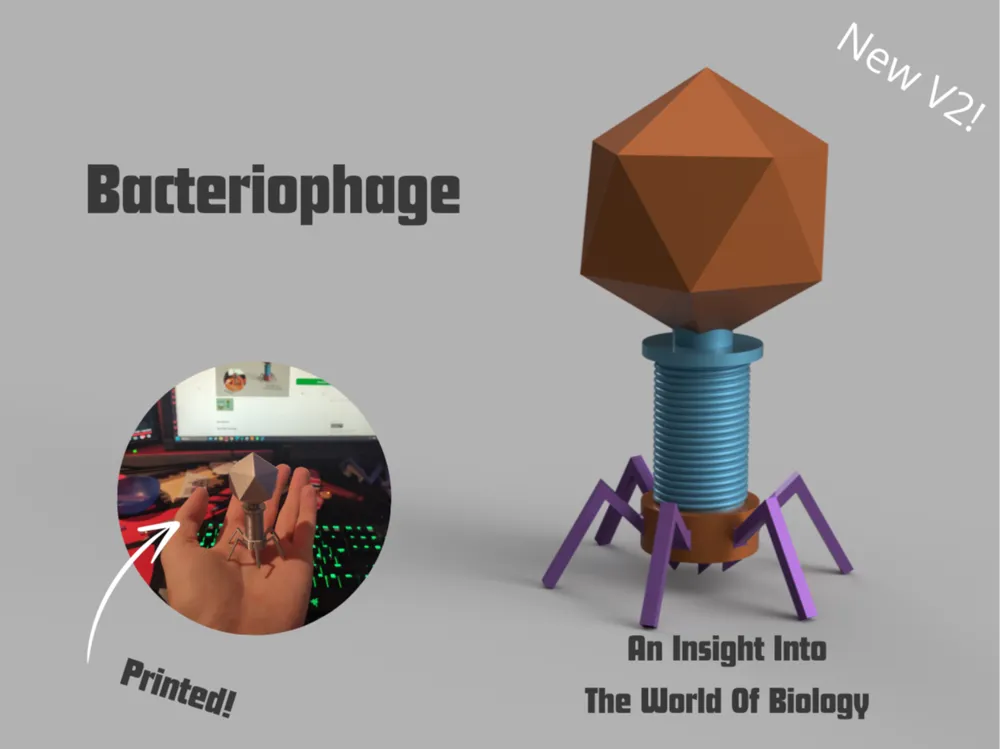
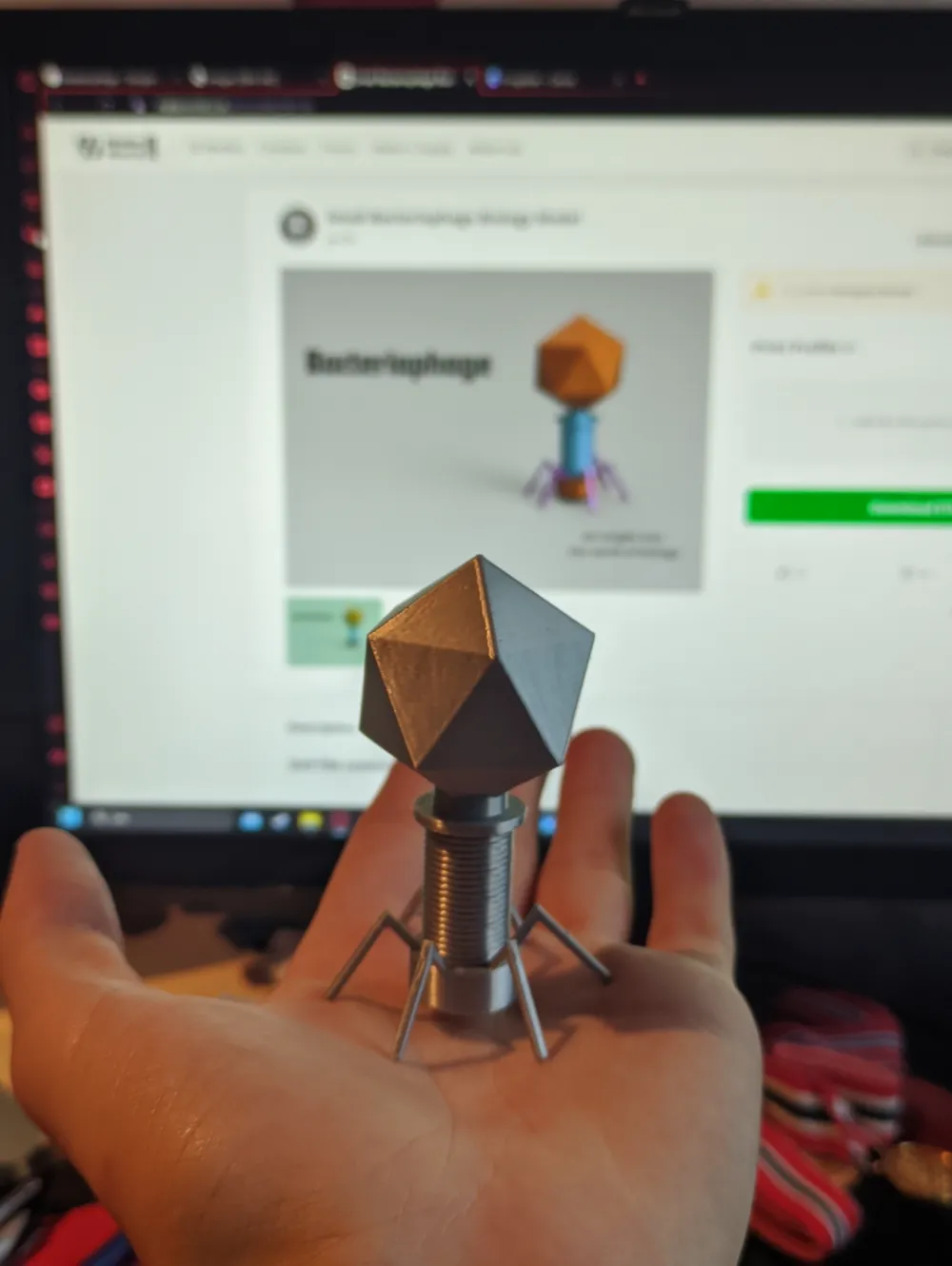
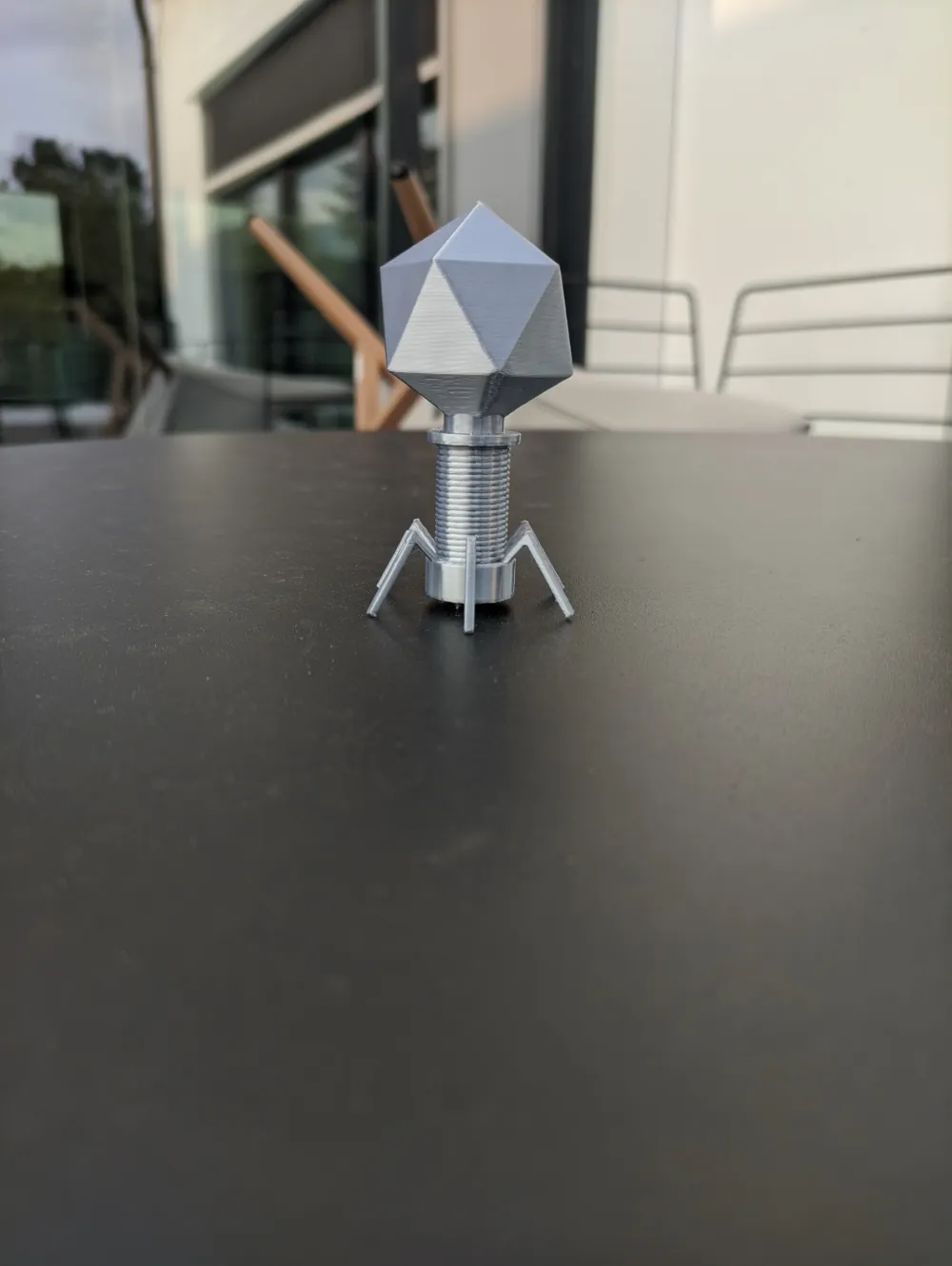
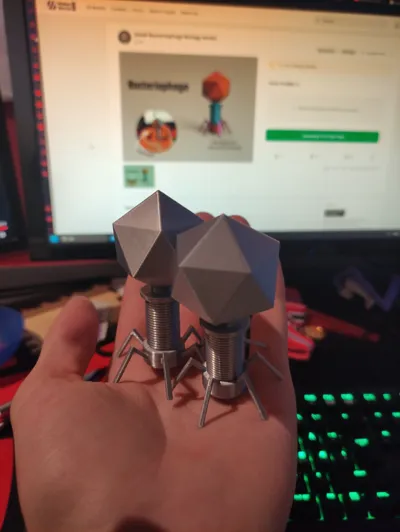
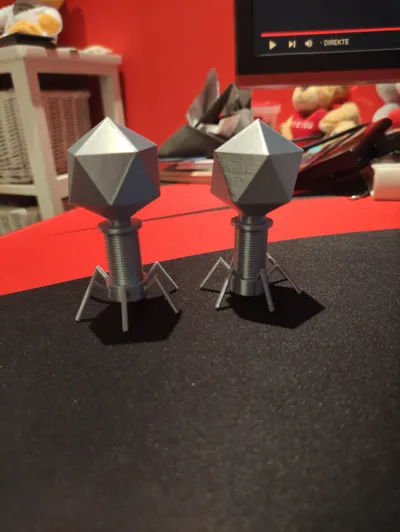
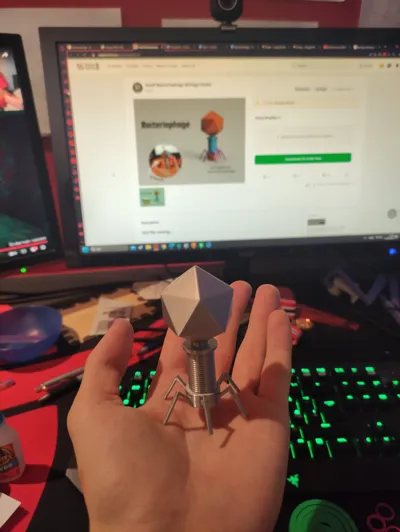
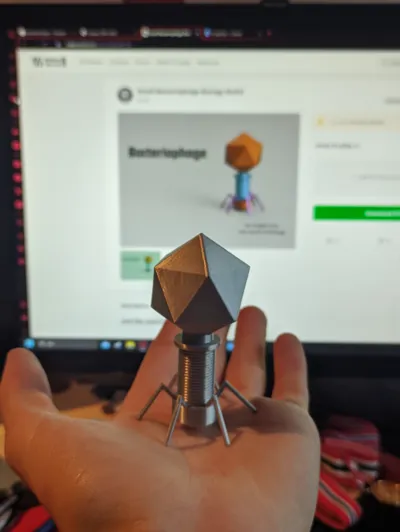
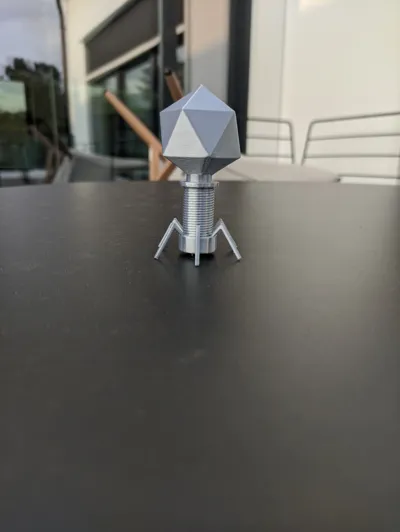
This model is a representation of a bacteriophage, a fascinating virus that specifically targets bacteria. I've tried to capture the key features of the phage while keeping the design both accurate and relatively simplistic.
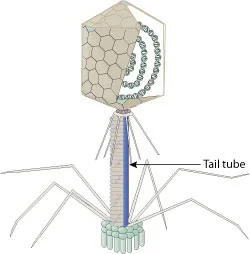
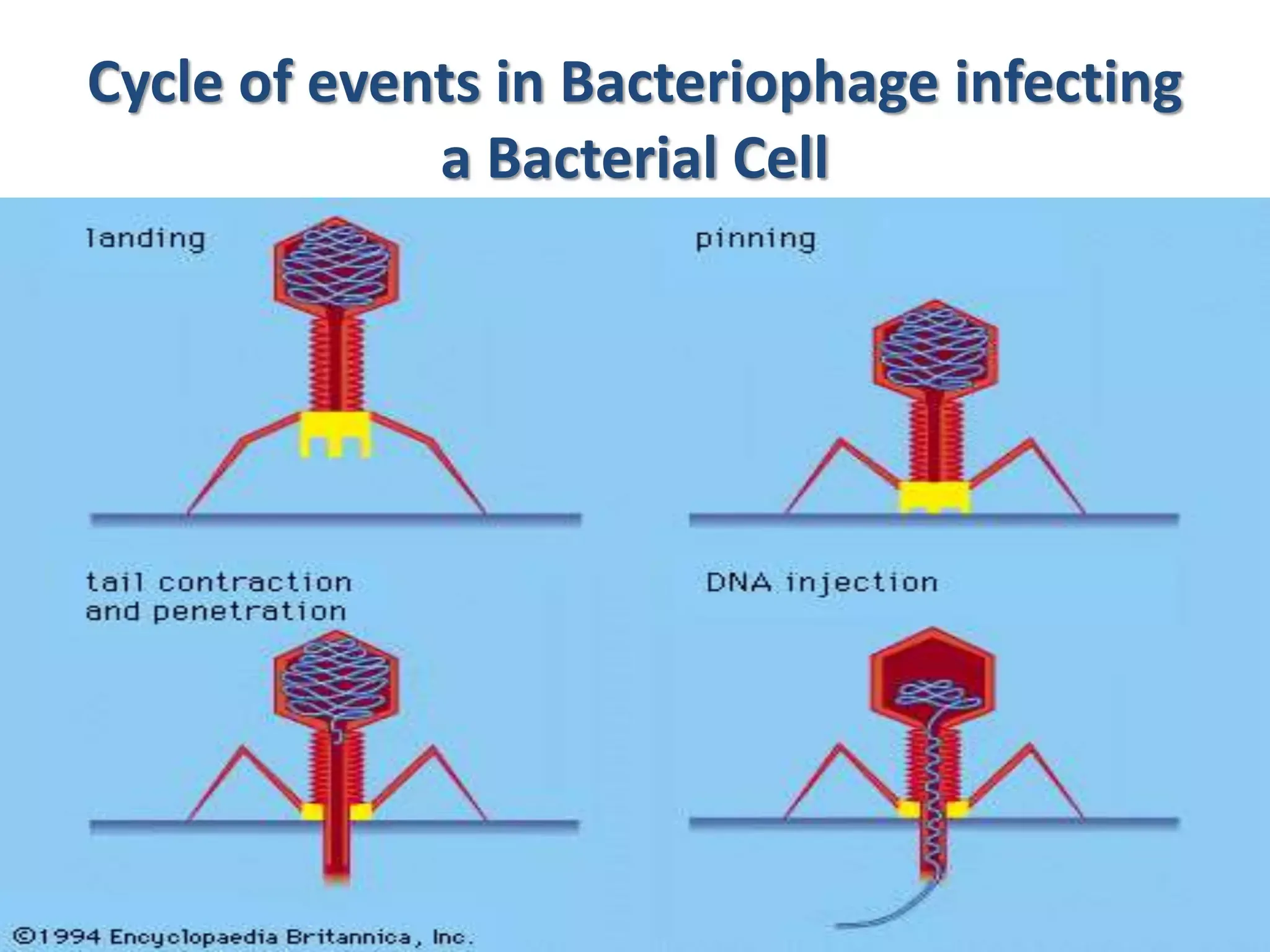
The head (capsid) is where the phage stores its genetic material. The part is prominently featured in relation to its importance. Just below the head, there's the neck, which acts as a channel for DNA during infection, and below that is the collar, which helps stabilize the structure. The sheath spiral contracts during the infection process to drive the tail tube into the bacteria.
(image from: https://viralzone.expasy.org/3960)
At the base, the tail fibers extend outward, designed to help the phage attach to a bacterial cell. The base plate serves as the anchor point, where the small spike-like parts help the phage attach and inject the DNA into the host.
(image from: https://www.slideshare.net/slideshow/bacteriophageppt/251485110)
In a small nod to the broader context, this bacteriophage model also relates to a fascinating area of genome editing—the modern CRISPR-Cas system, where bacteriophages have played a central role.
I hope this model serves as a useful tool for anyone looking to explore the world of different kinds of viruses and their role in biology. Oh and if you are interested in learning more about CRISPR, I recommend this video by TED-Ed. :)
Good to know:
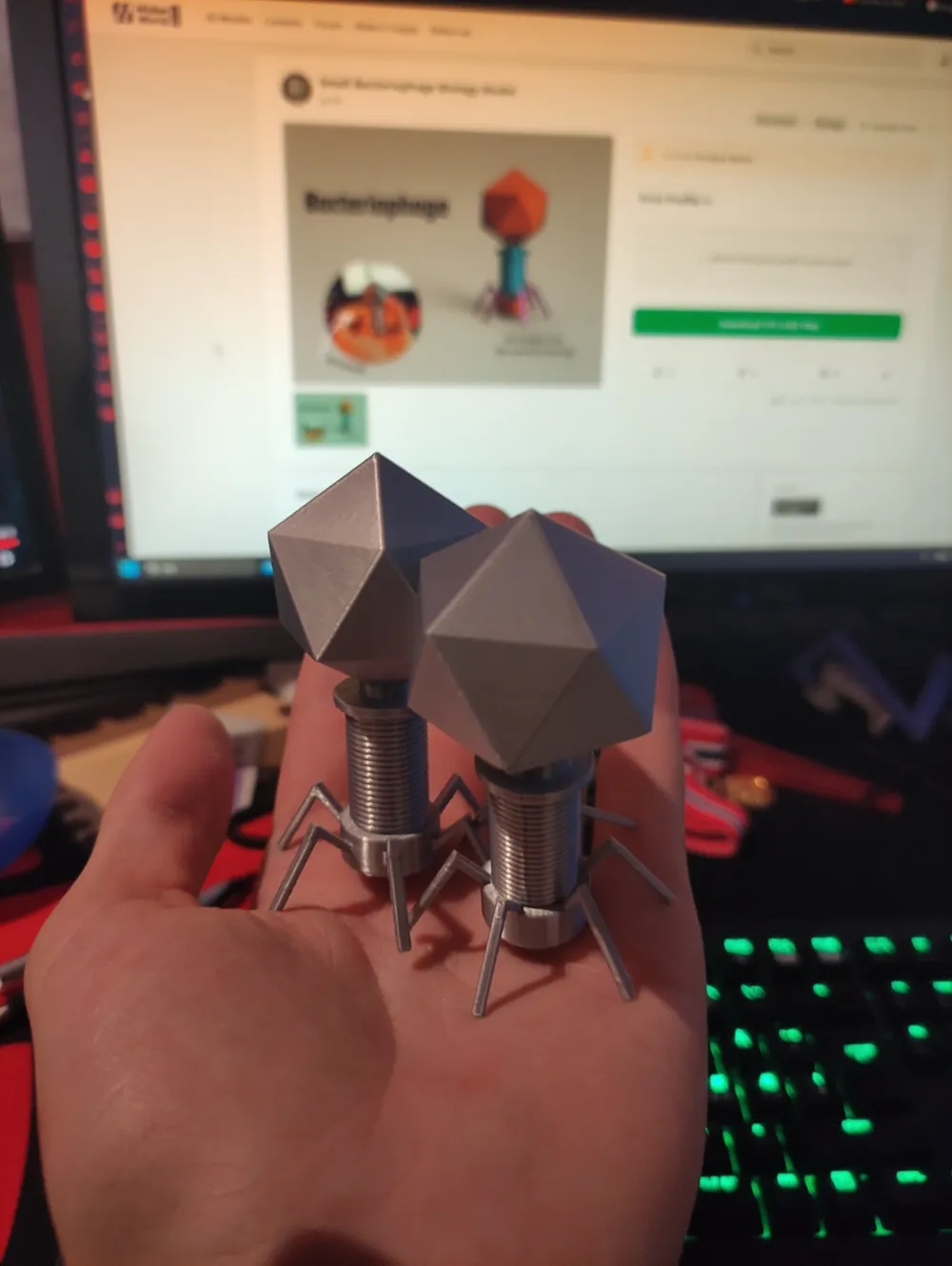
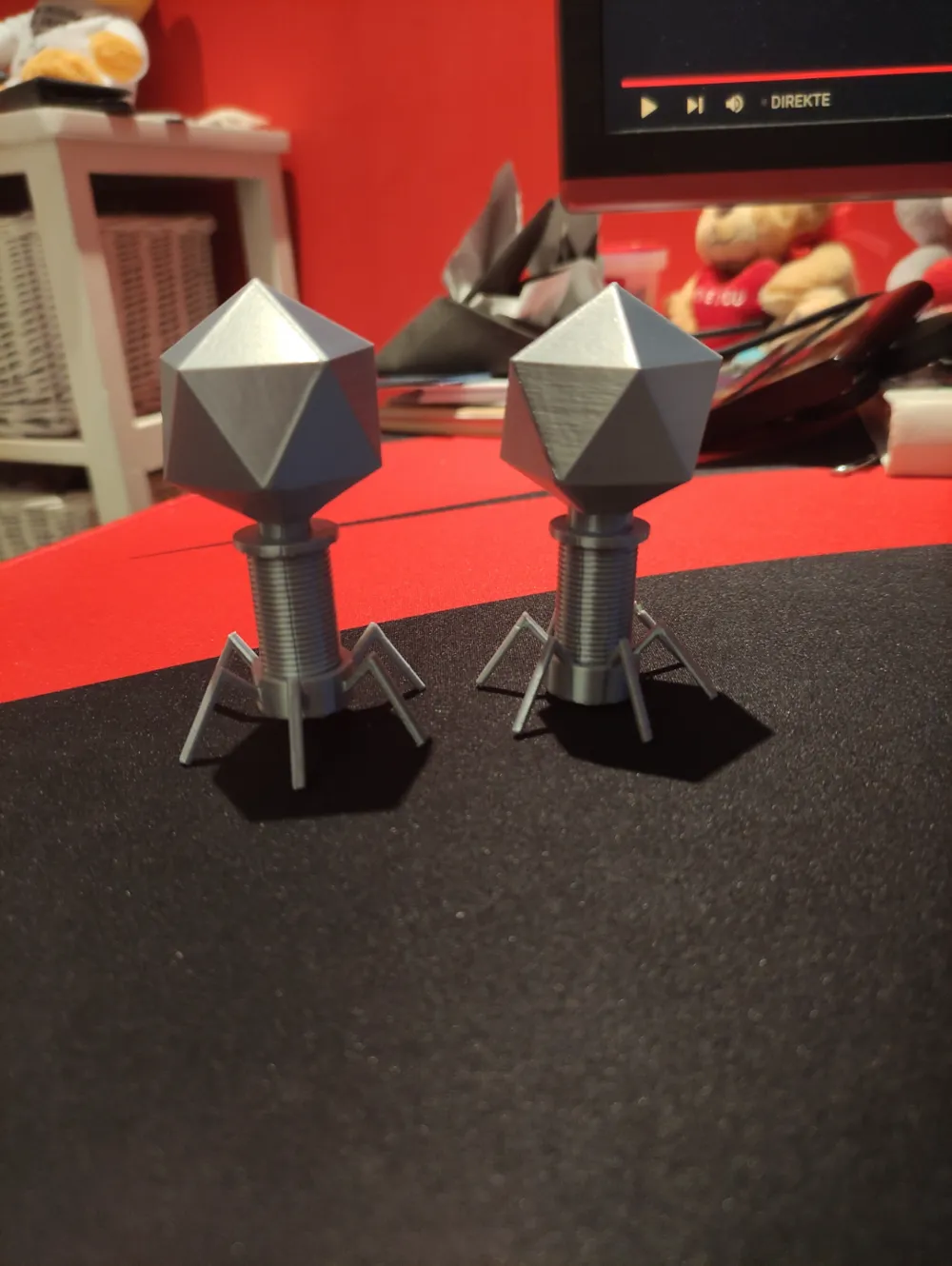
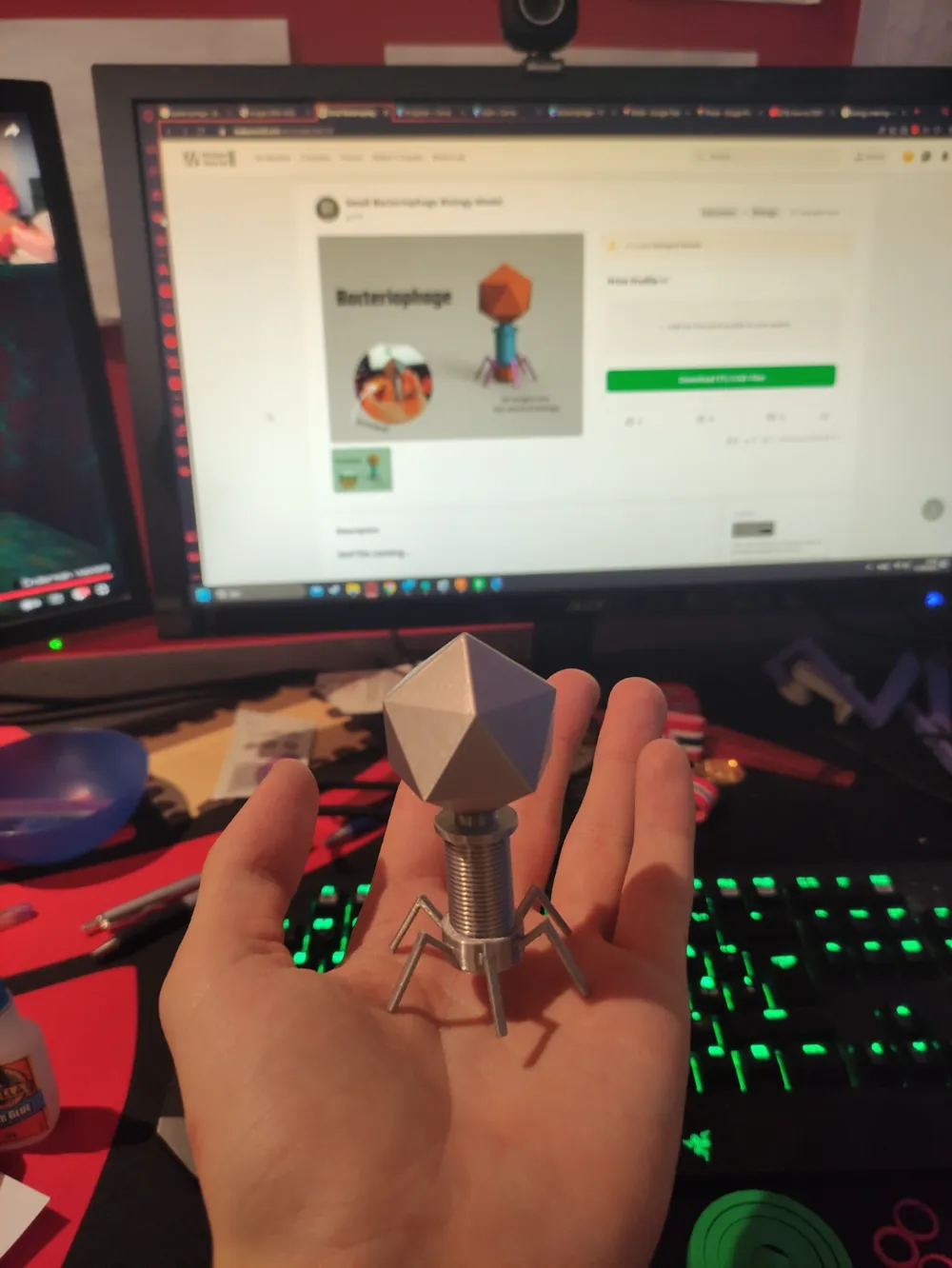
If printing with silk filament, be a little bit carefull when removing supports around the tail fibers (legs). :)
Also if silk PLA, don't drop it (I tested)…
License

You shall not share, sub-license, sell, rent, host, transfer, or distribute in any way the digital or 3D printed versions of this object, nor any other derivative work of this object in its digital or physical format (including - but not limited to - remixes of this object, and hosting on other digital platforms). The objects may not be used without permission in any way whatsoever in which you charge money, or collect fees.


Comment & Rating (38)