
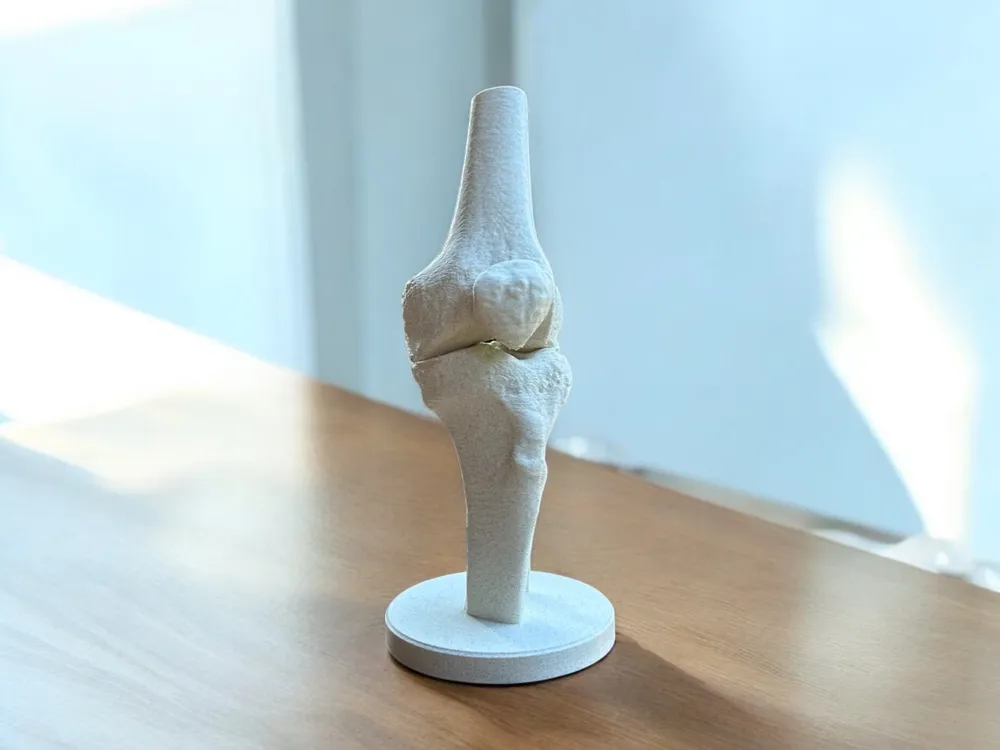
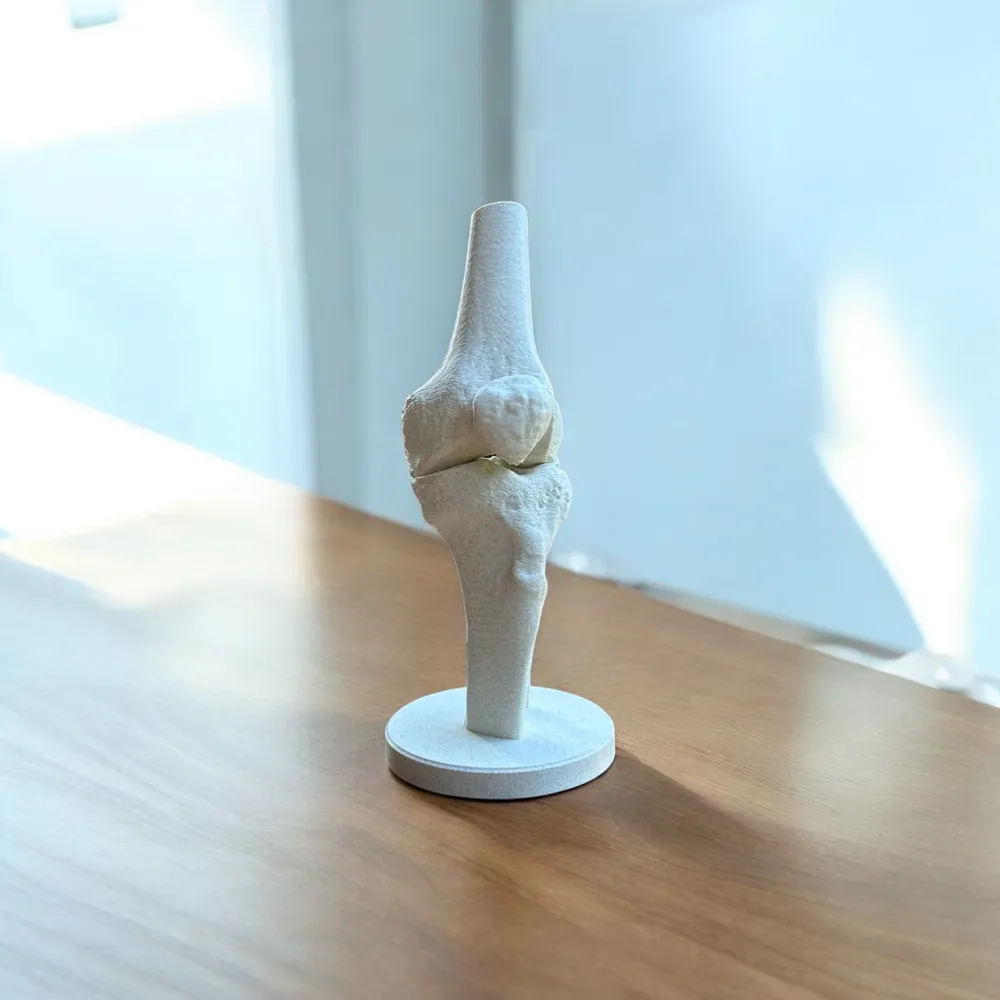
Anatomical Knee Model (from real CT)

Print Profile(6)


Description
Boost Me (for free)
If you would like to support my work, feel free to give me a boost!:)
Membership
If you're interested in selling prints of 100+ of my models, check out my commercial license tier!:)
If you are interested in selling prints of my models, check out my Patreon: https://www.patreon.com/c/treedprints/membership
Model Information
This model consisting of Femur (thigh bone), Tibia (shin bone), Patella (kneecap) and Fibula (calf bone) is made from a real CT of a person so the bones are anatomically correct. But in this model there are no soft tissues such as the meniscii or ligaments. Maybe I'll create a more complete model at a later time point once I segmented the soft tissue structures visible in a MRI.
Knee joint
The knee joint actually consists of two joints the tibiofemoral joint (between Tibia and Femur) as well as the patellofemoral joint (between Patella and Femur). Its function are very complex. In fact so complex that my whole PhD is dedicated to learn more about the complex motion patterns of the tibiofemoral joint consisting of 3 rotations and 3 translations - motion patterns that researchers around the world are dedicated to investigate. This knowledge is central to understanding disease development such as osteoarthritis or improving on prosthesis designs.
Interesting facts about bones
In your bones there are cells that constantly dissolve the bone by using some kind of acid, and cells that constantly build up bone. These cells can sense the way that your bones are loaded with forces and organize your bones in the way that optimally can deal with the forces acting on the bones. Of course this process can take some time, but roughly every 10 years your whole skeleton has been replaced by new tissue. Fascinating to think about!
License

You shall not share, sub-license, sell, rent, host, transfer, or distribute in any way the digital or 3D printed versions of this object, nor any other derivative work of this object in its digital or physical format (including - but not limited to - remixes of this object, and hosting on other digital platforms). The objects may not be used without permission in any way whatsoever in which you charge money, or collect fees.


Comment & Rating (189)