



Print Profile(1)

Bill of Materials

- 1.5mm rod x 1:
Description
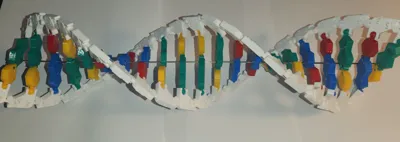
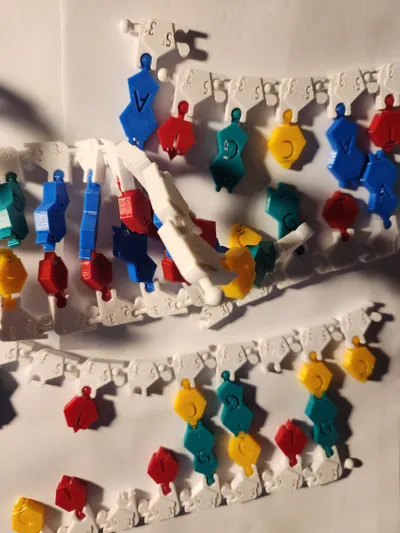
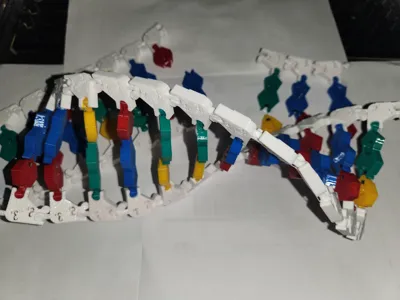
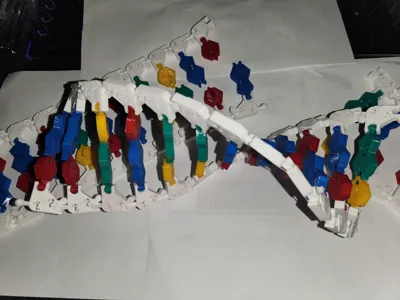
Deoxyribonucleic acid (DNA) is a double stranded molecule that contains the genetic code for life. DNA consists of two strands composed of a phosphosugar backbone with nucleic acid bases. Nucleic acid bases pair with weak hydrogen bonds that are cleaved and rejoin during DNA replication and RNA transcription.
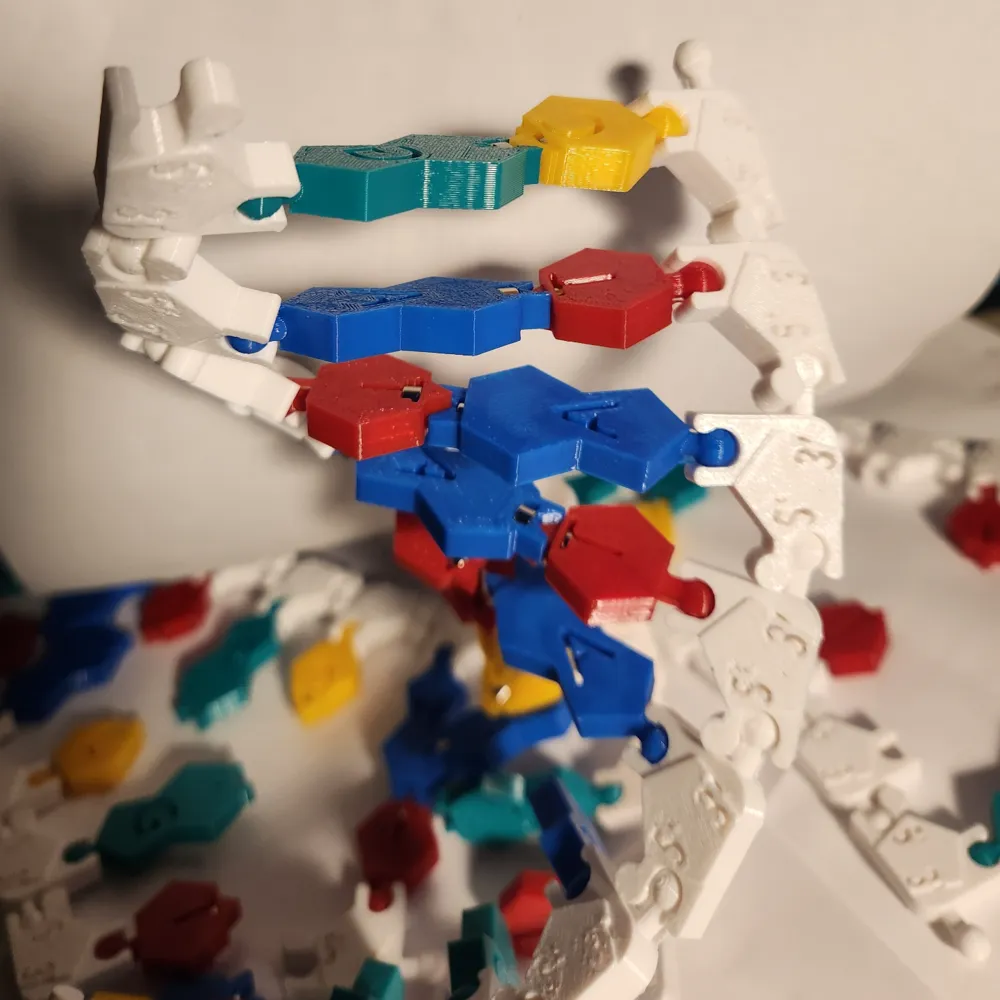
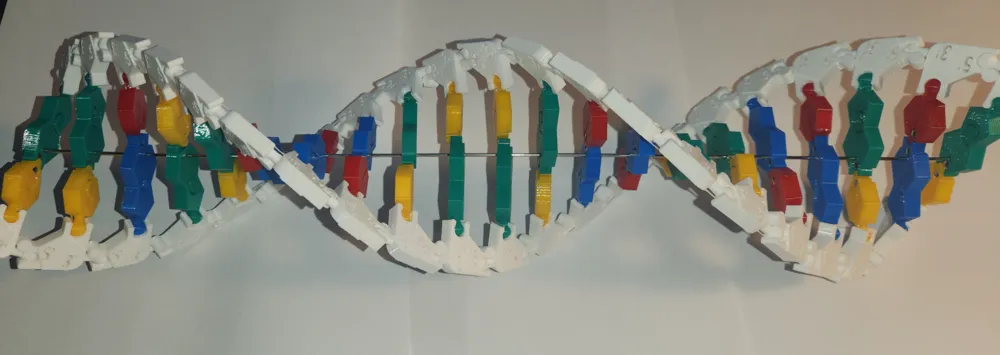
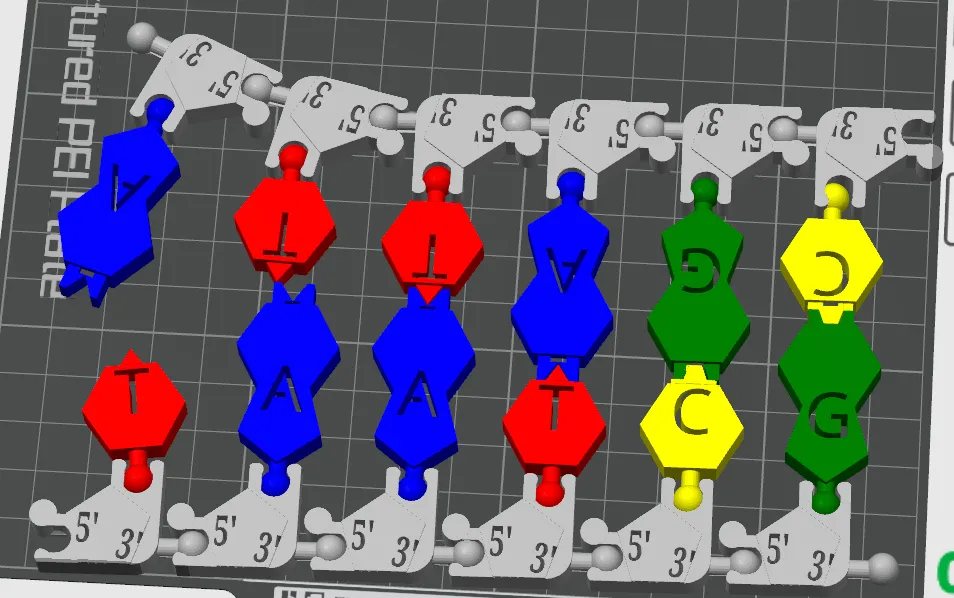
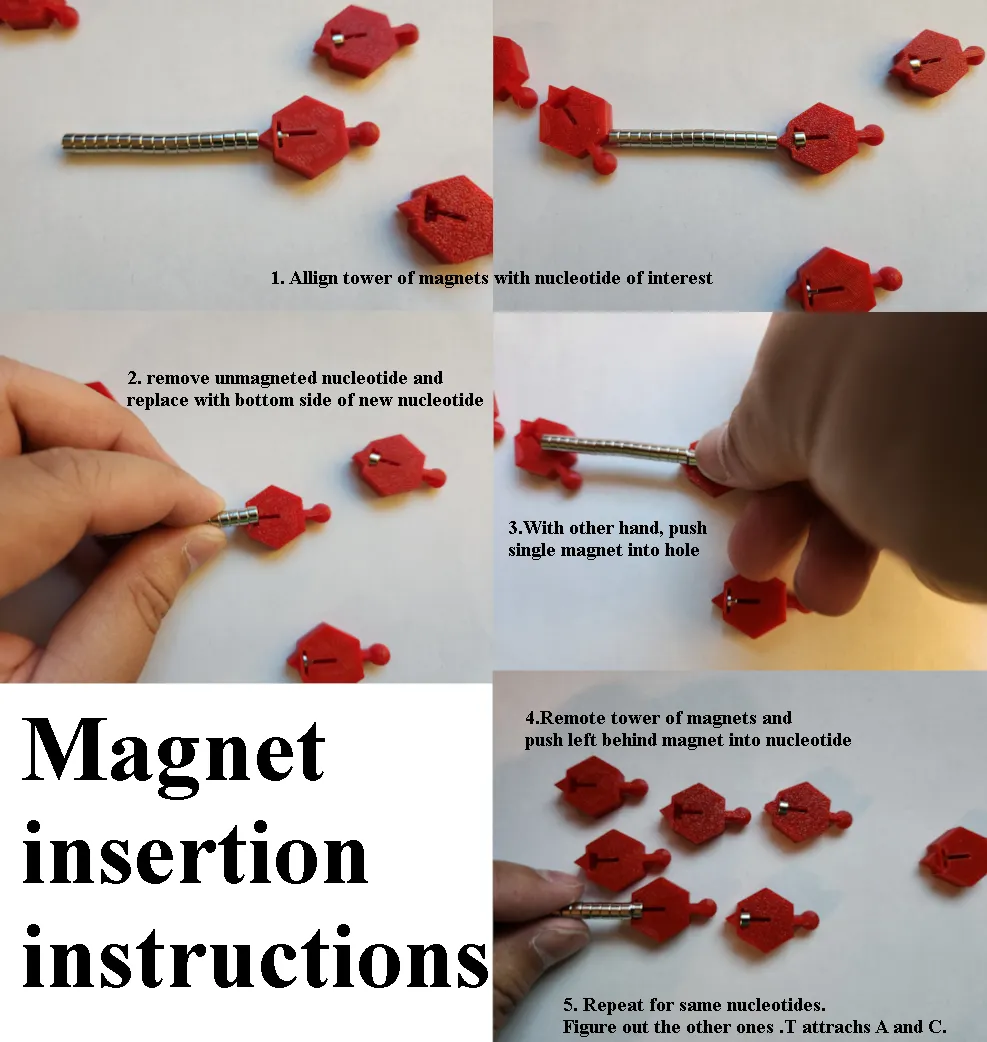
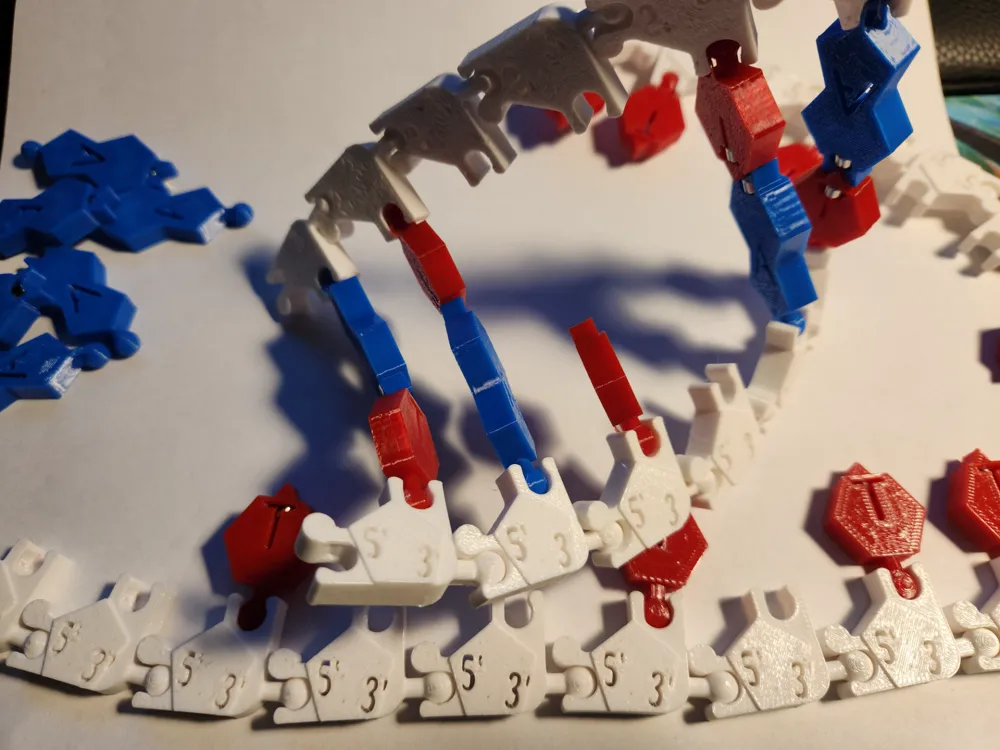
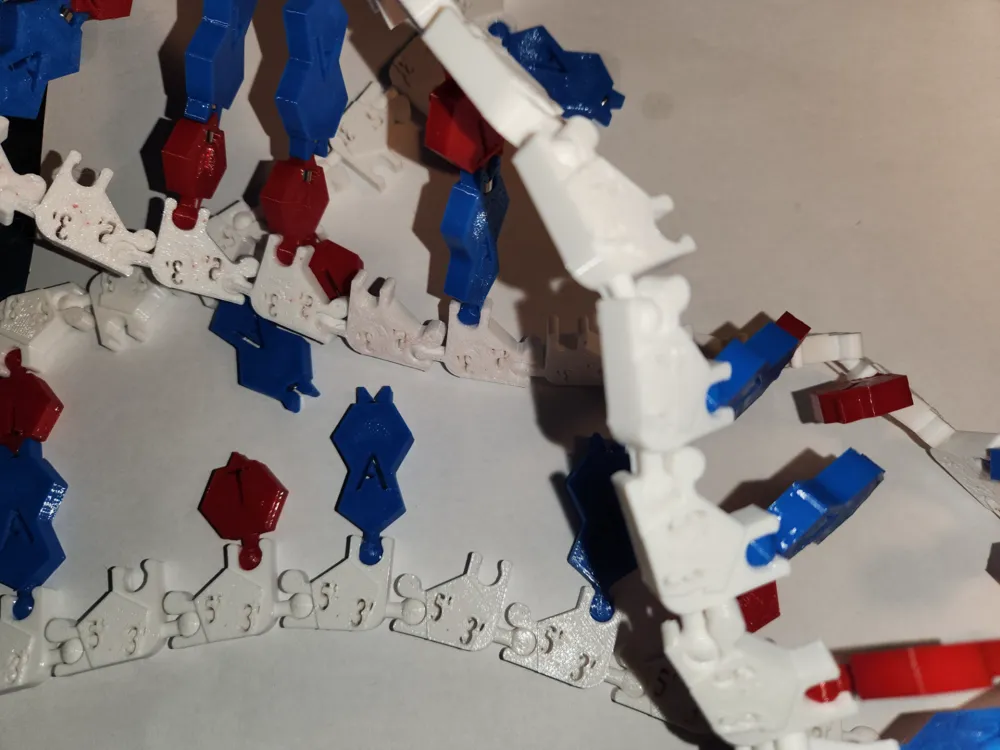
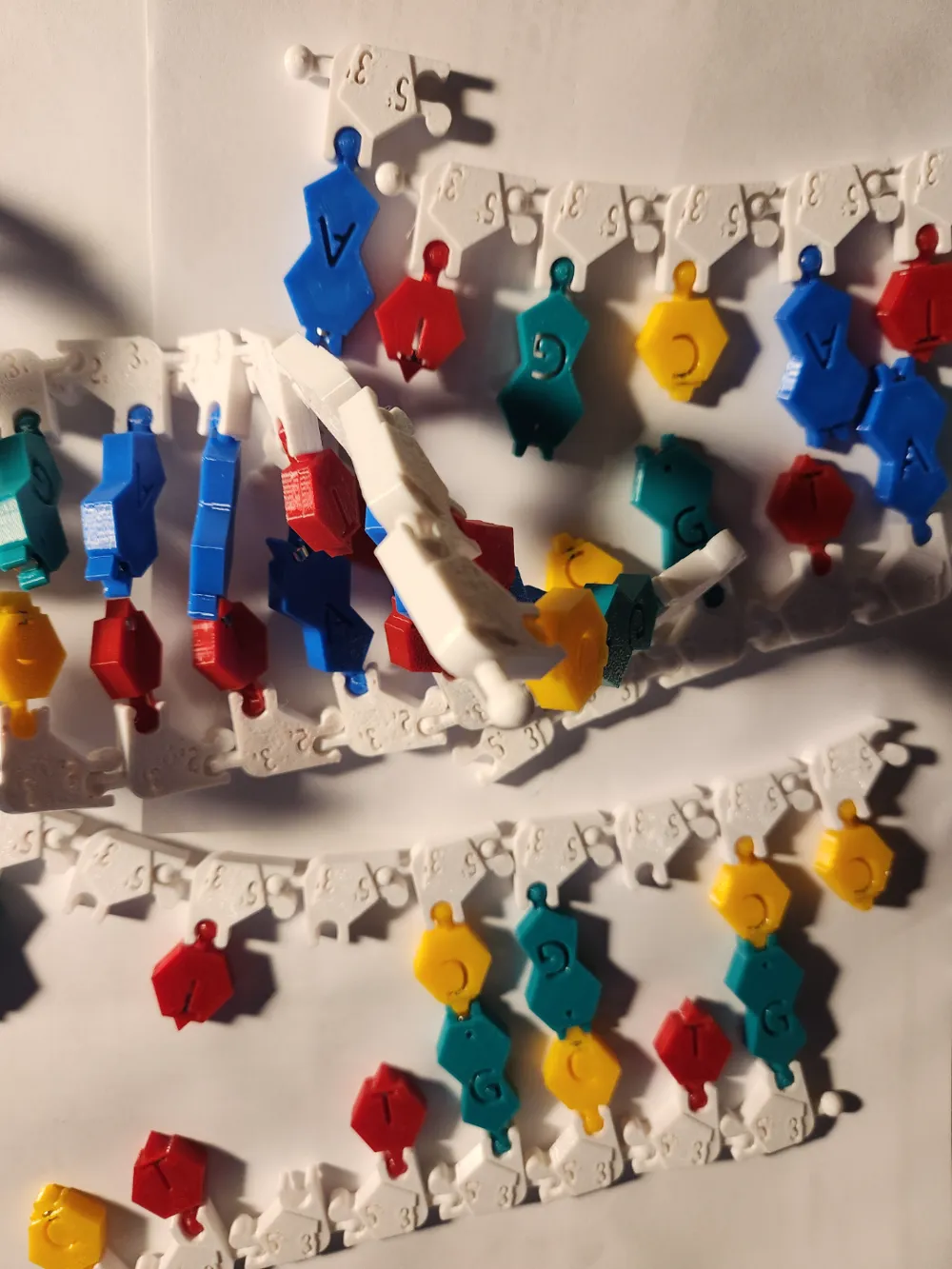
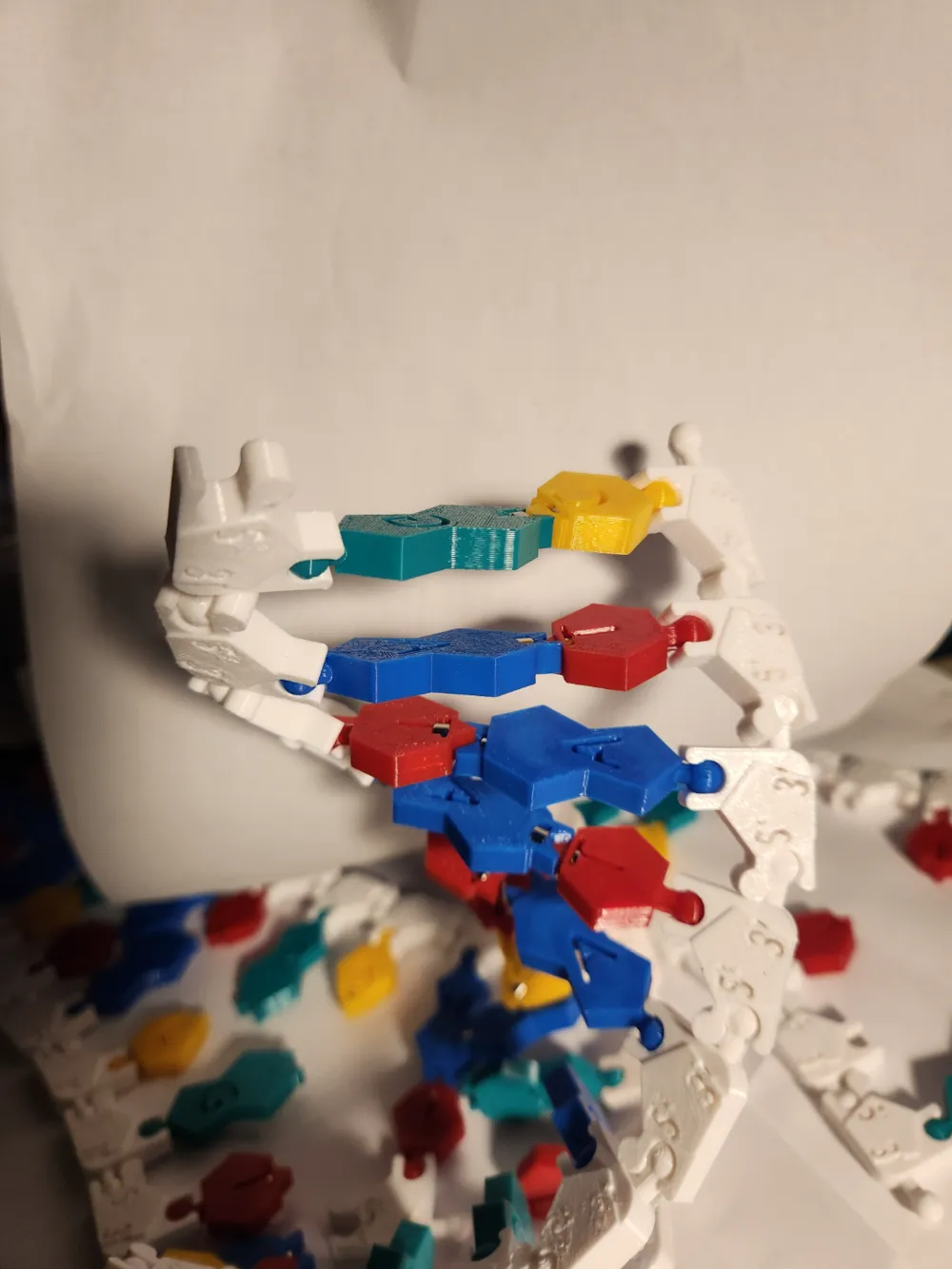
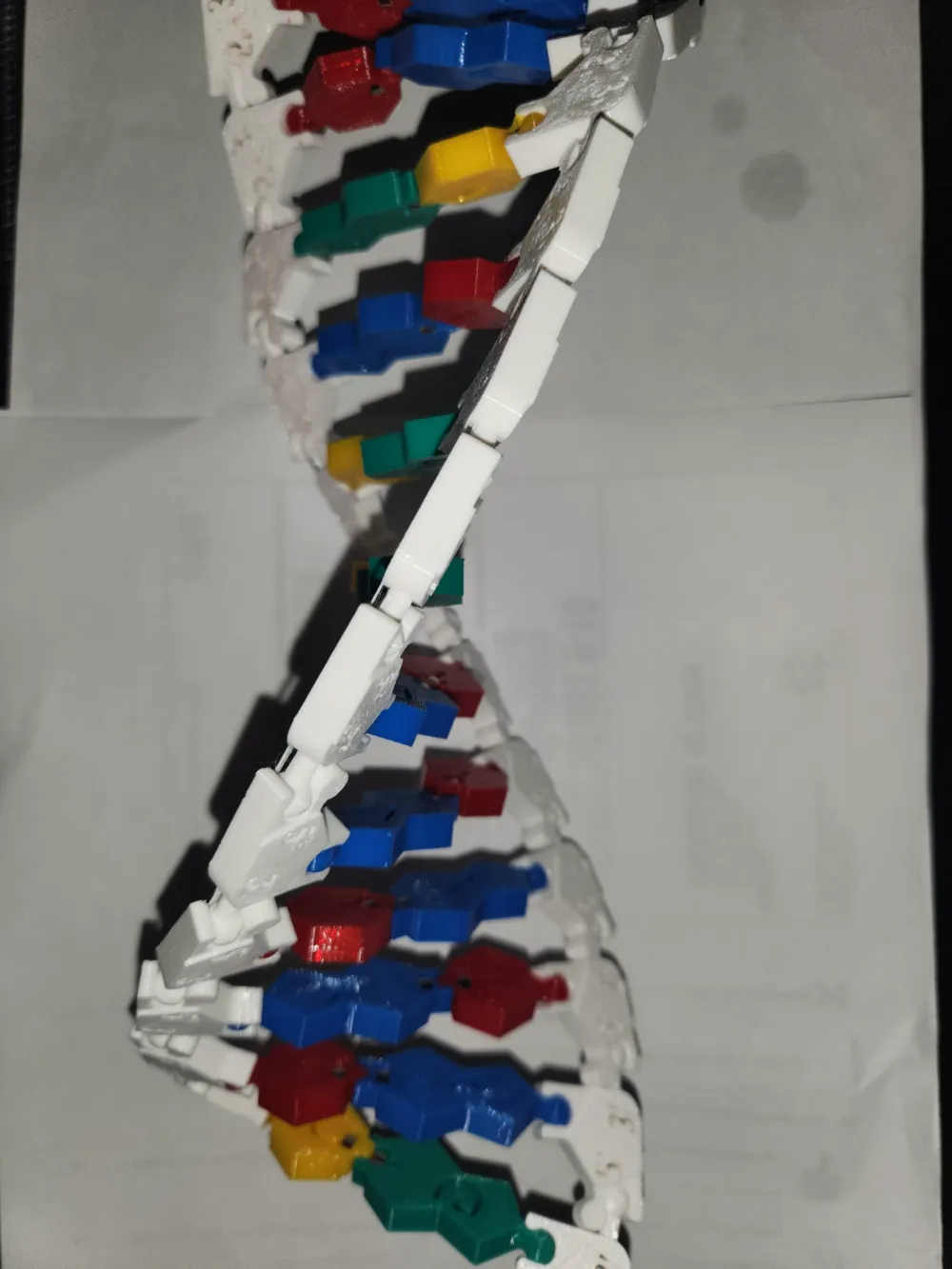
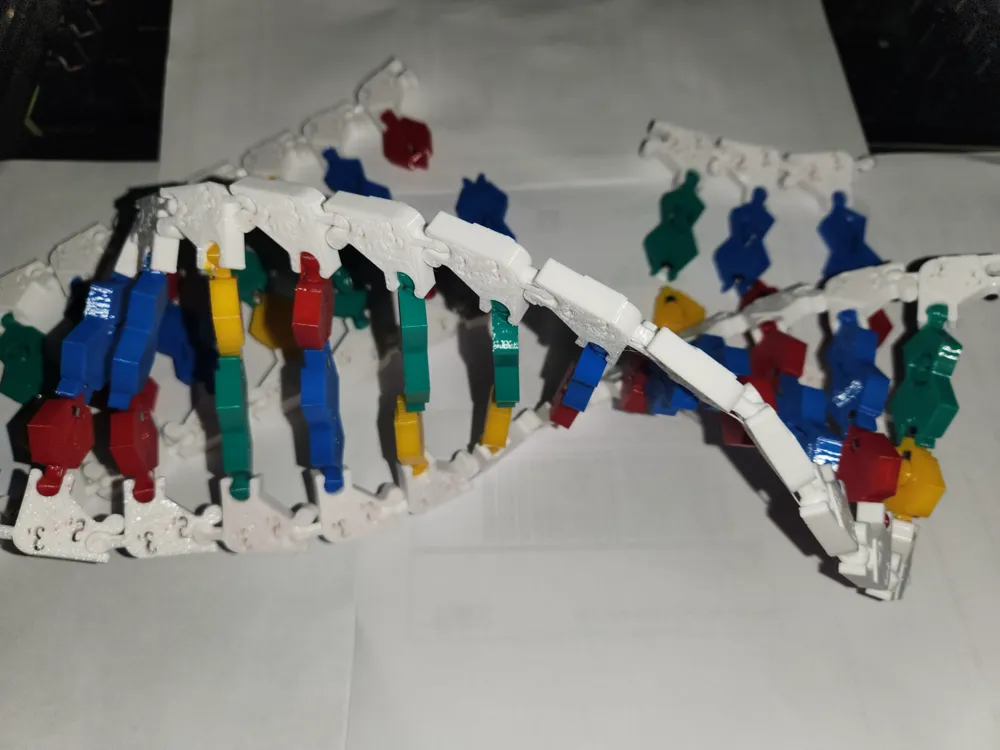
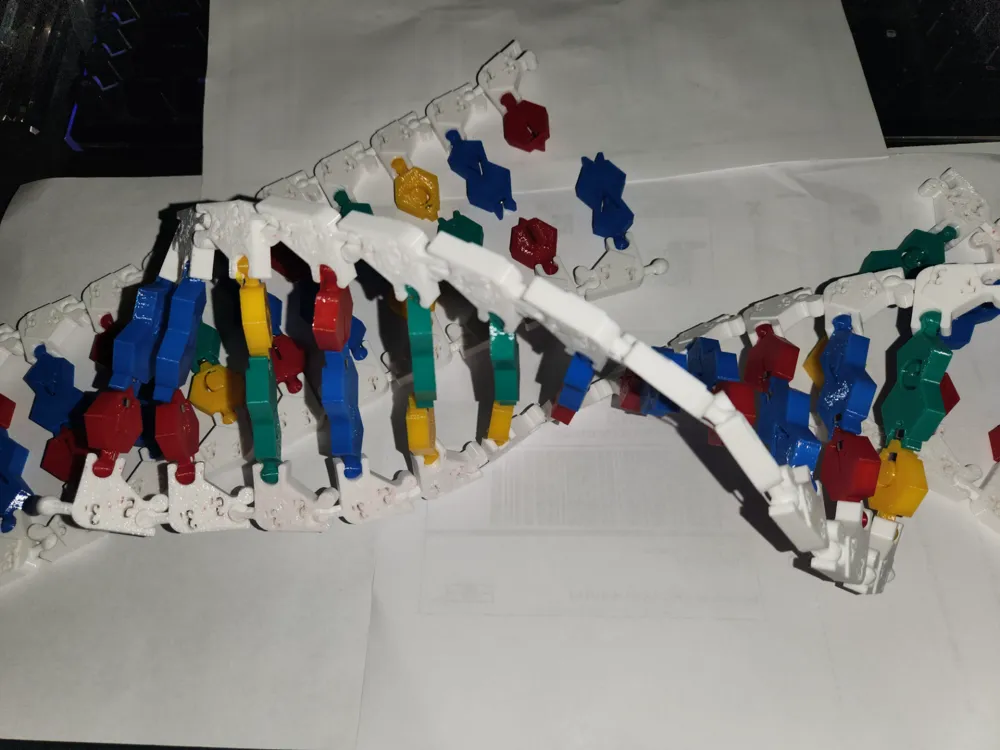
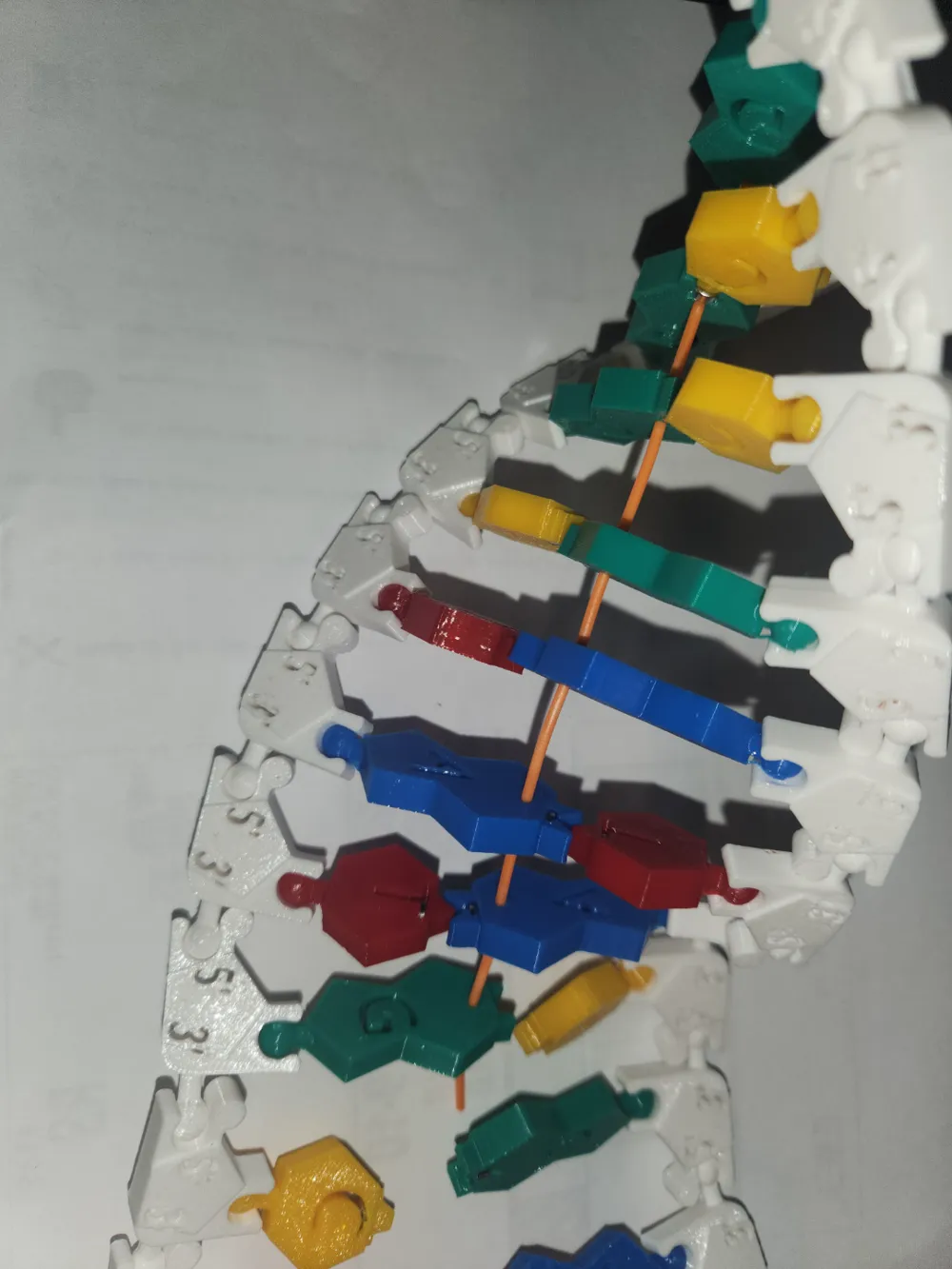
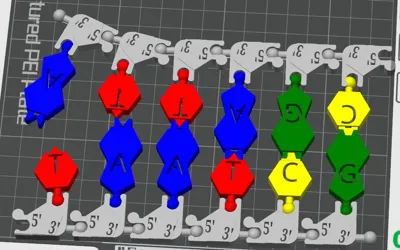
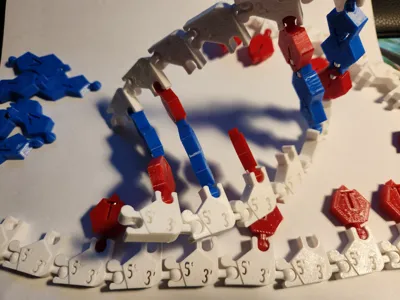
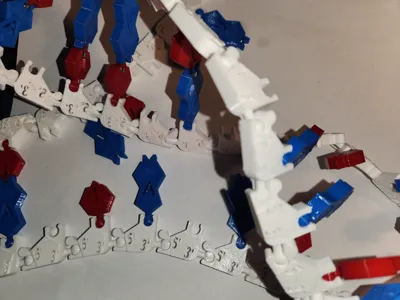
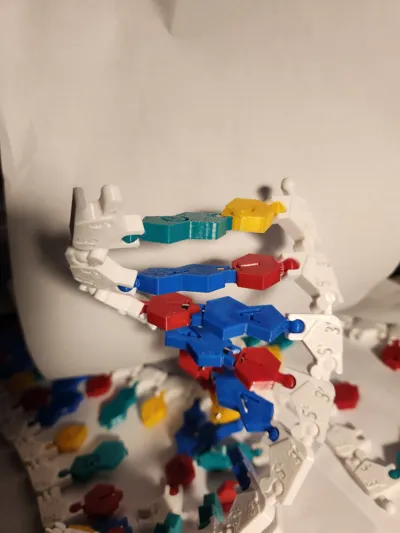
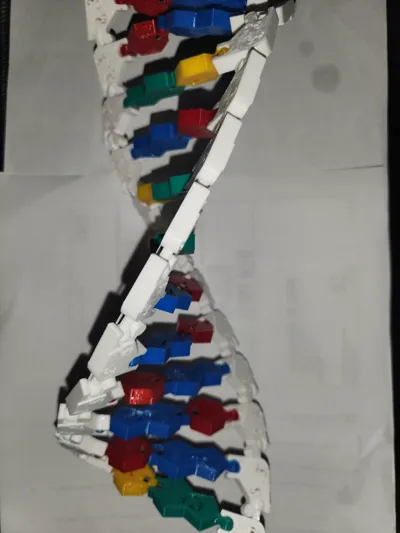
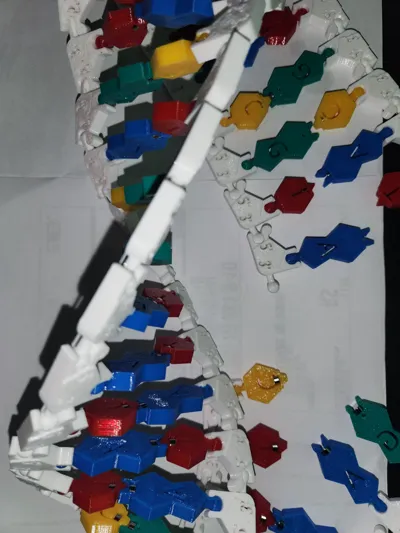
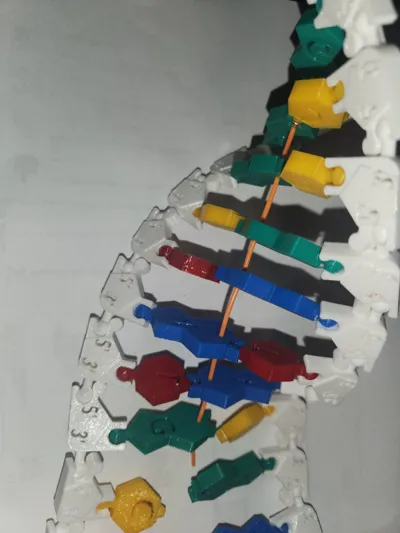
I am a highschool science teacher and this is 80% of what I would want in a DNA molecular model kit. The nucleic acids each have an insert for a magnet to magnetically base pair the nucleic acids. The sugar backbone is shaped and identified with 3' and 5' ends as well as the sugar structure and a circle for phosphate. Pieces all snap together with a modified K'Nex ball shape joint allowing flexion. Two strands can combine, seperate, replicate, and recombine to teach central dogma. The original slices have holes for 5x3mm neodymium magnets that are exposed slightly on the surface so a probe can remove the magnet should pieces need to be replaced. Using the adjustable joints, create a double helix model that even completes a full turn in the literary roughly 10 base rises, very challening to form. Purines have a 2.05mm hole, printed with petg settings fits, for a 1.75mm strand of filament to assist with making a stand or alligning the double helix model. Additionally, if magnetic, a 1.5mm metal rod can fit through the hole for a more rigid model.
For printing ratios, I would follow chargraff and nucleotide ratios for human dna: Adenine (30%), Thymine (30%), Guanine (20%), Cytosine (20%) but up to you to decide!
video for magnet insertion:
no more
License



Comment & Rating (44)