
Compliant Guitar Capo
Print Profile(5)



Description
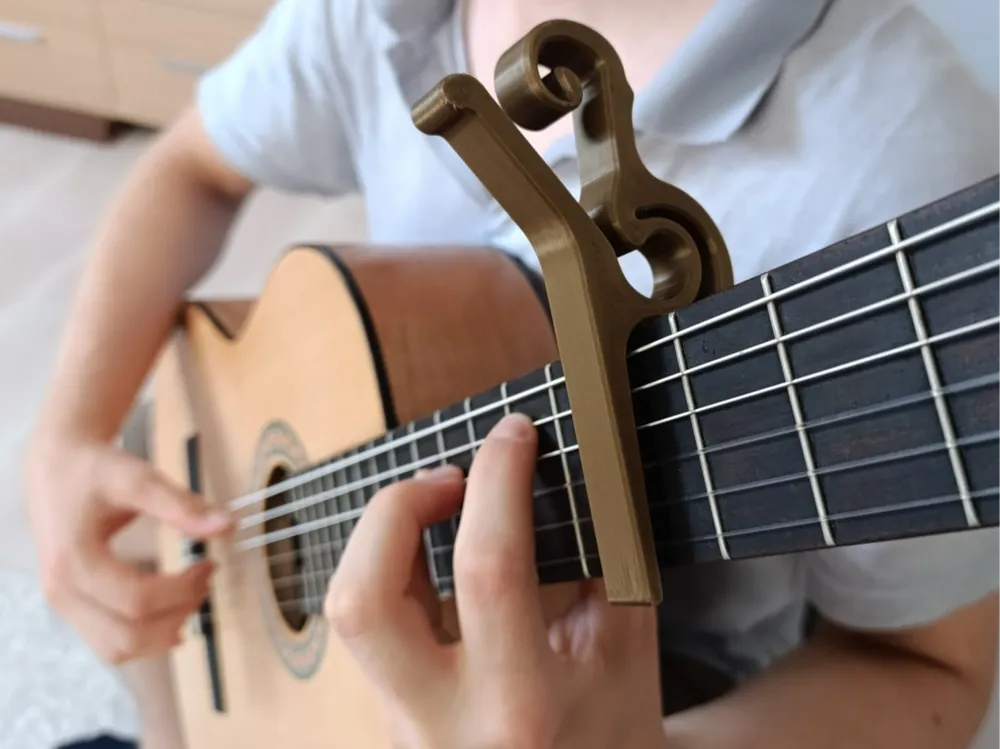
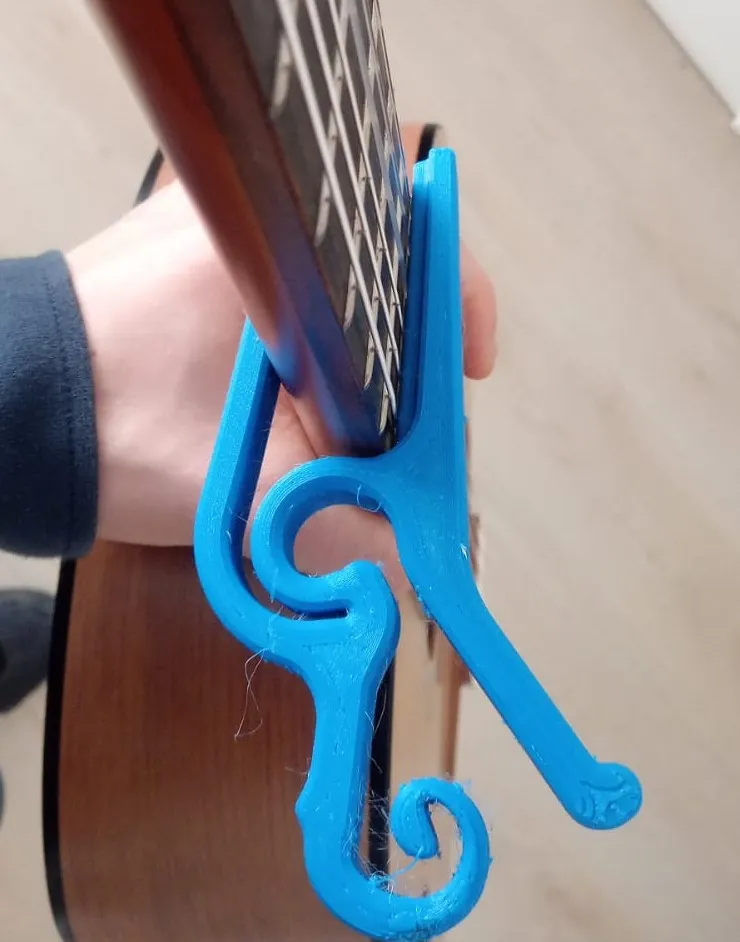
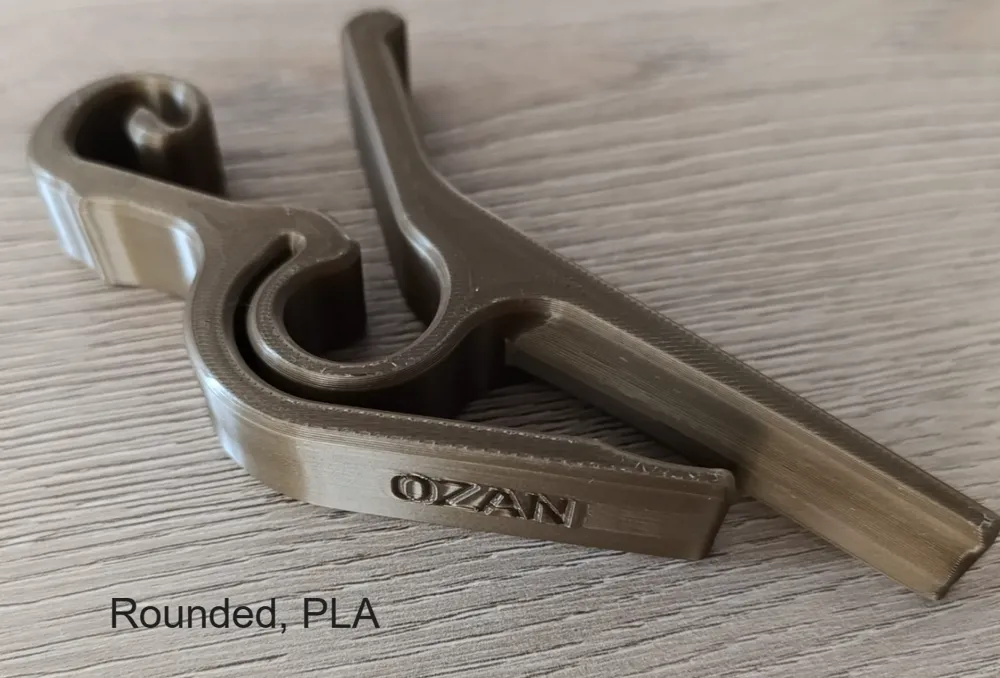
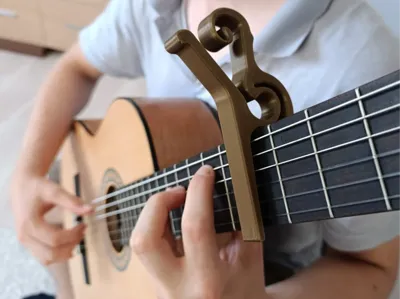
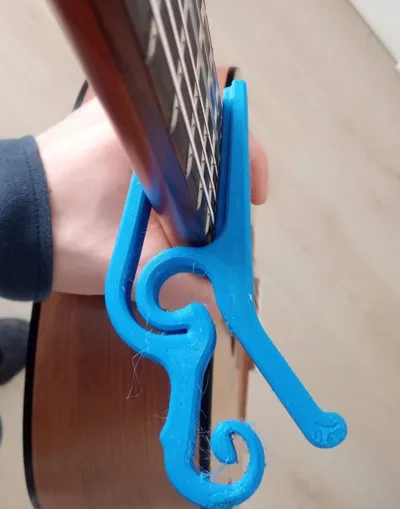
3D printable guitar capo uses compliant mechanism to squeeze, long-lasting, must be printed with enough wall loops to fulfill the compliant part.
Refined Version: The previous version had some practical usability issues, which I identified through both testing and feedback. Based on these trials and the comments I received, I made several design changes and created refined 3D files. You can read the issues of the older design and how I fixed them in the last version, detailed in the section below.
Boost Me (for free)
If you want to support my work for free, I’d really appreciate it.
Update Date: 07/04/25
1- No Buzzing stings:
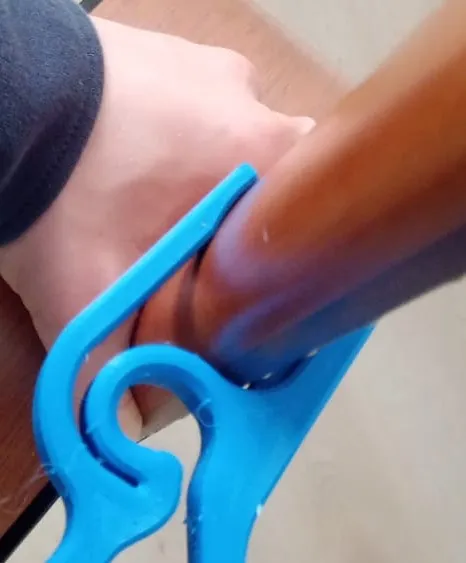
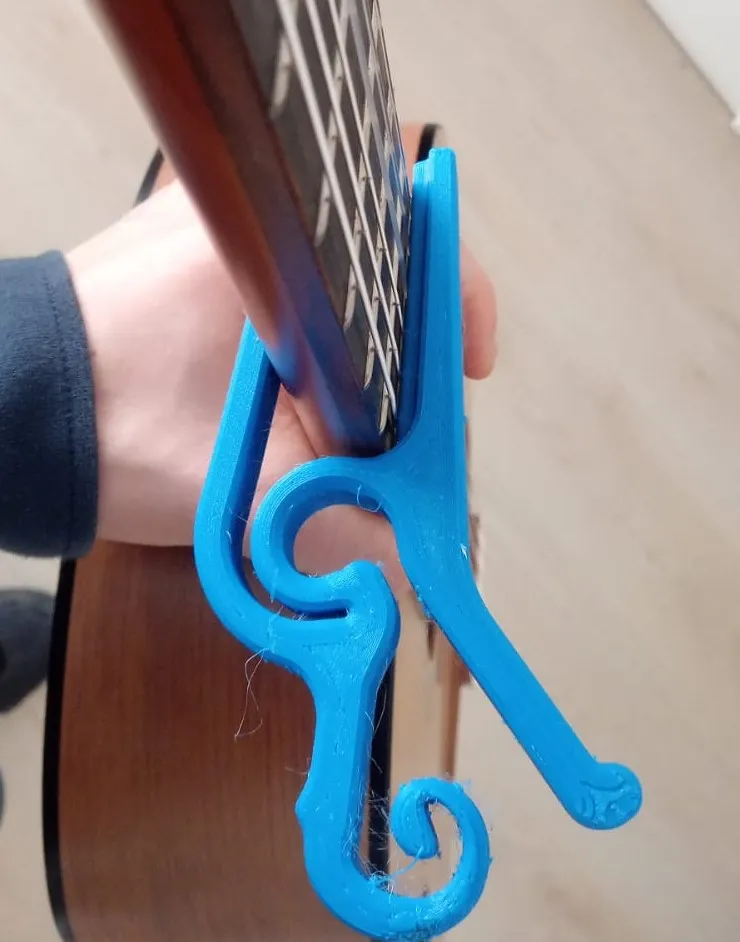
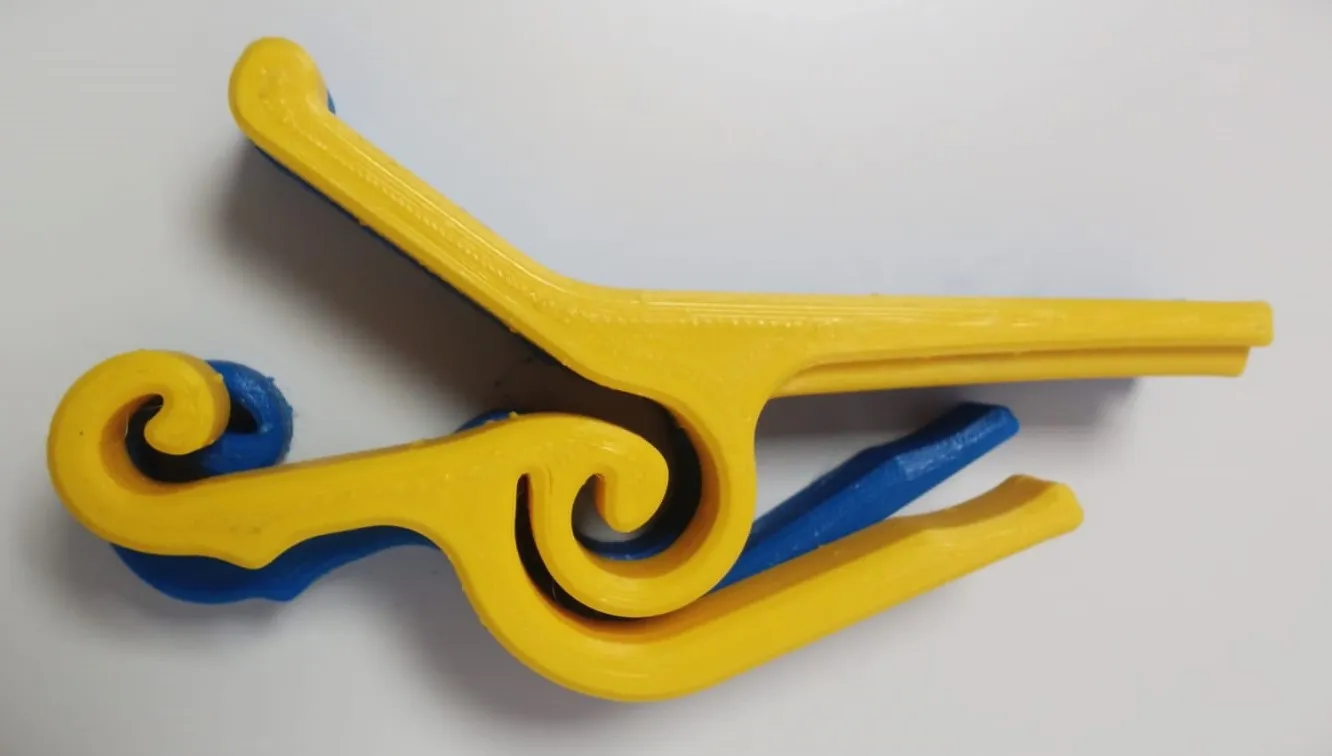
- Many users pointed out a buzzing issue especially on classical guitars, particularly when playing the low B and A strings. Classical guitars have taller necks, which can exacerbate this problem, especially when playing aggressively. I also experienced this issue when pressing too hard on these strings.
- To address this, the capo’s grip on the guitar neck was optimized. Adjustments were made to the arm’s length and circular cut, resulting in a more centered grip, which significantly improved clamping strength, especially on classical guitars. Additionally, the capo’s placement was made more responsive and secure when applied.
- The flexion angle of the arms was increased to store more energy for better string compression. However, this adjustment did lead to reduced longevity and increased deformation over time, especially with certain prints.
2- Increased Longevity:
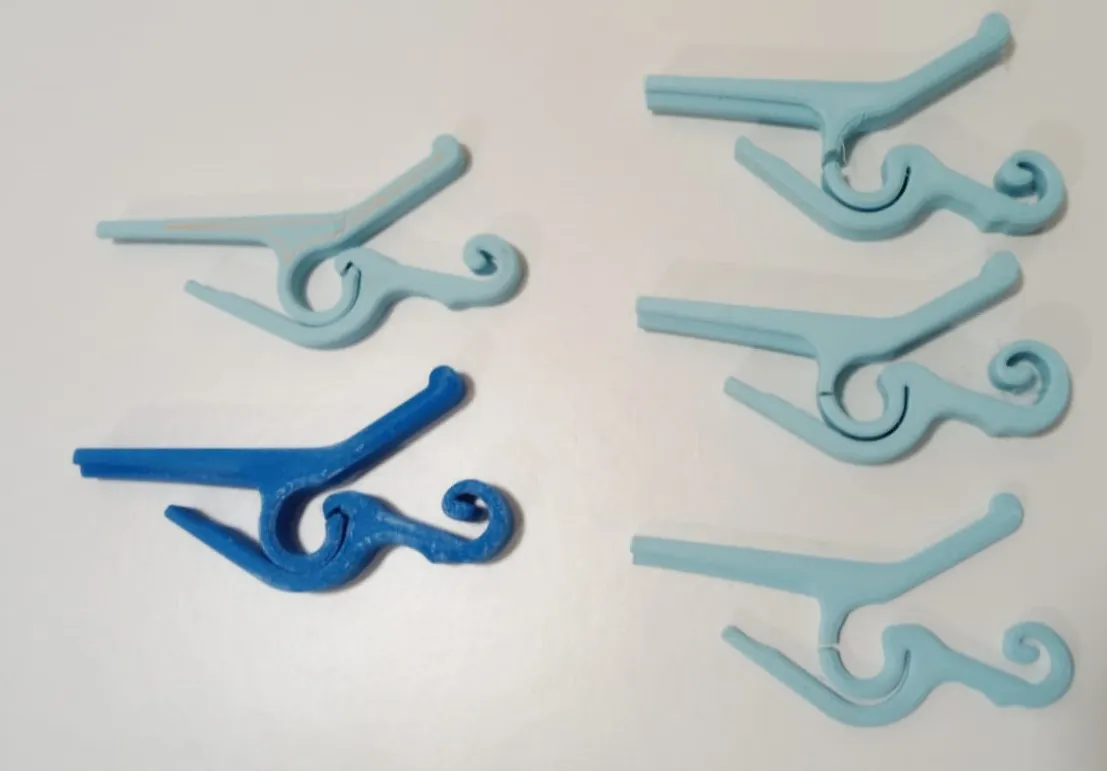
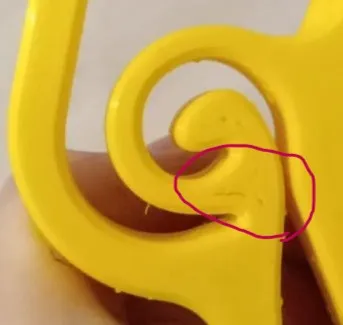
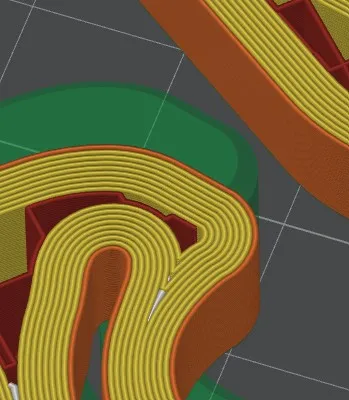
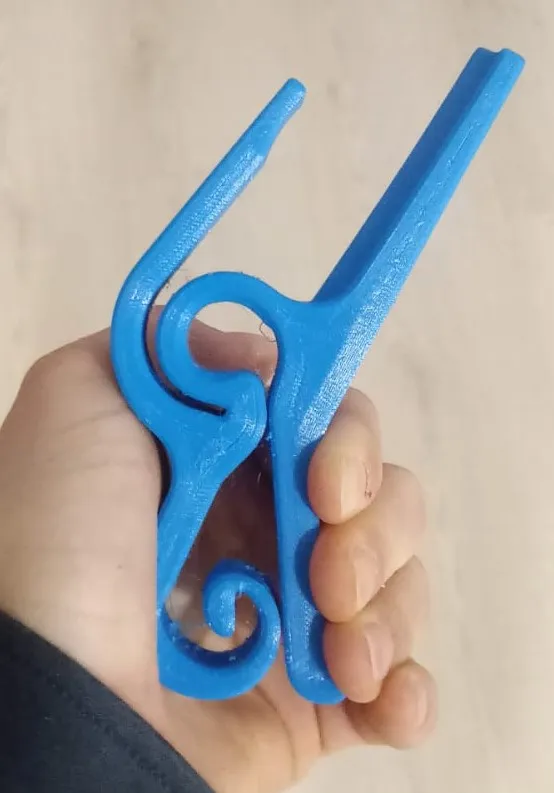
- Test prints helped identify weak points where some models loosened or broke at the end of the circular void. This was also observed in older prints that had loosened at the same spot.
- To resolve this, the unnecessary continuation of the "snail-shaped" aesthetic was removed, and two additional walls were added to reinforce the structure at the point where breakage occurred. This adjustment eliminated concerns about weak points.
- Another failure point was breakage in the circular section when excessive force was applied, causing the two sides of the mechanism to almost touch. This only occurred when exceeding the intended force range (such as overstretching during placement).
- To prevent this, the geometry was adjusted to connect the arms earlier, just before the "elbow" area. This design still provides ample expansion to fit thick guitar necks.
3-PETG & ABS versions:
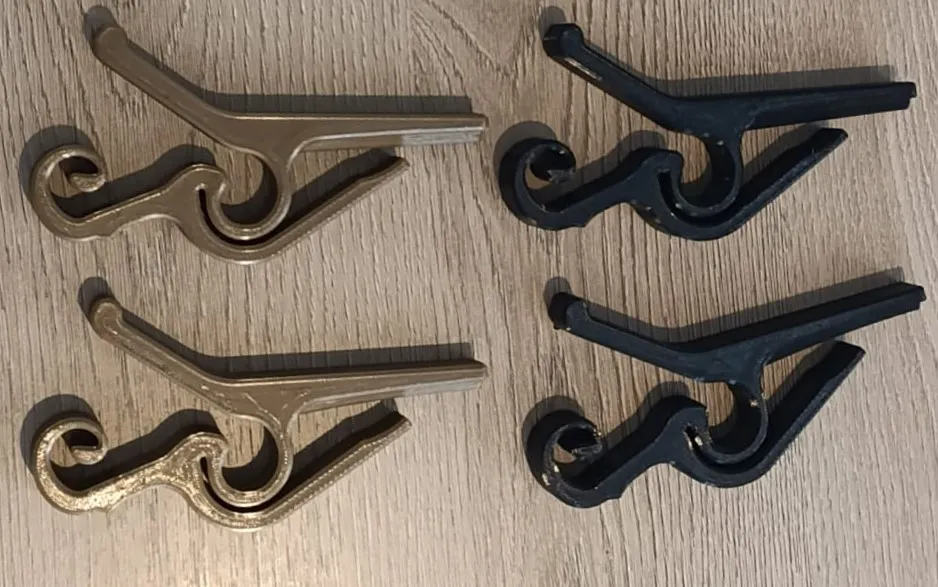
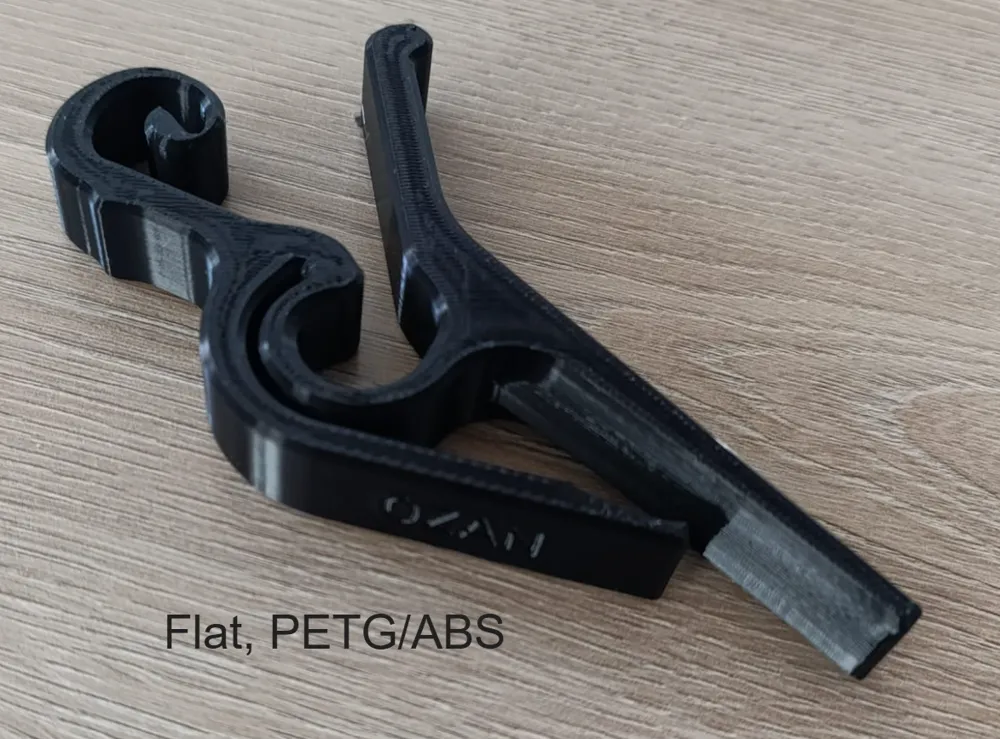
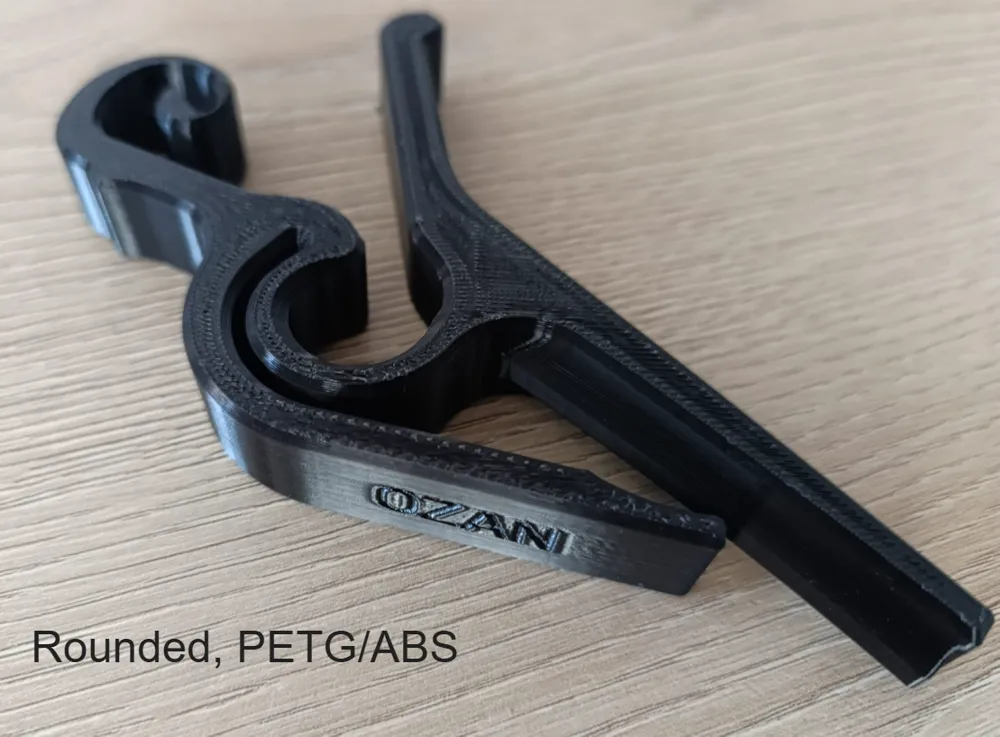
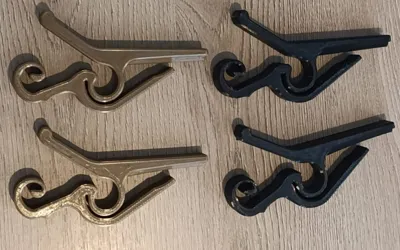
- The switch from PLA to PETG showed that PETG didn’t store enough tension in the original design. To fix this, a version with a 1 mm thickened circular section was created to ensure adequate tension with more flexible materials like PETG. The updated design holds significantly more tension than PLA versions and remains durable.
- For those prioritizing easy squeezing and longevity, the non-thickened PETG version works well. The 1 mm thickened version provides stronger grip strength. With ABS, you should definitely use the thickened version, as the non-thickened one may be too weak. PLA should stick to the original, as the thickened version could be too brittle.
4-Better Bed adhesion:

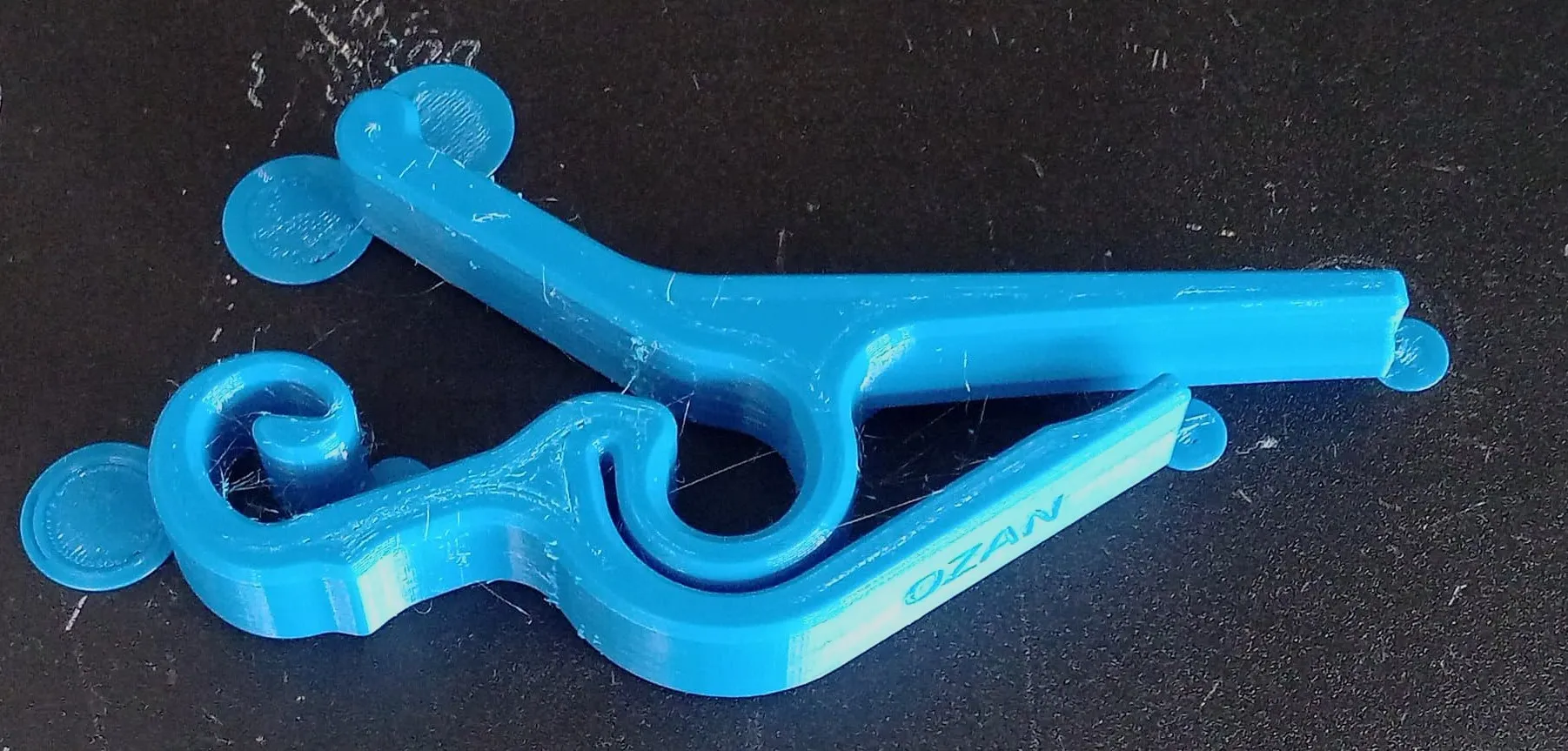
- Bed adhesion is a problem for any design with sharp corners or long extensions—this one has both. To save you the hassle of dealing with messy brims on a relatively complex model, I added custom brims only where they're actually needed. You can easily remove them by hand or with a side chisel. If you prefer, you can also download brimless versions from the “Download STL-CAD files” button.
Update Date: 10/08/25
5 – Optimized Touch Ends for Classical & Acoustic/Electric Guitars
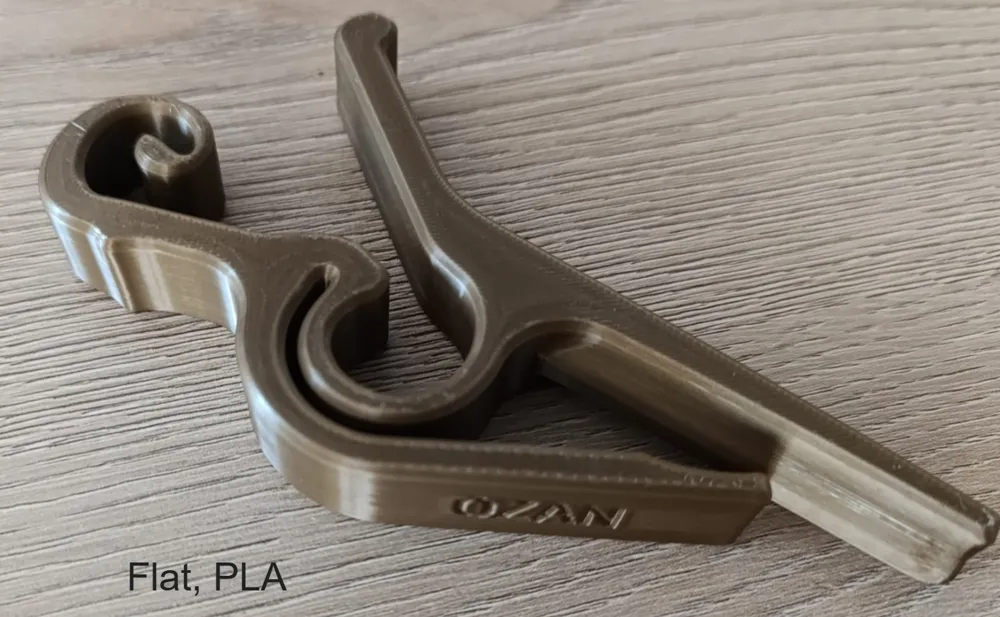
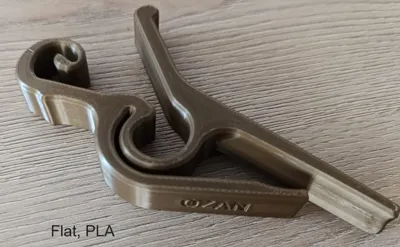
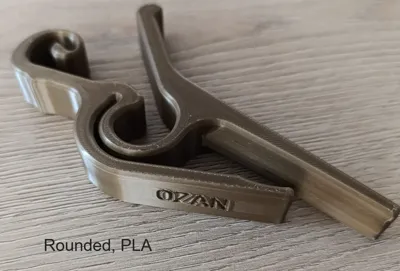
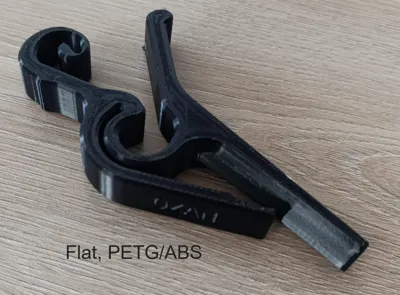
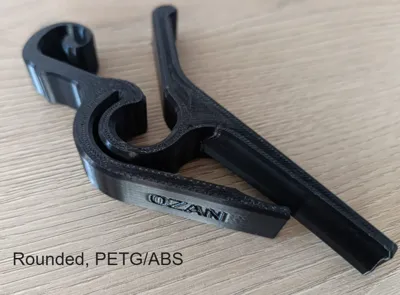
- In older versions, the capo used a semi-flat touch end. While this worked for classical guitars, it wasn’t ideal for acoustic or electric guitars, which typically have slightly rounded necks.
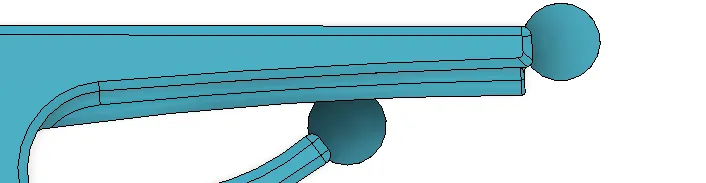
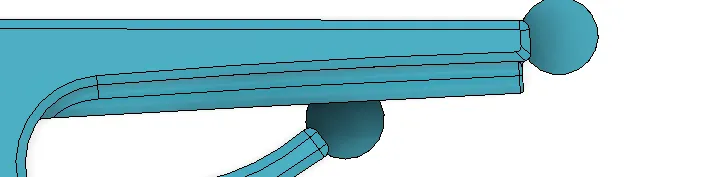
- For classical guitars, choose the flat version. For acoustic or electric guitars, choose the rounded version for better fit and performance.
- Haven't tested yet but in theory Ukuleles should be played with the flat version (so called "for classical") and Basses with rounded (so called "for electro/accoustic"). Make your own decision for any other application depending on neck shape of the ensturement.
6 – Rubber Touch End
- Although the refined versions worked well with different range of classical and Electro guitars tested so far, some users still reported slight string buzzing. Adding a flexible material to the touch end greatly improves tolerance, allowing the capo to adapt better to different guitar types. It also performs better under aggressive playing styles.
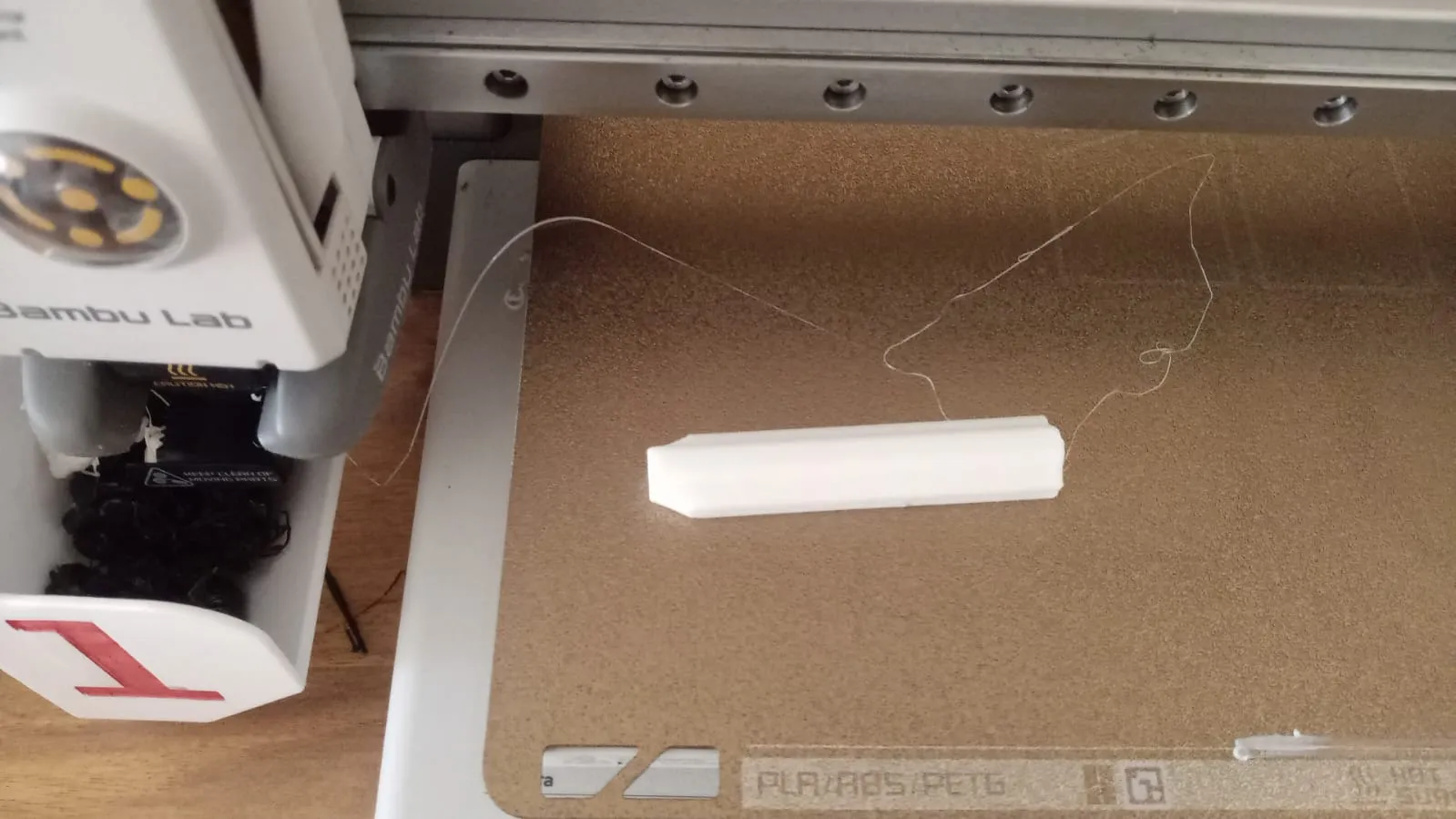
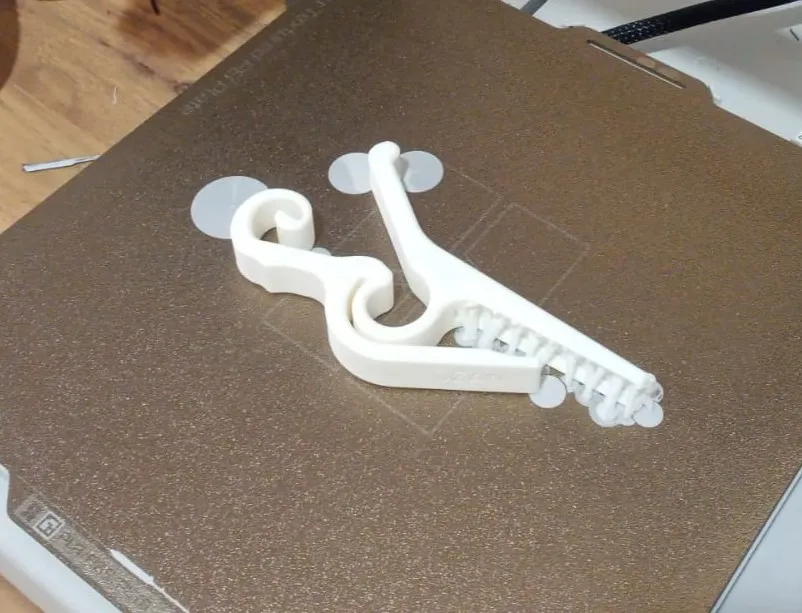
- A new version with a TPU touch end is now available as a new version of this model. If you don’t mind using a bit of support material and can print with TPU, this variant is recommended as a slight but valuable improvement.
You can find it on my profile or at the link below:
https://makerworld.com/en/models/1689028-guitar-capo-with-tpu-touchend-compliant#profileId-1790232
Boost Me (for free)
If you want to support my work for free, I’d really appreciate it.
Thanks a lot to everyone who helped me with this design—both through positive comments and constructive criticism. I'm still surprised by how well-organized and supportive the 3D printing community is, and I am greatfull to be a part of it.
If you want to print more practical parts and have a better guitar experiance, chack out "Guitat Accesories by Ozan" collection on my profile or at the link below!
https://makerworld.com/en/collections/1897657-guitar-accessories-by-ozan
License

You shall not share, sub-license, sell, rent, host, transfer, or distribute in any way the digital or 3D printed versions of this object, nor any other derivative work of this object in its digital or physical format (including - but not limited to - remixes of this object, and hosting on other digital platforms). The objects may not be used without permission in any way whatsoever in which you charge money, or collect fees.


Comment & Rating (567)