
Optimized Disc Golf Mid-Range Disc

Print Profile(1)

Description
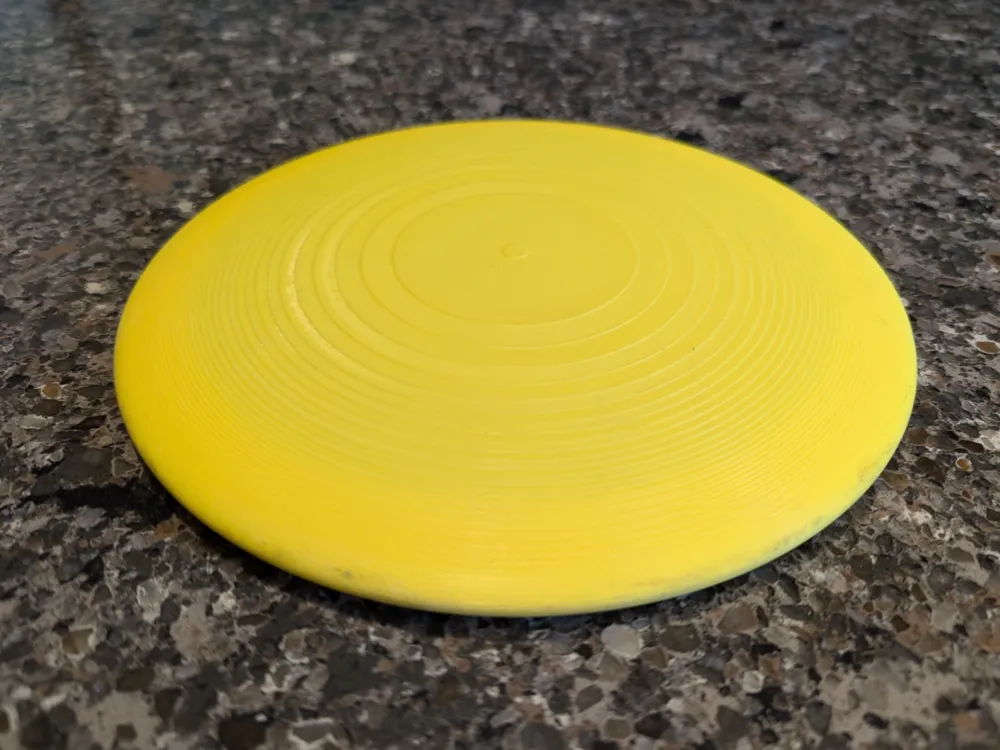
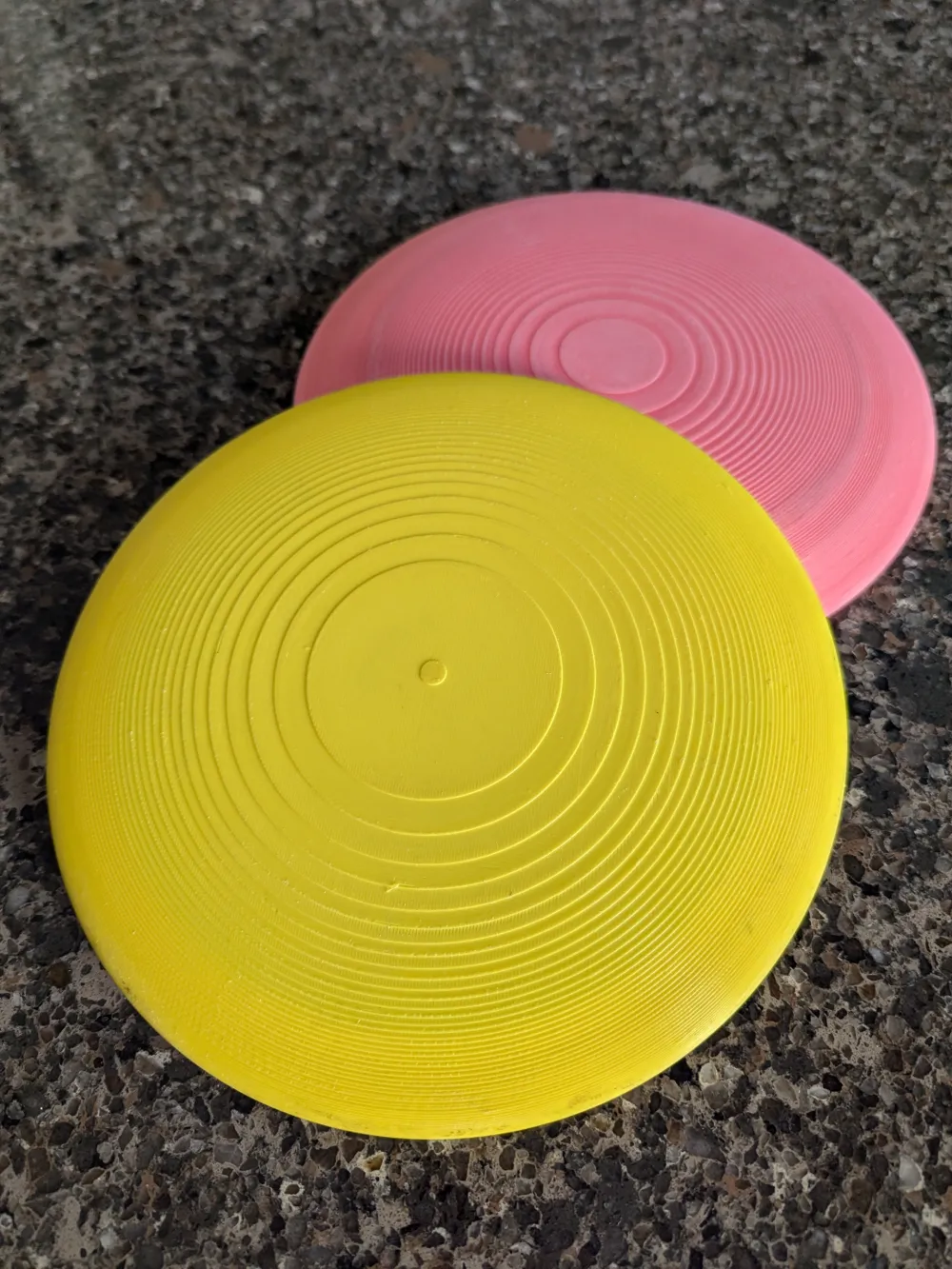
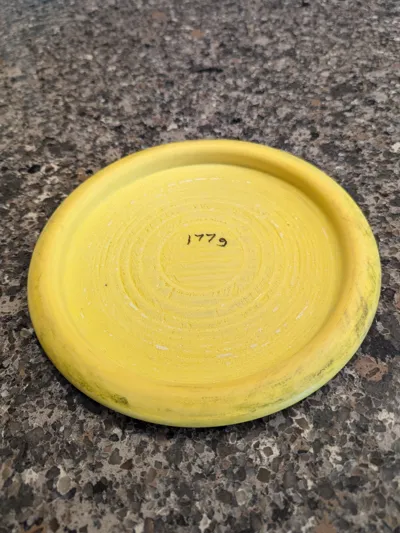
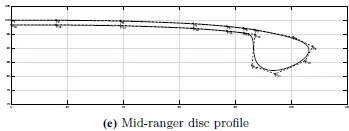
This is a mid-range disc golf disc model I generated using the numerically optimized design from the paper: https://link.springer.com/article/10.1007/s00158-021-03107-7. Shout out to BigBlambino for identifying this paper and posting a model for the driver disc. The mid-range profile, shown below, was designed to have a balance between the lowest drag (as needed for the driver) and highest lift (as needed for the putter).
Filament Type and Disc Weight
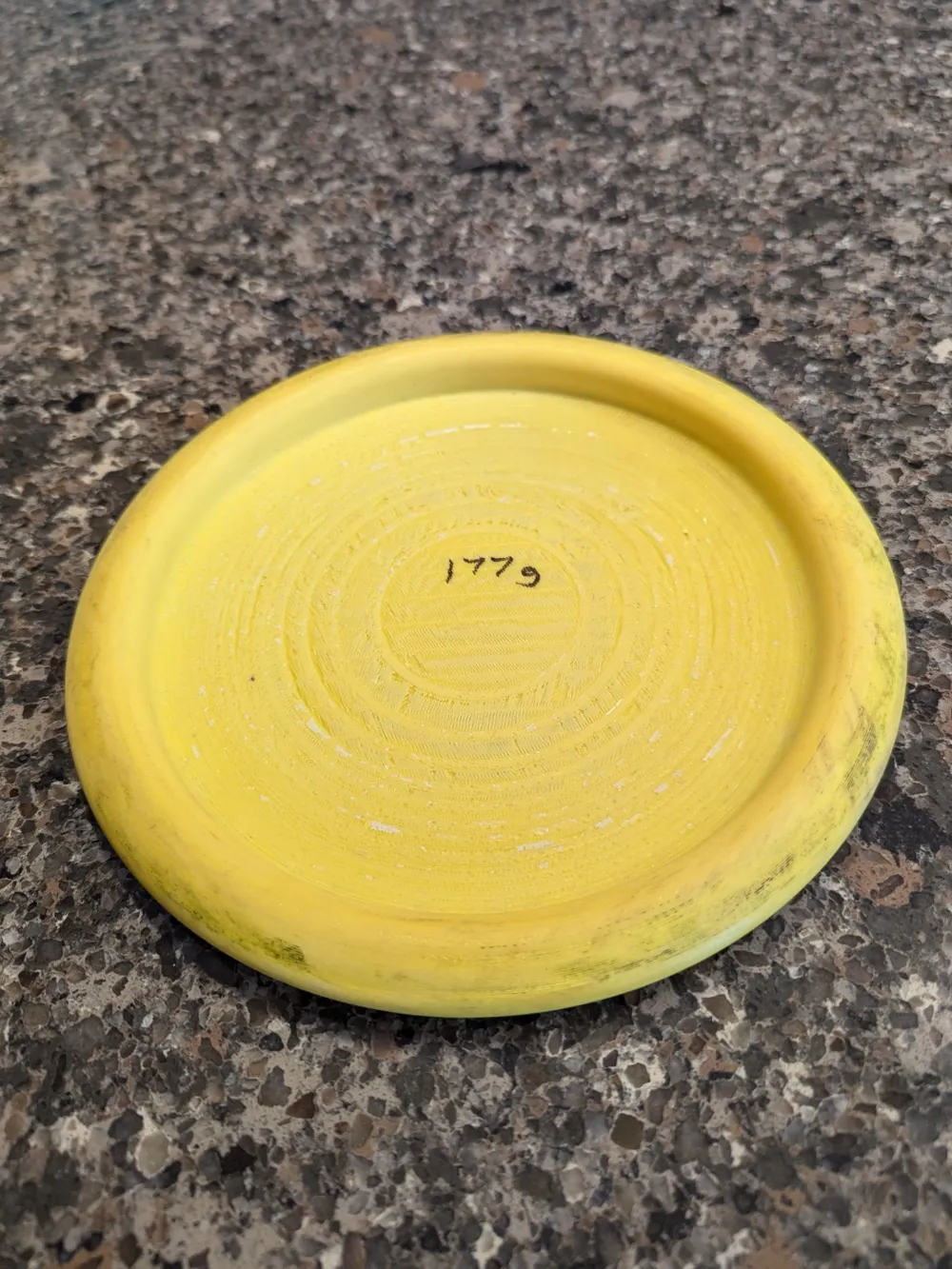
Disc weight can easily be adjusted by changing infill %. To achieve higher disc weights in the 175-180g range I prefer, I found that higher density plastics in the 1.2-1.25 g/ml range (PLA, PETG, TPU) were needed. ABS and ASA, with densities closer to 1 g/ml, were too low to achieve the higher weight range even at 100% infill. An oddity I noted in printing these discs was that the model weight predicted by the Bambu slicer was approximately 9-11g higher than the actual disc weight. As example, the profile I posted lists a model weight of 188g but the final disc was 177g. It's unclear why I have been seeing such a large difference, but it may require several prints if you're trying to hit specific weights (as it did for me).
Supports & Brims
You will absolutely need supports. Since there is an extensive amount of support material, the type selected is important. I have tried several different regular and tree supports and even PLA support material at the support-model interface. By far, the easiest supports to remove have been the organic tree supports using only the same filament as the disc. Using the PLA support material did provide a slightly cleaner surface but they were much more difficult to remove.
So far, I have printed the discs only in PLA. For PLA, I found inner and outer brims to be necessary since there is very little model-to-bed contact area. Stickier material like TPU may not need brims, but this is untested.
Post-Printing Cleanup
Because of the supports and brims, significant filing and/or sanding is needed to smooth the edges and inner surface.
Final Assessment
On my first full 18 holes at my home course, I threw my best round ever (by one stroke). Coincidence?…maybe, but it did throw well. I made my first test discs from PLA since it's cheap and I had it on hand. I did not hit any trees, but I do expect the PLA discs to break when I do. Because the PLA is so rigid, it also bounces a lot when it lands. Now that I know the discs do throw well, I'll be ordering some TPU to make a more durable set.
License

You shall not share, sub-license, sell, rent, host, transfer, or distribute in any way the digital or 3D printed versions of this object, nor any other derivative work of this object in its digital or physical format (including - but not limited to - remixes of this object, and hosting on other digital platforms). The objects may not be used without permission in any way whatsoever in which you charge money, or collect fees.


Comment & Rating (39)