
Caterpillar automaton

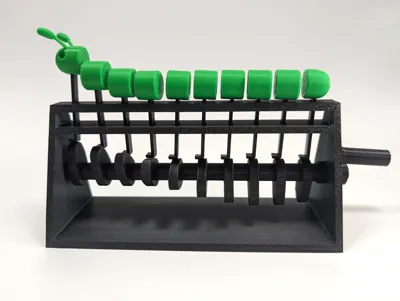
Print Profile(3)


Description

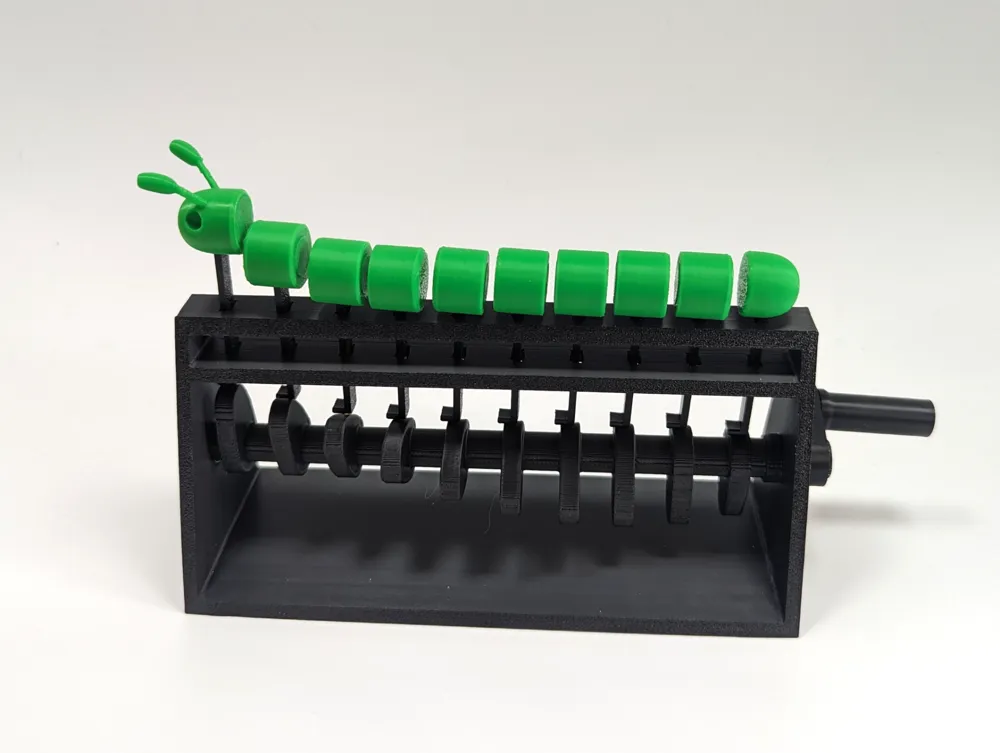
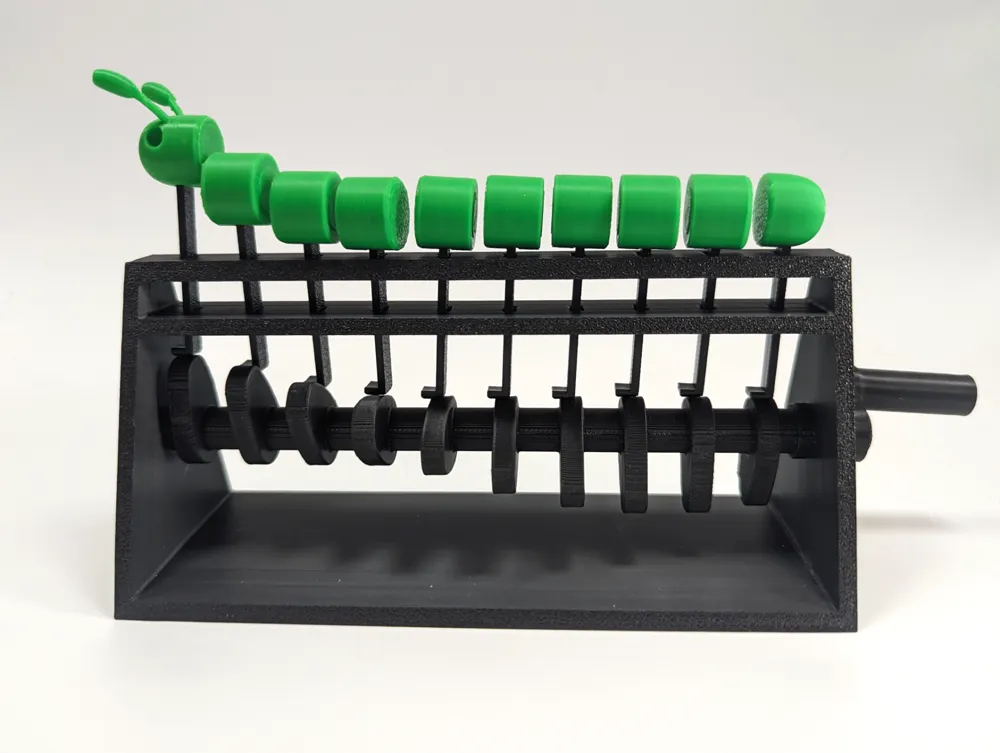
Caterpillar automaton.
Easy to print: only the cam shaft prints with supports enabled.
Easy to assemble: requires no glue. All parts friction-fit together.
Assembly instructions
Remove the support structure from the cam shaft and smooth out areas that seem too rough.
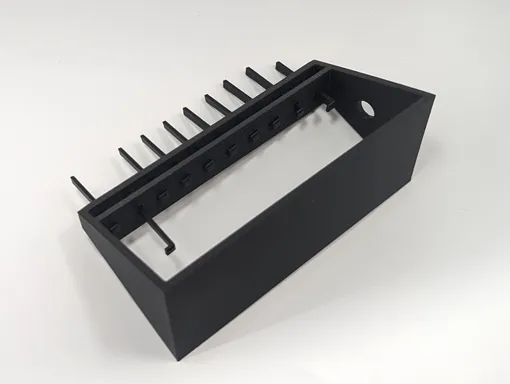
Set the housing on the side and insert the stems through the housing slots.
Notice the tittle feet must point away from the hole in the housing.
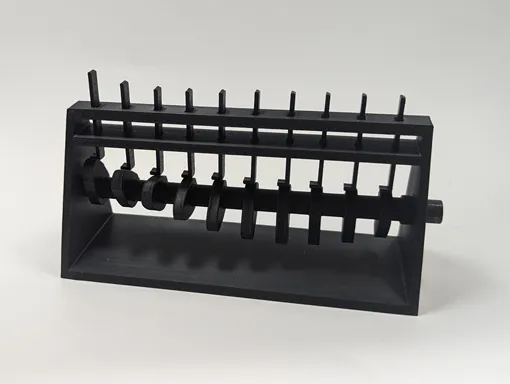
With the housing still on its side, insert the extended end of the cam shaft through the hole, then slide it until it snaps into the support-slot at the opposite end of the housing.
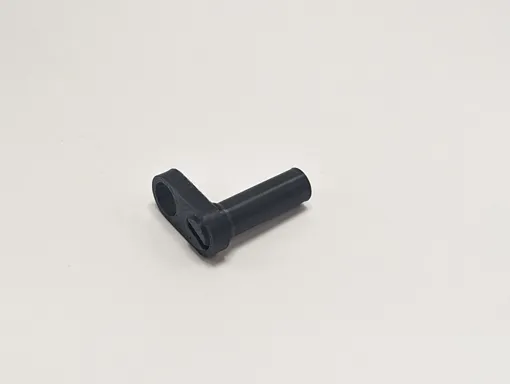
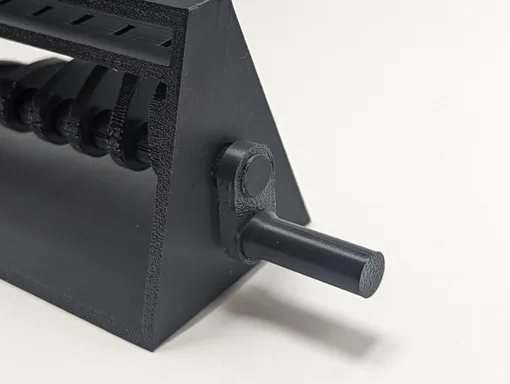
Assemble the handle and press it on the end of the shaft.
While holding each stem, push the caterpillar's head, body parts and tail onto each stem while supporting it from below. Notice the caterpillar is facing away from the handle. Ensure each part is pressed down completely, but note that the head of the caterpillar will sit a bit higher than the other parts.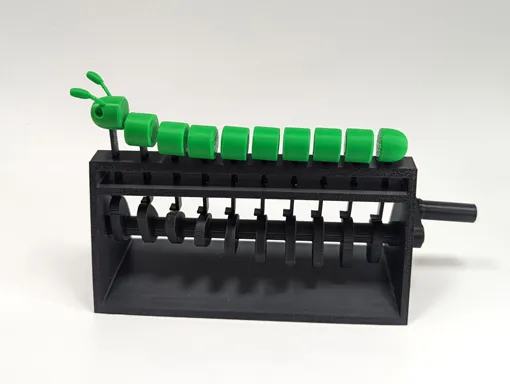
Please remember to rate your prints!
Profile ratings are not only important for other users but also serve as valuable feedback for designers!
Click here to see my other models
Boost Me (for free)
If you like this model, please boost! It's free to you, but it's a meaningful way to support me and my designs.
General 3d Printing Tips
- Make sure your printing plate is clean! Oils from your skin can cause adhesion issues for your prints. Regularly wash your print plate with a detergent like Dawn, and avoid touching the surface when removing prints from the bed.
- If it's an option on your printer, always level the bed before each print. If you have to perform this manually, do so after every few prints. It takes a bit of time and patience, but it's a fair trade for reliable results.
- Ensure bed and nozzle temperatures are within the expected range for the material you're printing. Temperatures that are too high or too low can negatively affect the print, causing warping, malformed layers, or adhesion issues.
- Reduce your printing speed. Slower speeds are especially important for overhangs, as they give the material more time to cool as it's deposited.
Membership
Click here to obtain a commercial license to sell physical prints of my 3D models.
License

You shall not share, sub-license, sell, rent, host, transfer, or distribute in any way the digital or 3D printed versions of this object, nor any other derivative work of this object in its digital or physical format (including - but not limited to - remixes of this object, and hosting on other digital platforms). The objects may not be used without permission in any way whatsoever in which you charge money, or collect fees.


Comment & Rating (64)